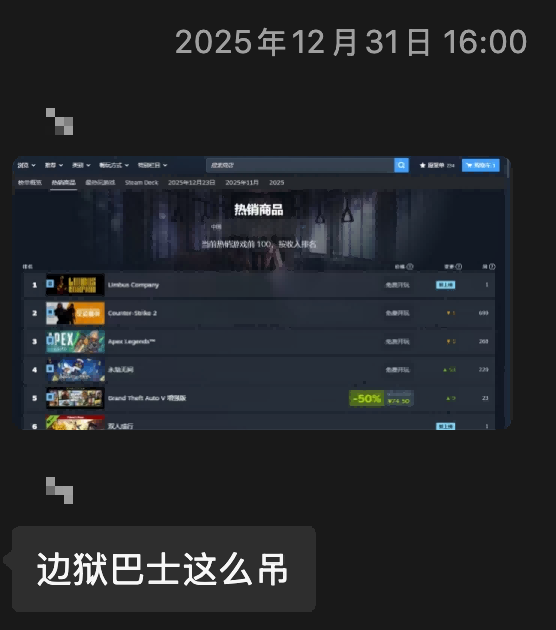
On the last day of 2025, there was a glitch in Steam's China Top Sellers chart.
A South Korean game titled *Limbus Company* has surged past *CS2*, *Apex*, and *Eternal Return*, climbing from 28th place all the way to the top of the charts.
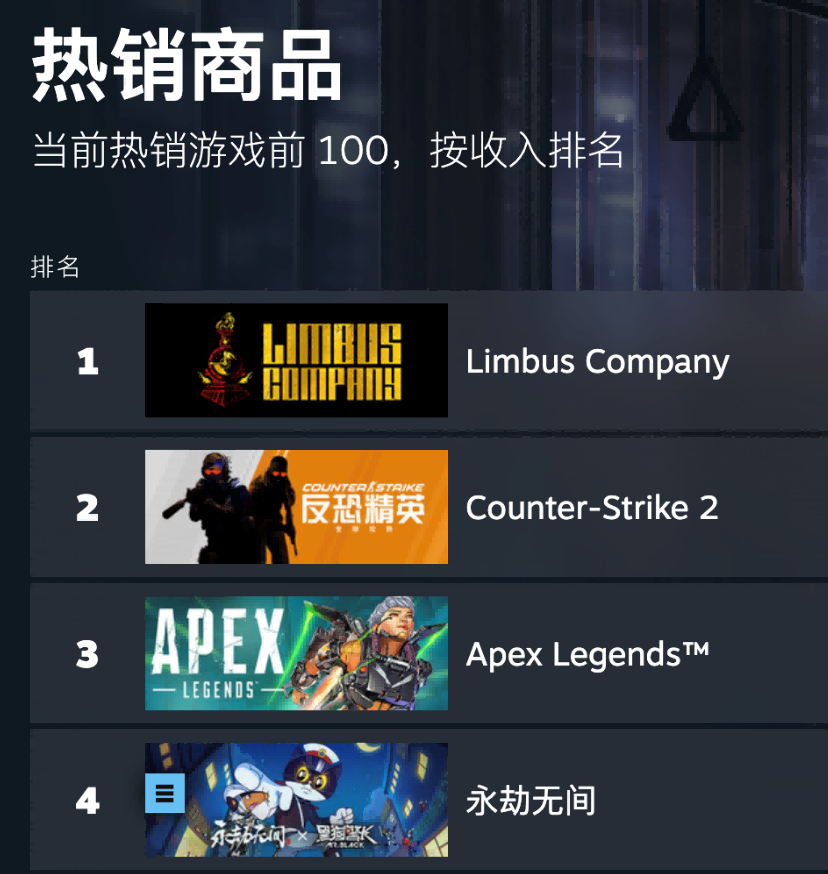
While topping the bestseller charts isn’t exactly a big deal, what if I told you this is a mobile game with no official Chinese localization—and it’s free to play with in-app purchases?
On December 31, *Borderlands* released Chapter 9 of Season 7. On Steam alone, concurrent players surged to 106,000.
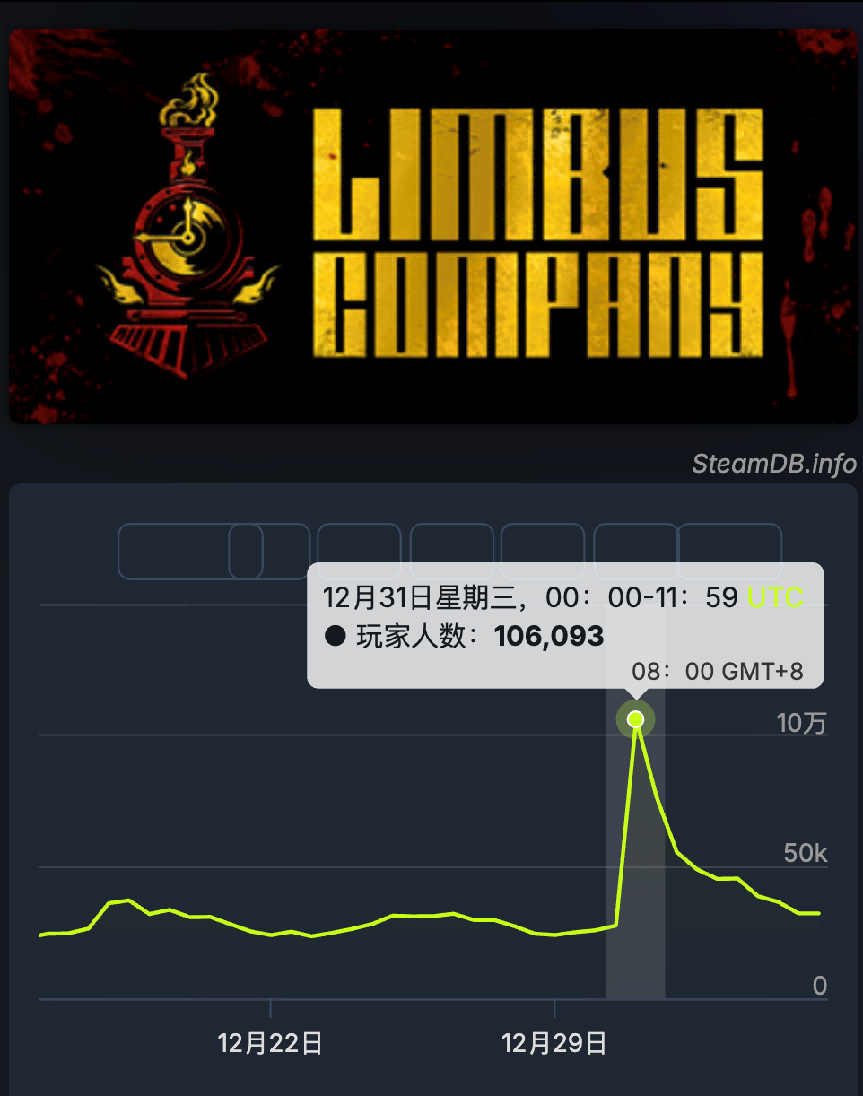
(Source: SteamDB)
The key point is that this game has been out for over two years, has no guaranteed rewards for gacha pulls, and limited-edition characters never go out of stock—players can still exchange them for fragments over time. The Season Pass lasts for six months, stamina can be stockpiled indefinitely, there’s no pressure to log in every day, and you can always catch up on any content you’ve missed later.
What’s even more surprising is that the development team, Project Moon, consists of only about 50 people—smaller than many single-project teams at second-tier game studios. It doesn’t even have an official Chinese version; it’s only managed to survive thanks to fan translations by the domestic gaming community.
Although *Border Prison* was released in 2023, its record for concurrent players on Steam was set in September 2025.
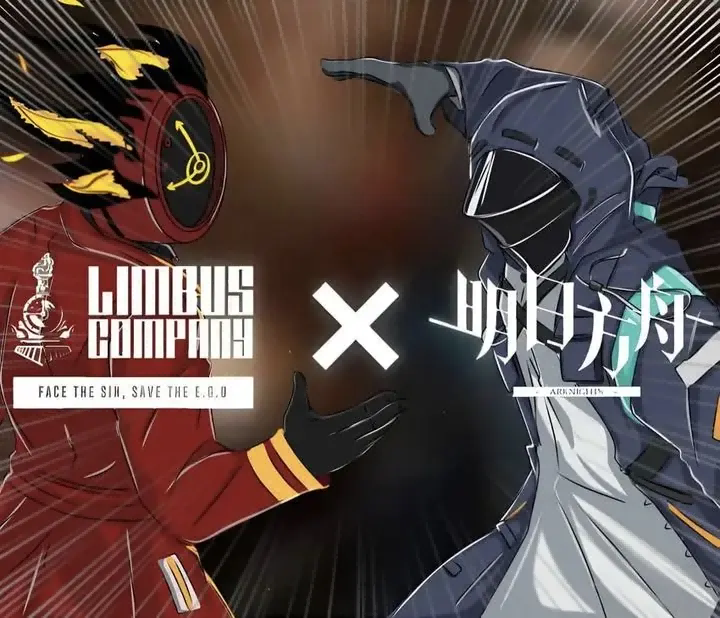
It’s simply because there was a one-way collaboration between *Border Prison Company* and *Arknights* that month.
What’s even more noteworthy is that *Border Prison* has taken a completely different path from its South Korean counterparts, *Azur Lane* and *NIKKE*. While the latter two are capturing the market with a “cute girls + heavy microtransactions” model, *Border Prison* has established a firm foothold with its “grotesque aesthetics + moderate monetization” approach.
Among all these business models—which are unimaginable for domestic mobile games—there is really only one question worth discussing: Can such games actually turn a profit?
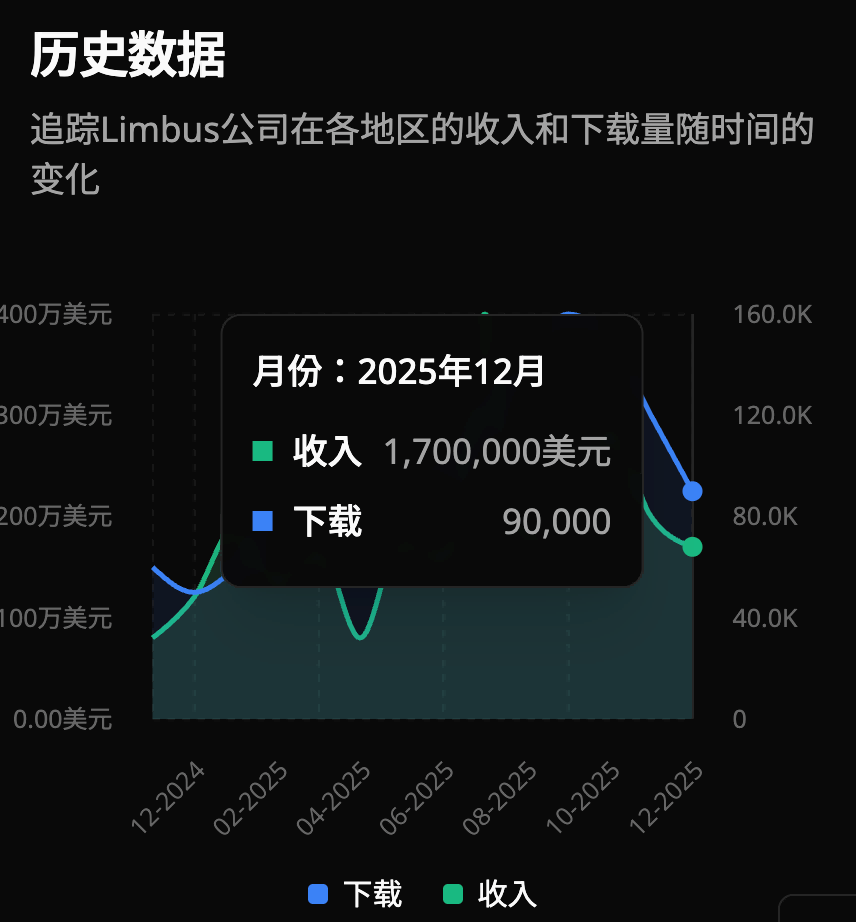
(Mobile revenue and download data for *Border Prison Corporation* for December 2025 / Source: Revenue)
01 A Bizarre Game That Began in a College Club
In December 2014, four students in the game club at Asia University in Seoul decided to make a game.
Leader Kim Ji-hoon’s idea was simple. He loves bizarre themes like the SCP Foundation and *The Cabin in the Woods*, but there weren’t any “monster management” games on the market that he could draw inspiration from.
Just as Chen Xinghan discovered a huge gap in the gaming market for “healing-style social games,” Kim Ji-hoon realized that since no one else was doing it, he would do it himself.
The team consisted only of programmers and designers; there were no artists. They hung around the manga club’s booth at their school’s festival, snapping photos of any monster drawings they came across. Months later, they tracked down the artist through a friend and finally recruited their first artist.
However, unlike Chen Xinghan, they are not yet sure whether this approach will sell.
So they launched a crowdfunding campaign.
In August 2015, Project Moon’s first game, *Lobe Inc.*, launched on the South Korean crowdfunding platform Tumblbug. The funding goal was 2 million won, approximately 11,000 RMB.
The team’s honest opinion is that if this crowdfunding campaign fails, it will prove that there’s no market for this direction, so we’ll just give it up.
In the end, "Lobe Inc." attracted 407 participants and raised 15 million won (approximately 71,000 RMB at the current exchange rate).
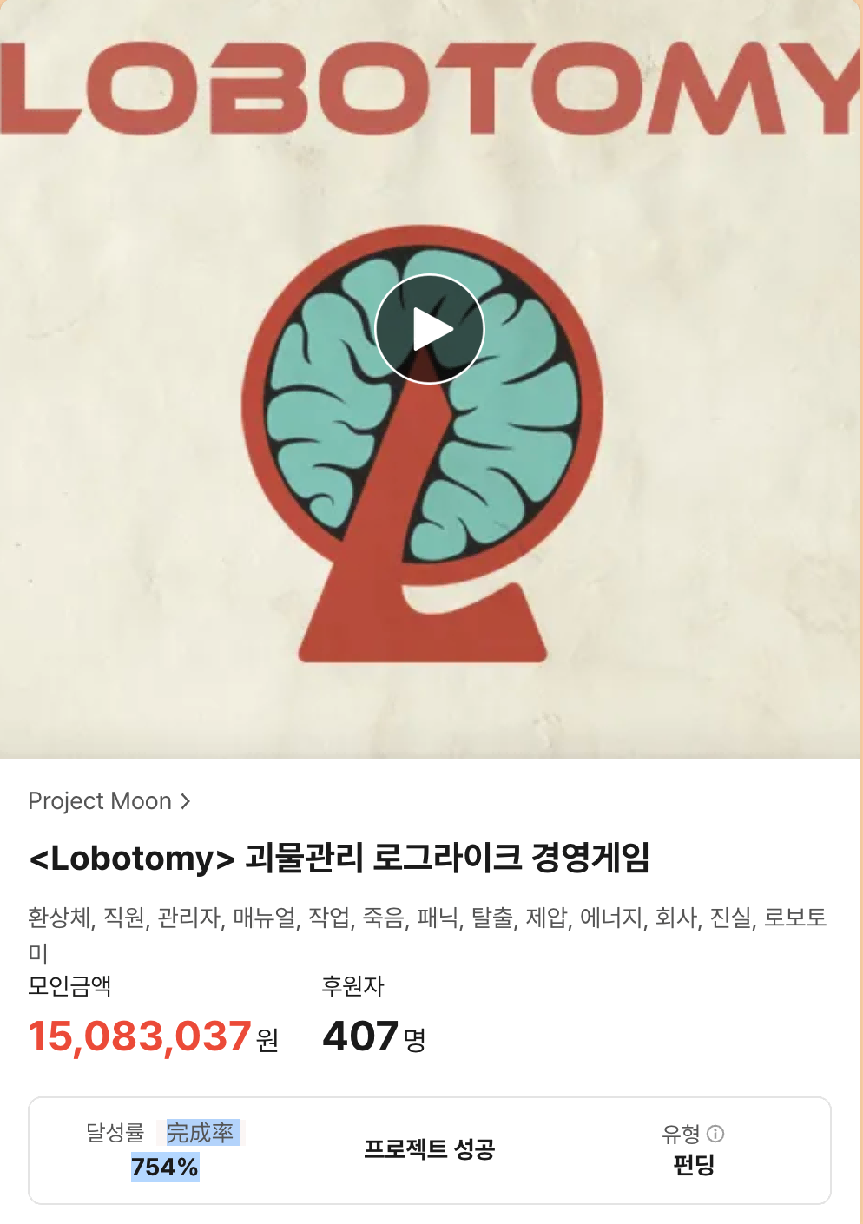
Although the amount isn’t particularly large, for Kim Ji-hoon, this 754% crowdfunding goal achievement has proven that the market for quirky management games is not just a hypothetical niche.
In November 2016, Project Moon was officially incorporated. The team hired its first programmer, bringing the total number of employees to seven.
When *Lobe* launched on Steam Early Access in August 2016, it was riddled with bugs. It sold only 1,000 copies in its first month. At a price of 20,000 won, and after deducting various taxes and fees, the studio couldn’t even cover the next month’s payroll.
Kim Ji-hoon posted an announcement on Steam stating, “We’re running out of money, so we can only deliver the content promised in the crowdfunding campaign; there will be no further development.”
Following this announcement, players of *Lobe* began recommending the game in communities across South Korea, China, Japan, the United States, and Russia. In January 2017, a well-known YouTuber streamed the game for 20 minutes, garnering 1.7 million views. Sales that month rose to 4,700 copies.
With a breather now, Kim Ji-hoon decided it was time for a major overhaul.
Change the real-time gameplay to a turn-based system, switch the American cartoon style to a Japanese anime style, and add a fully developed game universe to the game.
This change nearly broke up the team. The shift in art style sparked negative feedback and led to heated arguments within the team.
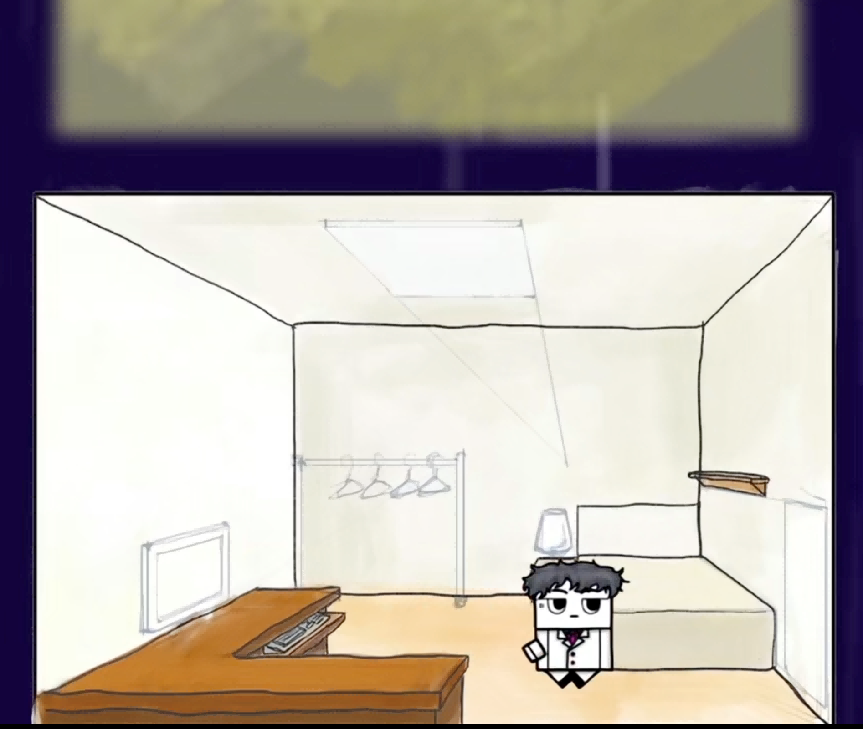
(Original style)
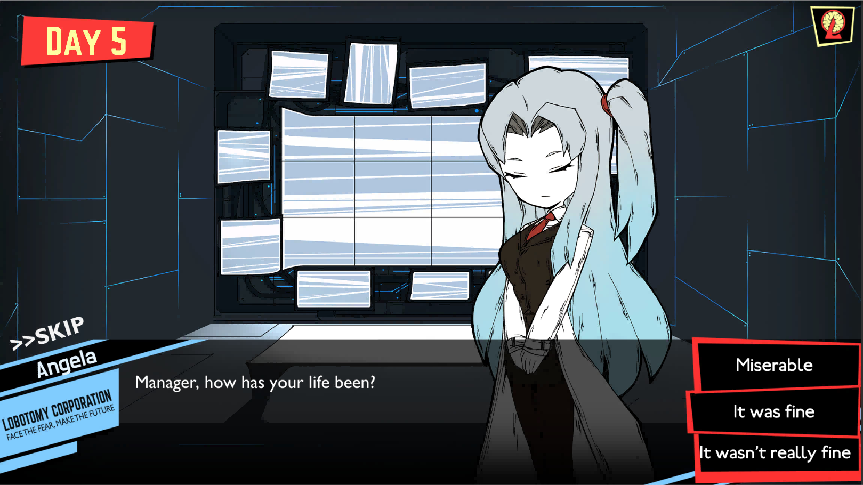
(Official Style)
In April 2017, the full version of *Lobe Corporation* was released. The game ultimately sold 1 million copies on Steam, proving the commercial value of the “Metropolis” universe.
In 2018, the team began development on *Ruins Library*, opting for the more challenging turn-based card battle genre. By this time, the Project Moon team had grown to about 20 members.
On May 15, 2020, the Early Access version of *Library of Ruins* was released. As before, it was met with a barrage of negative reviews due to critical bugs, combat mechanics that relied too heavily on luck, and excessive difficulty early on…

However, Project Moon’s breakthrough this time lies in using custom tracks by the band Mili to heighten the emotional impact of the combat. When the dark, violent battles are paired with Mili’s narrative-driven music, players suddenly realize that this “contrast” is precisely what makes *Ruins Library* so unique.
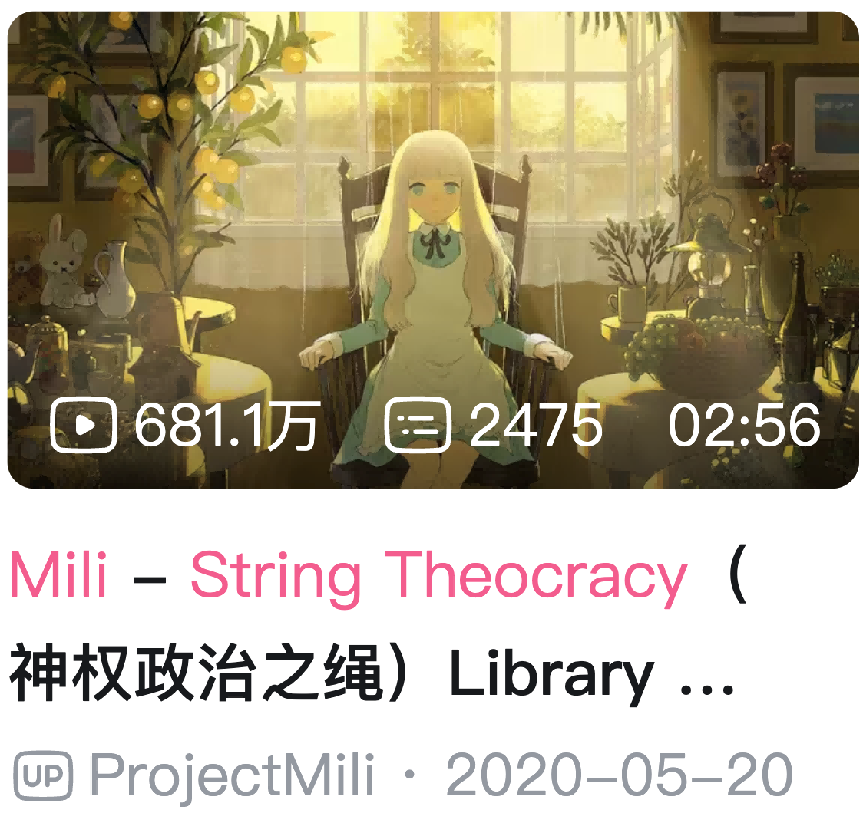
The game ultimately sold 500,000 copies on Steam. More importantly, *The Ruins Library* successfully fleshed out the world of *Lobe Corporation*, laying bare its power structures, social conflicts, and human struggles.
By the time *Prison Company* was greenlit in 2023, the team had grown to 50 members, secured investment from Devsisters Ventures, and built up significant IP influence.
This time, they're developing a mobile game.
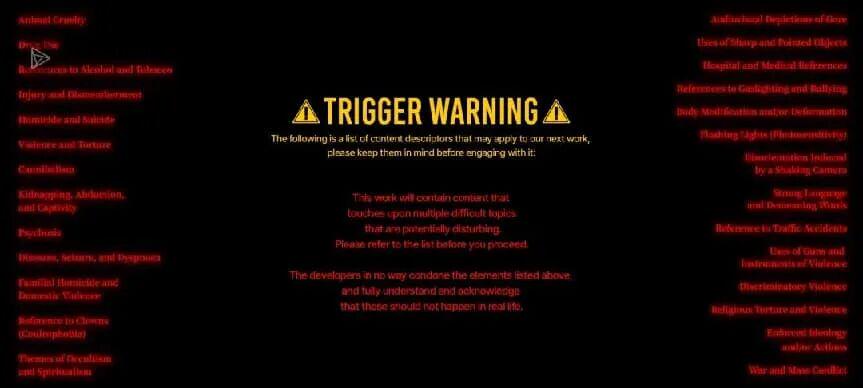
02 "Border Prison Corporation": Can It Survive on Its Modest Revenue Stream?
There is only one core payment option in *Borderlands: The Company*: the Season Pass, priced at $10.99 (approximately 76 yuan at current exchange rates). It is updated every six months. This pricing is quite unusual in the mobile gaming market, but it offers excellent value for money.
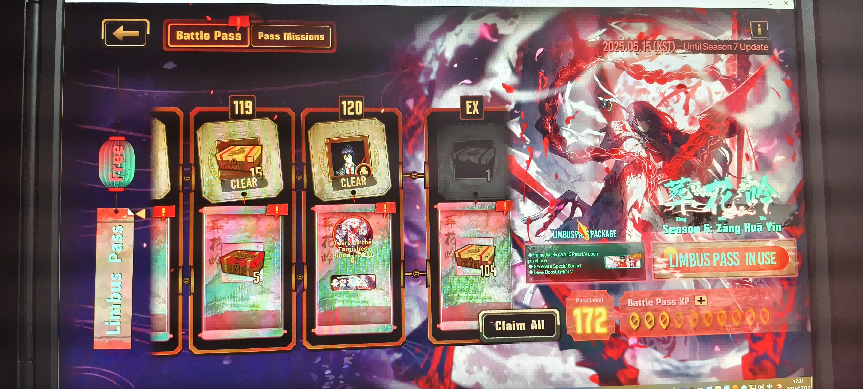
Even more crucial are the design details of the pass.
The Season Pass does not include exclusive characters; all characters can be obtained for free through regular gameplay over the course of six months. The value of the paid option lies in the speed at which you can acquire them; the difference in acquisition efficiency between free and paying players is roughly twofold, but there is no difference in combat power.
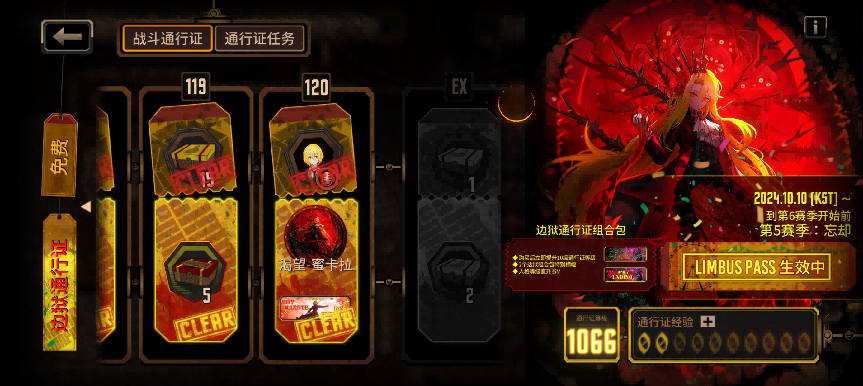
The gacha system is also well-balanced. Limited-edition characters can be obtained by exchanging fragments and will never be removed from the game. Players simply have to choose between spending more time or spending less money—the end result is essentially the same.
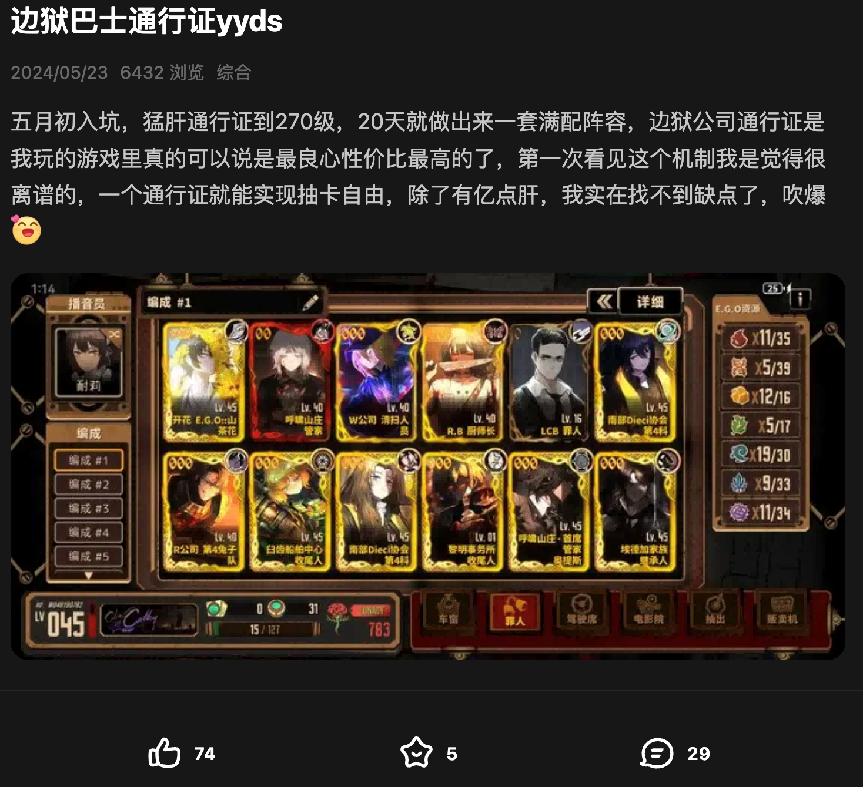
(Source: TapTap user)
Even more extreme is the stamina system. In *Border Prison Corporation*, stamina (endorphins) can be converted into modules, has no upper limit, and can be stored indefinitely. You can go a whole month without logging in, and your stamina won’t be wasted.
This design eliminates login anxiety. Most games go out of their way to get players to log in every day—through check-ins, stamina resets, and daily tasks—creating a sense of urgency that makes players feel they’re missing out if they don’t play. *Borderland Corporation* takes the opposite approach: by reducing the pressure to log in, it actually increases player retention.
In an exclusive interview with the Japanese media outlet *Dengeki Famitsu*, Kim Ji-hoon said, “Rather than maximizing profits, I’d rather pursue the ideals of the current members and my own.”

From a team of four in 2016, to nine members by the time *Lobe Corporation* was completed, to 20 members for *Ruins Library*, and now to 58 members during the operational phase of *Border Prison Corporation*. Each expansion has been measured.Kim Ji-hoon put it bluntly in an interview: “When the team exceeded 20 people, I started to feel overwhelmed.” He insists on maintaining close communication with every member, striving to view them as individuals rather than mere numbers on paper.
In 2021, Devsisters’ venture capital arm invested approximately 2 billion won (equivalent to about 10 million yuan) in Project Moon.Kim Ji-hoon accepted the funding for three reasons: the investors promised to guarantee creative freedom and refrain from interfering in operations; even if *Ruins Library* failed, this funding history would serve as a credential for his next project; and the funds would provide the team with temporary financial relief. He made it clear: “If the investment were likely to compromise our independence, we would have refused it.”

To investors, this decision may not seem “aggressive” enough. But Kim Ji-hoon has clearly set his own limits—and is perfectly content with them. He once said, “If we expand just for the sake of expansion, or pursue profits just for the sake of profits, Project Moon will lose its true essence.”
The 12 core characters are set in stone—this was established as the framework for *Borderlands Corporation* from the very beginning of its design. Unlike other mobile games that release new characters every month, Project Moon uses the “Personality System” to expand the depth of its characters rather than their quantity. A single character can have multiple distinct combat forms, each corresponding to a different class, set of skills, and storyline.
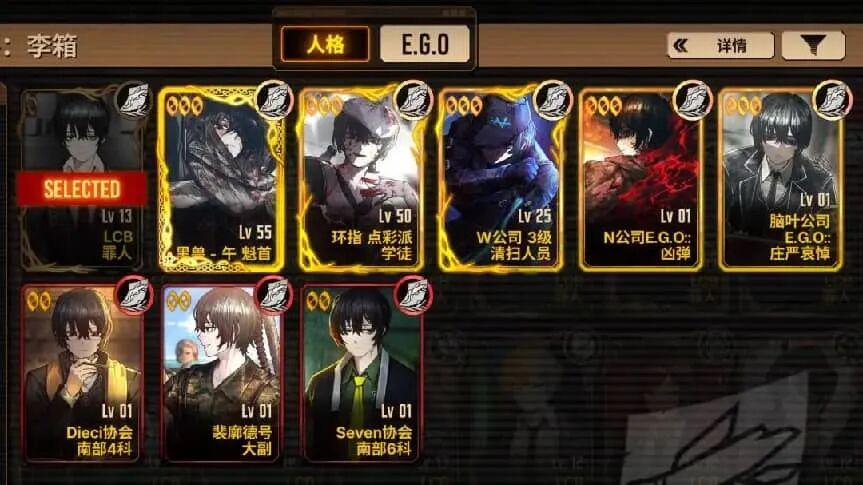
With 2D character art and turn-based combat, development costs are naturally manageable. There’s no need for 3D modeling, open-world environments, or motion capture, allowing the team to focus their energy on storytelling and system design.
The data supports this logic. Players of *Border Prison* spend an average of over 100 hours in the game. The percentage of players who return after leaving the game is far higher than the industry average. Community engagement has remained strong for three consecutive years.
These are all forms of free marketing.
(Chinese Wikipedia)
In the short term, *Borderlands Corporation* certainly won’t generate as much revenue as the big studios’ second-tier titles, but Project Moon places greater emphasis on steady long-term retention, word-of-mouth, and organic community-driven content creation.
Domestic second-tier games are designed to cater to content consumption—with their development scope, content update frequency, and team size all geared toward this purpose—and rely on corresponding monetization strategies to cover operational costs. In contrast, *Borderlands Corporation*’s payment model, centered around a season pass costing approximately 25 yuan per month, does not reflect which model is “right” or “wrong,” but rather two entirely different business logics.
03 Trust is more valuable than size
In fact, the relationship between Project Moon and the gaming community was built on a less-than-ideal start.
When the previous title, *The Library of Ruins*, was released, its Chinese localization encountered serious issues. Players reported quality problems with the localization team, and there were even rumors that the team leader had absconded with the funds. The game was plagued by bugs such as frequent garbled text and display errors, and the experience for Chinese players was so poor at one point that the community had to create unofficial patches just to play the game properly.
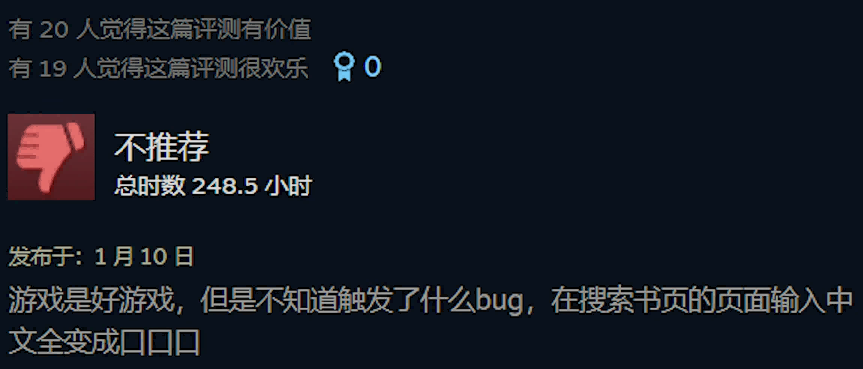
As a result of this experience, Project Moon exercised extreme caution when launching *Borderlands Corporation* and decided not to release an official Chinese version.
Under normal circumstances, this would have been a disaster. But the reaction from the domestic gaming community was unexpected. They spontaneously formed the “Urban Zero Association,” took over the entire localization effort, launched an open-source project, and have continued to update it to this day. Project Moon was not banned; instead, it received official recognition.
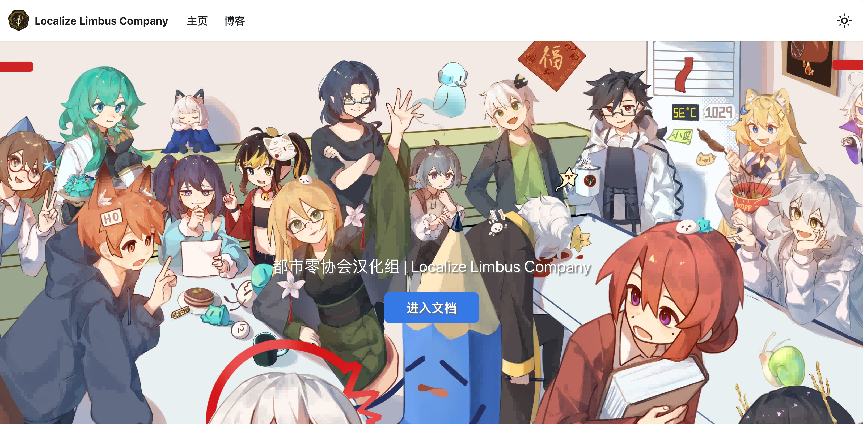
(Chinese Localization Team: Urban Zero Association Localization Team)

This kind of community-driven self-help is virtually impossible in China’s secondary game market. Strict copyright controls, official monopolies on operations, and a lack of tradition among players for self-organization all combine to form an invisible barrier. However, the player community of *Borderlands Corporation* demonstrates another possibility: when the developers exercise sufficient restraint and place enough trust in the players, the community will spontaneously take on the responsibility of spreading content.
Veteran players created free starter accounts for newcomers; NGA and Bilibili became hubs for in-depth strategy discussions; during the 2025 Spring Festival, players spontaneously organized an IP-themed New Year gathering; and fan-made videos totaled over two hours in length and garnered nearly 700,000 views. All of these were examples of zero-cost marketing.

(A spontaneous Spring Festival gathering on Bilibili)
Kim Ji-hoon’s personal experiences may explain the source of this restraint. In an interview, he revealed that he suffers from bipolar disorder and once nearly had a stroke due to excessive work-related stress. His childhood experiences with domestic violence have made him exceptionally sensitive to pain and the need for control. It was precisely this dark period that led him to rethink “what constitutes a sustainable way of working”—not only for himself, but also for the players.
Stamina can be stockpiled indefinitely, there’s no pressure to log in, and content can be enjoyed at a leisurely pace—the philosophy behind these design choices all point to a single goal: “to avoid creating anxiety.” Kim Ji-hoon said, “If we expand just for the sake of expansion, or pursue profits just for the sake of profits, Project Moon will lose its true essence.”
His literary tastes are equally evident in his game design. The 12 core characters in *Border Prison Corporation* are inspired by world-renowned literary classics such as Dostoevsky’s *Crime and Punishment*, Melville’s *Moby-Dick*, Dante’s *Divine Comedy*, and Cervantes’ *Don Quixote*.From a young age, Kim Ji-hoon was captivated by Haruki Murakami’s *Norwegian Wood* and Hermann Hesse’s *Demian*, works that focus on the survival and redemption of the individual in a cruel world. He is not drawn to grand narratives, but rather to “everyday conversations and lighthearted banter.”


(A Bilibili user shares the classic novels corresponding to the twelve characters in *Prison Bus*)
This cultural depth is difficult to replicate quickly. The aesthetics of the bizarre require genuine passion and sincere dedication from creators, rather than mere commercial calculation.
On September 25, 2025, *Arknights* announced a one-way collaboration with *Borderlands*. A year earlier, Project Moon had been invited to speak at the “Pioneer Chip” event in Shanghai. Eagle角 Network’s decision to invite Project Moon was, in itself, a recognition of their content quality. In today’s mobile gaming market, where homogenization is rampant, choosing a content niche with “no direct competitors” and trading depth for loyalty may be another path to breaking through the status quo.

But this path is not open to everyone. The success of *Border Prison* is built on the reputation established by its two predecessors, *Lobe Corporation* and *Ruins Library*—a classic case of survivorship bias. The cultural landscape of the Chinese market differs from that of South Korea, and blindly raising the bar for the bizarre and obscure inevitably carries risks.
What is truly scalable is shifting the focus from flashy visuals and graphics to the uniqueness of content; leveraging organic community sharing to reduce customer acquisition costs; and alleviating anxiety, building trust, and securing long-term subscriptions.
In other words, given that domestic mobile games are generally trapped in an anxiety-inducing cycle of “log in—daily tasks—log out,” is there a solution that allows games to thrive in the long run without chasing monthly active users?
Conclusion
On December 31, 2025, the moment *Borderlands Corporation* topped the Steam charts in China.With the release of Chapter 9 of the Season 7 limited-time content "Spider's Red," the game saw a surge of players during the major update—driven by three years of accumulated player trust and a loyal user base cultivated through gentle monetization. On January 12, Steam concurrent users reached a new peak of 122,000, second only to the record set during the previous collaboration with *Arknights*.
And since this coincided with a lull in the release of flagship products, the timing, content, and trust all came together in perfect harmony.
At the end of the interview, Kim Ji-hoon quoted Hesse: “Today, few people know what a ‘human being’ is, but many are able to feel it. Therefore, these people are better able to face death with composure than others. Just as I, too, will be able to die in peace after finishing this story.”
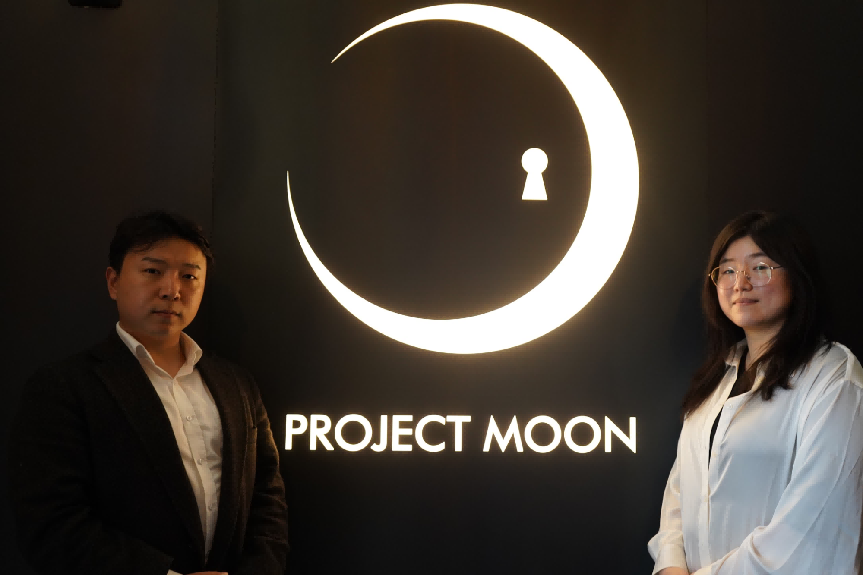
In the gaming industry—which is both an "art" and an "industry"—he chose a path that few have taken. A business model that respects players will ultimately earn their respect in return.
Source:
[1] Japanese gaming media outlet *Dengeki Famitsu* (電ファミニコゲーマー) – Interview with Kim Ji-hoon and Lee Yu-mi of Project Moon, September 17, 2024
[2] Tumblbug: Crowdfunding Data
[3] GameJob: Company Employee Data
[4] PitchBook Corporate Database: Devsisters Ventures investment information (approximately 2 billion KRW in 2021)
[5] Revenue (Mobile App Data Platform): Mobile Revenue and Download Data for *Prison Corporation* for December 2025
[6] SteamDB: Steam concurrent user data
[7] GameKee, GCORES, and other gaming media: game mechanics, gameplay descriptions, and background information on industry analysis
[8] Community platforms such as Bilibili and NGA: Information on player-led fan translation groups (Urban Zero Association) and fan-created content
[9] Hero Game Research Institute: Introduction to *Limbus Company*: How a "Gacha-Free" Mobile Game Is Achieving Steady Growth
原创文章,作者:游茶妹儿,禁止转载:https://youxichaguan.com/en/archives/195382