For a long time, SLG games have been a quintessential example of the hardcore gaming genre. The general perception of this genre is that while it boasts strong player retention and generates revenue quickly, it has a high barrier to entry and a limited audience. The global phenomenon that is *Endless Winter* has broken down the wall between casual and SLG games through its seamless gameplay integration, making more developers realize that SLG games can indeed appeal to casual players.
Following this, as more similar titles—such as *Three Kingdoms: Ice Age*, *Bengbeng Kingdom*, and *Dark War: Survival*—gained traction in the market, the concept of “casual SLG” naturally emerged as a new market trend.
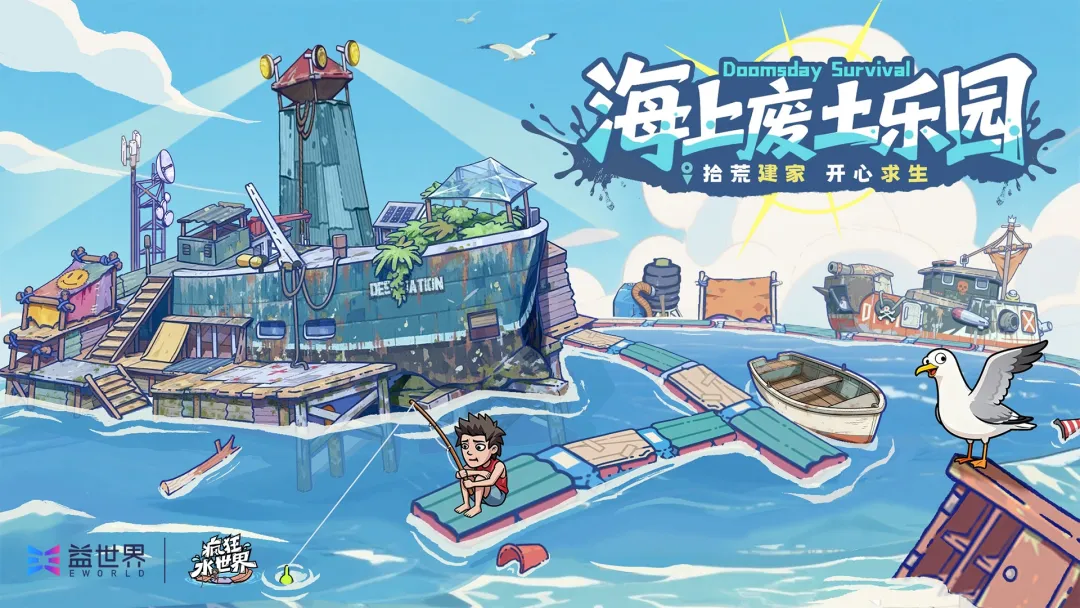
And even today, three full years after *Endless Winter* launched, this trend continues. Recently, another new SLG game—*Crazy Water World* from Yishijie—has appeared at the top of various charts.
According to reports, the mini-game version of *Crazy Water World* got a head start; within days of its launch in December 2025, it shot up to the Top 50 on WeChat’s mini-game sales chart. Following the official release of the mobile app version on January 8, the mini-game’s popularity surged even further, climbing all the way to the Top 10 on the sales chart.
To date, the game has reached No. 7 on WeChat’s Top-Selling Mini-Games chart and No. 8 on Douyin’s Top-Selling Mini-Games chart, while the Android mobile version has also climbed to No. 12 on TapTap’s New Releases chart.
01
Focuses on simulation-based management
Unlike most popular strategy games, *Crazy Water World* eschews dark visual styles and popular themes like ice-bound worlds and zombies. Instead, it features a lighthearted, colorful cartoon art style and a rare “flood apocalypse” theme, offering a refreshing change of pace.
In terms of gameplay, this game is similar to the titles mentioned above, featuring a combination of “simulation management, card-based progression, and turn-based strategy.” Upon entering the game, players will gradually encounter three major events: “Hurricane Crisis,” “Rescuing Survivors,” and “Building a Maritime Utopia.” Guided by these events, players will seamlessly unlock the game’s three core gameplay mechanics.
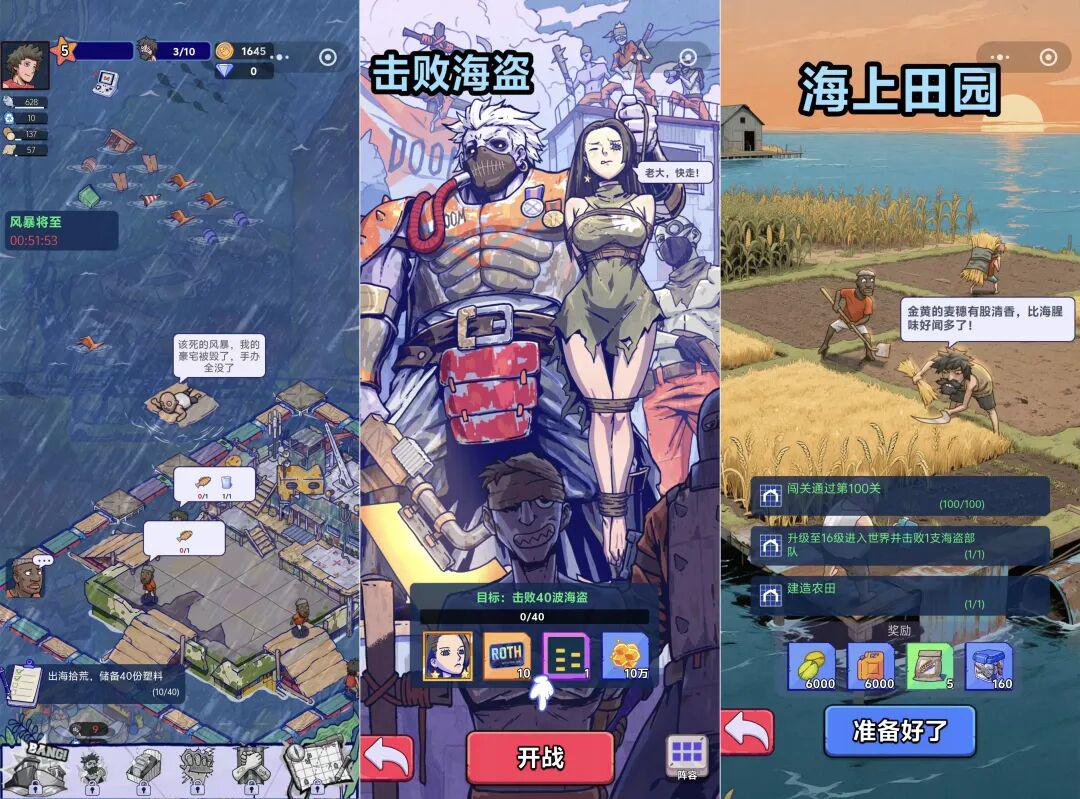
The first stage is similar to a tutorial, where players must gather various resources to help all survivors safely weather the dangerous storm period; in the second stage, players need to recruit more powerful heroes to form a team, complete combat levels, defeat the pirates, and rescue the captured characters; in the third stage, players must join the global chat channel to cultivate farmland and further develop their base.
Overall, however, the numerical-based simulation management remains the game’s core gameplay: the main progression largely revolves around collecting resources, constructing buildings, completing production, and fulfilling orders. That said, these standard processes have been given a fresh twist.
During the resource gathering phase, players can not only guide survivors to salvage and collect small amounts of resources directly from the sea near the base with a simple tap, but also acquire large quantities of basic supplies through mini-games such as sea scavenging, underwater exploration, and fishing.
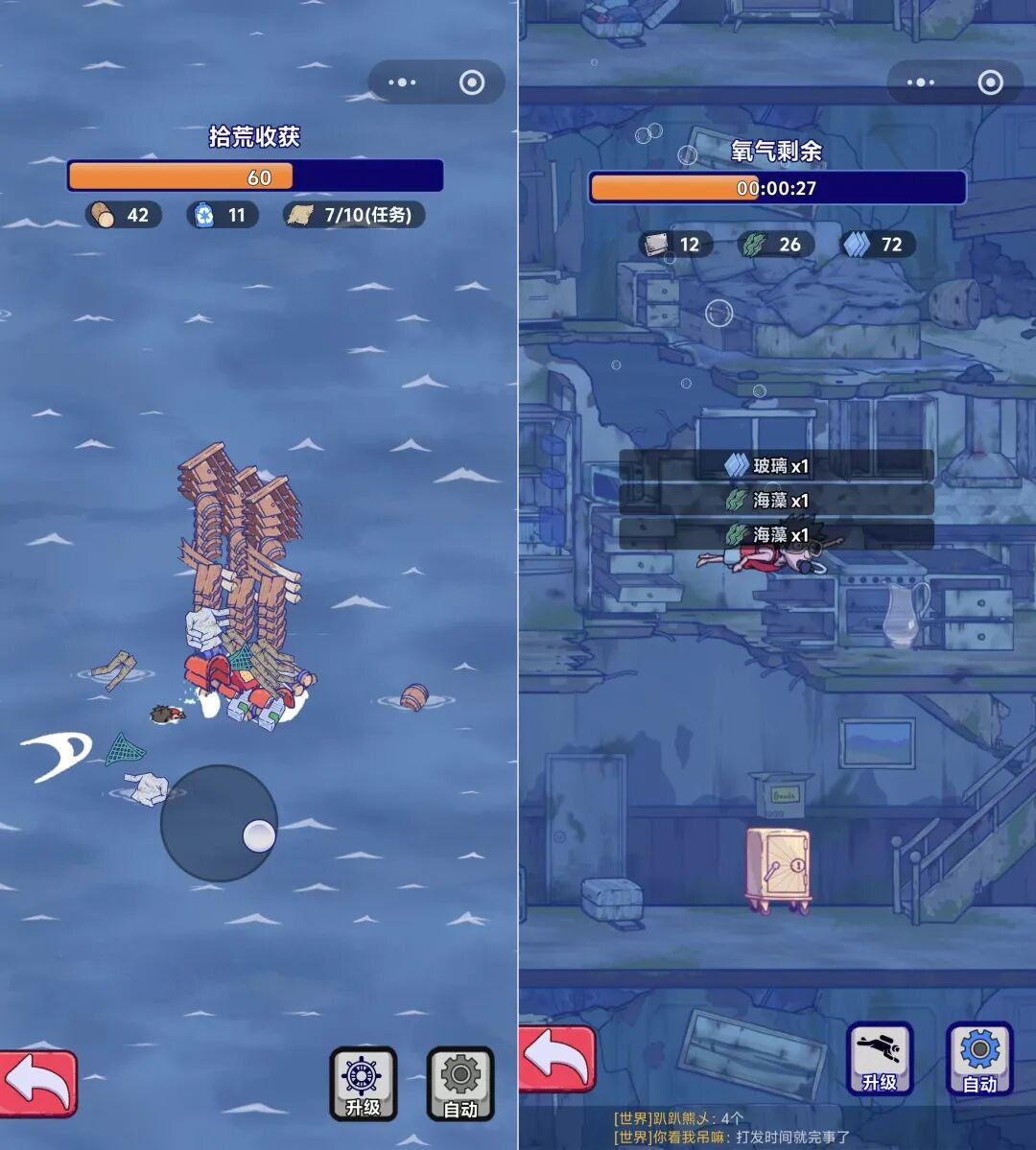
In the "Scavenging at Sea" game mode, players simply swipe their fingers to steer their boat across the ocean while collecting resources like pieces of wood, plastic, and fabric floating on the water's surface. However, while collecting these items, players must watch out for sharks and schools of fish lurking beneath the surface.
When exploring the ocean floor, players can control their character as they navigate through submerged skyscrapers, collecting pieces of metal, glass, and seaweed hidden within. However, oxygen is limited, and the exploration must end immediately once it runs out.
Fishing is also very simple; with just a few simple casts and retrieves, you can catch fish to use as a basic ingredient for preparing a variety of dishes.
These mini-games are ingeniously designed; they not only deepen the "Water Apocalypse" lore but also add more depth to the early stages of the game. As more gameplay features are introduced later on, an auto-play mode is added to the mini-games, allowing players to focus their energy on these new elements.
The resources collected will primarily be used for subsequent construction and product manufacturing. The game features a wide variety of building types, including residential buildings, power plants, and hospitals, which are mainly used to increase the population;while production buildings—such as fish processing plants, seawater extraction plants, clothing workshops, daily goods factories, and metal factories—are, of course, used to produce various goods; in addition, there are many other functional buildings, such as warehouses for storing various raw materials, command centers for appointing heroes, and training camps for generating hero experience, among others.
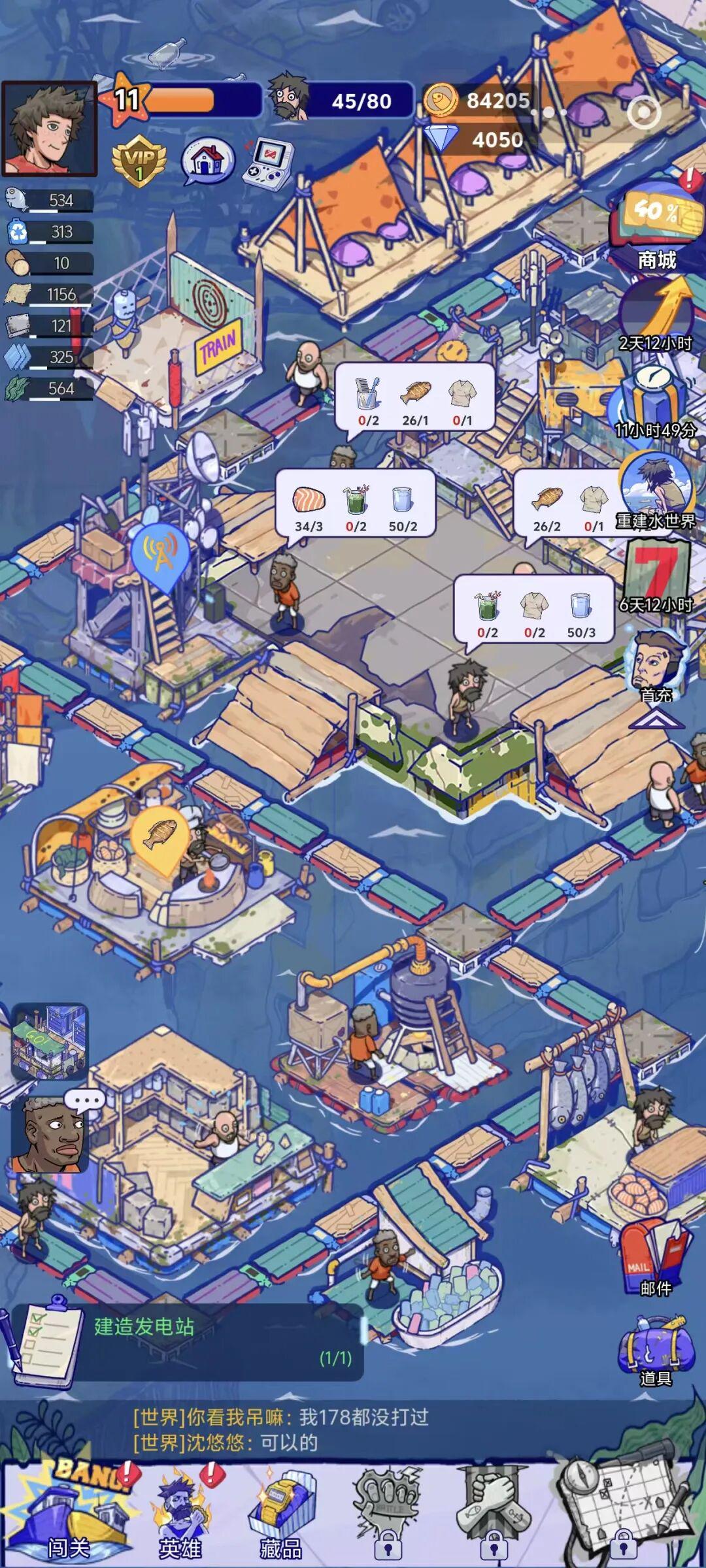
Ultimately, constructing and upgrading various buildings, as well as increasing the population, will boost the protagonist’s total experience points. Additionally, producing various goods and delivering them to residents who need them to fulfill orders will also earn corresponding experience rewards. Once your experience reaches a certain level, you’ll unlock more new buildings and gameplay features.
02
Familiar hero-raising mechanics + casual strategy game
The progression system in the game is divided into two parts: Heroes and Collectibles.
The hero development system is relatively standard: heroes are categorized into three tiers—Rare, Epic, and Legendary. Players acquire different heroes through recruitment (gacha), and these heroes can be assigned to production units to boost output efficiency, or used to form combat squads to battle enemies in level-based battles.
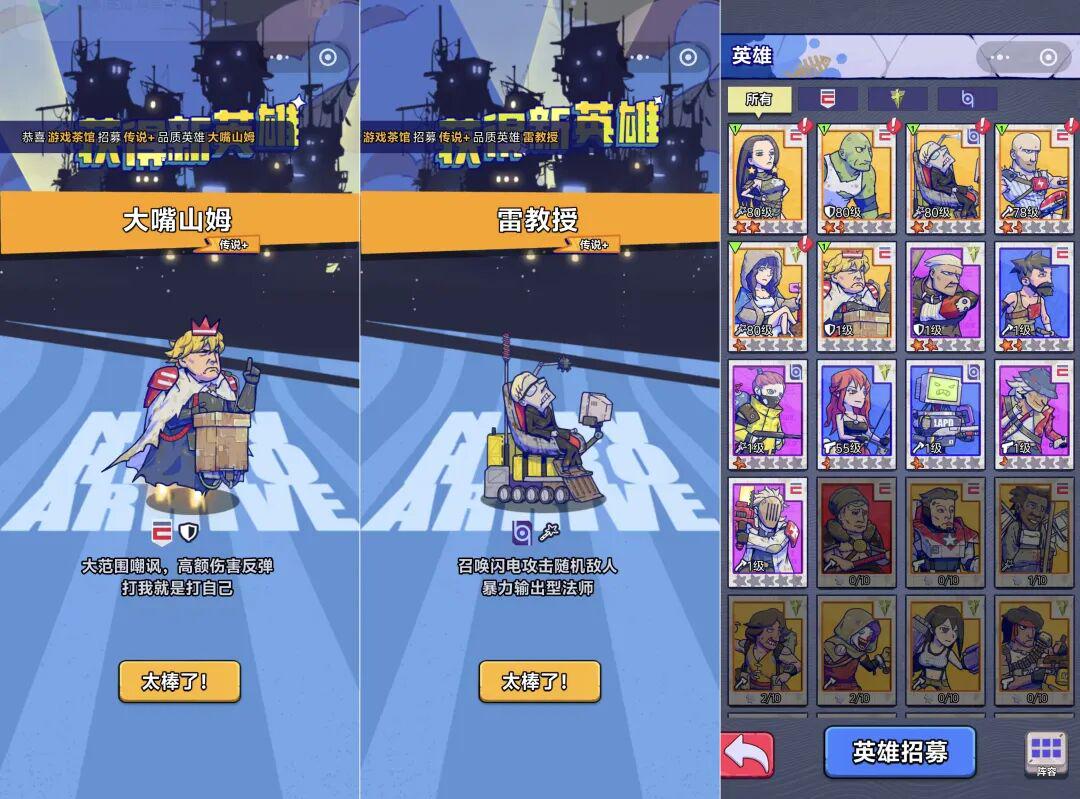
In terms of hero design, the game features many character elements that are sure to bring a smile to players' faces, such as the Blond King, the Professor in a Wheelchair, and Ghostfire Jason, among others. This also provides a significant advantage in terms of content for attracting players in the early stages of the game.
The hero development system is also very comprehensive, featuring leveling up, star upgrades, skill unlocking, badge enhancement, weapons, and equipment—all of which provide ample opportunities to boost hero stats.
Items can also be obtained primarily through gacha draws. Different items provide direct buffs to their corresponding heroes, further boosting their stats. Collecting specific sets of items also grants additional bonus effects.
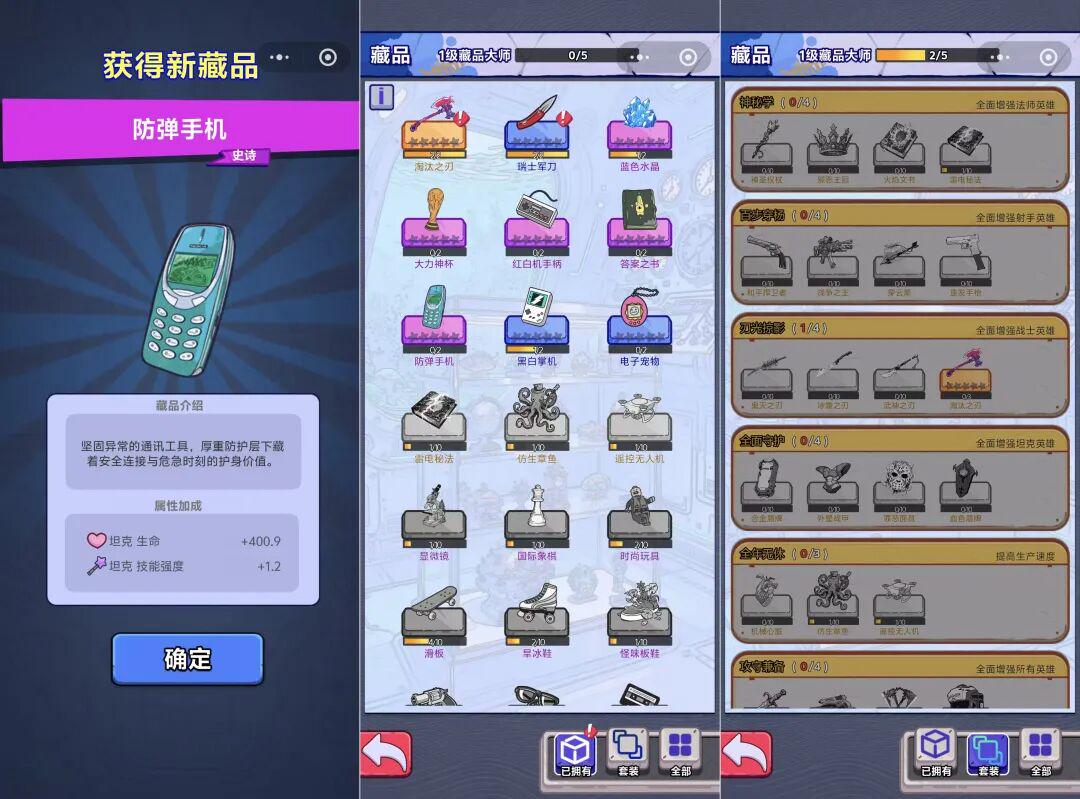
Once you've completed the initial character development phase, you can test your progress through main story battles, the Arena (PvP), and Trial Dungeons.
The main combat sequences are presented in the form of levels. By completing these challenges, players can obtain key resources—such as building blueprints—to further advance the construction of their base. As a result, hero development is actually a crucial component of the simulation and management process.
However, outside of the core loop—which involves managing the base, leveling up the main character, unlocking hero level caps, having heroes earn more resources through combat, and continuing to manage the base—the SLG elements play a relatively smaller role.
Once the main character reaches level 16, players can unlock the open world and access additional features such as battling pirates, capturing other cities, and participating in alliances, seasons, and city battles.
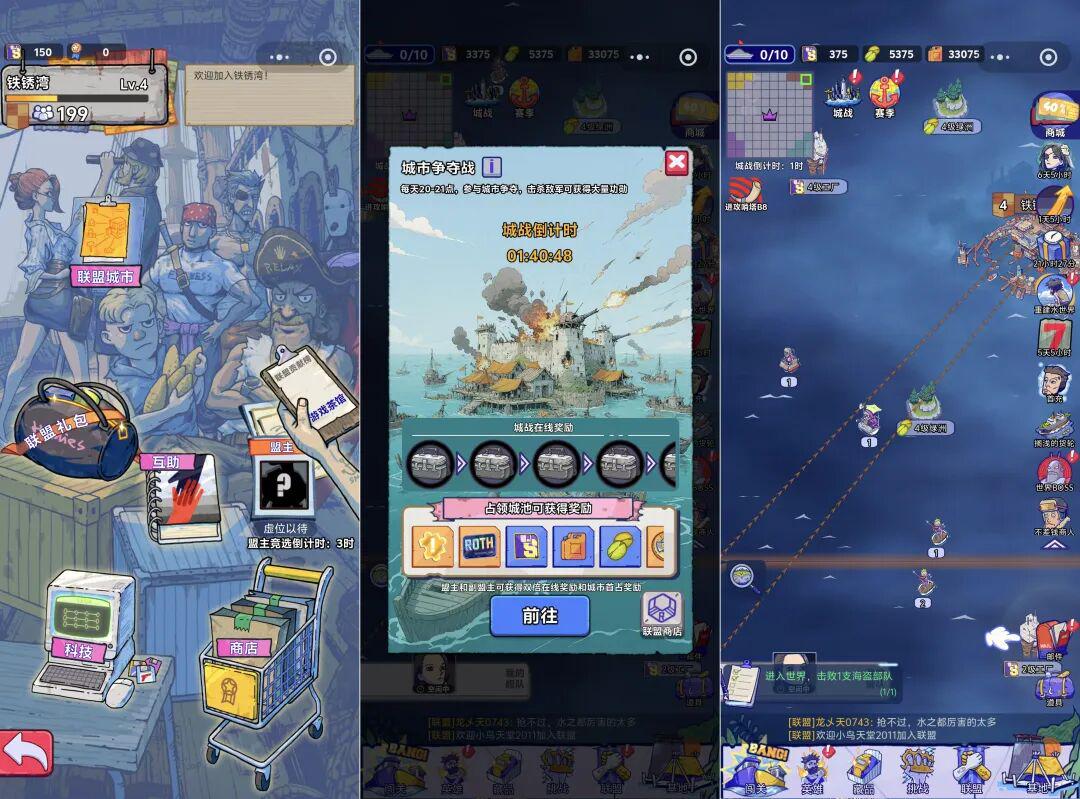
Based on the proven success of numerous hit games in the market, this strategy—which combines simulation gameplay to attract new users and SLG elements to boost retention—has proven highly effective. Simulation gameplay and its mini-games offer distinct advantages during the user acquisition phase, quickly capturing the attention of a large player base; meanwhile, the card-collecting and SLG mechanics in the later stages are primarily used to improve user retention and encourage in-app purchases.
Ideally, as long as the game’s early setup and introduction are smooth enough, more casual players will be able to seamlessly transition into the SLG mode—and may even become more deeply immersed after gaining access to additional resource rewards, social interactions, and a sense of accomplishment from combat.
However, compared to similar games in the past, the SLG elements in this game are more streamlined, so even in the later stages of the game, players won’t face too much strategic pressure.
Accordingly, the game’s user acquisition campaigns have focused its core selling points on showcasing its theme and management gameplay. Most of the ad copy revolves around the tagline, “Start with a small island, catch fish, gather resources, and build a post-apocalyptic maritime survival base!” Additionally, a large number of visuals use AI-generated imagery to demonstrate the process of upgrading and transforming the maritime refuge, thereby piquing players’ interest.

图源:AppGrowing
Therefore, it can be said that this game is essentially a management simulation game with added SLG elements.
END
With years of deep expertise in the simulation management genre, Yishijie has released several hit titles—including *I Am the Big Boss* and *Master of Business*—each generating over 100 million yuan in monthly revenue. The company later significantly boosted the market performance of its title *This City Has Good Farmland* by incorporating SLG elements into its core simulation management gameplay. In 2025, they also launched *Lands of Jail* overseas, a classic “Endless Winter-style” game.
So, after years of experimentation and exploration, it comes as no surprise—and indeed feels like a natural progression—that Yishijie has finally launched *Crazy Water World*, a casual SLG game, in the domestic market.
So far, the game’s performance has been quite impressive, but SLG is, after all, a genre that tends to gain momentum over time. As for whether it can maintain its current momentum and create another revenue miracle for the market, we’ll just have to wait and see.
原创文章,作者:游茶妹儿,禁止转载:https://youxichaguan.com/en/archives/195380