With Zhuge Liang gone, the Wei army is closing in on Chengdu. If you were Liu Shan at this moment, what would you do?
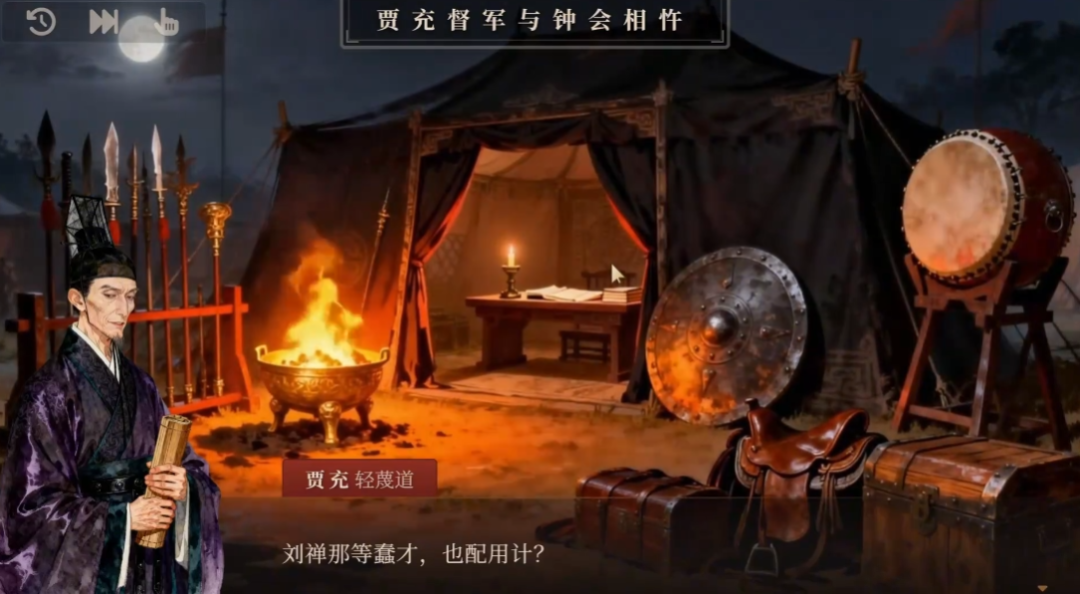
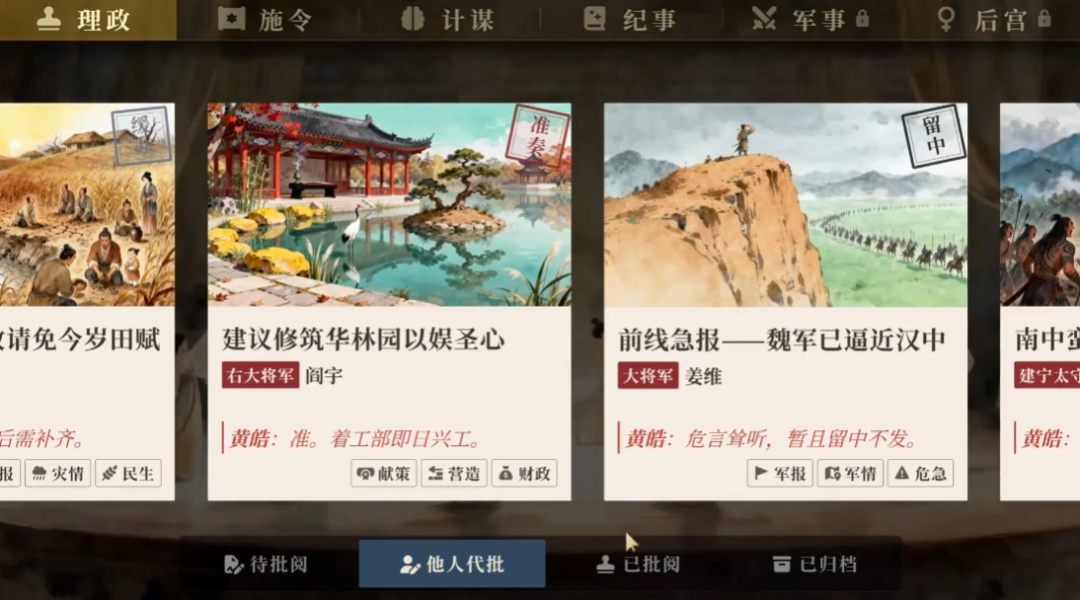
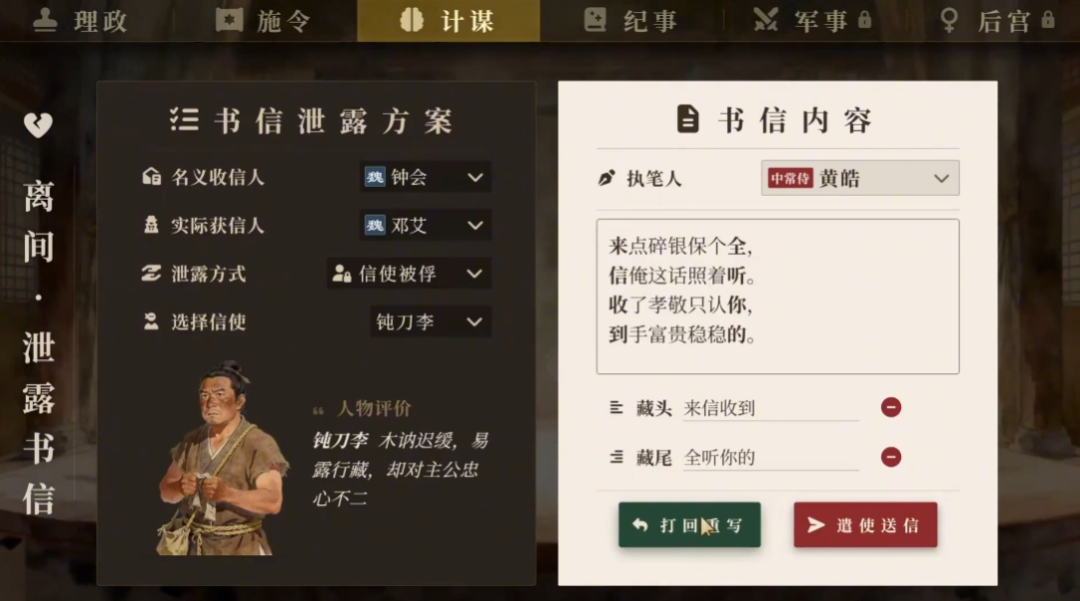
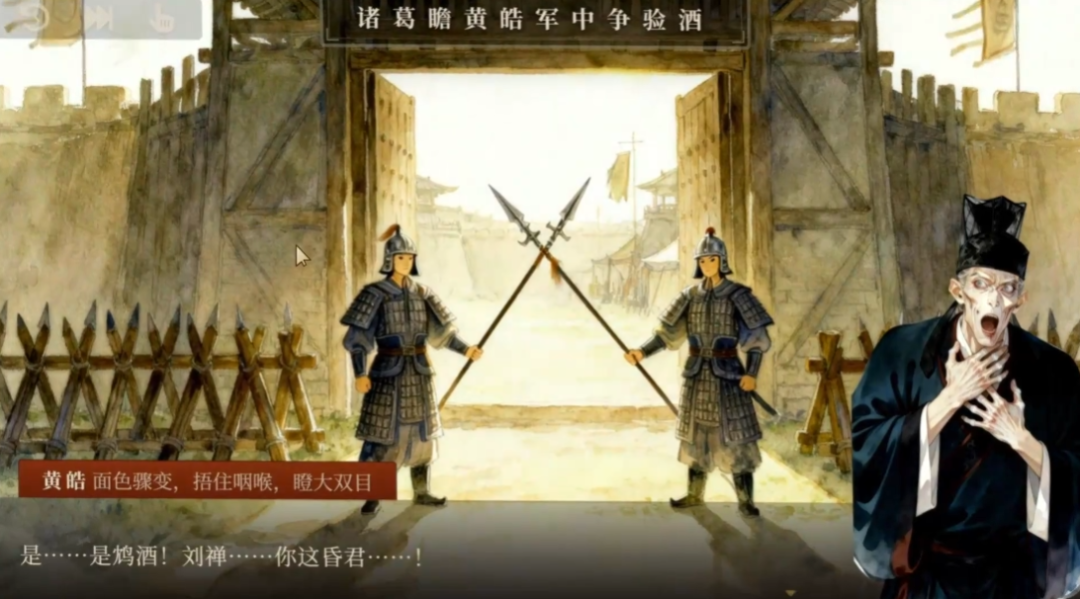
A game titled *My Three Kingdoms* presents an alternative historical scenario: through Liu Shan’s cunning, the treacherous eunuch Huang Hao is poisoned to death, and Zhong Hui, commander of the Wei army, is executed as a result of a scheme to sow discord. The dying Shu Kingdom appears to find new life, and the course of history begins to shift…
The development of this series of stories is not the result of a scriptwriter’s plot, but rather a simulation generated by AI. According to the developers, once the official version of the game is released, players will not only be able to play as “Liu Shan,” but also as any figure of real power during the Three Kingdoms period, making it akin to a “Emperor Simulator” set in the Three Kingdoms era with even greater freedom.
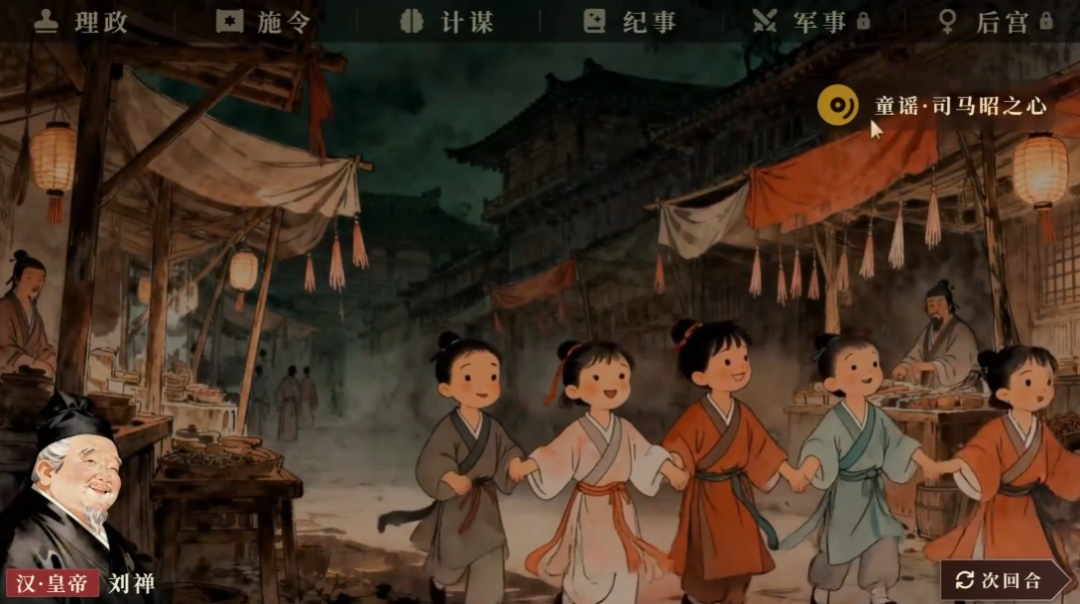
On January 2, as soon as the video was released, it attracted widespread attention from fans of the Three Kingdoms era, racking up over 300,000 views. Netizens gave the game rave reviews, saying, “It really understands what players want.”In *My Three Kingdoms*, the AI not only explores historical "what-if" scenarios but also has a keen grasp of "Three Kingdoms" references. For example, in the gameplay demo, the reason the State of Wei so easily fell for Liu Shan’s scheme was that they believed "Liu Shan is a fool." When the story reached this point, the comment stream erupted with laughter: "There’s a newbie protection system, right?"
In fact, neither AI text-based games nor “AI role-playing” are new concepts in the realm of AI gaming. So what makes *My Three Kingdoms* so highly anticipated? The Teahouse sat down with producer Hu Jinghao to find out.
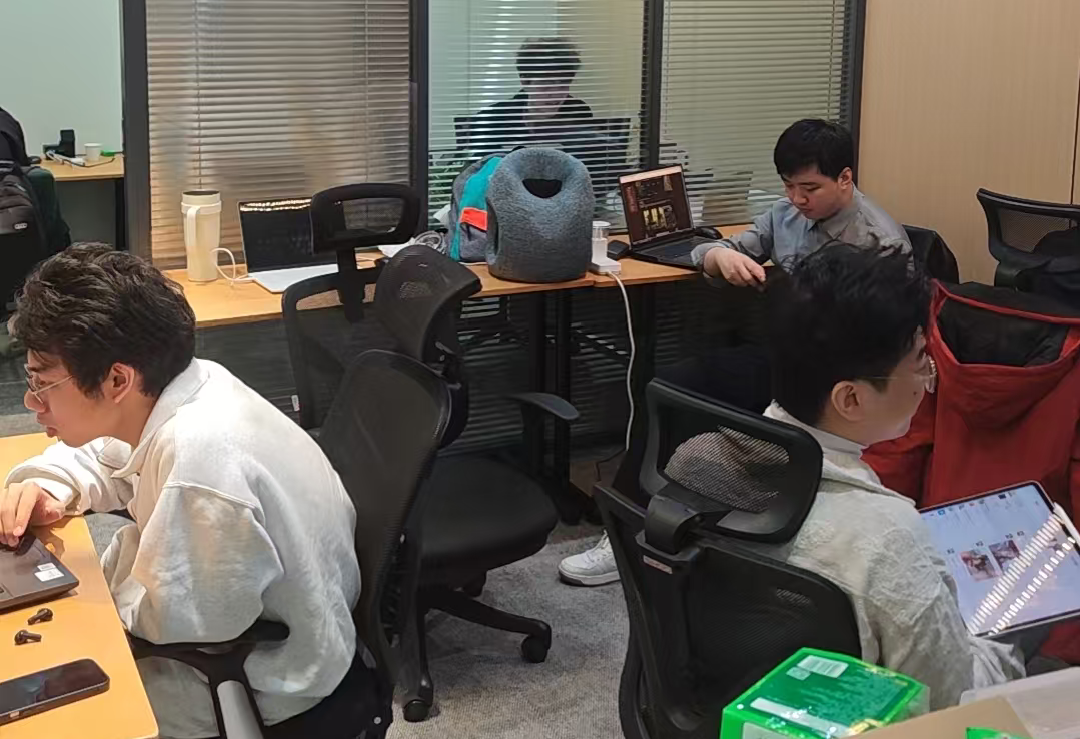
Dr. Hu Jinghao graduated from Peking University and spent five years working on AI-related game projects at Tencent. Last September, after *My Three Kingdoms* secured funding from Qiji Innovation Forum, he officially left Tencent to assemble a team and continue developing the game.
His exploration of AI-driven games began two years ago, when he realized that “mainstream AI games often lack a sense of gameplay, making it hard for him to find them engaging.” This is particularly evident in AI-driven text adventure games, where, after multiple rounds of dialogue, the AI inevitably goes OOC (out of character).After years of reflection, he developed a solution called “recursive evolution”—it divides the entire storyline into multiple recursive stages, where each round of simulation is not constrained by historical contextual memory.
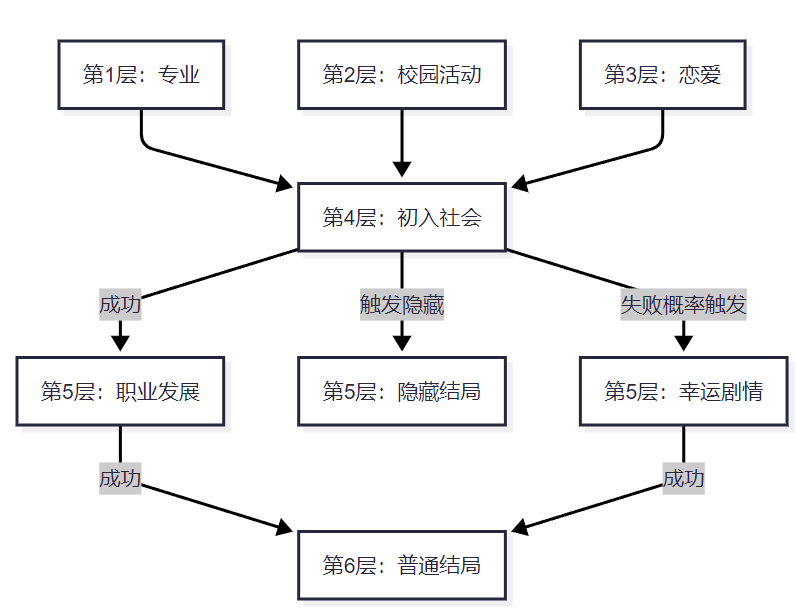
"Sixth Dimension" Game Setting | Image courtesy of the interviewee
In early April of last year, he used his spare time to create the AI word game *Six Degrees of Separation*, which served as an initial validation of his concept of a “recursive AI game.” In this game, players interact with six characters they meet over the course of six story rounds, with the ultimate goal of getting to know a famous person.

The following is a transcript of the conversation between the teahouse and Hu Jinghao:
01
Left Tencent to develop AI games on his own
Teahouse: Was most of your work at Tencent previously related to AI? Hu Jinghao: Yes. What we were doing before was mostly integrating AI into the gameplay of already mature games; essentially, it served as a nice-to-have feature rather than introducing a completely new way to play. Teahouse: Why did you choose to leave Tencent in September of last year? Many people working on AI games likely started as early as 2023.Hu Jinghao: I’ve been evaluating the situation. Before 2025, I believed there were still many technical challenges with using AI for games—for example, image consistency was an issue, AI didn’t follow text prompts as well, and the cost of AI was still quite high. But after models like DeepSeek and GPT-Image emerged, I felt those challenges had been resolved.By 2025, models had advanced very rapidly. I felt we had reached a tipping point where we could truly create a playable, mature AI game. Teahouse: In early 2025, you developed *Six Degrees of Separation*. What prompted you to create this game at that time? Hu Jinghao: After DeepSeek was released, I felt that the time was right to start developing AI games. As I considered what kind of game to make, I brainstormed many ideas.After evaluating my options, I decided that *Sixth Dimension* was likely the AI game I could develop the fastest at that time—it served as a way to get my feet wet. I had already been considering a game based on the Three Kingdoms era at that point, but I felt that was a very ambitious goal, so I put it on the back burner.
Teahouse: I noticed that you previously analyzed *Six Degrees of Separation*, which employs a design approach you’ve defined as a “recursive AI game.” Did you carry this approach over to *My Three Kingdoms*?
Hu Jinghao: The core technical approach remains consistent. For example, when it comes to preventing the game’s context from becoming bloated over time, the solution is similar: by designing the game state system to make the entire game a Markov process, we ensure that the context remains unchanged regardless of the game’s duration.
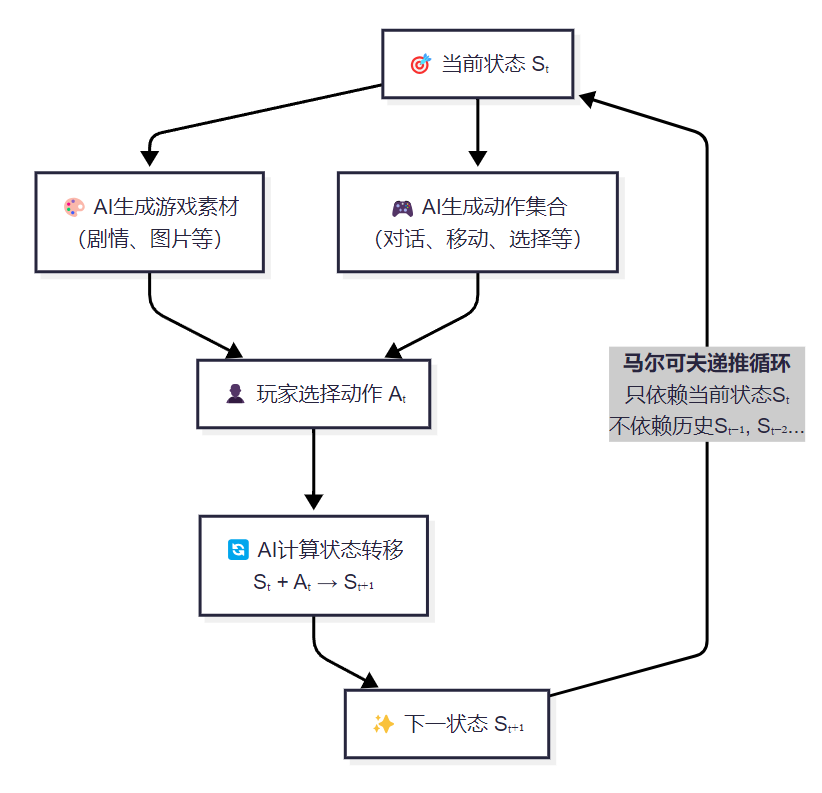
Design Principles of "Recursive AI Games" | Image courtesy of the interviewee
Additionally, regarding the controllability of AI, the concept of “recursion” we refer to essentially involves allowing players to continuously trigger state transitions within the expansive, predefined world we’ve created. These two core principles have remained consistent in both my previous games and my current title, *My Three Kingdoms*.
The main difference lies in the third point: *Sixth Dimension* is a game with very little freedom, as all playable content is pre-generated by AI; in contrast, *My Three Kingdoms* offers a high degree of freedom, with far greater variety in player interactions, interactive spaces, and potential story triggers, and the scope and complexity of its status system have also been significantly expanded.Consequently, *Six Degrees of Separation* is more akin to a technical demo, whereas *My Three Kingdoms* is a title intended to fully showcase this game design philosophy.
Teahouse: How Many Dimensions Does *My Three Kingdoms* Feature?
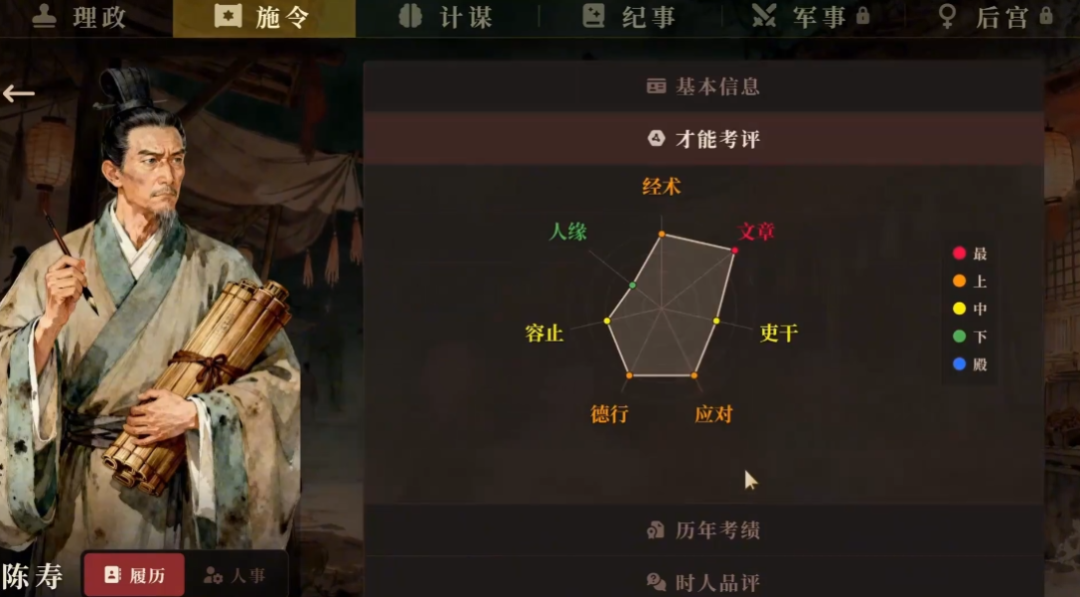
Hu Jinghao: *My Three Kingdoms* features an enormous number of dimensions—so many that it’s currently difficult to pinpoint an exact figure; there may be tens of thousands. For example, the relationships between characters, the relationships between characters and players, the attitudes of local residents toward players, governance levels, development status, and public sentiment—each of these constitutes a separate dimension. Although the number of dimensions will be fixed upon the game’s final release, the overall scale will be immense.
Teahouse: In the world-building you mentioned earlier, each country features distinct characters whose personalities align with their historical counterparts. I’m curious—in a traditional game development model, could a single person handle this kind of work on their own?
Hu Jinghao: I’d say it’s highly unlikely. In traditional game development, there have always been a couple of major challenges: first, giving characters a unique spirit and personality; and second, ensuring that the story evolves dynamically as the game progresses and generates new content. Neither of these was possible in the past; only with the help of AI can we achieve highly realistic character development, authentic role-playing, and dynamic storytelling.
There is also a fundamental difference in the way we approach these two types of projects. When developing AI-driven games, the primary focus is on whether the AI can accomplish a given task; when developing traditional games, the focus is on whether we can accomplish that task. Our role is more like that of a conductor—we need to figure out how to make the AI work effectively.
Teahouse: I recall you mentioning before that you see yourself more as a “general.”
Hu Jinghao: Yes. To me, AI is like a very smart but somewhat unruly soldier. It’s not easy to command it into battle; it takes a great deal of exploration and accumulated experience to get AI to generate game content the way we envision it.
Teahouse: Did you encounter any technical challenges while building this AI-driven game design system?
Hu Jinghao: Of course, we encounter all kinds of technical challenges. Since much of what we do has never been attempted before, we have to figure out how to solve problems—whether they’re minor details or systemic issues—on our own. For problems we can solve, we tackle them head-on; for those that are too difficult to solve right away, we find a way around them.
Teahouse: Could you give two typical examples?
Hu Jinghao: Since the game features multiple storylines running in parallel, logical inconsistencies can arise. For example, Zhou Yu might have been killed in one storyline during a single turn, yet in another storyline, he continues to interact as usual. We later designed a dedicated mechanism to synchronize statuses when key events occur and notify other storylines to update, thereby resolving these “storyline conflicts.”
02
AI History Simulator
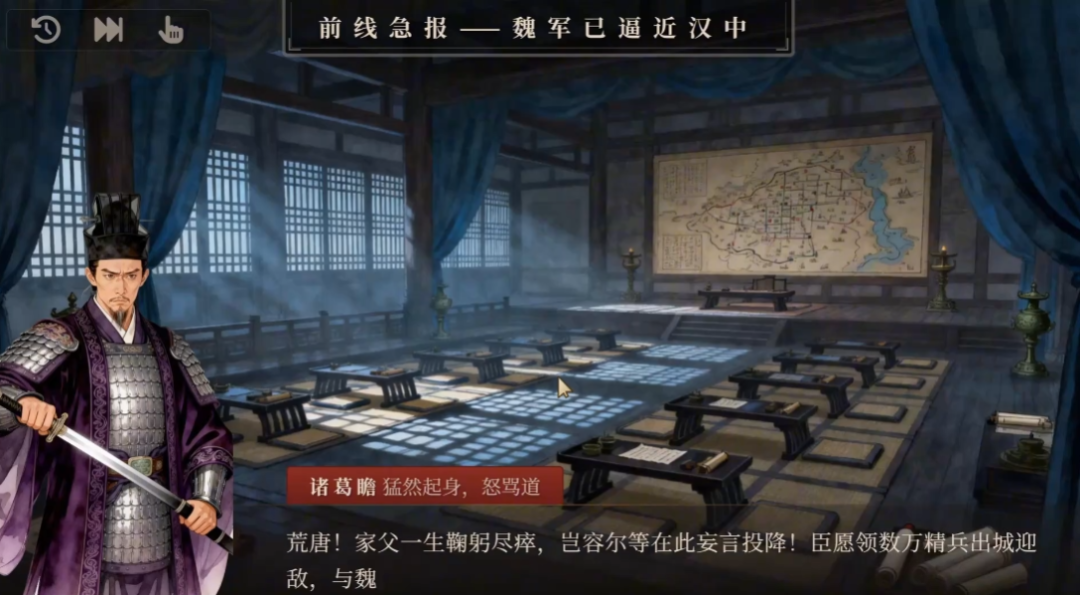
Teahouse: In the video, we only see a glimpse of the gameplay. What will the actual experience be like once *My Three Kingdoms* launches? Hu Jinghao: Our game can be described simply as a “ruler simulator.” At its core, you play the role of a supreme ruler and determine how to shape the nation and the course of history.
There are several core interaction methods: one involves your subordinates reporting to you or offering advice, and you simply decide whether to follow their suggestions. This is a relatively casual gameplay style, where players only need to issue commands.
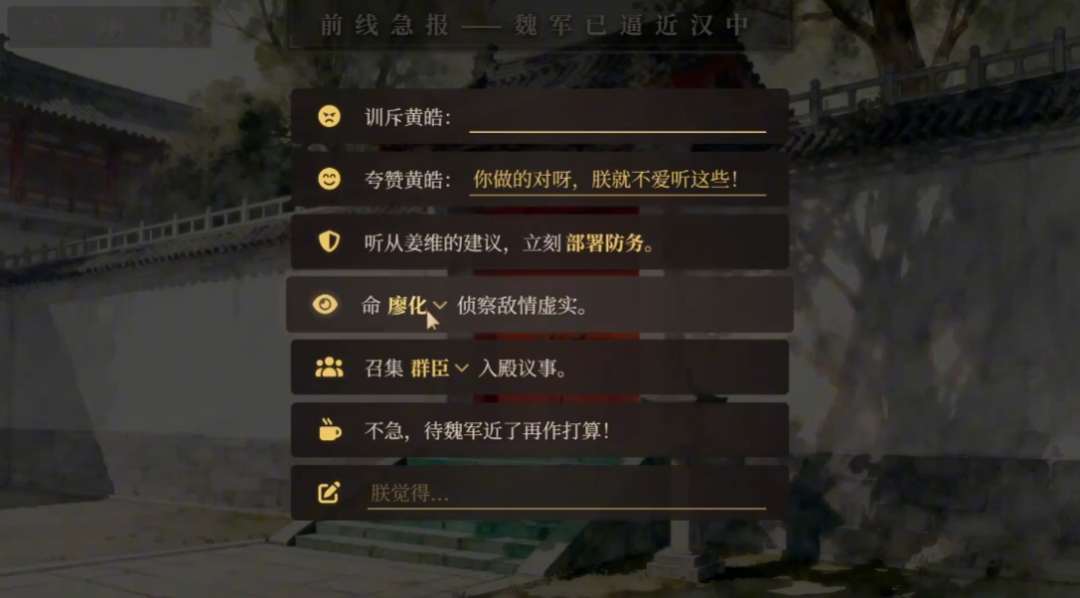
Another playstyle is more akin to a tabletop role-playing game, where players need to develop their own strategies—such as how to devise and execute plans. Here, we give players a great deal of freedom. If players don’t want to deal with something too complex, they can also rely on the AI to come up with solutions.
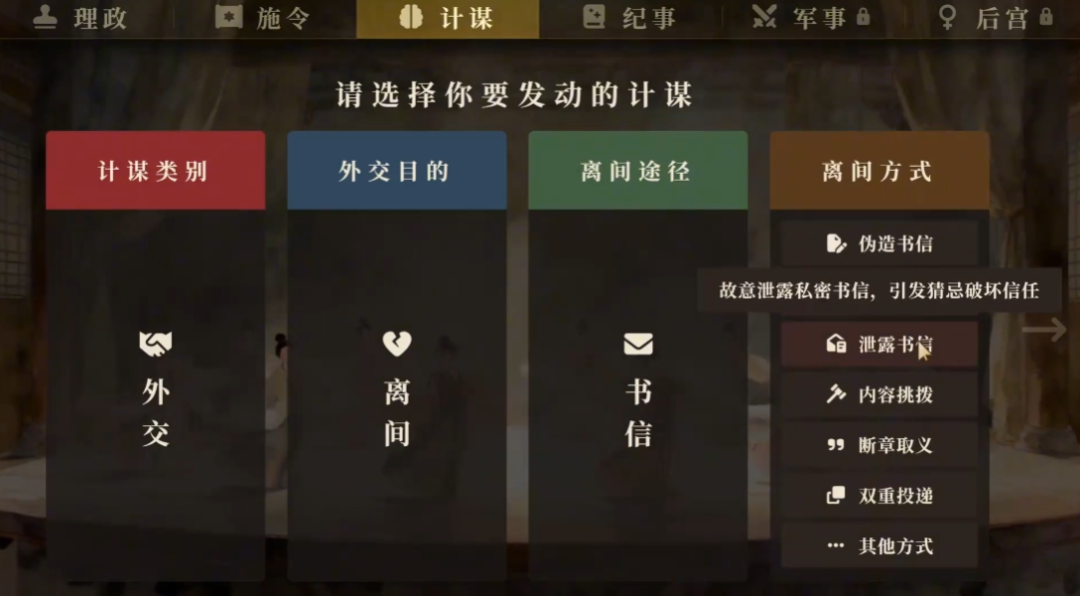
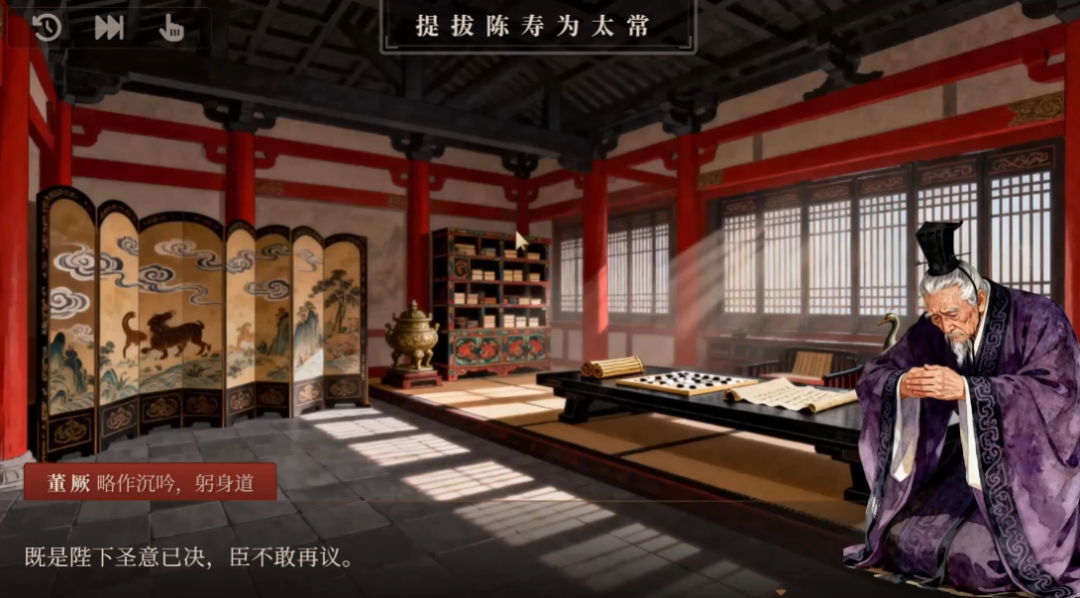
The gameplay involves continuously driving events forward and altering history, so players will witness many events that never actually occurred in history, resulting in a narrative that differs significantly from the Three Kingdoms history we know. We haven’t set any specific game objectives—such as unifying the realm—so players are free to interpret the Three Kingdoms era however they like. They can build a harem, or choose to be a tyrannical ruler; our hope is that players will focus more on enjoying the experience of playing the game.
Teahouse: Can We Keep Playing Forever?
Hu Jinghao: No, players can actually be overthrown or die. Our game also has an implicit timeline system, where a single game turn represents a period of time in real history. I think that if all the familiar characters from the Three Kingdoms era were already dead, it wouldn’t be the Three Kingdoms anymore. As long as some of the familiar characters are still around, the game can continue—essentially allowing players to create their own history across decades of real-world time.
Teahouse: You mentioned earlier on Bilibili that Liu Chan won’t be the only playable character unlocked eventually—there will be others as well. I’d like to know how many Three Kingdoms characters are expected to be available for players to choose from in the future?
Hu Jinghao: There won’t be a particularly large number of playable protagonists, because we have a core principle: the character the player controls must be the actual ruler of the nation—such as a monarch or a powerful minister—who is free from external constraints and has complete control over the country. Characters like Cao Cao, who, though not nominally the emperor, actually held the reins of power, meet this criterion; whereas if the character were merely a puppet ruler, the gameplay experience would become overly complicated. We prefer to give players the freedom to command the nation as they see fit.
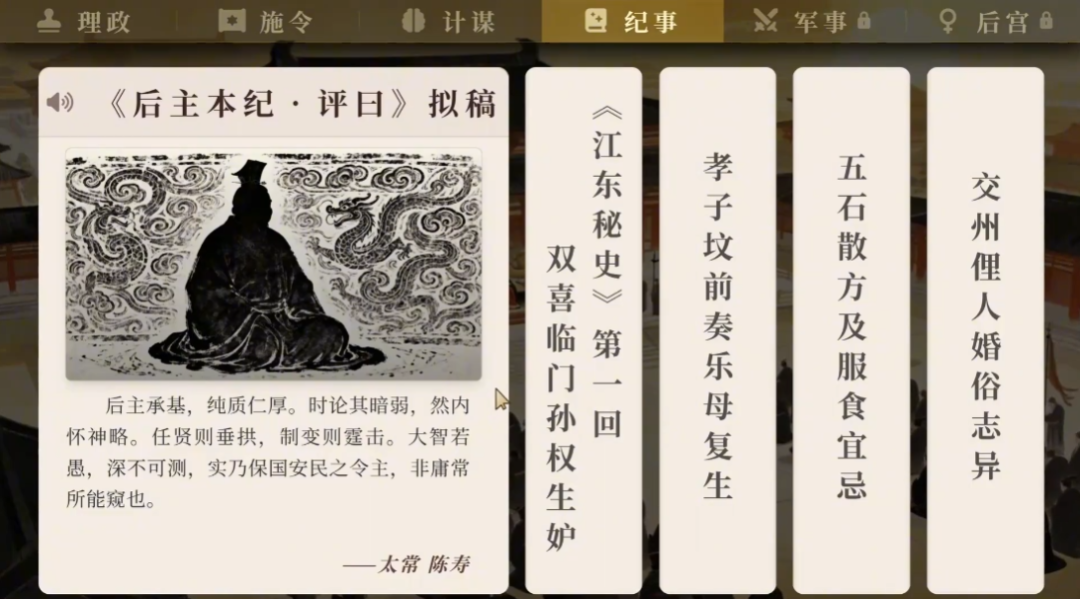
Teahouse: Which parts of *My Three Kingdoms* were created using AI? Hu Jinghao: It mainly falls into two categories. First, during the process of world-building, we used AI to improve efficiency, helping us quickly construct such a vast system. For example, AI helped us generate character profile cards and filter out interesting events from the vast historical narrative.Second, AI generates game content. Currently, all content in the video demo is AI-generated, including text, images, and voiceovers.
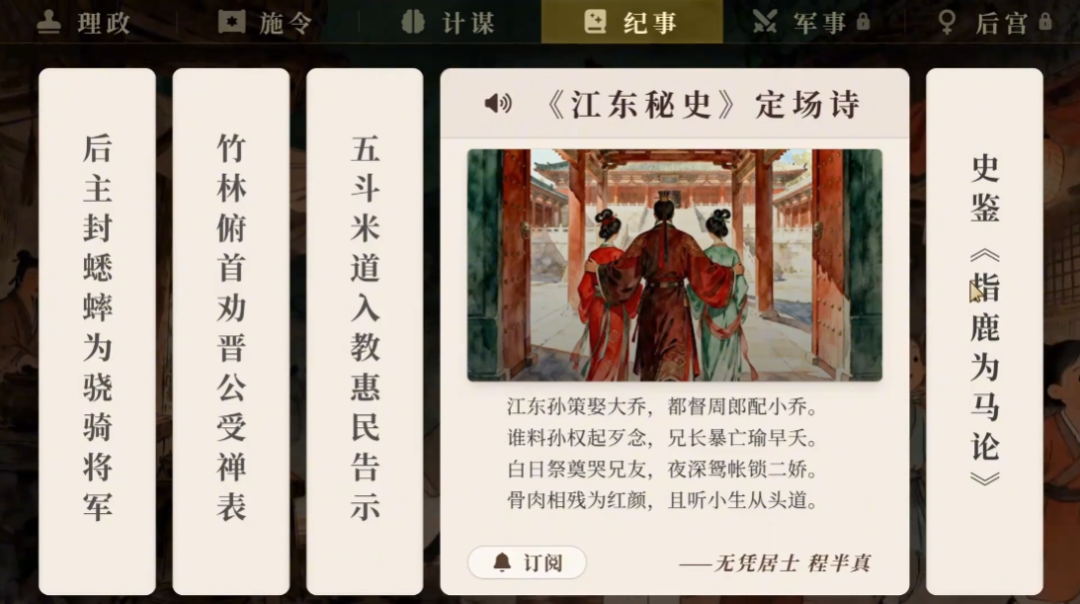
Teahouse: I’ve noticed that many players are concerned about whether using Mr. Shan’s crosstalk-style voice acting and AI-generated images in the game might raise copyright issues. How do you handle these kinds of issues?
Hu Jinghao: At present, there are no clear laws, regulations, or definitive standards regarding whether AI-generated content constitutes infringement. For example, whether using Teacher Shan’s vocal style constitutes infringement remains a gray area within the industry.
Our principle is this: if clear legal boundaries are established in the future, we will strictly adhere to them and avoid any infringement. At this stage, while the rules are still unclear, we will continue to monitor developments and learn, handling copyright-related issues in the most compliant manner possible.
Teahouse: I noticed you were discussing the "New" and "Old" Three Kingdoms with players in the comments section. I’m curious—since the AI knows so much, it likely understands both the "New" and "Old" Three Kingdoms. How do you decide what to include and what to leave out when crafting the narrative? Hu Jinghao: We’re quite meticulous when constructing the game’s world. For example, when it comes to each character’s background and traits, we take a very serious approach to character design, adhering closely to historical facts.However, once the AI starts generating storylines and actually interacts with players, it tends to veer off in directions that might seem far-fetched. We won’t sacrifice the fun of the game’s narrative just to maintain historical accuracy. Our core goal is to create an enjoyable game, not a perfect historical recreation. So while we use history as a framework, the story players actually experience will differ significantly from real history.
Teahouse: I’ve noticed that many players in your comments section share a common concern: in the tabletop role-playing games they’ve played before, their characters’ personalities were consistent at first, but as the game progressed, their memories became muddled, and the characters even deviated from their original backstories to cater to the players.
Hu Jinghao: In game design, we spend a significant amount of time—especially in the early stages—building out the game’s world, with the core objective of addressing these kinds of issues. We record all changes that occur during gameplay within a separate game state system, rather than relying on the AI’s contextual memory. For example, when a character’s attitude toward you shifts from loyalty to hostility, this change is directly recorded in the game state, and subsequent interactions proceed based on that state, rather than having the AI recall specific events.The core of our design is that “game state equals AI memory.” Details that do not affect the state are naturally forgotten, thereby creating a controllable memory system that does not expand as the game progresses.
Teahouse: So how are these statuses determined? And how do they interact with players?
Hu Jinghao: We predefine multiple possible states for each character—for example, there can be dozens of different ways for a subordinate to interact with you. When a specific event occurs in the game, the character’s state undergoes a distinct shift, and this shift is recorded. Afterward, the AI simply generates content based on the latest state; the specific details of how the state evolved are no longer important. This ensures that key state changes are not overlooked.
Teahouse: You’re more interested in the “emotional” states that emerge when AI interacts with players.
Hu Jinghao: That's right.We’ll record key information directly in the game state rather than in the AI’s context. For example, in the “Three Visits to the Thatched Cottage” scenario, if the player has Zhang Fei tie up Zhuge Liang and bring him back to camp, we’ll record the state “Zhuge Liang ignores you and refuses to offer advice.” All subsequent interactions with Zhuge Liang will be based on this state until the player takes new actions to change his attitude.
Teahouse: Sounds a bit like the affinity system in traditional games, doesn't it?
Hu Jinghao: You could think of it this way: it is essentially a state system independent of AI. However, unlike traditional numerical affinity metrics (such as a linear scale from 0 to 100), our state system is tag-based and multidimensional, allowing for a rich array of possibilities in character relationships rather than a single numerical value.
Teahouse: Won’t players be able to see these statuses directly, just like they can see the affection meter? Is your design meant to be more subtle?
Hu Jinghao: Yes. We want these states to be conveyed naturally through the storyline—for example, by using a character’s gaze or tone of voice to express their attitude—rather than presenting them as a numerical interface that can be viewed directly.
Teahouse: I’ve seen quite a few players mention that the schemes in the demo are too easy to pull off, with no real twists or turns along the way. Is this because the demo was designed to show the smoothest possible outcome, or will future versions include the possibility of failure?
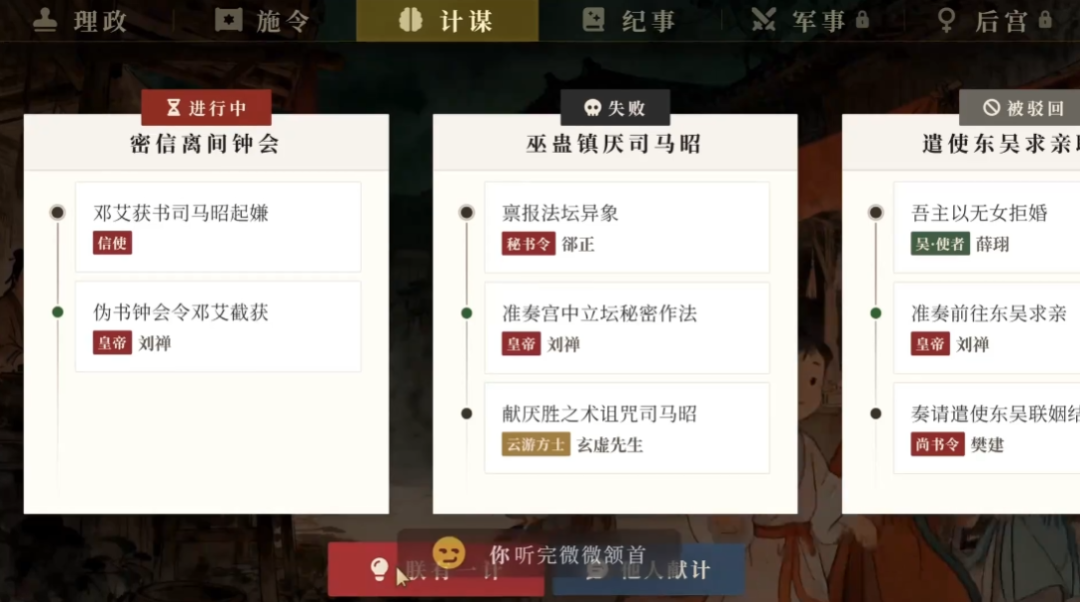
Hu Jinghao: There will definitely be failures down the line. We’ve designed a probability system for all events, and the player’s plans will only affect the probability of an event succeeding. For example, with high-difficulty events like assassinating Cao Cao, the success rate will be very low.
Teahouse: Do players know these odds?
Hu Jinghao: We hope to convey the difficulty of events through the script itself—for example, by having the storyline naturally convey that “this is a difficult task.” As for whether to display probability values directly, we’re still weighing our options—showing them directly might diminish the sense of novelty and gameplay, but not showing them risks players feeling that the outcomes are too random. We plan to test this during the first closed beta and decide based on player feedback.
Teahouse: Does the player's skill affect the success rate?
Hu Jinghao: Yes. If players plan more strategically and role-play more effectively, their chances of success will increase. However, the final outcome isn’t entirely up to the players; it’s still based on our judgment system.
03
Targeting the "Three Kingdoms" IP, aiming for sales of one million
Teahouse: To be more specific, what kind of audience is your game aimed at?
Hu Jinghao: The backend playback data reveals a clear trend—the audience is almost entirely male, with men accounting for over 95% of viewers. The age range is also quite broad, spanning from under 18 to those in their 30s and 40s and beyond. Since "The Three Kingdoms" is a national-level IP, we hope to optimize the experience for casual players in the future to attract more players to the game.
Teahouse: So you chose the Three Kingdoms theme from the start because it has a wider audience? Hu Jinghao: That’s the main reason. The Three Kingdoms—or what’s known as the historical genre—has a very complete and grand worldview. When it comes to history, AI has already learned from a vast amount of data; it understands all the characters and events within it. So when we have the AI create a game like this, the feasibility is inherently very high. If it were a fictional world, it would be difficult for the AI to understand who the characters are or what events might occur.
I think the Three Kingdoms era—or historical genres in general—are a great starting point for AI games. From a market perspective, Three Kingdoms games do indeed have a very large audience. I once saw a statistic stating that 800 million people in China have watched the classic Three Kingdoms TV series. From a gaming perspective, Three Kingdoms games also generate very high revenue. So there is widespread recognition of the value of Three Kingdoms game IPs.
As a history enthusiast, I often find myself wondering what history would look like if certain events had never happened. For example, what if Guan Yu had beheaded Cao Cao at the Battle of Huarong Pass? I believe people would be open to and willing to pay for an AI that could explore all these hypothetical scenarios.
Teahouse: You mentioned in the Bilibili comments section that you plan to release the game on Steam as a one-time purchase. Cost control is a major challenge for AI games sold as one-time purchases. How do you manage the game’s costs?
Hu Jinghao: We have several key strategies for reducing costs. First, although the game offers a high degree of freedom and supports direct player input—making it impossible to cache all content—we’ve found that there are significant similarities in the gameplay states of different players. When different players enter similar core gameplay states, we replace real-time AI generation with pre-generated and cached content. This approach covers the majority of scenarios and effectively reduces computational costs.
Second, we will negotiate with model providers to secure more favorable partnership rates. Additionally, from a game design perspective, we will proactively manage complexity—for example, by reducing unnecessary dimensions in certain scenarios or merging non-core dimensions—to ensure the overall space of possibilities does not become too vast. The key is to keep the effective dimensions within a reasonable range; as long as a few key dimensions are similar, cached content can be reused.
Teahouse: According to public records, you participated in an event organized by Qiji Innovation Forum and secured funding in the millions. Is that correct?
Hu Jinghao: We secured a standard 2 million yuan investment from Qiji Chuangtan, in exchange for a 7% equity stake. When I first left my previous job, I chose Qiji Chuangtan primarily because they offered the highest level of certainty and the fastest funding, which allowed me to avoid spending too much time on fundraising during the early stages. So, from the time we received the funds until we built the demo last week, we didn’t engage with any other investors; it wasn’t until recently that we began communicating with some investment firms.
Teahouse: What’s the overall situation like so far?
Hu Jinghao: People are quite interested in what we’re doing and believe we’re bringing fresh gameplay and design to AI games. We’re currently in positive discussions with several institutions, and they’re willing to move forward with the next steps. However, fundraising—especially in later rounds—is a lengthy process, so we can’t be certain of the final outcome just yet.
Teahouse: How many more rounds of funding are expected?
Hu Jinghao: Our plan is that the funds raised in this second round of financing will be sufficient to complete the development of our current game. Any subsequent financing will primarily be used to prepare for future projects.
Teahouse: How complete is this game at the moment?
Hu Jinghao: Based on my own assessment, we’re currently about 30% complete. We expect to officially launch by the end of this year, so the development cycle isn’t too long. We plan to release a first beta version in August of this year. That version will be quite complete in terms of content, but we’ll still be making significant adjustments to the gameplay. Since this is a completely new gameplay experience, players are bound to uncover some issues once they try it out, so we’ve set aside a few months for optimization.
Teahouse: The concept of AI-powered tabletop role-playing games isn’t exactly new on the market. Are you worried that the game might not be as popular as you’d hoped once it launches, or that the financial returns might fall short of expectations?
Hu Jinghao: Our game shares some similarities with tabletop role-playing games in terms of the player experience, but there are many fundamental differences in design. First, the game world and underlying state system we’ve built address common issues in AI-driven tabletop RPGs, such as loss of context and unreasonable rulings. Second, our gameplay and interaction mechanics are more diverse than those of tabletop RPGs. In short, while we share some similarities with tabletop RPGs, our game offers far greater creativity in terms of gameplay.
Teahouse: What are your expectations regarding player numbers and commercial returns after launch?
Hu Jinghao: Our primary goal is to create our first AI game that players find “fun.” If we achieve this goal, sales and word-of-mouth will naturally follow. Our gameplay is unprecedented, and combined with the massive “Three Kingdoms” IP, we expect sales to exceed several million copies. From a business perspective, we hope the pricing will cover our costs and generate a profit, allowing us to continue exploring more AI games.
Tea House: Is a projected sales volume of several million units the minimum required to break even?
Hu Jinghao: It will definitely break even. If it sells a few million copies, it will rank among the top five single-player games in China.
Teahouse: So if sales are less than a million, can we still cover our costs?
Hu Jinghao: That should be possible. Even if sales don’t reach one million units, revenue will still be close to 100 million yuan, so we’ll still turn a profit. However, we’d still like to set our sights a little higher.
原创文章,作者:游茶妹儿,禁止转载:https://youxichaguan.com/en/archives/195348