According to Steam DB data, the number of new games released on Steam in 2025 is approaching 20,000. This data from the platform—which hosts the majority of single-player games from small and medium-sized teams—seems to signal a boom in the indie game market.
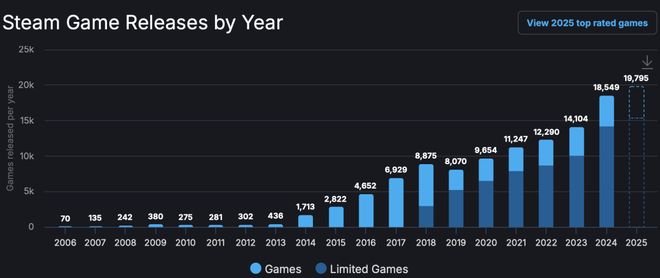
Even when focusing solely on domestic indie games, this figure has seen rapid growth over the past decade. According to data from the domestic game sales rankings, more than 1,600 Chinese-developed games were released on Steam in 2024, representing a 45% year-over-year increase.
Behind the numbers lies a paradox: while the ecosystem continues to mature, developers aren’t necessarily better off. With platforms, publishers, investors, trade shows, and competitions all in place, a set of data provided by Snake, founder of “Indie Light,” reveals that the median sales figure for domestic indie games on Steam is just over $1,000. “A five-person team making a game might earn less than if they set up a stall in the town square,” he noted.
The industry’s maturation has been accompanied by its share of hardships—and this may well be the most accurate description of the past decade of indie gaming.
01
Changes in Platform Channels
In its early days, the indie game market was a wild frontier where rules and market order had yet to be established—with few practitioners, scarce distribution channels, and rampant piracy.
In 2010, Ye Qianluo, founder of the indie game publisher Gamera (later renamed Gamirror), was still working for a gaming media outlet. At that time, the term “indie game” had not yet been clearly defined; similar titles were often referred to as “fan games” and were sold sporadically on Taobao stores or personal platforms in the form of physical discs, with sales volumes remaining inconsistent.
Around the same time, the first signs of the indie game scene were beginning to emerge. In 2010, industry veteran Peng Bitao founded the “Independent Planet” community, bringing together a group of early enthusiasts. Although the community was small, within this tight-knit circle, people were already quietly playing and discussing obscure titles. However, this enthusiasm had not yet broken out of the niche, and there was still a long way to go before a genuine industry ecosystem could take shape.
The bigger problem was that there was virtually no connection among developers. While there were a few independent developers scattered across Beijing, Shanghai, Guangzhou, and Chengdu, they were largely unaware of each other’s existence and lacked channels for communication or platforms to showcase their work. Even at the IGF China (Independent Games Festival China), which was already in place at the time, most of the finalists and award winners were overseas titles—the voices of local developers were drowned out by international competition.
At the same time, the mobile gaming market was in a period of rapid, unregulated growth. Jason, the founder of Veewo Games, recalls that when he and two partners with no background in gaming established their studio on Zhichun Road in Beijing in 2011, the barriers to entry were extremely low: “You didn’t need to know how to design games, and raising funds was very easy.”
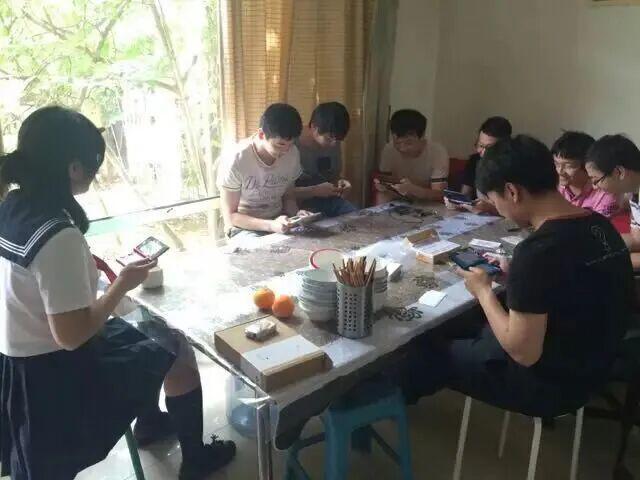
Veewo Games' Early Office
Back then, distribution platforms held an extremely dominant position, with revenue splits between CPs (content providers) and platforms reaching as high as 1:9—whatever the platforms promoted, that’s what users played. The widespread adoption of smartphones made it seem as though “skin-swap” mobile games (games that merely swap out art assets but feature highly similar gameplay) could generate profits with minimal investment.
Veewo was no exception in its early days.In 2014, they created a game called “1024” modeled after the number-matching game “Threes!” After its release, it briefly went viral in China, only to be adapted by Italian developer Gabriele Cirulli into the globally popular “2048.” This “chain of imitation” epitomized that era: small teams were both copycats and victims of copying, making it difficult for them to achieve the market success they hoped for.
The turning point began to take shape around 2014. As the number of products grew and users became more discerning, the platform also began to prioritize creative works. The Apple App Store launched editor-curated recommendations for indie games, adopting a "buy-to-own" model with upfront payment. At that time, if a game was featured in an Apple recommendation, it could generate hundreds of thousands of downloads in a single day.
Jason's *Super Phantom Cat* was featured in the App Store in multiple countries, becoming one of the first Chinese-developed games to make it onto the "Top Games" charts overseas.
At the same time, channels for PC and console gaming were also opening up.In early 2014, the ban on console gaming was lifted, and officially licensed PS and Xbox consoles began entering the market; Steam upgraded from its Greenlight system to a direct submission model, supporting UnionPay and WeChat Pay, attracting both Chinese players and developers; in 2016, Xindong Network launched TapTap, focusing on indie game distribution; in 2017, Tencent’s WeGame went live, and the game *Don’t Starve*, introduced on the platform, sold over 1 million copies in its first month, setting a new record for domestic PC single-player game sales.
The emergence of these platforms has put an end to the dilemma of having no distribution channels, and has also led to "indie games" becoming increasingly associated with the concept of "creative buy-to-play games."
02
The "Solo Travel" Ecosystem Takes Shape
As platforms and channels evolved, developers scattered across the country began to come together.
In late 2014, Xindong Network hosted a Game Jam that attracted over 100 developers from across the country. It was the largest developer gathering in China at the time, and participants discovered that people in various regions had been quietly working on similar projects all along, though they had previously had no way of communicating with one another.
In 2015, indie game events began to proliferate. In January, the Beijing leg of the Global Game Jam attracted more than 150 participants; in the middle of the year, ChinaJoy established an indie game team exhibition area for the first time; and that same year, the IndiePlay China Indie Game Competition was officially launched, receiving more than 100 submissions in its inaugural edition.
Xiong Tuoni, Vice President of “Light of Independence,” recalls that during ChinaJoy 2015, he organized a dinner across from the exhibition hall. With 15 people per table, the two tables were filled with nearly the entire domestic indie game community at the time. They created a QQ group called “People of Games,” and the community gradually took shape from there.
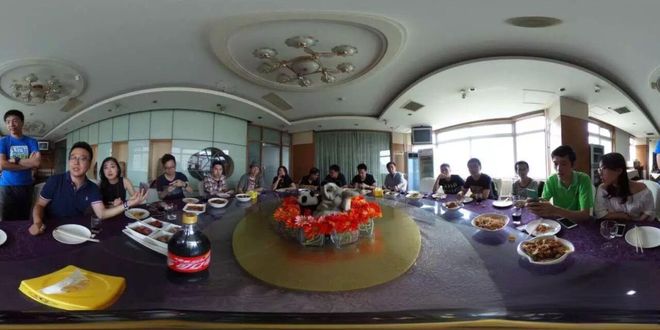
A dinner gathering organized by the "Solo Travel Circle" that the Early Teahouse attended
By 2016, the contours of this ecosystem had begun to take shape. The IndiePlay competition received over 200 submissions, and the number of independent game developers in China was estimated to have surpassed 1,000. That same year, TapTap was officially launched at the IndiePlay Awards Ceremony—a platform that would later become China’s most important game distribution platform, and one that has been inextricably linked to the indie game scene since its inception.
In 2017, the WePlay gaming culture expo, aimed at gamers, was launched in Shanghai. Although the first WePlay was held under rather limited conditions, its lineup already had a distinctly international flavor—the Polish delegation brought *Ruiner*, which went on to become a major hit, while Japan’s BitSummit also sent representatives to the event, and *NieR* producer Taro Yokoo was invited to attend.
In the years that followed, *Sekiro* made its Chinese debut at WePlay in 2018, and Nintendo began participating annually. By 2025, WePlay had expanded to 17,000 square meters, with a content density two to three times that of other established gaming expos.
As industry exchanges have become increasingly frequent, hit titles have begun to emerge. *Lost Castle*, released in 2016 and developed by three recent college graduates, ultimately sold over 2 million copies.
However, the shortcomings of small teams are equally apparent—staff shortages often make it difficult for developers to handle marketing and promotional tasks beyond actual development. *The Great Cultivation Simulator*, which also sold over 1 million copies and was developed by a team of just three people, was initially stumped by the need to print promotional materials for trade shows. At the time, their publisher, Gamera, bought them a printer, which solved their immediate problem.
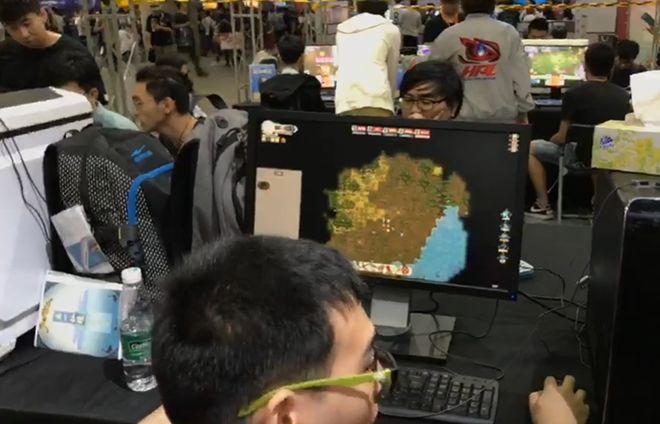
Early gameplay footage of *The Amazing Cultivation Simulator* captured by a netizen
Independent game publishers first emerged to help developers handle these promotional tasks, and as the industry has evolved, their roles have become increasingly specialized.
Gamera later became an indie game publisher that released five hit titles in three years, but during the first nine months after its founding in early 2018, Ye Qianluo struggled to find games to publish; the first title he released, *Miracle of Color*, was actually a free-to-play game.At the time, there were very few people making indie games; Ye Qianluo estimated that there were only about 100 indie titles on the market, so finding developers was no easy task. Before striking a deal with the developers of *The Great Cultivation Simulator*, he joined their QQ group as a player. After receiving a demo, he drafted a preliminary publishing plan while playing the game, and even flew to Chongqing specifically to win them over with his sincerity.
Gamera’s subsequent releases, *The Dyson Sphere Program* and *Fireworks*, both made it onto the annual sales charts for domestic games. In both cases, the Gamera team initially reached out to the developers through social media. “When we first discussed publishing the games, we didn’t know if they would become hits; it was more about our personal love for the games,” recalled Ye Qianluo.
By conservative estimates, the number of domestic indie game publishers has now risen to between 40 and 50. Data shows that among the top 20 best-selling domestic indie games of 2024, 70% involved professional publishers. These publishers provide upfront payments to cover development costs and, within their capabilities, assist with a wide range of non-development tasks, making them a vital link in the industry ecosystem.
03
Backed by capital and policy support
As the developer community has grown closer-knit, game conventions have matured, and publishers have entered the market, major companies have also recognized the potential of indie games.
As early as 2010, Tencent and NetEase had already begun investing in indie game studios; in 2021, investment by major game companies reached a fever pitch, with Tencent investing in titles such as Pasia’s *A Tale of Time* and Shanghai Fat Pudding’s *Lost Island*, covering multiple indie game subgenres including puzzle, simulation, and narrative;NetEase also invested in more than a dozen small teams after 2021, including Flashfire Corridor, Moon Soil, and Changyu Timespace.
In 2020, Gigabit invested in Yunshan Xiaoyu’s *Mountain and Sea Traveler*. Through its subsidiary “Gigabit Capital,” it also partnered with major companies such as Tencent, NetEase, and Yingjiao to establish several specialized funds dedicated to investing in indie games and startup teams, including investments in Jike Network and Runmeng Network, thereby further enhancing the indie game ecosystem.
Subsequently, companies such as Yingjiao, DiDi, Lilith, and Bilibili also began investing in indie games and development teams. In addition to investment, the incubation programs offered by these major companies have provided comprehensive support to small teams.
NetEase has partnered with Yingjiao and Youxing to establish "Shanghai Youban," and has formed a joint venture with Chongqing Yuzimao, the development team behind *The Dyson Sphere Program*, to focus on incubating indie games.
In 2023, Yingjiao established Yingjiao Kaituo Xin, a fund dedicated to supporting and investing in the indie game ecosystem. By 2024, it had already invested in 18 game development teams, covering indie genres such as puzzle, survival, and narrative games, helping these teams navigate the critical transition from "demo to finished product."
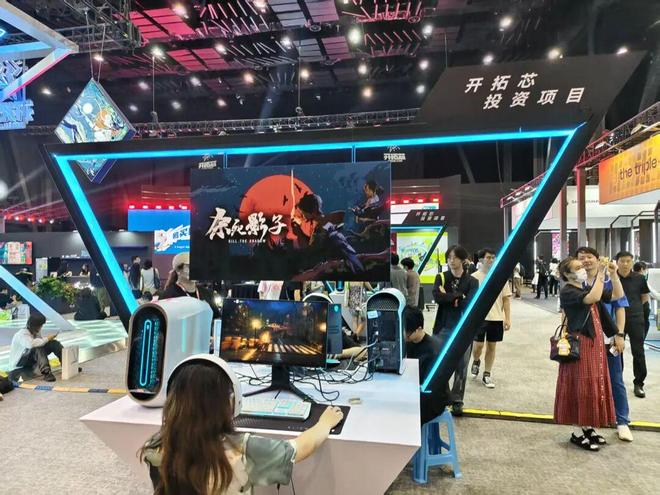
Yingjiao Kaituo Core
He Qian, who graduated from Tsinghua University in 2022 with a degree in a game-related field and founded "Liquid Miao," feels this keenly.
In 2021, while still a graduate student, he participated in various university game competitions organized by Gigabit, Tencent, and Lilith, winning awards for titles such as *Messy Up*, *Psychologist*, and *Five-Dimensional Space*. He had already made a name for himself in the industry before even graduating. When he first launched his startup, he received investment offers from several firms but ultimately chose to accept funding from Eagle角 Kaituoxin.
“Eagle Corner often provides us with practical advice or assistance, such as opportunities for industry networking, art outsourcing resources, and help with organizing exhibitions. Their only requirement is that we get the game made,” said He Qian. He added that this investment relationship, which respects the creative process, allows him to focus more on the game itself.
With the backing of capital, independent game development teams have been able to overcome the early challenges of "limited funds and technical expertise," while the emergence of blockbuster titles has further attracted attention and support from policymakers.
In 2018, titles such as *The Scroll of Taiwu* and *Chinese Parents* garnered widespread attention after selling over a million copies;In 2024, the blockbuster success of *Black Myth: Wukong* led to increased policy support for indie games. Districts such as Yuhang in Hangzhou, Xuhui, Minhang, Yangpu, and Putuo in Shanghai, Chaoyang and Shijingshan in Beijing, and Nanshan in Shenzhen have all established incubators to provide indie game teams with comprehensive support in areas such as space, funding, and policy assistance.
From the handful of early developers to the current influx of college students, former employees of major tech companies, and entrepreneurs from other industries; from high technical barriers and significant funding gaps to the widespread availability of development tools and diverse investment channels—over the past decade, every link in the indie game ecosystem has been refined. The core change has been that creators now have the confidence to take the plunge.
04
Is this the golden age of indie games?
Looking back a decade ago, Xiong Tuoni described how there were few people capable of building games from scratch, and putting together an indie game team was practically “impossible”; today, however, college students, former employees of major studios, and entrepreneurs from other industries are flocking to the field, and these individuals have had a clear understanding of game development from the very beginning.
Ye Qianluo of Gamera has felt this shift particularly keenly: when the company was first established in 2018, he estimated that there were only about 100 indie games on the market; today, a conservative estimate puts the number of domestically produced indie games released each year at over 2,000.
In fact, the indie game market—which indie developers are eager to enter—remains a cutthroat environment.
Snake, founder of “Light of Independence,” once used a set of statistics to paint a picture of the industry’s reality.Of the more than 1,000 indie game teams launching titles in China each year, only about 200 games truly leave a lasting impression on the market. The remaining 800 mostly fade into obscurity without a trace, while the median sales for Chinese indie games on Steam are just over $1,000. “A five-person team making a game might earn less than if they set up a street stall.”
Since 2021, influenced by the overall market environment, the investment boom in the indie game sector has cooled significantly, with both the amount of capital and the number of projects on the decline. A Kun, Director of Strategic Investments at Yingjiao, has observed a paradoxical trend: “While more and more people are choosing to go independent, capital investment is decreasing and the scale of investments is shrinking.”
Even well-funded publicly traded companies may cut ties with indie game publishers due to profitability concerns. An indie game developer once shared with Teahouse that she had entrusted the publishing of her second game to a publicly traded company. However, during the suspension of game license approvals, the company dissolved its publishing division, leaving several titles from small teams on hold. She managed to reclaim her game by writing articles to bring the situation to light, but due to a lack of manpower, the game has yet to be released.
However, major studios still tend to favor established teams with hit titles or well-known producers, making it difficult for new teams to secure funding. Many developers have to mortgage their homes or rely on income from outsourcing and part-time jobs to keep their game projects afloat.
Snake believes: "At its core, indie gaming is still a form of entrepreneurship. Entrepreneurs need to face the realities of the industry and be true to themselves; they should think things through carefully before deciding whether to take the plunge."
For many people, indie games remain a place for self-expression. This is certainly true for Li Chi, founder of Miao Tuo Ji Studio, who left ByteDance. Following the approach of major studios, he unveiled three games in just two months, as if he were in a rush to make money. When I asked him about his original intentions, he said that while commercializing games is certainly important, what ultimately sets indie game development apart is that “I can fully express myself through my games; I don’t want to reach a point where I can no longer express myself after finishing a project.”
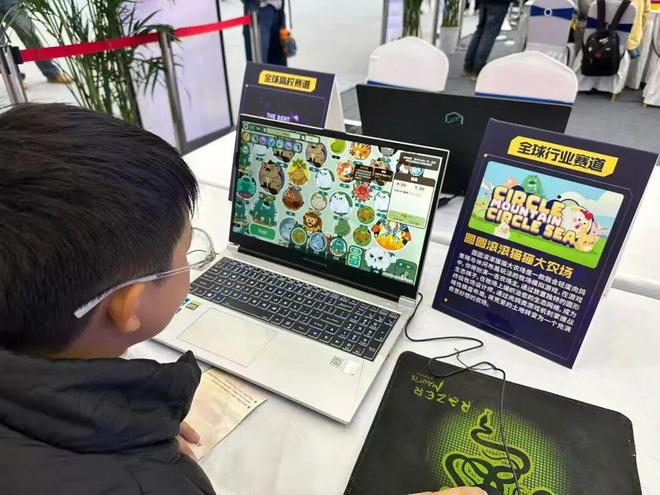
Li Chi's Independent Game Exhibition
Jason, who entered the industry early on, found the answer through more than a decade of perseverance. Starting in 2019, the "wealth myth" surrounding App Store recommendations gradually lost its effectiveness with the advent of the traffic era. Although *Super Phantom Cat* continued to be featured, its revenue was nowhere near what it used to be.
ByteDance, a neighbor that had once shared office space with them in the same apartment building, had suddenly risen to become an industry giant. While competitors around them were all playing the traffic game of “buying traffic” and “pushing streams,” he just couldn’t seem to adapt to it at the time.
Just as the team was feeling lost, *Neon Abyss*—which they had uploaded to Steam on a whim—brought them a new lease on life. By 2025, *Neon Abyss* had sold 1.5 million copies worldwide on Steam. This only strengthened Jason’s resolve: “Our company is dedicated to making fun games; that’s our unwavering mission.”
For Snake, the ideal state of the indie game market is one where a wide variety of games flourish, encouraging everyone to contribute their efforts—watering and tilling the soil—so that, in the end, an ever-growing number of titles can be brought to life.
Today, the establishment and refinement of a series of ecosystem networks may not necessarily signal that indie games have entered a so-called “golden age.” Rather, it is more like the cultivation of fertile ground—not rich enough to ensure every seed flourishes, but loose and accommodating enough to inspire passionate creators to bend down and sow their seeds, and to dare to take risks in pursuit of their dreams.
原创文章,作者:游茶妹儿,禁止转载:https://youxichaguan.com/en/archives/195233