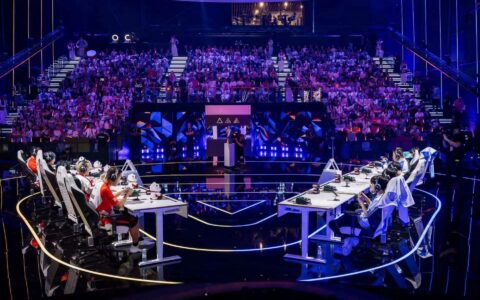
“Antiquities” such as fossils and natural specimens are regular features at the Chengdu Museum of Natural History, serving as evidence of nature’s evolution. But now, the museum is displaying items that seem far too “contemporary,” such as Asian Games esports gold medals, championship rings, and commemorative statues.
As a cultural space open to the public, the museum attracts visitors of all ages—college students, parents and grandparents with their children, and, of course, esports fans who made a special trip to attend.Some have a clear goal in mind, searching the venue for familiar player IDs; others wander around, exploring the exhibition areas at a leisurely pace. But you can tell that whether or not they’re familiar with the KPL or esports in general, it doesn’t stop them from taking a keen interest in these exhibits.
This marks the first time an esports event has attempted to bring esports history into a museum. Just five days after the KPL 10th Anniversary Special Exhibition opened, the number of visitors has already surpassed 40,000.
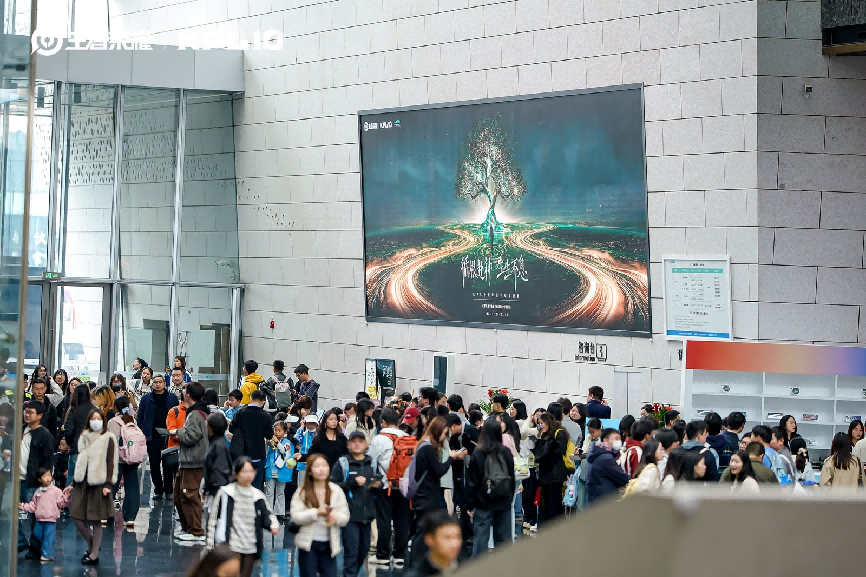
Countless visitors walked into the exhibition hall to witness a visual representation of the history of esports. The KPL is likened to a constantly growing tree, from which the two themes “Tracing the Roots” and “Sowing the Seeds” have sprouted.“Tracing the Roots” looks back on the journey, detailing how the KPL has flourished amid the cheers of tens of millions, evolving from its early days as a professional tournament into today’s vast esports ecosystem. “Sowing the Seeds” looks toward the future: with solid foundations and ample nourishment, the KPL will continue to grow and expand into new territories.
As esports begins to document its own history—which stories are remembered and which details are carefully showcased—it reveals the KPL’s own perspective on the past decade.
01
Trophies and Statues, Souvenirs and Memento Shirts
For longtime KPL fans stepping into the arena, a sense of familiarity will likely be their first impression, as this venue holds countless memories from the league’s decade-long history.
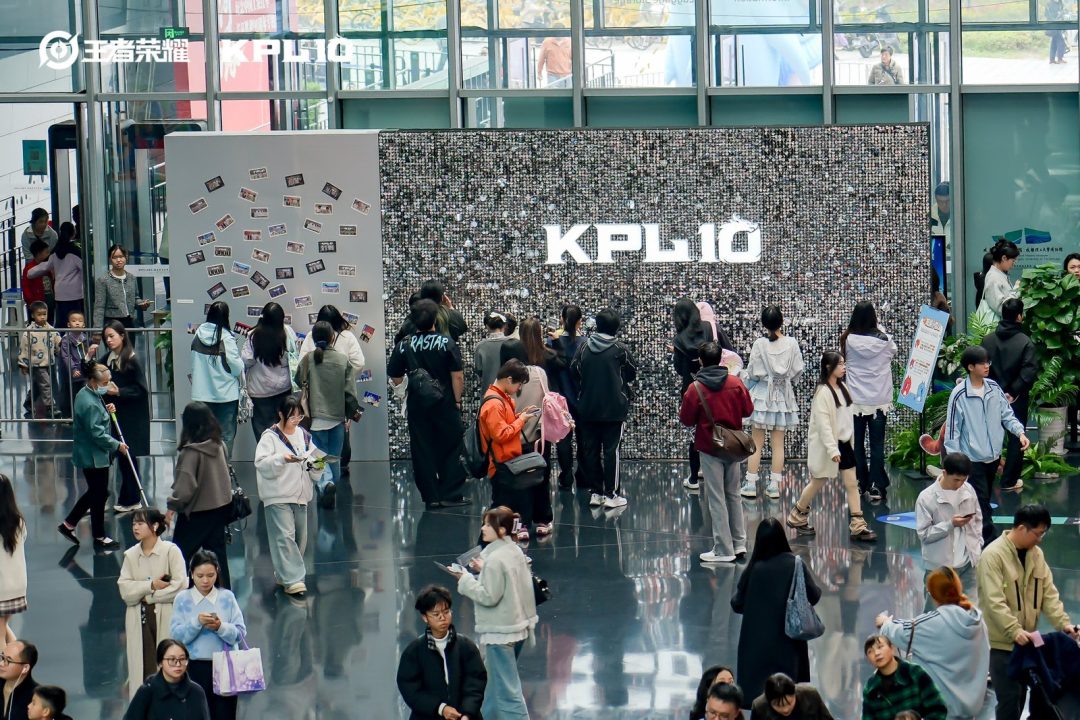
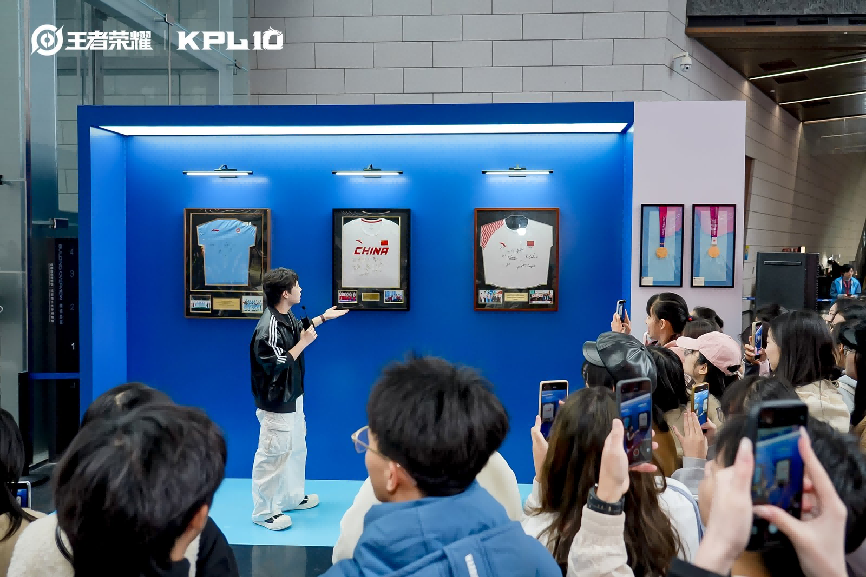
Upon entering, the first things you see are a large photo wall adorned with athletes’ IDs and an exhibition of actual Asian Games gold medals. This immediately conveys that this is a competition with a decade-long history that has produced a wealth of talent and has brought national honor on the world stage on numerous occasions.
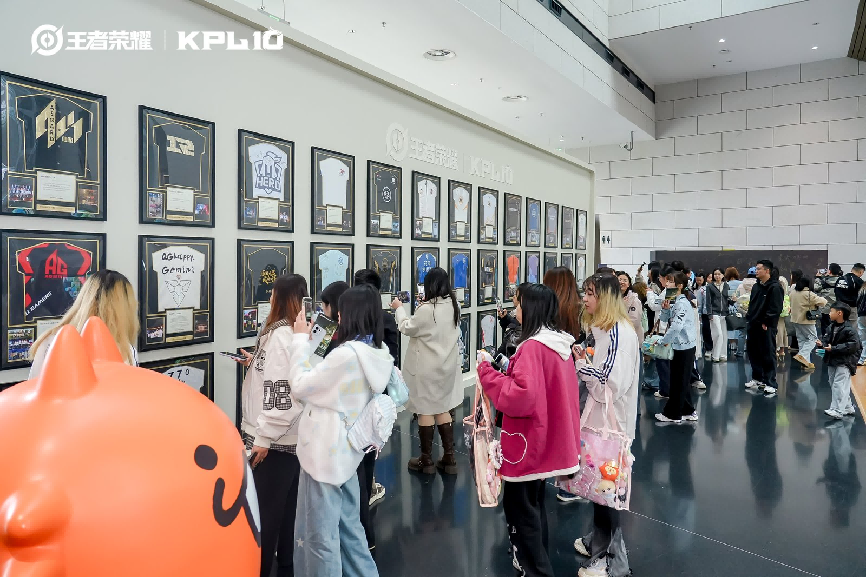
Further ahead is an exhibition featuring 39 team jerseys covering an entire wall, including autographed jerseys from active players at 16 clubs, as well as some specially donated by the clubs and players themselves. It’s easy to draw parallels here to the jersey walls found in the NBA or at soccer clubs; behind each jersey lies a story of a player’s youth.
Head up to the second floor, where you’ll find the most photo spots. Fourteen giant posters chronicle the origins of each FMVP skin, flanked by letters players wrote to their in-game heroes and voice messages for fans.The FMVP represents a “mutual achievement” between players and heroes; this honor stems not only from the players’ own exceptional skill but also from the unwavering support of the fans who have journeyed alongside them. This exhibition design effectively showcases the three-way bond between players, heroes, and fans.
Just around the corner is the KPL History Gallery, tracing the league’s evolution from its early days as a single-division professional league through numerous format reforms, with tournaments and clubs now spanning the entire country and commercialization flourishing across multiple fronts.
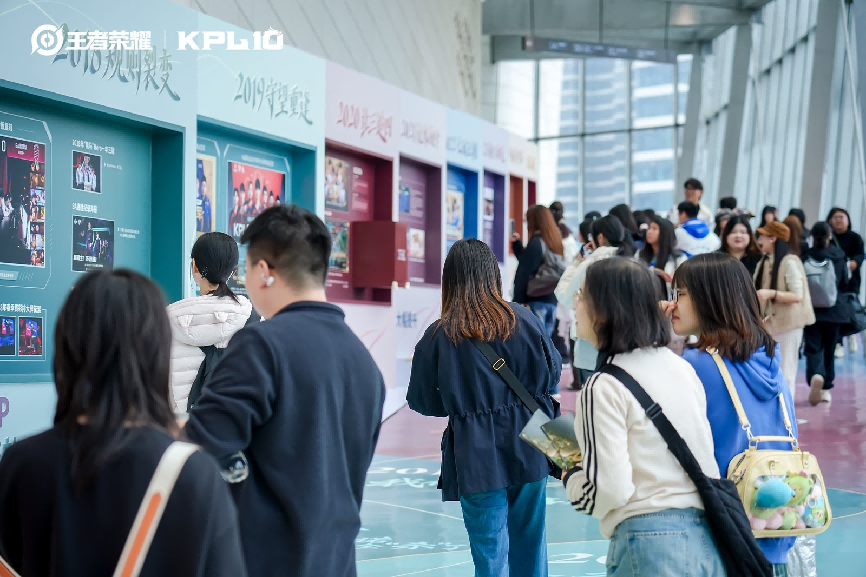
The organizers arranged activities for the players at the venue that day. Player Jiu Cheng told us that over the past decade, the KPL has grown from a “competition” into an “industry.”“I started playing in shopping malls and worked my way up to the KPL. In the beginning, when I won, only a few dozen people would cheer my name. Now, I play in stadiums packed with tens of thousands of people and at city home games, with advertisements everywhere. Everyone has professional operations and well-established teams.”
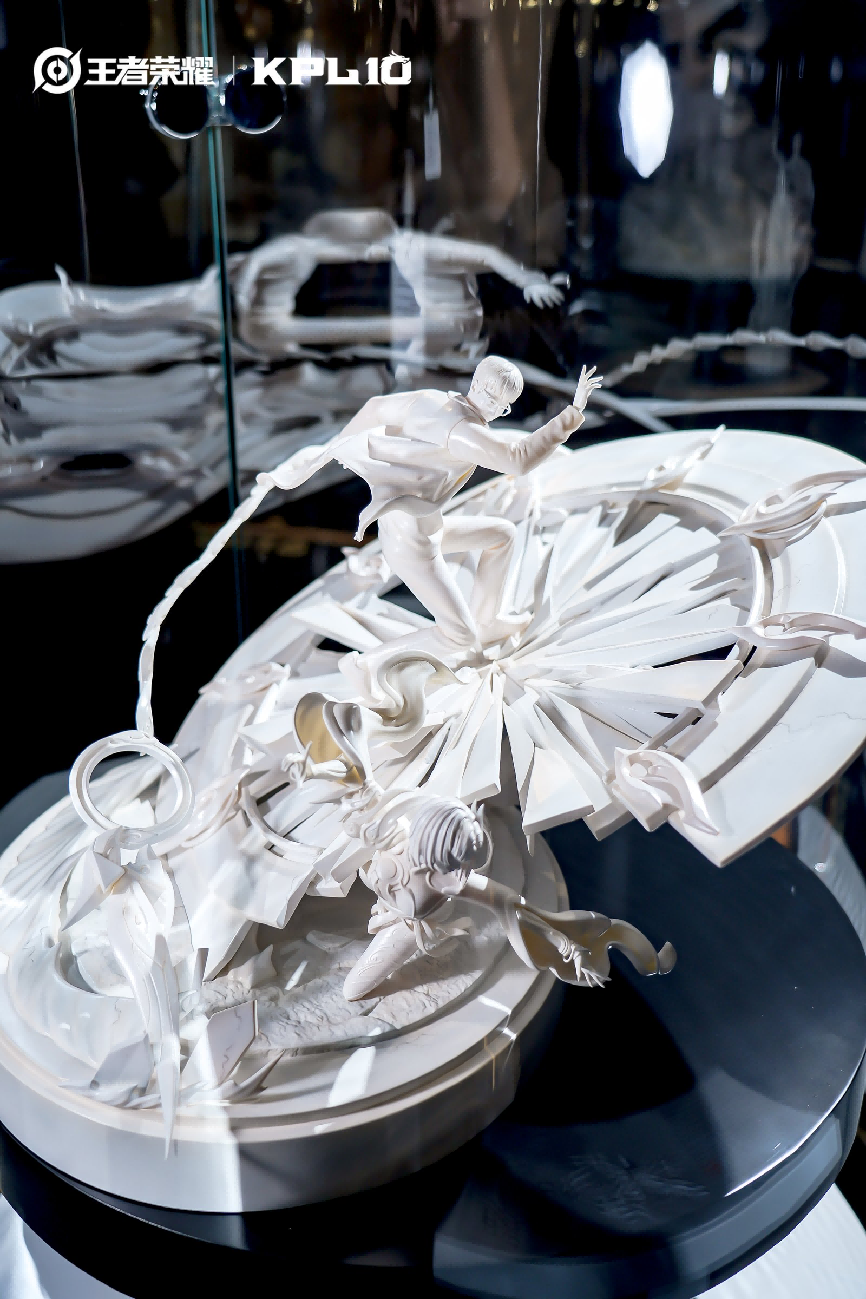
The 【Wanmu·Reunion】 exhibition hall on the 4th floor has become a veritable “pilgrimage site.” In a museum-quality darkened space, ten “Annual Memorable Figures” sculptures surround the 10th-anniversary commemorative trophy. The contestants and their representative heroes are immortalized in these sculptures, capturing iconic moments and the bonds that unite them.
I saw “Warm Sun,” the “Memorable Figure” of 2020, appearing alongside the hero “Mirror” as if they were twins at either end of a slanted mirror surface, with shards scattering in the wake of their movements—a reinterpretation of the hero’s iconic image.These sculptures possess extraordinary artistic expressiveness, reminding me of moments in the players’ careers—beyond the “highlights”—when the spirit of esports truly shone through.
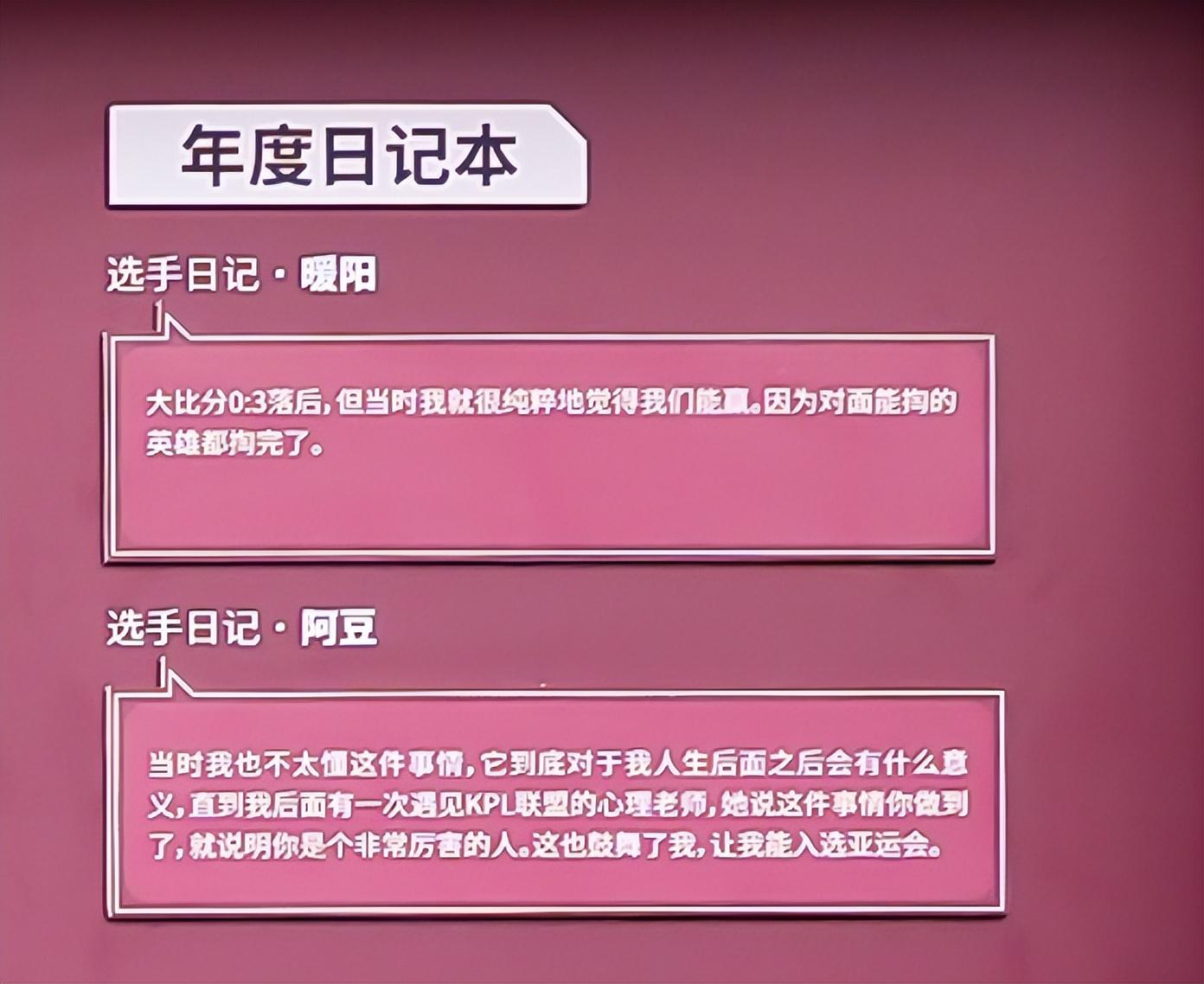
Just like Warm Sun’s “attitude.” At the 2020 Honor of Kings World Championship, even while trailing 0–3, he remained convinced that he and his teammates could still win. Drawing on his mental fortitude and professional attitude, he successfully led his teammates to pull off the first “comeback from 0–3 to 4–3” in the KPL since the implementation of the global draft system, ultimately claiming the championship.
And in this final showdown at the peak of the fierce battle on Phoenix Mountain, we once again witnessed this “attitude” of his.
Looking to the left, within a 10-meter-long frame, the players’ IDs from the past decade have been meticulously embroidered, stitch by stitch, using the Suzhou embroidery technique. “I spent half a minute looking for my name on there before I found it. Ten years is such a long time—I really feel lucky to have a small spot on there,” said Jiu Cheng.
On March 22, 2018, he made his KPL debut. He was so nervous that his palms were sweaty, and he couldn’t even hear what the coach was saying during the draft. But that was the first time Jiu Cheng felt—I’m not just playing exhibition matches at the mall anymore; I’m playing professionally.What followed were the 2018 Winter Championship, the Triple Crown, and three Finals MVP awards—the rewards Jiucheng’s “determination” earned him at the age of nineteen.
Competition is all about winning, but the history preserved in this museum goes beyond mere victory.
The “Team and Player Memorabilia Exhibition” features not only text and images chronicling each team’s history, but also a wealth of unexpected “curated items.”
When the Chongqing Wolves unveiled their 2024 official team photo shoot, a former intern—known as “Wolf Sister”—created a set of “painful outfits” featuring abstract emojis for the players. Some players couldn’t put them down once they saw them, while others only agreed to be photographed wearing them after the marketing team begged them repeatedly.
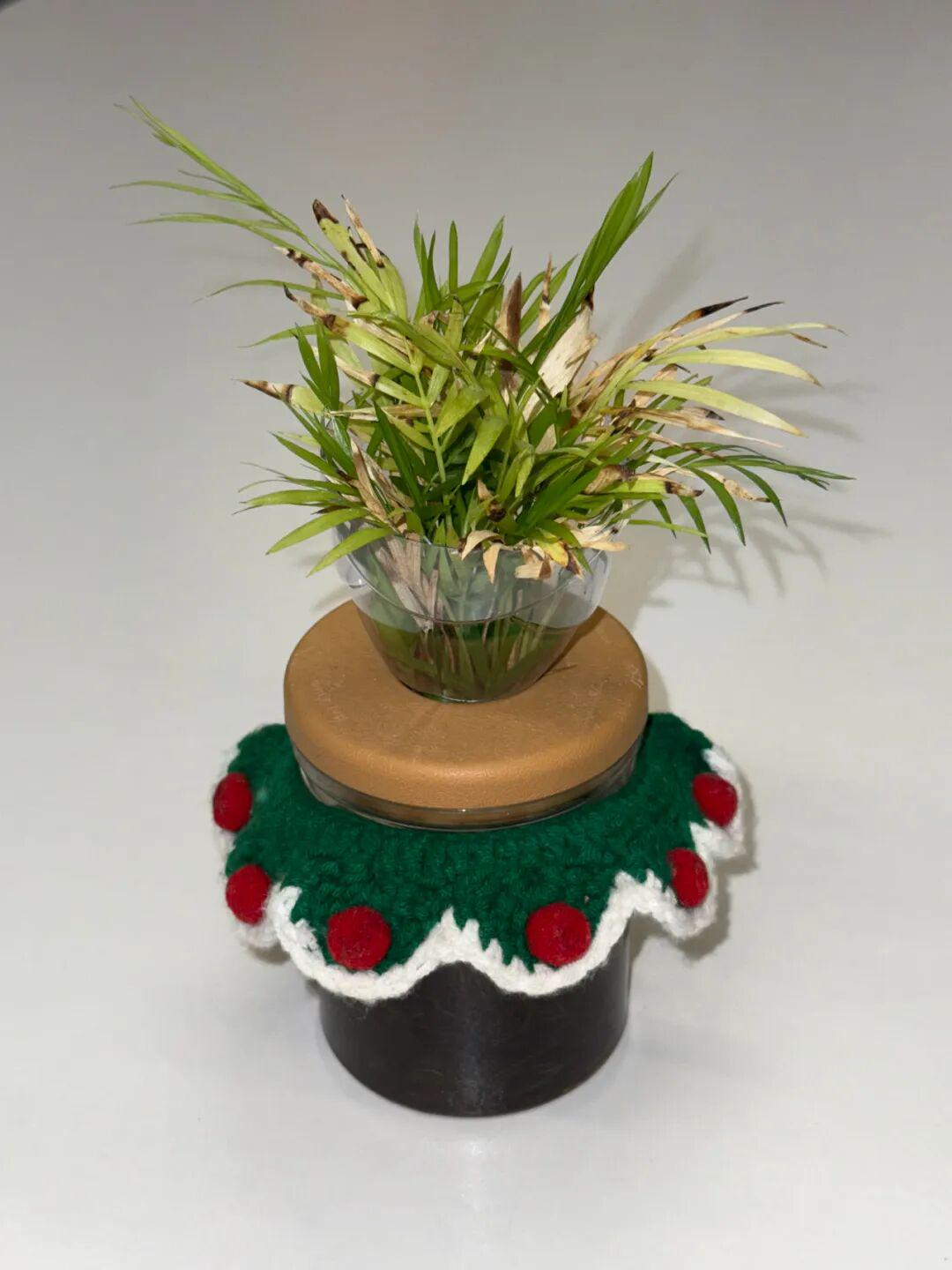
Contestant Liu Lang wants to share a houseplant from his bedside; he feels that seeing a touch of green every morning before training really lifts his spirits. He also wants to share that good mood with everyone.
Xuan Ran of AG Super Play Club shared a handwritten birthday letter. Since he receives love and encouragement from his fans every year, he wanted to convey his feelings of mutual support and connection through a personal letter.
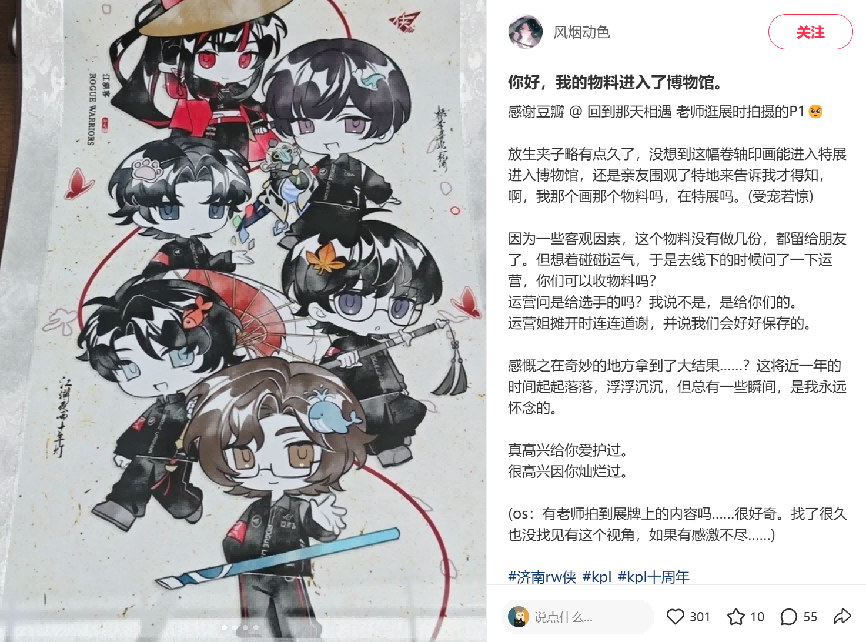
Source: Xiaohongshu @Fengyan Dongse
I also saw a beautiful scroll painting gifted by a fan, which was selected by Jinan RW Xia to be added to the team’s collection. Later, while scrolling through Xiaohongshu, I came across a post by this fan expressing her amazement: “I can’t believe I’ve ended up in a museum this way.” Even though she hadn’t been following the team closely for some time, she was still surprised and delighted to feel so valued.
These diverse collections capture a wide range of emotions from off the field and are now proudly displayed in the museum to honor every participant in KPL history.
02
It’s glory on the field—and a decade for the fans
“When they posted this photo, I even left a comment under it on Weibo—I think I was still a sophomore at the time.” Many of the conversations I overheard at the scene followed this same pattern: “When this happened, I was…”
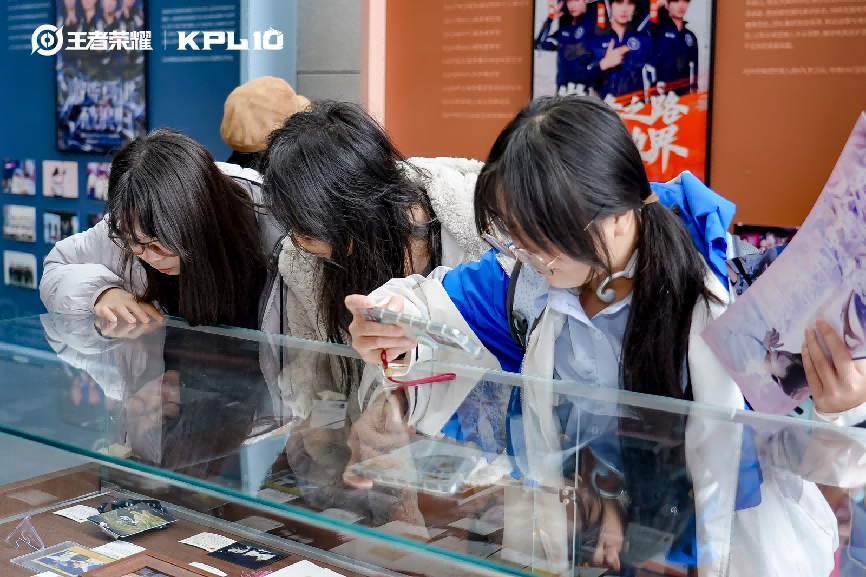
It’s easy to spot the fans who made a special trip to attend—most of them come in groups, know the exhibits inside and out, and many even bring professional equipment to take photos and capture the moment.The exhibits seem to be more than just snapshots of history; they also resonate with the visitors’ own life journeys. Whether the games back then were thrilling or left them with regrets, whether they were still in school, had just started working, or were glued to the screen with friends—these memories come flooding back.
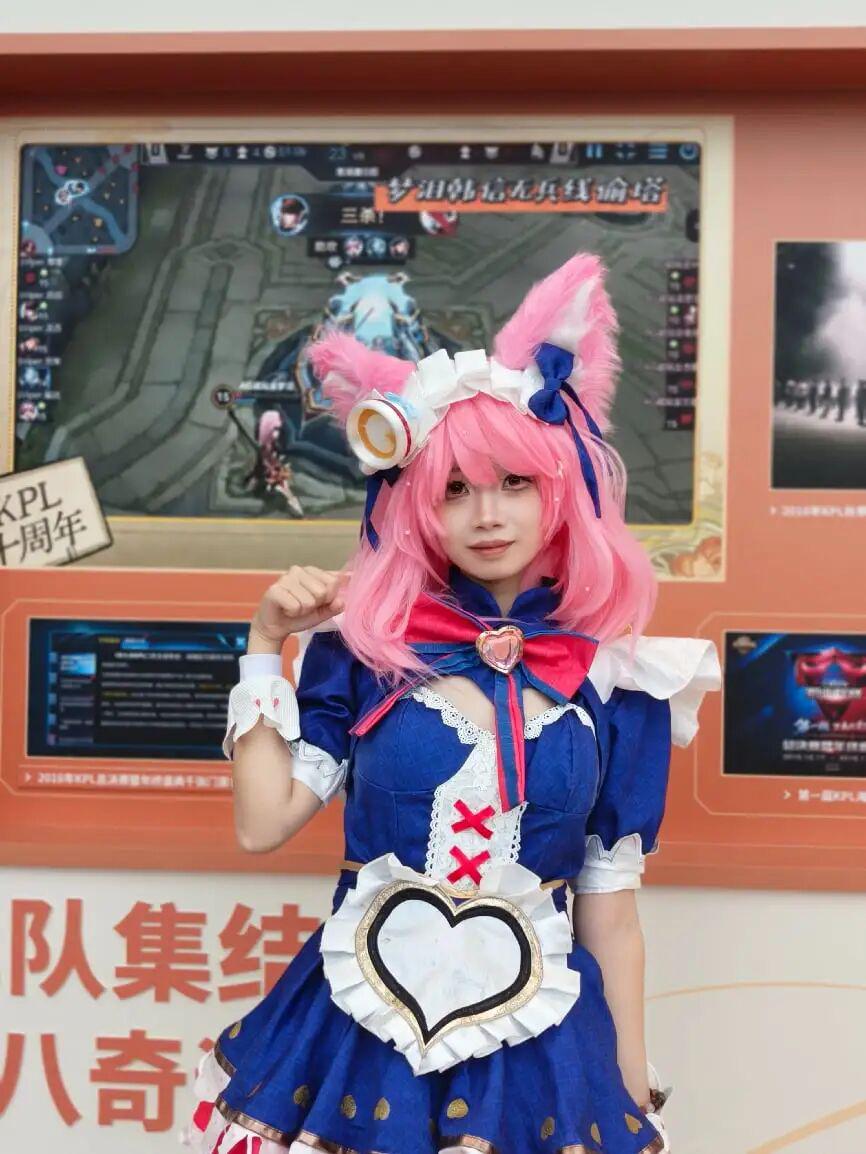
I chatted briefly with a girl dressed up as Daji for a cosplay event. She’s been playing *Honor of Kings* for ten years and has been watching the games for a long time. She follows many popular teams and players but isn’t a die-hard fan of any one in particular—she just enjoys watching the matches.
Surprisingly, she’s actually been following the KPL less and less over the past couple of years due to her busy work schedule. But since the museum exhibition was such a novel concept, she still went all out with a cosplay to check it out.“The exhibition hall on the fourth floor—the moment I walked in, I was completely blown away. It really brought back so many memories of watching the matches back then.”
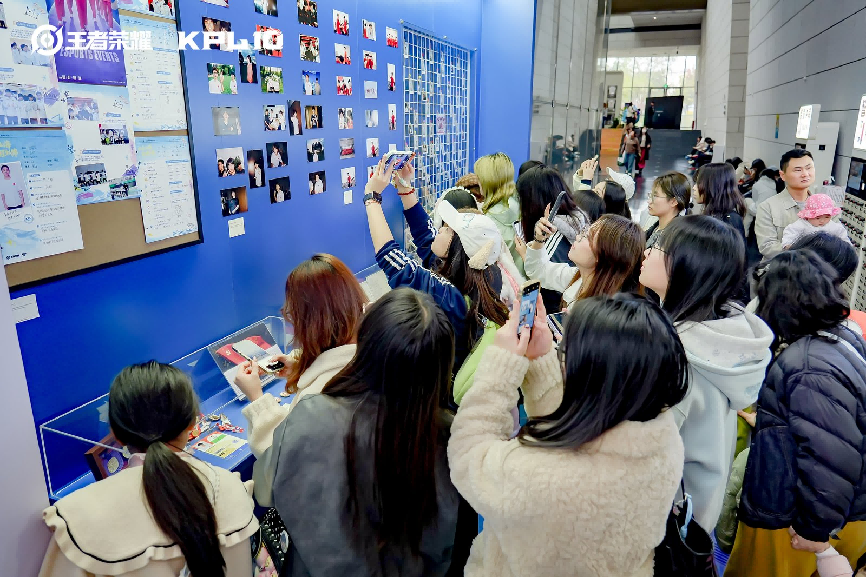
Another viewer, Xiao Z, finds the moments when she was inspired by the players’ competitive spirit even more unforgettable. She started watching the KPL in middle school, and the most memorable match for her was actually one where the player she was rooting for didn’t win.It was a showdown between two top teams; instead of opting for a meta-dominant lineup, the team chose heroes that held sentimental value for them. Even though they ultimately lost, she felt the match itself was thrilling enough.
When he entered college, peer pressure and an overwhelming academic workload left Xiao Z feeling completely lost for a time.“At the time, he (the player) was also facing a major headwind, but he used Shangguan Wan’er to withstand the pressure and take down the opponent’s dual carries.” This match held special significance for Xiao Z. “Starting with an aggressive opening move is the best way to gain the upper hand—ever since then, I’ve been inspired by Shangguan Wan’er’s line.”
Over the past decade, the KPL has gradually evolved from a professional esports league into a cultural phenomenon with a broad fan base, and its influence extends far beyond the arena.
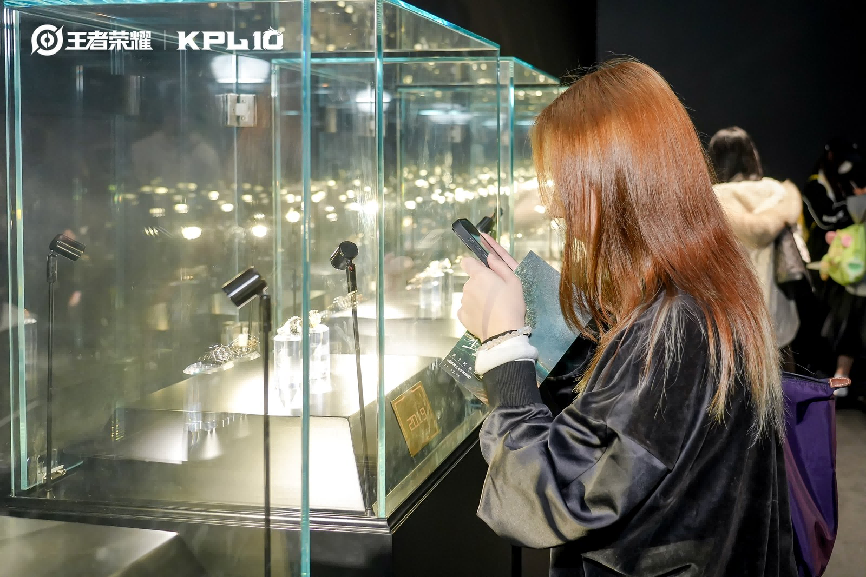
“Official histories” chronicle victories, defeats, and defining moments; for many viewers, these competitions overlap with certain stages of their own lives, forming part of their “personal histories.” The perseverance, composure, and thirst for victory displayed by athletes on the field can, at certain moments, provide spiritual strength to those watching from home.
Of course, not every memory needs to carry some deep meaning. Cheering simply because of an exciting match or feeling happy just because you saw your favorite player—these pure joys are precious in and of themselves. The history of the KPL has, without us even realizing it, become intertwined with the coming-of-age experiences of an entire generation of young people.
As for “passersby,” the reasons that drew them to stop were even more straightforward: the diverse exhibition areas, the exquisite exhibits, and the immense enthusiasm displayed by the fans gathered around.
The appeal of pure esports content to KPL viewers—and even to a large number of non-fans, or “casual viewers”—actually exceeded the curators’ initial expectations. With many questions in mind about how to condense a decade-long esports tournament into a single space, I spoke with the curator about the design and details behind the special exhibition.
03
A Curator’s Perspective: How to Make Sense of a Decade’s “Depth”
“The KPL went through an exploratory phase in the beginning, when some people used to joke that we were an amateur operation,” said the curator.
Starting in September 2016 in a small studio at Shanghai’s Huayuanfang, the inaugural KPL Fall Season drew nearly 1,000 people to the venue.By November 2025, the annual Grand Finals held at the “Bird’s Nest” attracted 62,196 attendees and set the Guinness World Record for “the esports event with the largest live audience.” This transformation from a “make-shift operation” into a “mighty tree” was, to some extent, the curatorial team’s original inspiration.
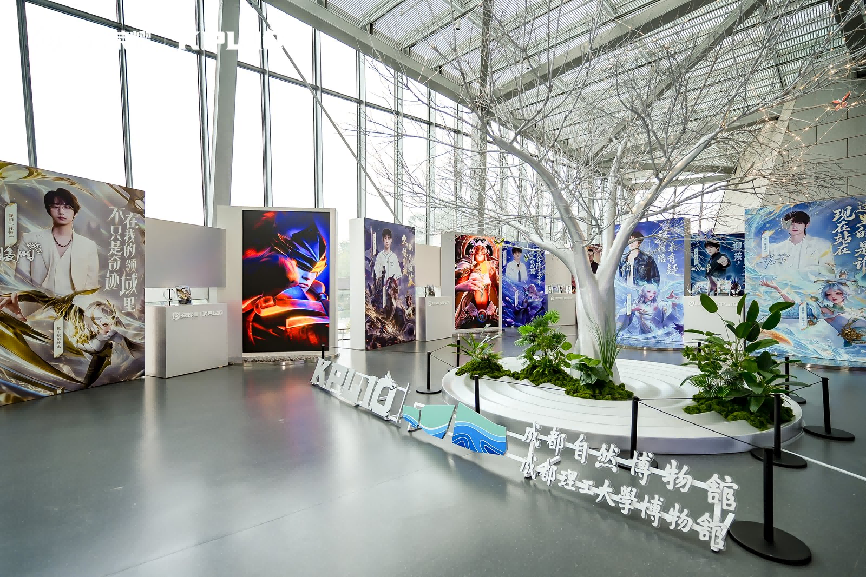
The Natural History Museum chronicles a wealth of narratives about the evolution of the Earth and humankind, and esports happens to be a new and rapidly growing industry, so locating the exhibition here was a natural choice. To reflect the intertextuality between the themes of growth and evolution, the exhibition space incorporates numerous elements of plants and vegetation.
“The curation of this special exhibition itself is the result of a collective effort.”
Much of the inspiration came from a broad call for ideas, such as the jersey wall. Early on, the team reached out to many players and asked them what they thought a 10th-anniversary special exhibition should look like; quite a few of them mentioned the need for a jersey wall.
A team uniform is an athlete’s battle attire and also their most everyday “competition gear.” It may accompany an athlete through an entire season, appear at crucial competitions, or bear witness to a special moment.
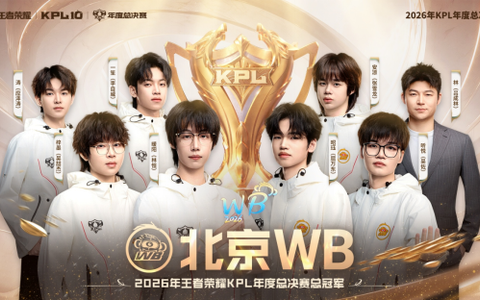
Beijing WB has selected the long-sleeve team jersey from the 2020 TS era. This jersey has witnessed the team’s two championship victories and has been part of countless chants of “Crowned with Glory, Never Stop Chasing Dreams.”The jersey embodies the spirit of “the path we’ve taken”—never stopping, always moving forward—and the team has indeed carried this conviction into this year’s Annual Grand Finals.
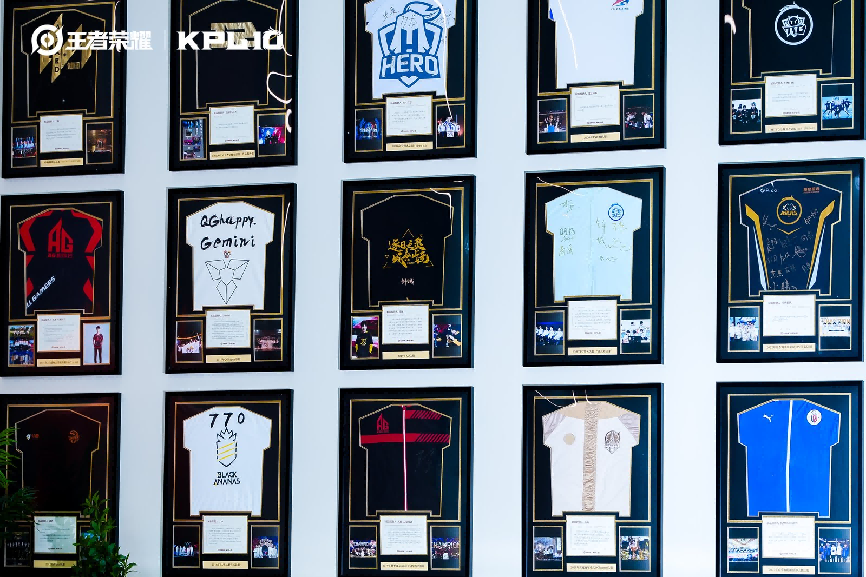
The team jerseys provided by AG Super Club are from different periods. One is from the 2016 Fall Season—the season that gave birth to the KPL’s first viral memes—and features the handwritten signatures of the team’s original five starters.The other jersey dates back to 2019, when—after a 438-day hiatus—AG announced its official return to the KPL. The team then went on a dominant run through the regular season and staged a dramatic comeback in the playoffs, ultimately securing its first-ever KPL championship.
The time-and-space markings on the two jerseys symbolize a team’s journey from its beginnings, through its low points, and back to the top. They embody AG’s spirit of “resilience”: never fearing failure and always having the courage to climb to new heights.
Since clothing is linked to the most concrete memories and the most unforgettable emotions, it’s easy to understand why athletes have such a special attachment to their team uniforms. Because the athletes’ feedback was so consistent, this element was incorporated into the exhibition.
The successful implementation of the entire project was made possible thanks to the close cooperation between the team and the athletes. The curator told me that, although screening the submitted exhibits was actually part of their additional workload, the coordination went very smoothly; they carefully went over each and every one of the many small, fragile items—which are particularly difficult to preserve—with the curatorial team.
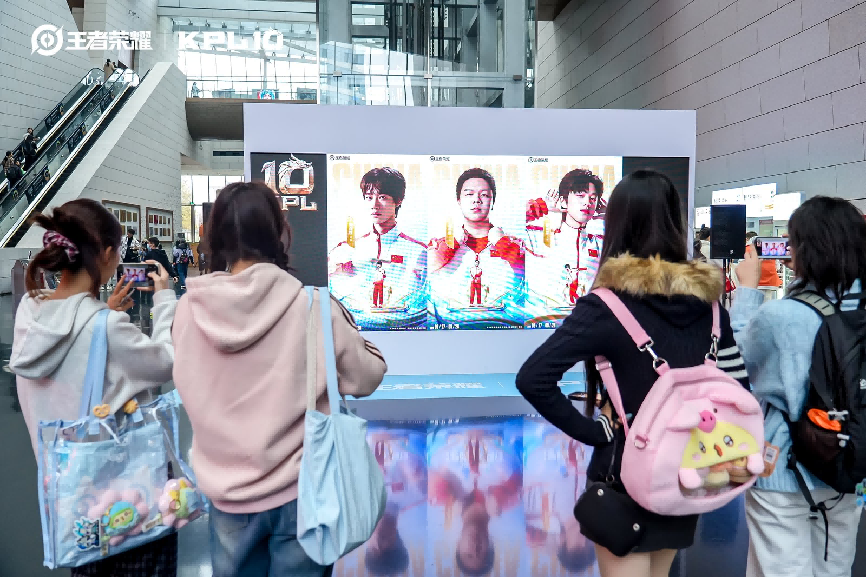
“The Asian Games gold medals on display here are all treasured family heirlooms that the athletes have lent to us for this exhibition. We want everyone to see just how valuable this exhibition is—it’s definitely worth making a special trip to see.”
This level of cooperation naturally stems from a trust built on the principle of “reciprocity.” Just as player Adou once hit a rough patch and chose to reach out to the league for help, the league promptly provided him with psychological support to help him overcome his difficulties. The KPL embodies not only personal emotions but also a mature set of professional standards that players are willing to rely on.
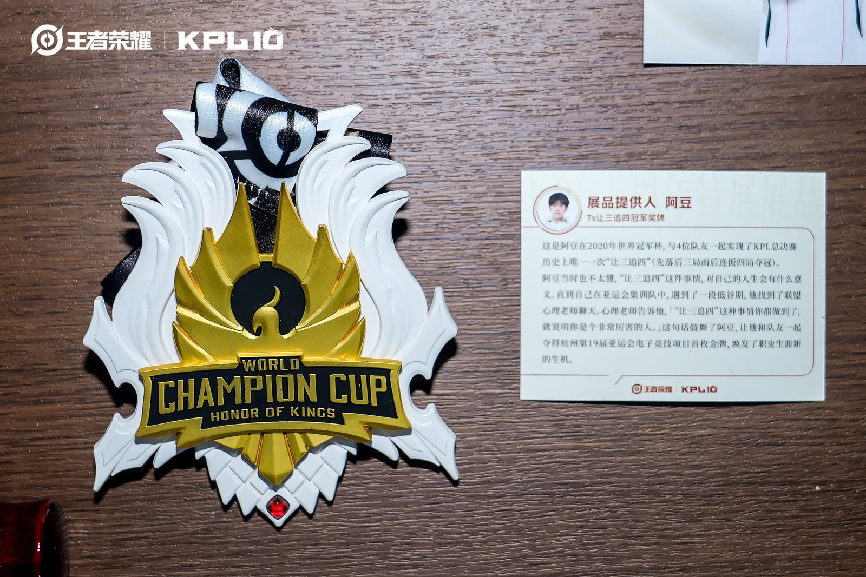
The curator explained that the KPL is grateful to everyone who has journeyed alongside them, and hopes that this history will be told from a more humanistic and equitable perspective. As a result, whether in the display of team uniforms or the arrangement of trophies, the organizers have chosen not to rank the exhibits based on “level of contribution,” but rather to document each historical participant equally.
At the “Tonglu Station,” the trophies, press passes, guest passes, and performance passes received by social media influencers—and even a secondhand work computer belonging to a staff member—offer a perspective from beyond the spotlight.
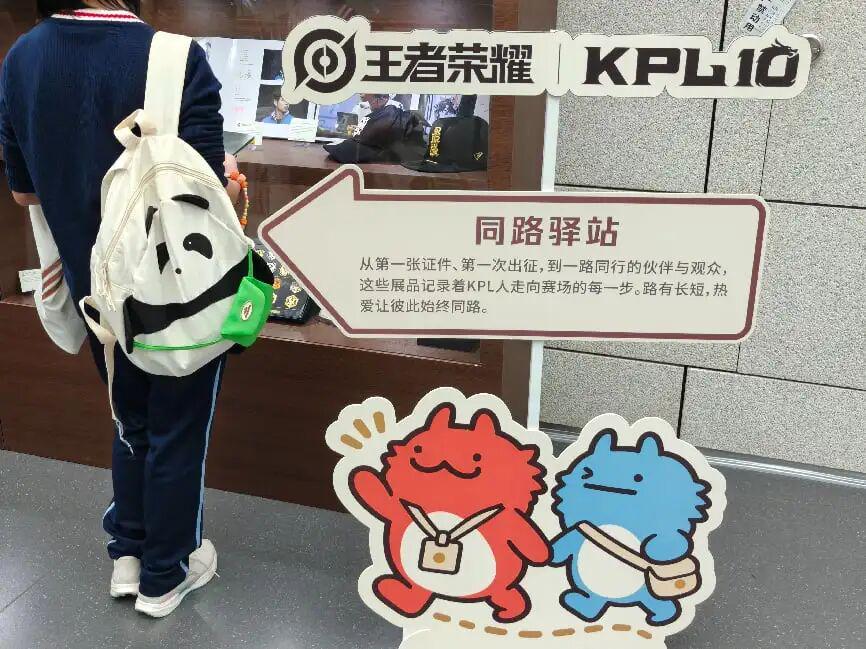
To ensure that more people can learn about this history—and to go beyond simply creating an exhibition geared toward fans—the exhibition has designed a “learning path” for a broader audience.
For example, the most eye-catching exhibits on the first floor include actual Asian Games gold medals, autographed team jerseys, and other previously unseen items. This marks a milestone moment for Chinese esports as it takes its place on the national podium; it also serves as the most direct way to convey to the general public—including parents visiting the exhibition with their children—that esports is a legitimate sport, thereby dispelling common stereotypes.
The second floor centers on content related to *Honor of Kings* heroes. Compared to the professional league, the game itself enjoys broader recognition, making it easier for non-fans to find a familiar entry point and learn more about the stories behind the exhibition. Moving up to the fourth floor, where statues and championship rings are displayed, the focus shifts entirely back to the KPL itself.
Actually, there’s another stereotype. Esports has long been “played online,” and it’s generally assumed that everything can be saved digitally—something that’s neither difficult nor out of fashion these days. So why is it necessary to present history in such a solemn “physical space” as a museum?
The curator firmly emphasized the necessity of this. The esports industry itself has developed so rapidly that much of its history and many details have been glossed over.The formats, players, and teams of many esports tournaments are constantly changing, and a vast amount of valuable footage, artifacts, and personal memories are scattered across different platforms and among various participants. By the time one wishes to look back, only a rough outline can be pieced together.
The KPL League itself is a team that places great emphasis on—and excels at—content archiving and digital presentation. However, it is also grappling with a very practical issue: people today have limited and fragmented attention spans; as they switch back and forth between various apps, it is difficult to find a space where they can truly focus and quietly reflect on a piece of history.
This is where museums become essential. With their relatively independent spaces and clearly defined visitor routes, they allow visitors to temporarily step away from the daily flood of information and take a solemn look back at this period of history.
This is about the sense of ceremony surrounding the KPL’s 10th anniversary, as well as the long-term vision of the esports industry.
04
Cherish the journey so far, and set off on the next one
“Of course, there are some regrets about this special exhibition, because there was actually even more content we could have presented,” the curator concluded.
The KPL itself has a rich and exciting history; match replays alone frequently garner millions of views on various video platforms, not to mention the countless iconic moments created by commentators’ fan-made content and the resulting fan culture. As mentioned earlier, the KPL League is one of the most proactive official organizations in the industry when it comes to documenting and preserving its legacy, and both teams and individual players have left behind a wealth of written and visual content.
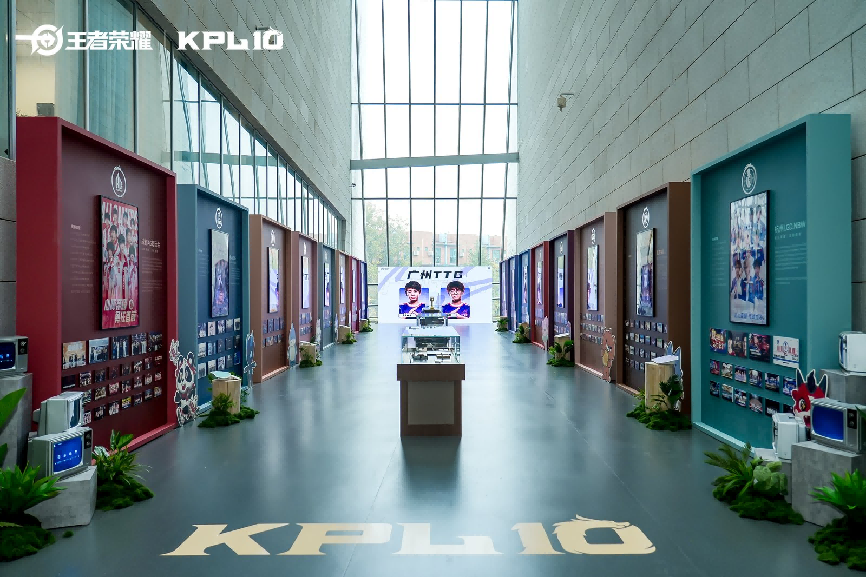
By being the “first to take the plunge,” the KPL has brought esports into a museum—and in terms of both its heritage and execution, it can certainly be called a “pioneer.”
Furthermore, the large number of “curious onlookers” drawn to this special exhibition also reminds us of another perspective—we must not overlook the authority and reach of museums in the realm of “science communication.”
The China Audio-Video and Digital Publishing Association’s *2025 China Esports Industry Report* revealed that in 2025, China’s esports industry generated revenue of 29.331 billion yuan, representing a year-over-year increase of 6.40 percent—the highest growth rate in the past three years. Moreover, esports can extend its reach to broader markets, such as IP licensing and merchandise.
Such a vast and vibrant emerging industry still lacks a “public voice.” Placing the Asian Games honors in the most prominent spot—a seemingly simple curatorial choice—actually dispels many stereotypes, allowing parents with children and older adults who know nothing about MOBA games to naturally immerse themselves in a journey through the history of esports.
These visitors, who initially had little connection to esports, went from simply looking on to gradually understanding the stories behind the exhibits, and eventually became truly engrossed in this history.It turns out that the KPL has achieved a level of broad public acceptance beyond expectations, thanks to the league’s consistent efforts in promotion and public education—and the museum’s brilliant curation provided the perfect opportunity for this.
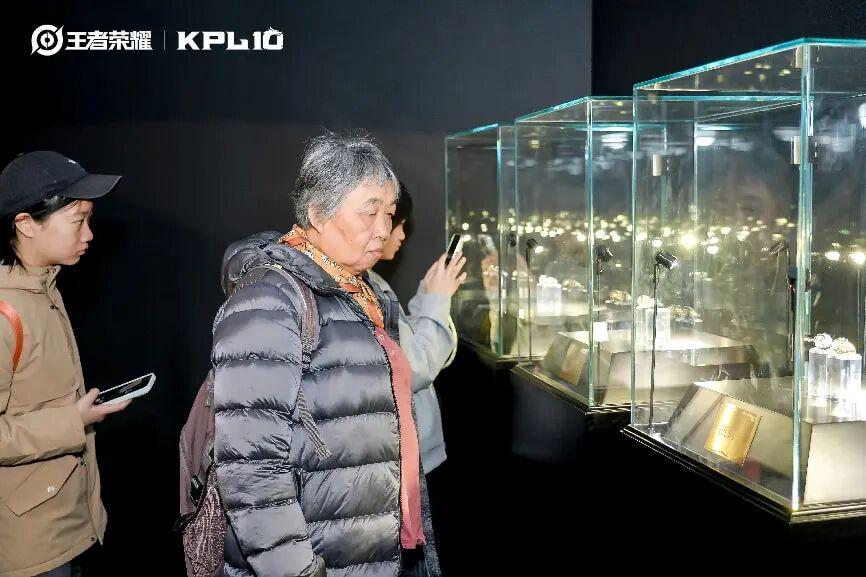
Moreover, this spread isn’t limited to those “outside the community”; for longtime viewers and players who haven’t followed the KPL in a long time—or even opened *Honor of Kings*—the exhibition served as a way to reconnect.Familiar players, matches they once followed—memories that had once faded resurfaced, and their passion was reignited. You could hear spectators at the venue exclaiming, “It feels like I could love *Honor of Kings* for another 10 years.”
The KPL 10th Anniversary Special Exhibition may not capture the entirety of its history, but it has at least taken a crucial step: encouraging esports to proactively document its own history, carefully curating and centrally showcasing it in a dedicated space, and thereby preserving more ways to narrate and understand it for the future.
“If this exhibition is still here ten years from now, I might buy a ticket to come in myself, bring a bunch of kids, and point to the display cases, saying, ‘I know this person; I’ve played against that one.’”This was Jiu Cheng’s musing as he walked out of the exhibition hall. In his view, the most impressive thing about the KPL over the past decade isn’t how many trophies it has accumulated, but the fact that new talent has consistently emerged.
Perhaps this is what all “history” has in common: honors and records remain in the past, while the competition itself always moves forward. The decade documented in the museum represents the accumulation of the previous phase and serves as the starting point for continued growth in the next phase.
原创文章,作者:游茶妹儿,禁止转载:https://youxichaguan.com/en/archives/224308