Recently, a batch of gaming-themed content has been drawing a loyal following eager for new updates. These videos feature neither celebrity endorsements nor in-game gameplay footage—just characters from the games pulling pranks.
For example, *Crazy Water World* features a bald, middle-aged man named “Fei Qiang” who repeatedly retrieves a seawater filter from the apocalyptic floodwaters, prompting viewers in the comments section to demand new episodes and create memes.
Also in Guangzhou, another small team of about 30 people is going through a similar experience. In their dark-themed, idle card game *Origin of the Eternal Night*, based on the *Journey to the West*, they’ve transformed Tang Seng into a muscular tough guy and had him sing in a video.This “Tang Seng singing” clip has garnered 7 million views on Video Account, with users requesting songs in the comments section—some even leaving messages saying, “If you make short dramas, I’ll definitely spend money on them.”
“In all my years of user acquisition, this is the first time I’ve seen users actively seeking out our ads,” said Liu Yi, the head of publishing for *Eternal Night: Origins*, with a touch of emotion. “Some users even started following our account because of the ads.”
Advertisements have traditionally been designed to interrupt content and prompt consumption. Today, some game ads have begun to take on the characteristics of content in their own right: viewers voluntarily linger, actively seek out new updates, and are subsequently directed to the game to complete a purchase.According to data from the DataEye Research Institute, *Origin of the Eternal Night* launched performance-based ad campaigns in early August 2026, with the daily volume of ad creatives—primarily AI-generated—at one point exceeding 10,000. The game entered the WeChat Mini Games Top Grossing Chart on its eighth day after launch, and its ranking continued to climb, reaching as high as fourth place.
01
Content-driven customer acquisition used to be very expensive
The gaming industry has been trying to attract players with content for nearly a decade, but the high barriers to entry in the past have kept most companies out of the market.
In 2017, in an advertisement for *Tanwan Blue Moon* released by Tanwan Games, Nick Cheung’s slurred line, “If you’re my brother, come cut me down,” unexpectedly went viral on social media and inspired a flood of fan-created content.At its peak, the game generated monthly revenue exceeding 200 million yuan, and its operator, Zhongxu Future, subsequently listed on the Hong Kong Stock Exchange.
According to Zhongxu Future’s 2022 IPO filing,from 2019 to 2021, its marketing and promotion expenses totaled 2.35 billion yuan, 1.643 billion yuan, and 3.739 billion yuan, respectively, accounting for approximately 78%, 57%, and 65% of revenue—with the figure approaching 80% in 2019.The reach of this type of advertising relies on celebrity influence and serendipitous online chemistry, making it difficult to plan and even harder to replicate.
Next came story-driven user acquisition content. Starting in 2019, the online money-making game *Sunshine Pig Farm* released a large volume of user-generated story content centered on cash-out features and red envelope giveaways, causing its user base to expand rapidly. Meanwhile, developers of “legendary” games experimented with situational dramas featuring a mix of celebrities and ordinary users.
In overseas markets, companies like Playrix have run “Save the Dog”-style narrative ads. Taking their game *Township* as an example, third-party ad tracking data shows that a narrative ad for *Township*—which ran from late 2021 to August 2022—generated an estimated 20 million impressions.While conversion efficiency has been repeatedly validated, the high costs and limited production capacity associated with live-action filming, as well as skepticism regarding discrepancies between ad content and actual gameplay, began to plague the industry during this period.
Later on, game companies began experimenting with full-fledged short dramas. According to publicly available information, in 2023, Caesar Culture partnered with Douyin’s short drama team to launch the mini-web series *The Road to Fighting Champion* for the mobile game *Battle Rules*; the first three episodes garnered a combined view count of over 20 million.In October 2024, *Fingertip Unrivaled* released a spin-off Three Kingdoms-themed short series and launched a live-action short series event within the game,allowing players to watch the series for free and unlock character content. However, given that the production cost of a single live-action short series ranges from hundreds of thousands to several million yuan, such productions are limited to serving as occasional marketing campaigns rather than a stream of daily-updated content.
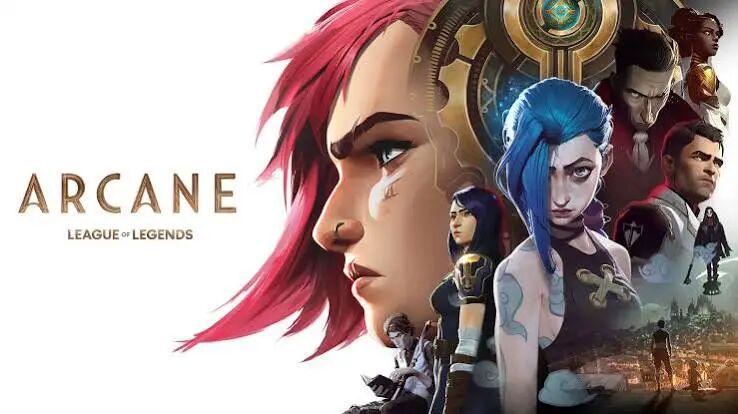
“JUSTICE: A City of Contrasts,” a pinnacle of video game-derived content
Major studios, however, have taken this approach to a whole new level.According to Variety, citing sources familiar with the matter, the production and marketing costs for the two seasons (totaling 18 episodes) of the *League of Legends* spin-off animated series *Arcane* amounted to approximately $250 million, with the first season alone taking about six years to produce. Although the series sparked a craze, the high time and financial costs involved are enough to deter small and medium-sized studios from even considering such a project.
Looking back at this thread, it becomes clear that the idea of turning ads into content has long been proven effective. The industry’s bottlenecks have consistently centered on three engineering challenges: production costs, content output capacity, and the speed of data iteration. In early 2026, video generation models experienced a surge in development, simultaneously resolving all three constraints.
According to observations by the DataEye Research Institute, the peak daily volume of promotional content for *Origin of the Eternal Night* exceeded 10,000 pieces—a scale that would have been unimaginable in the era of live-action filming.According to DataEye’s *2026 First-Half AI Drama and Anime Data Report*, from January to May 2026, the domestic AI drama and anime market exceeded 22 billion yuan, and is expected to reach 40 billion yuan for the full year.
The platform ecosystem is also shifting toward small and medium-sized teams. According to official data from WeChat, the number of mini-game developers has exceeded 500,000, with 80 percent of them being small and medium-sized teams of fewer than 30 people. Over the past year, more than 80 mini-games have had over one million daily active users, and more than 300 products have generated quarterly revenue exceeding 10 million yuan.
“When there was a surge in video-generation models at the beginning of the year, we saw it as an opportunity for small teams to gain a competitive edge.”Liu Yi recalls that at the time, the products the team was running were generating limited revenue, AI tools were expensive to use, and the return on investment for creative assets fell short of expectations—yet the team persisted in investing. “We believed this was the right thing to do, so we just went ahead and did it. It was also because this experience built up the team’s capabilities that we later saw our first surge in popularity with *Eternal Night*.”
02
Get users to like the characters first, then have them pay for them
The strategy for *Eternal Night: Origins* can be broken down into a clear chain of reasoning: since characters are the core assets of a card game, the primary goal of advertising creative is to make the audience like the characters and, as a result, want to own them.
Liu Yi explained that during the project planning phase, the team had two requirements for the theme: it had to be accessible, and the characters had to be memorable. “Journey to the West” and “Romance of the Three Kingdoms” were two options with relatively low barriers to entry. The team further determined that true “dark-themed Journey to the West” card games were rare on the market, so they settled on this niche.Character design revolved around the theme of contrast: the traditionally perceived frail Tang Monk was reimagined as a tough guy with well-defined muscles. The team drew inspiration from the positive feedback received for similar characters on short-video platforms to finalize the design.
Subsequent campaign data showed that the Tang Seng creative performed significantly better than those featuring other male characters. Based on this, the team concluded that the user base was predominantly male and from lower-tier markets. Consequently, the direction for new characters was adjusted: male characters were designed to avoid being overly handsome, while female characters were styled to have a more mature, “older sister” vibe.
The female character Da Heitian unexpectedly went viral. Liu Yi said that the team has seen users mention her in the comment sections of other games, and users have specifically requested her appearance under their own content—her popularity has exceeded expectations.
Liu Yi has his own take on the relationship between content and conversion, which he describes as a shift in the consumption scenario.Simply displaying gameplay footage and urging users to spend six yuan to roll for a character won’t appeal to users who aren’t interested in this type of game—it may even cause them to resist. By framing it differently—telling users that the team is working hard to produce the show and hoping they’ll support the product while enjoying the show—the meaning of the payment shifts from a mere monetary transaction to a form of support for the content.
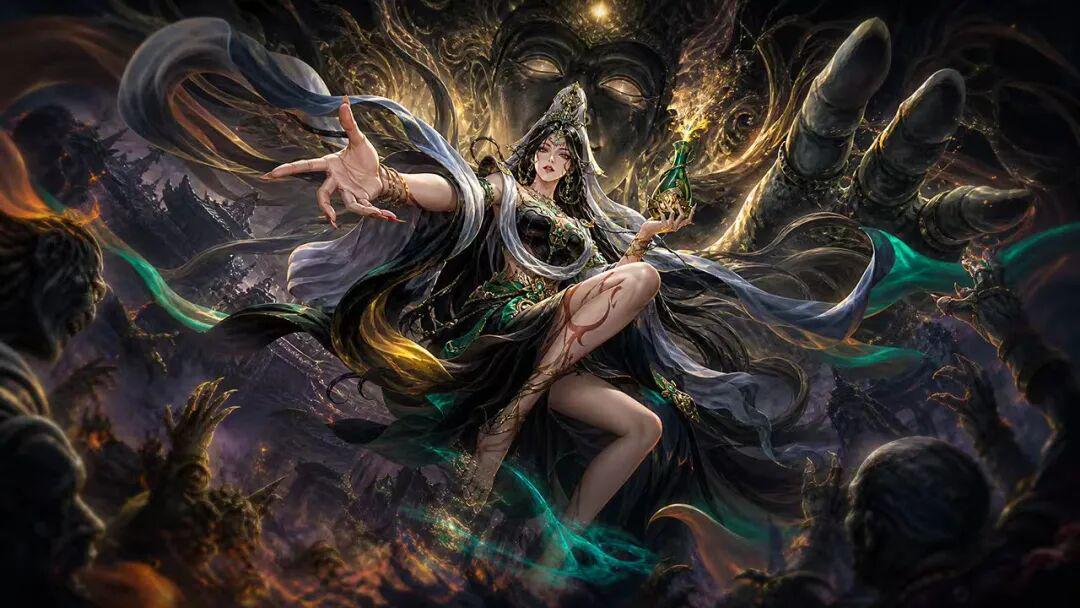
Da Hei Tian, a favorite among players and viewers alike
The main battleground for this model is WeChat Video Accounts. Liu Yi explained that, in addition to the short conversion path, user-driven sharing and organic virality within the WeChat ecosystem offer even greater value for the product’s long-term operation. After a video is published, a mini-game anchor can be embedded; when users scroll past the video, a link to access the mini-game appears in the lower-left corner.
The WeChat Mini Games team told Game Tea House that they view this type of advertising as part of the content ecosystem, believing that this content can drive user acquisition. The platform provides developers with non-game scenarios—such as Video Accounts, the Game Circle, and PC—to help them better serve users through text, images, and videos.
According to historical data from QuestMobile cited in a 2024 report by Guosen Securities, users aged 36 and older account for approximately 60% of Video Account users, while users in fifth-tier and lower cities account for 19.8%—a higher proportion than that of Douyin and Kuaishou during the same period.At the May 2026 Developer Conference, WeChat officials disclosed that WeChat Mini Games had over 500 million monthly active users, with males accounting for 53% and females for 47%; users aged 24 and under, 24–40, and 40 and older accounted for 10%, 50%, and 40%, respectively.
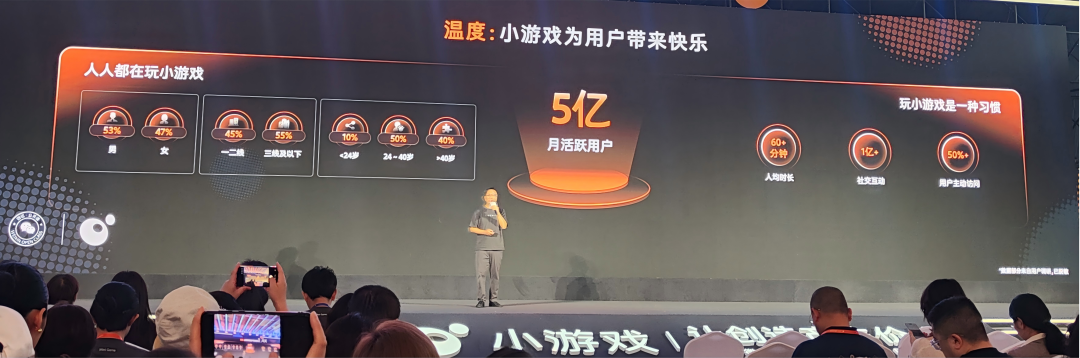
WeChat Mini-Games User Profiles
The primary paying audience for card-based games consists of middle-aged users with fragmented free time and disposable income; the user profile derived by Liu Yi’s team from advertising data largely aligns with this demographic.
Liu Yi revealed that, from the very beginning of the game’s launch, the team had been using both the Video Account’s “Heat” feature and Tencent’s Advertising Quality (ADQ) platform simultaneously. After creating some relatively high-quality content, their ad spend increased by 5 to 6 times, with a single video reaching a peak of 7 million views. “In terms of the overall Video Account platform, we ranked first on the monthly chart,” he said.
The platform is also actively courting these teams. According to official data released by WeChat, the platform provides 50,000 yuan in promotional funds for the initial launch of new games, and the revenue threshold for in-app purchases (IAP) in newly launched games that is exempt from revenue sharing can reach 50 million yuan. Over the past year, revenue from mini-game livestreams has grown by 239% year-over-year.A Video Account promotion team told Game Teahouse that they are helping developers navigate their initial advertising strategies through support measures such as cold-start assistance for new games.
The WeChat Mini Games Developer Conference held in May 2026 was themed “From Connection to Longevity.” Following the event, Product Director Li Qing told the media that 500 million monthly active users is approaching the industry’s ceiling, and the platform is shifting its focus toward optimizing the ecosystem structure and exploring the long-term value of content.
The Video Channel promotion team revealed that content-based creatives—which initially accounted for a small proportion—have gradually become the main driver of ad spend for mini-games on the Video Channel and continue to grow rapidly. Among the mini-game ad campaigns monitored by the platform, the average spend per post for AI-generated creatives is also higher than the average for standard creatives.
03
Advertising Is Starting to Shape Games in the Opposite Direction
The changes brought about by this model are most evident in customer acquisition efficiency.
On its eighth day after launch, *Origin of the Eternal Night* entered the WeChat Mini Games Best-Selling Chart, and its ranking continued to climb thereafter, reaching as high as fourth place at one point.Liu Yi admitted that the results took the team by surprise; the game ranked quite high from the outset, so the team subsequently expanded its advertising budget while ensuring it met the return-on-investment targets. Observations from the platform corroborated this experience; the Video Account promotion team also noted that content-based creatives performed significantly better in terms of engagement than traditional promotional materials, and registration conversion rates were on par with the market average.
There are concrete benchmarks for this efficiency improvement. Liu Yi explained that certain visuals, which previously required production using the UE engine and took half a month to a month to complete, can now be finished in one to two days with the help of AI, while maintaining the same quality as before.An industry survey by the tech media outlet “Chaping” revealed that the price for a single piece of traditional 3D advertising footage can range from 100,000 to 200,000 yuan, with production cycles starting at one or two weeks; AI has compressed this cycle to just one or two days.
Liu Yi also emphasized that AI is not without its costs. In addition to labor expenses, the cost of AI tools represents an ongoing additional expense, and the output of visual content is limited by the complexity of the script; for some complex scenes, it can take more than a day to complete a single shot, requiring the creation of each individual shot before they are assembled.
In the creative industry, the rule is that the gains from cost reductions rarely translate into profit; instead, they are mostly reinvested into advertising budgets and resources for trial and error.
A change even more profound than efficiency is taking place on the product side, where advertising data is beginning to influence game content. Iterations in card games rely heavily on new characters, and Liu Yi’s team provides feedback on each character’s advertising performance to the R&D team, which uses this as a basis for designing new characters. A prime example of this is how data on Tang Seng’s promotional materials led to the conclusion that the game appeals primarily to male users in lower-tier markets.
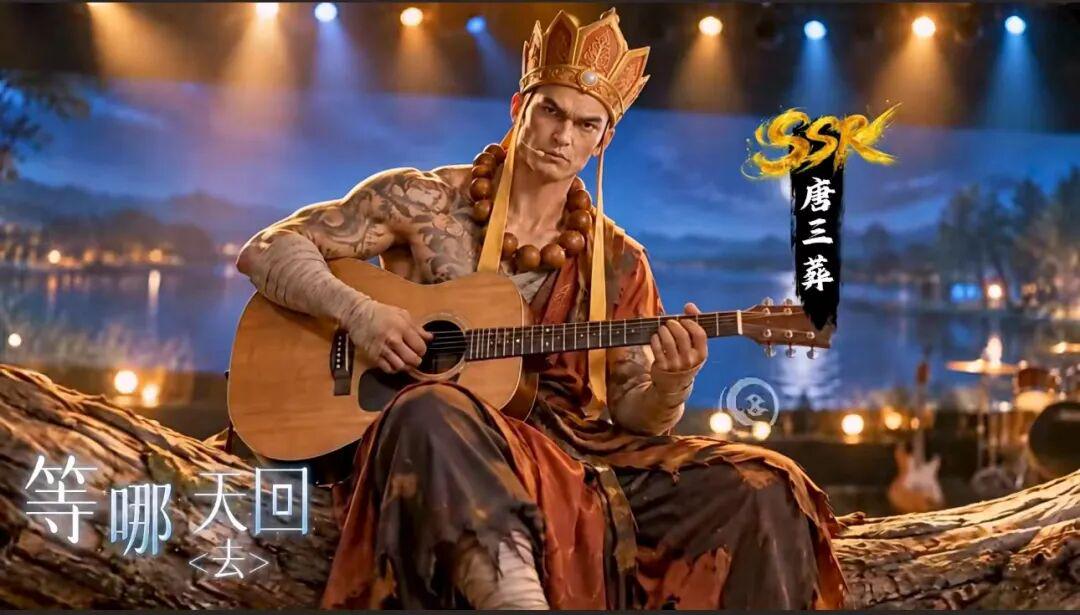
A Tang Seng Completely Different from the Traditional Image
Using user acquisition data to inform project initiation and product decisions is already common practice in the game publishing industry, and AI has significantly accelerated the validation process.Liu Yi explained that a character concept can be quickly visualized to test click-through rates and cost-effectiveness before the findings are shared with the R&D team. Another team member offered a more systematic explanation: there are no set rules regarding who proposes suggestions during the project initiation process; the key lies in who can provide data proving that users genuinely like it.
At the heart of business decision-making are investment costs, certainty, and expected returns—a process similar to that of filmmaking, where research, project approval, and production form a complete chain, and distribution and R&D share responsibilities based solely on feasibility and success rates.
User engagement is also evolving. As ads are constantly updated, some users have developed a habit of following the latest content, requesting songs in the comments section, and suggesting that characters try new musical styles.One user comment that left a strong impression on Liu Yi was, “If you make short dramas, I’ll definitely pay for them.” He interpreted this to mean that while users might not convert the first time they see an ad, consistently producing high-quality content will cause them to follow the account, thereby increasing the chances of conversion. The team views this type of user as a key source of growth.
Currently, the “Eternal Night: Origins” team operates five or six official accounts on Video Channel, with plans to have different accounts focus on different types of content, such as singing and story-driven content, and is considering launching character merchandise at the right time to reward users.
This model is already close to virtual idol management, and Liu Yi acknowledges that it has elements of that—in a sense, some of the characters have already “made their debut.” However, he remains cautious about whether to enter the short-form video industry directly. The product has been live for just over two months, and there are still many issues to address; with a limited team size, they need to focus their resources on resolving urgent matters.While the short-form video business may be explored in the future, at this stage, the content still serves to enhance the product’s distribution performance.
04
The Leveled and the Elevated
It is widely acknowledged in the game publishing industry that AI is leveling the playing field when it comes to content creation.
Liu Yi believes that while differences in production capabilities may be quickly bridged, differences in results will persist over the long term. Even with the same script, the quality of work produced by different designers varies significantly, due to differences in their aesthetic sensibilities and proficiency with prompts.
He illustrated the value of creativity using examples from the industry. “Crazy Water World” closely integrated source material with trending topics; the team created set props such as a seawater filter and an electric eel generator to serve as memory anchors. These anchors naturally align with the post-apocalyptic survival theme, allowing various trending topics to be incorporated into the concept.It is difficult for AI to directly produce this kind of design. If you simply feed trending topics to an AI and ask it to package them, the results are usually unusable; human insight remains the source of competitive advantage.
Opinions vary regarding the lifecycle of AI-generated content. Conclusions from academic experiments tend to be cautious, while several consumer studies have shown that, when participants are unaware, their evaluations of AI-generated ads are similar to those of human-created ads; however, once they learn that the content was generated by AI, their trust and willingness to purchase drop significantly.
However, frontline workers have a different experience.
Liu Yi believes that user fatigue stems from repetitive creative formulas, not from AI as a format itself; as long as creativity continues to evolve, the visual format itself will not easily grow tiresome.Another team member’s assessment was even more direct: most ordinary users cannot tell whether content is AI-generated or not. What industry professionals need to do is track changes in user preferences and respond with content that reflects those preferences.

In-Game Character Encyclopedia
The platform has adopted a more pragmatic approach. The Video Channel promotion team told Game Teahouse that while they support developers using tools such as AI to enrich their content, they do not encourage the mere pursuit of quantity or short-term exposure. Whether the interest generated by the content can be converted into sustained game engagement also depends on whether the gaming experience meets user expectations.
Liu Yi’s team’s strategy is to prepare for all possibilities. He mentioned that the company’s leader often says, “First determine right from wrong, then good from bad”—meaning they should invest in what they believe is right first and let the results unfold naturally.During the model boom in early 2026, even as returns fell short of expectations, the team continued to refine its AI content generation capabilities—an effort that ultimately paved the way for the product’s subsequent scaling on Video Account.
In Liu Yi’s view, once AI is integrated into workflows, creativity and quality actually become even more important than before—these are the two key factors for distributors to build a competitive edge.
When it comes to industry trends over the next one to two years, he remains cautious, reluctant to draw conclusions about specific categories. Instead, he emphasizes the value of user insights, believing that any category has the potential to succeed as long as it addresses user needs.His advice to newcomers to the industry also centers on building long-term assets: studying the platform ecosystem and content compliance, establishing an account matrix and community management system, and providing support for the long-term operation of their products.
Returning to the original question—why did viewers start following the ads?—Liu Yi’s answer was straightforward: “Whatever users like, that’s what the team does.” Meanwhile, in the comments section of *Origin of the Eternal Night*’s Video Account, users are still requesting another song from Tang Seng.
原创文章,作者:游茶妹儿,禁止转载:https://youxichaguan.com/en/archives/223327