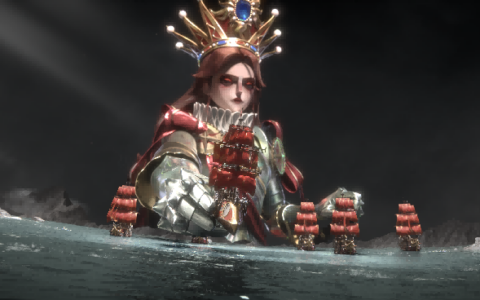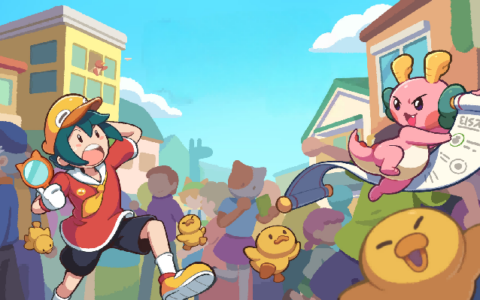
In July 2026, independent game developer Sha Lu had just completed her sixth round of chemotherapy and was still facing a 25% mortality rate.
He had been ill for a year. A year earlier, in July 2025, Sha Lu traveled to Beijing to attend the Nuclear Fusion Game Expo.During the expo, he felt weak, but he never even considered the possibility of a serious illness. Looking back, he only belatedly realized how dangerous the situation had been at the time; if he had been jostled in the crowded venue of the Beijing Nuclear Fusion Expo, “he would very likely have died on the spot.”
After the trade show was over, Sha Lu went to the hospital, where the doctor immediately admitted him; he was subsequently diagnosed with acute leukemia.
In the early stages of his illness, his condition deteriorated very rapidly. At one point, Sha Lu fell into a semi-comatose state that lasted for a month. “I had to lie in bed for more than 18 hours a day and could barely stay awake,” he said. During that month or so, he completely lost the ability to care for himself, had no time to attend to the company’s future arrangements, and even experienced two life-threatening episodes.
After his health improved slightly and he regained his ability to care for himself, Sha Lu returned to game development. He identifies as an ENTJ and believes he has a trait that makes it impossible for him to stop working: “Watching TikTok or short videos, or playing games, doesn’t necessarily bring me much joy—it’s work that brings me joy.””
01
Selling a House to Start a Business
In 1986, Sha Lu was born in Suzhou, Jiangsu. Growing up in a family of moderate means, he had access to high-quality single-player video games from an early age, such as *Phantom Sword of the Ghost City* and *The Knights of the Flame Dragon*, developed by Han Tang Studio in Taiwan, as well as *The Legend of Jin Yong’s Heroes*,*Romance of the Three Kingdoms*, and *Legends of the Three Kingdoms*.
These role-playing games had a profound influence on his aesthetic sense of gaming art. After entering high school, Shalu and several friends created accounts on Youxian.com and served as moderators for *The Age of Discovery*.He was responsible for editing game information and walkthroughs on the forum, which led him to study a great deal of geography. During a history class one day, Shalu gave a presentation to the entire class on the Age of Discovery and even earned praise from his history teacher.
After that, Sha Lu developed a keen interest in the cultural impact of video games and published an article in the school newspaper declaring that video games are the ninth art.
During his college years, this gaming enthusiast began transitioning into an indie game developer, running a gaming forum and dabbling in fan game production. Whenever he had a new idea, he would post recruitment notices on the forum to find artists, scriptwriters, and voice actors.Since fan game projects were developed on a volunteer basis—with members working purely out of interest—the teams were extremely unstable, and people would drop out every other day. Looking back on that experience, Sha Lu reflected, “A group that runs purely on passion is highly unlikely to make it to the end.”
When he first left college, he worked in other industries as well. He took 20,000 yuan from his parents as startup capital to launch his own business, selling clothing and anime merchandise, and he also capitalized on the e-commerce boom by opening a Taobao store.It was a boom period for the textile and apparel industry. Sha Lu would often ride his bicycle several kilometers to work. In the summer, when temperatures soared to over 30 degrees, he would sort through merchandise in stuffy warehouses, often ending up completely drenched in sweat.
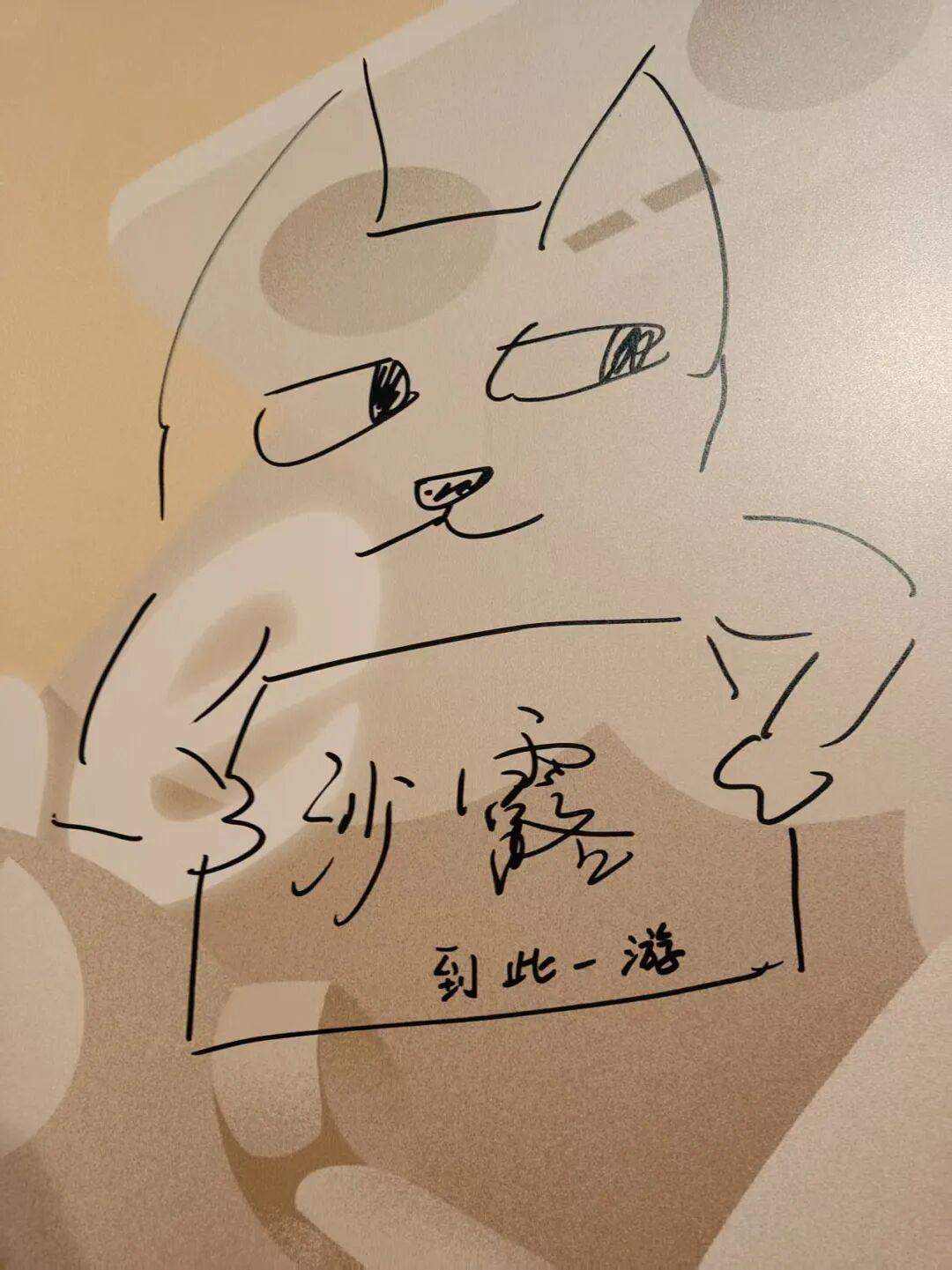
Shalu’s autograph from the event
Although his body was exhausted, the positive feedback from the business kept coming in.Sha Lu said that compared to making games, this entrepreneurial journey didn’t feel particularly difficult. During this time, he met his current wife through the online game *Ragnarok*. The two formed a team and chatted in the game, gradually growing closer, and solidified their relationship after meeting in person at ChinaJoy in Shanghai.
The idea of making games began to stir within me once again. My wife is skilled at drawing, and Shalu handled the game design; together, the two of them spent six or seven years creating small text-adventure games.
It was August 2, 2018, and the sun was beating down on Shanghai’s Pudong district. At the bustling ChinaJoy venue in the International Exhibition Center, 32-year-old Sha Lu was chatting with a group of online friends in their twenties around a dining table when he announced to everyone that he would be closing his Taobao store—which he had run for many years—and switching careers to develop indie games.
Later, Sha Lu wrote in her blog: “I sold my house to raise money for game development. Unlike some big shots who own stacks of properties—selling one leaves them with ten more.”
02
Lose Everything
“The Ballad of the Knight,” a project launched in 2018, was the first harsh trial of Sha Lu’s career as an indie game developer.
Through a friend’s introduction, Shalu met a technical expert. At the start of the project, the team’s cost estimate was only half of what it ultimately turned out to be. However, the collaboration soon revealed problems: there was a lack of trust between the two parties, and communication was extremely difficult. In Shalu’s words, “It was like having Fan Bingbing as the ideal, Qiao Biluo as the bottom line, and an ET alien as reality.”
This technician lacked enthusiasm for developing single-player games. He repeatedly demanded that Shalu add an in-game store system, and he was also slacking off—often refusing to write code and skipping work for an entire day at a time. Shalu felt quite helpless about this: “He said he’d work at most two hours a day; if it went beyond two hours, he wouldn’t work because his efficiency would drop.He just sat there playing games all day.”
Since there were no game designers on the team, Sha Lu handled all the game design work single-handedly at the time. However, after he finished the design, the programmer told him he couldn’t understand it and demanded that Sha Lu figure it out on his own and redo it in a specified format; even the slightest deviation from the format would earn him a harsh scolding.Shalu had no choice but to push himself to the limit: “I could only sleep about four hours a day, six hours on weekends, and I handled everything else all by myself.”
Even so, he didn’t switch lead programmers midway through the project. After all, changing the lead programmer halfway through game development would mean scrapping all the code and starting the game from scratch—the sunk costs would be too high.
After months of restructuring and delays, *The Way of the Hero: A Wanderer’s Song* finally launched on September 21, 2020.At that time, Shalu was facing the dire situation of its account funds running dry; without a launch, the company would not survive, so it had no choice but to brave the competition against *Xuanyuan Sword*, released in October, and *Cyberpunk 2077*, released in November.
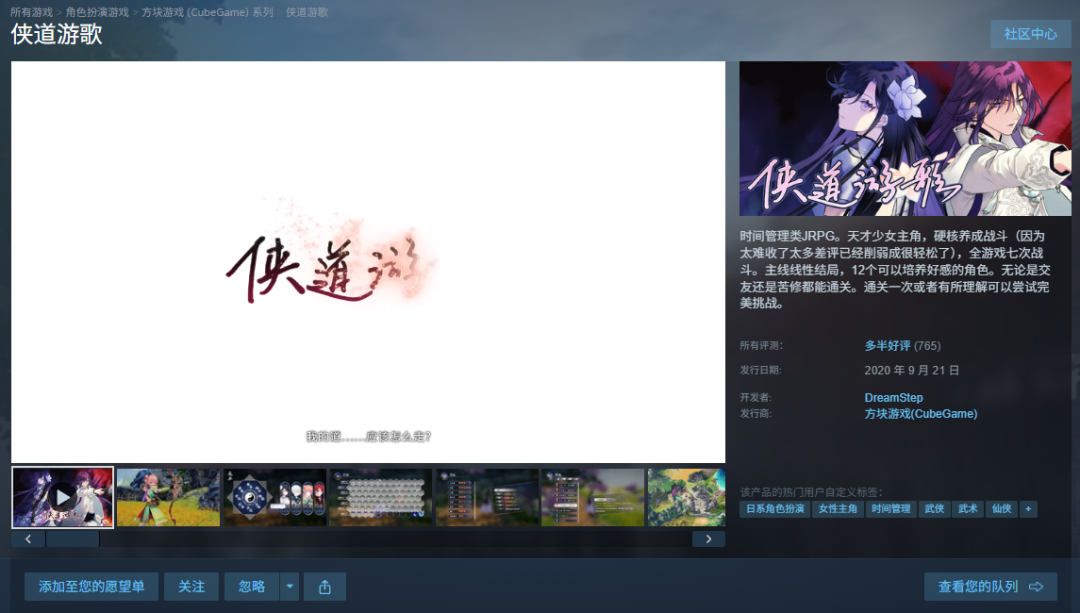
The current Steam homepage for “The Way of the Knight”
After the game was released, it briefly shot to the top of the New Releases and Region-Wide Best-Sellers charts. Just as Sha Lu was about to celebrate in the QQ group, a flood of negative reviews came pouring in, and the positive rating plummeted to 54%.According to Steam’s policies, games with an approval rating below 70% are demoted, and *The Way of the Knight* was immediately removed from the platform’s recommendations.
The main reasons for the negative reviews were motion sickness caused by the camera work and a save file bug. Although the Shalu team had conducted four rounds of testing and five rounds of revisions, to avoid spoilers, they limited the testers to a few trusted friends. The small sample size meant they failed to detect these critical issues.Faced with the negative reviews, the team was on pins and needles. One girl, unable to bear the pressure, retreated to the common lounge to cry. Shalu and the team released two updates in quick succession that afternoon to address the issues, and the approval rating painstakingly climbed back to 70% by 1:00 a.m.
“This time, I really experienced the thrill of a roller coaster like never before,” said Sha Lu, still shaken six years later as she revisited the topic. The game, into which she had poured her heart and soul, ultimately ended in a disastrous failure. “It was a total loss—we didn’t even recoup half of the costs.”
03
The Versatile Solo Traveler
Following the failure of *The Way of the Knight*, Sha Lu decided to start work on a new project. As a loyal fan of Atlus, he initially wanted to create a surgical simulation game similar to the Nintendo DS title *Super Surgeon*, in which a surgeon protagonist would unravel the unsolved mysteries from the previous game.After consulting industry insiders, however, he was warned that the game’s content might face censorship due to its graphic violence, so they were forced to abandon that idea and explore a new direction.
However, halfway through development of the new project, Shalu discovered that its gameplay closely resembled that of the popular game *Loop Heroes*. To avoid being accused of plagiarism by players, they had no choice but to ruthlessly scrap the half-finished project.
Subsequently, the outbreak of the pandemic brought game development to a standstill, and the team’s finances grew increasingly tight.Shalu drew inspiration from playing *13 Sentinels: Aegis Rim*, borrowing its framework of unlocking the story as the player progresses to establish the narrative structure for her new game. Titled *Floating Life: A Song of Wandering*, the game underwent numerous rewrites and revisions, taking nearly eight years to finally see the light of day.
In the first month after the game’s release, it had 800 wishlist entries—which, in Shalu’s view, was “barely passing.”Sha Lu summed up this experience in a single sentence: “I’ve always felt that making indie games is like playing the lottery.” He joked that after all these years of hard work, he had “gone from a greenhorn to an old, jaded greenhorn.”
During his eight years in the industry, in addition to R&D, Sha Lu has also handled game publishing and PR.In this regard, he is quite experienced; he helped *Death’s Rampage: The End of the Road* achieve strong sales of 100,000 copies in its first week, and he even engaged in preliminary negotiations for a blockbuster game—though unfortunately, the partnership ultimately fell through due to internal factional disputes within the company. Even at the time of this interview, he still expressed regret over the situation.

Sha Lu Attended the China Game Developers Conference and Delivered a Speech
In Shalu’s view, 2024 marks a turning point; as Steam’s algorithms continue to evolve, the survival rate of indie games has dropped significantly starting this year. In the early days, the platform would grant extra exposure based on the number of players online, which is why idle games were so popular. “Now, these versions change every year, and the updates are constant—each phase is different.”
Today, the desktop idle game genre has become a red ocean, making it difficult to survive in the market conditions of 2026. Sha Lu advises developers to seek opportunities in genres with a large user base and relatively low production barriers, and to constantly ask themselves, “Why would players want to play your game?”
Furthermore, based on his own experience handling publishing and PR, Sha Lu believes that good publishing involves more than just buying video ads; it also requires helping developers with testing, optimization, and providing localization advice—a complex and time-consuming process. For small developers, Sha Lu recommends reaching out directly to publishers rather than PR agencies, noting that “there are even more pitfalls in PR than in publishing.”
04
Concerned Citizen
An indie game developer had this to say about Sha Lu: “It’s hard to find an indie game developer who doesn’t know him. You see him in all kinds of groups—Sha Lu comes across as a caring community member.”
To date, Shalu has helped indie developers release five single-player and board game titles free of charge, and has also organized numerous charitable activities within the indie gaming community. For example, during the 2021 pandemic, Shalu noticed a strong demand for partners in various developer groups and consequently created a shared document where indie game developers could post requests to form teams.
This document covers topics such as outsourcing, publishing, research and development, and team building, with a total of approximately 10,000 entries, and has helped a large number of developers. Later, because it infringed on the interests of certain individuals, illegal content was uploaded to the document and it was reported; after being banned multiple times, it was eventually shifted to a channel format for management.
As independent gaming communities across the country gradually took shape and matured, Sha Lu’s outlook began to change. Especially after being diagnosed with leukemia, he felt it was time to focus more on himself: “Now that everyone else is up and running, I think it’s time for me to step back.”
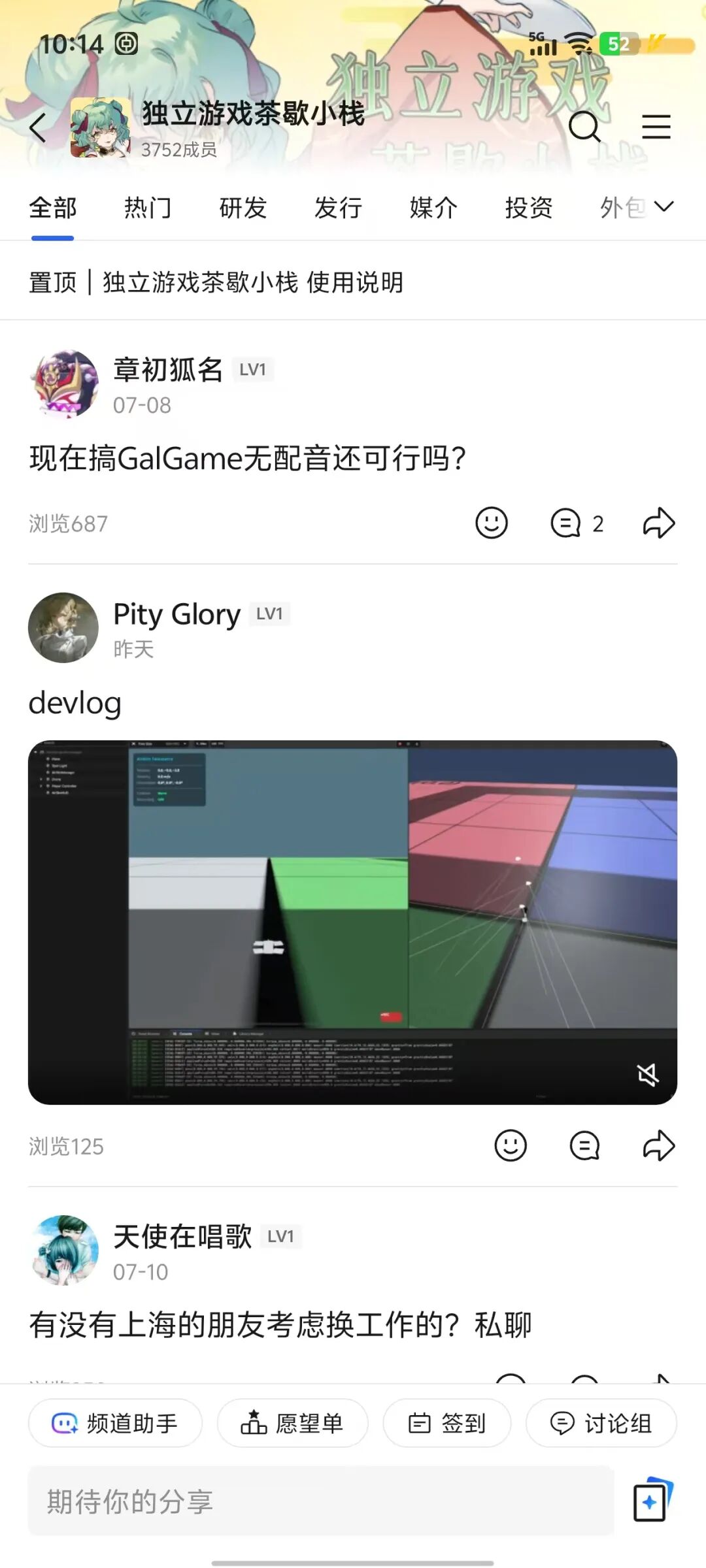
An indie game site called “Tea Break Station” that evolved from a collaborative documentation project
Looking back over the past few years, there have been moments of joy shared with like-minded friends, but naturally, there have also been some disagreements. Shalu occasionally encounters stubborn developers who, when he points out issues with their games and offers suggestions for optimization, show no appreciation; instead, they accuse him of trying to sabotage them and claim he can’t stand seeing others’ games succeed.He has also seen situations in publishing partnerships where developers refused to allow the publisher to interfere with the creative process, resulting in problems after the game’s launch.
In the past, Sha Lu would have tried to make a strong case to persuade the other party, but now he says he will simply “respect their fate.” In his view, indie developers must be stubborn—those who aren’t stubborn can’t create anything—and developers need to experience many of these pitfalls themselves before they can truly understand them.
Based on his personal experience, Sha Lu believes that solo travel is an industry where losses far outweigh profits. “The vast majority—about 95 percent—operate at a loss. Those who manage to stay in business do so despite the losses; 95 percent of them are operating at a loss.” For young people looking to enter the industry, his advice can be summed up in three words: “Don’t do it.”
In Sha Lu’s words, unless you have exceptional mental resilience and come from a well-off, wealthy family, it’s best to gain a few years of experience at another company before getting into game development. “If you don’t meet even one of these three conditions, you’re better off not doing it—it’s better to stick with a regular job.”
But then, changing the subject, Sha Lu went on to say that “the chosen ones” don’t need to worry about these three criteria. As for what constitutes a “chosen one,” in his view, if a game can garner 2,000 to 3,000 wishlist entries right after its page goes live without any promotion—or 30,000 to 50,000 wishlist entries after a demo is released—that’s enough to prove they have the talent to succeed in this field.
From selling his house to chase his dreams to continuing to type away even after being diagnosed with leukemia, Sha Lu has witnessed the entire journey of the indie gaming scene—from its chaotic beginnings to the intense competition of a “red ocean.” “Making indie games is like buying a lottery ticket,” he says.Even so, in this game of slim odds, he has accepted whatever fate has in store, hoping to make the most of his time and continue his unfinished musical journey alongside his companions.
原创文章,作者:gallonwang,禁止转载:https://youxichaguan.com/en/archives/208352