In the current environment, where AI is siphoning off all speculative capital, it is undoubtedly difficult for traditional games without any AI elements to secure funding.
Li Songmo's team is another group that has capitalized on a pivotal shift in market trends.
Late last year, they approached a U.S. dollar-denominated fund, which showed considerable interest in the project. However, since the start of this year, the fund has undergone internal restructuring and shifted its focus entirely to the AI sector, seemingly losing interest in gaming. “It’s been a month since we sent the updated business plan, and we haven’t heard back,” Song Mo candidly revealed to Game Tea House.

Fortunately, Songmo and his team still had ample funds in their accounts, so their need for financing wasn’t urgent. However, Songmo wasn’t sure where the money for their next product would come from or whether they’d be able to secure additional resources.
Xiao Du, who has also found fundraising to be a major challenge, has just halted development on his new project, disbanded the development team, and returned to working as an independent developer.
Xiao Du told Game Teahouse that over the course of this year, he had essentially met with every domestic institution and developer still investing in games, but not a single one agreed to back the project. Faced with this expected outcome, Xiao Du and his team discussed the matter and decided to halt the project.
But Xiao Du has no intention of giving up just yet; now he uses AI tools every day to tinker with new games.
Du’s project has been put on hold, and he’s started a new one on his own; Songmo’s next game is still in the works, but its future remains uncertain. Their situations point to the same conclusion: it’s getting harder and harder to secure funding for pure gaming projects.
The money hasn't disappeared, of course; it has simply flowed into areas that appear to offer greater "certainty."
01
Is AI Sucking Money Out of the Gaming Industry?
AI is permeating various fields, including content production, transportation, and industrial manufacturing. Virtually everyone believes it is the next revolutionary technology, and a firm consensus has been reached on this point.
Zhu Yuan, former head of investments at NetEase, wrote that major tech companies and capital are pulling out of the gaming industry and flowing into the AI sector. The data supports his assessment. In the first quarter of this year, AI projects attracted 81% of global venture capital funding, a 150% surge from the previous quarter.
Now, investors in the gaming industry are also jumping on this bandwagon.
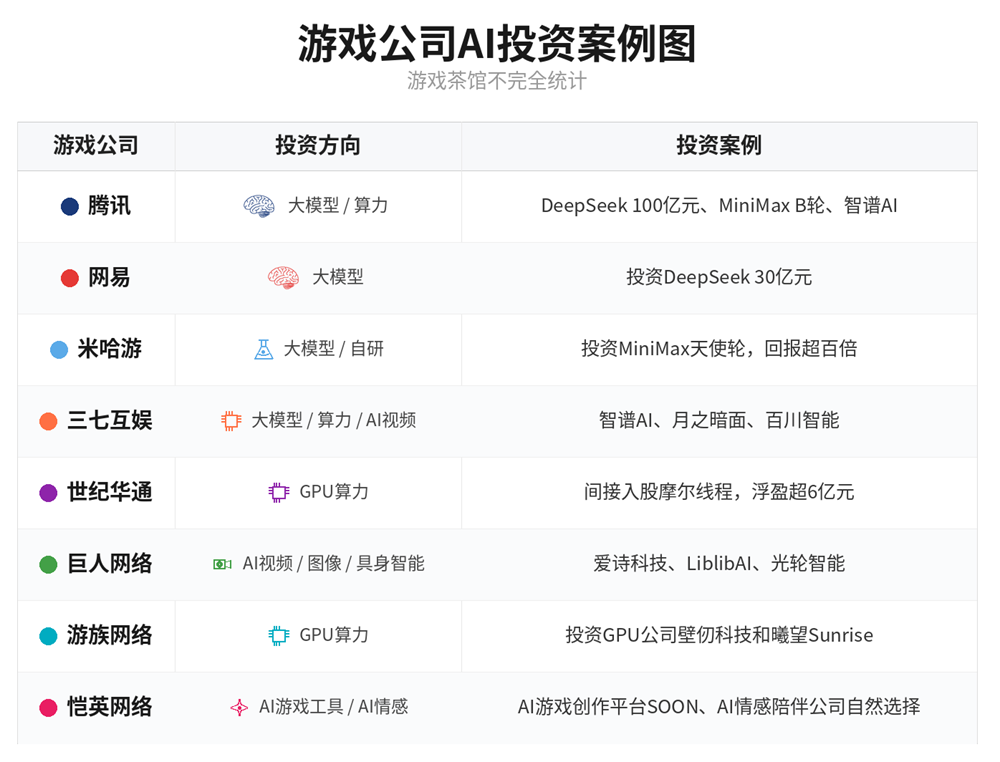
Game investor Wang Ze'an told Game Teahouse that 70 to 80 percent of the projects he has reviewed this year are AI-native games. Interestingly, many of those involved in AI game development are former executives from internet companies who lack deep experience in the gaming industry; there aren’t many pure-play game developers among them.
“(They) want to leverage the capabilities of AI models to build a platform, which is also in line with the DNA of the internet.” However, Wang Ze’an admitted that he has yet to see an AI-native game that “solves both commercialization and quality issues.”
However, most of the AI gaming projects that strategic investors see are, in reality, projects designed to attract VC funding.
Game investor Shi Xin stated bluntly that many FAs (financial advisors) have developed formulaic templates for packaging AI game projects:
Find someone with modeling experience from Factory B, someone with product experience from Factory T, and poach a planner from Factory M to put together a team that looks like a real powerhouse.
“But if you look at the actual progress of the project and examine the underlying logic behind it, you’ll find many flaws that don’t hold up.” Shi Xin believes there is a great deal of speculation involved.
AI-native games are generally still in the early stages of technological exploration. They rely on the input and output of large language models, and their gameplay is currently limited to language-based interaction genres such as simulation and companionship. There may be a variety of technological paths to explore in the future.
When all capital is focused on "certainty," a startup game team that hasn't yet proven itself and can't present a compelling new narrative is naturally out of the running.
02
Nowadays, getting money requires giving up more rights.
Not every startup game team fails to secure funding. Earlier this year, Zouchuan Studio came close to securing funding, but just before signing the Term Sheet (TS), the team’s leader, Yuexia (Lin Xia), called off the deal.
Last year, Yuexia approached several investors, and as negotiations progressed to the term sheet stage, issues began to surface. To varying degrees, the investors would add additional clauses to the equity investment terms, effectively creating a situation where existing shareholders had equal shares but unequal voting rights.
If all shareholders ultimately have their preferential rights honored, Yuexia will lose its absolute say in the project.
In Yue Xia’s view, starting a business means using one’s own money to buy freedom from the constraints of employment; if one is bound by various terms and conditions just to secure funding, that clearly goes against the original purpose of starting the business.
Therefore, even after going through a bankruptcy restructuring, Yuexia still put up 1.5 million of his own money to become the sole shareholder and support the development of the new game.
The incident involving "Moonlight" is not an isolated case. Shi Xin, an investor in the gaming industry, has observed that over the past two years, in order to mitigate risk, investors have often demanded additional terms, such as prioritizing the repayment of investment costs from project dividends, or investing through convertible bonds (where the debt is converted into equity if the company performs well).
Strategic investments by game companies focus more on synergies; some companies seek the rights to publish new games, while others seek nothing more than a promise from a star producer that, should the startup fail, they will be given priority for employment at the investing company.
"The current funding environment requires startup teams to give up more equity when raising capital," Shi Xin concluded.
Faced with additional demands from investors, Li Songmo’s team took the same stance as Yue Xia: they refused to accept them. In his view, investment is a collaborative endeavor in which success and failure are shared—“we are equal partners.”
An investor once strongly advised Li Songmo not to put all his resources into a single project, but to divide the funds evenly among multiple projects to spread the risk. Li Songmo did not accept this advice; he knew that spreading his investments too thinly would prevent the projects from building up the necessary technical expertise to become competitive.
Behind investors’ growing caution and increasingly stringent terms lies the reality that it is difficult to exit investments in the gaming industry.
It is already difficult for game companies to go public; since Tanwan Games’ IPO in Hong Kong in 2023, no other game company has successfully gone public. Even those that have gone public have struggled to gain market traction.
Shi Xin pointed out that the price-to-earnings (P/E) ratios of gaming stocks in the secondary market have continued to decline, particularly on the Hong Kong stock market. The rapidly narrowing exit channels have effectively deterred most domestic financial investors.
Apart from funds like IDG, ZhenFund, and Sequoia Capital—which have made money in the gaming industry in the past—most funds outside the industry have largely stayed away from gaming.
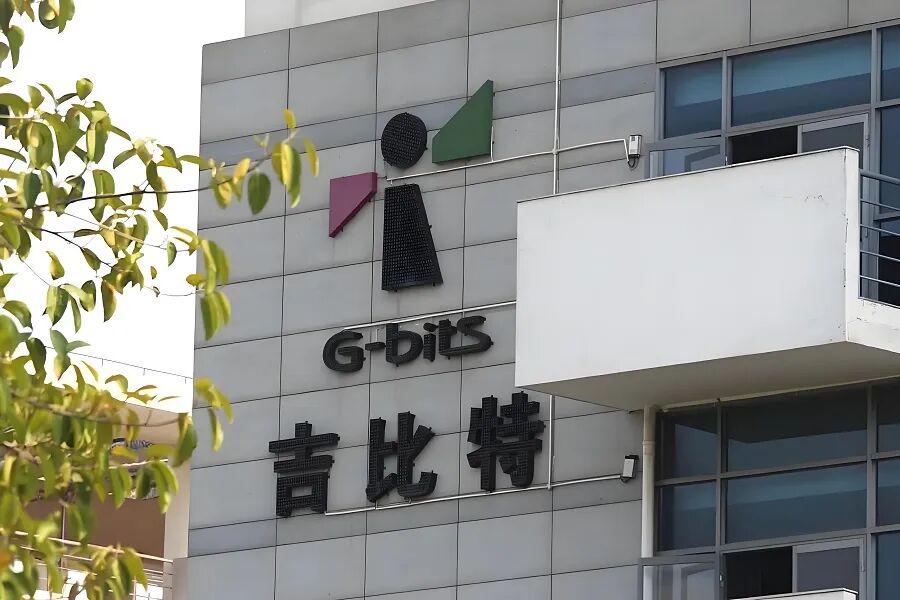
IDG invested in Gigabit
Since equity financing is difficult to secure, what about project financing? For example, approaching the issuer to discuss a partnership based on product quality?
Xiao Du, a seasoned developer, tested his new game. He sat down with the publisher to run the numbers, and they concluded that investing over a million in marketing and promotion for the new game wouldn’t be financially viable for the publisher. With such a significant investment of resources yielding almost no profit and a low risk-reward ratio, the partnership couldn’t move forward.
Having reviewed numerous small-scale projects, Shi Xin suggests that projects seeking less than one million in funding should consider crowdfunding. “With social media so widespread, a good idea can find its first users through crowdfunding and trade shows—there’s no need to take the narrow path of equity financing.” Many of the high-profile projects Shi Xin has come across raised their initial capital through crowdfunding.
So, now that we’ve emerged from the trough of the industry cycle, hasn’t the gaming investment and financing environment shown much improvement compared to previous years?
03
How warm is the water? Only you know.
If we rewind a few years, as antitrust investigations and the post-pandemic contraction of the gaming market took hold, investors had less capital to invest. The market immediately hit rock bottom.
From 2024 through the first half of this year, there has been an increase in transactions involving large individual deal sizes, and leading companies in niche sectors have consistently secured funding—a sign that conditions have improved. However, there has been no substantial increase in the number of deals made by strategic investors; capital is becoming more concentrated rather than spreading out.
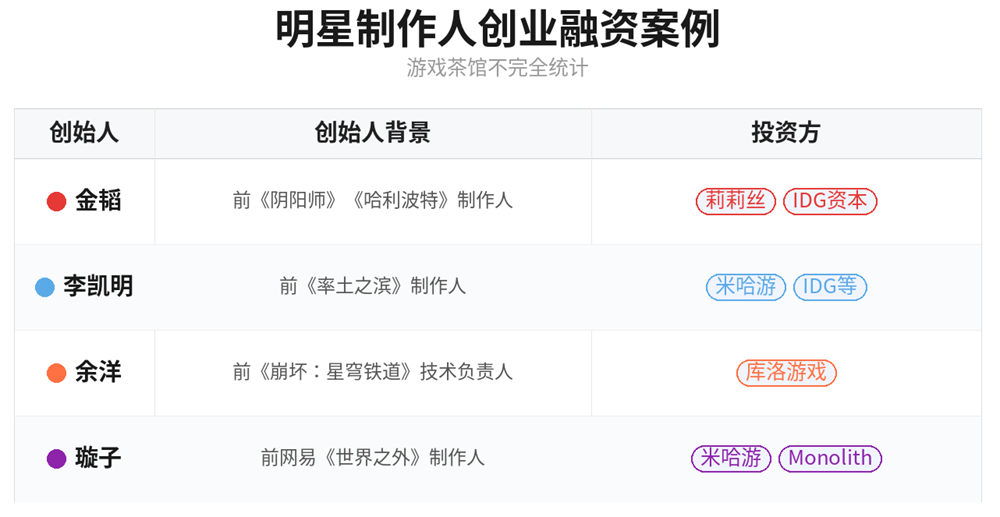
The reality remains harsh, as the scale of strategic investment operations at major tech companies continues to shrink. After talking to a number of people, Xiao Du discovered that the primary role of many companies’ investment departments these days is simply to help their executives identify future directions. He feels strongly that the current funding environment is even less vibrant than it was during the downturn a few years ago.
The world is diverse; even in the same environment, each person’s perception of water temperature varies.
Investor Wang Ze'an joked that, compared to the low point, the current environment is “no different from deciding whether to join the Nationalist Army in 1948 or 1949—getting a project approved is no easy task, and it really puts a producer’s taste to the test.”
More importantly, major studios are no longer interested in acquiring entire production tracks; they now prefer to integrate teams and invest only in proven, star producers.
The underlying structural contradictions in the gaming industry’s investment and financing landscape—namely, the mismatch between fund cycles and game project cycles, and the limited exit options—have yet to find clear solutions.
04
Who's Rewriting the Rules?
When the old rules no longer apply to the gaming industry, there are always those who try to redesign the gameplay.
Yuan Jing, the former CEO of Mutong, took the most direct approach: she used part of the proceeds from the sale of Mutong to establish her own Pilot Fund, which primarily invests in Steam products and teams. Free from pressure from LPs (limited partners), she sets her own return timeline, aiming simply to “outperform inflation or savings account interest rates.”
But he also acknowledged that this approach is not replicable; after all, very few people have the resources and the courage to use their own money to set up a fund to invest in video games.
Shao Yun, a former executive at NetEase, is also trying to find new solutions. The Magic Find Fund, which he founded, leverages his past experience in identifying talent, nurturing talent, and incubating blockbuster products to focus on early-stage investments in AI games. However, he acknowledges that early-stage investments carry high uncertainty and require a 5- to 10-year timeframe to prove their viability.
Investors include Sequoia Capital, IDG, major companies such as 37 Interactive Entertainment, and individual LPs like Yuan Jing, reflecting their endorsement of the company’s direction. However, Magic Find is still in its early stages and will need time to prove itself.
Zhu Yuan took a more aggressive approach, making contrarian moves as capital began to dry up. GreaterThan Group, which he founded, raised $100 million, and its first round of investments included teams laid off by NetEase.

Bullet Farm, in which Zhu Yuan invested, was originally funded by NetEase
Zhu Yuan’s logic is simple: the industry has overreacted. When major companies and investors are pulling back, that is precisely the best time to attract top talent and invest in undervalued assets.
Yuan Jing needs financial freedom, Shao Yun needs LPs who believe in a 5- to 10-year cycle, and Zhu Yuan needs a global network built up over more than a decade—none of these are universally applicable. What should a startup team without these resources do?
Under the moonlight, give your own answer—start by establishing certainty for yourself.
This former Tencent producer believes that the high level of uncertainty inherent in the gaming industry makes it inherently unsuitable for angel investment. Since investors seek certainty, it’s best to produce tangible results first before discussing a partnership. Fortunately, current advancements in AI technology have significantly reduced the initial startup costs.
His new game, *Toy Spirits*, has obtained its publishing license, and the Campfire beta test is imminent, laying the groundwork for future business partnerships.
05
Confidence still lies with those who roll up their sleeves and get to work
In today’s gaming investment and financing landscape, narrow exit channels, the extreme caution of strategic investors, and the concentration of capital on star producers or AI gaming projects have collectively created several structural contradictions in gaming financing, making it even more difficult for pure gaming projects to secure funding—a feat that now requires the perfect alignment of timing, circumstances, and human factors.
Fortunately, industry professionals are also thinking about how to adapt to these changes, and developers are always doing their best to create the conditions for new products. These people, who are rolling up their sleeves and getting to work, are more convincing than any current difficulties or roadblocks. The true strength of the gaming industry still lies in the hands of everyone who continues to make games.
原创文章,作者:游茶妹儿,禁止转载:https://youxichaguan.com/en/archives/208158