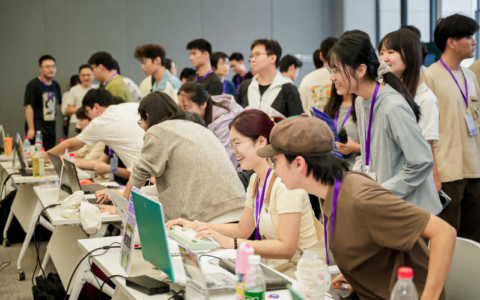
AI-generated short dramas have now become a major trend in the industry, frequently topping various short-form drama charts, which clearly demonstrates the commercial potential of AI-generated video content.
ByteDance’s influence is undeniable behind this new trend. In February of this year, ByteDance launched Seedance 2.0, which can generate a cinematic-quality short video in 60 seconds using just a piece of text, a few images, or a short video clip.
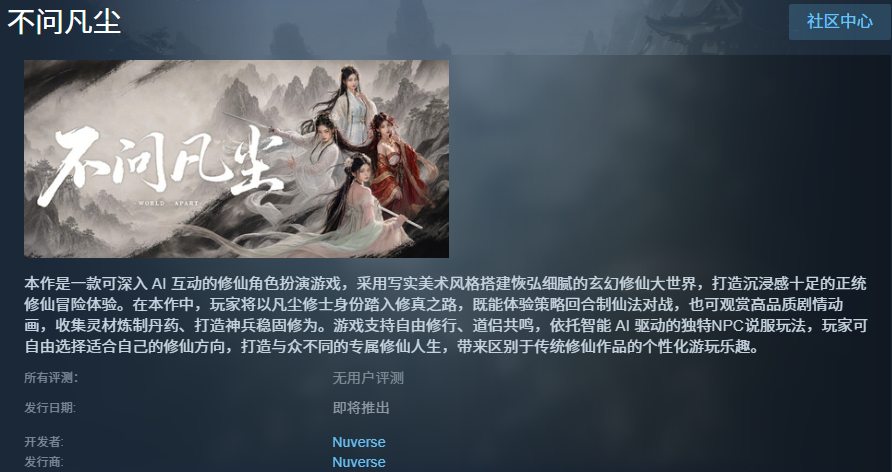
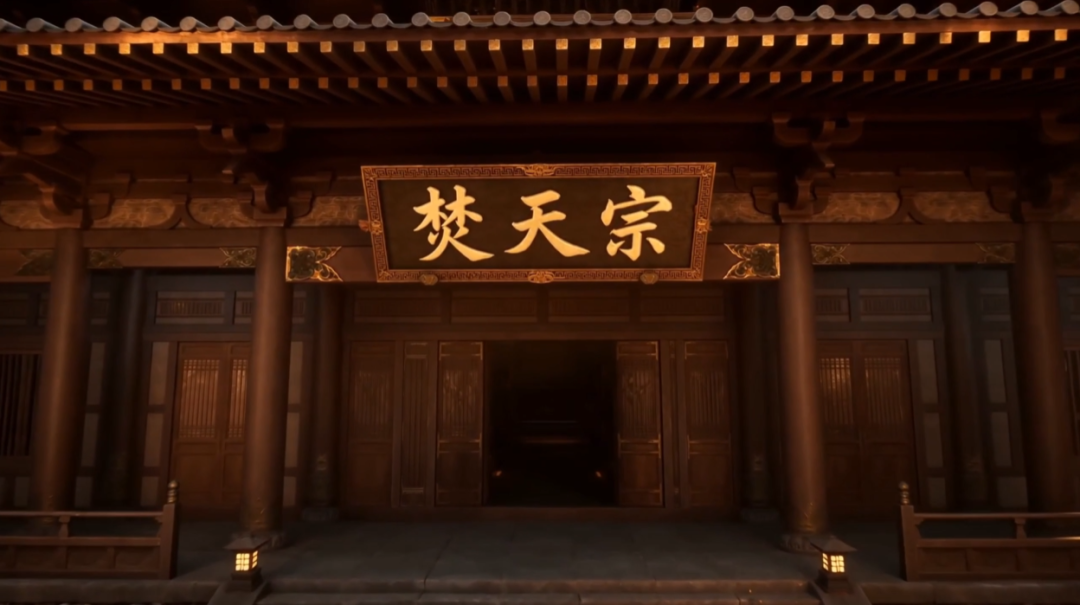
In fact, long before AI-powered film and television gained traction, ByteDance Games’ Jiangnan Studio had already been developing an AI-powered live-action RPG titled *Beyond the Mundane*. This live-action RPG, set in a cultivation-themed world and built using AI film and television technology, was greenlit last year, and its first teaser trailer was released in May of this year.
This isn’t hard to understand. Since 2023, AI has been a key focus for ByteDance, and Xin Jie’s interest in AI began around that time as well. Before *Beyond the Mundane*, he had experimented with three AI games, all of which were scrapped during the demo phase.AI technology evolves at an extremely rapid pace. In his view, developing AI games is more like a strategic game—one cannot focus solely on the present but must accurately anticipate the future direction of the industry.
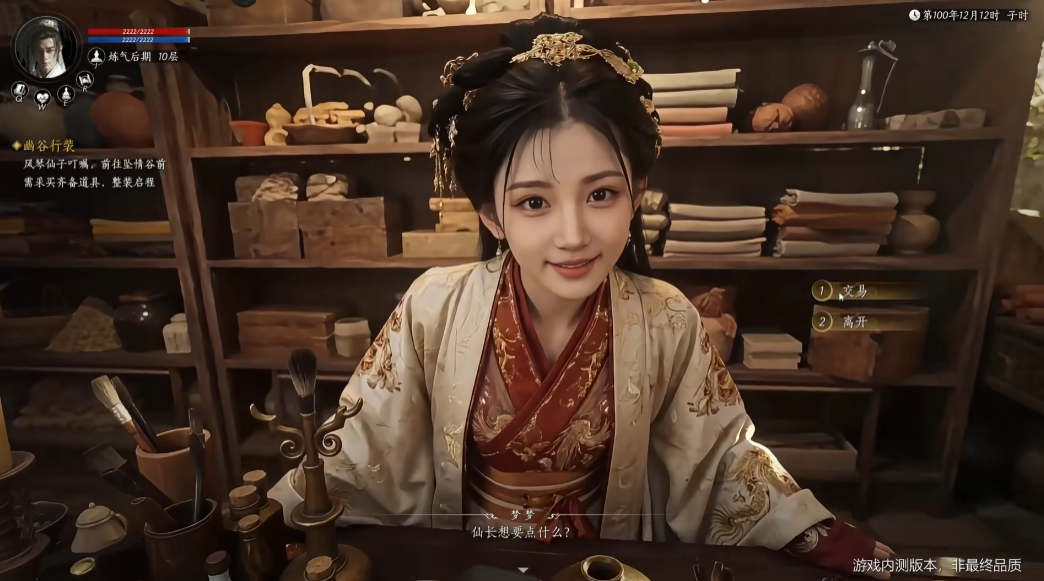
This time, however, he believes the team has chosen the right direction. In the Jiangnan Studio office, he pulled out his phone and showed me a video generated by AI: the young girl in the video had a lively, radiant smile.

That was the moment he knew for sure. The video was generated by AI, using nothing more than a random image of a person found online; they had simply specified the first and last frames and let the AI fill in the rest. But the moment it started moving, the character took on a quality that only a real person could possess, and he couldn’t help but stare at the screen for half an hour.
Now, with the rollout of applications such as AI-generated animated series, AI video has the potential to become a viable commercial product. He is very confident in *Beyond the Mundane*.
The following is a transcript of his conversation with the teahouse, presented here in edited form:
01
An AI-powered film and game series created by Byte Games
Teahouse: Did you used to work in the field of AI yourself?
Xin Jie: I don’t think I really started paying close attention to AI until 2023. I joined ByteDance right after graduation, and back in 2023, similar products on the market were still in their early stages. From 2023 to 2025, we experimented with many different products in the AI gaming space.
Teahouse: The three previous versions we developed were all scrapped during the demo phase. Why has this project been able to move forward?
Xin Jie: Because the logic is different, we’re still figuring out how to approach the first three projects.
The first one was something like a “Boss Simulator”—a management game where you have to manage your employees using natural language and assign them different projects. Overall, the goal was to create an entirely new gameplay experience.
However, I’ve found that because natural language requires typing to interact, the complexity of player interaction and the enjoyment derived from it are rarely proportional. You need very complex operations to get excellent interactive feedback, which means that relatively few people are able to enjoy this kind of fun.
Later, I invited a few coworkers to play, and it really hit me hard. They said, “Don’t make me go to work in the game, too.”I had originally intended to create a perspective that felt exhilarating, but in the game, I found myself dealing with a constant stream of headaches all day long. My AI employees would ask, “Boss, can I take the day off today?” or “I see my neighbor doesn’t look well—can we skip working together today?”
The second product is a story-based adventure simulator. It’s somewhat similar to the “infinite loop” gameplay style, where players guide their characters on adventures across different worlds, attempting to transform character bonds and adventure memories into unique gaming experiences.It’s a pretty interesting concept. We even tried creating a scenario where Lin Daiyu is transported to Hogwarts, and to our surprise, she recites poetry whenever she uses magic.
Due to the limitations of the large language models available at the time, the product never moved forward. It was around early 2024; at that time, large language models lacked the ability to retain long texts and continuous storylines, often resulting in confusion regarding the game’s world-building and plot logic. For example, we had created several instances at the time.
However, this project gradually evolved into the direction we’re heading now. That’s because it inherently leverages the creative potential of AI.We also realized that if we were going to pursue this, we needed to choose a direction that could compete with classic games as AI technology advances. Pure text-and-image gameplay lacks competitiveness and struggles to rival the mainstream games on the market with their high-quality graphics, so we set our sights on the AI video sector, which was still in its infancy.
Back then, I wanted to create *Director Simulator*, a game centered on simulating the management of a film and television production company. Players could sign actors, rewrite scripts, select cast members, use AI to generate movie trailers, and experience the inherent unpredictability of filmmaking while freely creating original content.
It was also during this process that we discovered the early concept for the “Memory Stone” feature now found in *Beyond the Mundane*. We realized we could “generate a video from a first and last frame,” so we randomly found an image online, set its first and last frames, and had the AI generate a video.I remember it very clearly—I must have watched that demo for half an hour. When the people in the image began moving continuously, it felt almost magical, creating a strong sense of immersion and realism.

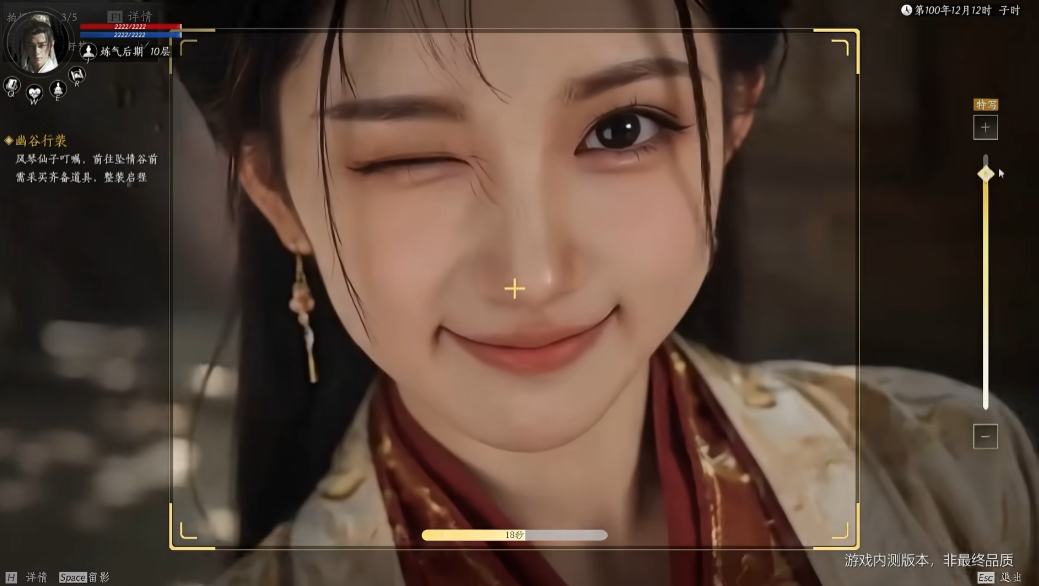
Building on this, we experimented with combining interactive gameplay with AI-generated video to create a simple game framework, which later became *Beyond the Mundane*.
Teahouse: Which department at ByteDance does this project belong to? How is this AI game project positioned internally?
Xin Jie: We’re part of the Jiangnan Studio.
I think there are still quite a few opportunities within the company. These initiatives can be implemented quickly internally thanks to a solid platform environment and the team’s strong support, which is why there are more opportunities and options for more strategic investments.
Teahouse: How many people on our team are working on this game?
Xin Jie: In the early stages, the team was consistently under 10 people. It wasn’t until around the beginning of this year that we realized this approach was highly reliable and could be applied to all types of games. That’s when we started expanding the team, and now there are about 20 of us.
Teahouse: Where Does “Certainty” Come From?
Xin Jie: I think it stems from two main areas.
First, AI multimodal technology has overcome the “uncanny valley.” In September 2025, we achieved the coherent, dynamic generation of AI characters; by the end of 2025, the quality of AI-generated images and videos had matched that of most PC games on the market, with the realism and detail of character models and scenes reaching a standard suitable for official release to players.

Second, breakthroughs have been made in the controllability of AI-generated content. A new generation of models, represented by Banana and Seedance, has significantly improved the controllability of text, image, and video generation.Early models could only generate content through extensive trial and error, with poor ability to understand instructions; new models can accurately interpret prompts and reference images, allowing us to independently control character movements, visual styles, and scene details—truly bringing creative ideas to life, rather than passively accepting content randomly generated by AI. This technological maturity gives us confidence that the project can move forward steadily.
02
An AI-driven cultivation game with a strong focus on gameplay
Teahouse: Overall, what kind of story will *Beyond the Mundane* tell?
Xin Jie: You find yourself in a world of cultivators, and the story follows the player as they arrive in this world and choose their own path of cultivation.
Teahouse: During gameplay, will players mainly interact with various NPCs, battle monsters, and explore the entire open world?
Xin Jie: That’s right. We’ve designed a unique cultivation-themed world, but we can’t reveal the details just yet. We’ll be releasing a dedicated world-building PV later to fully introduce the setting of this world.
Players will undertake missions assigned by the main storyline, but we don’t require everyone to follow the main storyline all the way through.Many players have grown tired of linear storylines; rather than passively following the narrative, they prefer to freely experience the joys of cultivating immortality. To this end, we’ve designed a rich progression system: players can choose different talents and pursue various paths, such as alchemy or artifact refinement; they can also form bonds with other characters and learn exclusive martial arts techniques through social interactions.
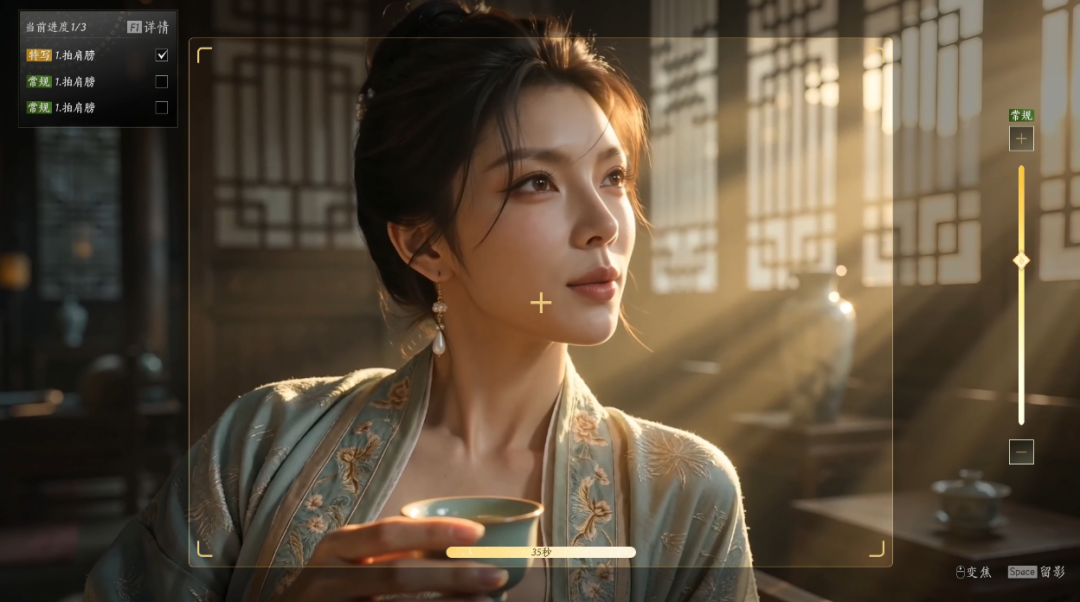
A “Signature Artifact” system will also be introduced later on, allowing players to freely choose between the Path of Righteousness, the Path of Evil, or to become an independent, free-spirited cultivator. Even without progressing through the main storyline, players can still cultivate and grow through these gameplay features, ultimately achieving ascension to immortality.
We have already developed a wide range of gameplay features, including alchemy, weapon crafting, sect trials, martial arts tournaments, auctions, and world bosses, all of which will be presented to players as part of the full game.
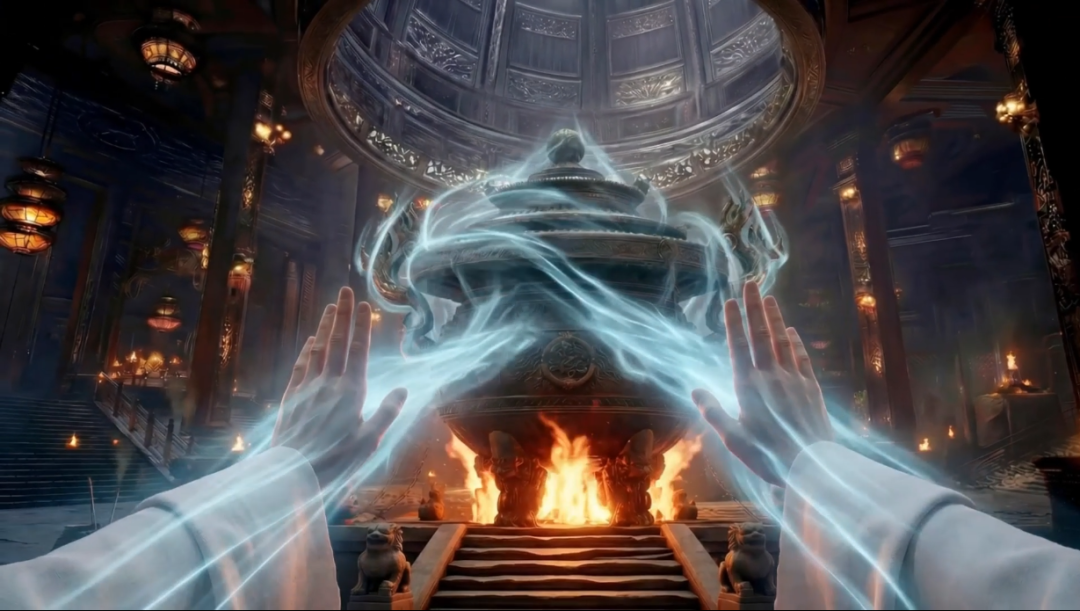
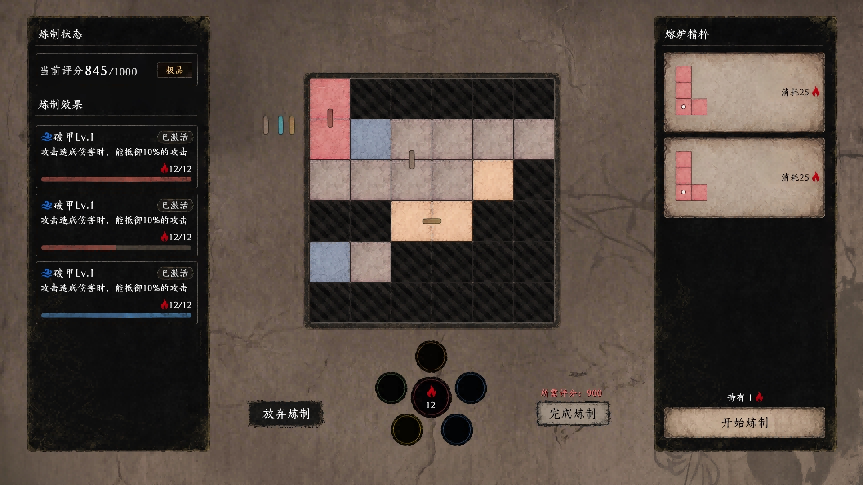
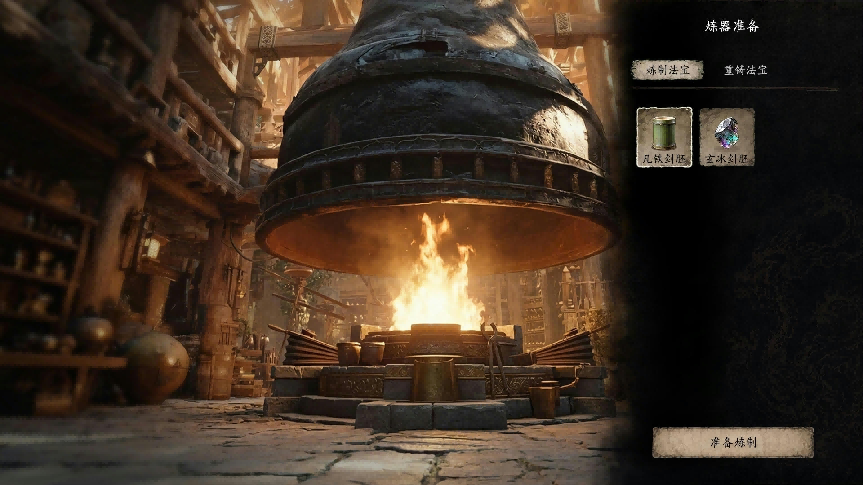
Teahouse: These are all fairly intensive gameplay experiences, which set them apart from most interactive cinematic games that focus on narrative.
Xin Jie: This is precisely what sets us apart from interactive film and game products. Many teams today are simply trying to add interactive elements to existing content, whereas we are leveraging an entirely new AI-driven production model to create a rich, authentic cultivation game.
This is because we clearly define our target audience as players of xianxia games on the Steam platform. These users not only want to follow the storyline but also seek rich gameplay, a fully realized world, and diverse interactive experiences—and these are the areas we’re focusing on developing.In the long run, the film and gaming industries will continue to converge: interactive film-games will gradually incorporate more gameplay elements, while traditional games will strengthen their narrative branching. Relying solely on a model based on multiple plot branches cannot satisfy all users; ultimately, each team will find its own niche and continue to explore market opportunities across different genres.
Teahouse: After your first PV was released, some comments in the discussion section mentioned that xianxia is a rather old-school genre. How did you decide that xianxia was the right theme for your project?
Xin Jie: We initially chose the xianxia genre last year. Part of the reason was that there were quite a few die-hard xianxia fans on our team; another reason was that I believe xianxia is a severely underrated genre. Previously, people tended to view xianxia as a niche market, but through our research, we found that these users are actually concentrated in first- and second-tier cities.
We observed a major content phenomenon surrounding *The Legend of the Mortal Cultivator* last year. This year, with the release of the *The Legend of the Mortal Cultivator* feature film and the *Sword Coming* TV series, we expect to continue expanding our user base.
I like to compare xianxia to a “genuinely Chinese cultural identity genre,” similar to China’s anime and manga culture.This is a rapidly growing market, but the current supply of games is still limited. Moreover, I believe that when it comes to cultivation combat skills, cultivation settings, and the level of detail in NPCs, AI can produce content of higher quality than existing products—this is a conclusion we’re quite confident about.
Teahouse: Many 3D anime adaptations face a lot of criticism if the modeling isn’t done well, and AI is even harder to control.
Xin Jie: I think these are two separate issues. Whether players are willing to accept AI-generated content ultimately comes down to whether the quality is good enough. If the visuals and production quality we create can match or even surpass the standards of mainstream TV shows and movies, players will naturally have no reason to reject it.
After we released the PV, a WeChat public account spontaneously organized a user poll. At the time, opinions were roughly split down the middle: half the players thought the content was good and were willing to give it a try, while the other half had reservations about the AI-generated format.In March and April of this year, we invited two or three dozen players to try the game in person, and the results were very different from before—the ratio of supporters to skeptics reached nine to one.
In other words, 90% of players, after actually experiencing the game, approved of the AI-generated content. As long as core aspects of the experience—such as combat, environments, and NPC interactions—meet the standard, players don’t dwell on what technology was used to create the content. It’s like watching a movie: people don’t decide not to watch it just because it was filmed with different equipment; the quality of the work itself is what matters most.
So our AI team has spent a lot of time and effort on design and discarding drafts: it’s not as if the work is done once the AI is released—we still have to do a lot of design work. The characters you see actually took a week or two to design.

In the future, domestic users’ acceptance of AI-generated content will continue to grow. We are also willing to invest additional resources to refine the details and optimize the design, so that players can feel the care that went into the production and we can deliver high-quality works.
Teahouse: There are quite a few established IPs in the cultivation genre, and developing works based on these IPs might attract a wider audience. In contrast, creating an original world and story carries significant risks. Why didn’t you choose to collaborate with an existing IP?
Xin Jie: Yes, I’ve been thinking about this issue from two perspectives. Developing an IP has its advantages and limitations—you have to go through the review process and ensure every design aligns with the IP. With this product, we hope to focus on using AI to quickly complete the 0-to-1 product validation.
But I believe we can’t afford to spread ourselves too thin. Later on, I got a tattoo that says “attention”—there’s a famous saying in AI algorithms: “Attention is all you need.” Part of the breakthrough in large language models comes from training them to focus on what’s important. I think this is just as important for a team.
Collaborating with IP holders, bringing great stories to life on screen, and executing long-term operations—these are all fundamental skills in the gaming industry. But using AI to build a complete game from scratch—that’s not a fundamental skill; it’s a problem you’ll have to solve on your own. As for the other challenges, you just need to handle them well moving forward.I hope to first devote all my energy to solving this unique problem of my own—once I do, I’ll have many options, and I’ll be free to pursue whatever I want.
03
Instead of making mobile games, they’re making one-time-purchase titles—what are they betting on?
Teahouse: When you were building the project framework, AI-animated series hadn’t taken off yet, right? What was the landscape like in that sector at the time?
Xin Jie: Yes, we completed the overall framework at the end of last year. At that time, Midjourney versions 3 and 4 were still the mainstream, and AI-driven content creation was still in its early stages. Subsequently, as models like Banana and Seedance were released one after another, our R&D efficiency improved significantly, and this technological iteration will continue.
Teahouse: There have been quite a few AI-powered interactive novels and interactive short-video content on the market this year. How do they differ from your core offerings?
Xin Jie: I’ve been working in this area for about a year now, and I feel this development was inevitable. In the past, creating interactive content with multiple branching paths required extremely high investment, yet the returns were uncertain—something most teams simply couldn’t afford. Now that the barriers to entry have lowered, more people are beginning to experiment with creating interactive content.
Our core goal is to create a comprehensive, large-scale game that includes a full range of gameplay elements, such as combat, environment exploration, NPC interactions, and character development. To that end, we will focus on developing core competencies in the gaming industry, including game design, game mechanics, and interactive feedback.
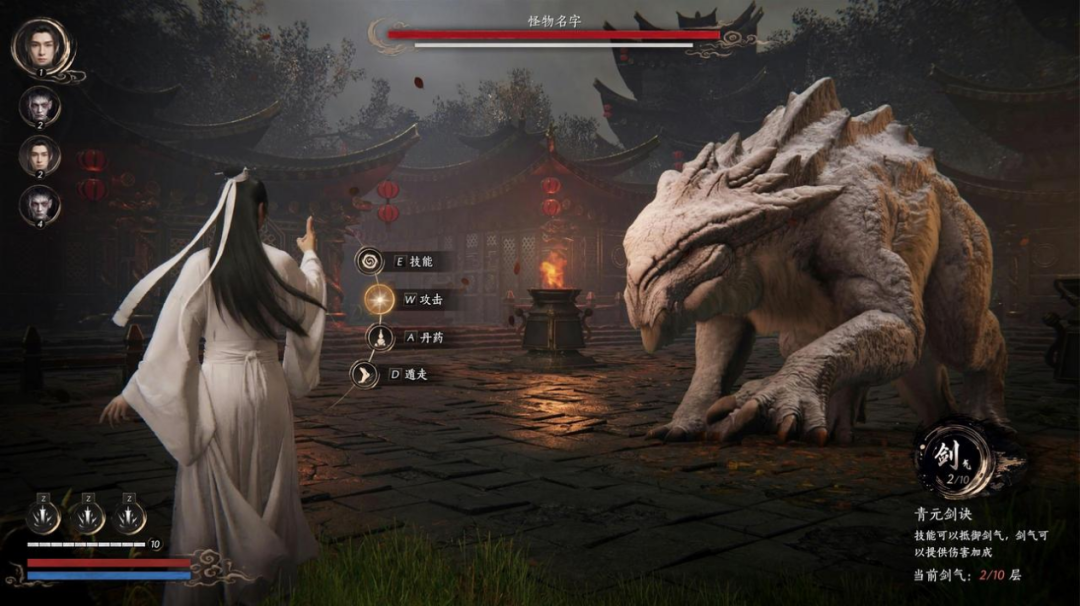
The interactive short dramas and AI-generated animated series currently on the market essentially stem from the film and television industry, with their core competitiveness relying on high-quality scripts and actors’ performances. However, high-quality scripts are scarce to begin with, and at this stage, AI is still unable to replicate the expressiveness of real actors. Achieving outstanding results requires a significant investment of time and effort in fine-tuning, which is also the current limitation of these types of products.Of course, I’m also optimistic about the future of interactive film and television content; it’s just that, at this stage, we’ve chosen to focus our efforts on the gaming sector. In the long run, these two categories will inevitably converge, giving rise to even more innovative forms of content.
Teahouse: So, compared to traditional AAA games, you’ve managed to reduce costs through AI; and compared to AI-driven interactive short dramas, you’ve introduced innovative gameplay mechanics. Would you say you’re taking an approach that combines the two?
Xin Jie: You could put it that way—our target audience has always been hardcore gamers.I’ve always felt that the gaming industry is like the construction industry—it requires not only creative design but also step-by-step implementation and construction. Many good ideas are limited by costs and production pipelines and thus cannot be realized. The entirely new production model brought about by AI can break through these limitations and unlock creative potential.
I’m very optimistic about the potential of AI-generated video in terms of visual quality; in the future, its visual effects will surpass those of traditional games. AI-generated video naturally delivers the same realistic visual experience that used to require massive budgets to create in top-tier 3D blockbusters.

Teahouse: This game leans toward hardcore gameplay, but ByteDance’s traffic distribution model is better suited to casual products. Once the game launches, how do you plan to promote it by leveraging the company’s ecosystem?
Xin Jie: Our product is still a relatively niche offering, available as a one-time purchase on Steam.Our core goal at this stage is to quickly validate the business model, so we won’t be engaging in complex traffic acquisition or advertising campaigns. Promotion is typically the domain of mobile games. This product should be exclusively for PC single-player. Ultimately, with PC single-player games, if you can provide players with unique features and high-quality content, they’ll appreciate it.
We don’t develop mobile games, and this aligns with what I said earlier: if we were to develop a mobile game, we’d have to deal with game mechanics, long-term operations, advertising, and user acquisition testing—all of which would divert the project team’s attention at this stage. Let’s first create this one pure game from scratch and get it up and running; once we’ve proven this approach works, there will be plenty of options for what to do next.
Teahouse: How long will it take to make?
Xin Jie: We’ll do our best to launch it this year.
Teahouse: Do you have any sales targets in mind?
Xin Jie: There are still expectations; it wouldn’t make sense if there weren’t any—you can’t just say you’re going to do it. Only when players give their approval does it prove that you’ve truly gone from 0 to 1 and done a good job.
04
“Making AI games is like gambling”
Teahouse: It seems there weren’t many teams working in this area before. Why didn’t other teams enter this space at the time, and what challenges were involved?
Xin Jie: Everyone has limited insight into industry trends. When we were developing the product, AI-generated character models were still unable to overcome the “uncanny valley” in visual terms. To create a complete game, we had to predict the state of technology a year in the future—which was essentially betting on the direction of AI development. If our predictions were too conservative, the final product would lack highlights;but if our projections were too aggressive, the project might stall due to technical shortcomings.
The success of this product would not have been possible without the successive iterations of Banana, Seedance, Image 2, and various agent models; without any one of these components, it would have been difficult to achieve. This is also a field that is constantly being disrupted by new technologies, placing high demands on the team’s ability to continuously learn and innovate.
Teahouse: If you didn’t win the bet, would you still wait?
Xin Jie: I think it depends on how firm your conviction is regarding this matter. My conviction stems from the fact that this project has clear implementation paths and business models for the short, medium, and long term. In the short term, the current product can be launched on PC and can be easily ported to mobile later on;In the medium term, we can collaborate with well-known IPs to create larger-scale works with a broader audience, while also reviving past concepts such as simulation management and narrative-driven games; in the long term, we can leverage the game world model to achieve seamless, real-time generation of environments and combat scenes. As AI technology advances, our R&D efficiency and product quality will continue to improve.
Teahouse: So what is the core underlying logic that enables this model to continue expanding and evolving?
Xin Jie: The core logic is to build the game’s mechanics, content, and the entire production process entirely on top of an AI system. I have a simple way to assess this: If the capabilities of an AI model doubled, would your first reaction be excitement or anxiety? If you feel excitement, it means you’ve chosen the right field.
In the early days, people were still figuring out how to get AI to write 1,000-character pieces; today, it can easily produce 10,000-character works, and AI has taken over much of the groundwork.We won’t simply follow the trend by developing these basic features; instead, we’ll focus on areas where AI excels, such as video and text-image content. As models continue to improve, our production efficiency and content quality will rise in tandem, and the range of practical product offerings will become increasingly diverse. Simply put, our product offerings and R&D framework are fundamentally built around AI from the ground up.
Teahouse: This model seems to have a low barrier to entry and is easy to replicate; now even ordinary people can use AI to make games.
Xin Jie: From a purely technical standpoint, there are indeed no absolute barriers—after all, we are not the developers of the underlying models. Looking at the gaming industry as a whole, most competitive barriers essentially boil down to quantifiable resources; whether it’s engine technology or team workflows, others have the opportunity to catch up.
Our strength lies in staying ahead of the curve. It’s not that other teams can’t develop similar approaches—it’s just that they’ll need to spend time working through, one by one, the various challenges we’ve already encountered. The AI field is inherently characterized by a constant race to catch up and alternating iterations, with models and technologies from various companies being updated in turn—this is the norm in the industry.We will continue to maintain our pace and explore this field alongside our peers.
Teahouse: Once your PV is released, there might be lighter-weight versions on the market before yours. How do you view this risk?
Xin Jie: I think this market is huge—to be honest, it’s big enough for many people to make a living in it. Being a pioneer isn’t as simple as it seems. As I’ve mentioned in previous conversations, my observation is this: the challenges you’ve repeatedly overcome are what build your competitive advantage.
As long as I do what I want to do well, there’s no need to overthink it. Just do what you want to do right now—that’s enough to make it work.

Teahouse: In the field of AI games, how do you see your position?
Xin Jie: I think we’re leading the way; experience and judgment in this area are very important.
A friend told me it feels like “picking up pennies in front of a steamroller”—large language models will gradually come to cover every industry and every capability module. In the process, you need to deliver something fun and create what you want to express before they reach you and that experience.
I believe that one day AI will surpass all of humanity in every respect. But this process isn’t about waiting—it’s about participating. Seeing, doing, and learning from a first-person perspective is, in itself, a unique experience.
原创文章,作者:gallonwang,禁止转载:https://youxichaguan.com/en/archives/207855