At first glance, *Journey to the Stars* gives the impression of being gentle.
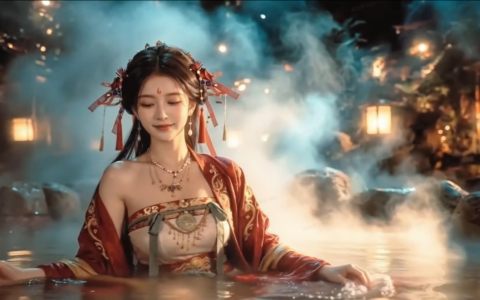
The hand-drawn artwork unfolds from a 45-degree isometric perspective, featuring bright colors and a texture reminiscent of oil paintings; judging by the brushstrokes alone, it seems like a delicate and charming game.
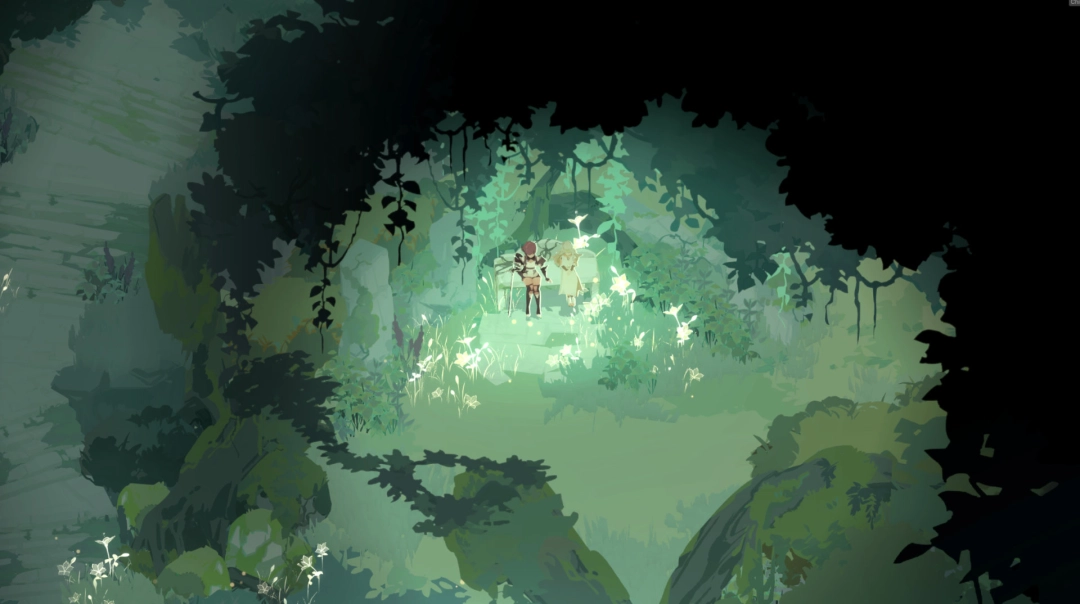
Two young women—the Light Knight Eve and the Star Messenger Lune—walk side by side through a world where the starlight has faded, against a backdrop of an oil-painting-like sky and ruins.
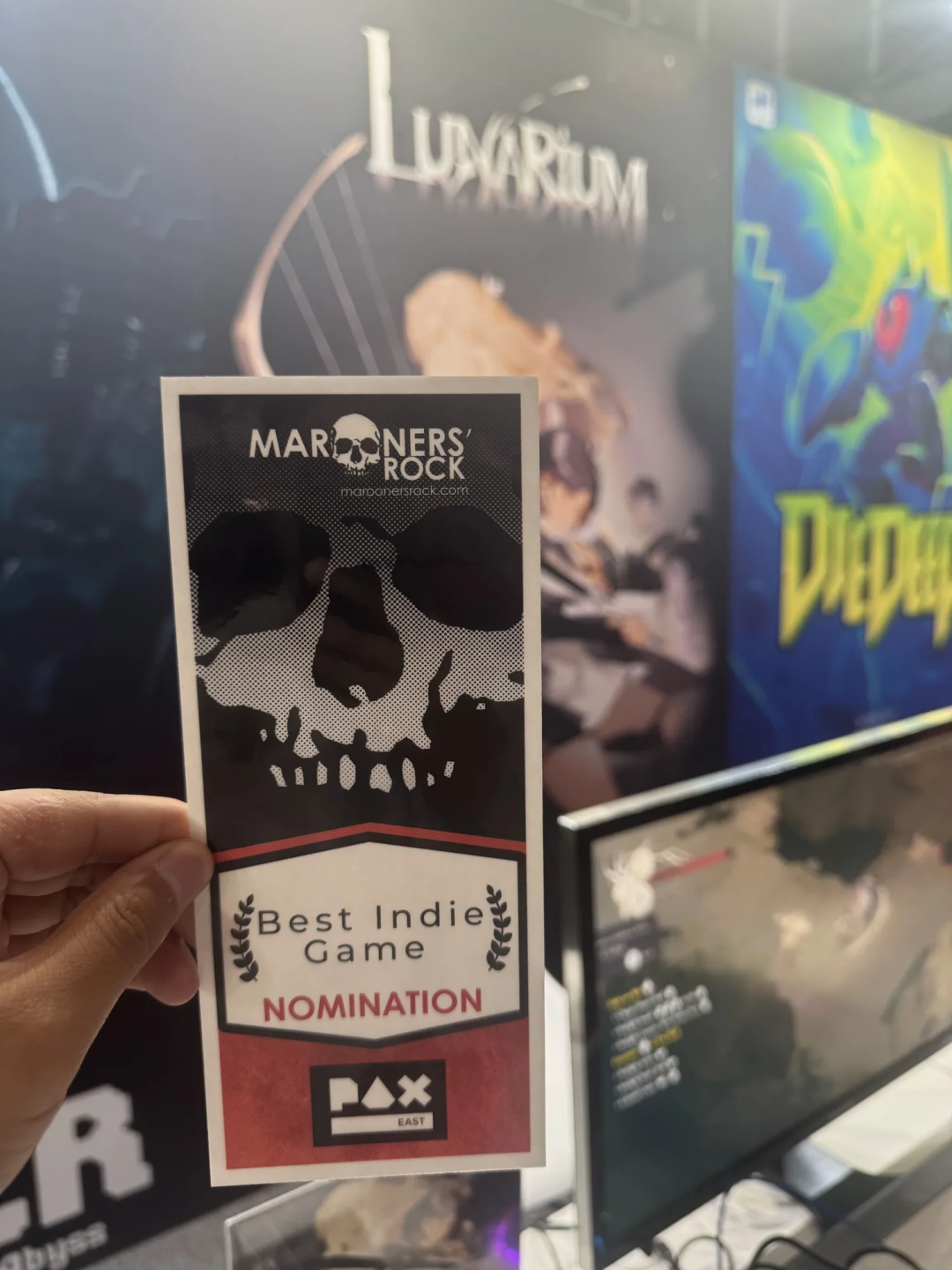
(In March 2026, this game—which had not yet been released—was nominated for Best Indie Game at PAX EAST.)
However, once players start playing, they’ll discover that the game’s hardcore combat is completely different from what the graphics lead you to expect.
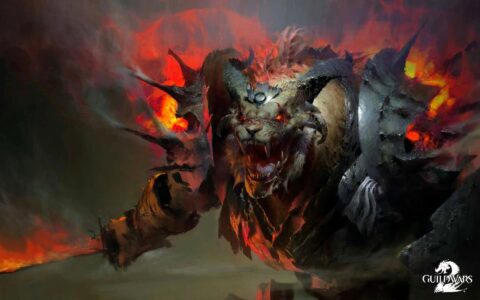
One player commented, “The art style is beautiful and incredibly soft, but the gameplay is the complete opposite—it’s like playing a 2D version of *Sekiro*.” “It lures innocent people in by disguising itself as a beautiful girl, only to kill them.”
Some players are drawn in by the game’s art style and narrative, only to be put off by the difficulty of the combat once they start playing; however, many more players stick with the game precisely because of the depth of its combat system, spontaneously sharing build ideas and analyzing hidden elements within the community.
Its “hardcore” nature stems from two aspects.
In terms of exploration, the game draws inspiration from *Hades*’ isometric top-down perspective but abandons *Hades*’ completely flat arena structure, instead constructing three-dimensional levels featuring elevation changes, looping paths, and blind spots.After defeating a mini-boss, players often gain new movement abilities that allow them to return to areas they had previously passed by but couldn’t reach—this ability-driven “sandbox” design philosophy is uncommon in top-down action games, and it seeks to carve out a space for exploration within the combat genre.
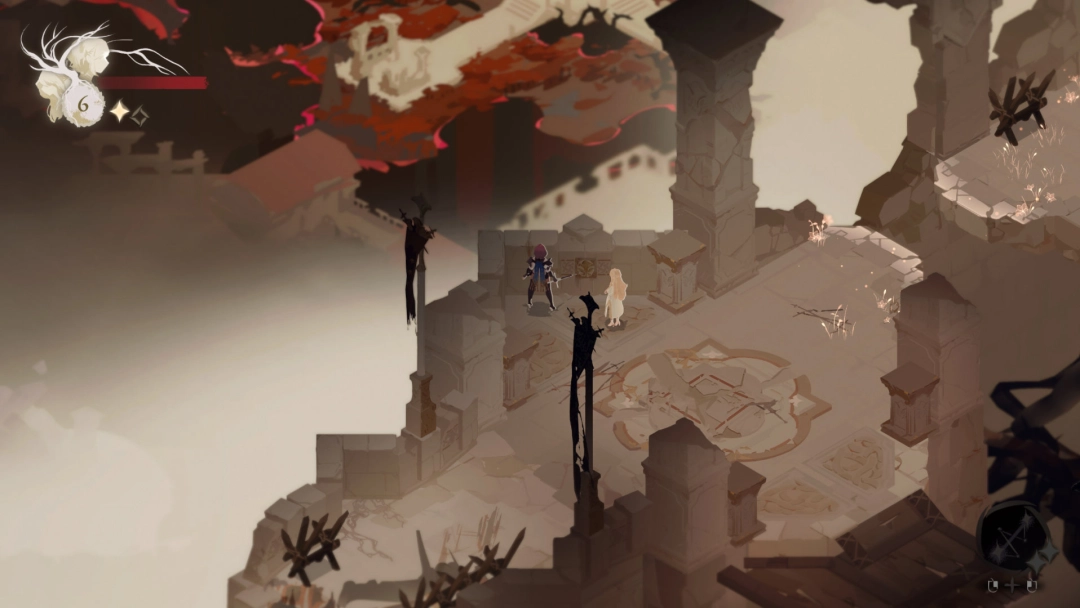
On the combat front, the game introduces a core mechanic called the “imbalance meter,” and precise parries are the most efficient way to fill it.Cooperative combat with two protagonists requires players to allocate commands between melee and ranged damage output, rather than relying on the passive support of traditional follow-type AI teammates; the “Rune Inscription” system in the progression system provides multi-stat passive enhancements, and the synergistic effects of different runes offer strategic flexibility in gear selection;”Starlight” energy is accumulated through rapid attacks and perfect parries, and is used to unleash special skills, creating a resource cycle that facilitates transitions between offense and defense.
As a result, it requires patience and precision; high-damage enemies often force players to go through a process of trial and error to figure out their attack patterns. The dual-protagonist synergy mechanic requires players to frequently shift their focus between melee blocking and ranged commands, resulting in a fairly intense control scheme; the experience leans more toward a hardcore game of offense and defense.
In fact, this is a Chinese action game that set out to emulate *Sekiro* right from the start. After the project was greenlit, however, it went through several twists and turns, incorporating creative concepts from other games and undergoing repeated refinements in its art style, controls, and gameplay.
Specifically, the camera angle creates a sense of brisk, agile gameplay, whereas the action mechanics—similar to those in *Sekiro*—follow a different rhythm. To address this, the development team sped up the action system three times over the course of two years, starting with the removal of the stamina bar and sustained defense mechanics from the demo phase, and continuing with separate adjustments to movement and dodging even after the game’s release.
Furthermore, the game’s framework and pipeline weren’t initially suited to the game’s style.
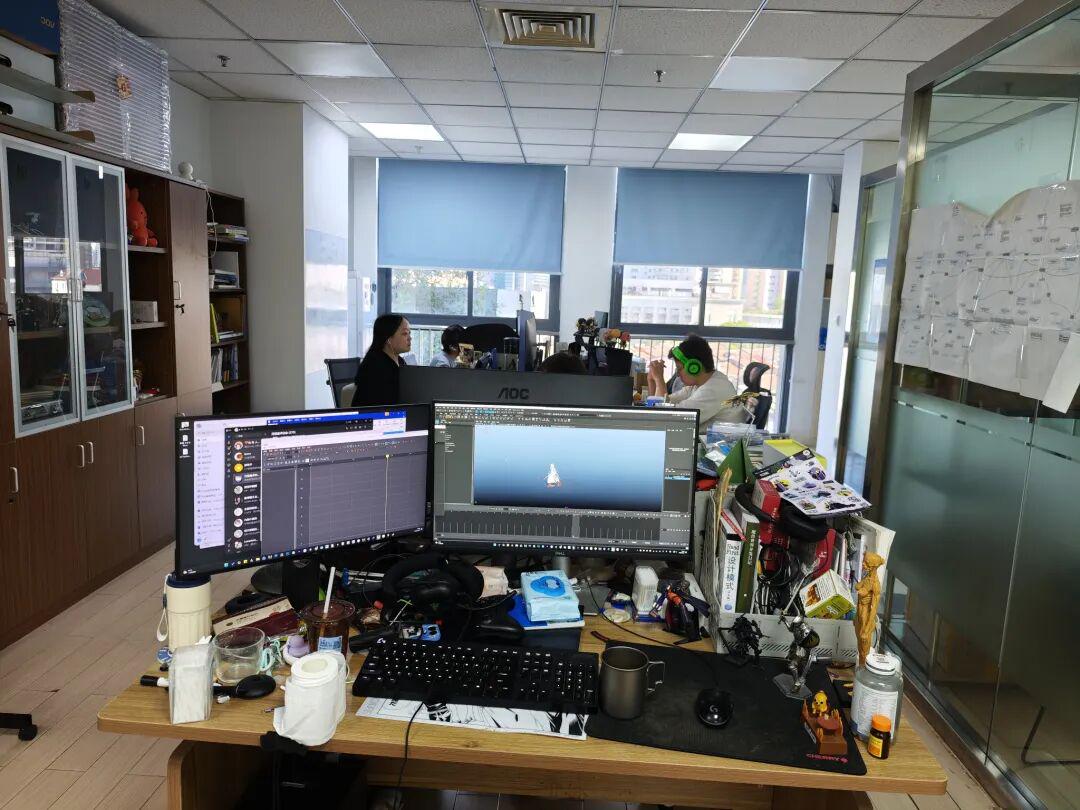
Interestingly, the producer overseeing the entire game has a background in animation; he transitioned from a pure art role to a production coordination role on this project. When he joined the team, he had no experience in game development and had never even considered working in the gaming industry.
Game Teahouse sat down with the producer of the *Journey to the Stars* project to discuss the direction shifts and various challenges the game team faced over the seven years from the project’s inception in 2019 to its official launch in 2026, as well as how this producer—who has a background in animation and transitioned from a pure art role to a coordinating role on the project—navigated these challenges.
The following is a transcript of the interview; some portions have been edited.
01
A Production Process Full of Setbacks
Game Teahouse: What was the original starting point for this project? Which of the directions set at the beginning were retained until the end?
[Producer]: This project has a long history. The main development phase began in 2023, so it’s been about three years now. But the project as a whole actually started back in 2019—even before I joined. I joined in 2020, when the team was still in its early startup phase; the concept was still quite vague, and its origins were complex.
In terms of presentation, since this was our first project, we needed clear references to move forward. At the time, *Hades* was quite popular; its isometric top-down art style had a retro feel and was highly polished, and there weren’t many direct competitors that were exactly the same.The asset complexity for this style is lower than that of pure 3D projects: the camera doesn’t need to rotate, and for some elements, simply drawing a flat image and placing it there looks indistinguishable in-game from an actual 3D model—which provided the development team with a great deal of creative freedom. Based on these factors, we settled on this visual style at the time.
In terms of gameplay, the team was particularly fond of the Souls-like genre at the time.In 2019 and 2020, *Sekiro: Shadows Die Twice* had just been released for a short while. Its systems were exquisitely designed, serving as both a synthesis and an innovation within the Souls-like genre. The starting point for our combat system was to dissect and study it, distill the design elements that delivered a great experience, and then create a game that could provide a similar experience.
The story’s theme was conceived much earlier—it was proposed by the original founding members of the team, even before I joined. At the time, it was just a vague idea, consisting of the protagonist’s visual design direction and a general world-building framework. Later, the lead artist developed it into a clearer visual design, and the writer crafted the complete story and world-building.
Visually, the direction is actually quite clear: we’re following the path set by *Hades*. From a practical standpoint, this direction is well-suited for small teams with limited experience. By 2023, the vast majority of the project’s current content had been developed by that time. In the preceding years, we took many detours—or, to put it another way, we lacked experience and wasted effort—but those experiences honed our skills.The game framework underwent a complete rewrite in 2023. After the new development team joined, while many art assets were reused, the code was completely rewritten, and a new project was created in Unity.
Game Teahouse: What was the direct reason for the 2023 overhaul? How do you personally assess that decision now?
[Producer]: The immediate cause was that the project underwent personnel adjustments, which changed the team structure.I joined at the end of 2020, initially in a pure art role, and by 2023, I had been there for nearly three years. Although everyone was still getting paid, the project wasn’t moving forward, which left us feeling rather adrift. At that time, everyone was getting anxious, and the project’s underlying flaws and internal conflicts were exacerbated. After the restructuring, the project needed a clearer direction, and the pace of progress was put back on the agenda.
There was a point we discussed: whether to continue with this project or move on to a different product category—one with simpler case studies to reference and more practical applications. In the end, I made the decision.My assessment was that the team still had a sense of cohesion and shared a common vision for what we’d built up with this project. But if we were to scrap everything we’d done so far and start a new project—one that took a long time to take shape and where conflicts arose along the way—it might never get off the ground, and the team would fall apart.
I’m inclined to keep expectations more realistic and just focus on getting this project done right. Many of the design and art assets from earlier stages can be reused. Around October 2023, I began taking on the role of project coordinator.There isn’t a clear hierarchy in small projects like this, so my role is more service-oriented: organizing the tasks people excel at, liaising with external parties, and coordinating with the business side. Compared to a creative producer, I’m more focused on moving the project forward, because many team members are talented, and I agree with their vision for the project. Following this adjustment, the project continued to move forward under the new framework.
By that point, everyone felt that things couldn’t go on this way. Something had to change—either we’d restructure internally and move forward, or we’d go our separate ways.The “frog in slowly heating water” analogy doesn’t apply here. As creators, we naturally hope to see our work published and to connect with our audience. It was precisely amid this atmosphere of seeking change that, in September and October 2023, a new type of project took shape.
Game Teahouse: You previously studied animation—was joining the game project a coincidence or part of your plan? How did that experience influence your decisions later on?
[Producer]: During the 2020 pandemic, I was originally planning to go to Japan to work on an animation project. I’d already received an offer and was preparing to apply for a visa. Then the COVID-19 outbreak hit during the Spring Festival, and I couldn’t leave. At the time, I thought it might be like SARS—that it would be over in three or four months—so I gave up my apartment in Shanghai and returned to my hometown to wait it out.But I ended up waiting from February all the way through August and September. Realizing this wasn’t a sustainable situation, I started looking for opportunities in China. Coincidentally, a college classmate was working on this project and asked if I wanted to join the team as a 3D artist. I sent him my portfolio, we had a chat, and we both felt it was a good fit, so I joined the team.
To be honest, before I joined, I never even considered making games. I majored in animation and had no practical experience or background in game development—unlike many college students today who plan ahead, create demos, and do internships. But I’ve always been interested in making games, so I’d watch some game development videos reposted on YouTube.We hit it off right away, so I joined the team. After I started, I mainly handled the 3D work for the project. We had several artists, but I was the only one doing 3D. Later, the team structure underwent some changes—the programming team brought in new members, and we hired two game designers—but the art team remained the same. I’m still the one responsible for all the 3D content in the game.
Game Teahouse: What specific issue led to the “service-oriented” coordination approach you mentioned? What were the main points of disagreement within the team previously?
[Producer]: There were two main sources of conflict in the past few years. First, there was no one specifically assigned to coordinate and make final decisions. Previously, this role had not been clearly defined during project implementation, which led to a lack of timely coordination when disagreements arose. Half of the conflicts in those years stemmed from this. The other half was due to the project’s prolonged lack of progress, which left everyone feeling lost and frustrated.
When everyone has their own ideas, disagreements are inevitable. When disagreements arise, someone who isn’t aligned with either side must step in to resolve them; otherwise, the more people argue, the less productive it becomes.The most important thing is to understand what each side is truly seeking. Sometimes there’s no fundamental disagreement—just a misunderstanding in how things were phrased, which makes it seem as though both sides are pursuing different goals. In such cases, what’s needed is to help them sort things out. When there really is a conflict, first let the other person know that someone understands what they want, then explain that while their idea has merit, the current situation isn’t suitable for implementing it.
For a collaborative project to run smoothly, someone must step in proactively at the first sign of any issue. By the middle to late stages of the project—especially this year, once everyone got busy—there were actually no disagreements at all.
Game Teahouse: When were the game’s art style and narrative focus on interactions with young girls finalized? Did this direction waver at all following the team changes?
[Producer]: We’ve been finalizing details all along, but there’s no specific timeline. The art concepts for the core characters were finalized early on, as was the technical approach, but the actual implementation has been an ongoing process.Since our development team had limited experience, we weren’t able to define the pipeline in great detail during the design phase; we were constantly experimenting, and changes arose as we went along. The content for the middle and later parts of this version of the script wasn’t finalized until near the end of last year.This directly led to a very late localization handoff; we were still installing localized assets the night before launch, which cut into testing and refinement time, resulting in some issues at launch. It’s true that we weren’t able to clearly define most elements early on; a lot of content only became clear just before launch. While the proportion of uncertainty has been decreasing, we’ve been feeling our way through the process the whole time.
Game Tea House: You play a lot of games and watch a lot of movies. How exactly has this input influenced this project?
[Producer]: I play all kinds of games—from popular indie titles to big-name blockbusters—and I watch all kinds of movies, at least one every week.As a service-oriented producer, I’m actually not a very distinctive person—I lack a strong preference for or deep expertise in any particular direction, so it’s hard to establish a personal brand. But this allows me to find common ground with every member of the team, which is one reason I’m able to act as a unifying force.
02
Streamlining and Speeding Up
Game Teahouse: From your perspective, what is the most original aspect of this game?
[Producer]: The biggest part of it comes from our commitment to—and expansion of—the visual style. Everyone knows that *Hades*’s aesthetic is great, but we take our time. By the time we release our game, it will actually feel a bit fresh to people. If we’d actually released it in 2022 or 2023, there might already have been a slew of *Hades*-like games on the market.
What sets us apart is that we didn’t break down Hades’ implementation into very clear steps and simply follow them. This might actually be an advantage stemming from our lack of experience. Experienced teams can quickly break things down and set up a pipeline, producing stable and high-quality results—but their work might end up looking too much like the original.When our team was first formed, not a single person had any game development experience—we were completely in the dark. We knew what we wanted, but didn’t know exactly how to do it, so we had to pool our ideas and figure it out on our own. The end result is that no other game on the market is truly like ours—not even *Hades* itself.We took some “wrong” approaches along the way, but by “wrong,” I mean we didn’t follow the original game’s implementation path—instead, we forged our own path through trial and error. Once our approach differed, the subsequent design and assets took on a different character as well. Combined with the fact that there was no strict pipeline forcing everyone to follow a set standard, individual team members’ preferences continually influenced the process, ultimately resulting in a highly original style.
Another point is that *Hades* was designed as a very 2D project to accommodate its fast-paced combat, and most *Hades*-style games have adopted the same design approach. But we wanted to create a level-based game with a sense of exploration.A purely 2D format was too limiting, so we had to go 3D. These two factors led us, almost by accident, to create something unique. But as for whether it’s good or mature enough, there’s still plenty of room for improvement. If we were to go back and make it now, we could do a lot better in many areas.
Game Tea House: Looking back after having done this once, what specific issues did the choices made in the rendering pipeline cause?
[Producer]: When we were researching *Hades*, we discovered that *Hades* had virtually no 3D assets—it was all 2D. Their animations were pre-rendered externally as a sequence of images and then imported into the engine; the characters were essentially flat, with constant cuts between directions.Based on this reference, we ultimately adopted a 2D project’s rendering pipeline. However, by the later stages of development, the vast majority of the project consisted of 3D assets, including characters and environments. Mixing the two made editing both complex and cumbersome, and it indirectly led to performance issues.
After launch, there were many negative reviews complaining about lag. Looking at the raw performance data, its system requirements are lower than those of many big-name games, but it doesn’t look like the kind of game that should be resource-intensive. Players expected it not to lag, but when it did, the negative reviews poured in.The root cause is that we’re using a 2D pipeline to render 3D objects. The 3D pipeline has a well-established set of optimization methods for 3D rendering; even without specialized optimization techniques, its performance is guaranteed to meet a baseline standard. However, the 2D pipeline doesn’t address these issues, leaving us stuck in the middle.Lighting presents the same problem: we ended up using heavily modified 2D lights to illuminate 3D objects. Achieving ideal lighting effects required layering numerous 2D light sources, yet we still couldn’t produce satisfactory detailed lighting on the 3D objects. We didn’t fully capitalize on the strengths of either approach and ended up suffering some of the drawbacks from both.There was also a lack of planning regarding scene asset specifications, leading to inconsistent levels of completion—some areas were empty, while others featured subtle variations that players wouldn’t even notice. If I were to work on a similar project in the future, I would lean toward using a fully 3D pipeline.
Game Teahouse: The action system started out as a 1:1 clone of *Sekiro*, but how many major structural changes has it undergone to reach its current state?
[Producer]: The combat system is primarily based on studying and breaking down *Sekiro*. The underlying architecture was built by the original design team, and we carried it forward from there.In the early stages, we modeled our asset specifications 1:1 after *Sekiro*, including four tiers of hit reactions and light and heavy left- and right-side parry animations—the parry animations alone had 6 to 8 distinct tiers. But we later realized that our team size was far smaller than that of a mature studio, so we couldn’t just blindly copy everything.Additionally, *Sekiro* uses an over-the-shoulder perspective with a more realistic style, requiring more nuanced animations for expression; our game is stylized, so creating that many variations would have had negligible impact. We subsequently made significant cuts, removing or merging many rules.
This gameplay system was largely inspired by *Sekiro*, and the process was similar to learning art: since we weren’t professionals, we didn’t get it right the first time. While staying true to our original intent, we incorporated a lot of our own ideas—some good, some not so good—so in the end, it didn’t turn out quite like the original.
A major structural change took place in the first half of 2024. We created our first playable demo and took it to the Guangzhou Independent Game Expo. That was the first time players outside our team got to try the game. That version was still very similar to *Sekiro*, featuring a resilience bar and sustained defense.Player feedback generally indicated that the game felt too slow. From a purely design perspective, it might be hard for a designer to understand: Sekiro was such a huge success, and many of our elements were identical to it—so why doesn’t anyone say it’s slow, but they say ours is?My takeaway was that the art style and camera perspective create preconceived expectations in players’ minds—expectations shaped by other existing titles—and there’s no way to fight that. So we undertook a major system overhaul: we removed mechanics like the resilience bar and sustained defense, and sped up all actions by about 1.5 times.When we participated in the New Game Festival in the first half of 2025, players still felt the game was slow, so we sped it up again. We made another adjustment upon launch, and only now are we close to meeting players’ expectations. The biggest lesson we learned along the way was that we failed to clearly gauge where that “balance” lay. Although we subjectively wanted to achieve it—and we certainly tried—we never got it right on the first try.
Game Teahouse: Some people believe that “Souls-like” action design is only suitable for large-scale projects. Having actually worked on it, what are your thoughts?
[Producer]: The volume of assets isn’t the issue itself; it’s the design quality that’s reflected in player feedback. Specifically in our game, we’re well aware that our design falls short in many areas. Players’ evaluations after launching the game are very objective—they clearly point out what works and what doesn’t. While the volume of assets is certainly something small teams need to pay attention to, excellent design doesn’t necessarily require a large number of assets to create a great experience.A good experience isn’t necessarily tied to richness. Some games excel at streamlining—with clear interactions that deliver a more direct sense of satisfaction. We’re stuck awkwardly in the middle: we started by modeling large-scale projects, then shifted toward a more streamlined approach when we realized it wasn’t working—but due to a lack of experience, we weren’t able to make the transition fully.Ultimately, we raised expectations that the game might have greater scale and richness, but we didn’t deliver; yet in our pursuit of simplicity and clarity, we didn’t strip things down thoroughly enough.
Game Teahouse: You once said, “Player feedback isn’t necessarily right, but their emotions are always right.” How did this statement influence your development process?
[Producer]: When players feel the urge to provide feedback, they may misattribute the cause—the advice they give is often wrong. But what triggers that urge is definitely some kind of negative experience, so that emotion itself is valid. The key is to identify how that emotion arises within the game and figure out where the problem lies.If a player reaches out, it’s because they’re frustrated. Their own analysis may not be entirely accurate, but the frustration is undeniable. We, as players, are the same—we rarely write reviews, but when certain points hit a nerve, we can’t help but give a bad review. The development team’s job isn’t to make changes based on what the player says, but to identify the true source of their frustration.
Game Teahouse: If you were to recreate this game today, what different trade-offs would you make regarding the gameplay mechanics?
[Producer]: We’ll streamline the combat system, enhance exploration and the sense of progression, and refine the feedback to make it more responsive. The bigger issue is value for money: the richness of the player’s experience isn’t proportional to the amount of resources they spend.It’s better to have three completely different bosses, each with only 10 moves, than a single boss with 20 or 30 moves. We need to refine the system so that, even with fewer moves, the essence of the gameplay remains intact—creating more designs that players can truly appreciate. This idea has been there from the start, but we lacked the determination and capability to see it through.
Game Teahouse: During development, which external works had a significant influence on you?
[Producer]: When we first started making major improvements to the action system, I played *Crab Crab’s Treasure Hunt*. It uses a very simple resource loop—nothing is overly elaborate—but the interactions are polished to perfection. After that, I took the lead in steering the changes in that direction. Once the system takes shape, there’s only a limited window during which external inspiration can really make a difference.You can draw on external references when establishing the early design framework, but once the framework is set, the focus shifts more toward refining and polishing what’s already there. At that point, having too many new external inspirations can actually be counterproductive—it makes you prone to impulsively and frequently altering the framework. Later on, after playing some excellent games, we did veer off course from our initial design; in hindsight, some of those deviations weren’t particularly beneficial.Now, I would recommend writing down your early design ideas—the more detailed, the better. When you’re tempted to make changes, refer back to them so you don’t get sidetracked by more recent influences. The most important source of inspiration was definitely *Sekiro*; the entire framework stems from that.
Game Teahouse: When designing a new boss, do you start with the concept or the gameplay?
[Producer]: Both. Some enemies have clear story points and dialogue designs—it’s a concept-first approach: we start with the dialogue, then create the art, and finally decide how to match the gameplay.For other aspects left open-ended, we start with gameplay ideas—defining the kind of combat experience we want—and then bring those concepts to life visually. In practice, we don’t have a strictly segmented pipeline; one person often handles many different tasks. We collaborate closely, communicating constantly and working continuously.
03
After launch, the journey turned out to be even more bumpy than expected
Game Teahouse: What have sales figures been like since launch? How do they compare to your pre-launch projections?
[Producer]: Sales are currently under 10,000 copies. Steam is a cutthroat environment right now—with so many new games launching every day, you have very little time to prove yourself.If you don’t perform at your best during that window, the game will be deemed unworthy of continued visibility and quickly removed. But there’s one notable point: the number of wishlists has continued to rise since launch—it’s now around 110,000 to 120,000, up from just 70,000 to 80,000 before launch. So it’s clear that there were issues with the project during the initial launch phase.However, the fact that the Wishlist count remains steady indicates there are still quite a few players interested in our game. We plan to release updates in the near future and, after the updates, combine them with a discount to try to regain visibility.
Game Teahouse: Has the project broken even yet? Where is the team focusing its efforts next?
[Producer]: We haven’t recouped our investment yet, but the team is already focusing on future updates and long-term operations. The success of this project will largely depend on how well the ongoing operations perform and what direction the team takes next.
Game Teahouse: We handled domestic distribution ourselves, but entrusted overseas distribution to a newly established small publisher. Looking back now, what was the problem with that decision?
[Producer]: We handled domestic distribution ourselves, and our main strategy was to learn by observing what other games were doing. At the time, the team wanted to gain experience in all aspects of the process. For overseas distribution, we partnered with Imperfect Games—another Chinese publisher. Their team was very responsible, but they were a newly established company, and I believe ours was only their second game to be published.We started working with the publisher too late. Our initial approach stemmed from a naivety-fueled arrogance: we thought we could just invest a little and give it a try. In reality, we wasted a lot of time and energy, and we didn’t execute the marketing and promotion efforts very effectively. We should have focused our energy on development, outsourced the entire publishing package, and followed along to learn from them.
Game Teahouse: The 69-yuan price tag has been the subject of much discussion. What are your thoughts on that figure now?
[Producer]: From a business perspective, the game would definitely sell better if the domestic price were a little lower. If we had a team with extensive publishing experience—or if we had experience publishing games ourselves—they would tell us exactly what the price should be. But setting business strategy aside, I think the amount of content justifies this price.That said, the initial release did have issues—it went live too hastily, and its performance in the first week was terrible across the board. I don’t think it was worth the price at that time. After we fixed as much as we could, looking solely at the content, I think it’s still okay. But the fact that “we think it’s okay, but players don’t” is, in itself, a sign of a lack of publishing experience.
The bigger problem was that the crowdfunding campaign locked in the price too early. While the campaign brought exposure, funding, and a base of loyal players, the marketing and promotion strategy at the time was underdeveloped, and the pricing decision was made hastily, leaving no room for adjustment afterward. Since the game had already been sold at that price through crowdfunding, a significant price cut later would have posed risks to both the platform’s rules and its reputation.The crowdfunding campaign only compounded the problems caused by an immature distribution strategy.
Game Teahouse: You said that if it had been released two or three years earlier, things would have been completely different. What makes you say that?
[Producer]: If it were released in 2023, it would probably sell very well. Right now, Steam’s entire sales ecosystem is in a phase where the old order is gradually breaking down and the new order hasn’t been established yet. There will be many unpredictable hit titles, but it’s very difficult to implement a well-planned, clearly defined marketing strategy at this point in time.We’ve benefited from Steam’s new calendar system—more than half of our wishlist entries came from it. The old “Upcoming” chart used to feature games for a week or even two on days when there were few new releases, but that’s no longer the case. Without personalized recommendations and under a standardized system, niche genres find it even harder to survive.The calendar system is restoring the original purpose of the charts: to provide games with ample exposure time. Two or three years ago, it was relatively clear what kind of game you should make, what distribution method to use, and what kind of return you could expect; success is still possible today, but the criteria for success are difficult to define.
Game Tea House: Now that the game has launched, how do you and the team feel about it?
[Producer]: There was a big discrepancy. More than a month before launch, we only had 20,000 wishlist entries, but by launch day, that number had reached 80,000. During that time, we felt that players really appreciated our game. In the end, we essentially squandered that opportunity ourselves: the initial release was riddled with issues, received poor reviews, and didn’t convert well into sales, so Steam quickly removed us from their featured section.The sales chart in the admin panel shows it clearly: there was a very strong initial surge, which was quickly cut short and then leveled off.
On the other hand, though, it’s very heartening. Many players appreciate the game’s design, and some of the subtle touches we hoped they’d notice have indeed been picked up on—they’re discussing them quite enthusiastically. While there’s criticism of the project as a whole, players appreciate the overall experience and have high expectations for the team, which is a huge source of moral support for us.
Game Teahouse: Is there a particular type of player behavior that makes you feel like a game is truly “complete”?
[Producer]: There are some things in the game that are relatively hard to find. When the game first launched, there was a bug where the walkthroughs and hints were missing. Put yourself in our shoes—if this weren’t a game we made ourselves, we wouldn’t be able to find them either. But many players, because they love the game, keep searching for them over and over. Once they find them, they spontaneously teach other players how to find them.When someone asks a question in the group chat, many others step in to explain the design behind it. That’s what makes us the happiest.
Games are different from movies or paintings. They aren’t complete until a player is involved. A game just sits there, motionless—unlike a movie, which can at least be played from start to finish. If players only experience a very limited portion of the game, it’s a disappointment for the developers.Many players spontaneously explore every nook and cranny of the entire game, leaving feedback, keeping records, and guiding others. It is only at this moment that the process of developing the game can be considered complete. Before this happens—even if the game itself is fully functional—the game does not truly come into being until players engage with it at such a deep level.
Game Teahouse: What is your overall take on player feedback and criticism?
[Producer]: We’re proud of the designs that players actually really like. As for the aspects players feel aren’t good, we know ourselves that they’re truly lacking.There are many regrets. During development, we discover many things that aren’t up to par, but we don’t have unlimited time to polish them—we have to stop when the deadline arrives. Player criticisms generally fall into two categories: one involves shortcomings where we genuinely didn’t do a good enough job and felt the limits of our capabilities; the other involves bugs or obvious design issues, which we fix as quickly as possible once players point them out.For the past two weeks, we’ve been releasing a new version almost every day. Some negative reviews may stem from the game not meeting players’ expectations—they were hoping for a different game, but ended up purchasing it due to marketing or other factors, only to discover after playing that it wasn’t what they wanted. Every game gets negative reviews like this, and there’s really nothing we can do about it.Among the players who found the game didn’t meet their expectations, some didn’t request a refund but simply left a negative review—and for that, we’re actually grateful to them.
原创文章,作者:gallonwang,禁止转载:https://youxichaguan.com/en/archives/207845
![[“Shadow of the Hero: Sword Debate” Salon Event Concludes Successfully] From Nostalgia to a New Market Segment: The Rise of the Martial Arts and Xianxia Game Genre](https://youxichaguan.com/wp-content/uploads/2026/06/640-3-480x300.png)