If I had to pick a moment from recent pop culture that best captures the relationship between gamers and game developers, my answer wouldn’t come from any specific AAA title, but rather from the ending of the movie *Ready Player One*.
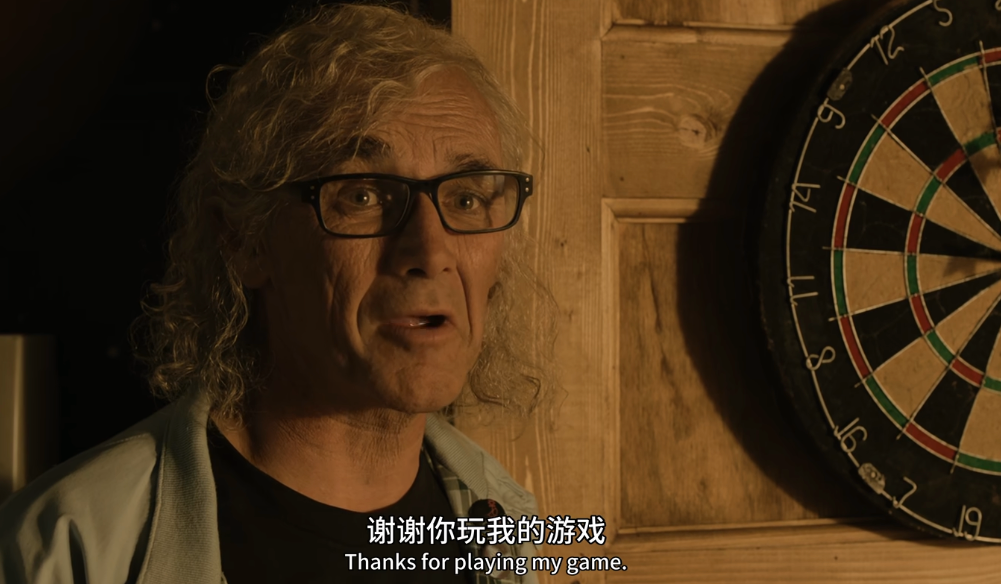
In that humble attic, when the protagonist, Wade, found the game console hiding the ultimate Easter egg, the white-haired creator of the game, Halliday—or rather, his virtual projection—faced the young man who had truly understood his heart. Without preaching or sentimentality, he simply spoke those words, which carried the weight of a thousand pounds:
“Thank you for playing my game.”

Over the past couple of days, I came across a video on Douyin featuring a collaborative effort by 100 people, part of the series *Thank You for Playing My Game*, which resonated deeply with countless people like me.In the video, over a hundred well-known game content creators—from legendary producers like Hideo Kojima to up-and-coming game developers from PlayStation’s “China Stars Program,” and the domestic game creators we follow daily—share their most authentic gaming journeys, behind-the-scenes stories, and creative motivations through interviews and narration. In the simplest way possible, they answer the same question:What do games truly mean to us?

In the recollections of Hideo Kojima, founder of Kojima Productions and producer of the *Death Stranding* series, there is a wondrous cycle: the child who gazed longingly at video games through a store window but could not have them eventually grew up to become a dreamweaver—it turns out that even the master began as nothing more than a child trying to save up his pocket change;

It’s the genuine self-assurance and pride in the voice of @PureBlack, a renowned technical gaming blogger, when he jokingly calls himself “just a lousy gamer”; it’s the heartwarming moment when @YangLaoTou, a hardcore gamer in his 80s, looks into the camera and tells his granddaughter, “Remember to buy me *Resident Evil 9*”;It is the stubborn refusal to bow to fate displayed by @ZhiYa, who cleared *Sekiro* without taking a single hit, having spent years perfecting his own control style with just one hand; it is the “What on earth are you talking about?” expression on the face of *Nuclear Waves* host @Nadya when asked, “Don’t you get bored playing and talking about games every day?” with a look that said, “What kind of nonsense are you talking about?”; and the brilliant metaphor from @Xiao Ningzi, the multi-talented gaming blogger who deconstructs the boundaries of gaming with her erhu and singing, when she compared games to “a magical wardrobe in the bedroom—open the door and step inside, and you’re in another world”—a comparison that had everyone nodding in agreement.

These scenes all boil down to one thing: games are more than just code. The meticulous details that developers pour their hearts into and the days and nights players devote to them are, by nature, solitary endeavors. But with every click of “Start Game,” that solitude is transformed into a shared resonance, and that passion is transformed into meaning. As @女流66, a leading figure in China’s console gaming scene, says in the narration: “Games allow people to swap time between reality and the virtual world.In a single day of real life, you might have witnessed half the protagonist’s life; or you might be stuck in a boss battle with no progress. The bizarre and fantastical nature of the game world, the compression or expansion of time—all of it makes you remember just one thing: you can’t get enough of it.”
And this is precisely the sentiment that familiar names like PlayStation, Nintendo, and Xbox bring to gamers—they are not just machines, but gateways in the living room that open up countless worlds. They carry the messages creators wish to convey, and they hold the dreams of every ordinary gamer who wants to “explore the entire universe within the limited span of their life.”
Reading this, I suddenly felt a deep connection. It wasn’t just a simple expression of gratitude; it was more like a secret code linking two worlds that had previously existed in parallel. And the game console—that black box sitting quietly in the living room—is the tangible embodiment of where these two worlds converge. It’s not only a source of daily joy for players, but also a special space where creators convey their feelings and connect with us.
This mutual affection has allowed me, once an "outsider," to now experience it firsthand.
From the stadium to the realm of dreams
Off-screen, I am a sports journalist specializing in reporting and producing live photo coverage of CBA and Chinese Super League games.
I used to think that the passion I felt from the sidelines or inside the broadcast van was the ultimate expression of my love for the game. I’ve captured the ecstasy of game-winning shots and witnessed the despondency following injuries. My job is to tell other people’s stories through images and words—stories scripted with sweat, scores, and glory. It’s a job that truly gets the blood pumping.
On top of that, I’m also a gamer—gaming is another major hobby of mine. Whenever I return home after a long day of fieldwork and collapse onto the couch, I always find myself reaching for the controller without even thinking about it.As that light bar illuminates, it’s as if I’m transported from the real world into another dimension. In *The Last of Us*, I journeyed with Joel and Ellie through a devastated land, experiencing the despair of losing everything and the weight of protection; in *God of War*, I bore the burden of the past alongside Kratos, learning to be a clumsy yet steadfast father.
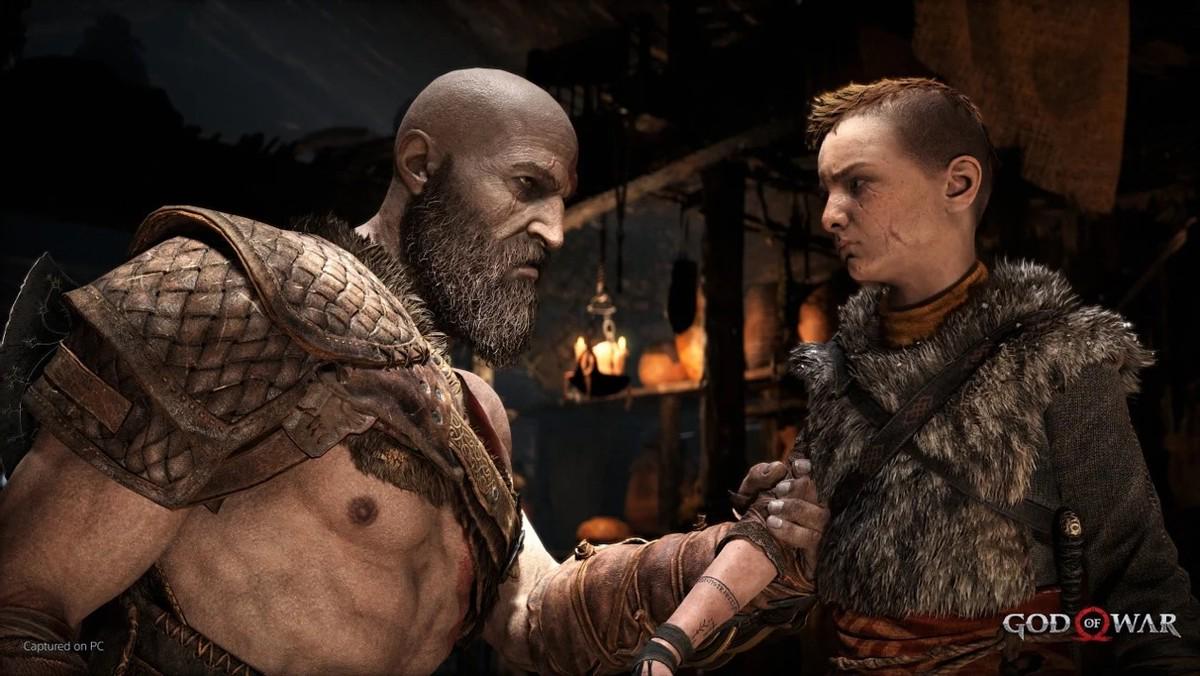
Back then, I was just a simple gamer. I marveled at Santa Monica Studio’s epic interpretation of Norse mythology and was captivated by Naughty Dog’s meticulous attention to the nuances of human nature. To me, these games were works of art, a source of entertainment, and a safe haven. I never imagined that one day I, too, would be able to turn my passion into a career, just like the game developers I looked up to.
The turning point came on an ordinary night. I had made a short video breaking down the plot of a PlayStation exclusive game. Driven purely by passion, I spent several sleepless nights studying the footage, dissecting the cinematography, and analyzing the characters’ motivations—just as I used to do when making sports documentaries. I posted it online, intending simply to document the process, much like I used to jot down notes in my notebook during games.
To my surprise, that video got a lot of comments, and it seemed like I’d found a whole new group of “followers.” I became a gaming content creator.
In the comments section, countless players debated a single detail with me, sharing the tears they’d shed and the courage they’d gained through this game. In that moment, I was suddenly overcome by a strange feeling—it was as if I were no longer just a reporter observing from the sidelines; I had become part of this “gaming feast” myself. Through my interpretation, I connected with the deeper meanings the creators had embedded in the game, and I connected with the millions of players like you and me sitting in front of their screens.
A sense of purpose flows in both directions the moment you press the start button.
What Console Games Have Taught Me: Reality and Dreams Are One and the Same
Many of us have probably used video games as an “escape” from reality at some point. When work gets too exhausting, we log in to clear our minds; when life gets too mundane, we log in to play the hero. The moment the screen lights up, it feels like we can temporarily shut the outside world out.
But as you play, you'll notice some amazing changes.
In *Ghost of Tsushima*, I braved the wind to follow in the footsteps of the protagonist; over time, I found that when faced with real-life challenges, I had learned to stay calm and search for clues one step at a time. In the mechanical jungles of *Horizon: Forbidden West*, I groped my way forward; when encountering unfamiliar territory in life, I gained the courage to simply “go and take a look.”Those nights spent grinding through a boss in *Sekiro* dozens of times taught us not how to defeat Genichiro Ashina, but that the act of “trying again” itself is sometimes the answer.
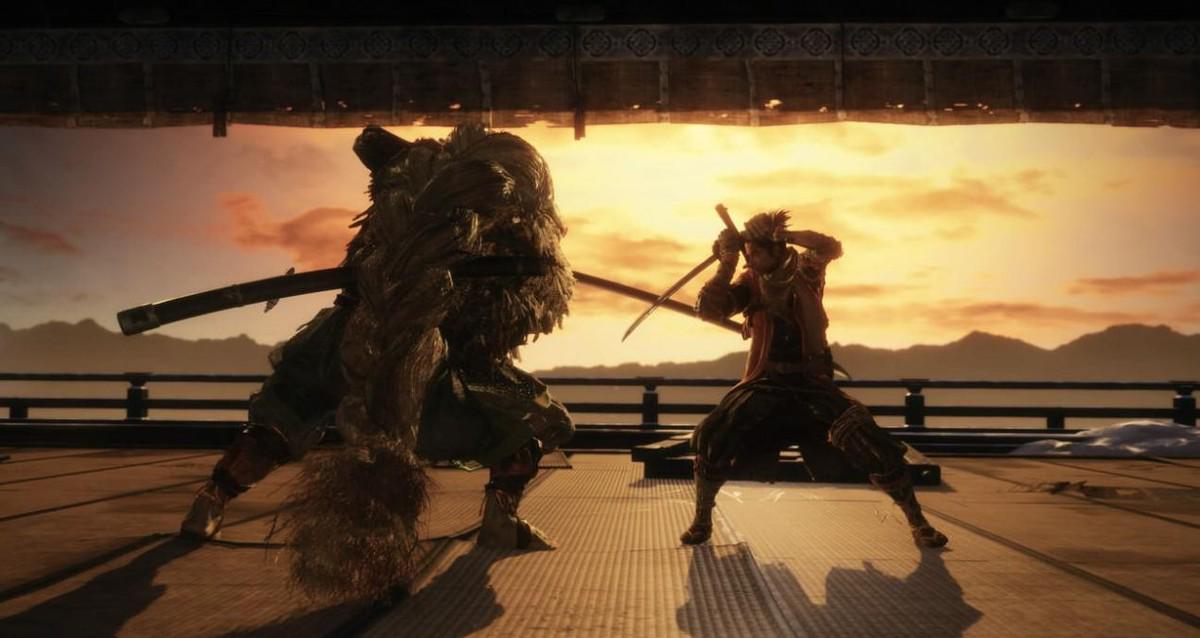
The late nights and meticulous attention to detail put in by those developers ultimately translate into our gasps of wonder or knowing smiles as we watch the screen. And every moment we, as players, immerse ourselves in the game—worrying about a character’s fate, getting excited over hidden Easter eggs, or staying up all night because of a compelling storyline—in turn gives these digital creations a human touch. Games are more than just code; they are truly dreams we weave together.
@InnocentIceCream, a game creator known for sharing pure gaming experiences, put it perfectly: “After all, people are born with the right to waste time; there’s no shame in having fun, and happiness doesn’t need a reason.”
Sometimes, what games teach us isn’t how to escape from life, but how to return to it with the courage, curiosity, and patience we’ve gained from gaming, and keep moving forward. Just like when we first held a controller as children—the world on the screen was fascinating, and as we held that controller, we were slowly growing up.
Thank you for playing my game, and thank you for making my dreams come true.
Now, whenever I sit down at my PS5, watch the light bar on the controller light up, and hear that iconic startup chime, I no longer feel like just a consumer. I feel like a participant, a co-creator.
When I beat *Cosmic Robot*, that pure, primal joy of platforming reminded me of the moment I first held a controller as a child. In that instant, I realized that no matter how times change or how far graphics evolve, what games truly preserve is that original spirit that brings us together.
So, I’d like to say to all the developers: “Thank you for making games that I love.”
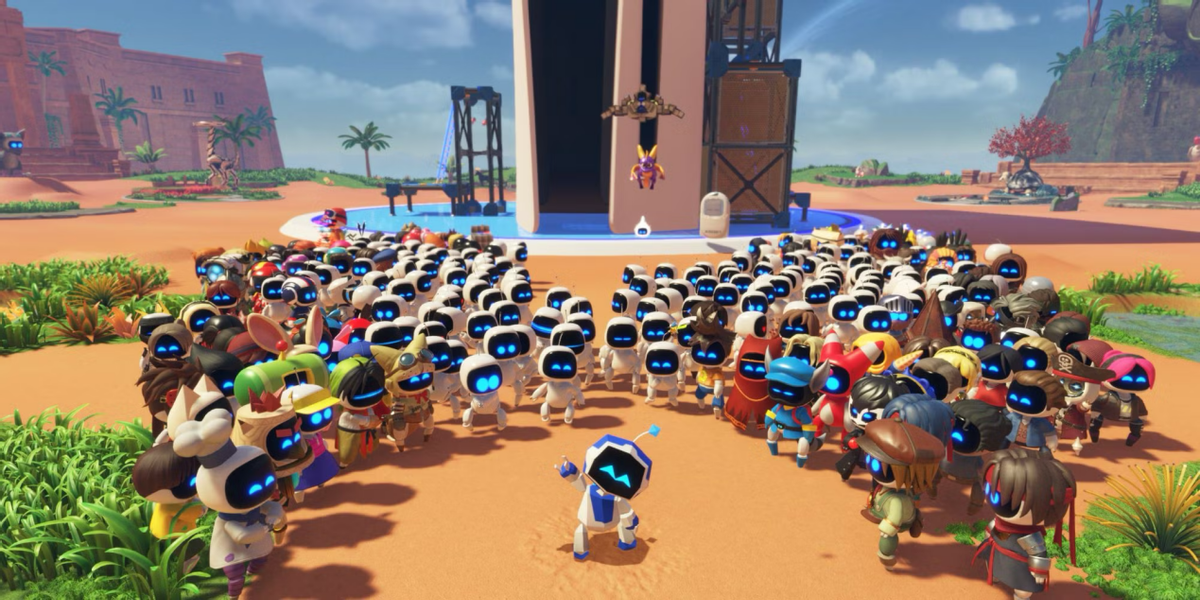
Thank you for creating a world where I can rest, grow, be moved, and even have my life transformed. As a player and a small-time creator, the only way I can give back is by taking every opportunity to enter that world seriously—by pressing “Start” with care, writing every word with care, and editing every shot with care.
As @Nvliu66 said at the end of the video: “We chose games as our medium to begin exploring the world and satisfying our curiosity. Why do we love games? Because we want to travel the entire universe within the limited time we have on Earth.”
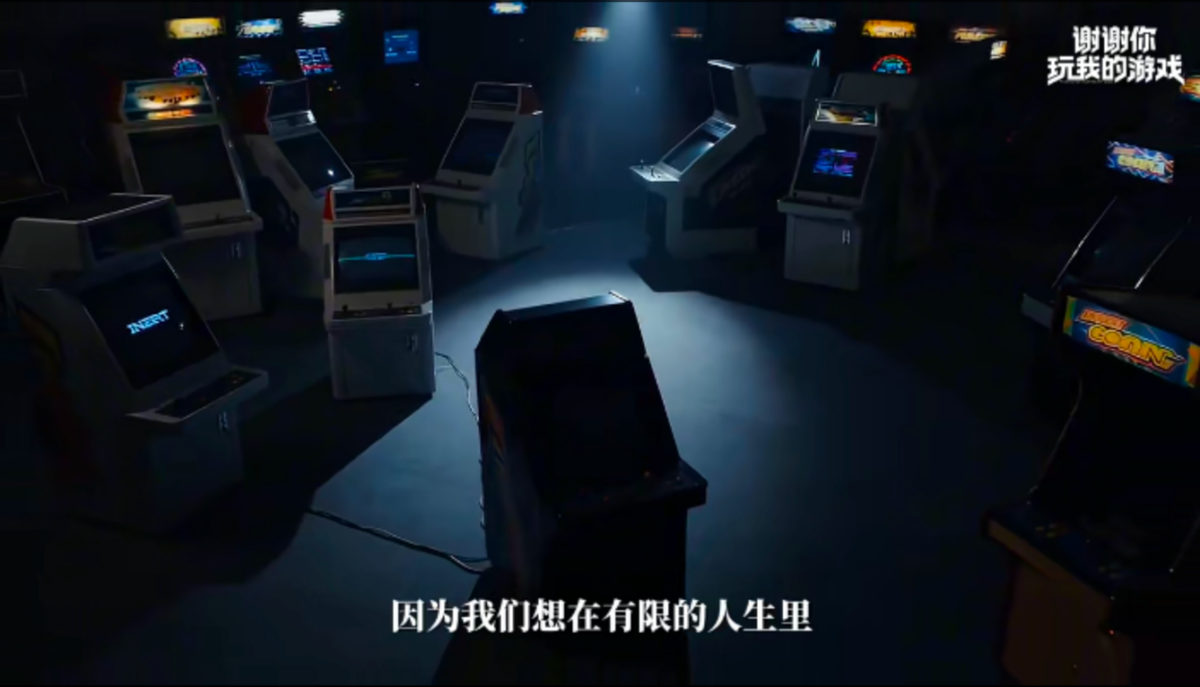
We come together because of our passion.
In the world of gaming, we are each other’s light, illuminating one another. And this light is powerful enough to transcend the boundaries between reality and the virtual world, lighting every step of our journey.
原创文章,作者:游茶妹儿,禁止转载:https://youxichaguan.com/en/archives/195650