Over the past two years, the gaming industry has been undergoing a profound yet often underestimated shift: players’ “download” behavior is increasingly becoming a mere formality, as the actual decision is quietly made long before—the moment they watch videos, bookmark guides, or discuss the game with fellow enthusiasts.
As users make decisions earlier in the process, traditional marketing strategies that rely on advertising blitzes to intercept them are proving ineffective. High user acquisition costs and low retention rates have become widespread challenges across the industry. Whether it’s the challenge of launching a new IP from scratch, the growth bottlenecks faced by established games, or the difficulty of breaking through to new audiences with game updates, all these issues point to the same core question: How can we effectively communicate with players before they develop an interest?
The path forward is becoming increasingly clear—the industry’s focus is shifting from a broad-brush approach to “traffic acquisition” toward a more refined strategy of “mindshare cultivation,” or “seeding and growth.” Around this growth paradigm, Xiaohongshu has developed a set of reusable, actionable methodologies. At this year’s Xiaohongshu Gaming Industry Summit, these methodologies were systematically organized into the “Four-Step Seeding Marketing Framework”: Find the Right Audience, Expand Reach, Craft the Right Message, and Break Through to New Audiences.
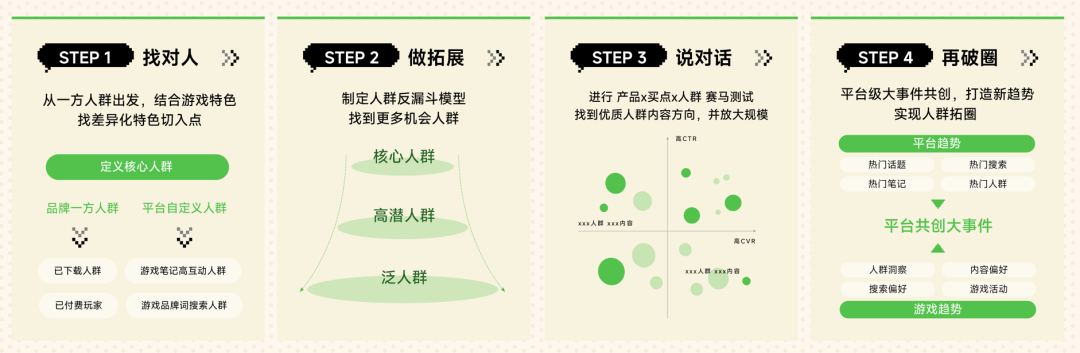
This is not just theoretical talk, but a “battle plan” that has been validated across multiple games. Whether for brand-new projects, long-running games, or major version updates, there are already numerous examples of successful breakthroughs achieved through this approach.This further confirms that Xiaohongshu is becoming a high-value user engagement platform covering the entire game lifecycle—it not only drives explosive growth during the launch phase but also systematically fosters user loyalty and value growth across various stages, including pre-launch testing, long-term operations, and version updates. A new, replicable, and predictable growth paradigm has quietly taken shape.
01
Breaking Through the Competition: How Can New Games Stand Out in a Highly Competitive Market?
Launching a new game is like opening a mystery box. How can you break through the intense market competition and gain a foothold? This is the question every team faces at the outset.
Even *Valorant*, which already had an established IP and a user base from its PC version, faced a similar dilemma when launching its mobile version: how to get both new and existing players to engage and achieve cross-platform growth? Its breakthrough began with the clear and comprehensive implementation of the “four-step influencer marketing strategy.”
The first step, “finding the right audience,” involves identifying core users. During the pre-launch testing phase, *Valorant* did not blindly target a broad demographic; instead, through small-scale content tests, it precisely targeted two high-potential groups: “core PC gamers (Valorant enthusiasts)” and “college students.” The former are natural supporters of the IP, while the latter are an active community on Xiaohongshu.The team designed content—such as “Highly Aesthetic V-Tactics Characters”—that highlighted the game’s character design aesthetics, establishing a distinct brand image in users’ minds even before the official launch.
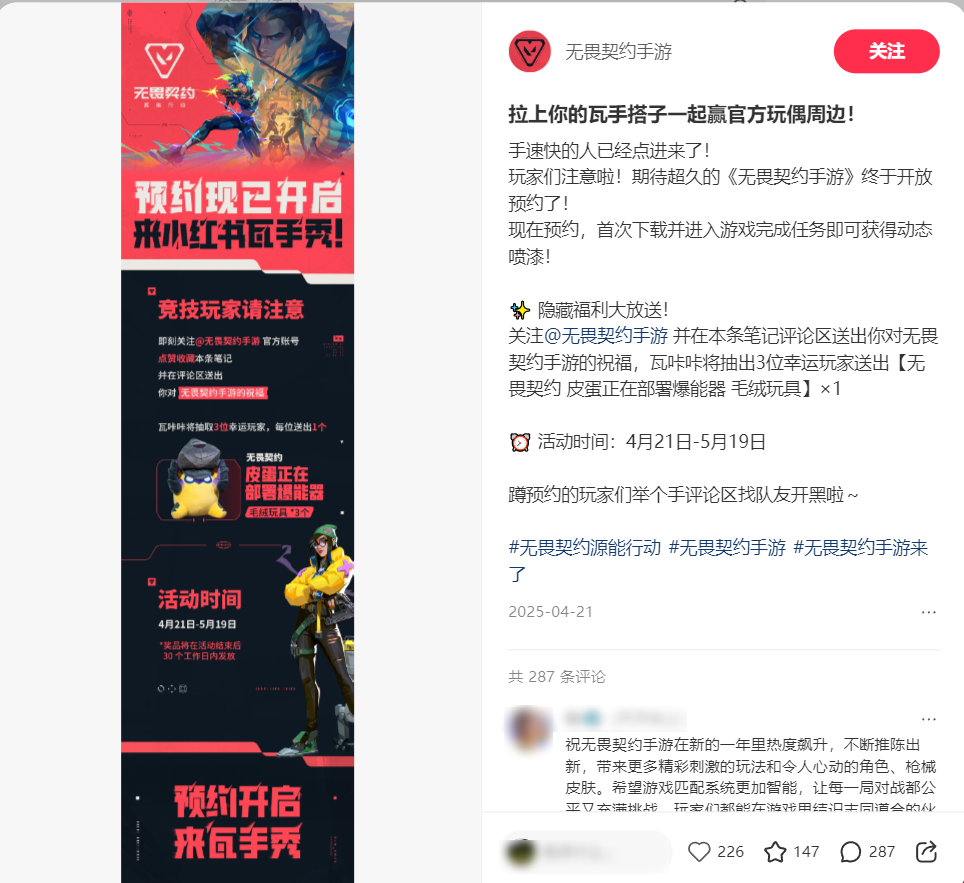
An event designed specifically for competitive players has sparked nostalgia among long-time fans of the franchise
The next step was “expansion,” which involved using core users as a starting point to reach high-potential and broadly interested audiences. The team realized that the Xiaohongshu ecosystem contained a large number of casual users interested in “trendy aesthetics” and “social interaction”—such as anime enthusiasts, fashion-forward groups, and even nail art enthusiasts.
Once the target audience has been identified, it’s equally important for the game’s marketing content to “speak their language.” *Valorant* breaks down the game’s selling points into specific appeal points tailored to different demographics: for core PC gamers, it emphasizes the “comparison between PC and mobile gaming experiences” to highlight the continuity of the IP; for younger demographics, such as college students, it highlights the game’s light-hearted entertainment aspects, such as “socializing and team-based shenanigans.”
For the general audience, *Valorant* has proactively expanded its marketing strategy: showcasing the heroes’ intricate models to fans of anime and manga, highlighting the game’s visually striking “good-looking characters” to trend-conscious players, and promoting fun content centered on “teaming up, playing together, and pulling pranks” to social gamers. Step by step, the game has broadened its audience from hardcore gamers to the general entertainment-seeking public.
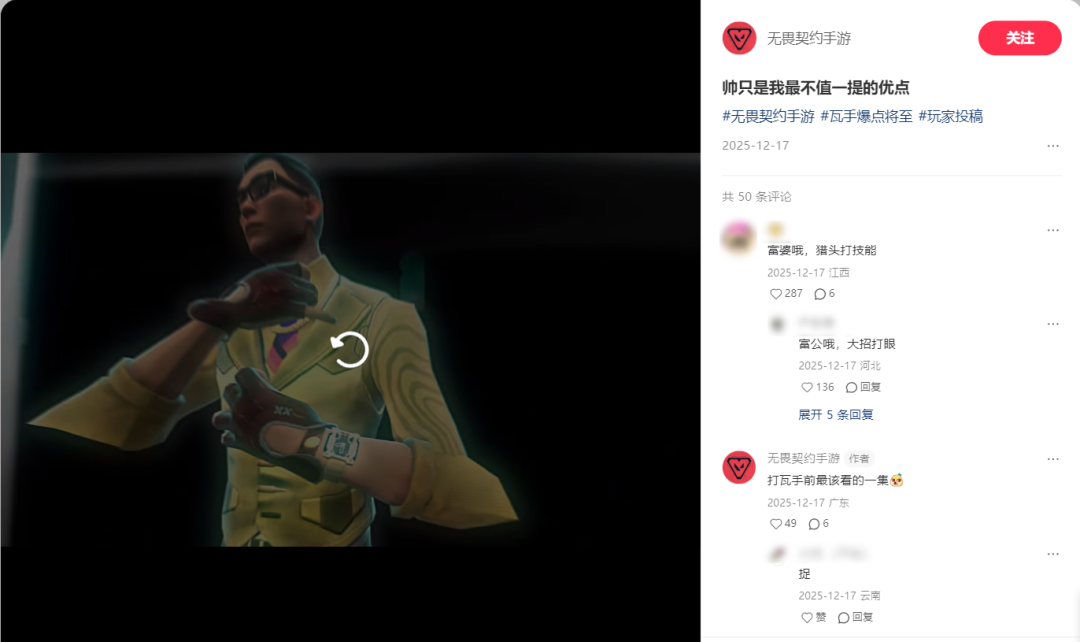
The official *Valorant* team is pulling a prank on Xiaohongshu
"Say Dialogue" in *Valorant* quickly garnered widespread attention, with "longtime fans of the VaIP," "mobile FPS players," and "casual players drawn to the game's visuals" all joining the discussion, driving the community's enthusiasm to new heights.
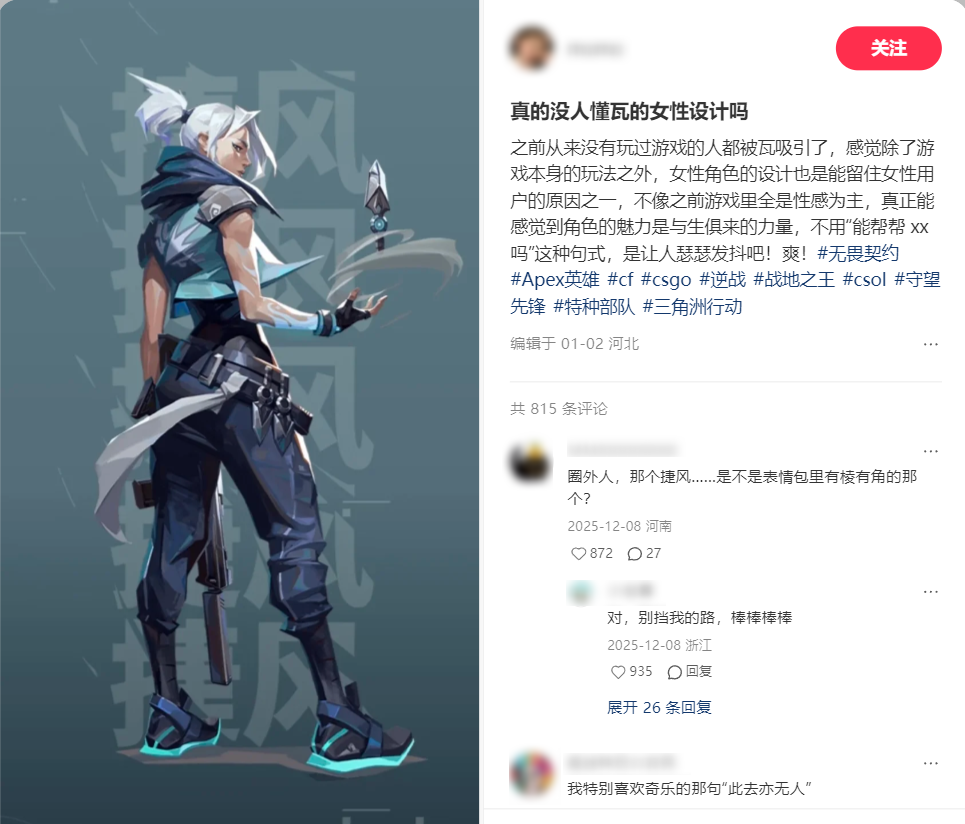
"Valorant" Achieves a Gender Breakthrough on Xiaohongshu
What truly helped *Valorant* break into new audiences was a series of pre-launch campaigns. The team launched a "Handsome V-Hand" recruitment drive and collaborated with celebrity "V-Sis" to secure in-game usernames. These highly interactive events quickly gained traction within the community, successfully breaking through the game’s existing niche. This content marketing not only attracted a large number of casual users to actively search for and try the game but also drove explosive growth in pre-downloads, achieving a critical leap in converting traffic into users.
Through a comprehensive strategy, the project ultimately achieved a 130% ROI during the open beta, grew the AIPS audience by nearly 10 million, and generated over 100 million impressions for major IP events. This successfully transformed the mobile version of *Valorant* from a simple “port of the PC game” into a new-generation FPS hit that has broken through to a broader audience.This also strongly demonstrates that, in an environment where user decision-making occurs earlier in the purchase journey, a phased “seeding” strategy that precisely matches audiences with content is more effective than blanket advertising in helping a product make the leap from “self-contained IP hype” to “breaking out across all demographics.” (Data source: Xiaohongshu Commercial Data Platform; Data period: August 2025 – October 2025)
02
Long-Term Revitalization: How a Seven-Year-Old Game Found a "Second Wind"
If the challenge of a new game lies in building brand awareness from scratch, then the anxiety surrounding the long-term operation of an established game lies in breaking through growth plateaus and preventing user segments from becoming stagnant. In today’s landscape, where similar products are constantly emerging and user attention is increasingly fragmented, maintaining a game’s popularity and achieving new revenue highs is no less challenging than launching a startup all over again.
Despite having been on the market for seven years, *Identity V* bucked the trend in 2025 by setting a new record for revenue during the same period in its history, serving as a prime example of how an established title can find new life.
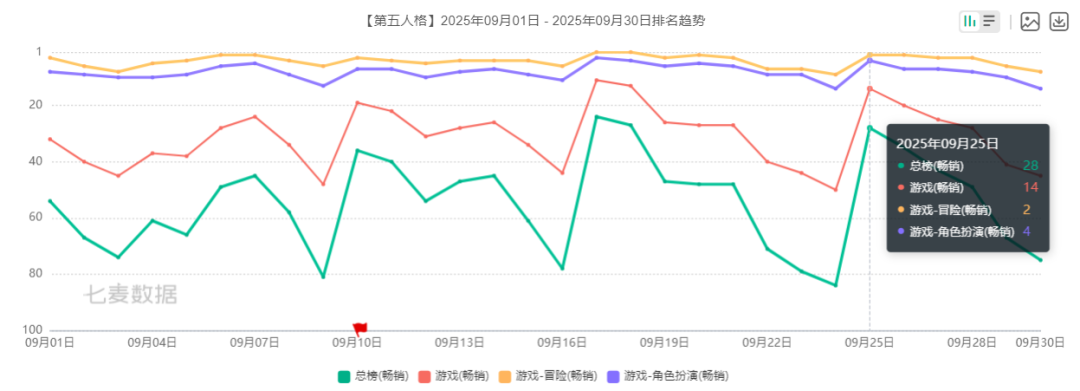
(Data source: Qimai Data; Data period: September 1, 2025 – September 30, 2025)
The key lies in the team shifting the strategic focus of the "Four-Step Influencer Marketing Strategy" from "finding the right people"—which tends to prioritize user acquisition—to the more in-depth "expanding engagement" and "building dialogue," thereby continuously tapping into growth opportunities within the existing user base.
During the "market expansion" phase, *Identity V* developed a "reverse funnel model" for audience targeting. Starting with core players who enjoy asymmetrical competitive games, the game expanded layer by layer to reach high-potential and general-interest audiences: from casual gamers and shooter enthusiasts to aesthetically-minded users interested in in-game fashion. It then continued to broaden its reach to general audiences such as female college students interested in anime and manga, as well as fans of fan-created content, thereby continuously expanding the boundaries of its user base.
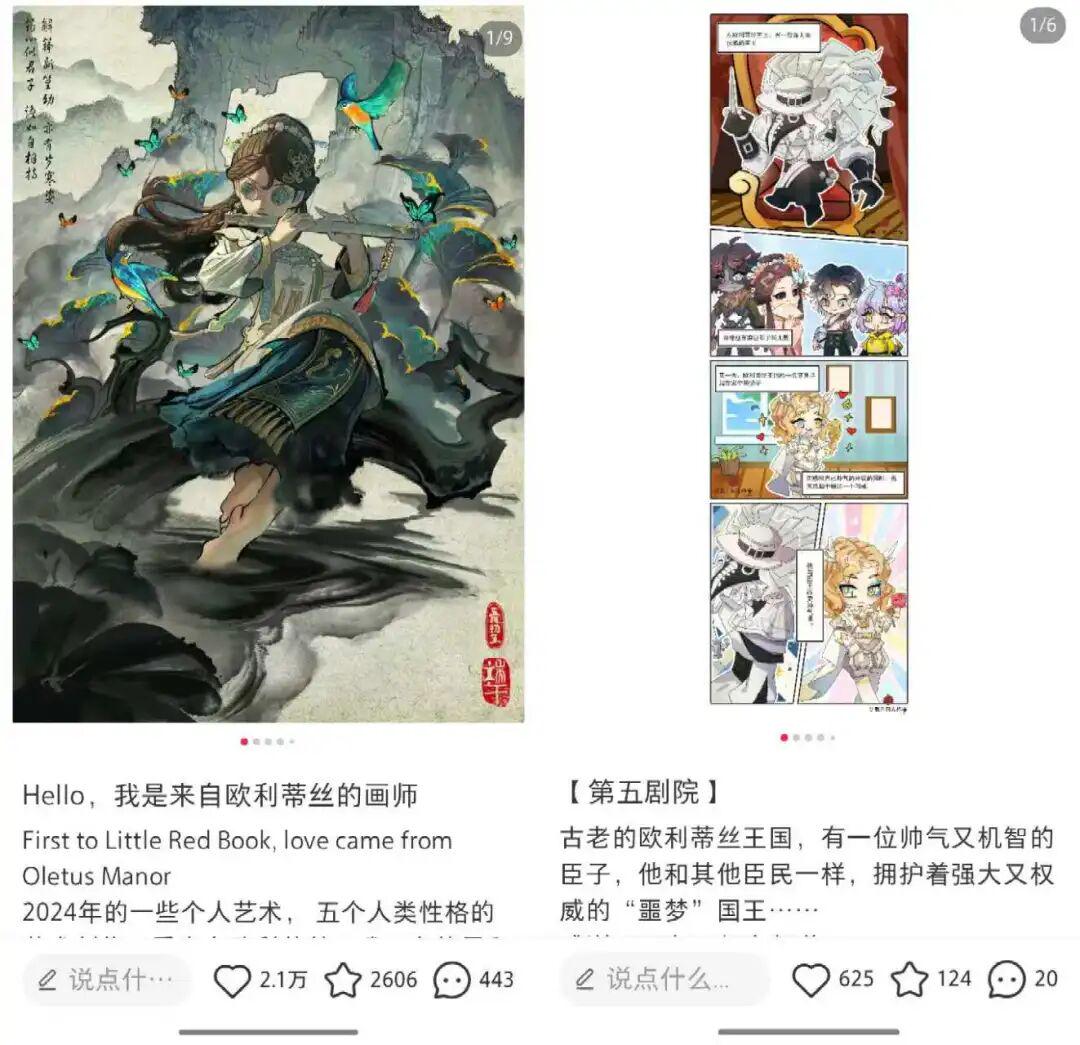
The Fifth Personality fan content
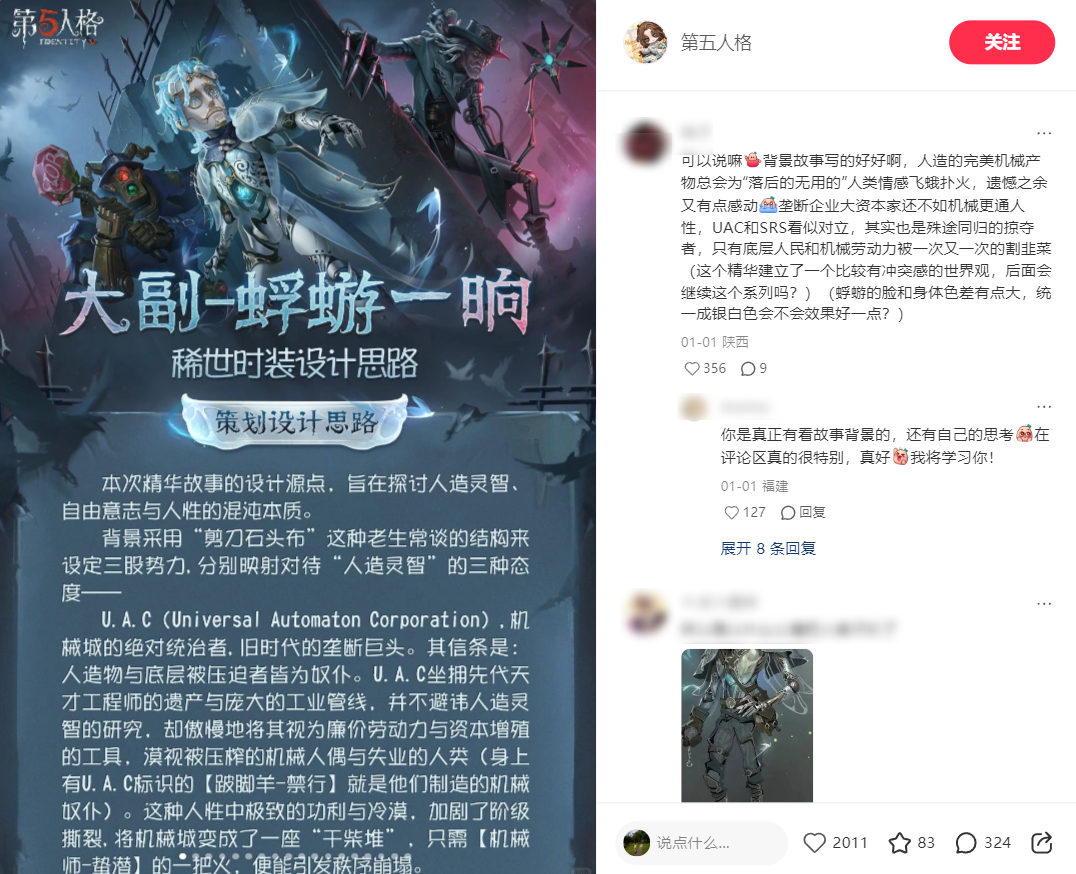
Expanding the player base requires meticulous content management—and this is precisely the core value of “Say Dialogue.”Identity V itself features a highly distinctive Gothic art style and a profound worldview. Consequently, the team took the initiative on Xiaohongshu to break down the design concepts behind rare and legendary costumes, engaging in open dialogue with players. Costumes such as “First Mate – Ephemeral” and “Grave Keeper – No Trespassing,” along with the official interpretation of how “humanity and emotion” were expressed in the designs, garnered widespread attention from players.
One player commented, “The story is so well-written. These perfect, man-made machines always throw themselves into the fire for ‘backward, useless’ human emotions—it’s both tragic and touching.” This deep emotional resonance shifts players from simply “playing the game” to “understanding the game,” and lays the groundwork for the content’s continued spread.
The game’s consistent and authentic content releases perfectly align with casual players’ preferences for storylines and world-building. This has led to a spontaneous surge of plot analyses and fan comics on Xiaohongshu, even giving rise to niche creators who specialize in interpreting the storyline of *Identity V*.
Building on this foundation, the ultimate "breakthrough to new audiences" was achieved through "collaborative event creation" that capitalized on platform trends. *Identity V* keenly identified the growing "traditional Chinese style" trend on Xiaohongshu and deeply integrated it with the game’s Chinese-inspired aesthetic costumes, launching a series of events such as the "Forbidden City x Tang Dynasty Collaboration."
This is not merely a simple exchange of resources, but a highly coordinated “content synergy”: on the one hand, it leverages platform trends to amplify the game’s cultural appeal; on the other hand, through creator incentive mechanisms, it transforms fans of traditional Chinese culture and fan-created content bloggers into active participants and disseminators of content, propelling the game from a niche community into a broader cultural sphere of interest.
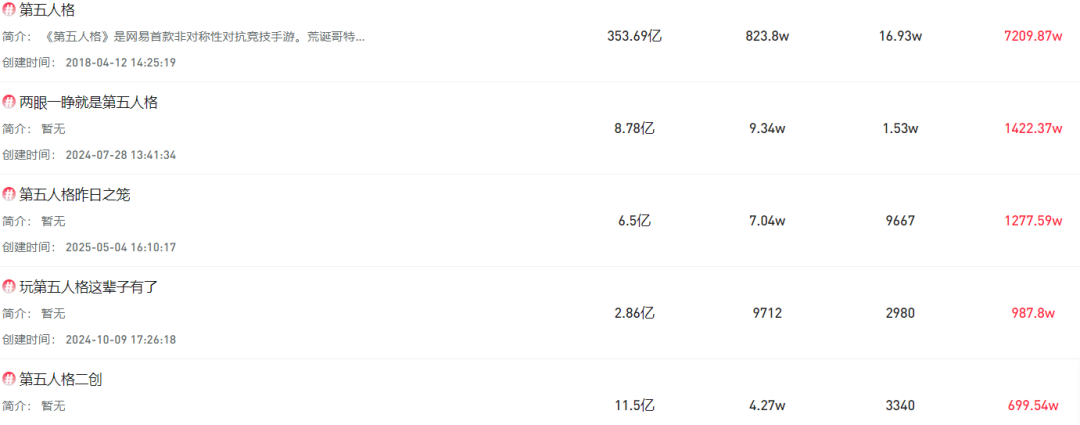
Trend Heat for "Identity V" | Source: New Red Data, 2018–2025
Ultimately, *Identity V* ranked among the top 5 in the overall gaming category and the top 2 in the casual esports category on Xiaohongshu, with domestic iOS revenue growing by 27.9% year-over-year from September to October. These results further demonstrate that through the refined operations outlined in the “Four-Step Approach,” even established games can continue to reinvent themselves and build a more robust, long-term brand moat.(Data Source: Xiaohongshu Business Data Hub; Data Period: July–December 2025)
03
The Update Craze: How Can Frequent Updates Keep Breaking Through to New Audiences?
For games with a long-term lifecycle, version updates are key to maintaining their vitality, but not every update can truly generate significant buzz. For many titles, update content ultimately remains confined to a niche audience, failing to translate into a sustainable growth trajectory.
"In the Name of Shining" offers a different approach. With its high-frequency iteration cycle of "one update every 21 days," the game has not only maintained a steady stream of updates but has also made it onto Xiaohongshu’s trending list multiple times. The key to its success lies in treating every update as a complete "mini-campaign to break into new markets" and systematically implementing the "four-step influencer marketing strategy" to execute these campaigns.
The campaign began with the precise step of “targeting the right audience.” The core user base for *In the Name of Shining* consists of female gamers, a demographic that is highly active on Xiaohongshu and enjoys sharing content related to fashion, beauty, and daily life—a perfect fit for the game’s core mechanics of “dress-up and home management.”
At the same time, Xiaohongshu’s content format—which focuses on images and text—is well-suited for quickly highlighting new features and naturally aligns with the rhythm of frequent updates. Sharing version updates feels more like friends exchanging the latest news than a stiff, formal announcement of new features.
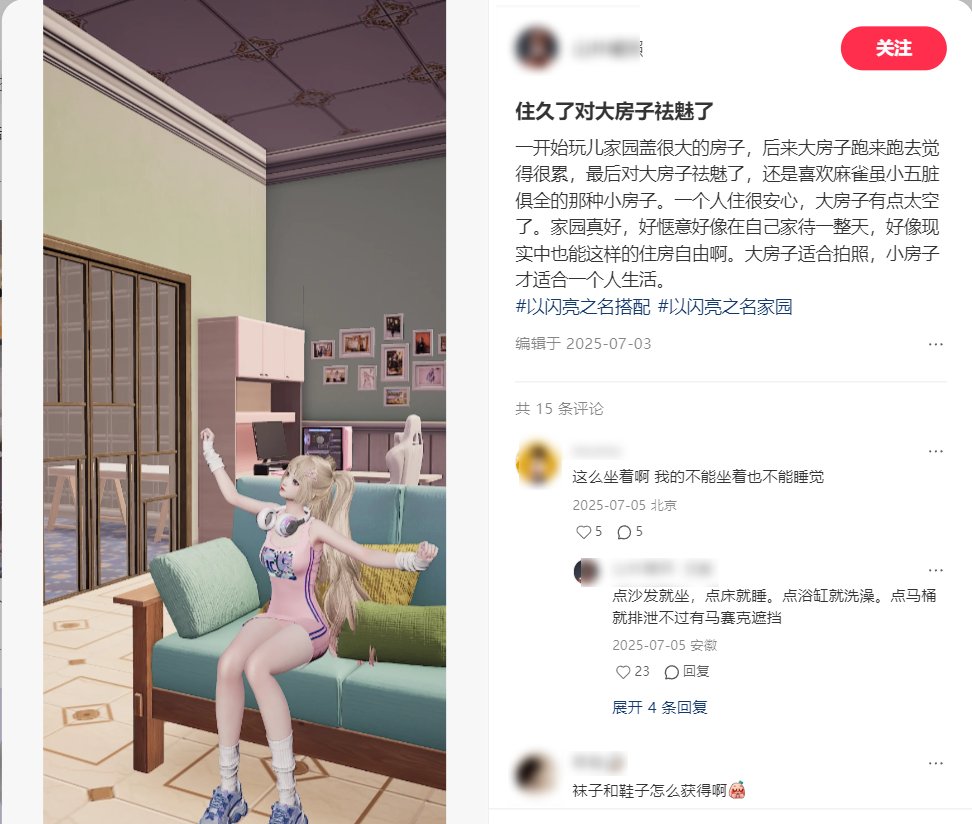
Players share their thoughts on the game *In the Name of Shining* on Xiaohongshu
Building on this foundation, the team has expanded the community ecosystem by continually broadening its reach: starting with core female gamers, it has extended to include casual simulation game players, female college students interested in anime and manga, beauty and fashion enthusiasts, and even pet owners who regularly share photos of their pets on the platform, thereby continuously expanding the scope of content to reach new audiences with shared interests.
For different target audiences, “tailored communication” is key to converting interest. For each update, *In the Name of Shining* prepares multiple communication strategies: for fashion enthusiasts, the focus is on showcasing the features and highlights of the new limited-edition outfits—such as the *Cardcaptor Sakura* collaboration, which features the IP’s first globally available dyeable outfit set—and breaking down the design details of the collaboration;For pet enthusiasts, the official team uses pet-themed comics and the pet system to encourage players to share photos of their adorable pets alongside in-game characters, showcasing the joy of raising pets within the game; for general users, the team integrates version updates with holidays and platform trends, allowing the game to naturally blend into everyday life.
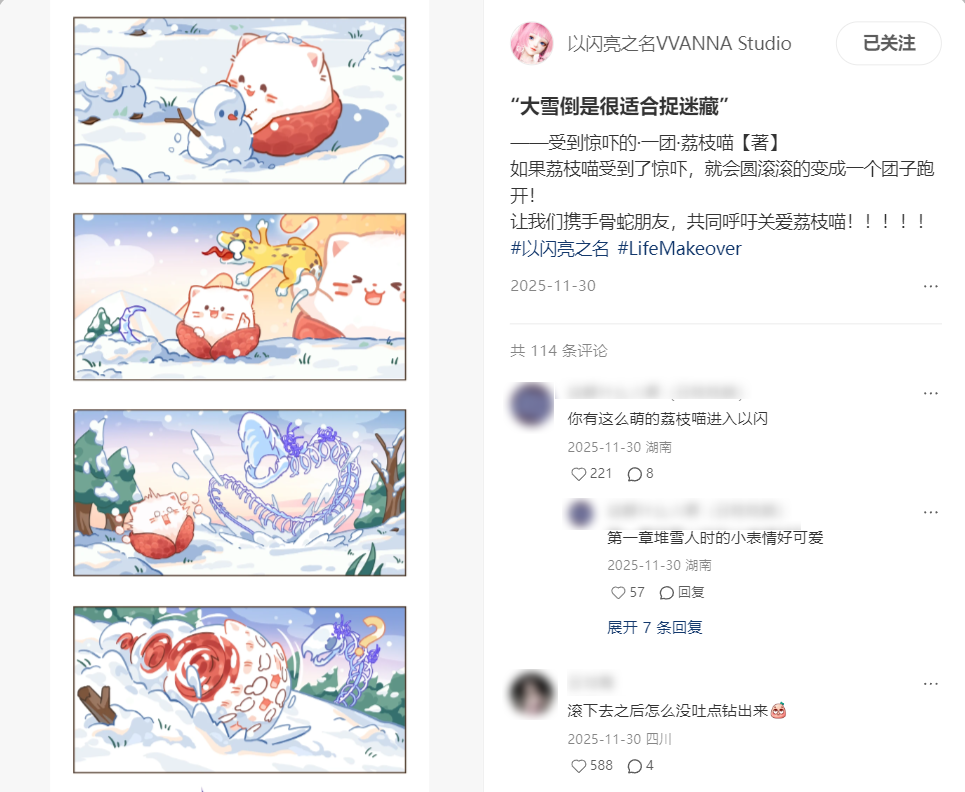
"In the Name of Shining" Officially Releases Pet Comic
Building on this, the game leveraged trending topics on the platform to “break out of its niche” and achieve a significant surge in visibility. Take last year’s “Holiday Outfit Event” during the National Day holiday as an example: the game collaborated with Xiaohongshu’s “Holiday Plan” IP to co-create content centered on “holiday outfits,” featuring “princess-style travel outfits” that blended in-game princess-style outfits with real-life holiday travel.Many players logged into the game during the holiday to create outfits and shared their “National Day looks” on Xiaohongshu, with this content further attracting attention from users outside the game’s core community.
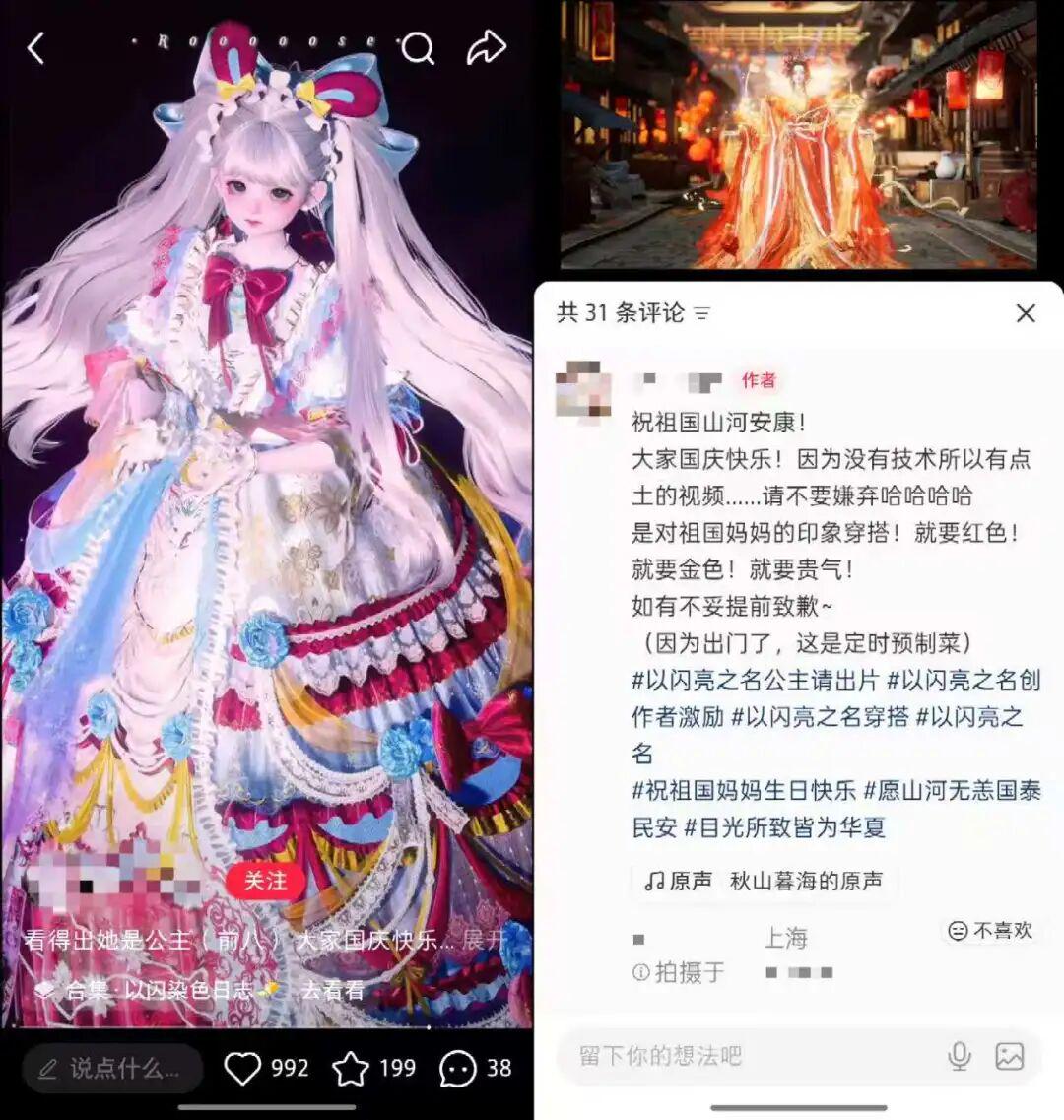
Players share their National Day outfits for *In the Name of Shining* on Xiaohongshu
In addition, *In the Name of Shining* will integrate trending topics from social media into its daily operations. During the year-end “Love Yourself” campaign, the team partnered with Xiaohongshu’s Creator Incentive Program to encourage players to create fan content around the theme. This approach seamlessly blends the expression of aesthetic individuality within the game with self-actualization, using relatable, everyday expressions to continuously expand the reach of the game’s content.
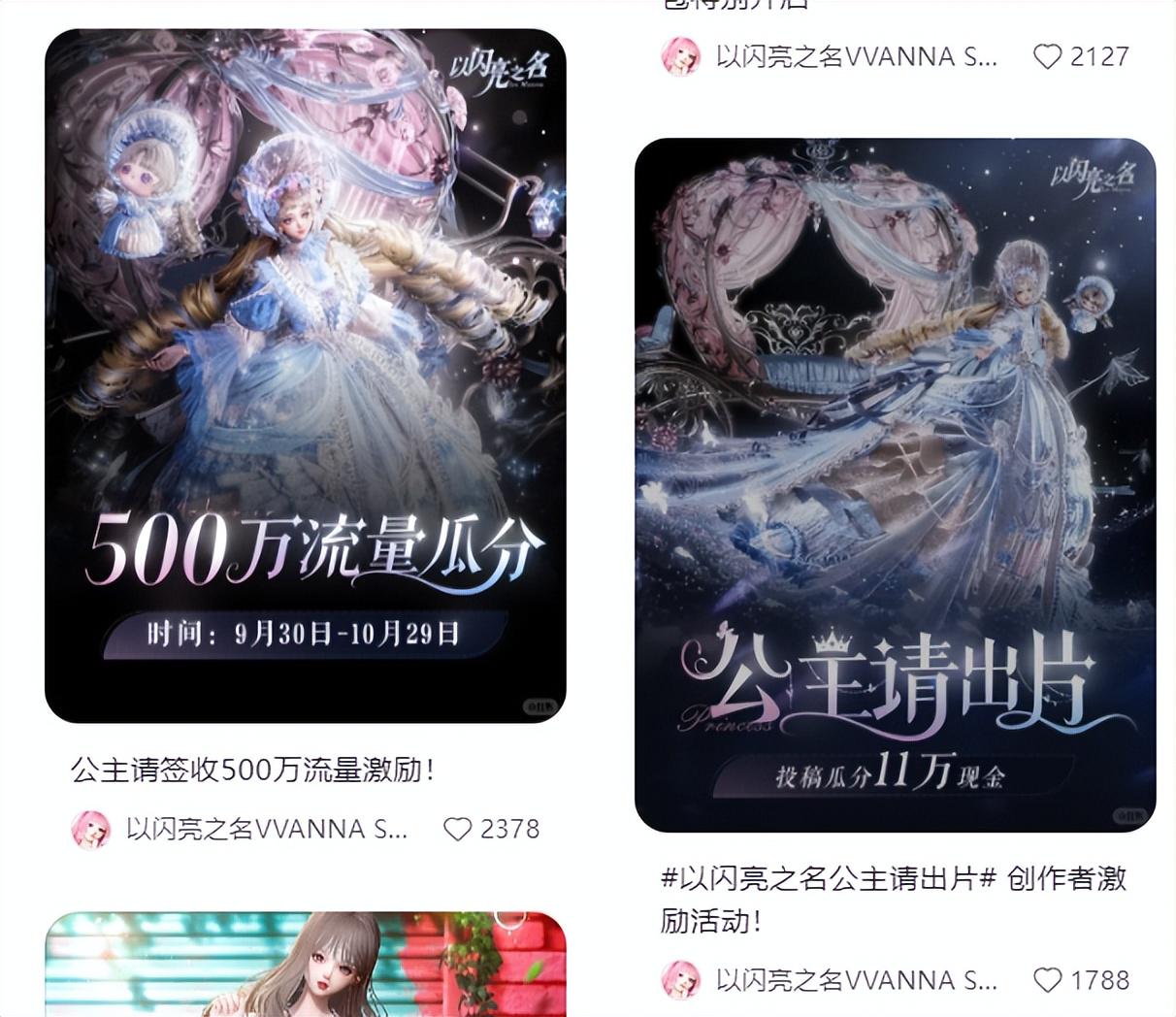
"In the Name of Shining" has repeatedly partnered with Xiaohongshu to launch creator incentive programs centered around trending topics on social media.
By deeply integrating the "Four-Part Series" into its release schedule, *In the Name of Shining* ensured that every update had the potential for sustained growth: user activation rates on Xiaohongshu increased by 170%, user ratings rose by 60%, and the number of high-value users more than tripled.This further validates that the “Four-Part Series” is not limited to major events; rather, it can be applied to break down every content update into granular components, transforming daily operations into sustainable growth opportunities and providing long-term games with a steady momentum to break through to a wider audience. (Data source: Xiaohongshu Commercial Data Hub; Data period: February 2025 – October 2025)
Conclusion: When the "Four-Part Series" Serves as a Guide Throughout the Entire Lifecycle
The first three case studies correspond to different stages of the game lifecycle—including new game launches, long-term operations, and major updates—and demonstrate that the "Four-Step Viral Marketing Strategy" is not a one-time tactic, but rather a proven methodology that can be adapted and replicated across various stages.
As the "four-part framework" becomes further integrated into the game's full lifecycle operations, it functions more like a growth navigation system—not only pointing toward phased objectives but also continuously recalibrating the direction to unlock greater synergistic effects.

Whether it’s breaking into new markets, revitalizing established games, or creating viral updates, these case studies all ultimately point to the same growth logic. The core value of Xiaohongshu’s “Four-Step Influencer Marketing Framework” lies in transforming “cross-demographic growth”—which was previously difficult to replicate—into a transferable, optimizable, and measurable growth model.
Behind this lies a profound shift in the logic of industry competition: a transition from a “traffic war” reliant on budgets to a “battle for mindshare” centered on understanding users and nurturing relationships. Success is no longer determined solely by the scale of ad spending, but rather by the ability to gain insights into user interests, the long-term cultivation of a content ecosystem, and the ongoing maintenance of community relationships.
Against this backdrop, the "Four-Step Influencer Marketing Framework" offers a practical roadmap: within the closed-loop ecosystem of "interest—decision," it systematically guides brands in cultivating interest and building trust at the decision-making stage.
Consequently, a true turning point is emerging for game developers. As players make decisions earlier and earlier in the process, those who can be the first to internalize this “mindset management” paradigm as a core competency will be better positioned to build a solid moat for sustained growth in a mature market. This seemingly quiet shift is reshaping the industry’s growth dynamics and competitive landscape.
原创文章,作者:游茶妹儿,禁止转载:https://youxichaguan.com/en/archives/195418