"Game Tea Roundtable" is a Q&A series jointly launched by Game Tea House and Zhihu. Each week, we’ll discuss various topics with industry professionals, and we welcome you to share your thoughts in the comments section.
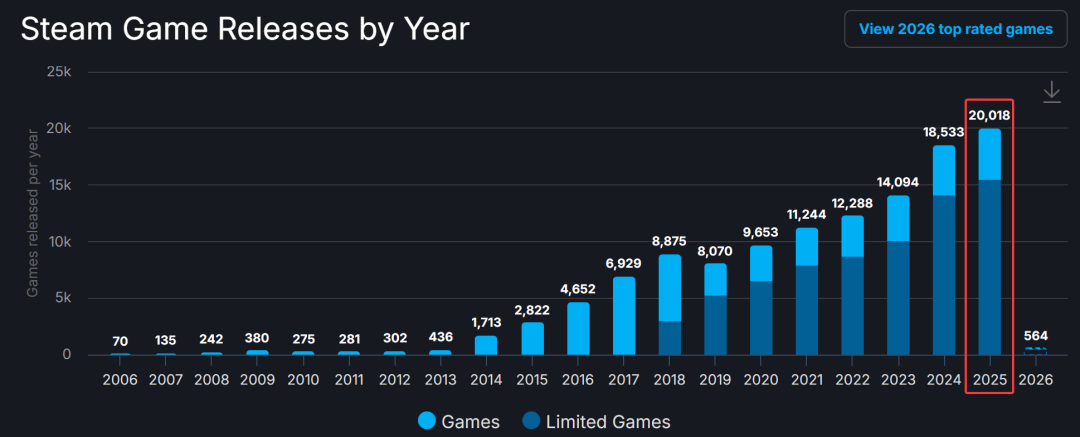
On the last day of 2025, an invisible counter clicked over—for the first time in history, the number of games released on Steam in a single year surpassed 20,000, reaching 20,018. Over the preceding decade, this figure had consistently grown at a breakneck pace.
Click to enter a description of the image (up to 30 characters)
Data source: SteamDB
This is a market that’s “half fire, half water.”
On the “hot” side, this PC gaming ecosystem—which boasts over 130 million monthly active users worldwide—continues to see its user base grow. In January of this year, Steam’s peak concurrent users surpassed the 42 million mark, with Simplified Chinese users at one point outnumbering English speakers to become the largest user group.In 2024, driven by *Black Myth: Wukong*, the Chinese console single-player game market saw sales revenue surge by 55.13% year-over-year. As players’ willingness to pay has risen accordingly, the single-player segment has entered a rare window of opportunity.
But the "cold" side of the industry is equally harsh: while top-tier titles generate substantial revenue, the vast long-tail market struggles to break through.According to estimates by Gamalytic, the top 5% of games on Steam are projected to generate over $300,000 in revenue by 2025, while the bottom 30% of games have an average total revenue of just $37. Approximately 55.3% of games generate less than $1,000 in revenue, and 30.5% sell fewer than 100 copies.
When macroeconomic statistics translate into real-world reality, they become a source of pressure that almost everyone can feel. This year, I attended several in-person game conventions, and roughly 80% of indie developers I spoke with told me that, regardless of how innovative their gameplay or how impressive their art might be, simply getting their games noticed had already drained all their energy.
With dozens of games vying for attention every day, the saying “Good wine needs no bush” is becoming a dangerous form of self-delusion. Indie games are no longer just about creativity and passion; they now require a systematic approach that encompasses product selection, value propositions, trend-setting, marketing, pacing, and even long-term brand building.
In this episode of "Game & Tea Roundtable," we spoke with indie game developers, publishers, and researchers about the question: "In a crowded publishing market, how can you keep your game from getting lost in the shuffle?"
▍“Traveling Thoughts” by Paranoia
Actually, if you want to figure out how to make a game that stands out, all you have to do is take a look at what games on Steam have been doing over the past few years.
The good news is, I have actually done some research on this. The bad news is, it’s virtually impossible to derive any “surefire, million-dollar, easy-to-execute” magic formula from the success of these games. But you might still find the following information quite helpful.
Let’s break this down into two categories: game development (internal factors) and game marketing and distribution (external factors). When it comes to game development itself, here are some key takeaways: choose genres or directions with a higher likelihood of success; incorporate trends, memes, and Easter eggs that have the potential to go viral; and make sure the game is truly outstanding.
Of course, even if following all these tips doesn’t guarantee you’ll sell a million units, it shouldn’t be too hard to sell a few hundred thousand. Let’s go over each point below.
- Choose a category or direction with a higher likelihood of success
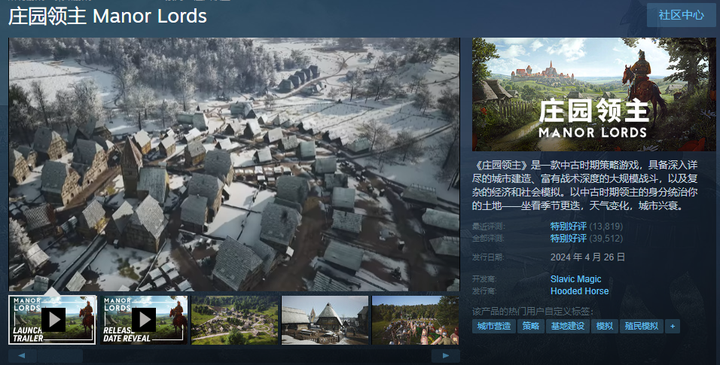
On Steam, choosing the right genre is half the battle. For example, simulation games have always been a goldmine. A massive hit from 2024, *Estate Lord*, was developed by a single person, yet it became a masterpiece that topped the global wishlists of tens of millions of players and sold over a million copies on its first day.
Click to enter a description of the image (up to 30 characters)
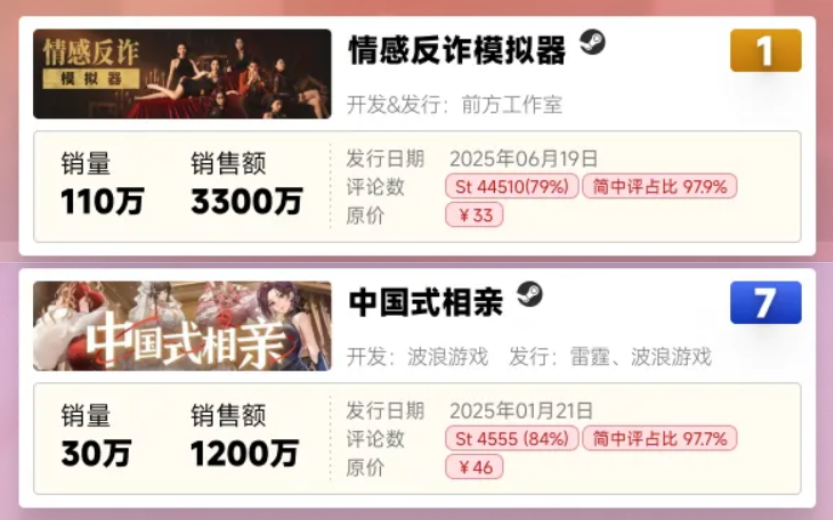
You could also try incorporating social issues into your game’s theme. For example, *The Matchmaker* and *Chinese-Style Dating*, which ranked highly on this year’s domestic game sales charts. But there are actually many good genres and directions to explore; you can check Steam’s new game data to see the number of new releases and sales figures by tag, so I won’t go into detail here.
Click to enter a description of the image (up to 30 characters)
- Include all kinds of potential viral memes and Easter eggs in the game
This actually ties into marketing and promotion as well—if you don’t prepare in advance within the game, where will you get the content for your marketing campaigns? Take Paru, for example, which went viral thanks to the “part-time job” meme; the developers had already been creating videos using part-time job-related content long before the game’s release. And this year’s *The Sultan’s Game* had plenty of standout moments, such as the “face-jumping” mechanic, turning the Sultan into an XX, and the two-headed dragon….

Click to enter a description of the image (up to 30 characters)
- The game is really awesome
That goes without saying. Take Supergiant, the developer of *Hades*, as an example: from *Bastion*, *Transistor*, and *The Bonfire* to *Hades* and *Hades II*, all of their titles have sold over a million copies, and starting with *Hades*, the studio has been on a path to selling tens of millions of copies.
So here’s an extra tip: Take game development seriously and make sure you improve with every title. If you do that, there’s a good chance your third or fourth game—or even your second, if you’re lucky—will be a hit.
When it comes to game marketing: Break out, break out, or just break the damn mold.
The bottom line is that you need to figure out your unique selling point and then use a series of moves to break into the mainstream. The key is to keep experimenting, manage user expectations, and adjust your strategy in a timely manner.
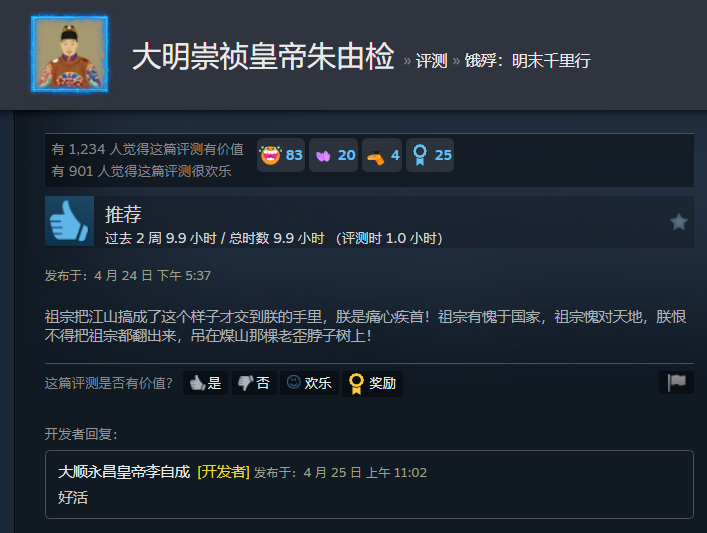
Take the best-selling visual novel *Starving: A Thousand-Mile Journey at the End of the Ming Dynasty* as an example. As early as 2023, when production began, the producer teased the concept of “putting a young girl on the dinner table,” which sparked a lot of discussion at the time. After its release, various jokes and memes sparked a frenzy across the internet. Here are a few examples:

Click to enter a description of the image (up to 30 characters)
First, there are all kinds of memes. I read a study a while back that said the best way to spread memes is through meme images (text + images).
Click to enter a description of the image (up to 30 characters)
Since the game is set in the Ming Dynasty, it sparked a frenzy of name-changing games and comments among netizens, and the developers happily joined in by changing their own names to join the fun.

Click to enter a description of the image (up to 30 characters)
The developers’ deliberate use of in-jokes is evident in various details throughout the game. Take the “Uphold Male Virtue” achievement as an example: the contrast between the concept of “upholding male virtue,” the foot fetish elements, and the trigger scenes naturally made this achievement go viral.

Click to enter a description of the image (up to 30 characters)
What’s more, the developers released a new title to promote the game immediately after its success. Since this game also features some bizarre elements, it’s naturally generating a lot of buzz.
▍Jike.com, Bai Guangda
Seven years ago, we wrote a brief analysis based on leaked Steam sales data.
At that time, there were fewer than 20,000 games available on Steam. But times have changed, and the Steam ecosystem players see today is almost completely different from what it was back then. Among young men aged 16–25 in China, Steam’s reach is growing by the day; at the same time, with over 20,000 new games released each year, the relationship between game products and their audience is undergoing a dramatic shift—it is no longer the players who need the games, but the games that are desperately seeking players.Developers are racking their brains to come up with innovative gameplay, themes, art styles, and other features to attract players, while players need a keen eye to spot the gems.
On the other hand, however, the indie game market is plunging into the deepest depths of a red ocean: due to the unique nature of these games, a “winner-takes-all” scenario prevails. Once a game loses its early-mover advantage, it risks being drowned out by the vast ocean of online noise.As we’ve noted in previous reviews, on Steam, the “survival threshold” is 50,000 copies sold—only then does a title break even; the “elimination threshold,” however, is just 500 copies. Many developers see their first—and last—attempt at game development end in failure at this very point.
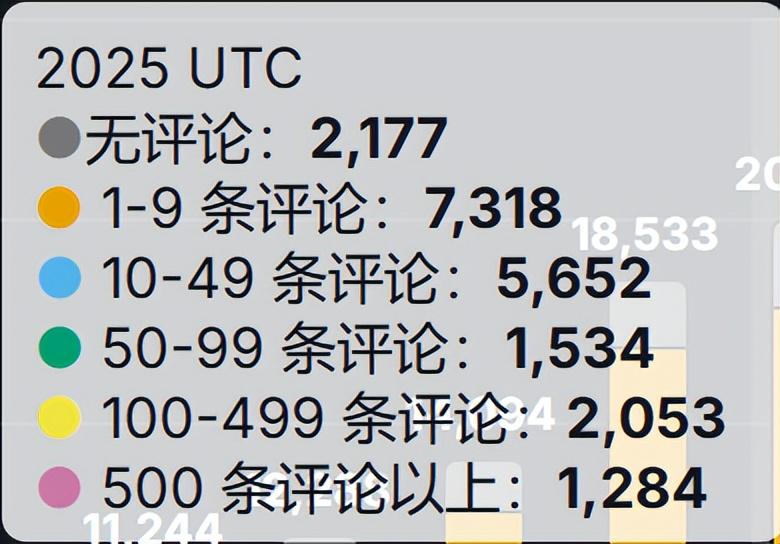
Today, these figures are reaching even more staggering proportions: nearly half of the new games released in 2025 received fewer than 10 reviews, only 2% of games managed to surpass the $1 million revenue threshold, and more than 5,000 games generated less than $100 in revenue (which isn’t even enough to cover the cost of listing on Steam).
Click to enter a description of the image (up to 30 characters)
Number of Reviews for New Games Released on Steam in 2025
Similarly, the cost for players to discern market trends and content quality continues to rise. If the original Steam was an amplifier, the current version is no different from Douyin, Kuaishou, or Xiaohongshu: it provides you with a platform, but you have to figure out how to attract attention and drive traffic on your own.
How can a new game stand out from the crowd? This is a question that Jike has been pondering for many years. If a developer views their game as their own child, then they must “give equal importance to both development and promotion.”The era of indie games where “good wine needs no bush” is long gone. Regardless of team size, gameplay genre, content focus, or art style, developers must distill the most valuable elements for promotion. Store pages, community buzz, wishlists, and all promotional videos are now equally important.
“Release date? The game is already out the moment your store page goes live”—that’s the reality for many.Treating the game as finished from the very start and figuring out how to sell one more copy every day—these things don’t begin with the end of Early Access, but with the creation of the project files. Even so, we still have to go head-to-head with some of the smartest people in the world, because in this era, the truly brilliant creators are all thinking about making games, and every developer wants to be the ultimate winner.
▍Li Beizhen, Organizer of Shenzhen Solo Travel Guide
If you’re a developer with the makings of a true titan, the question of “how to stand out” holds little meaning for you. There will always be a select few genius developers and producers in this world who, without needing outside opinions or help, can battle their way to the top and become the protagonists of the industry; for them, this market is a blue ocean.
But most people simply can’t pull this off. As a developer at the “grassroots” level, I always view issues from the perspective of an independent developer, and I believe there’s no established, foolproof path that guarantees anyone will stand out. This isn’t a career that can be sustained solely by a developer’s individual skills: your game’s quality, marketing budget, and other factors all need to be above average; you need to avoid pitfalls at every stage; and you need to seize every opportunity that arises along the way…Even when all these factors come together, the odds of success remain minuscule. And as indie developers, with our limited resources and smaller scale, this is likely a goal that’s extremely difficult to achieve.
So, 25 years from now, I would advise everyone not to worry too much if their game only sells a few thousand copies. What we should focus on instead is how to keep improving with each step forward, so that people gradually come to recognize your team. Only one in a million titles can make a name for itself right out of the gate. But there are so many developers out there—we can’t expect everyone to cross a narrow bridge and compete for the “Holy Grail.” That makes no sense.
I believe that indie developers need to persevere and commit to the long haul. You have to be absolutely dedicated to this endeavor over the long term before you can finally find that breakthrough moment. And if you choose to give up at any point during those years leading up to it, you might miss out on that “happy ending.”
▍Xiao Xing, Publishing Producer at WiseGames
In recent years, the variety and scale of games on Steam have continued to grow, with a wide range of AA and AAA titles, as well as online games, gradually dominating the top spots on the New Releases chart. Whether from a publisher’s perspective or that of an indie developer, let’s briefly discuss what makes them “different.”
First, let me make one thing clear: if you’re making games simply to express your passion and creativity on a whim, or just to share your ideas with a wider audience, then you don’t need to worry about what follows—because I’d like to focus more on the commercial side of indie gaming.
Over the years I’ve spent in publishing, I’ve spoken with countless developers, and what strikes me most is that the development of most indie games is often driven by dreams and passion. The spark for a great indie game might come from a wild idea sparked by playing a blockbuster title, or it might be a dream nurtured since school days. More often than not, however, it stems from someone who, after years of working at a major studio, has grown tired and weary—deciding to return to their roots, find a new life of their own, and create something with genuine heart and soul.
There’s no denying that these are all excellent starting points for a solo project. But what I want to emphasize is that a game’s starting point doesn’t necessarily equate to its highlight. Often, the simpler the underlying mechanics seem, the harder it is to make them as polished and engaging as those in top-tier titles.
This phenomenon is particularly evident in many popular game genres that developers perceive as easy to get into. Take *Slay the Spire* as an example: I’ve seen at least 30 indie development teams or solo developers who, after playing it and becoming hooked, decided to launch a project to create a “second Slay the Spire.” Some build on its foundation with minor tweaks, some simply want to copy it and change the art style, and others aim to make something bigger and more fun than the original!
But in the end, without exception, they all failed. Some were abandoned halfway through; others seemed to be completed but were completely unplayable; and still others were in development for several years, only to end up completely unrecognizable by the time they were finally launched—entirely different games from what was originally envisioned when the project was first launched.
For an indie developer looking to create a commercial indie game, having passion, a sense of purpose, dreams, and drive is just a very, very basic starting point. What matters even more is the series of tasks that follow once the project is officially launched, as these directly determine its success or failure.
Steam is a global marketplace with over 20,000 new games released every year, but only a handful become blockbusters. What makes you think your game will be the one to stand out?
So, if you want to develop an independent commercial game, you must face reality head-on, establish a clear and comprehensive cost plan and project timeline, and maintain unwavering perseverance. A single game isn’t your entire career—it’s merely a test of your ideas. You need to persevere, persevere, and persevere some more to have even the slightest chance of becoming that shining new star on Steam’s annual charts one day.
▍Interview with Shatian Dange, Producer of *Wuhui*
As a newcomer to indie game development, I’ve drawn some insights from my experience working on *Wuhui* so far: In addition to game development, I always set aside time specifically for marketing my game. Beyond trying to gain more exposure on platforms like Xiaohongshu and Douyin, it’s also essential to build your own studio IP—or game IP.Your first game will have only a small following, but as you build up your portfolio, more and more people will come to know you. This process of building a following should not be overlooked.
I have a neighbor who’s a fairly well-known indie game developer. He’s made seven or eight games so far, all with a distinct personal style, but his early titles didn’t gain much traction because back then, he just knew how to upload his games online. It wasn’t until a few years ago that he started actively building a fan base, and he soon discovered that each subsequent release garnered better feedback, with sales steadily increasing. I really hope I can follow in his footsteps.
▍Han Zhiyu, Founder of Chaos Galaxy
The cultural and creative industry is characterized by a spiral of growth amid competition. The most obvious example is online fiction: with just a middle school education and a pair of hands, anyone can write. While the vast majority remain in the pack, this doesn’t prevent some from rising to the top as “Platinum-level Masters.” Nor does it prevent the overall quality of fiction from continuing to improve.
A decade or two ago, I did indeed experience the era when the domestic gaming market was a monopoly—back then, anyone who could make a game could make money. But starting around 2017, with the widespread adoption of game engines, the influx of new industry professionals, the rise of globally accessible platforms like Steam, and the recent advancements in AI productivity, game development will eventually become something anyone can do.
But no matter how many games are released or how many people are developing them, there will always be a top 100 of games raking in huge profits, and a top 1,000 of games turning a profit, recouping their costs, and continuing production. Moreover, the trend is moving toward a landscape where technology, money, and power are becoming less and less capable of creating monopolies, and where it’s becoming easier for ordinary developers to make a name for themselves. Competition is growing fiercer; while this poses a challenge for developers, it’s undoubtedly a boon for players.
As for whether a random person or group will fail miserably or strike it rich by making a game, it’s entirely a matter of trial and error. You won’t know if you can do it until you try. If you don’t try, you certainly won’t succeed.
原创文章,作者:游茶妹儿,禁止转载:https://youxichaguan.com/en/archives/195296