“It feels like I’m always playing the role of a student, so I wanted to see what it’s like to be a ‘green pepper’ for a change.” A whim led Zhou Houquan and Zhu Tong, doctoral students at Soochow University, to create a browser game that has taken the academic world by storm—*The Green Pepper Simulator*.
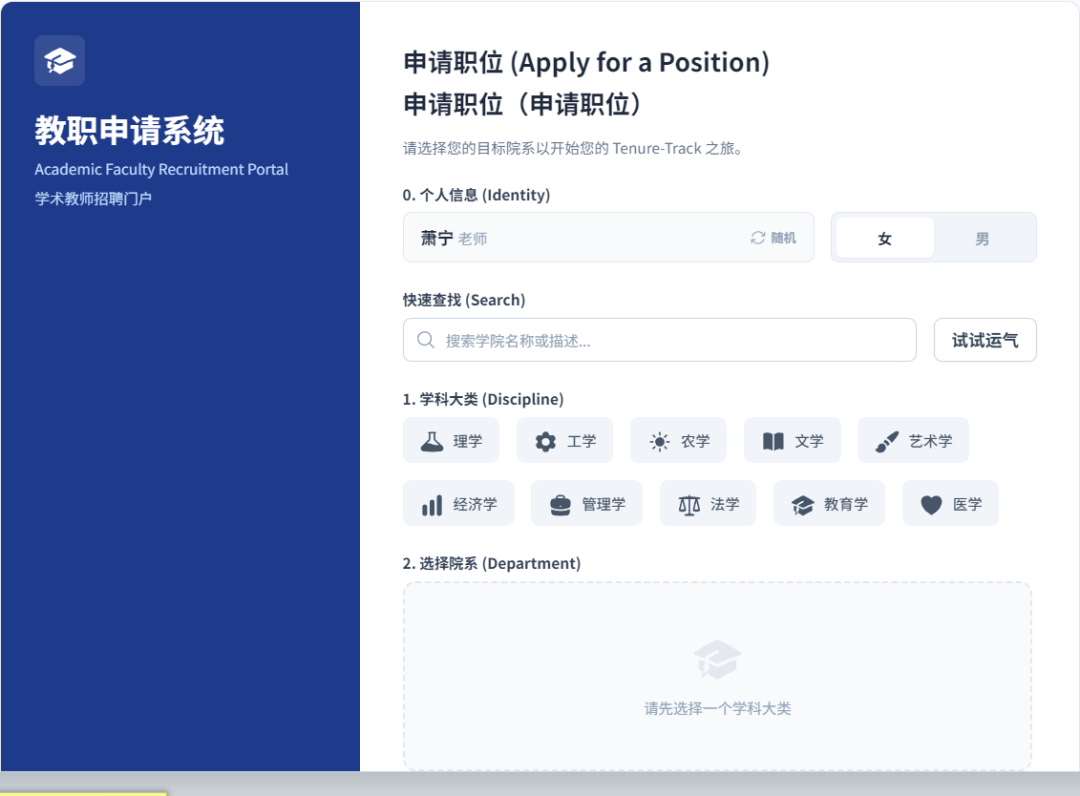
The game features a simple, straightforward interface. No registration is required—just visit the website, select a subject, and the AI will randomly generate your “Green Pepper” identity: you’ll get a personalized resume, and even the school you’re assigned to will be randomly selected.
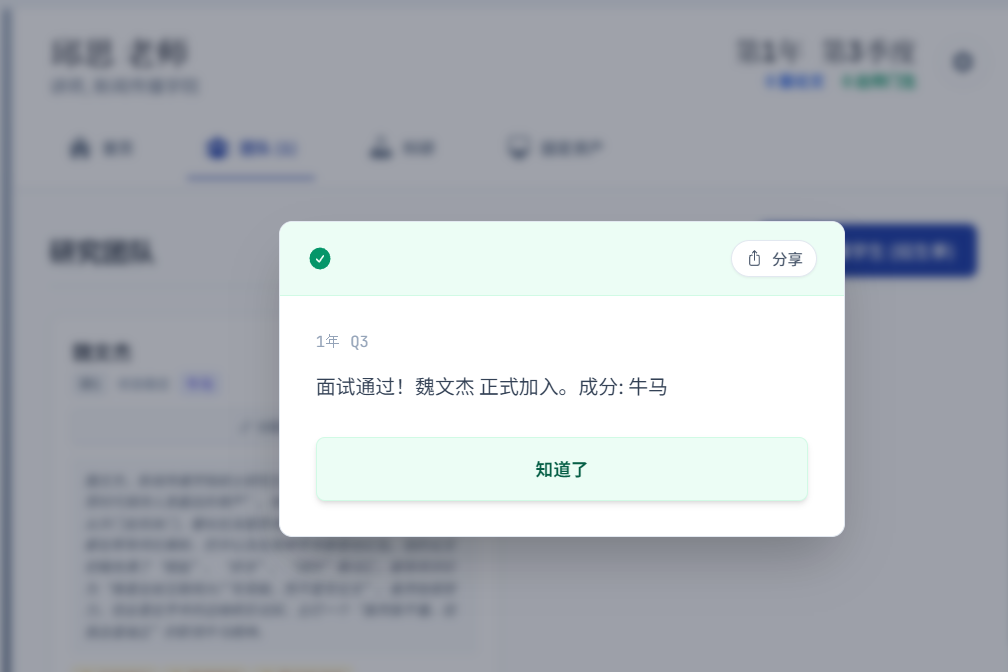
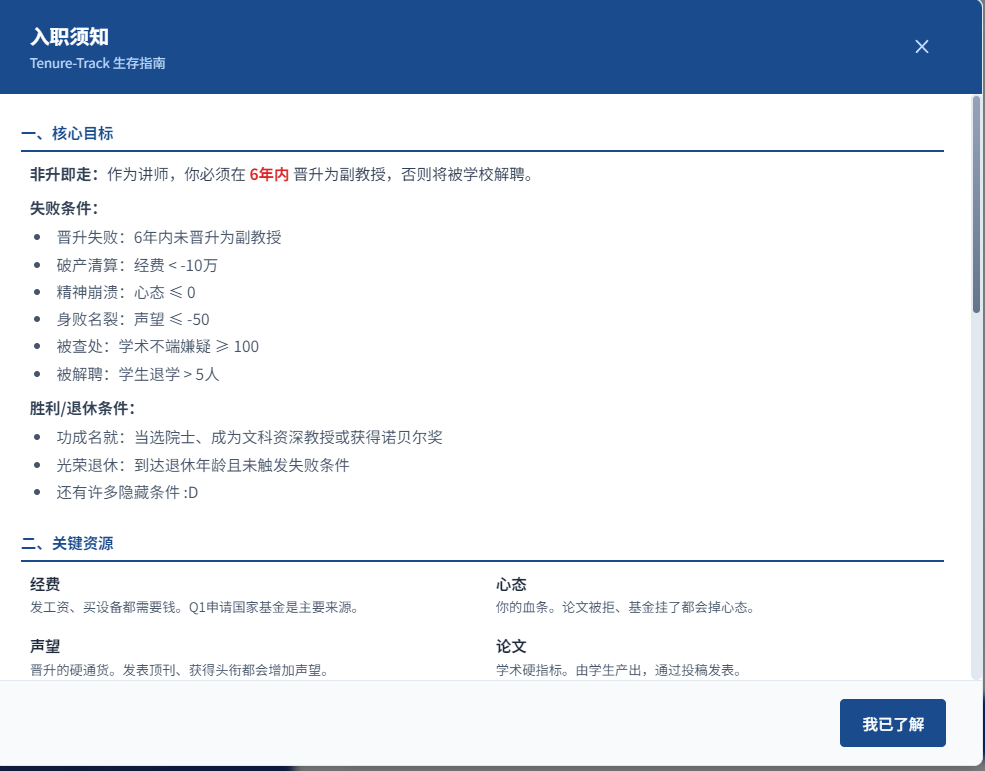
The game’s core gameplay almost perfectly replicates the daily life of a real-life young academic: applying for government grants, securing corporate sponsorships to raise funds, recruiting students to help their advisors “churn out papers,” and gradually climbing the career ladder by accumulating academic achievements.
Of course, researchers face every single one of these challenges: revising papers can really take a toll on your mental health, and getting a full-body massage to recharge costs precious research funds; on top of that, you occasionally have to deal with a never-ending stream of salespeople pushing their products—it’s incredibly annoying, but you have no choice but to put up with it.
It took the two of them just two weeks to go from concept to a fully built website. The initial version was actually quite rough: there were no strict numerical constraints, research funding was abundant, and there wasn’t even any pressure to publish papers. Even so, the game had the first 20 testers hooked.Their senior classmate, Liu Yahui, was one of them. She played from just after 6 p.m. until 1:30 a.m., rising from “Lecturer” all the way to “Academician,” and exclaimed that her “sense of accomplishment was off the charts.” Later, she even volunteered to join their team, helping to manage their social media platforms.
On December 16, after the URL for *Young Scholar Simulator* was released online, it instantly caused a sensation in academic circles. Zhu Tong and Zhou Houquan revealed that over 1,000 people flocked to the game on its first day of promotion, with daily players peaking at 90,000 and concurrent users exceeding 2,000.Players praised the AI-generated “memes” for accurately capturing the daily realities of research life, creating a deeply immersive experience: some became hooked on the thrill of advancing “from lecturer to academician,” finding relief from real-world research anxieties; others saw their own futures reflected in the simulation and couldn’t help but reflect on systemic issues within the research community.
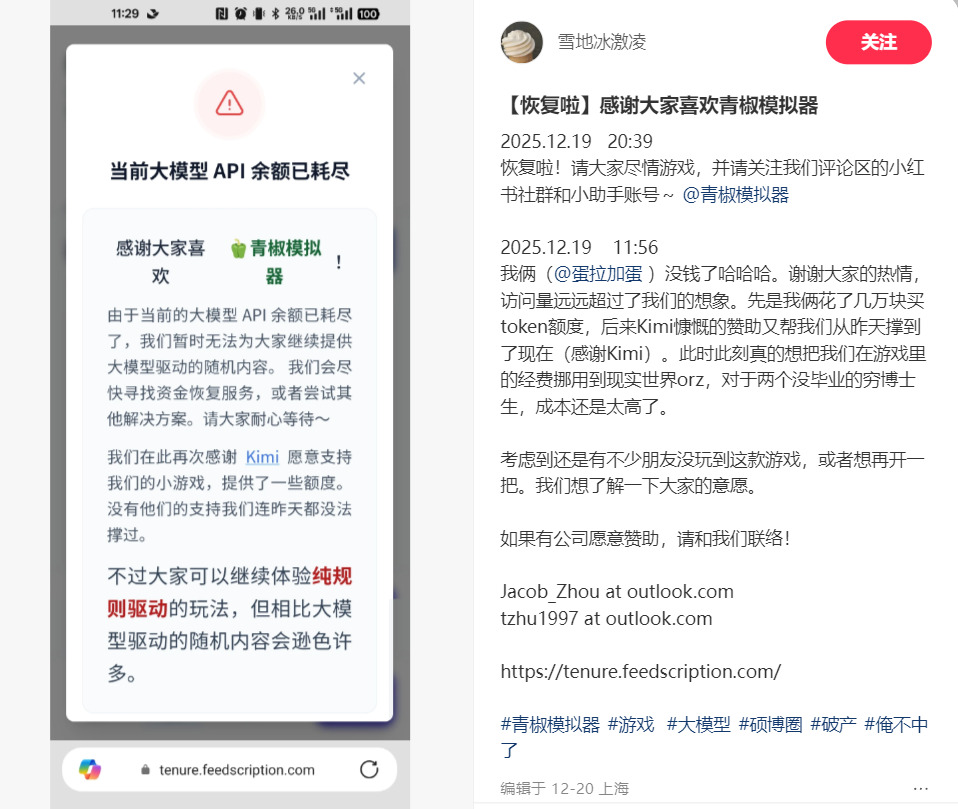
But no one expected that this “whimsical creation” would soon face a harsh reality check. Since players could jump right in without registering, the sudden surge in players quickly depleted the two men’s supply of idle tokens.To keep the game running, they spent tens of thousands of yuan of their own money to buy tokens, and later received sponsorship from Kimi. Even so, by noon on December 19, the large-model API had completely run out, leaving the two with no choice but to post a plea for help on social media. Fortunately, the post garnered widespread attention, and by that evening, the game was back up and running.
For two PhD students in artificial intelligence with no prior experience in game development, this unexpected surge in popularity inadvertently set them on a path to explore the intersection of “AI and gaming.” The token shortage crisis they encountered is precisely the challenge currently facing many AI startups—skyrocketing computing costs have become a major obstacle hindering the industry’s growth.Their journey—from the game’s viral success to their urgent appeal for help—not only brought them unexpected attention but also gave them a firsthand look at the real-world challenges facing the AI industry.
This was a fascinating convergence of academia and industry, and Tea House took this opportunity to sit down with them for a chat. Below is an edited transcript of Tea House’s conversation with several authors of *Green Pepper Simulator*:
01
An AI game I made on a whim
Teahouse: I saw on Xiaohongshu that you created this simulator because you had some grievances about the academic world. Could you tell us a bit about how it all started?
"Green Pepper": It started out very simply. We saw a game similar to *Mentor Simulator*, which progresses through story choices. We wondered, "Could we use a large language model to generate more interesting, randomized responses?" We found this approach intriguing and quickly put together our first demo.
Teahouse: What was your initial design concept when building the demo?
"Green Pepper": The initial page design was relatively simple, with the core focus on creating a student recruitment feature—players can recruit different types of students, who then produce research papers, and players can also interact with them. The current version has evolved gradually through ongoing communication and discussions with our first group of players (namely, our friends).
Teahouse: How long did it take to develop the first version of the website? What were your main tasks during that time?
"Green Pepper": It took about two weeks to launch the first version. Setting aside backend technical issues, the initial demo was quite rough. Students had unlimited opportunities to receive encouragement and support each quarter, with no numerical constraints. This allowed them to take on an unlimited number of side projects per quarter, leading to excessive research funding and completely eliminating any pressure to publish papers.We gradually optimized the game, adding numerical limits to create a sense of urgency and expanding the range of actions based on player feedback. Initially, the only activities were taking walks and getting full-body massages, but later we added features like grading papers and retracting publications, which resolved the issue of academic misconduct metrics remaining unchanged.

Teahouse: Is this simulator designed to integrate directly with other models at the core level, or does it follow a different technical workflow?
"Green Pepper": In the early stages, we used a combination of multiple models. We found that different models excel at generating different types of content. Taking cost into account, we combined high-cost and low-cost models—the high-cost models were responsible for generating memes, which yielded better results; the low-cost models were responsible for generating content such as social media posts and student profiles, helping to control overall costs. Specifically, we first designed several backend API interfaces, with each interface corresponding to a different model or the same model, and then combined them based on a comprehensive evaluation of performance and speed.
Teahouse: In the current version, which parts are AI-generated? Are there any specific restrictions in place?
"Green Pepper": Most of the content is generated by AI, including teacher profiles, student personality profiles, simulated events, and social media feeds; AI-generated content makes up a significant portion of the platform. We initially did not want to impose any restrictions on AI-generated content, but we found that the diversity of content generated by the model was insufficient. For example, when it comes to tags like "cows and horses," the model automatically limits its generation to a narrow range.
Teahouse: Do you have any previous experience in game development?
"Green Pepper": I have no formal game development experience, only the basics from small assignments in my undergraduate courses—such as simple projects like controlling a spaceship to blow up a planet.
Teahouse: Did you run into any roadblocks during the early stages of development?
"Green Pepper": Overall, things have gone fairly smoothly, but we're mainly stuck on collecting data from front-end requests and figuring out how to hide model latency. We're still grappling with this issue.
Teahouse: To elaborate, what exactly are the challenges involved in the data collection process?
"Green Pepper": Frontend requests involve a wide variety of data types, and we also need to track and collect the response results from large language models. Since we didn’t want to use a relational database, we ended up having to use some less-than-ideal methods to temporarily store the data.
Teahouse: Do you have any questions about the model's response speed?
"Green Pepper": The biggest challenge in using AI for game development is slow response times. Players may have to wait anywhere from ten to thirty seconds after entering input to see results, which can easily lead to frustration. This is closely tied to the model’s concurrency capabilities and the number of tokens it can generate per second, so we prioritize these factors when selecting a model.
02
90,000 daily active users, 2,000 concurrent users
Teahouse: Did you initially announce a closed beta group for players? How did you acquire your first batch of users?
"Green Pepper": We didn’t announce a closed beta group; our first batch of users were all friends we knew personally. After our friends had tested the app for a while, we launched a large-scale promotion on December 16—which basically involved posting on Xiaohongshu and sharing the post in student groups we were part of.
Teahouse: How many people were playing at the beginning?
"Green Pepper": On the first day of promotion, there were about a thousand people; during the beta testing phase with friends, there were about 20 people.
Teahouse: Was your initial motivation for this project purely out of personal interest? Did you not consider promotion at all from the start?
"Green Pepper": It was purely out of interest—I just thought it was fun. Plus, the content generated by the large language model is really funny, so I wanted more friends to experience it and decided to give it a try.
Teahouse: Was there a specific moment that made you decide to promote it?
"Green Pepper": There are many interesting aspects to it. For example, there’s a sales pitch event in the game where a salesperson promotes equipment like the Model 3000 server—which can speed up experiments—which feels very familiar to those of us in computer science. Students from other majors can also relate to it; for instance, those in the foreign languages department will come across bilingual jokes. These little jokes tied to specific fields, combined with the context of master’s and doctoral students, are very popular.

Teahouse: How did the promotion process unfold?
"Green Pepper": It started by being shared in student groups like dorm chat groups, food delivery groups, and secondhand marketplace groups. Friends found it entertaining and helped spread the word on their respective school forums, so more and more people started playing it.
Teahouse: What was the peak number of concurrent players after the game was launched?
"Green Pepper": The game has a daily peak player count of approximately 90,000, with around 2,000 players online at any given time.
Teahouse: Compared to other mentor-style simulators, your game has a longer playtime—players can play for four or five hours, or even over ten hours. Is that due to the design?
"Green Pepper": While other simulators track progress on an annual basis, we do so quarterly—our progress cycles are several times longer than theirs. However, some players have reported feeling bored in the mid-to-late game, as they find themselves simply tapping on stats repeatedly. We are currently exploring more diverse gameplay options and expect to launch a brand-new version within the next few weeks.
03
Token shortage leads to commercialization challenges
Teahouse: You guys didn’t expect the token fees to run into the tens of thousands, did you?
"Green Pepper": I really didn't expect that. If I'd known earlier, I might have thought it through more carefully.
Teahouse: When did Kimi start sponsoring you? How did the partnership come about?
"Green Pepper": Kimi began sponsoring us at noon on the 18th and continued through the morning of the 19th. The partnership was arranged through a friend. At that point, we had already spent tens of thousands of yuan on token fees and really couldn’t afford it anymore, so we reached out to manufacturers to see if we could secure sponsorship through advertising or other means.
Teahouse: Are the token fees high during the beta testing phase? How much did it cost to set up initially?
"Green Pepper": Not much. We were already topping up our tokens for our large-model experiments at the time, and we only used a few dozen yuan worth of leftover tokens during the initial setup.
Teahouse: We’re interacting with more people in the AI gaming field now, aren’t we?
"Green Pepper": That's right. We've spoken with developers of similar games, and the general consensus is that tokens are too expensive. However, as large-model technology evolves, token costs will become increasingly affordable, and users will be more willing to pay—after playing games powered by large models, users will have higher expectations for content diversity and will be more accepting of the associated costs.
Teahouse: I see in the comments that a lot of people are willing to pay the token fee.
"Green Pepper": You can really feel that people's tolerance and acceptance are growing.

Players in the social media comments section who are willing to pay for *Green Pepper Simulator*
Teahouse: Are you currently considering commercialization? After consulting with friends, what are their thoughts on this?
"Green Pepper": We're currently figuring out how to keep the game running long-term, but after consulting with friends, everyone seems concerned about monetization. The core issue is that while players find the game fun at first, they might drop off in large numbers if they have to cover the token costs themselves—though we haven't run any tests on this yet.
Teahouse: What are the main arguments friends have against commercialization?
"Green Pepper": The core issue lies in how the game is operated in its later stages. For example, some players have suggested a one-time purchase model on Steam, but the cost of tokens would increase with the player’s playtime—especially after new gameplay features are added, when consumption would become even more staggering—making a one-time purchase model unsuitable. Others have suggested requiring users to provide their own API keys, but this creates a barrier for the typical group of master’s and doctoral students, as it would require additional top-ups to obtain them;Implementing a direct token-based payment system would also impact future commercial pricing strategies; in-game or video ads, meanwhile, would compromise the product experience. We have not adopted any of these approaches for the time being.
Teahouse: Are there any commercial solutions available at this time?
"Green Pepper": Not at the moment. We still have some time, so we want to focus on refining the gameplay first. If we really can’t find a solution later on, we’ll choose one of these options. In the future, we may lean toward offsetting computing costs by selling additional services, while doing our best to avoid impacting the core gaming experience.
Teahouse: After posting about "bankruptcy," have there been any other sponsors?
"Green Pepper": Many people have offered to personally sponsor the project, but we’ve turned them all down because we’re worried we’d run out of funds before players even get a chance to experience the game. Some companies have offered to sponsor free or discounted tokens, and we’re very grateful for everyone’s support. We’re currently using Xiaomi’s MiMo model.
Teahouse: When investors approached you earlier, were they expressing an intention to invest, or were they simply interested in this direction?
"Green Pepper": We're primarily interested in the direction this is heading. We haven't proactively presented our business plan or revenue model to investors. In the AI+gaming sector, everyone is currently in a wait-and-see mode, learning as they go, and hoping for the emergence of a groundbreaking Super App.
Teahouse: You’re about to graduate. Will your future career be related to this project?
"Green Pepper": On a related note, we are also working on large language models, with a focus on reducing token costs. This includes designing more lightweight and faster model architectures, exploring more optimal structures, and enhancing the models' capacity. We are currently continuing to iterate and optimize the Green Pepper simulator, aiming to explore more possibilities in the realm of AI and gaming. We look forward to releasing the new version to everyone soon.
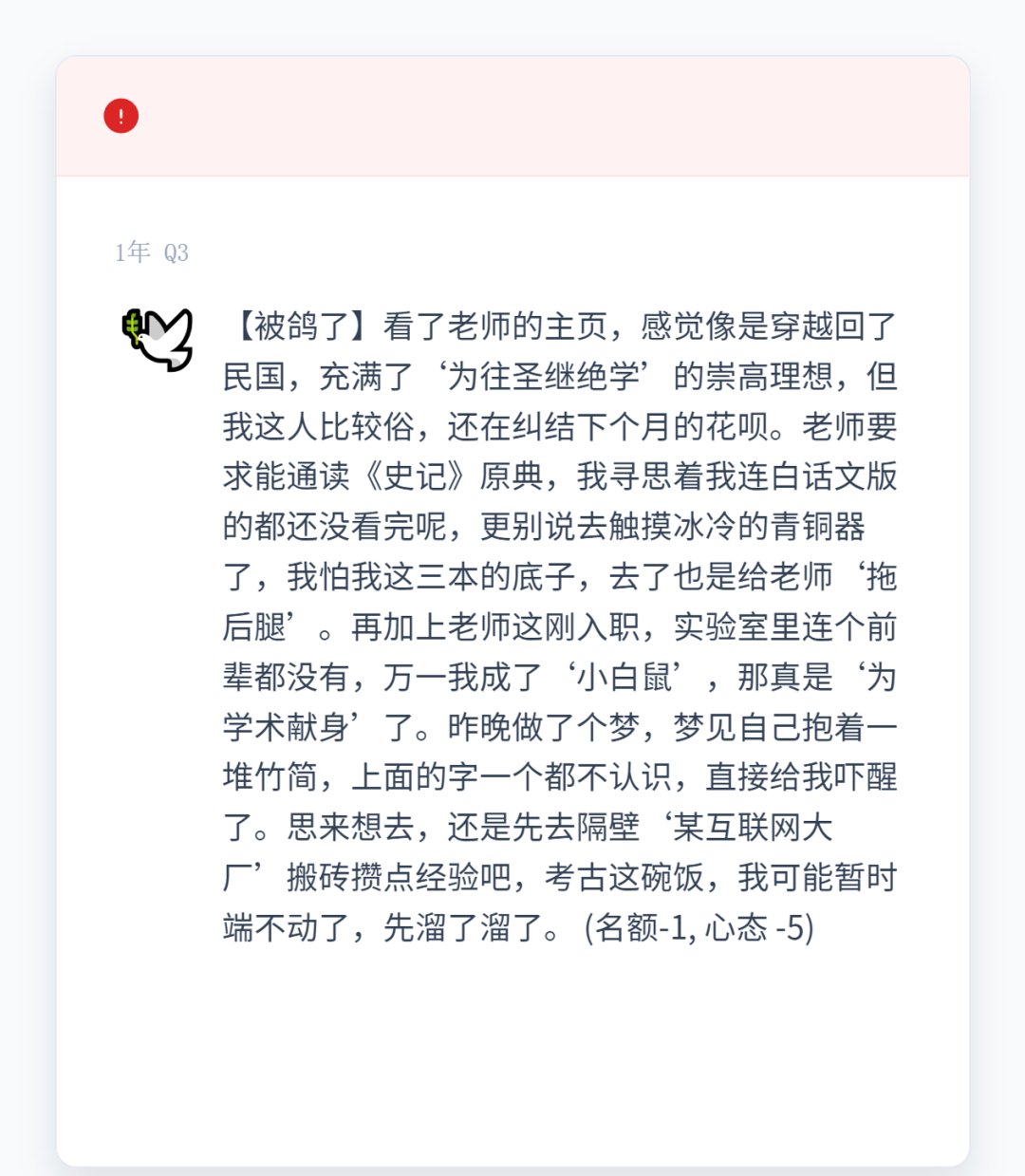
The new teacher was rejected by the students
Teahouse: Can you give us any hints about the direction of future updates?
"Green Pepper": The core objective is to enhance AI engagement within the game. Currently, much of the content is still structured within a framework we’ve established, but moving forward, we hope to have large language models generate new storylines and offer richer life path choices, allowing players to explore more possibilities. For example, we’ll no longer be limited to the teaching career path; we’ll introduce paths such as becoming a renowned teacher or pursuing research, so that teachers with different areas of expertise can follow distinct career trajectories.Currently, annual events are randomly generated by the AI. Moving forward, we aim to enhance the randomness of the “choices shaping outcomes” mechanic—so that when players make different choices, the AI can expand their life path options accordingly, rather than following a linear teaching career path. For instance, we plan to introduce new directions such as corporate roles and administrative positions.
04
The Line Between Research and Business
Teahouse: Can this project be included as part of your academic work?
"Green Pepper": Absolutely not—it’s just something we do in our spare time. We were pretty discouraged for a while. After the launch on December 16, we spent over 10,000 yuan in a single day on the 17th. At the time, we were thinking of gathering some feedback and writing a technical report, approaching the issue from a research perspective. It was only after we received token funding that we avoided going down that path.
Teahouse: So does this project conflict with your research?
"Green Pepper": In fact, the two are not contradictory; they share similarities in methodology, though their specific research approaches differ. Academic research places greater emphasis on algorithmic results; while efficiency is also a concern, many engineering implementations in games—such as multi-model blending and latency optimization—are difficult to quantify in academic papers, yet they play a crucial role in game implementation.
Teahouse: So you need to balance the time spent on game development and scientific research.
"Green Pepper": Basically, I do research during the day and work on updates and iterations after I get off work at night. However, I didn't manage my time well during the early stages of development, so sometimes I'd be busy until three or four in the morning. I was really sleep-deprived last week.
Teahouse: You didn’t expect to go down the path of AI + gaming at first, nor did you expect so many players to enjoy it?
"Green Pepper": That's right, we didn't have that in mind at all at first. Actually, we have to thank our players. Without your support and enthusiasm, we wouldn't have received the continuous positive feedback that made it possible for us to keep optimizing the game. It was your feedback that helped us see new ways to combine AI with gameplay and discover new possibilities, which is why we're willing to keep investing in it.
Teahouse: You could say that academic work often comes with its share of setbacks, and the recognition this game has received has brought some validation to your academic careers.
"Green Pepper": When developing products, you’re closer to the users and can quickly receive positive feedback; but in research, the process is long, and it’s hard to see results quickly.We’ve also recreated the frustration of academia within the game. For example, our initial paper system was designed so that students would automatically generate a paper once they reached a certain score. We revised this to a system where “papers may need to be resubmitted,” simulating the helplessness of real-world academic research. Many players on social media have complained about “spending over ten days resubmitting papers”—which is, in fact, a reflection of reality.
Teahouse: Is this something you’ve actually experienced as well? Did you often hit a wall with your thesis or struggle with self-doubt while pursuing your PhD?
"Green Pepper": This is very common. For example, if you’ve been working on a paper for a long time without getting it accepted, new methods may emerge that surpass your own research as time goes on. You’ll need to constantly adjust your approach, and the longer it drags on, the more stressful it becomes—until the paper is finally accepted, at which point you’ll finally breathe a sigh of relief.
Sometimes I disagree with reviewers, which can really affect my mindset. What stands out most in my memory is a project I worked on for a year: after submitting it, it went through a conference review process, but when I submitted it to a journal, it was rejected due to “insufficient reviewers,” wasting four or five months. There are also some reviewers who, due to the rise of large language models, are pessimistic about the future of foundational NLP and give very low scores—it’s really frustrating.
原创文章,作者:游茶妹儿,禁止转载:https://youxichaguan.com/en/archives/195246