In recent years, the "mild horror" genre has emerged as a major force in the gaming market. Thanks to its natural ability to generate buzz and its powerful emotional impact, it has quickly evolved from a niche genre to a force the industry can no longer ignore, with an increasing number of established games experimenting with incorporating mild horror elements into their existing gameplay frameworks.
As a pioneer of the “search, shoot, and retreat” gameplay style in China, the mobile game *Dark Zone Breakthrough* also launched a brand-new “micro-horror” mode called “Valley of the Eerie Mist” during the recent Season 17. When the news broke, many players were taken by surprise.After all, at first glance, the game’s serious, hardcore military-themed style seems difficult to reconcile with supernatural elements. However, once the new mode officially launched, market feedback and player experiences provided an unexpected answer.


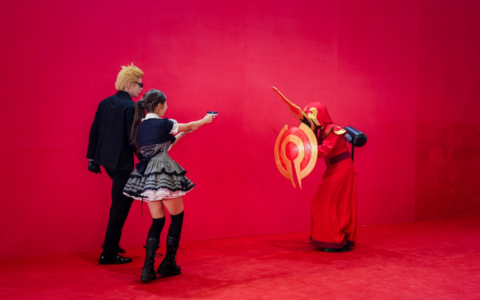
“The atmosphere in ‘Misty Mist Valley’ really has a bit of a ‘K-style’ vibe.” ““The more immersive, the better; the scarier, the better—I hope it scares me to death.” In the comments section on Bilibili, many core players of *Dark Zone Breakthrough* have expressed extremely high expectations. Some players even posted images of Lam Ching-ying’s costume, joking, “Can I go on the offensive in this outfit?”

Beyond the banter, they also seriously brainstormed ideas, discussing how to integrate elements of mild horror more naturally into the game’s existing hardcore core. The new version’s promotional video has already surpassed one million views on Bilibili, fostering a sense of co-creation between players and the developers.

From a practical perspective, the hardcore “realism” that *Dark Zone Breakthrough* has always emphasized not only blends seamlessly with its subtle horror elements but actually enhances them, amplifying the atmosphere of terror—the stark contrast between the clear, realistic rules of the game and the “irrational” transformations of enemy forms creates a psychologically intense sense of tension for players.
01
Once information is tainted, even veteran players have reason to be afraid.
Why did this sense of contrast work so well? In my view, the addition of subtle horror elements didn’t undermine the core “search, fight, and retreat” gameplay of *Dark Zone Breakout*; rather, by introducing a “hidden threat,” it provided players with a completely different and fresh sensory experience.

Eerie wooden dolls can be found all over the valley. At first glance, they appear to be mere scenery props, but the moment you turn your back, you’ll hear a spine-chilling creak.The moment you turn back, they’ve already teleported behind you to attack, making you want to flee the area as quickly as possible. The developers have deliberately placed these dolls in blind spots around various corners on the map, causing me to “run into a surprise” multiple times—so much so that now, whenever I see one of these dolls, I can’t help but fire a couple of shots first to check if it’s real or not.
In addition, there are nearly invisible “refractive entities” that roam freely across the map, leaving only footprints on the ground or being detectable only through a camera. By the time you realize you’re losing health rapidly for no apparent reason, you’ve likely already been ambushed by a pair of pitch-black hands “swiping across your face.”

Even more ingenious is the fact that *Dark Zone Breakout* has introduced a “Sanity Meter” system tailored to its psychological horror theme, adding a new survival variable to the gameplay.Sanity isn’t merely a negative status bar. In the early stages of Sanity loss, players will first experience auditory hallucinations and become more susceptible to attacks; as panic intensifies, their stamina regenerates more slowly and depletes faster, until they can no longer move stealthily and are forced to “stroll” across the map with wide strides, exposing their position completely.

While the gameplay changes discussed earlier were limited to the individual experience, “fake teammates” directly undermine the sense of security that used to be a hallmark of teamwork.The game randomly spawns “imposter” characters disguised as teammates. Not only do they forcibly replace the corresponding teammate’s marker, but they also follow you around, shooting and looting alongside you—only to pounce on you the very next second the moment you let your guard down.In the Dark Zone, where value reigns supreme, players must not only watch out for enemies that can appear at any moment but also fear that a teammate might be a “fake” who suddenly attacks from behind. This crisis of trust is, in itself, a classic form of micro-fear.
In my view, the “information game”—a key feature of The Dark Zone’s gameplay—plays a crucial role in making hardcore realism and the “mild horror” genre such a perfect fit.The game itself is very restrained when it comes to information gathering; aside from advanced gear like thermal vision and life detectors, or seasonal supplies, players can only rely on hearing and sight to determine the exact location of enemies. To hear footsteps more clearly, some players even turn the volume all the way up. The addition of “auditory hallucinations” and ““fake teammates”—introduce a form of “interference” in players’ information-gathering channels. When players attempt to pinpoint enemy positions by listening or rely on teammates to cover their backs while they focus on the front, the whispers in their ears and ambushes by fake teammates can instantly send chills down their spines.This design—which disrupts players’ established thought patterns and renders their accumulated combat experience partially useless—undoubtedly adds an extra layer of fear to the match.
02
When Realistic Art Meets the Supernatural, Even Mild Horror Feels Real
The success of “Valley of the Eerie Mist” cannot be simply viewed as a “counterintuitive” experiment; it requires a delicate balance of horror intensity, ensures that the core gameplay and subtle horror mechanics mesh seamlessly at the design level, and blends perfectly with the game’s artistic style.The reason the mobile game *Dark Zone Breakout* was able to naturally incorporate micro-horror lies in the high degree of compatibility between the game’s foundational design and the micro-horror genre.
How should we interpret this statement? For *Dark Zone Breakout*, hardcore realism is in its DNA; the game’s obsession with detail naturally creates an immersive atmosphere. And in horror storytelling, a commonly cited consensus is that true horror often stems from the unnaturalness of familiar things when they are distorted.

Visually, *Dark Zone Breakthrough* features a realistic art style: the architectural layouts are meticulously designed, the outdoor terrain is muddy and complex, and the interior furnishings bear the marks of daily life. Compared to the more vibrant art styles typical of similar games, this realistic and refined aesthetic helps players feel fully immersed in the game.

Building on this, the Dark Zone’s unique weather system significantly enhances the game’s atmosphere. Previous weather conditions—such as rain and sandstorms—had already been effectively integrated into gameplay through elements like noise interference and reduced visibility;This time, “Valley of the Eerie Mist” takes it a step further, effectively immersing players in a world rife with supernatural phenomena and danger. The mist serves not only as a weather element and atmospheric feature but is also linked to Sanity, making it a crucial factor that influences the combat experience.
At the character and combat levels, realistic character mechanics and battle environments also serve to amplify the atmosphere of subtle dread.The task force members players control are not superhumans; they get tired from running too long, their stamina drops when they’re hungry, and they lose health when they become dehydrated. Under these relatively demanding conditions, every decision on how to evade monster pursuits creates a sense of urgency for the player.
With these two forms of extreme realism layered on top of one another, when players encounter supernatural phenomena, they experience a highly convincing sense of “subtle, documentary-style horror.”
This actually aligns perfectly with the concept of “tactical micro-horror”—a genre that’s extremely popular in overseas films and TV shows—in which highly trained, well-equipped modern special forces are forced to confront unnameable supernatural forces while operating under highly realistic physical laws.This sense of loss of control, built on a foundation of realistic, hardcore gameplay, is far more effective at breaking through players’ psychological defenses than games that forcefully cram in horror elements.Building on the Dark Zone’s existing realistic environment, the game uses visual effects like fog of war, thunderous sound effects, and abnormal lighting to create a truly immersive sense of oppression, making the incorporation of subtle horror elements all the more effective.

It can be said that this update to *Dark Zone* truly and effectively combines the essence of the “mild horror” genre with the core of *Dark Zone* in an innovative way, creating a unique experience where 1 + 1 > 2.The micro-horror elements weren’t simply tacked on as an “extra mode” in *Dark Zone Breakthrough*; instead, they deconstructed and reconstructed the existing framework layer by layer—from enemy design and environmental layout to survival mechanics and teammate dynamics.This is why, even though *Dark Zone Breakthrough* is venturing into the micro-horror genre for the first time, the addition doesn’t feel jarring—instead, players have embraced it as a natural and addictive upgrade.
03
Continue experimenting based on the "search, strike, and withdraw" strategy
In the long term, a product’s longevity often depends on its ability to continuously generate fresh experiences and expand the scope of gameplay.Players’ appreciation for “Misty Valley” is also a testament to the synergy between “The Dark Zone” and “mild horror.” Furthermore, this appreciation is built upon the deep foundation that *The Dark Zone: Breakthrough* has cultivated over the years by consistently refining its hardcore core and the “search, fight, and retreat” gameplay mechanics.
Looking beyond the success or failure of a single gameplay session, what truly sets “Misty Mist Valley” apart is how it uses a bold fusion of themes to reaffirm the flexibility of *Dark Zone Breakout*’s gameplay within the “search, fight, retreat” framework.The addition of subtle horror elements has not diluted the game’s hardcore foundation; rather, it compels players to reevaluate every decision and every strategic move—a deep exploration of the core experience.Judging by the enthusiastic feedback from players, this new mode is undoubtedly a success: it demonstrates a unique and harmonious synergy between hardcore realism and the subtle horror theme, while also serving as a solid testament to *Dark Zone Breakthrough*’s steadfast commitment to innovation that continually pushes boundaries.This innovative courage—embodied by the principle that “you can’t build something new without breaking the old”—along with the game’s solid development depth, not only reaffirms *Dark Zone Breakthrough*’s dominance in the “search, fight, and retreat” genre but also provides a highly instructive success story for gameplay fusion across the entire industry.
Thanks to this unwavering commitment to innovation that continually pushes boundaries, the “Search, Attack, and Retreat” gameplay reveals even more possibilities, giving us every reason to look forward to the future development of the *Dark Zone Breakthrough* mobile game.
原创文章,作者:游茶妹儿,禁止转载:https://youxichaguan.com/en/archives/216060