When it comes to life simulation games, many people probably think first of well-known titles like *Stardew Valley* and *Animal Crossing*. But decades ago, EA’s *The Sims* series practically defined the genre and dominated the market.
However, looking back, you’ll find that few teams have dared to develop *The Sims*-style games. The reason is that life simulation isn’t a simple gameplay mechanic; rather, it’s built on three overlapping systems: house building, character creation, and life simulation.Each of these systems, taken individually, is a massive undertaking in its own right, and when combined, they can become a nightmare that many teams are reluctant to tackle.
Of course, there have been teams willing to take risks over the past decade or so: Paradox Interactive’s *Life by You* was announced with great fanfare but was canceled in 2024; Krafton’s *inZOI* made a splash with Unreal Engine 5 but quickly lost 85% of its player base;EA’s own Project Rene shifted from the highly anticipated *The Sims 5* to a mobile social project with an unclear direction. The various setbacks faced by these teams have also made the *Sims*-like genre increasingly niche.

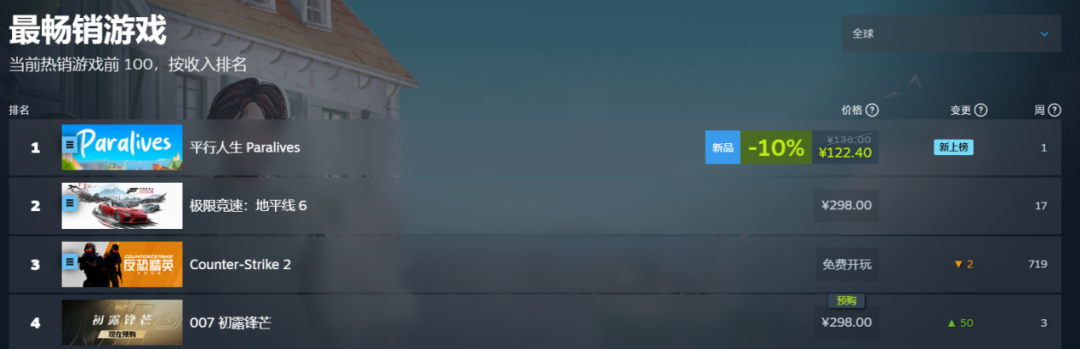
However, just recently, *Paralives*, a game developed over seven years by a 10-person Canadian team, has achieved both critical acclaim and strong sales.Despite fierce competition from major titles like *Horizon 6*, the game successfully topped the Steam Best Sellers chart and set an astonishing record of selling 250,000 copies within 8 hours (based on the game’s $36 price tag, revenue exceeded 60 million yuan).
Even more incredible is that this smash hit was launched in 2019 by Alex Massé, an independent developer. Although the team eventually grew to about 10 people, the entire development cycle spanned seven years,the team did not accept a single penny of external investment, relying entirely on crowdfunding from players via the Patreon platform to fund development. At its peak, the team had 9,000 backers, who contributed nearly $40,000 in monthly revenue to cover development costs.
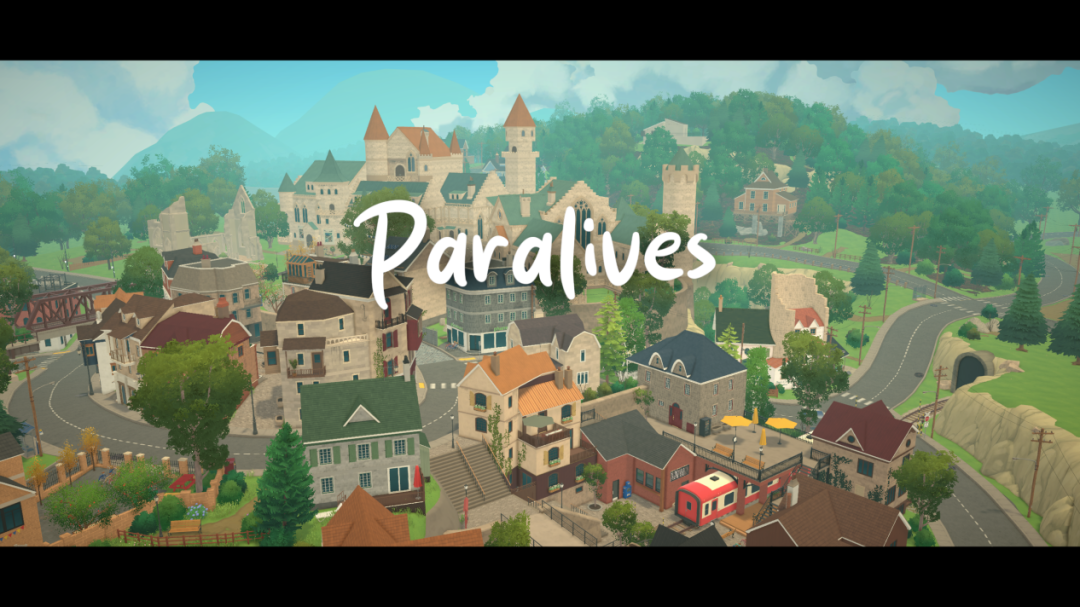
Driven by a love for *The Sims* that bordered on frustration at its shortcomings, and fueled by the enthusiastic support of countless players, this little-known team accomplished something even major studios wouldn’t dare attempt.
01
Alex Massé became obsessed with *The Sims* when he was 10 years old.
Creating characters, building houses, and watching virtual avatars go about their lives. Like many children of his generation, he spent countless hours playing these life simulation games. The difference was that while others were still immersed in the games, he began thinking about how to make them.
He began teaching himself programming while still in high school. After graduating from college in 2014, he chose to enter the mobile gaming industry, where he contributed to the development of projects such as *PewDiePie’s Tuber Simulator*.Through side projects and participating in Game Jams, he taught himself game design and 3D modeling, quickly mastering the essential skills for game development, including modeling, design, and programming.
But he never lost sight of his identity as a gamer, and his disappointment with The Sims series eventually led him to consider making games himself.
“As a fan of *The Sims*, I think others must feel just as fed up as I do with the repetitive cycle. It’s always the same massive amount of DLC, with each update offering less and less new content, and then we have to shell out a fortune to buy the game all over again when a new installment comes out.You can tell there are some improvements with each generation, but what’s missing is a sense of adventure and innovation. Take the Build mode, for example—one of the game’s core features—it hasn’t really changed much since *The Sims 2*.”
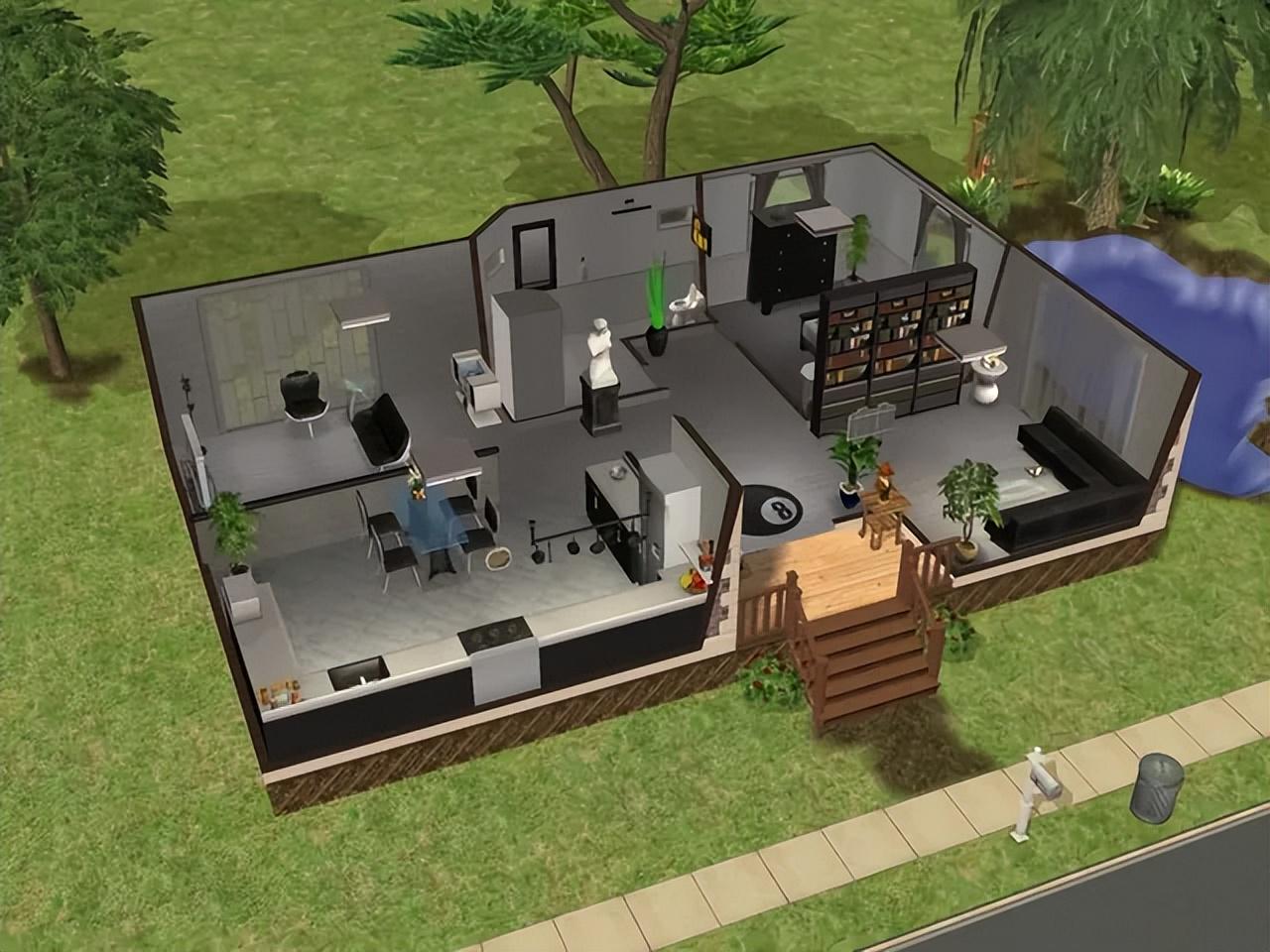
The Sims 2 Screenshot
It was precisely this intense sense of frustration—the feeling that “the student isn’t living up to the teacher’s expectations”—that ultimately served as the motivation for the greenlighting of *Parallel Lives*.
“Ever since I entered the gaming industry, I’ve always wanted to create a simulation game. I believe what life simulation games have been missing is a powerful yet intuitive tool that allows players to build any kind of house with precision and ease. Of course, I’ve created many different prototypes over the years, and with *Parallel Lives*, I hope to finally bring my dream game to life.”
At first, Alex’s plans weren’t particularly ambitious. He built a few small prototypes to showcase some of his creative ideas for simulation design. In June 2019, he uploaded some GIFs and videos to Twitter, and to his surprise, they attracted a lot of attention from gamers.
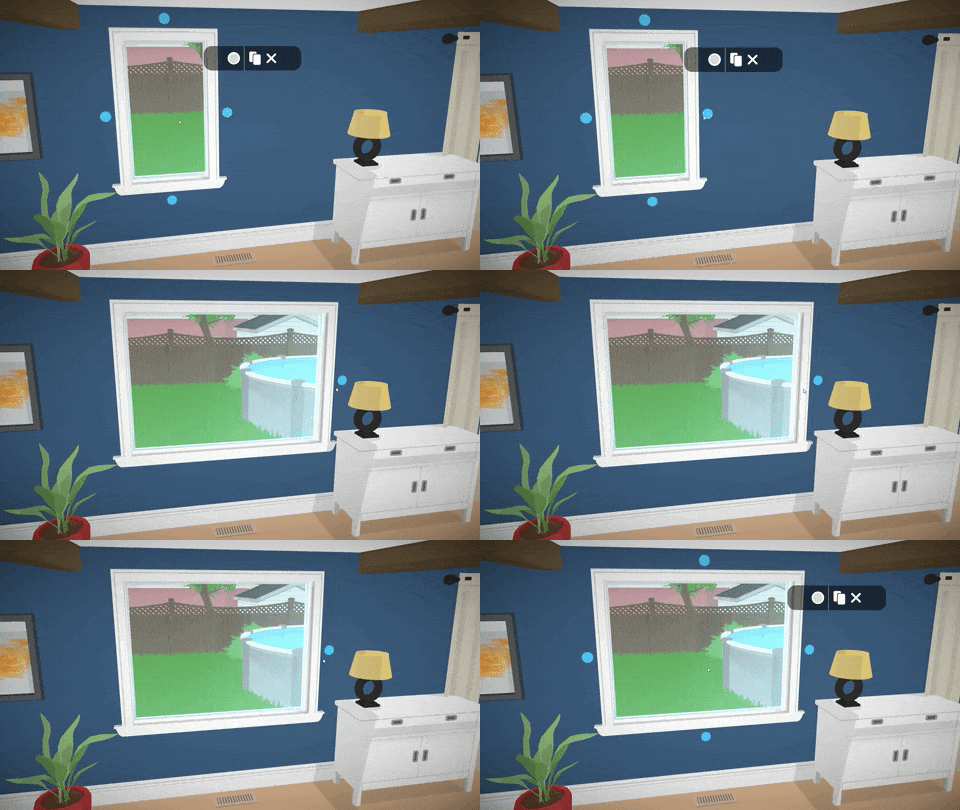
“The overwhelmingly positive response on social media left me completely overwhelmed,” he recalled later.
Overnight, he suddenly realized he might actually be onto something. But a very practical problem soon followed: it was simply impossible for one person to tackle such a massive project; he needed funding to build a team.
It didn’t take long for him to find a breakthrough. An indie game called Ooblets took a path that was completely different from traditional development—it adopted a “marketing-first” approach. The developers posted the very first screenshot on social media, building a player community early in the development process, rather than working in isolation for three years before suddenly announcing the game.
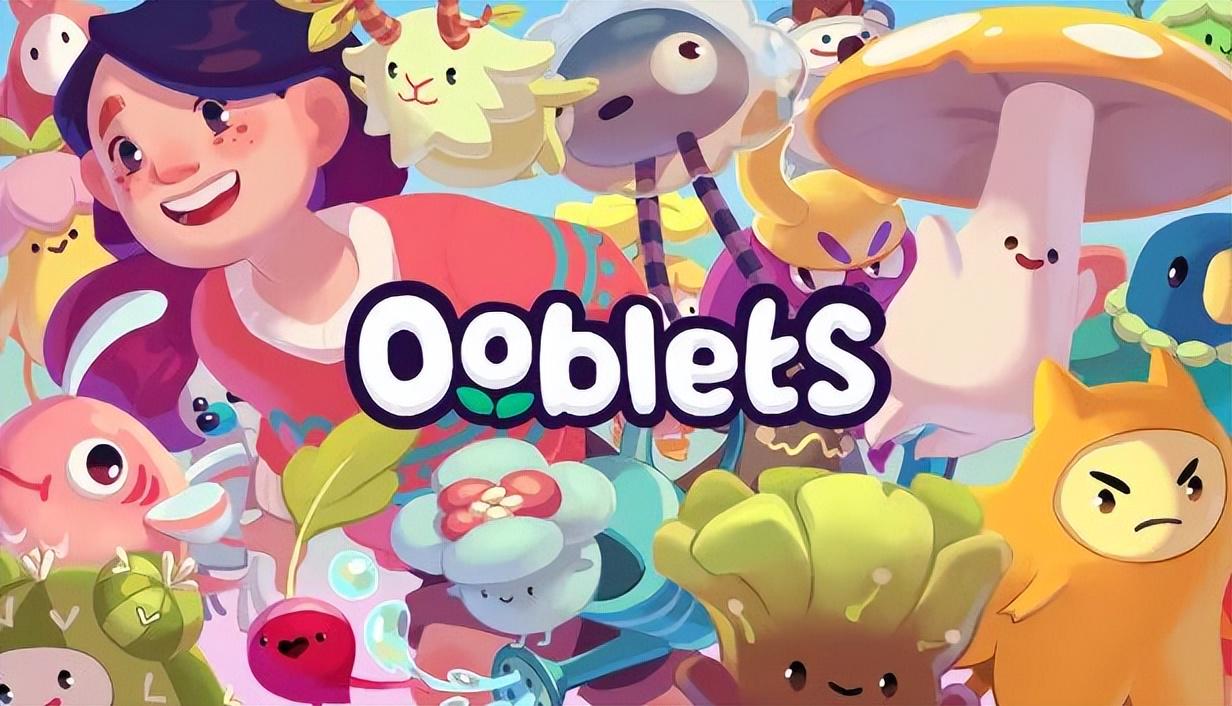
“They didn’t have anything to show besides concept art, but they shared it on Twitter anyway and got great feedback from players. I really like this approach to development. I don’t want to spend three years working in isolation, only to find out when I finally show it to people that nobody’s interested. So from the very beginning, I’ve been actively sharing what I’m working on.”
Inspired by this model, he launched a Patreon page where players could voluntarily donate to support development costs. His expectations were modest at the time; he just hoped to earn enough each month to hire an artist.
However, the end result far exceeded his expectations. Before long, his monthly Patreon donations were enough to support him as a full-time developer. So he quit his job and dedicated all his time to the *Parallel Lives* project.Patrons flooded into Discord, and even spontaneously created a 100-page concept document called *Parabook*.
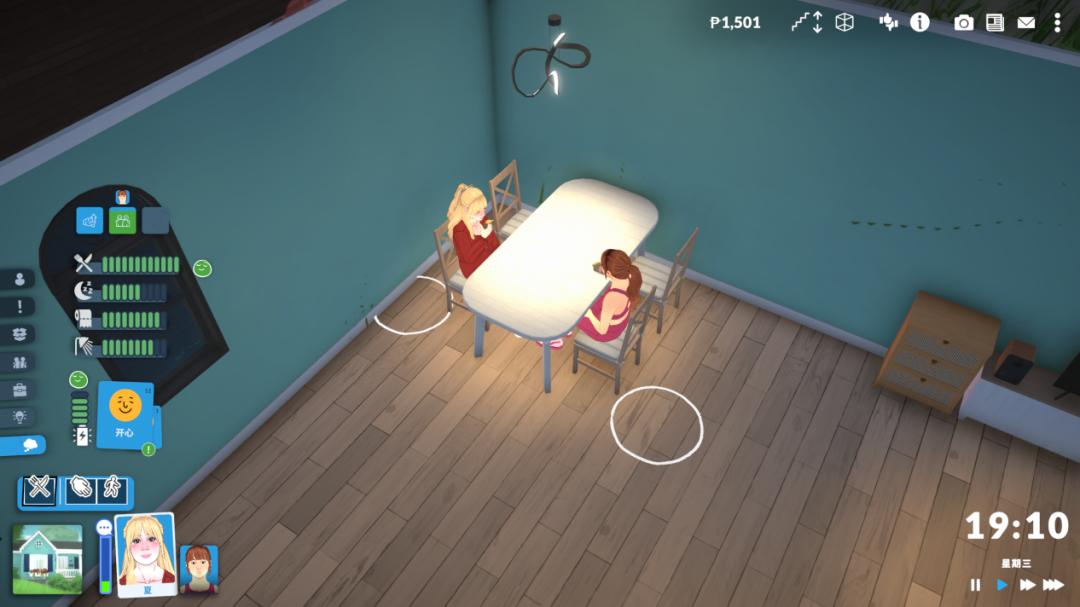
Game Screenshots
Seeing the intense enthusiasm of these unfamiliar players, Alex knew things were heading in a direction he couldn’t predict. At the time, he was the sole developer of *Parallel Lives*.
02
In May 2020, *Parallel Lives* released a video introducing “Maggie,” the first character officially revealed in the game.
But that’s not the main point; rather, it’s the features showcased in the video that have sent life simulation gamers into a frenzy. The “height slider” allows characters to vary in height; the color wheel lets furniture change to any color in real time; and with hair that bounces and clothes that sway with movement, the characters feel “alive” for the first time.But what’s most impressive is that you can freely customize Maggie’s house directly, without having to load any other separate sections of the game.
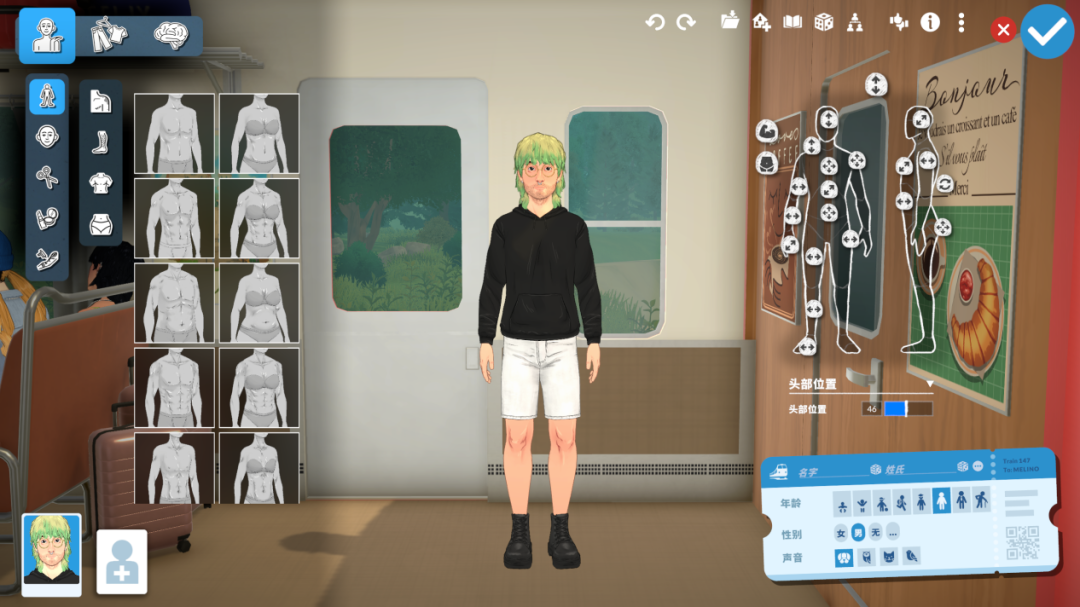
Game Screenshots
YouTubers like lilsimsie and a host of other *The Sims* creators posted review videos raving about the game, which drew massive attention—and almost instantly, all eyes were on *Parallel Lives*.
The number of backers on Patreon has also skyrocketed as a result.According to a report by PC Gamer, by May, the game already had 7,000 backers and was raising approximately $16,000 per month; just two months later, that number had risen to 9,000, with monthly revenue nearing $40,000.
Alex used the money to do what he wanted most: “hire people.” 3D artists Léa Sorribès and Roxane Morin joined one after another, PR Director Christine Gariépy was quickly brought on board, and programmer Anna Thibert joined the team shortly thereafter. Paralives Studio was finally officially established.
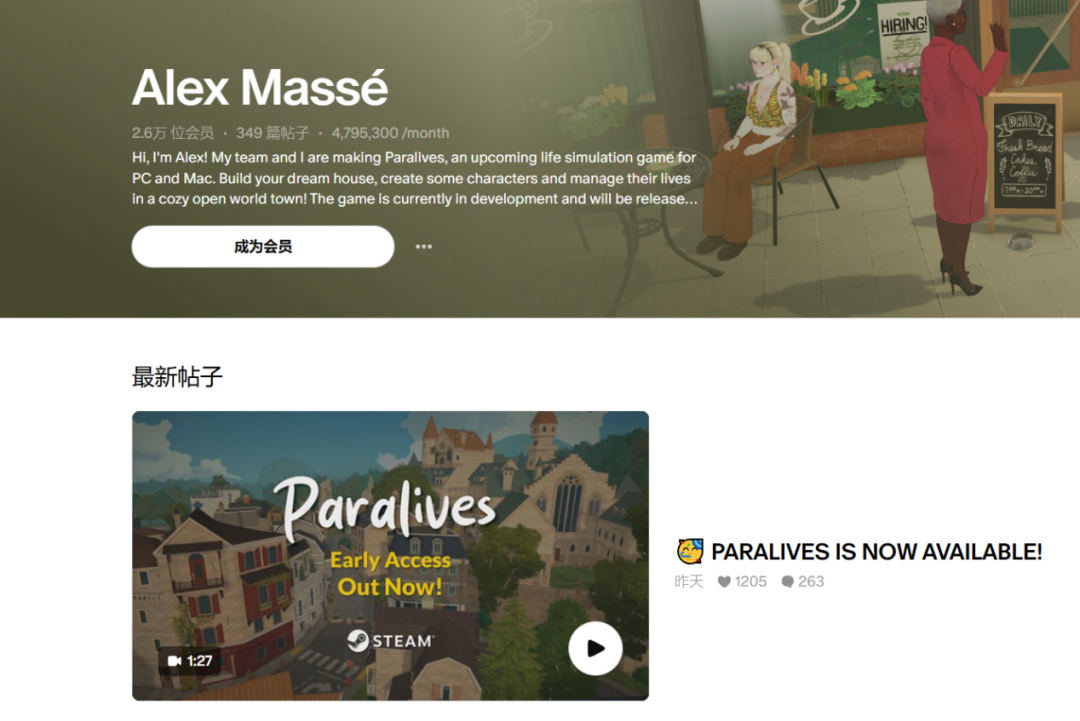
Patreon Page
Alex later reflected, “We have a very close relationship with our supporters; it’s even more community-oriented than Kickstarter. We hope to gather as much feedback as possible from players through the Patreon community.”
The generous support and encouragement from a large number of players gave Alex a great deal of confidence, and the official formation of the team accelerated the game’s development. However, it was precisely at this point that Alex first systematically revealed a rarely discussed truth about the life simulation genre: “The development difficulty of this genre is, in essence, underestimated.”
“For an independent team, this is a very ambitious project. It can essentially be viewed as a three-in-one product: house building, character creation, and life simulation—and each component requires a wealth of features and content to fill it out.”
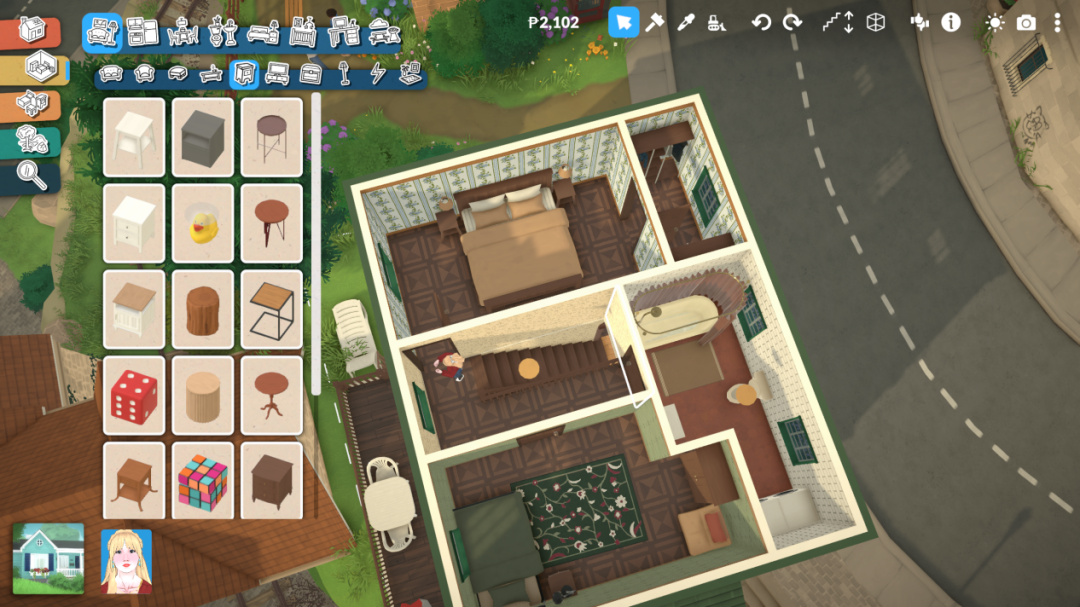
Game Screenshots
Realizing the challenges involved in development, he quickly made a decision to prioritize the building mode. This was both intuitive—after all, creating a livable environment for characters is what many players enjoy most—and aligned with his strengths, as building has always been his favorite aspect of *The Sims*.
However, he wasn’t satisfied with traditional grid-based building tools, so he turned his attention to another game: *Cities: Skylines*.
“I drew a lot of inspiration from Skyline and its road-building tools, which let you easily create straight or curved roads of any length, completely free from grid restrictions. I thought to myself, ‘How great would it be if this system could be used for building walls and houses?’ With such flexible tools, players could unleash even more creativity.”
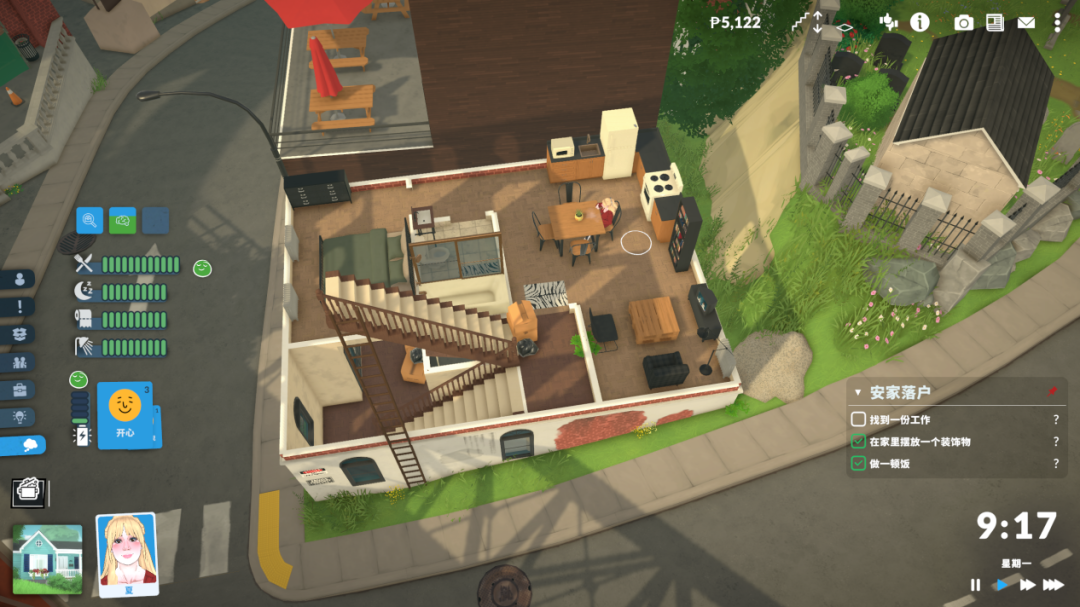
Game Screenshots
However, the system proved to be more challenging than initially anticipated, particularly when it came to creating door and window openings in non-flat walls and placing objects on curved surfaces; nevertheless, the team successfully resolved each of these issues one by one.
Beyond the game’s design, he has another obsession when it comes to quality: attention to detail. In an interview with Rock Paper Shotgun, he revealed his unique take on the game’s atmosphere.
“I really love the way the curtains, swings, and chandeliers sway in the breeze. And the dust particles floating in the air! I believe these little details really bring the game to life and create a beautiful, serene atmosphere. I’m looking forward to adding more details like this in the future.”
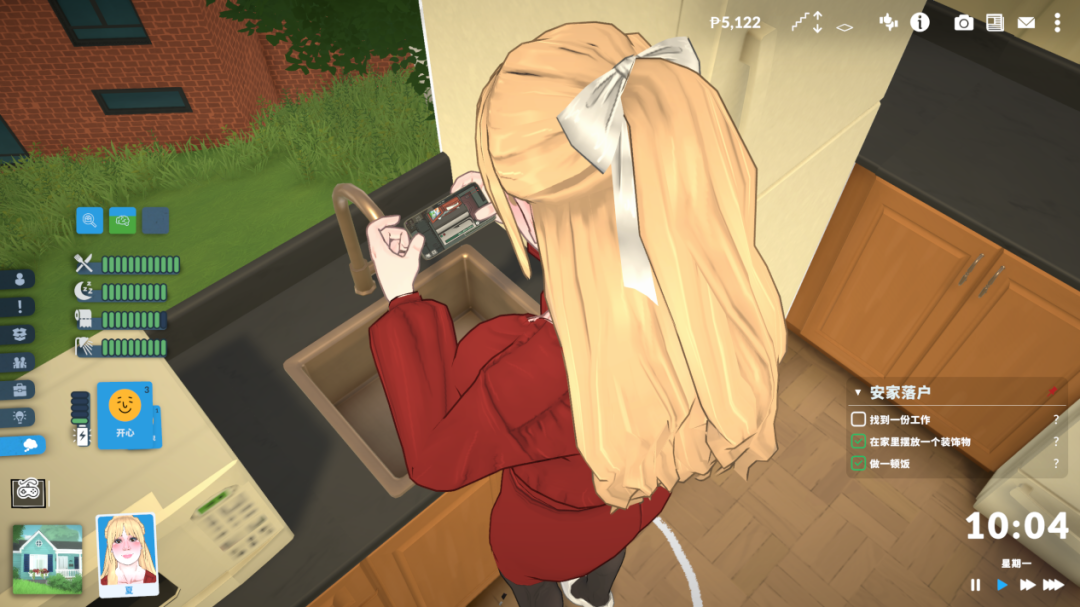
Game Screenshots
While *Parallel Lives* was in development, the Patreon community was also shaping the game in its own way. Backers contributed a wealth of ideas and inspiration, such as the name “Paramaker” for the character creator and the name of the in-game currency. Yet Alex always managed to maintain a rare sense of realism.
“We have to be very careful not to exceed the scope of development and to stay true to our original vision of creating a fun and innovative game that we can ultimately release successfully. That’s why we can’t incorporate every single player suggestion—I need to constantly manage the boundaries of community involvement.“However, we’ve still compiled a long list of features that we can add in updates after launch.”
03
Before long, it was 2022. By then, the Parallel Life team had grown to 10 members, and monthly revenue on Patreon had stabilized at over $38,000. In May 2022, the team published a detailed development roadmap on its official website, systematically listing all feature modules from development through to post-launch for the first time.
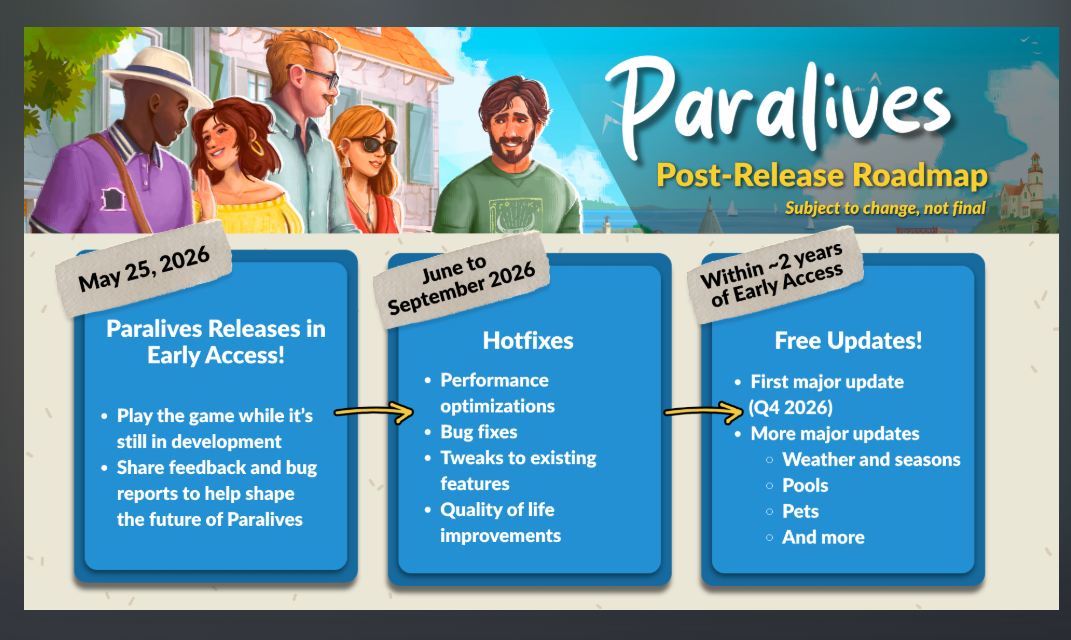
Latest Route Updates
By 2023, *Parallel Lives* had finally reached a year of explosive progress in development.The art team added over a hundred pieces of furniture and items, programmers focused on developing gameplay features for Live Mode, the relationship system’s “Labels” design was fully unveiled, the art style for food was finalized, the team expanded to 12 members, and monthly revenue on Patreon stabilized at around $35,000.
On February 7, 2024, *Parallel Lives* marked the most significant day since the project was launched.
The team released a 7-minute gameplay trailer showcasing the full process of characters moving, finding jobs, upgrading skills, and engaging in social interactions. At the end of the trailer, the developers announced a major change that could reshape the life simulation genre.
“Parallel Lives will never release paid DLC; all post-launch content will be provided as free updates.”
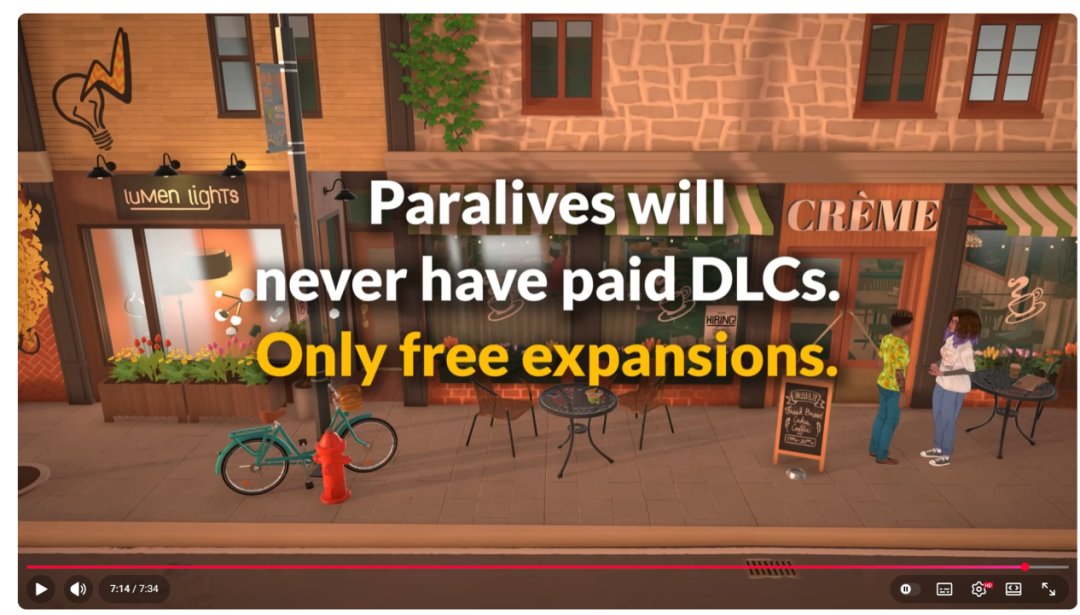
This statement sparked a massive uproar in the gaming community. He directly called out the *The Sims* series, where DLC priced in the thousands of dollars has become the norm. While EA continues to churn out massive amounts of DLC, an indie studio has announced that all future updates will be free.
An official post released on the same day quickly explained the reasoning behind this decision: “As gamers ourselves, we believe that a paid game should inherently offer a rich gaming experience. We hope that Parallel Lives will become a game that is loved for years to come. As a small studio with no shareholders, we believe that revenue from the base game alone is sufficient to support long-term free updates and maintenance.”
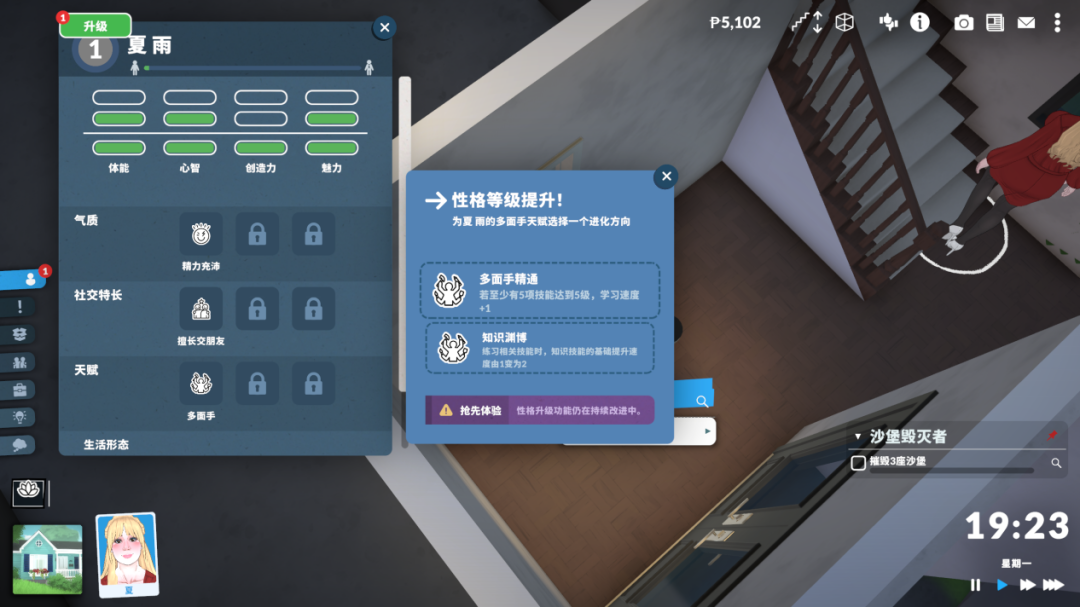
Game Screenshots
Along with the release of the trailer, the official team behind *Parallel Lives* announced that an Early Access version would launch on Steam in 2025. The game’s wishlist count continued to rise, surpassing 900,000 by mid-2025.
However, *Parallel Lives* did not launch as scheduled at the end of 2025. Instead, players were greeted by a personal letter from Alex posted on the official website, announcing that the game’s release had been delayed.
In his letter, he spoke candidly about the reasons for the game’s delay. On the one hand, after expanding the testing phase, the overwhelming amount of feedback from a broad user base made the team realize that the game had not yet met release standards; Live Mode still contained bugs that impacted the experience, and the towns lacked sufficient content. On the other hand, he returned once again to a concept he had cited multiple times before: the challenges of a “three-in-one game.”
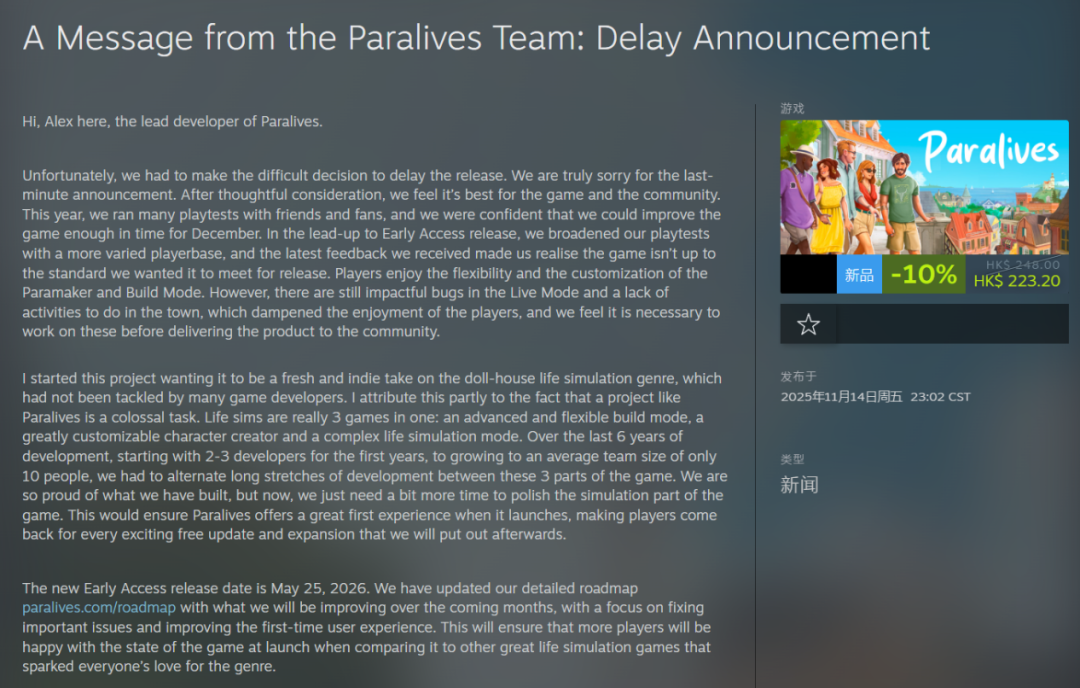
Notice of Postponement
“From the very beginning, I wanted to create a unique dollhouse life simulation game—a genre that few developers have ventured into.I think part of the reason is that projects like Parallel Lives are massive undertakings. That’s because life simulation games are actually more like hybrid products combining three distinct gameplay elements: an advanced, flexible building mode; a highly customizable character creator; and complex life simulation mechanics.”
He went on to say, “Over the past six years of development—starting with a team of just two or three people in the early years, and averaging only ten people—we’ve had to devote a significant amount of time to each of the game’s three components in turn. We’re proud of what we’ve built so far. But now, we just need a little more time to polish the simulation aspect.”
At the end of the letter, he made a promise: “We are fully committed to creating a high-quality, innovative game with the support of our community, and to continuing to update it for years after release. We are deeply grateful for your ongoing support; it means everything to our small team.”
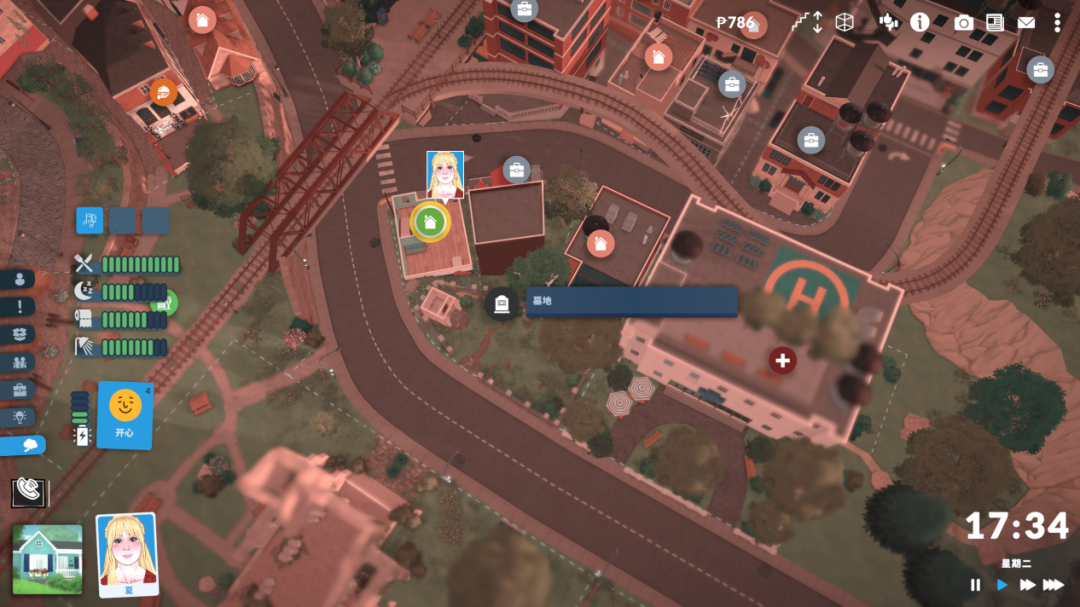
Game Screenshots
Finally, on May 25, 2026, the Early Access version of *Parallel Lives* was successfully released. It sold a staggering 250,000 copies within eight hours and, despite stiff competition from a host of major titles, successfully topped Steam’s global best-seller chart.
Conclusion
Back to the original question: Why do so few people dare to make games like *The Sims*?Over the course of seven years, Alex has provided a somewhat different answer: The challenge has never been technical or financial, but rather whether you have an idea and the resolve to disrupt the genre, and whether you have a player community that trusts you enough to stick with you through thick and thin—paying just a few dollars a month—in the simplest way possible.
For the industry, the value of this story may not lie in the fact that it was a “success,” but rather in the fact that it proves: even in a sector dominated by giants and capital, a team of just 10 people, relying on small-scale crowdfunding from a group of strangers, still has a chance to survive—and thrive.
It wasn’t because of abundant resources, but because of the players, the community, and the team—the game Alex had wanted to make since he was 10 years old is finally complete.
The sources are as follows:
GameInformer:
https://gameinformer.com/2019/08/15/why-paralives-is-looking-to-be-the-sims-new-rival
Rock Paper Shotgun:
PC Gamer:
https://www.pcgamer.com/how-paralives-is-using-patreon-to-compete-with-the-sims
Polygon:
https://www.polygon.com/23433566/sims-5-project-rene-paralives-life-sim
HappyGamer:
Vandal:
原创文章,作者:gallonwang,禁止转载:https://youxichaguan.com/en/archives/197818