These days, making money from mini-games is nothing new.
Heavy-to-midweight genres such as RPGs, card games, and SLGs have long dominated the top spots on major platforms’ best-seller charts thanks to their strong revenue-generating capabilities, giving rise to numerous blockbuster hits with revenue exceeding 100 million yuan.However, these high-revenue sectors are firmly dominated by top-tier developers with substantial capital and resources, making it increasingly difficult for small and medium-sized teams to break through.
However, recently, Wuhan Duoqu Information successfully propelled a mini-game called *Master of Champa* into the top 3 of Douyin’s best-selling chart.It is worth noting that this game does not fall into any of the popular categories mentioned above. Instead, operating outside the mainstream, highly competitive market, it successfully tapped into a niche by leveraging an “obscure” RTS gameplay style, thereby carving out a new profitable path in the mini-game sector.

- Simplified Gameplay
The gameplay prototype for *Master of Champa* is *Pocket Groove Tactics*, released in February of this year by the Cypriot developer LAPITOPA LTD; however, the game did not generate much buzz in overseas markets. In contrast, the Chinese version, *Master of Champa*, has since surged ahead, winning over a large user base in the domestic casual gaming market.
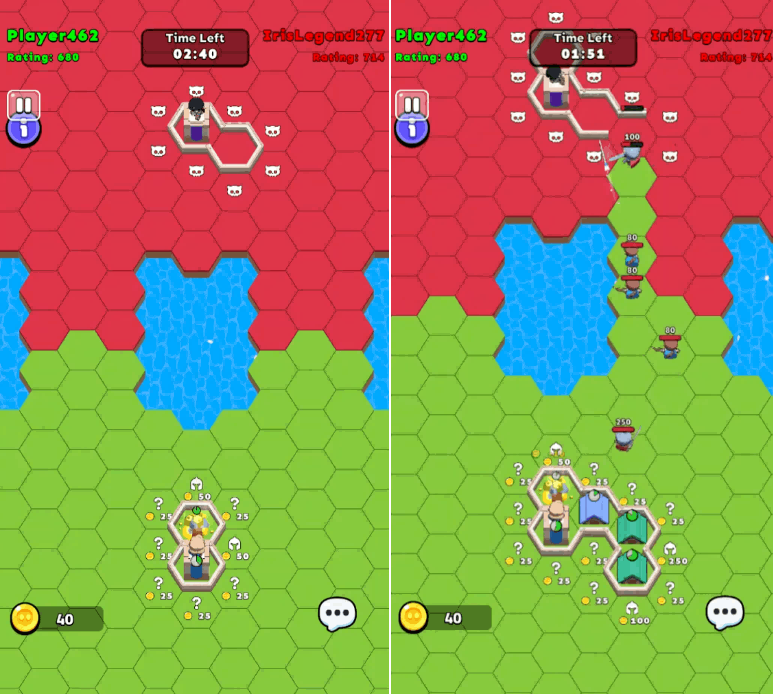
《Pocket Groove Tactics》
Specifically, *Master of Champa* streamlines classic RTS gameplay. While retaining core elements such as territory control and faction-based combat, it incorporates features like auto-attack and fixed movement paths to lower the game’s difficulty.At the same time, it cleverly integrates popular gameplay elements from turn-based strategy and tower defense games, significantly simplifying the controls and tactical depth while shortening match durations. This successfully transforms hardcore strategy gameplay into a lighter, more casual experience, allowing casual players to easily enjoy the thrill of strategic combat.
The game’s main story levels feature a classic 1v1 battle mode set on a hexagonal board. At the start of the game, both players occupy territories on opposite sides of the map, each with an initial main city and a small amount of gold. The main city continuously generates gold, serving as the primary source of income during the match.
Players spend gold to construct three types of core buildings within their territory: barracks, gold mines, and defense towers. Once a barracks is built, it continuously produces various types of soldiers, who automatically attack enemy territory and capture the corresponding area upon successfully entering it;Gold mines generate more gold, allowing players to quickly accumulate resources and lay the economic foundation for accelerated expansion; defense towers automatically attack enemy units within their range, protecting the base.
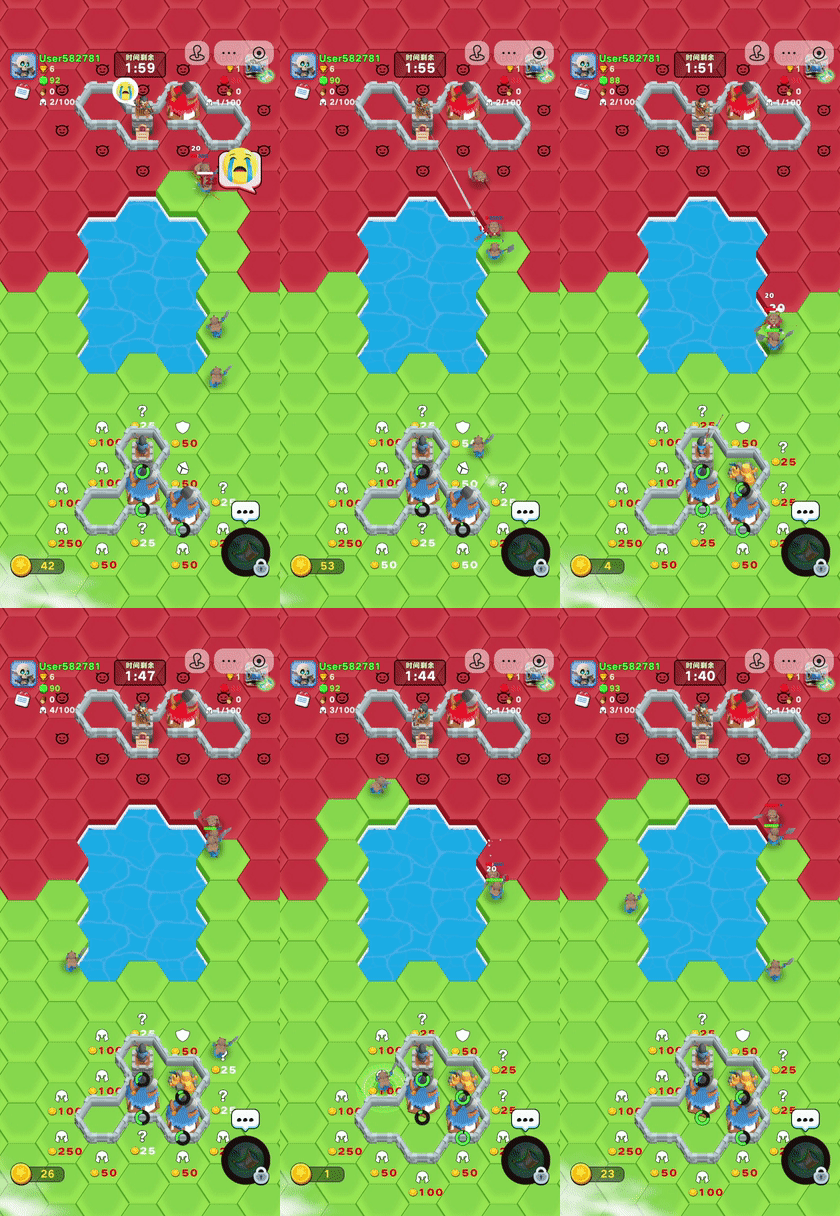
Throughout the match, the fully automated combat mode simplifies all tedious tasks. Players do not need to constantly monitor unit movements or worry about terrain effects. They simply need to allocate resources wisely, plan their building layouts, and rely on territorial expansion and military superiority to either destroy all enemy structures or capture the majority of the map within the time limit to win.
The final version of *Master of Champa* has a very low learning curve. A brief tutorial at the start—lasting just a few minutes—enables players to understand the functions of each building type, learn how to purchase buildings through tap controls, and quickly grasp the game’s core mechanics, demonstrating just how thoroughly the developers have streamlined the experience.
- The thrill of getting it straight
A fast-paced, straightforward gameplay rhythm can also provide players with the most immediate sense of excitement and thrill.
Once you’ve passed the early resource-gathering phase and built a large number of gold mines, the in-game economy will grow rapidly, like a snowball rolling downhill.allowing players to freely expand their military forces on the basis of relatively abundant resources; once the number of barracks on the battlefield increases, the sight of large numbers of troops charging collectively, continuously breaking through the enemy’s layered defenses, and achieving overwhelming combat dominance is highly effective at stirring players’ excitement.
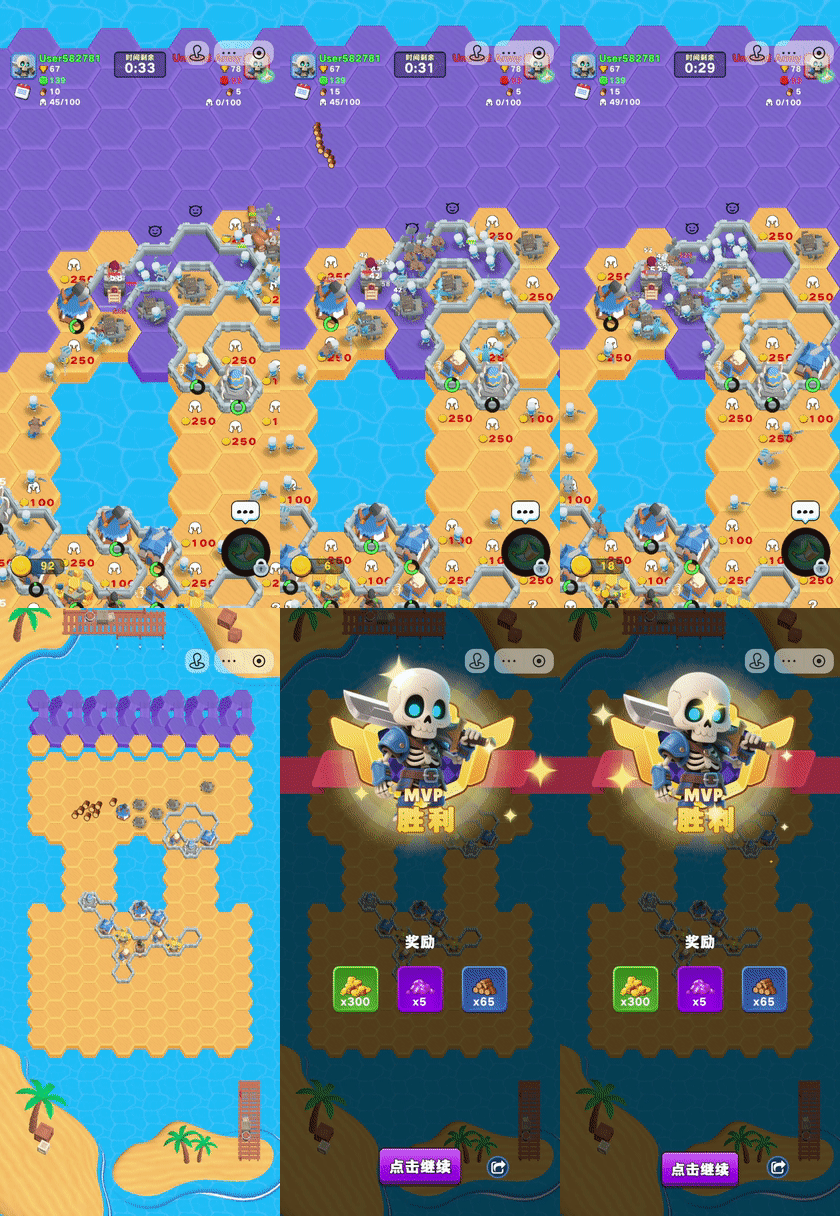
Throughout the game, players can watch their territory expand as their army advances, gradually pushing back and annexing enemy positions.When the match concludes, the victory animation will showcase the entire board completely under your control. The visual impact of the color inversion further amplifies the joy and sense of accomplishment that comes with victory.
- Strategic
Although the gameplay in *Champa Masters* is very simple, it still offers a certain degree of strategy, which revolves primarily around resource allocation.
Generating gold during a match takes time, so with limited resources, players must carefully consider how to allocate their gold.You can either prioritize mining gold to accumulate more resources for future combat strength; or build barracks to deploy troops first and launch a preemptive attack, seizing the initiative; or construct defensive structures to fortify your lines… Different choices will lead to different outcomes in the battle.
During combat, both sides can clearly see each other’s building layouts and adjust their strategies accordingly. When the opponent focuses on economic development, we can speed up troop production to disrupt their rhythm; if the opponent concentrates on building barracks, we can deploy turrets on the front lines to establish a solid defense;if the opponent already has a tight defensive network, we can also leverage the layout of the grid to expand indirectly, gradually chipping away at their outer territories through routes with weaker defenses.
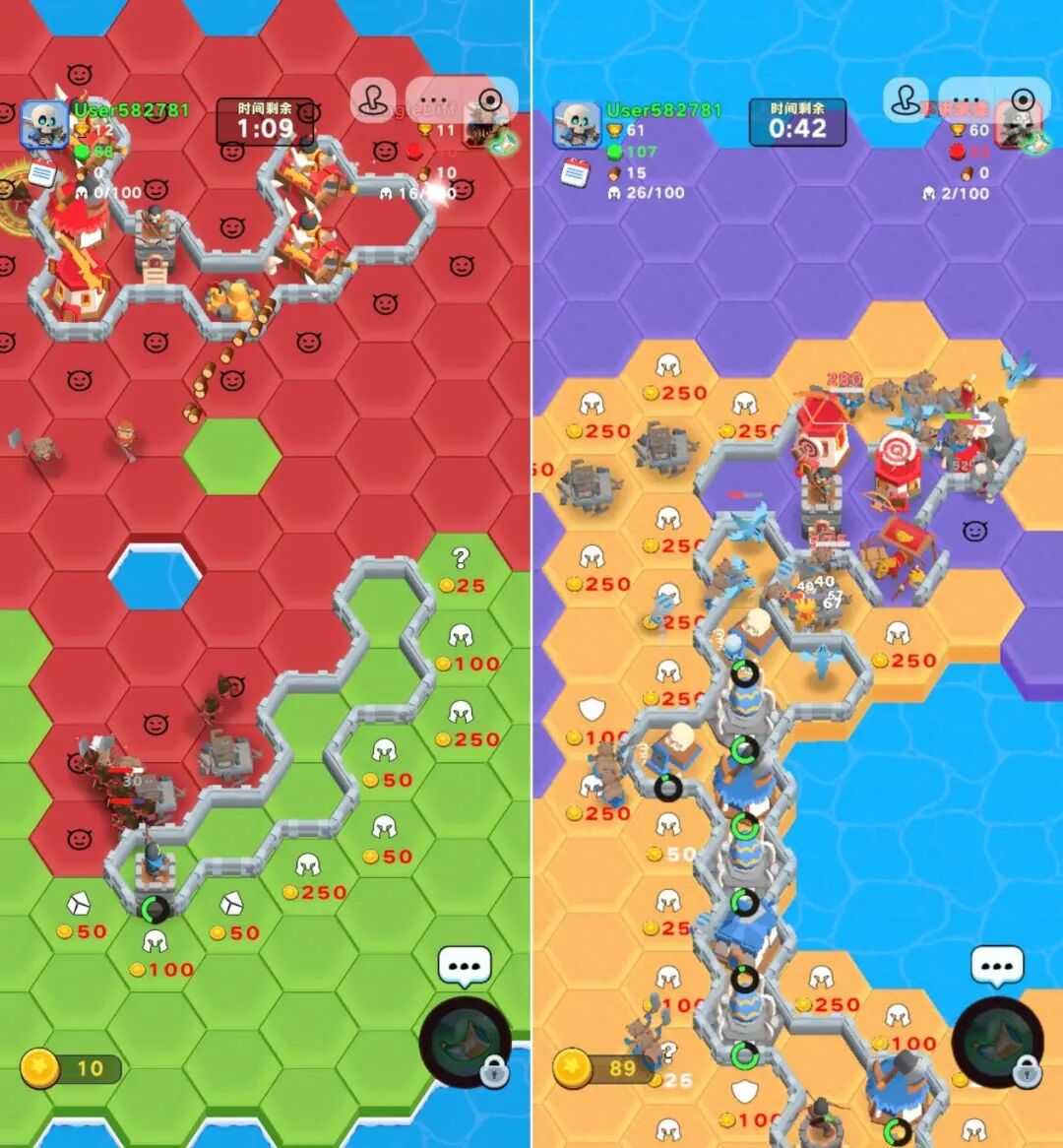
This back-and-forth, counter-move-for-counter-move style of combat fills the game with a thrilling sense of strategic competition.
- Randomness
As the saying goes, “There is endless joy in battling others, and endless joy in battling fate.” *Master of Champa* not only features strategic competition between players but also incorporates some very interesting random elements.
In-game barracks and the units they produce are divided into four tiers: Common, Rare, Epic, and Legendary. Players invest varying amounts of gold to construct barracks, and the probability of obtaining higher-tier barracks varies accordingly. The more resources invested, the higher the chance of obtaining higher-tier barracks and producing powerful units.
In addition to standard building plots, the game features more cost-effective “mystery” plots marked with a question mark. These have lower unlock requirements, but their outcomes are highly unpredictable. There is a higher chance of obtaining Epic or Legendary barracks, but there is also a significant chance of getting nothing at all.When luck is on their side, players can unlock Legendary units directly, turning the tide of battle and staging a comeback; however, there is also a risk of wasting resources and gaining nothing in return.
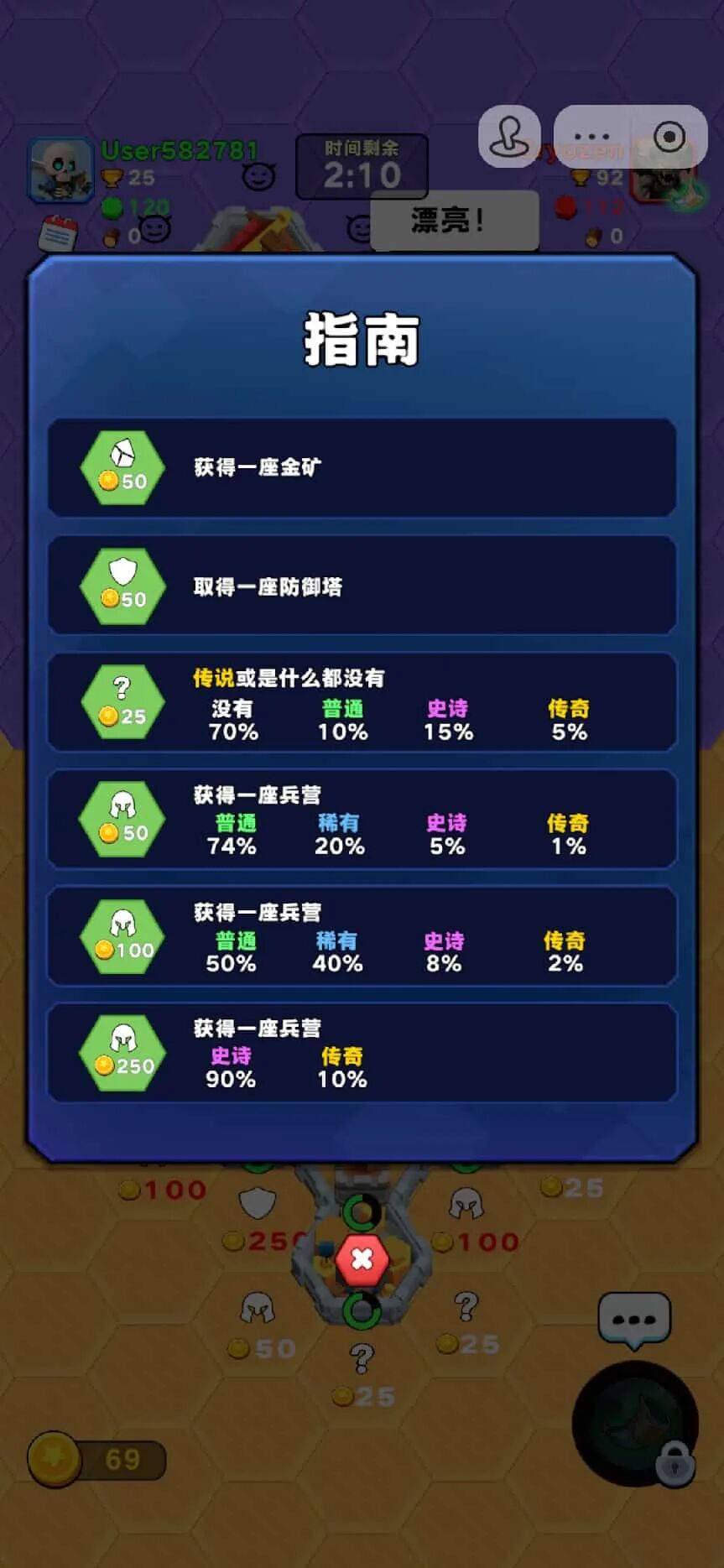
This design, filled with uncertainty, perfectly taps into players’ “gambling” mentality; especially when the battle is at a critical juncture, it always makes people unable to resist trying their luck.Successfully unlocking a legendary unit triggers a full-screen pop-up effect for that specific unit. The striking visual impact instantly heightens players’ excitement, delivering a powerful sense of surprise.
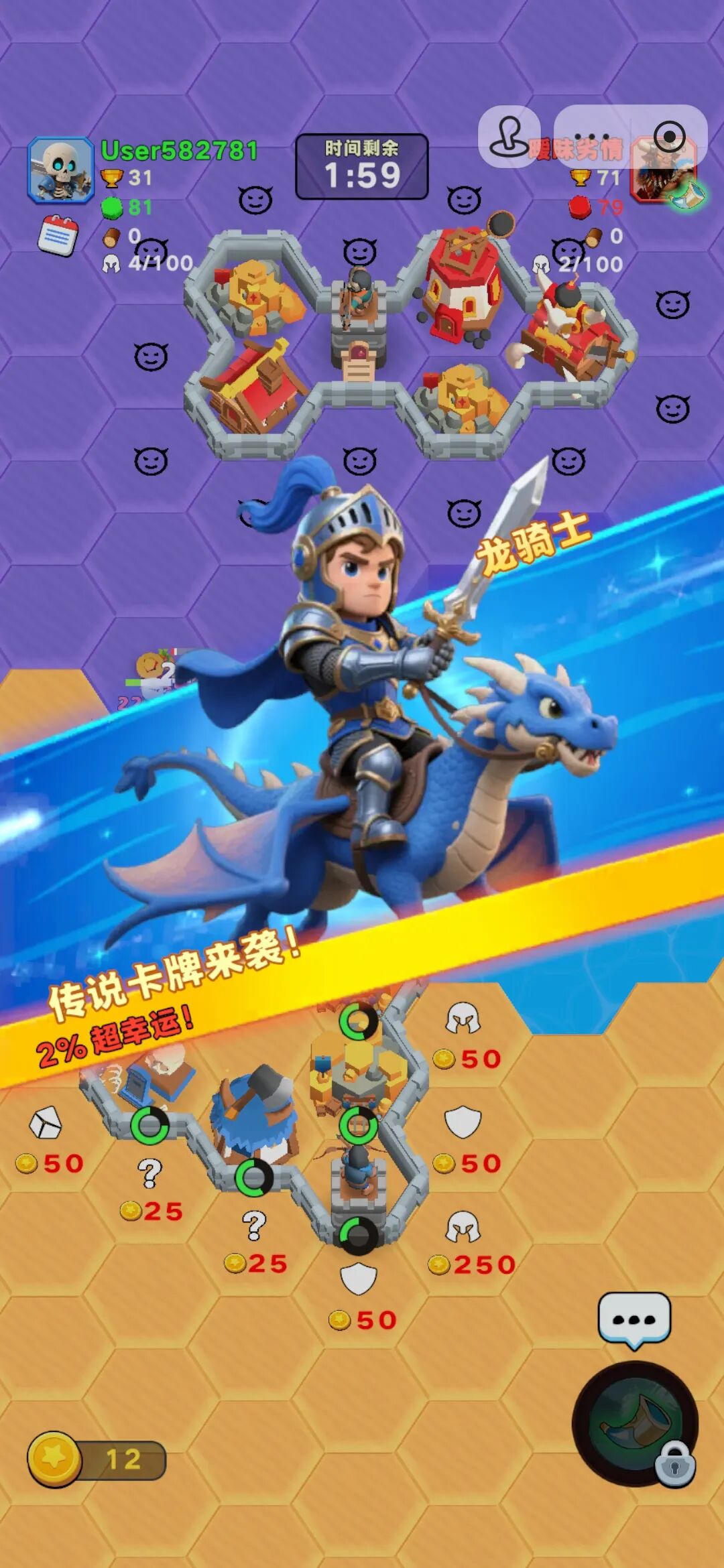
The element of randomness also creates a strong entertainment value, which is why this game ultimately gained popularity quickly, driven by short-form video content and live streams, and rapidly attracted a large following.
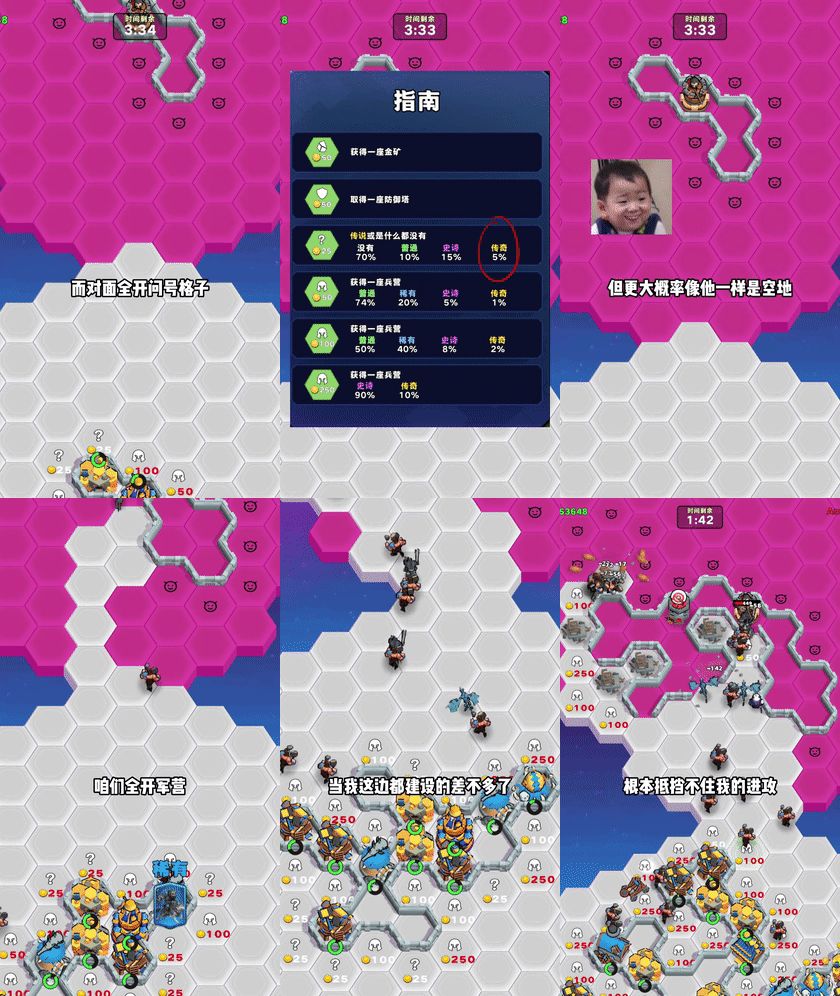
A large number of creatives featuring probability-based gameplay have been released. Image source: App Growing
- Development Module
In addition to its core gameplay, the game also features a card-collecting and-raising module commonly found in mini-game markets.
Cards are divided into four major types—Human, Orc, Undead, and Machine—and four rarity tiers: Common, Rare, Epic, and Legendary. As mentioned earlier, the higher a card’s rarity, the stronger the corresponding unit’s combat power; however, the lower the probability of that unit being produced by the barracks, and the longer the cooldown time for producing that unit.
Players primarily obtain new cards by progressing through the game or by purchasing them directly. Card fragments earned from winning matches can be used to level up the corresponding cards. Before each match, players can select and combine cards from their existing collection to form their starting lineup.

The card-leveling mechanics are fairly standard, but *Master of Champa* adds an extra “loot box” feature.You’ll receive a treasure chest reward after every victory, but the system only has four slots for opening chests, and opening each one requires a certain amount of time. If all slots are filled, you won’t be able to obtain new chests from subsequent victories.
In addition to waiting, players can also open the treasure chest immediately by watching ads or using diamonds. This design not only effectively controls the pace of the game but also adds an additional monetization opportunity.

In addition, the game features a unique “Territory” module.By using the wood resources accumulated through level progression, players can expand their territory by claiming additional plots. Unlocking each plot reveals different buildings, which provide corresponding boosts to the main tower’s basic attributes—such as attack power, health, and gold generation rate—during combat. Additionally, upgrading the territory grants players more resource rewards.
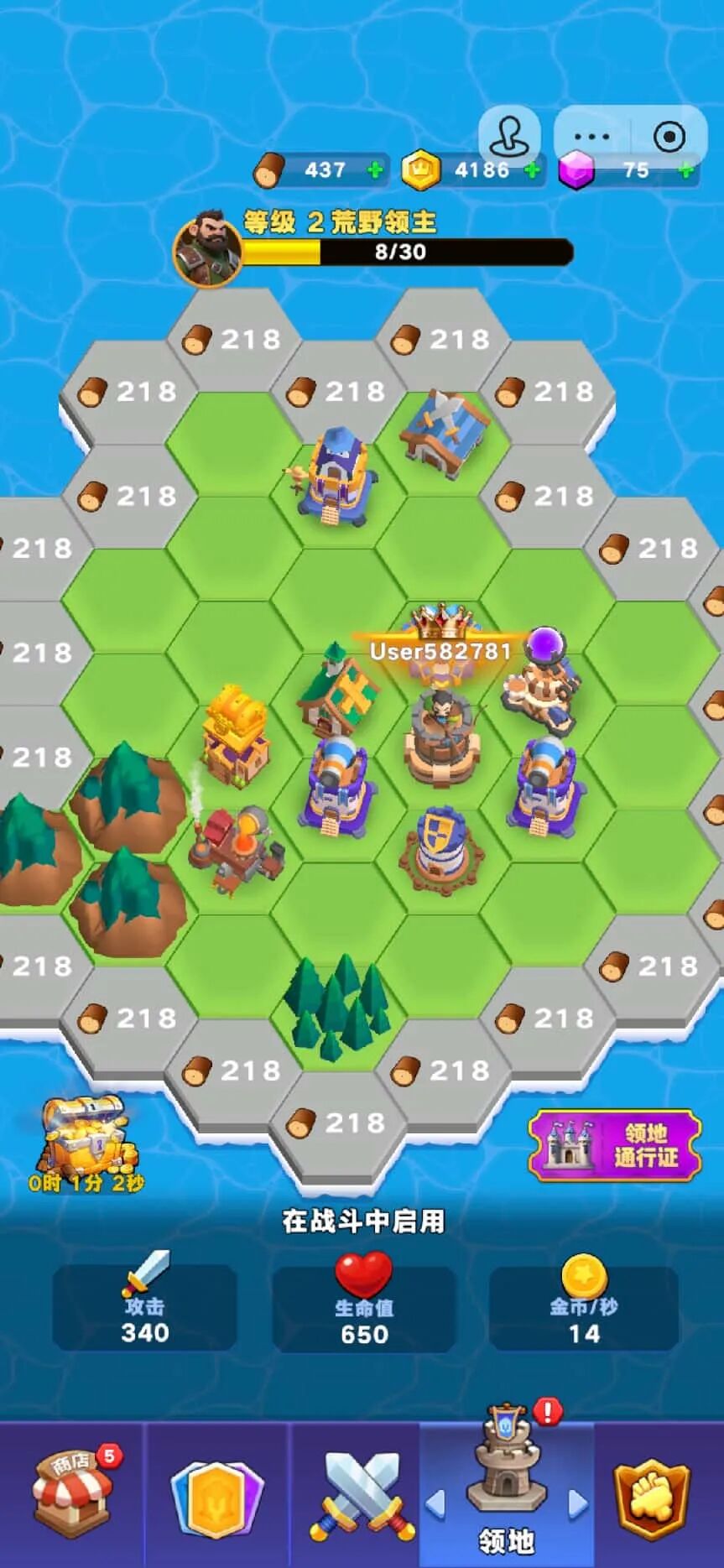
Compared to the standard “Talent” module, the “Territory” management and development system aligns better with the game’s mechanics and is more engaging.The structure revealed when each plot is uncovered is completely random—it could be a fortress that boosts defense, a barracks that increases attack power, an empty plot with nothing on it, or an area occupied by enemies. Players must defeat the enemies in battle to claim ownership of the territory.
Overall, the resources players receive for simply completing the game are very limited; it’s quite common to open a chest after playing for ten or so minutes and find only two character fragments.As players enter the late game, the resources required for card upgrades and team progression increase dramatically. At this point, the system can seamlessly guide players toward purchasing in-game items to bridge the resource gap and accelerate their progression.
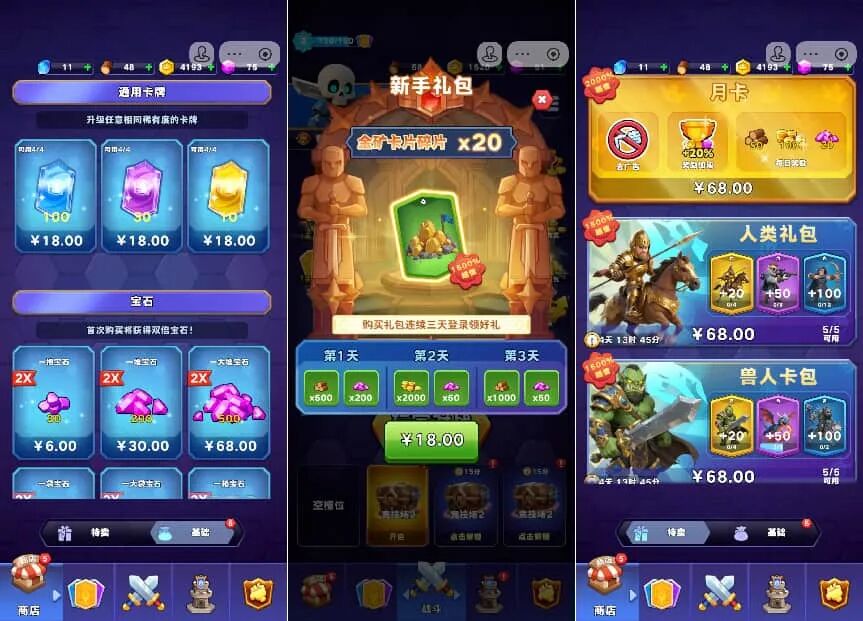
Core Commercial Design
By quickly capturing players’ attention with core gameplay that’s accessible, easy to pick up, and highly entertaining, the game then leverages a progressive progression system for stats and resources to effectively stimulate players’ willingness to spend.With this combination in place, it was only natural that *Master of Champa* would smoothly climb to the top 3 on the best-seller charts.
Conclusion
As of today, *Master of Champa* has held a spot in the top 5 of Douyin’s best-selling chart for over two weeks. Furthermore, shortly after its launch on the WeChat Mini Games platform, it quickly climbed to the top 31 on WeChat’s best-selling chart, clearly demonstrating that this type of lightweight strategy battle game has a substantial audience base and commercial potential in the domestic mini-games market.
In today’s increasingly homogenized and competitive market, this product has successfully broken through with its unique casual strategy gameplay, and may well inspire developers with fresh creative ideas.It remains to be seen whether this gameplay model will become a prototype for a new hit, and whether other teams can build upon it to explore new themes, integrate additional mechanics, deliver unique gaming experiences to players, and achieve even greater market success.
原创文章,作者:gallonwang,禁止转载:https://youxichaguan.com/en/archives/197741