In the gaming industry, the Spring Festival season has always been a highly competitive period.
However, now that the traffic boom has peaked, traditional tactics centered on aggressive advertising and user acquisition have clearly run their course. Major companies are now rethinking a key question: “In the fiercely competitive Spring Festival season, what will it take to capture players’ time and money?”
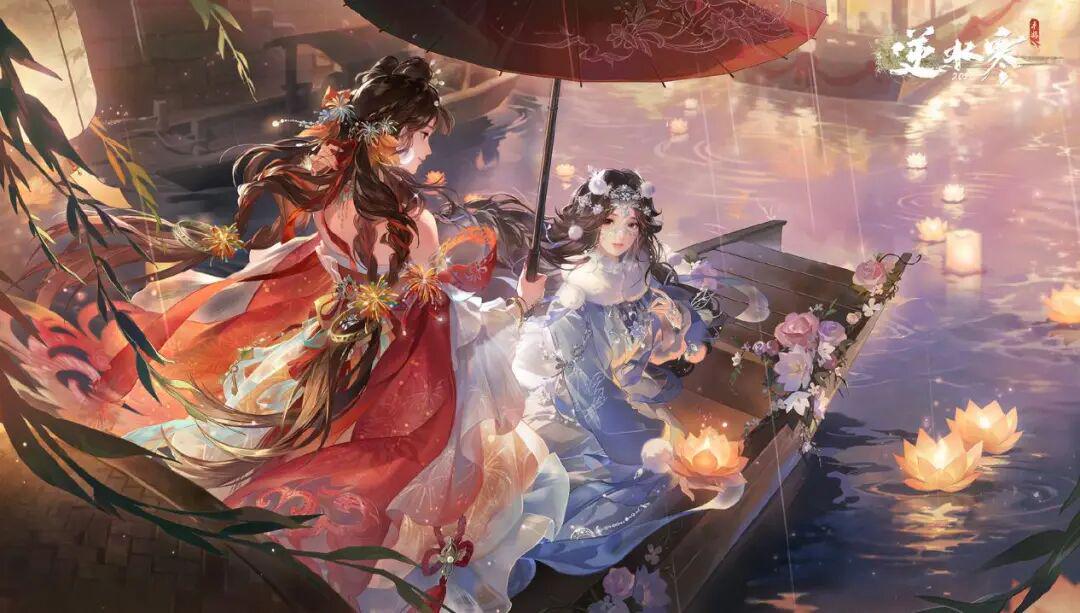
On February 6, the Spring Festival update for the *Jade Dynasty* mobile game officially launched. With its solid monetization model, Chinese-style content, and the unique “moat” built through emotional connections with players, it appears to have provided some answers.
On the one hand, on the day the Spring Festival update was released, a large number of players shared their top-up experiences (including payment discounts from third-party platforms) on social media. Later, the Douyin livestream “Great Song New Year Shopping Festival” even surpassed Dong Yuhui to claim the top spot on the overall rankings.
This shows that *Jade Dynasty*’s Lunar New Year skins are becoming the “cyber-themed holiday goods” of the MMO world.


Meanwhile, interest on major social media platforms has remained consistently high. A post by the official account promoting the “288 Custom Benefits” offer quickly garnered over 100,000 views; the music video for the new “Hongyin” genre on Douyin sparked frame-by-frame analysis among fans of traditional Chinese culture; and Bilibili’s update preview for the “Year of Good Fortune” was flooded with countless “Happy New Year” comments in the live chat.
All signs point to the fact that the *Jade Dynasty* mobile game is becoming an iconic symbol of the Lunar New Year in the MMO genre.

Through frequent "traditional Chinese cultural campaigns" and generous in-game New Year's gifts, a content ecosystem that holds the "power to set aesthetic standards," and trending topics that serve as a new form of social currency, the *Jade Dynasty* mobile game is building a competitive advantage that cannot be replicated simply by throwing more resources at the problem.
01
Competitive Advantage: Redefining the Consumer Logic of "Online New Year Shopping"
We often say, “There’s always something to look forward to during the New Year,” and the same goes for gamers. Who wouldn’t want to receive more red envelopes and enjoy more perks during this important holiday?
However, in the traditional business model of MMOs, the Spring Festival is often seen as a “major spending season.” Given this context, the decision by the *Jade Dynasty* mobile game to adopt a “give-to-sell” strategy this year actually feels somewhat counterintuitive.
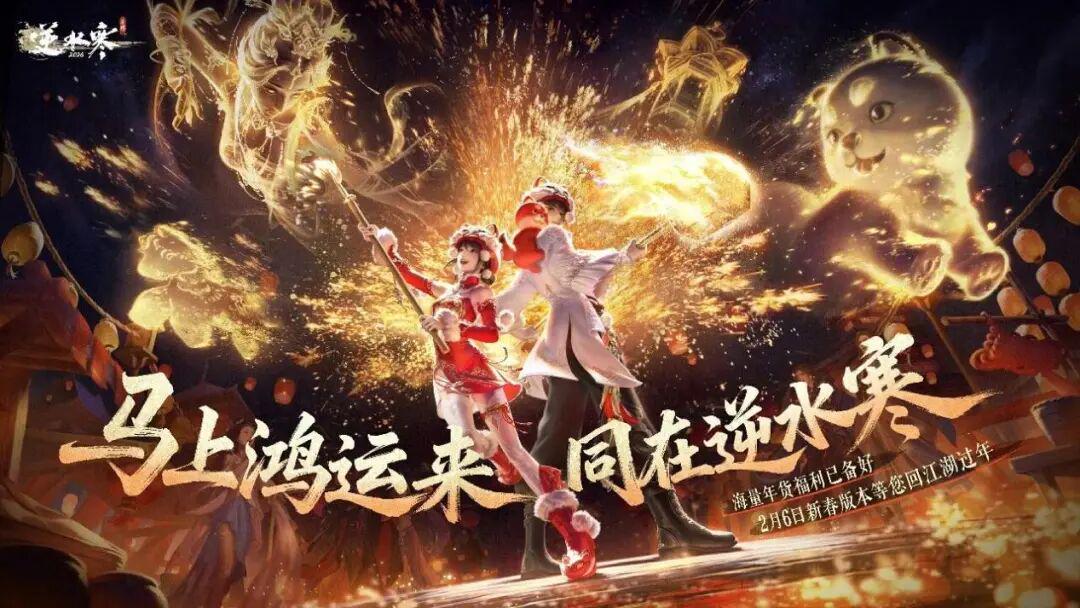
For this Spring Festival update, the *Jade Dynasty* mobile game has rolled out a comprehensive package featuring “288 Customizable Outfits” and a series of high-value rewards. Not only can players choose from 36 top-tier outfits, but the game has also prepared 8.88 million red envelopes to celebrate the New Year with all players.
No wonder so many players have commented, “My character in *Ni Shui Han* has been so good to me this Lunar New Year—I’m going to play this game for the rest of my life.” Even players who had previously clashed over the “card selection” controversy have come out in strong support.


From the perspective of the tea house, this operational strategy has successfully transformed in-game virtual updates and rewards into "digital New Year gifts" for players in their real lives. Once "playing *Niushuihan* during the New Year to claim new outfits" becomes a user habit, the product gains the same resilience to economic cycles as traditional New Year customs.
While Spring Festival events in previous MMOs often had a "short-sighted" feel to them, the *Jade Dynasty* mobile game has chosen a different approach that ultimately achieves the same goal.
On the one hand, traditional consumption patterns persist, with ultra-luxury aesthetics catering to the desire for ostentation among high-spending players; on the other hand, a wide array of cost-effective paid content—such as “limited-time fashion”—has struck a chord with casual players: for example, the fully-equipped “288” package, which players have calculated costs an average of just 61 yuan per item after factoring in various recharge discounts.

Players are picking out their favorite Lunar New Year skins as if they were "shopping for New Year's goods"
By using "freebies" to lower the barrier to payment and drive purchases, this "low-barrier monetization" strategy has not only failed to reduce revenue but has actually maximized commercial value by expanding the DAU base and increasing the payment penetration rate. During the Spring Festival—a particularly significant period—*Jade Dynasty Mobile* successfully positioned itself as the most "rebellious" consumer icon in the MMO sector.
02
Content Moat: The "Flood of Traditional Chinese-Style Content" That Is Hard to Reproduce in the Short Term
If generous rewards are merely a stepping stone, then the "quantity" and "quality" of the traditional Chinese-themed content updates are what truly attract players.
It’s not uncommon to hear people complain, “The Lunar New Year just doesn’t feel like the New Year anymore.” So what exactly is the “spirit of the New Year”? In the view of Teahouse, this spirit is built on a cultural resonance rooted in collective memory and a sense of ritual. Through digital reinvention, traditional culture—with its rich historical heritage—can precisely fill this spiritual void.
In this Lunar New Year update, the *Jade Dynasty* mobile game has specially assembled a "World Intangible Cultural Heritage All-Star Team." Through multifaceted presentations by master artisans representing various fields of intangible cultural heritage, the game has crafted a unique "Jade Dynasty-style" Lunar New Year atmosphere.
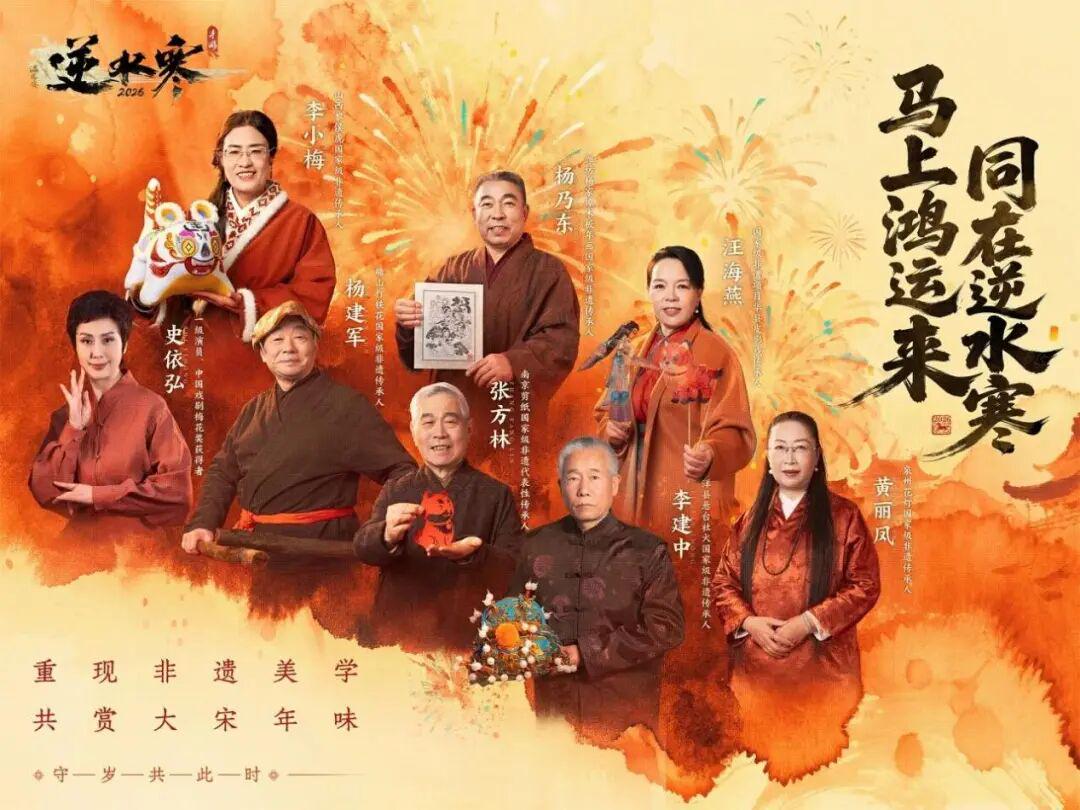
In the game, you can experience the stunning vocals and dance moves of Peking Opera, feel the warm New Year blessings conveyed through woodblock New Year prints, witness the intricate artistry of shadow puppetry in the martial arts world, and admire exquisite paper-cut art and dazzling lanterns. Traditional performances such as cloth tiger dances, iron flower displays, and Shuhuo folk performances will all be faithfully recreated in the game.
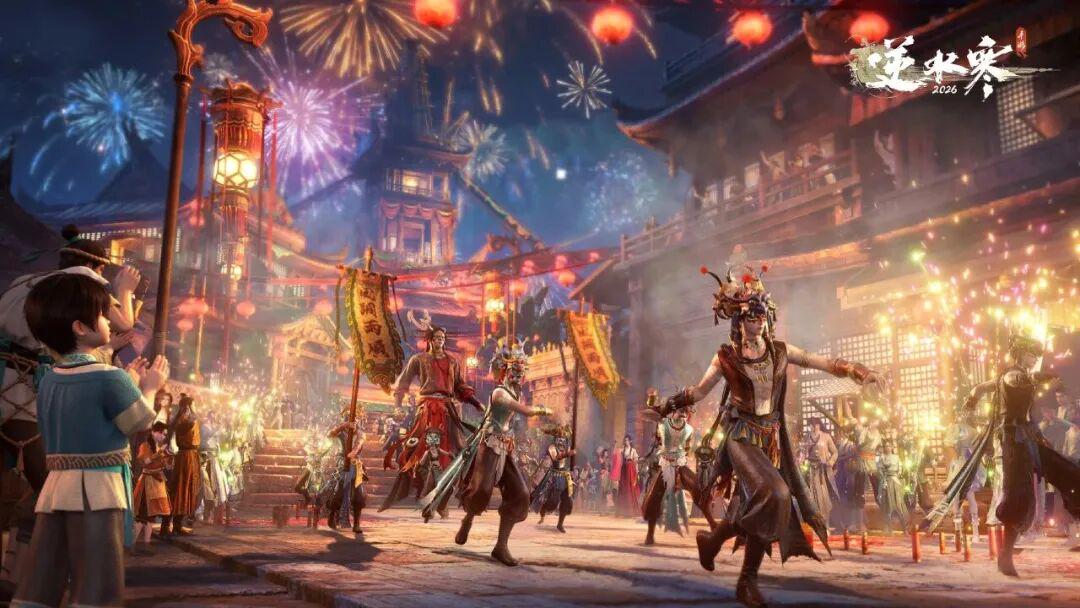
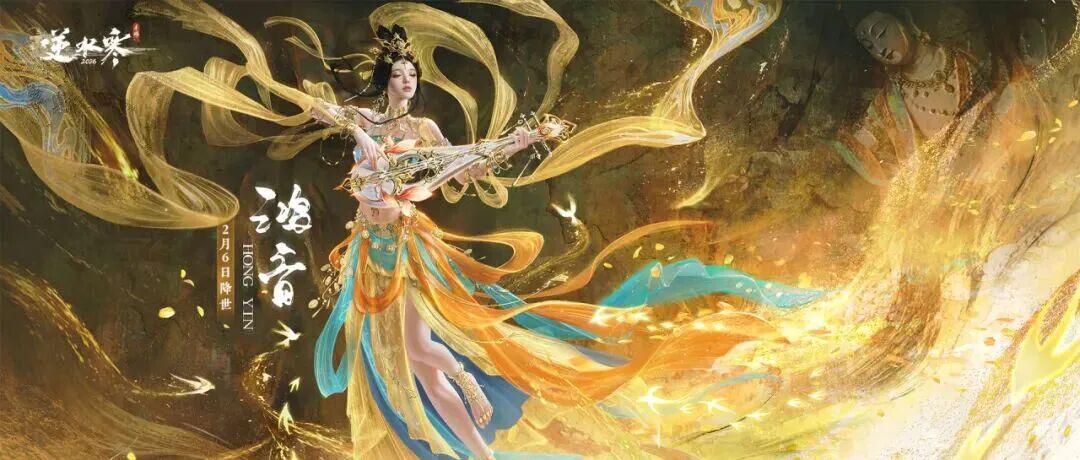
At the same time, the all-new style 【Hongyin】 will also be released alongside the Spring Festival update. With the motto “One string, one world; one stroke, one celestial maiden,” and drawing inspiration from the celestial maidens of Dunhuang, Hongyin vividly captures the Western Region aesthetic through flowing robes and dancing ribbons. Featuring the pipa as its instrument and dance as its form, it embodies the unique Eastern beauty of Dunhuang culture.
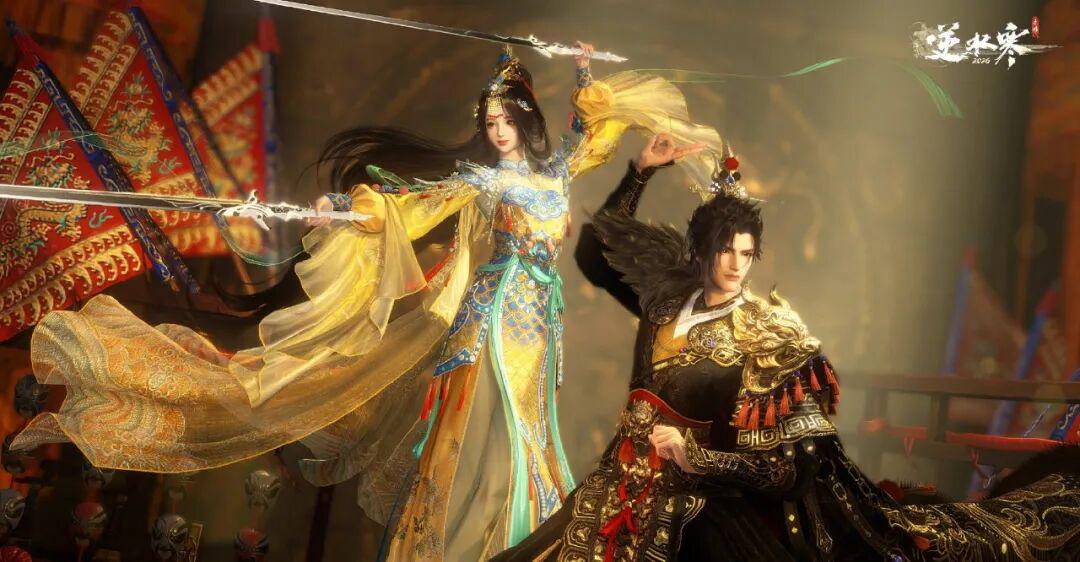
In addition, limited-edition costumes inspired by *Farewell My Concubine*, the Lunar New Year storyline *Spring Unites Heaven and Earth: The Year of the Horse*, and Han Duo Zhen’s Lunar New Year event “Blast the Year Beast, Grab Red Envelopes” further enrich the Lunar New Year update, allowing players to celebrate the holiday together.

It’s worth noting that this intense barrage of traditional Chinese cultural content isn’t just a fleeting phenomenon limited to the Spring Festival, but rather a regular feature of the *Jade Dynasty* mobile game over the past two years.
Looking back on the past year, the "Investiture of the Gods" collaboration in January brought mythological legends to life through in-game outfits; the "Dream of the Red Chamber" collaboration in June brought one of China’s Four Great Classical Novels into the game; the "Guanshan" update in October unveiled a majestic hidden realm steeped in Qin opera and drumbeats; and the new "Dunhuang" map in December allowed players to experience the wondrous sights of the Western Regions, with its endless stretches of yellow sand.

This consistent output of high-quality traditional Chinese-style content has established a strong perception among users: "The aesthetic standards of *Jade Dynasty* = the gold standard for traditional Chinese-style content." As a result, *Jade Dynasty* has established a content ecosystem where it holds the power to set the aesthetic bar.
While competitors may be able to imitate the gameplay of a particular version or draw inspiration from a specific costume design, the dual accumulation of "quantity" and "quality" supported by a robust production pipeline—along with the resulting aesthetic momentum of the IP—cannot be replicated through short-term "copying."
03
Emotional Moat: A Source of Comfort for Gen Z Gamers
Of course, in addition to its traditional Chinese cultural narrative, the *Jade Dynasty* mobile game also demonstrates a strong "online sensibility."
In today’s fast-paced gaming market, where everything can be turned into entertainment, you can’t really claim to understand gamers unless you know how to pull off pranks and play on memes. Interestingly, in the early days of the *Jade Dynasty* mobile game, it displayed an “embarrassingly” natural talent for this, even inspiring a wave of competitors to “follow suit.” Today, this innate sense of online culture has been taken to new heights by the “rebellious sons.”

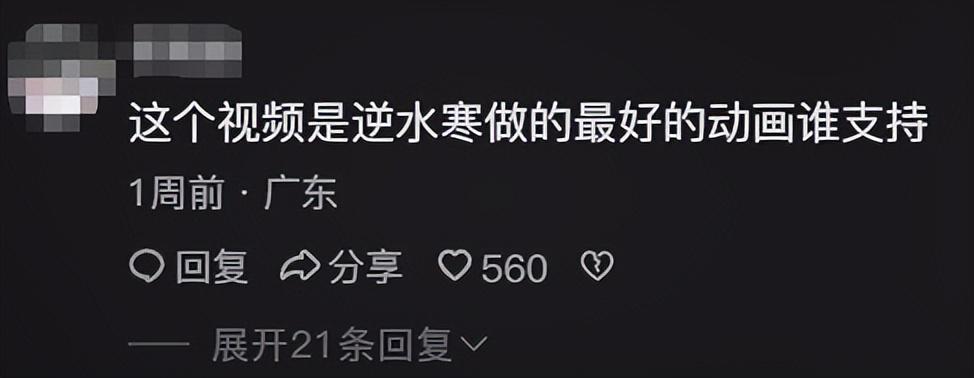
For example, the Lunar New Year update featured a collaboration with the hit song “Sunshine, Rainbow, and a Little White Horse,” prompting countless players to exclaim, “That’s so typical of you.” A collaboration with “Sunshine, Rainbow, and a Little White Horse” for the Year of the Horse didn’t seem out of place at all. The developers even released three consecutive videos featuring the song, all showcasing a sense of abstract confidence.

Then there’s the “Blood River Puppy,” which has since become the mascot of *Jade Dynasty*. Originally just an ordinary in-game pet, its abstract appearance and mesmerizing gaze won the hearts of players, ultimately propelling it to the top of the charts.
Interestingly, however, while it enjoyed immense popularity online, "Blood River Puppy" faced a tumultuous and uncertain journey in its offline debut.As a “top-tier influencer,” its very first in-person appearance ended in disaster, and its second public outing saw it turned into a “balloon sausage.” It wasn’t until its most recent offline event that Blood River Puppy finally ascended to the throne—not only did it grow a full coat of fur (literally), but it also secured its own dedicated exhibition booth (enough said—this is all part of my journey).

Given the popularity of the content mentioned above, it’s clear that the appeal of “poking fun and pulling pranks” lies in its ability to accurately tap into the complex psychological state of Gen Z players. This “I get you” approach to game operations requires developers to genuinely put themselves in players’ shoes and learn to understand their true preferences. It’s not just about providing aesthetic pleasure; it’s also about connecting with the sense of community inherent in youth culture.
It is precisely this sense of belonging that has also fueled a thriving UGC ecosystem, which in turn benefits the game itself. You may often see an endless stream of screenshots, videos, and fan-created content related to the *Jade Dynasty* mobile game on social platforms like Douyin, Bilibili, and Weibo.Whether it’s prank videos playing on in-game memes, screenshots showing off new outfits, or heartfelt moments between romantic partners and master-apprentice pairs, the content is diverse and engaging.

Players' emotions are conveyed through the medium of the game, and their preferences are expressed through it. As a result, social interaction among players has evolved from gameplay itself to encompass an emotional dimension.
Under many videos, you’ll also see comments like, “How many years have you spent in this world?” or “I want to take a photo with my significant other under the fireworks.” When a game begins to hold players’ unique memories and social connections, it undergoes a fundamental transformation from an “entertainment product” into a “virtual home.” This sense of belonging, born from emotional connections, is the strongest moat for maintaining user retention.
Conclusion
To be honest, for today’s younger generation of gamers, eating the New Year’s Eve dinner and watching the Spring Festival Gala are no longer the only ways to celebrate the Lunar New Year. They often prefer to immerse themselves in their favorite communities and spend the evening with close friends, and gaming has clearly captured this massive shift in social dynamics.
The ingenuity of the *Ni Shui Han* mobile game lies in its keen ability to capture these shifts in generational lifestyles. Rather than attempting to educate players on “what the spirit of the Lunar New Year is,” it has positioned itself as an integral part of that spirit through a wealth of content and rewards.
When “watching fireworks in a game on New Year’s Eve” has replaced TV programs, and “dressing up characters in new outfits” has become the new generation’s digital New Year’s tradition, this product has effectively undergone a transformation in identity—it is no longer merely a game for passing the time, but rather a digital festival that resonates on a spiritual level with Generation Z.
In today’s world, where traffic can be bought and strategies can be copied, it is precisely this “exclusivity”—born of long-term, sustained operation—that serves as the moat capable of sustaining a business’s enduring success.
原创文章,作者:游茶妹儿,禁止转载:https://youxichaguan.com/en/archives/195542