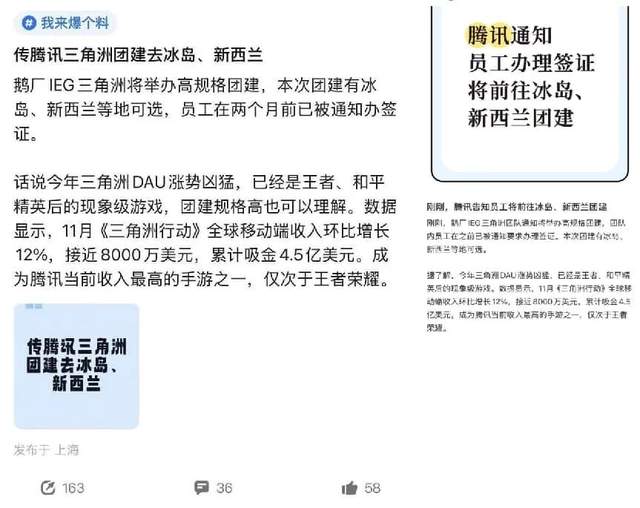
A few days ago, news spread online that employees of *Operation Delta* (hereinafter referred to as “*Delta*”) had gone on a team-building trip to Iceland and New Zealand, leaving many office workers green with envy.
And the "get-rich-quick" stories surrounding this game are nothing new. One professional esports player once remarked enviously, "My friend has been doing escort missions in *Operation Delta* for a few months and has already bought a SU7."
With 33 million daily active users, the No. 1 spot on the overall best-seller chart, and annual revenue exceeding 4 billion yuan, Hua Gongcheng (a pseudonym), a content partner for *Delta*, offered a more vivid summary: “Over the past year, *Delta* has delivered historic performance among games of its kind in terms of both social media metrics and consumer spending.”
"Delta," which has become a new legend in the gaming industry, has also spawned a booming ecosystem of related businesses: live streaming, esports, and even gray-area services like escorting and account boosting have all become "gold mines" for industry professionals.
01
With people leaving big tech companies and veterans making a comeback, the industry is teeming with talent
The "profit-generating effect" of the downstream ecosystem for *Delta* was already evident during the closed beta phase.
Jiale, who later became a professional player for "Delta," found the experience particularly rewarding. In November 2023, shortly after joining the closed beta, he took on a three-hour escort job. Not only did he earn 800 yuan for his time, but he also received an additional 1,000 yuan tip from the client. After maintaining this level of income for a month, he had earned a total of 10,000 to 20,000 yuan from escort jobs.
After the game’s open beta launch in 2024, Jiale’s “path to wealth” really took off. Thanks to his exceptional gaming skills, he quickly amassed a large following and became the top streamer in the *Delta* category on the Huya streaming platform. With his financial situation significantly improved, he immediately invested in professional equipment worth around 60,000 to 70,000 yuan.
Another streamer who has capitalized on this trend is Yang Qijia, who became one of the top streamers on *Delta* in less than three months thanks to his “Operation Rescue” series. Earlier this year, his company expanded from five or six employees to sixty or seventy.

“For the live-streaming industry, a blockbuster game is crucial,” said Cao Zhi, Yang Qijia’s agent. “We had our eyes on this title long before *Delta* was even released.”
At the age of 21, Yang Qijia streamed *PlayerUnknown’s Battlegrounds* under the username “Shao Jiong” and amassed savings in the tens of millions, but fell into a slump as the game’s popularity waned. It wasn’t until he began streaming *Black Myth: Wukong* that the followers of his new account, “Yang Qijia .”, skyrocketed from 6,000 to hundreds of thousands—and *Delta* became the “second wave of success” in his career.
In Hua Gongcheng’s view, game streamers on Douyin who attract over 100,000 live viewers are already considered “phenomenal.” Typically, it’s impressive enough for a single game to produce just one such streamer, yet *Delta* has seen three such creators—Lin Shu, Bai Ze, and Hao Tian—emerge in just one year.
Even the small-time streamer “Jian Xu” has tasted success: during the first National Day holiday following the open beta, he earned in a single day what would have taken three days to make at a major automaker—thanks to his work as a “game-grinding proxy” and viewer tips. Having previously led a routine life, he decisively quit his stable job and threw himself headfirst into this booming industry.
Account boosting and escort services—the methods through which Jian Xu and Jiale made their first fortune—have become an indispensable part of the *Delta* secondary market over the past year. Discussions about making money through *Delta* escort services are everywhere on social media; some students have shared that they earn over 10,000 yuan a month doing this, and there are even reports that the most in-demand escort service providers can earn more than 100,000 yuan a month.

According to industry insiders, the average monthly income for ordinary security guards is generally around 16,000 yuan, which exceeds that of white-collar workers in some second- and third-tier cities, while top enforcers can earn as much as 50,000 yuan a month. Such income levels are attracting a growing number of people to the industry.
Since the use of cheats is one of the factors determining the price of "escort" services, it has also spurred the rise of third-party anti-cheat agencies. These agencies check for recent device removal records to confirm the absence of DMA or software-based cheating, while also monitoring the testing process via remote connection to ensure that the testers do not cheat. Upon passing the assessment, the agency issues the tester with an industry-recognized "certificate of integrity," which serves as a key endorsement for securing future business.
02
With 100 esports clubs worldwide, the "Delta" team is on the rise
In addition to live streaming and esports support, *Delta* esports clubs are popping up all over the world. Hua Gongcheng estimates that more than 100 esports clubs worldwide have established *Delta* branches, led by celebrities, top streamers, and traditional professional esports organizations.
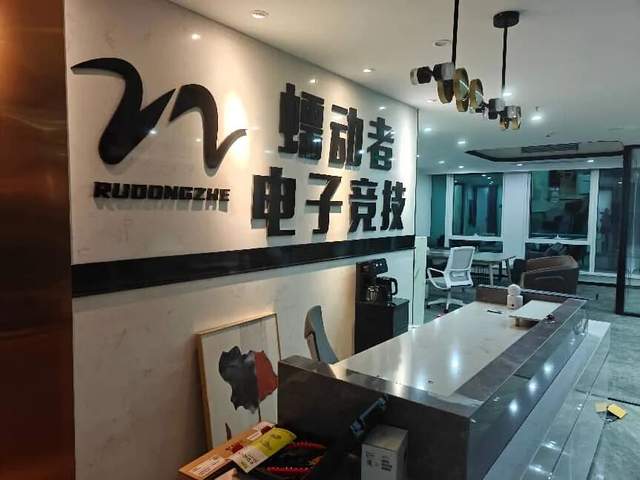
The "Peristaltics Team," founded by internet celebrity streamer Yang Qijia, is one such group.
On April 22, 2025, at the SPARK2025 Tencent Games press conference, *Delta* officially announced the launch of its global esports initiative. Since then, *Delta* tournaments have gradually gained momentum, including the Tencent-organized Assault Cup, Streamer Summit, Fenghuo Cup, and 2025 Fenghuo World Cup, as well as the DDC Diamond Championship hosted by video streaming platforms.
In June, Yang Qijia participated in the *Delta* "Broadcaster Championship" and placed third in the offline finals in July. His strong performance in the tournament inspired him to form a professional *Delta* team.
In July of this year, the "Peristaltic Team" was officially established, choosing "Financial Island" in Chengdu's Jinjiang District as its training base. This natural island, formed by sediment deposits, is adjacent to the core area of the High-Tech Zone, where rent is four times the average in Chengdu. Standing at the floor-to-ceiling windows of their office, with the river flowing past the building, they joke that they hope to benefit from the feng shui principle that "where there is water, there is prosperity."
According to public records, many traditional esports organizations have also entered the fray: WE and IG, known for *League of Legends*; QJ Esports, active in the *CrossFire* scene; AG, a major player in the *Honor of Kings* arena; and Tianba Esports, co-founded by Chen He, have all established *Delta* divisions.
According to Hua Gongcheng’s observations, there are as many as thirty or forty clubs that have invested significant resources in “Delta” esports initiatives alone. This scale represents the “ceiling” of all the esports projects he has been involved in to date.
Huagongcheng’s company, a content partner for *Delta*, has also formed a *Delta* esports team. He discovered that, amid fierce competition, the salaries of *Delta* professional players are two to three times higher than those in other esports disciplines.
Jiale, who later joined the "Wormers" team, reflected that he had "caught a break." Previously, he had been a professional esports player for *Apex Legends*; at the time, the game had not yet been released in China. He competed for two years, winning several championships and runner-up titles, but instead of earning money, he ended up borrowing tens of thousands of yuan from his parents.
What really struck him was that once, after finishing in second place and winning a $10,000 prize, he was asked in an interview, “How do you plan to spend the money?” He even daydreamed about how he would spend it, but to this day, he still hasn’t received the prize money.
Before he started making money from *Delta*, he lived in his hometown in Guizhou, where he was once so poor that he had to ask his parents for money even to buy a bottle of water. Since then, he has often remarked, “I don’t play games that don’t make money.”
Hua Gongcheng, a "Delta" content creator, noted the difference between "Delta" esports and other esports titles: "In most cases, the development of a game's esports ecosystem relies on clubs taking a gamble that the game will become popular. With 'Delta,' however, the game and its community gained traction first, and everyone is now eager to join the fray."
03
The Uncertainties of Esports: The "Sword of Damocles" Hanging Over Our Heads
In reality, compared to the staggering revenue generated by escort services and account boosting, the future of *Delta* esports is fraught with uncertainty.
Lao Yan, manager of the "Wormers" team, has eight years of experience in the esports industry. In his view, 95% of domestic esports clubs are not profitable, and their revenue is largely tied to official leagues.
Yet *Delta* has not yet officially launched in the league, hanging over esports clubs like the "Sword of Damocles": no one can be certain whether the tournament format will endure, and clubs that have invested heavily are all waiting for the outcome to decide whether to keep the title on their roster.
However, Hua Gongcheng, co-founder of "Delta," has a different perspective: "Delta Esports isn't about short-term gains; it's about building a professional stage for players who love gaming and fostering a healthier ecosystem."
On the one hand, while "escort services"—as part of the downstream industry chain for *Delta*—have indeed fueled the game’s popularity, they have also drawn the ire of many players who seek a fair gaming experience. Tencent’s stance on these services has grown increasingly strict; the company recently announced that it had cracked down on the first studio offering cheating-assisted gameplay services, while simultaneously launching the "Pottery Shard Ban" reporting mechanism to further curb the gray market.
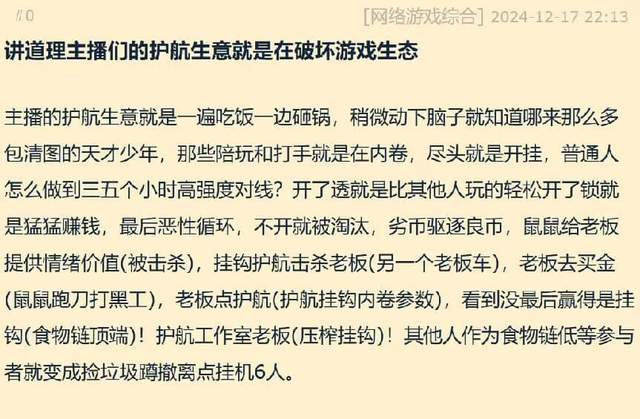
Gaming community criticizes "escort"

Authorities Collaborate with Police to Break Up First Cheat Software and Gaming Companion Studio
On the other hand, compared to highly competitive games, industry insiders generally believe that *Delta*, with its stronger entertainment appeal, has greater potential to turn players into stars. Both the "Crawlers" team and the companies partnering with *Delta* have adopted a dual-track approach featuring both "star streamers" and "professional players."
Jian Xu is a prime example: his stream truly “broke into the mainstream” after he ranked 11th on the kill leaderboard during the Huya Golden Brick Cup Season 2.For him, *Delta* fulfilled his esports dream—he knew he wasn’t a “natural talent,” and his past performance in first-person shooters had been mediocre. But in *Delta*, his strategic mind came into its own: it was precisely this ability to “think faster than he could aim” that once led the “Crawler Squad” to a top-three finish in a tournament.
Delta has also given many “veteran players” a second wind: when Jian Xu and Jiale joined the “Peristalsis Squad,” they were 22 and 25 years old, respectively—in the esports world, where reaction speed is key, that’s considered “veteran” age, but Delta’s gameplay turned their experience into an advantage.
04
Beyond the Wealth Creation Myth
Beyond the wealth-creation myth of *Delta*, this thriving industry has, to some extent, provided a sense of fulfillment for many people.
Xu Jian’s career shift was driven by a desire to break free from a life he felt was “predictable and unchanging.” After graduating from college, he joined a major automaker, where he performed the same mechanical tasks day in and day out. “I felt like a small cog in the machine—I wasn’t learning anything, and I couldn’t see a future for myself.”
Although life as a streamer on "Delta" can be tough at times—he leads a grueling 16-hour schedule of "streaming in the afternoon and training at night," faces misunderstandings from viewers, and is forced to act extroverted, "as if playing a different person"—the results of his hard work are always evident: he receives positive feedback from viewers and achieves solid rankings, giving his life a sense of purpose once again.
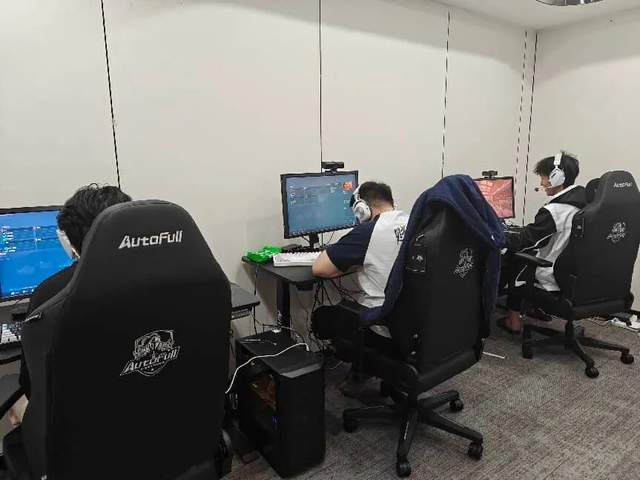
Jian Xu and his teammates are training
Lao Yan, a club manager who has been in the esports industry for eight years, has always harbored a "dream of winning a championship."In 2017, while still studying abroad, he ventured into the industry with the fearless determination of a young bull—knowing his skills weren’t up to par for a professional player, he resolved to focus on the behind-the-scenes work. Leveraging his strong Korean language skills, he actively searched for club job postings on platforms like Weibo and successfully pitched himself as a team manager and translator.
While teaching at an esports academy, he felt that although the school had produced many outstanding players, “the selection process was more about weeding out students than preparing them for the real world of professional competition.”
Now that he has quit his job to coach full-time—handling everything from player selection to business negotiations and budgeting—he’s so busy he only gets four or five hours of sleep a day, yet he still finds great joy in it: “I really love this industry. I want to lead a team to a championship with my own hands and make my dream—and the players’ dreams—come true.”
As night deepened, Jian Xu and Jia Le were still intently training at their computers, while Lao Yan continued to juggle club sponsorships and training schedules. No one could say for sure how long *Delta*’s popularity would last, nor did anyone know what their efforts would ultimately yield, but on this path fueled by the game, everyone was living life to the fullest and chasing their dreams with all their might.
原创文章,作者:游茶妹儿,禁止转载:https://youxichaguan.com/en/archives/195230