In 2022, when Unreal Engine 5.0 was released, the entire gaming industry was undergoing a major shift.
On one hand, we have phenomenon-level projects like *Black Myth: Wukong*, which prove that “China can produce AAA games” with top-tier technology and a team of over a hundred people; on the other hand, an increasing number of indie studios are facing closure—they’ve burned through their funding, spent two or three years developing a product, only to discover that the market simply isn’t interested. While the technical barriers are lowering, the barriers to success are actually rising.Big studios have the money and manpower; small teams simply can’t compete. Meanwhile, small, niche indie games rely too heavily on creativity and luck, making survival a long shot.
Caught between these two extremes, a group of developers has chosen a third path: rather than chasing AAA-level technical prowess or betting on a creative explosion in indie games, they approach game development with a mindset that “works backward from cost and intuition”—asking themselves: What kinds of gameplay are fun? Which genres have lower development costs? And which markets face less intense competition?
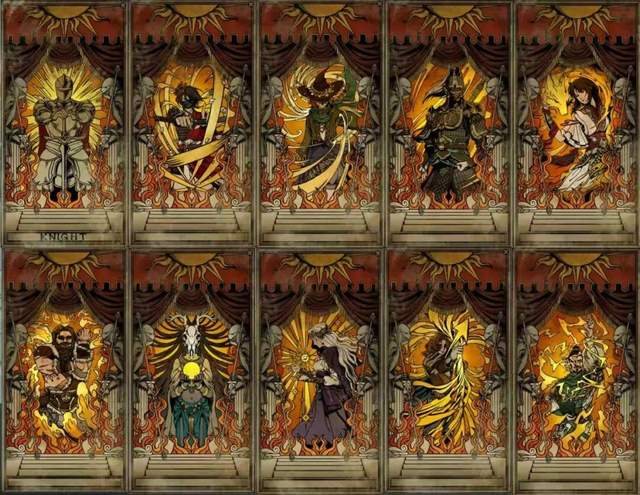
Character Concept Art for *Shadow of the Crimson Moon*
This may sound overly pragmatic, even a bit contrary to the spirit of gaming. But for cross-industry entrepreneurs who lack funding, industry connections, or even a “previous project” to showcase, this might be the only way to survive.
FF is exactly that kind of game developer.
When I met him, this China Academy of Art graduate, born in 1996, was sitting in his Hangzhou studio, with several paintings from his college days hanging on the walls. He was supposed to become an artist or a college professor. But now he is the co-founder of *Sudden Shadow: Crimson Moon Slayer*, a “jack-of-all-trades” who has launched four cross-industry startups and burned through three years’ worth of funding before finally producing his first game.

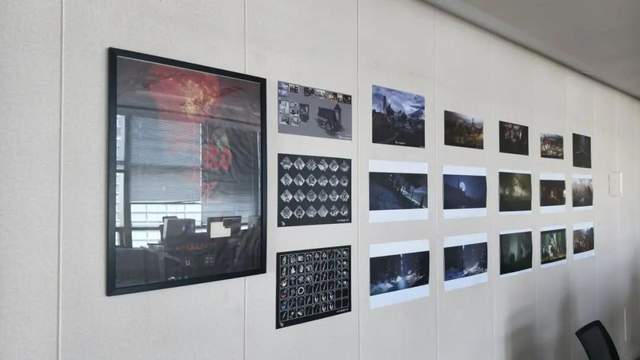
A painting hanging in the office
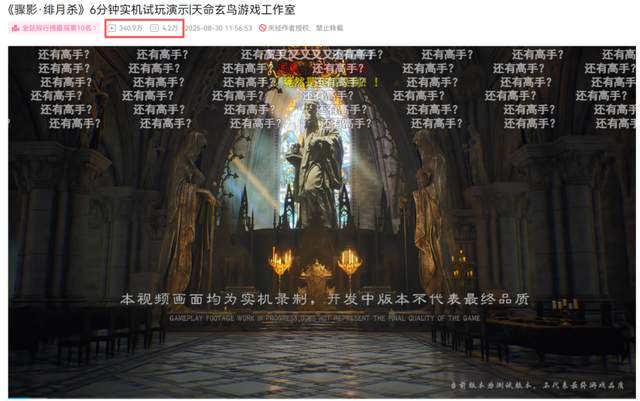
Yet despite being a game that seemed to have been developed as a side project, it gained popularity among players based on just three promotional videos—with an average view count of over 3 million on Bilibili alone—and even caught the attention of several major game studios at one point.
Taking this opportunity, the Teahouse also sat down for an in-depth conversation with FF, co-founder of Tianming Xuanniao Game Studio.Three years ago, they knew almost nothing about game development and even briefly “dreamed” of creating an open-world game. But three years later, they have developed a 3D PVP game in the style of “Mafia,” attempting a small-scale yet refined breakthrough in a niche market where “no one else is competing”—all with a team of 21 people, an investment exceeding 10 million yuan, and zero external funding.
01
Failing a course caused my life to take a “different turn”
“You might not believe this, but I failed four courses one after another during my freshman year and almost got kicked out of school. Looking back now, I guess I was just letting loose way too much back then.” FF recounted this amusing college anecdote with a touch of self-deprecating humor, shattering my “stereotypical” image of him as a model student.
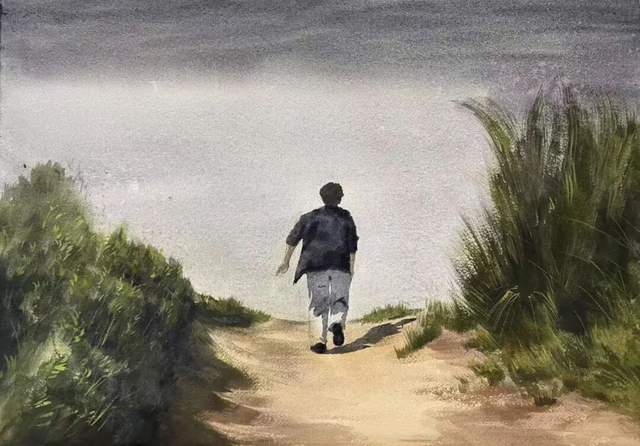
FF’s paintings from college
While studying at the China Academy of Art, he majored in oil painting and was admitted to the graduate program in water-based media after scoring the highest on the preliminary exam. For a long time, he believed he would become an artist or a university professor, but the course of his life began to “veer off course” after he started a business during his sophomore year.
He attributes this to a spirit of adventure—a love of trying new things and embracing challenges. In his view, successful entrepreneurs all share one trait: they possess more boundless energy than the average person. He had no trouble keeping up with his academic workload at the time, so he needed to channel his excess energy into productive pursuits. It was precisely this spirit of adventure that drove him to do things his peers wouldn’t dare attempt, allowing him to ride the wave of opportunity and launch four successful startups in a row.
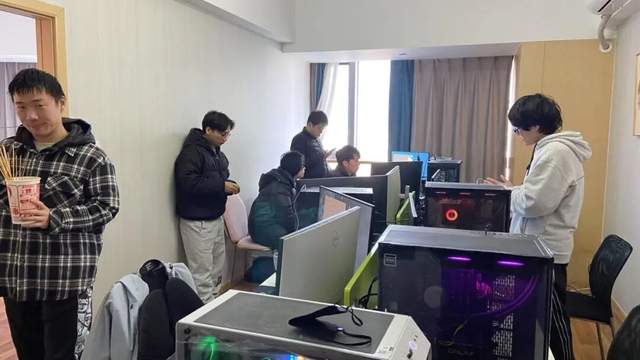
Early photos of the Tianming Xuanniao Studio
In the second semester of his sophomore year in 2016, he and WW, another co-founder of his current company, established a software technology company in Wuhan. The two art students, who had no technical background whatsoever, hired a team to take on outsourcing projects for apps and mini-programs.
He told me that WW took the lead in deciding to expand into Wuhan. Although none of us had a technical background, we were all passionate about tech entrepreneurship. We gradually built the team, began hiring, making referrals, and taking on various projects. We mainly created models for medical institutions or developed small management tools for product-based companies.
This startup lasted about a year and a half. At its peak, the company’s annual revenue exceeded one million yuan, but unfortunately, due to a lack of experience as a first-time entrepreneur and the constant frustration of delayed final payments, I ultimately couldn’t keep it going.
“Back then, the internet was in its wildest, most unregulated phase—you could practically make money just by diving a little deeper into it. I was really excited at the time, so I tried my hand at all sorts of industries. My first startup was in software technology; it was actually more like an outsourcing firm, and we mainly provided various software outsourcing services.”
FF attributes the success of its first venture to the benefits of the internet’s rapid, unregulated growth. Although revenue appeared promising, the profits generated were barely enough to cover costs.
When asked why he didn’t choose a field related to art for his first startup, he gave me an unexpected answer. “I was probably influenced by my parents to some extent. Before starting our family business, I majored in art and design, but what I’m doing now has nothing to do with painting. My thinking at the time was very straightforward: I just wanted to give it a try—what if it worked out?”

FF’s paintings from college
His first venture was not only a bold, opportunistic endeavor for FF, but it also gave him a “unique perspective” on cost control and risk management; this cautious financial mindset became the underlying logic for his future entrepreneurial endeavors.
After the company dissolved, he went through a period of uncertainty. Fortunately, he still had some time before graduation, so he prepared for graduate school entrance exams while getting his thoughts in order, and ultimately succeeded in getting accepted.
But unexpectedly, WW’s early foray into the hotel and homestay sector in 2018 proved quite successful, so during my first year of graduate school, FF was steered onto a different path.
02
Every trend brings its own rewards
The second startup clearly came about sooner than FF had anticipated.
In 2018, he was still a first-year graduate student. By then, WW had already made some initial forays and investments in the hotel and vacation rental sectors, with quite promising results, so they quickly brought FF on board.
“Back then, I wanted to create something tangible—something with relatively low capital requirements but fast cash flow. He gave it a try and saw some potential, so he brought me on board. Of course, the more important reason was that with a bed-and-breakfast, we didn’t have to worry about late payments; the platform paid out quickly. Plus, this was finally a chance to put what we’d learned in art school to good use,” FF explained.
Destiny of the Mystic Bird Studio
And that’s exactly what happened. At first, they selected just a few units to test the waters, but when they saw that business was booming, they gradually expanded their operations to both Nanjing and Wuxi. During the company’s three-and-a-half years in operation, they had as many as several hundred units available for rent at their peak, and they even launched their own brand.
As for why we chose to operate homestays in both Wuxi and Nanjing, WW felt that while Wuxi had a developed economy and strong purchasing power at the time, it actually lacked suitable places for people to spend their money. In other words, unlike Hangzhou and Shanghai, which offer a wide variety of places to spend money, competing in a mature market would obviously be much more difficult. Wuxi, on the other hand, is a city where consumer amenities haven’t yet caught up with economic development—people have money but nowhere to spend it—making it a market with greater potential by comparison.
Given their background in the visual arts, they have a natural advantage in interior design and artistic design. Consequently, their primary approach involves identifying suitable properties, carrying out a series of customized and distinctive renovations, and finally managing the properties as a unified rental portfolio.
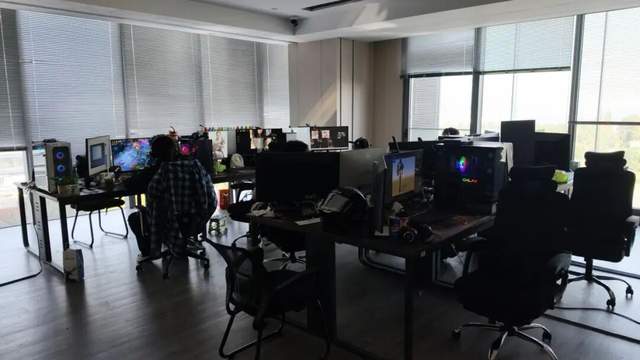
Destiny of the Mystic Bird Studio
He told me that the rates at the boutique hotel they operate range from about 150 to 600 yuan. While this is slightly higher than nearby options, thanks to its natural advantage in artistic design, it is undoubtedly the best choice for high-spending guests who value a quality experience.
“Back then, boutique hotels were still a novelty—the kind of place everyone had to visit and snap a photo at. In a way, the design by the China Academy of Art was quite cutting-edge, and we really went the extra mile in every aspect. Whether it was our thematic concept, artistic design, or housekeeping services, we did an excellent job—we truly outshone many of our less-dedicated competitors.” Even now, when I think back on it, I can still sense a rare sense of vigor in his casual remarks.
“Where exactly does the advantage of the design you just mentioned come into play?” I asked.
“For example, when designing the lighting, we avoid situations where light shines directly into people’s eyes. I’ve stayed at many standard hotels before, and most of the time I’ve encountered a problem: when you turn on the bedside lamp, the light is usually blindingly bright. From the very beginning of the design process, we consider the guest’s movement patterns—where they typically walk and sit—and then use design elements to create a space where you don’t notice any obvious light sources, yet the room is still well-lit.”
In addition, we strive for aesthetic appeal even in the simple arrangement of objects. In the field of art and design, there is a discipline called composition, which uses the placement and arrangement of objects to create visual beauty, thereby evoking a sense of psychological pleasure in viewers. Combined with a variety of wall colors—such as beige, off-white, and gray—the diverse room themes we create significantly enhance the immersive experience for our guests.“Our classic themes at the time included Bohemian and American Western styles. We would incorporate various theme-appropriate decorative items to create a strong sense of time travel for customers the moment they entered the room,” he explained, citing a few simple examples.
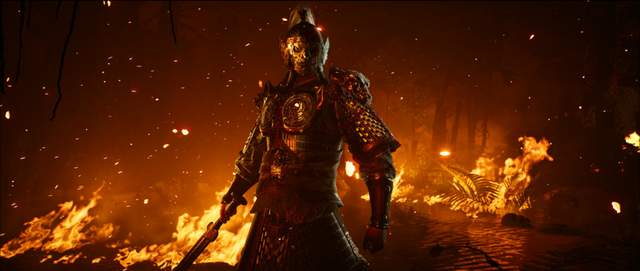
Screenshots from *Shadow of the Crimson Moon*
Such sincere dedication is bound to yield substantial returns. Compared to their previous venture, the revenue from the bed-and-breakfast has clearly increased significantly, and the quick cash flow has allowed the two founders to make a considerable profit. However, he also acknowledges that the drawbacks of this business model are quite evident: since the core of the operation involves subletting rooms after leasing them, the rental costs are inherently high. Combined with the additional expenses incurred from various design elements, this results in a rather low profit margin.
Before they knew it, it was 2021, and the pandemic’s impact on the retail sector had dealt a devastating blow to their bed-and-breakfast business. After struggling to make ends meet for so long, they ultimately couldn’t hold on any longer. After operating for three and a half years, they decided to call it quits.
However, those first two “attempts” did not slow down FF’s entrepreneurial journey; after graduating from graduate school, he entered the MCN industry and launched his third startup.
“Actually, by the time I graduated, I had already been accepted and was preparing to teach at a university. But my experiences with my first two startups had made it impossible for me to settle for such a mundane life. At that time, live-streaming e-commerce was just taking off, the platform commission rates were reasonable, and the industry was still in its infancy. So, with a ‘let’s give it a try’ attitude, I decided to run an MCN agency for a while.”
He admitted that running an MCN was the most laid-back of all his entrepreneurial ventures. At the time, their office in Hangzhou was very small; with just two employees, they managed over a dozen live-streaming hosts. While the hosts showcased their talents and sold snacks, household goods, and other items, the team handled product selection, liaising with manufacturers, and recruitment and management.
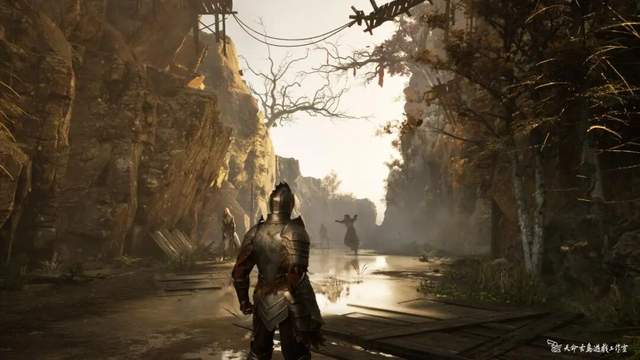
Screenshots from *Shadow of the Crimson Moon*
However, this startup venture did not last as long as expected; in less than six months, the two founders decided to step down.
“The profit margins for live-streamed e-commerce are pretty high, but the overall revenue isn’t very stable. Most importantly, I just don’t have any interest in it. I don’t like watching live streams, and I don’t spend much time staring at my phone, so it gradually started to feel a bit boring,” he added. “WW feels the same way. It just feels like we’ve gone down the wrong path—it has nothing to do with our field of study, and it’s as if all those years of learning were for nothing.In the end, we came to the conclusion that we’d found something with decent potential, but it just wasn’t something we were really interested in.”
Six months later, FF entered the film industry and took on the role of a traditional producer, but due to various issues, the feature film ultimately failed to make it to the big screen. After just half a year of struggling in the film industry, FF was forced to change careers.

Photos from the film and television industry era
All three of his entrepreneurial ventures generated positive returns for FF. He attributed this to his keen business acumen, which allowed him to successfully ride the wave of each trend. However, the fact that none of these ventures lasted led him to ponder another question: What kind of industry can both be profitable and warrant a long-term investment? After much deliberation, he finally turned his attention to gaming—a field he had loved since childhood.
“Of course, the goal of running a business is to make money, but gaming is something we genuinely love,” said FF. “In my opinion, there aren’t many jobs where you can do what you love and make money at the same time.”
03
Attempting a “small but refined” breakthrough
Developing games wasn’t actually a spur-of-the-moment “idea” that FF came up with on a whim; in fact, FF had been eager to get into game development ever since its first startup.
At the time, they knew next to nothing about game development; they simply viewed it as a branch of the internet business. Since their previous experience at a software technology company had given them a solid foundation, they wondered if that knowledge might also be useful for creating a single-player game. However, after discussing it with WW, they realized the costs were far beyond what they could afford. Moreover, they were still students at the time, and if they devoted themselves entirely to the project, they would likely be unable to balance both their studies and the game development.
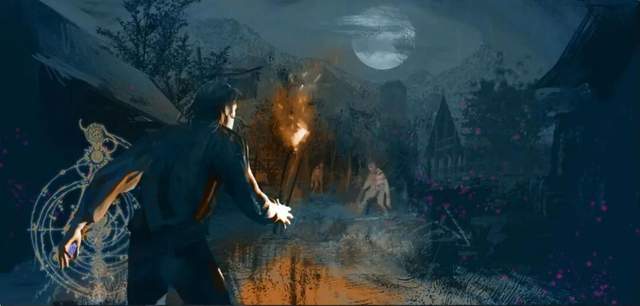
Early concept art
However, many years later, things finally took a turn for the better. In 2022, the release of Unreal Engine 5 offered them a glimmer of hope; the upgraded engine tools not only delivered superior graphics but also significantly reduced development costs. At that moment, the founders’ risk-management radar shifted from red to green, and with the mindset of “let’s give it a try,” they ventured into the world of game development.
“For one thing, WW and I are both veteran gamers. Back in elementary school, whenever we had computer class, we’d bring a USB drive with a copy of CS 1.6, quickly copy it for everyone, and then we’d all start playing CS online together.After college, WW and I often played Dota and Naraka: Bladepoint together—that was probably the craziest period of our gaming lives. On the other hand, with our previous startups, the industries we were in were shut down just as they were starting to grow. In contrast, the gaming industry just keeps getting bigger and bigger; it seems to be expanding nonstop.”
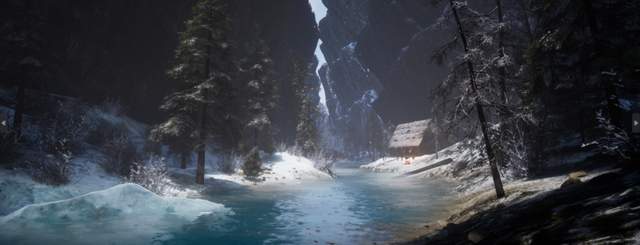
Early concept art
Initially, they had big ambitions and had mapped out an early version of the game. At the time, they were influenced by classics like *Prototype*, *GTA*, and *Red Dead Redemption*, and believed that open-world games would be well-received by players. Coupled with the power of the Unreal Engine 5, they felt that developing a single-player open-world game held greater potential.
So, from 2022 through mid-2023, the entire team focused on refining the art concepts, creating a wealth of grand and beautiful scenes. Their approach at the time was straightforward: first, they would develop the art concepts, and then see where their inspiration would take them next.
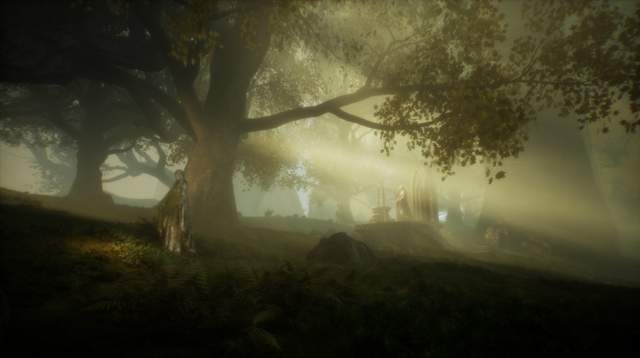
Early concept art
But by late 2023, FF suddenly realized that costs were spiraling out of control. As they delved deeper into the gaming industry, they discovered that both game optimization and production costs were far beyond what they could afford, making the project virtually impossible to bring to fruition.
The team quickly shifted their approach, consolidating all assets from the original open-world game and extracting a single chapter from the background story. They replaced it with a single-game-of-Werewolf format, incorporating elements such as multiplayer PvP, and launched it as a new product. This was the precursor to *Shadow Rush: Crimson Moon*, which was initially titled *Code Name: Shadow Rush*.
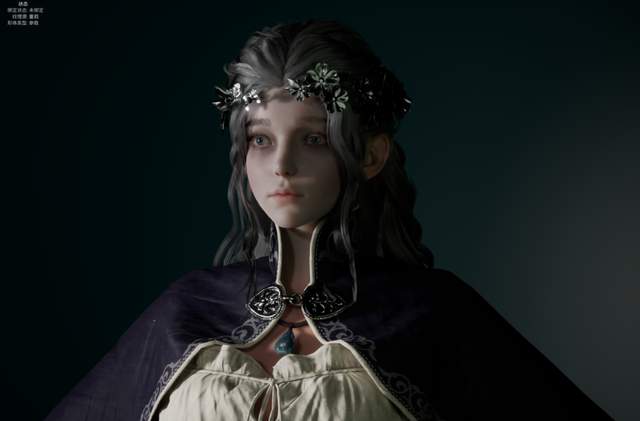
Character Concept Art for *Shadow of the Crimson Moon*
When asked why they suddenly switched to playing Werewolf, FF paused for a moment and said, “It was actually WW’s idea. We play board games quite often, and we’re especially fond of Avalon. We feel that the best part of board games is being able to take on different roles—it’s a sense of immersion that’s hard to experience in real life. For example, you can be a knight, a traitor, or even a liar.”
“Another point is that board games don’t emphasize competitiveness; players care more about the fun and the experience of playing. For example, when I play ‘Werewolf,’ I never get too worked up—at worst, I just switch roles and start a new game. That’s something purely competitive games can’t really offer.”
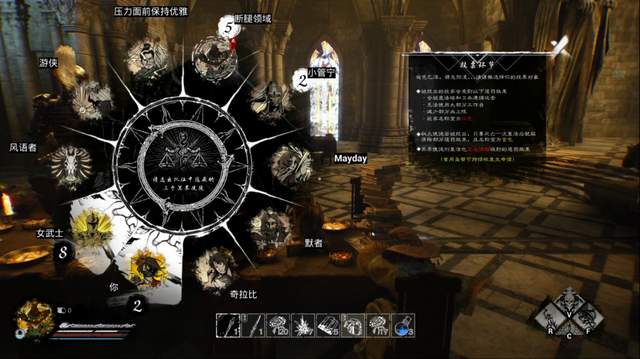
Screenshots from *Shadow of the Crimson Moon*
This “entertainment-first” philosophy is deeply ingrained in *Shadow and Crimson Moon: Murder*.From what I’ve seen in the internal test version, *Crimson Moon: Werewolf* not only retains the classic voting mechanics of Werewolf but also introduces a set of RPG-style classes and character progression. In the first phase, players must eliminate three plague points; during this time, they can quickly acquire powerful gear and magic by completing quests or defeating bosses, while the werewolf characters can either take the opportunity to cause chaos or sit back and watch the situation unfold.
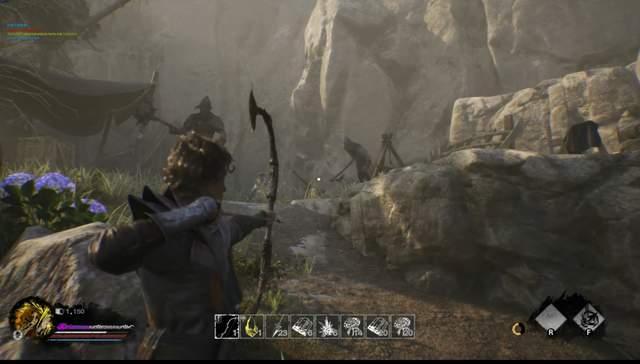
Screenshots from *Shadow of the Crimson Moon*
If the three plague sites are not successfully eliminated within the time limit, all players will be forced to embark on an escort mission in the second phase. This is where the RPG-style character development from earlier comes into play: large waves of enemies will spawn periodically to launch attacks, and the werewolf character can take advantage of this to reveal their identity, sow chaos, and disrupt the mission’s progress.
It’s safe to say that *Shadow and Crimson Moon* is a great fit for players who enjoy multiplayer games or want to create engaging livestream content. By incorporating various gameplay elements into the traditional Werewolf game, it’s poised to stand out among the multitude of multiplayer PvP games.
In 2024, *Shadow of the Crimson Moon* released its first promotional video, which generated significant buzz among players and quickly surpassed 2 million views. This response gave the team immense confidence, showing them that even a niche genre could attract an unexpectedly large audience.Subsequent trailers garnered over 3 million views. Through communication and feedback from players, the team gradually adjusted the game’s development direction and content, cutting out a large number of redundant features and adding more engaging gameplay elements.
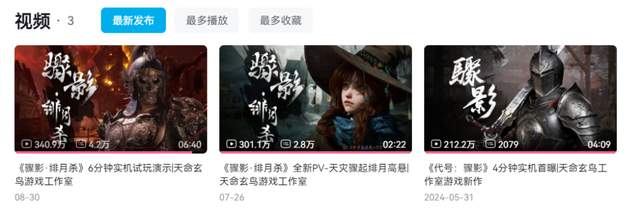
But the problem is that 3D Werewolf is, after all, a niche market, and no developers are willing to venture into it. This makes me wonder: “There really aren’t many 3D Werewolf products on the market. How do you view this market segment? Do you see it as a unique advantage?”
He replied, “For one thing, from the very beginning, our goal was to create a small but polished game, keeping costs within a certain range. As long as the user base exceeds that threshold, we’ll turn a profit. Besides, for our first game, our expectations aren’t that high—as long as we break even, that’s a huge success, and the experience will provide valuable insights for future product development.”
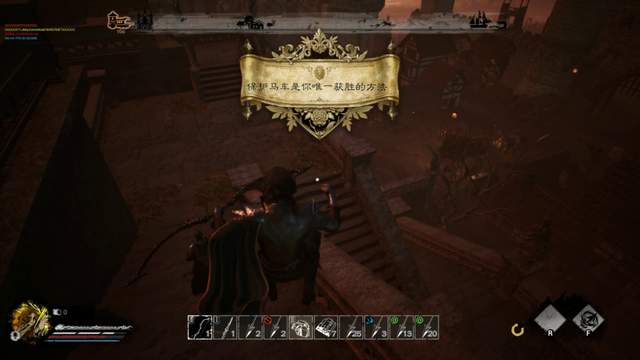
Screenshots from *Shadow of the Crimson Moon*
On the other hand, the relevant market isn’t as small as one might think; games like *Dread Hunger* have sold over a million copies, and compared to their development costs, the revenue generated by those sales is incredibly high. But for a AAA game, it could end up being a total loss—that’s the advantage of this genre.
“In our view, the fact that few others are pursuing this path is actually what makes it an attractive opportunity for us. Crowded markets require significant resources to compete effectively, whereas only in less crowded markets can a startup like ours carve out a niche. That’s why this is precisely the direction we’re eager to explore.”
04
No product can make you stand out
Actually, before conducting this interview, I tried to gather information and materials about the startup Tianming Xuanniao, but I was surprised to find that there was very little information available online, which only served to make the company seem even more low-key and mysterious.
FF just smiled after hearing this, then offered an explanation. First, they haven’t secured any funding yet, so all development costs are being covered by their existing capital, which means it’s difficult to find partners willing to promote them proactively. Second, their current capabilities don’t allow them to make a big splash; without a product or a concept, and as a startup, making a high-profile move at this stage would feel like trying to draw water from an empty well.
He admitted that, at first, they hadn’t even considered raising funds because they felt it would be difficult to answer a question from investors, such as, “What products have you developed in the past?” Under such circumstances, gaining the other party’s trust became absolutely crucial.
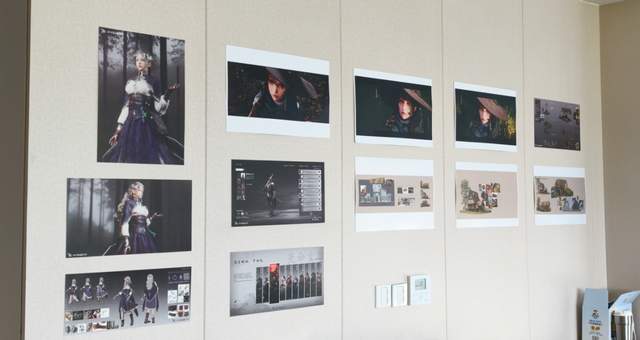
Destiny of the Mystic Bird Studio
Later, he and WW thought it through carefully and realized that this problem seemed unsolvable. “When you’re building something for the first time and people ask about your project experience, you can only say you have none. We won’t lie, and we can’t just ‘fabricate’ a project history out of thin air. So why not just say, ‘Okay, we won’t approach you just yet. We’re going to focus entirely on building the product. When the time comes, you can ask us again, and we’ll say that we didn’t have any experience before, but now we have a pretty solid one you can take a look at.’“We hope to interact with our partners based on this business philosophy. So in this process, we have no choice but to keep a low profile—and that’s precisely why we must choose to do so: because without a product, there’s nothing to give us the confidence to be outspoken.”
The Destiny of the Mystic Bird team currently consists of 21 members, with the art department alone accounting for seven of them—the largest group. Although the project has been in development for over three years, the overall costs have remained within an ideal range, currently standing at just over 10 million yuan.
With steady growth over the past three years—surpassing 20 employees this year—the team’s gradual expansion has allowed us to effectively manage costs. As part of FF’s philosophy, we’ve been cautious about opening new positions in our first foray into the gaming industry, and we’re still learning and finding our footing. Cost control was particularly strong during the first two years, so even as a newcomer to the gaming industry, the team has not found itself facing costs that far exceed the budget.
It’s worth noting that the entire team is currently fine-tuning the product and finalizing gameplay content. Future plans include the release of numerous maps and new gameplay features, with a new map scheduled every three months and new gameplay updates every six months to maintain a consistent operational rhythm. There are also plans for sequels or new projects, though these will depend on the sales performance of *Shadow of the Crimson Moon* before any final decisions are made.Regarding publishing partnerships, FF stated that they are open to collaboration, but he places greater emphasis on the publisher’s ability to effectively market and promote games within this specific genre and gameplay style.
“Since this is your first time making a game, have you thought about what you’ll do if it fails?” I asked him one last question.
After a moment’s thought, he gave me his answer in a very firm tone: “I think it’s perfectly normal for a game to fail, but a company absolutely cannot fail. After all, every project comes with its own risks, and perhaps some uncontrollable factors will ultimately lead to a project’s failure. But at the very least, from the company’s perspective, it must retain the ability to continue operations.”
“Our assumption is that even if a project fails, the company can still launch a new one—at least we can try again. My thinking is simple: a single project failure doesn’t mean anything. What we should focus on is controlling costs, learning from past experiences, and continuously iterating.”
原创文章,作者:gallonwang,禁止转载:https://youxichaguan.com/en/archives/195154