Today, following its usual 11:00 a.m. release schedule, *Wuthering Waves
* released a concept trailer featuring a new map and a new character. Within less than an hour of its release, the trailer had racked up 400,000 views and over 11,000 “Likes”; as of this writing, the view count has surpassed 2 million.
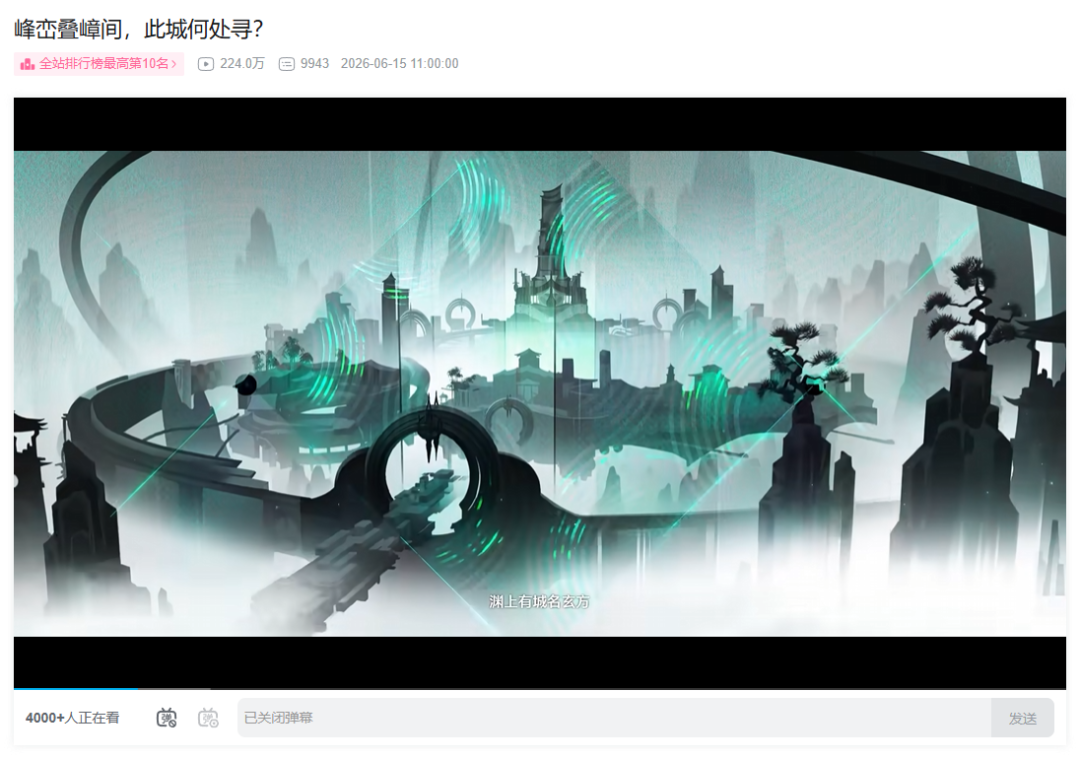
The PV features mostly 2D concept art, with visual teasers of new maps and characters flashing by in succession. Although there are no in-game footage, the information revealed is already enough to get players excited and singing their “graduation songs.”

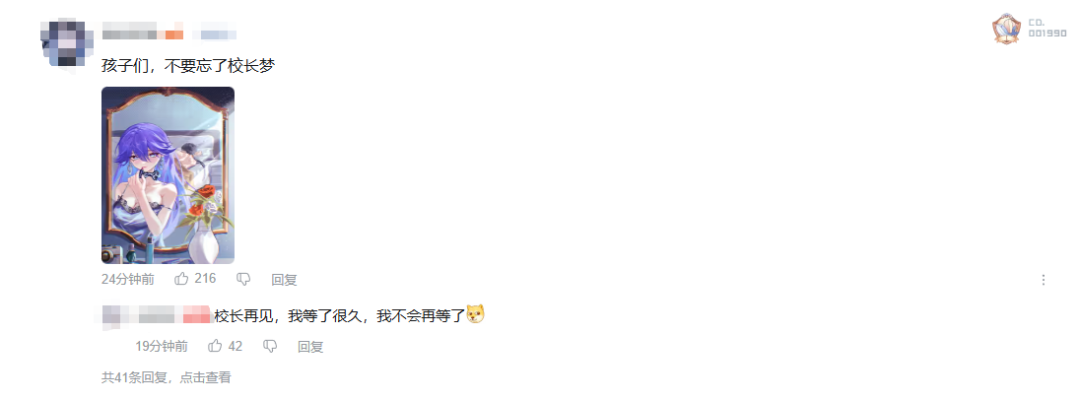
After watching the trailer, aside from the excitement I felt as a player, I was even more surprised by *Mingchao*’s mastery of diverse artistic styles. At the same time, I couldn’t help but marvel at how well Kuro captures the essence of Chinese culture—this PV alone showcases a lot of substance.
At the beginning, as a fleeting image of Xuanfang City flashes across the screen, a voice-over recites three lines: “At the source lies a city named Xuanfang; as the pivot turns, the characters shift, concealing the mysteries; ingenious mechanisms rotate on their own, and kites soar.”” These three lines follow a symmetrical seven-character, three-line verse form, and the flow of their rhymes closely resembles the incantations and verses often found in ancient texts describing a mysterious city.
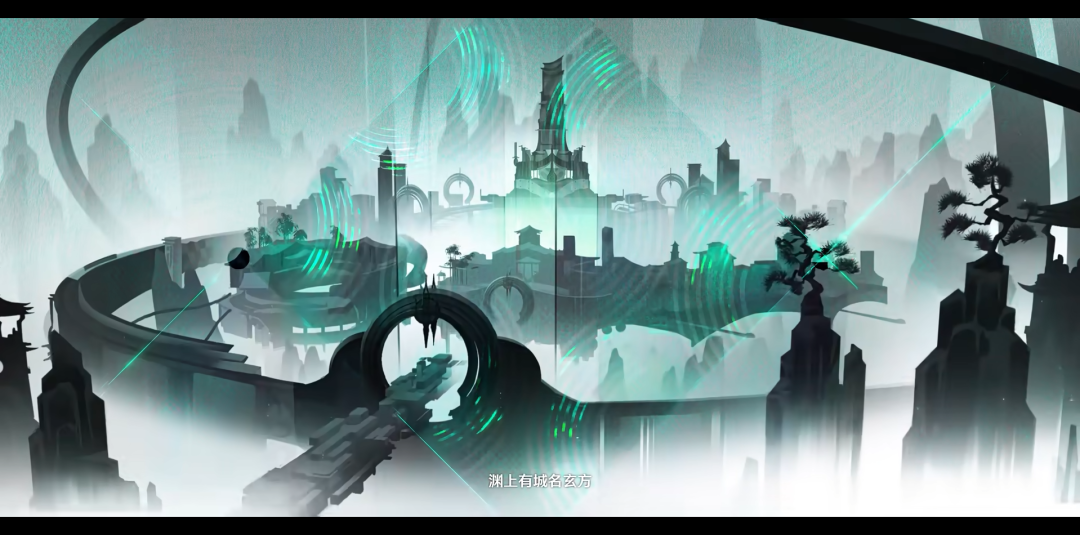
The information density here is quite high; “Xuanfang” is likely the name of one of the major cities on the new map. For now, let’s refer to the teahouse as “Xuanfang City.” When combined with keywords such as “shuxuan,” “xuanji,” and “jiaoqiao” from the last two lines, this almost explicitly suggests that the core design inspiration for this city comes from the Moist School’s art of mechanical devices.
In particular, the three characters “Yuan Niao Xiang” directly refer to the legend recorded in pre-Qin classics about Lu Ban and Mo Di building a wooden kite. As mentioned in *Han Feizi: Wai Chu Shuo*: “Mozi built a wooden kite; it took him three years to complete, but it flew for only one day before breaking.”
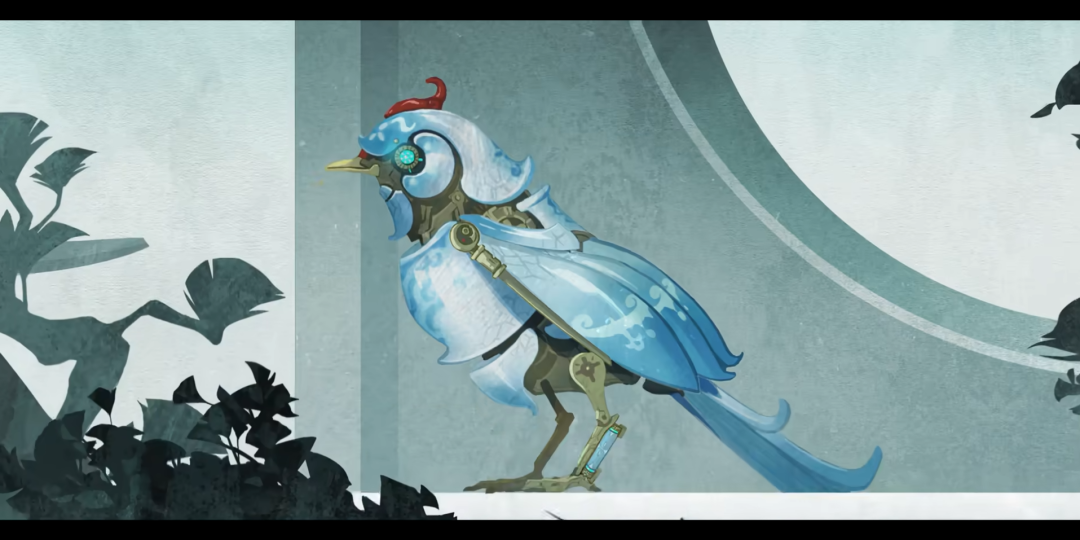
The two characters “Shu Xuan” also allude to the astronomical imagery of “Xuanji and Yuheng” from the *Shangshu: Shun Dian*. The visuals and narration echo the phrase “ingenious self-rotation,”Teahouse reasonably speculates that the concept of Xuanfang City most likely takes the “craftsmanship and technology” school of thought among the Pre-Qin philosophers as its design anchor, grounded in ancient Chinese engineering philosophy.
After seeing a glimpse of Xuanfang City’s “Ingenious Mechanisms,” the cast of characters that appeared later only reinforced the teahouse’s feeling that something big was truly on its way.
This time, Kuro unveiled six characters at once, each accompanied by a seven-character poem.
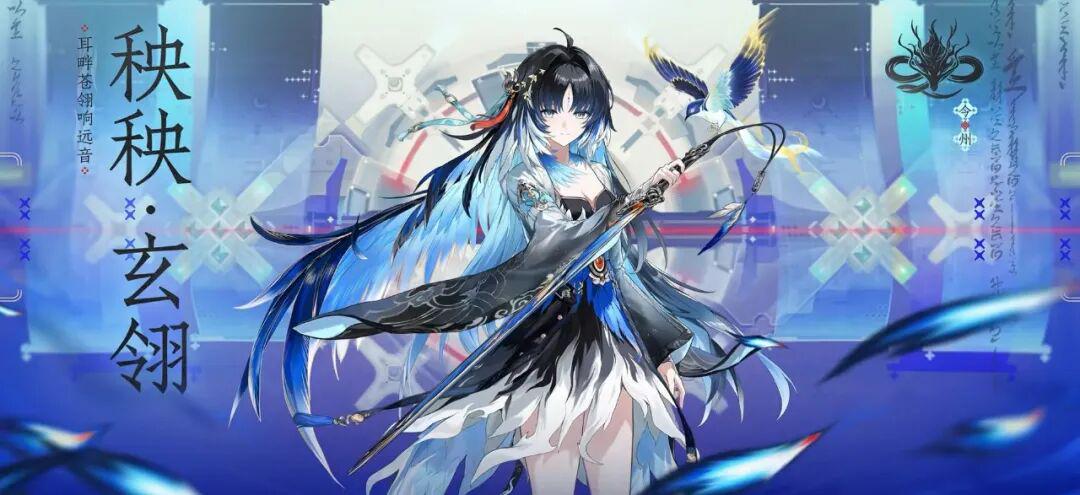
“The distant sound of Cangling echoes in my ears” refers to Yangyang·Xuanling. As one of the “Big Three” that have accompanied players since the open beta, Yangyang has finally evolved two years later—transforming from the original “Skylark” into “Cangling”—and now exudes an aura reminiscent of a mythical bird.
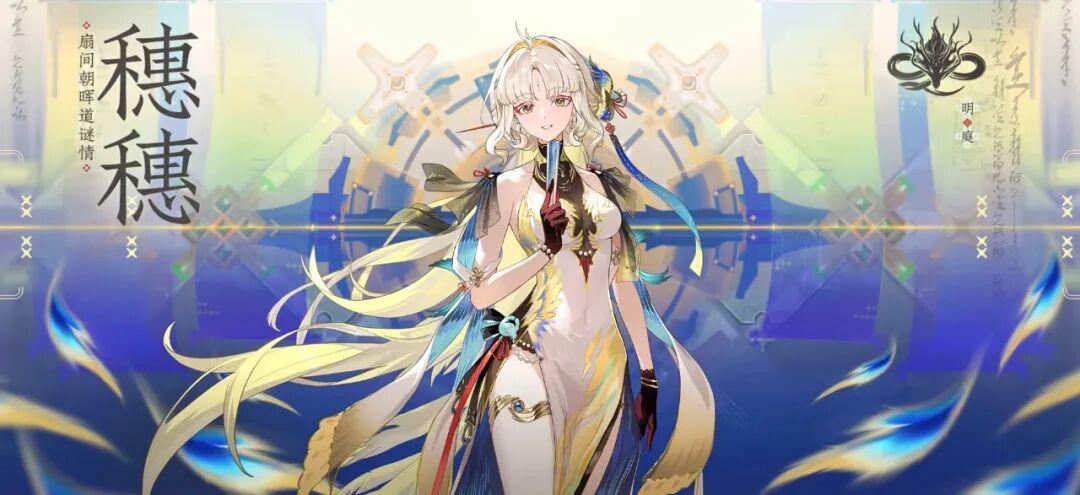
“Morning glow between the fan’s folds hints at a mysterious romance” corresponds to Sui Sui; considering the poem’s meaning,“fan” naturally corresponds to the folding fan Sui Sui holds in her hand, while the image of “morning glow” represents vitality, possessing the same radiance as her character’s primary color scheme; however, the appearance of the phrase “mysterious affection” adds a layer of ambiguity to this clarity.
In the in-game demo released today featuring Yangyang·Xuanling and Suisu, these two characters—who are likely sisters—jointly showcase the design characteristics of divine birds:
Suisu is rendered primarily in warm gold tones. Holding a folding fan, her movements resemble a dance with long sleeves and a fan; with every gesture, miniature landscapes appear and disappear. The red sun between the mountains alludes to the myth of the Golden Crow bearing the sun, and the particle effects evoke the Daoist concept of “the universe within a jar.”
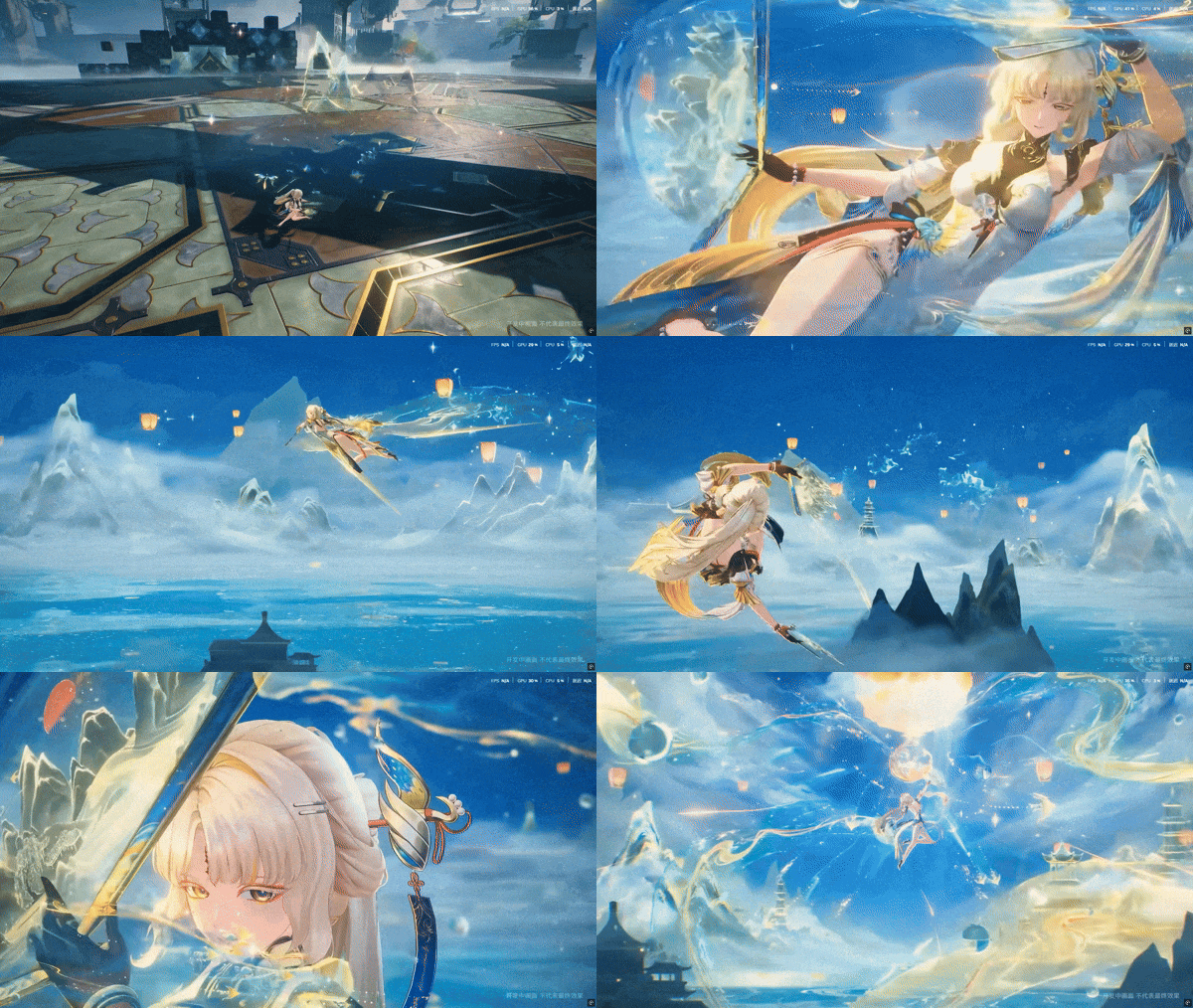
Image source: Bilibili @Jike
Yangyang Xuanling, on the other hand, features a base palette of deep black, blue-black, and blue, evoking the mysterious and ethereal atmosphere of traditional ink-wash “Night Mountain” paintings,Her long hair, with its blue-black gradient and the feathered ends unique to Yangyang, combined with the texture of the bird feathers and sword light scattering during her attacks, gives Yangyang a sharper, more fierce appearance compared to Sui Sui.

Image source: Bilibili @Jike
Seen in this light, aside from the correspondence in their names, the design language of the two characters’ combat effects also forms a neat contrast—one light, one dark; one golden, one mysterious—The Tea House has good reason to speculate that the two are sisters. *Tide of Voices* has likely split a mythological “twin” theme between the two characters, allowing each to embody a different aspect of it.
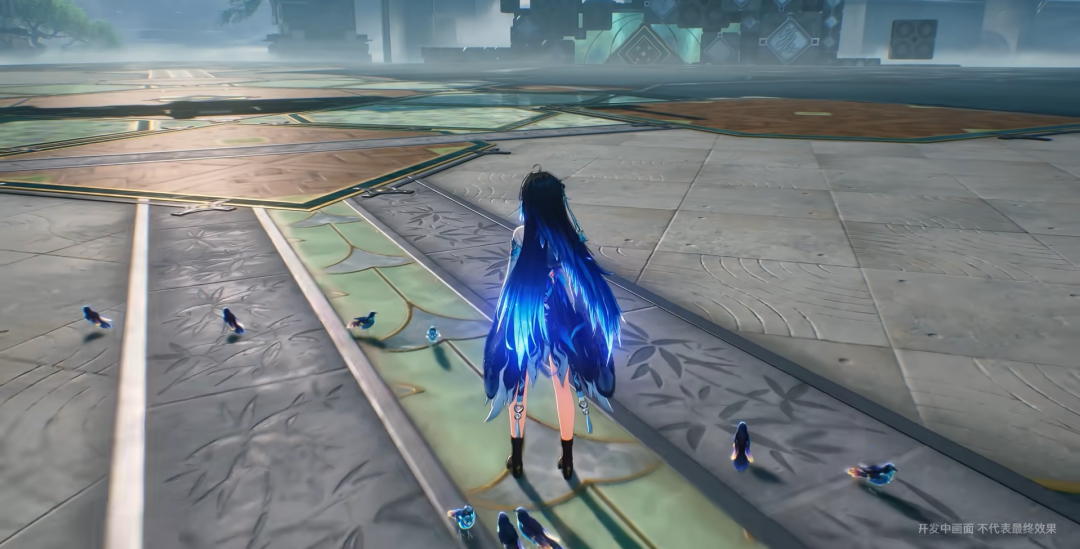
Yangyang will still have little birds by her side (so cute!)
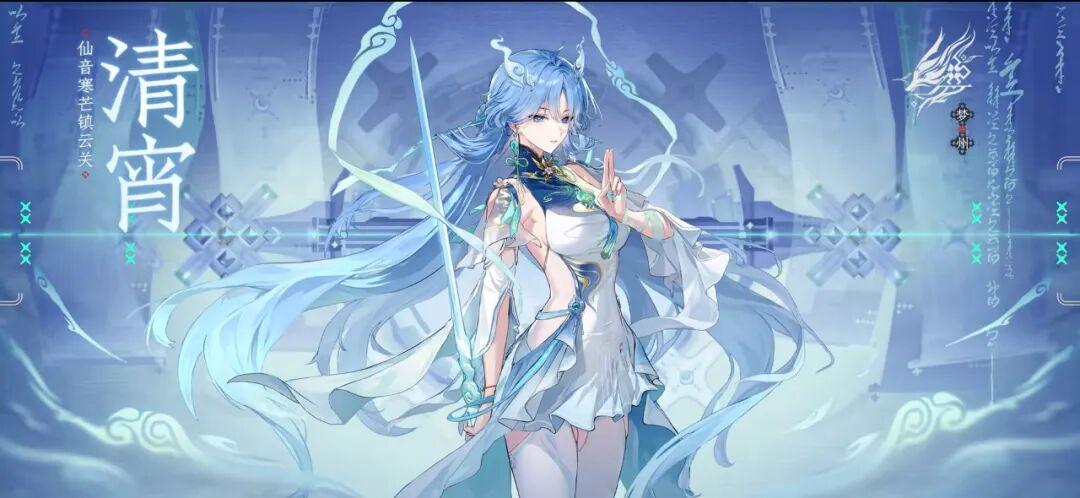
“Celestial Melody, Icy Glow, and Zhenyun Pass” corresponds to Qingxiao,The combination of “Celestial Melody,” “Icy Radiance,” and “Master” practically embodies the classic template of a sword immortal: one who cleaves the heavens with a sword, possesses unparalleled skill on the zither, and—clad in simple, elegant white robes with long, ice-blue hair—exudes Qingxiao’s otherworldly aura of “standing alone, detached from the world.”
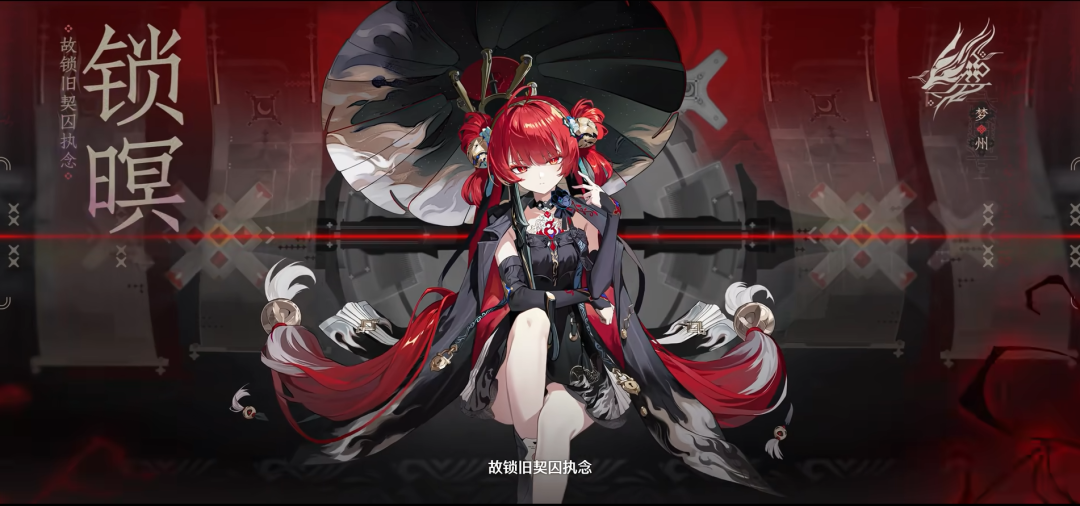
“Thus bound by an old pact, imprisoned by obsession” corresponds to Suo Ming; this is also the heaviest line among the six characters. “Thus bound,” “old pact,” “imprisoned,” and “obsession” all point to bondage and the past. It seems that Suo Ming is also a character trapped by the past.
“Even today, one walks alone in this mysterious realm” corresponds to Jing Ran. The mood of this line is somewhat somber; “mysterious realm” suggests a dark, subterranean, or supernatural setting, while “even today, one walks alone” further conveys a sense of isolation—walking underground and hiding in the shadows.
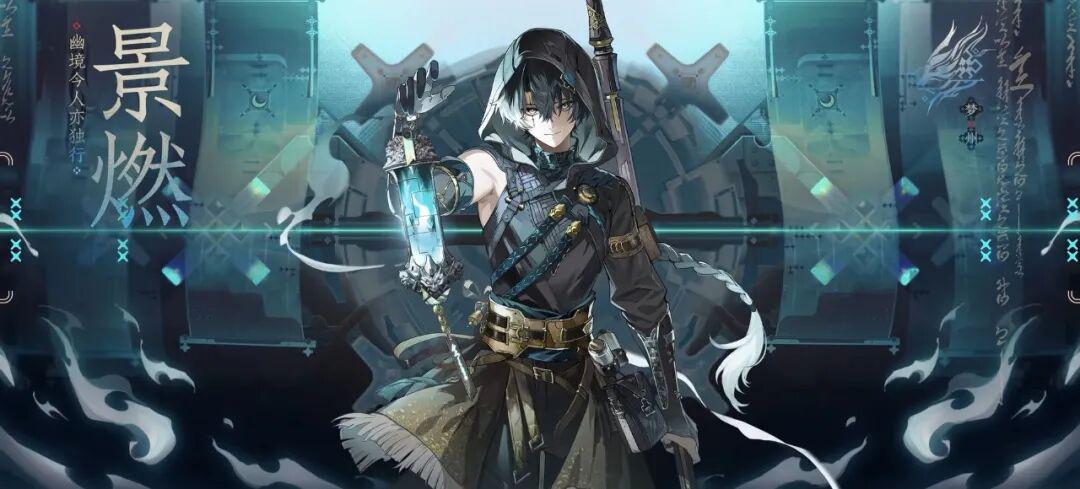
Are you a tomb raider? Do you have a Luoyang shovel?
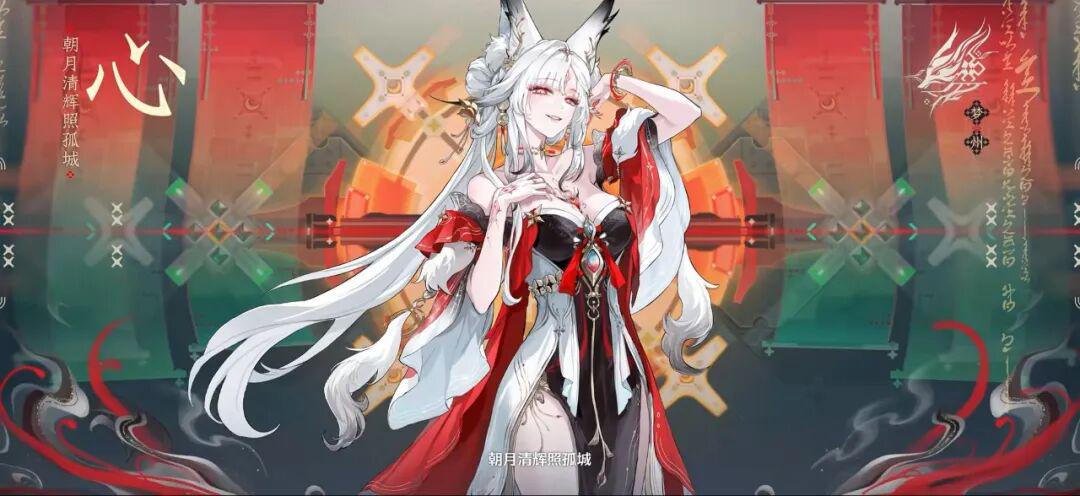
The teahouse’s favorite character—Xin—was given the line, “The moon’s clear radiance shines upon a lonely city.”
In terms of vocabulary, “moon” and “clear radiance” are classic lunar imagery that should evoke a sense of tranquility and elegance; yet, in the original illustration, the moon is depicted as incredibly alluring and seductive, creating a stark contrast—both visually and in terms of the text—with the accompanying words.
Moreover, in the word for “heart,” the character for “morning” (朝) appears before the character for “moon,” referring to the moment when the morning and the moon appear together—as if hinting at the twilight hour when dawn is approaching but the moon has not yet set. Beneath the vast sky, there is only one beloved and a solitary city.
That evocative scene—with the waning moon still casting its light and both the people and the city feeling isolated—made me feel a deep sense of pity for the teahouse.
Her name, “Xin,” also strongly suggests that she may have a deep connection to Xin Yuehu, the Ruler of the Year in Mengzhou. Incidentally, Xin Yuehu is also the constellation Xin—one of the Twenty-Eight Lunar Mansions of ancient China—and is a classic figure in ancient Chinese literature.
Rated 6 chains
So, as you can see, the six characters and six lines of poetry are quite similar to the prophecies for the “Twelve Beauties of Jinling” in *Dream of the Red Chamber*; each contains highly condensed imagery that foreshadows the fate and story of the corresponding character.
Taken together, they form a series of ancient-style poems—fragments that represent the new map—evoking themes such as guarding the frontier, wandering the martial world alone, the entanglements of fate, and even the desolate vigil of a lonely city bathed in moonlight. These themes encompass nearly all the core motifs of classical Chinese narrative:chivalry, fate, solitude, protection, and transformation.
After discussing Lahelo’s “collectivist” science fiction, Kuro returned to the “Huanglong” chapter. Aside from differences in narrative and art style, the underlying implication here is that *Mingchao* is now capable of producing two major story arcs with completely different styles within a single year.
Looking back at the design elements of these characters—wide sleeves, folding fans, phoenix-adorned headdresses with pendants, dragon-horn hair ornaments—and even the use of colors reminiscent of the “Thousand Li of Rivers and Mountains” painting and the ink-wash shading details visible in the background—these elements actually made their debut earlier in the “Jin Zhou” era of *Mingchao*.
On that note, I have to mention another topic that has recently sparked widespread discussion and received rave reviews in the community: the crossover between *Mingchao* and *Cyberpunk: Edge Runners*.
What’s really interesting about the teahouse is that when you view this cyberpunk collaboration alongside today’s first look at Xuanfang City, you’ll get a much clearer sense of the stylistic range of *Mingchao*.
From the post-apocalyptic national style of the Jin Zhou era, to Li Na Xita’s Western European religious fantasy and operatic aesthetics, to La Hailuo’s retro-futuristic space academy style, to the masterful use of cyberpunk aesthetics in cross-over collaborations, and now to the Moist School mechanical arts theme that has recently been revealed—over the course of two years, *Mingchao* has established five distinct cultural systems across the landscape of Solaris.
This kind of scope is quite rare in the second-tier gaming market. The drastic shift in style puts immense pressure on the development pipeline, as one can imagine, but this effort pays off by ensuring that every chapter delivers a genuine sense of “freshness” to players. This may be the reason—one that the Teahouse had not previously analyzed—why *Mingchao* continues to generate such anticipation among players.
3.5 The comprehensive return to traditional Chinese aesthetics can, to some extent, be seen as an echo of *Mingchao*’s past. The original Jin Zhou served as the starting point for *Mingchao*, allowing it to demonstrate its design capabilities in deconstructing and reinterpreting Chinese aesthetics.
Now, more than two years later, *Mingchao* has developed a content pipeline for expressing traditional Chinese aesthetics that is far more mature than it was in the 1.0 era. How Kuro will tell stories and present Chinese-style artistic imagery—the answers to these questions will surely be revealed one by one before long.
Anyway, to cut a long story short, I’m sorry, Principal, and I’m sorry, Lahai Luo. I’m off to the teahouse to become a sword immortal.
原创文章,作者:gallonwang,禁止转载:https://youxichaguan.com/en/archives/206845