
On the morning of the sixth day of the Lunar New Year, Brother Zhong, who runs the Paodao Studio in Madagascar, was still asleep when a phone call from his translator roused him from bed.
“They’re causing a commotion,” the interpreter said over the phone. “They’re on strike.”
The workers who had been on duty the night before stopped working, and those who were supposed to be on the early shift that morning also stayed indoors and refused to work. There were about fifty or sixty of them—the entire workforce from both shifts—and they practically packed the studio to capacity. They had coordinated their actions and launched their protest in unison.
When Brother Zhong arrived, he was the only Chinese person in the room. The workers were sitting down, so Brother Zhong told them to stand up. “I’m your boss. I’m much older than you—probably even older than your fathers—so it’s rude of you to sit there like that.”
Once the workers got up, Brother Zhong went over everything with them point by point: he explained that their wages were already higher than the market rate; since the night shift ran from 7:00 p.m. to 5:00 a.m. the next morning—which was too long—he had taken the initiative to provide each of them with eggs and baguettes as a late-night snack;Tea, sugar, and meal allowances—he paid for all of them out of his own pocket. “None of this was part of our agreement; I added these for you on my own.”
But this did not sway the workers; they stood firm on one point: they demanded a 20 percent wage increase, or they would all walk out together—“Malaysians must help Malaysians.”
Zhong Ge was at a loss and could only say that, under these circumstances, he couldn’t continue working. He then told the workers through an interpreter that anyone who wanted to leave could take their pay and go.
“In the end, half of them left, and half stayed.” Brother Zhong recalled later that he was facing the pressure of a sudden surge in orders at the time, and the workers had clearly counted on this to go on strike. “The translator remarked with some emotion that they had planned it all out—they were determined to walk out together no matter what—but they didn’t expect that, since you’d generally treated them well, half of them ended up staying.”
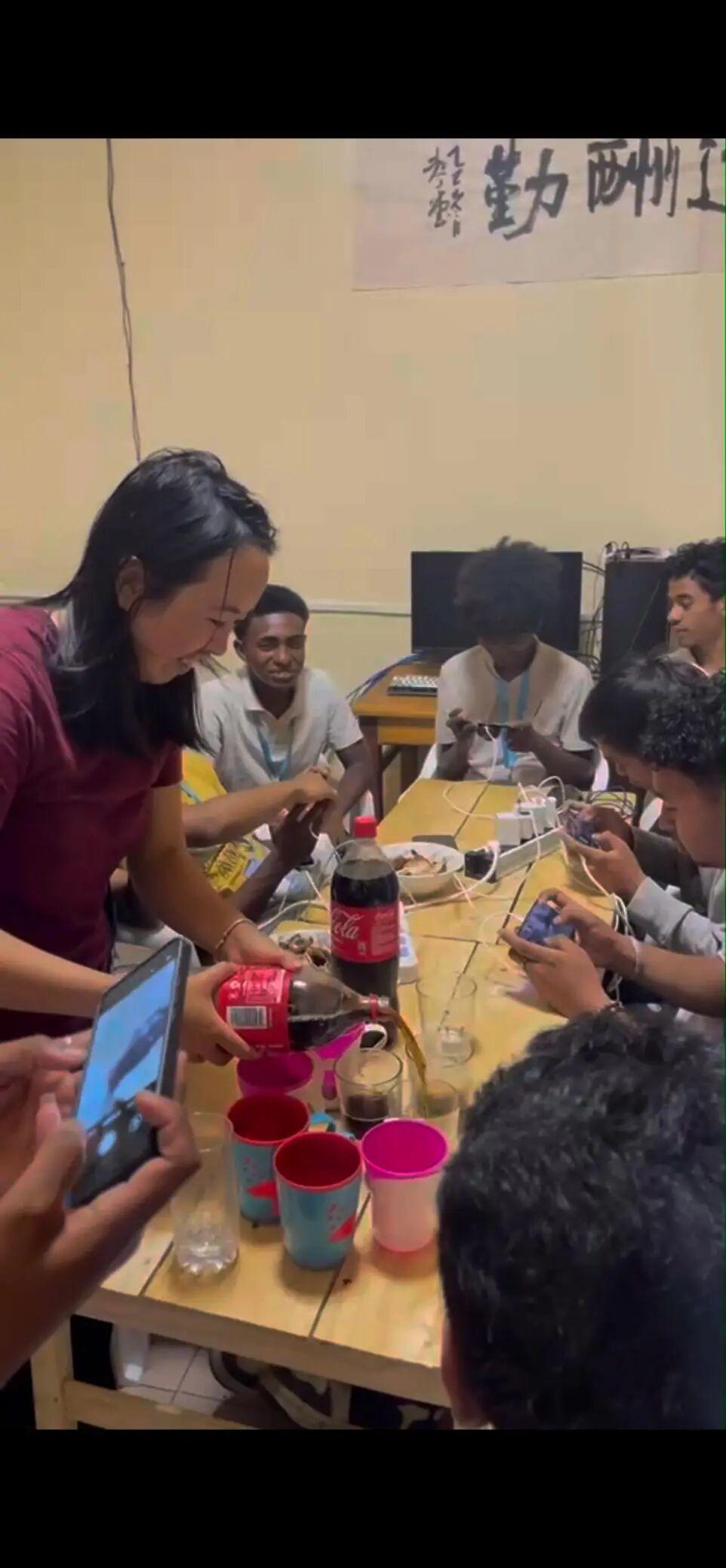
A dinner gathering for the workers at Zhong Ge Studio
Just a few days before this strike, Brother Zhong had sent red envelopes to everyone, and a photo of their lively dinner together was still posted on his profile page. “Half the people in that picture had already left.”
After the strike, Brother Zhong came to this conclusion: “You can’t be too nice to them. They haven’t been through the trials of a market economy or the industrial age; if you’re nice to them, they’ll think you can’t do without them.We’ve gone through decades of reform and opening up, so we understand that when others treat us well, it means they respect us. But they think that if you’re nice to me, it’s because you can’t do without me—so I can shamelessly demand higher wages and better benefits from you.”
01
A Land Blessed by Heaven
That strike, which had driven away half the workforce, became a topic that Brother Zhong and his employees avoided discussing. He simply gave a pay raise to the half of the workers who had chosen to stay at the time. “The employees who left considered them traitors, but they knew full well that staying was the right decision.”
From an economic standpoint, turning down this job is certainly not a wise choice for young people in the area.
The unemployment rate in Madagascar ranges from 70 to 80 percent—a figure Brother Zhong observed after running a business there for two years. The country’s per capita monthly income is equivalent to only 300 to 350 yuan. In his view, “This is a country that has failed in governance; it’s very, very bad.”
But there is no direct correlation between poverty and happiness. Zhong Ge found that although young people in Madagascar don’t have much money, they are no less happy for it. “Young people in Africa are happy; their sense of well-being is not necessarily any less than ours.”
This joy has its roots in nature. Madagascar is a tropical island with no winter, so there’s no risk of freezing to death, and food is easy to come by. As Brother Zhong puts it, “You can lie under a coconut tree, wait for a ripe coconut to fall, take a few sips, and you’ll survive.” If you’re really short on protein,“just go catch some fish—all it takes is a little fishing.” The cost of survival is extremely low; this is a blessing from heaven bestowed upon this land, and it also provides the natural conditions for the locals’ “laid-back” lifestyle.
Brother Zhong noticed that people here only bought enough rice for a single meal—“one jin of rice, half a jin of rice”—and no one ever bought a whole bag of rice to take home. Except for the top one percent of extremely wealthy families, ordinary people generally had no surplus grain; they always had just enough to get by for the day.
This way of life has also shaped a unique lifestyle. Young people love to play soccer, and the sport is extremely popular; the country has even finished as runner-up in the Africa Cup of Nations. Brother Zhong still remembers how people celebrated when the team made it to the final: “They grabbed basins and steel pots and banged on them until the whole city was making noise.”
On Friday nights, small groups of people would drive up in cars or on motorcycles, grab a bottle of beer, and sit by the roadside chatting. Brother Zhong once asked the translator curiously, “With all the chaos in this country, wouldn’t that lead to fights?” He replied, “No, no—everyone’s just happy and having a good time at this hour.”
Sunday is a day off that locals never miss, no matter what. This is also the time that gives Brother Zhong the most headaches: “They take Sundays very seriously; they have to go to church.”Not only do his workers take the day off, but on this day, the entire capital comes to a standstill. On the capital’s busiest street—the equivalent of Beijing’s Wangfujing—‘all the shops and restaurants are closed.’ Locals gather in groups of three or five to have picnics, socialize, and enjoy their day off.”
“They’re living a slow life,” Brother Zhong said. “We can’t say it’s wrong—it’s just a different way of life.” In his view, if we were to have a deep discussion about happiness, he said, “You really wouldn’t know who’s happier.”
However, this lifestyle poses a hurdle for any Chinese person looking to start a business here. The most obvious example of this is that as soon as they get paid at the end of the month, they disappear.
Zhong Ge specifically asked them why they did this, and the answer he received was hard for him to swallow. “His logic went like this: ‘I’m broke, so I need a job. The whole point of working is to make money. So if I’ve worked my butt off for a whole month and earned all that money, why would I still need to work? Am I crazy or something?’”
Because of this difference in perspective, the size of Zhong Ge’s studio has never lived up to his expectations. “We had 50 people during the Spring Festival, and we’re still at 50 today. I’ve always wanted to grow it to over 100 people, but I just can’t seem to get there.”
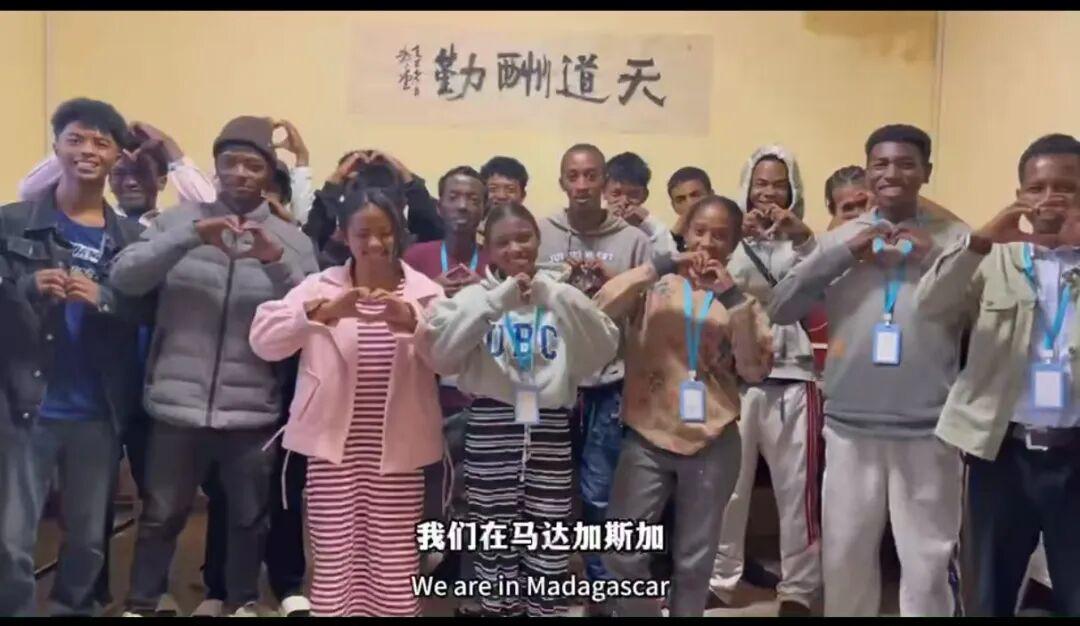
The workers at Zhong Ge’s Studio
The same dilemma is evident in “Brother Bao”’s studio. This Zhejiang-born entrepreneur, who didn’t even graduate from high school, spent many years making his way in eight African countries before settling in Madagascar in 2022, where he owns mines and factories. At its peak, his game studio employed more than 500 people; it now maintains a staff of around 400.
“Once you pay him today, you probably won’t see him for the next week,” Brother Bao said. “Chances are he’ll be out drinking. I don’t dare buy too many cell phones—who knows if there’ll be fifty people in line today and a hundred who don’t show up tomorrow? It’s just too unpredictable.”
As someone who has spent the first half of his life struggling, Brother Zhong needs time to adapt to and understand the local culture.
He ran a home appliance retail business in Weinan City, Shaanxi Province. In 1999, his small 100-square-meter store generated 18 million yuan in retail sales, and Zhu Jianghong, the founder of Gree Electric Appliances, personally visited the store.Later, he partnered with Yulin Mobile to run a promotional campaign, signing up 10,000 users in just ten days. Through a promotion that offered home appliances as gifts for prepaid phone credits, he gave away a full shipping container’s worth of microwave ovens.Later still, he purchased more than 8,000 square meters of real estate to build a hotel and entered the cryptocurrency “mining” industry—until 2021, when the National Development and Reform Commission issued a notice cracking down on cryptocurrency mining activities, causing his “mining” business to collapse.
“My life has been too smooth so far,” Brother Zhong said. It was precisely because things had gone so smoothly that he fell into the trap of arrogance. After the mining industry collapsed, doing business in China became increasingly difficult. Approaching sixty, Brother Zhong refused to accept his fate. “I’ve spent my whole life looking for opportunities.If you tell me to accept my fate and stop looking for opportunities, I’ll get so bored I’ll go stir-crazy.”
In 2024, he set off for Madagascar. This island nation, which consistently ranks near the bottom of the global GDP rankings, has extremely low labor costs, is free from large-scale warfare, is surrounded by the ocean on all sides, and is relatively more open than the African interior. Brother Zhong hoped to find a path to “renewal” here.At first, he made raffia bags and wool scarves, but last summer, when he returned to China and chatted with his second son—who was still in college—about a game called *Operation Delta*, Brother Zhong’s interest was piqued again. “Twenty million daily active users—that big? I said I had to study this and get a thorough grasp of it.”
After doing some research, Brother Zhong quickly found a new direction for himself: opening a game power-leveling studio in Africa.
02
Cultural Conflict
Zhong Ge refers to Madagascar as his “place of rebirth,” and he has high hopes for this studio’s business.
There used to be a note on the workshop wall that read, “Heaven rewards diligence.” Brother Zhong tried to use these words to convey to the workers the principle that the more you work, the more you earn, but he later discovered that this classical Chinese wisdom didn’t take root in Madagascar: “The Malagasy people understand ‘Heaven,’ but they don’t understand ‘rewarding diligence.’”
Of course, there were a few employees who took his words to heart and shared them with their families when they got home. Upon hearing this, their parents—unlike Chinese parents—didn’t feel pleased; instead, they asked their children, “Son, or daughter, why have you become so dim-witted since you started working at that Chinese company?”
Zhong Ge gradually came to realize that the problem wasn’t with the workers, but rather the cultural gap between the two civilizations. Madagascar has long been in a transitional phase from a tribal society to an industrial one, and “people generally lack a sense of what it means to go to work.”
This characteristic of tribal civilization naturally fosters greater solidarity among workers and carries a certain degree of exclusivity.
“They, in turn, look down on us,” Brother Zhong said, “thinking we’re just like ants—all we care about is making money; we’re purely economic creatures.”
But Brother Zhong does not believe that Africans are inherently “lazy,”In his view, behind the workers’ various behaviors lie not only the protection afforded by their uniquely favorable natural conditions but also the lingering traces of poverty caused by failed governance. They lack an understanding of business and the workplace, nor do they have the conditions necessary to develop such an understanding. In Brother Zhong’s view, this cannot be attributed to the workers themselves.
Brother Bao has a different perspective on these cultural differences. He employs more than 400 workers locally and has concluded that there is a significant gap in efficiency compared to China: “When one person is working, there might be eight others standing around watching; their efficiency is roughly one-tenth that of Chinese workers.”However, he doesn’t dwell on whether to adapt to or change this culture: “If someone is hard to manage, just fire them—you won’t give them a second chance.”
In contrast, Brother Zhong prefers to build rapport with the workers. He conducted a survey specifically to ask the workers why they applied for the job—in other words, what drew them there? Was it to earn money or to have fun? The results surprised him: nearly 70 percent of the workers were there to play games for free, while only 30 percent were there to earn a wage.
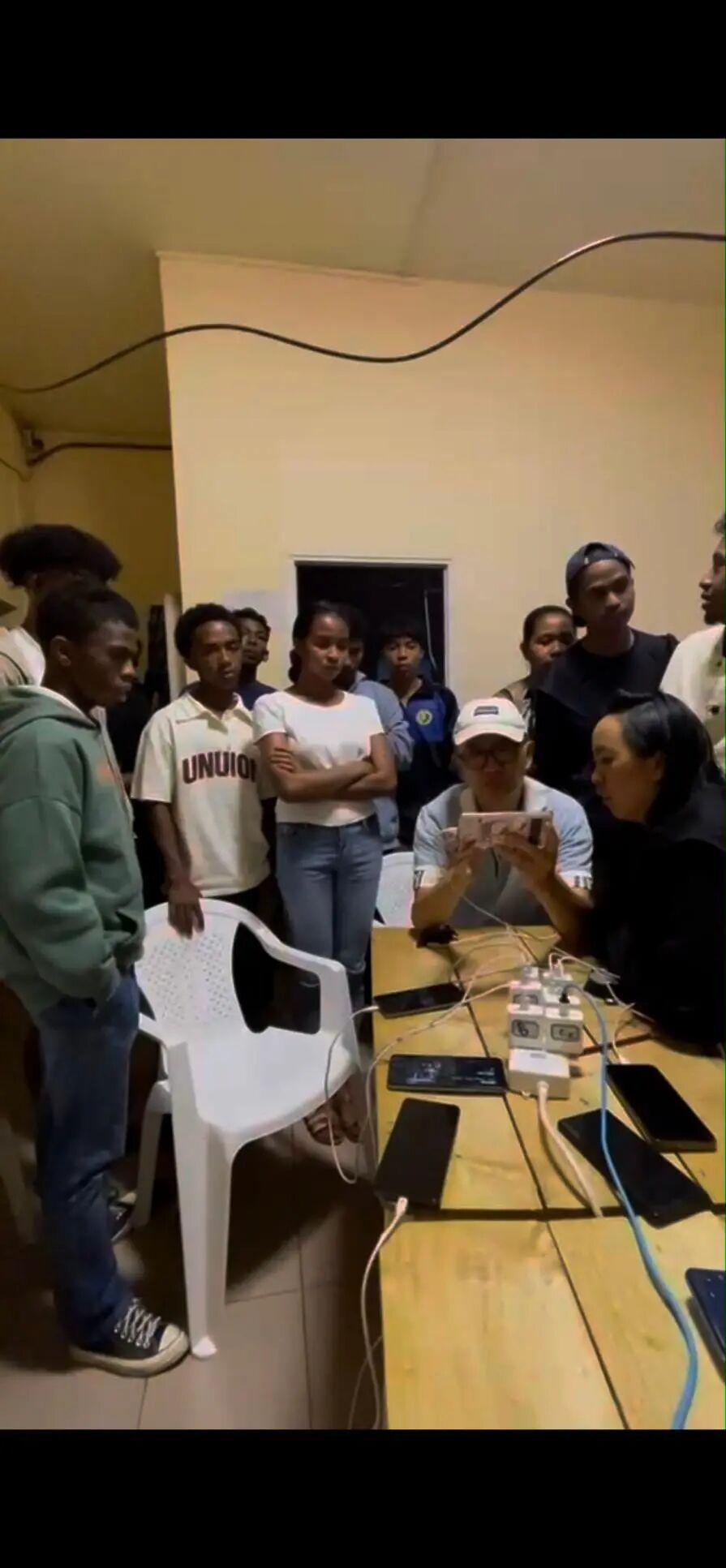
Brother Zhong and the Workers
Now that several months have passed, workers have come and gone, and gradually a core group of veteran workers who stay at the studio long-term has emerged. Brother Zhong’s answer to this question has also changed. The last time he asked, the ratio had shifted to fifty-fifty, which made Brother Zhong quite pleased. “I think they’re being sincere,” he said.
As a result, the lives of the young people who stayed to work have also improved.
Brother Zhong once asked the workers how they spent their wages. The vast majority said they would prioritize improving their living conditions—for example, by buying a cell phone. Since Brother Zhong runs a business selling used cell phones, he naturally became the workers’ supplier. “It’s a kind of closed loop: when you get paid, you come to us, and we sell you a cell phone at a price lower than the market rate—and that way, we get our money back.”
Young people also buy secondhand Chinese sneakers or a full set of athletic wear—items that were previously out of their reach. As for the money they have left over, some workers save it for their own tuition, while others give it to their parents to help improve their family’s overall standard of living.
“These kids are still mostly good-hearted,” said Brother Zhong, who was also pleased to see the workers able to support their families. Inspired by these workers, more and more young people have been coming to his studio hoping to apply for jobs, including relatives, friends, and classmates of the current workers. “It’s a different experience from working at a foreign company.”
03
Ideals and Reality
In Madagascar, young people don’t have a very fulfilling life.
Mobile internet, which has long been widespread in China, is a luxury for young people there. Baobao Ge estimates that while the local smartphone penetration rate is reportedly 30 percent, less than 5 percent of users actually have internet access. “It’s like everyone can afford to buy a car but can’t afford to fill it up with gas.”
Zhong Ge has also noticed this. In the homes of the vast majority of workers who come to his studio, it’s not that there’s no electricity, but there are “daily power outages,” and the internet is even more unaffordable.A 250GB data plan on a one-year contract costs over 300 yuan per month—equivalent to an average person’s monthly income. If, like the studio, they were to purchase data on an ad hoc basis, it would cost between 800 and 1,000 yuan per month.
Although the area is poor, local prices are shockingly high. A bucket of bottled water in the office costs 45 yuan, a bowl of beef noodle soup costs 38 yuan—and if you add an egg, it’s over 40 yuan—and electricity costs a little over 2 yuan per kilowatt-hour.The unstable power supply is also a problem for all kinds of home appliances. As Brother Zhong puts it, “If you buy a computer, the power supply will blow within a week; if you buy a TV, it’ll break within a month or two.”
Of course, the vast majority of local households don’t face this kind of problem. After all, a GeForce 1060 graphics card that costs less than 2,000 yuan in China goes for 4,700 in Malaysia, and an LCD monitor that costs 170 yuan in China sells for 680 in Malaysia.
To keep the studio running, Brother Zhong had no choice but to install a solar power system himself to solve the power supply problem, and Brother Baobao also spent 50,000 yuan to install a solar power system with energy storage.
With limited access to electricity and the internet, local workers didn’t have many opportunities to play games before landing this job. The vast majority of workers still use basic feature phones or second- or third-hand used phones from China that can only be used for making calls.
There were also early versions of internet cafes in the area—small “arcades” with two or three computers. If they had controllers in addition to the computers, that was considered a luxury setup. Most of the time, the scene in these small internet cafes was one or two people playing, while the remaining seven or eight stood around watching to get their fix.
The vast majority of young people don’t have the means to keep playing games after they get off work at the studio. “He can’t afford it himself, so no matter how much he loves it, there’s nothing he can do,” Brother Zhong said with a smile, adding, “After playing games all day and working ten hours, you’re already so exhausted you feel like throwing up.”
Brother Baobao had another observation about the local youth’s leisure activities: they have almost no ways to entertain themselves, and some even get so bored that they play in the mud. Consequently, local teenagers generally start dating at a younger age. “What can you do? There’s nothing else to do,” he said.

Street scenes in Madagascar photographed by Brother Zhong, showing young people playing soccer
The lack of material and spiritual enrichment does not mean that local young people lack their own thoughts and ideas; on the contrary, Zhong Ge found that these young people have an accurate understanding of the current state of the country. “Actually, they’re quite clear-headed; they’re an awakened generation.”
Brother Zhong once asked more than twenty young people in his studio a big question: Are you optimistic or pessimistic about the country’s future? In Brother Zhong’s view, although Madagascar is underdeveloped, this also means there is a vast market and plenty of opportunities to explore. So he asked the question expecting them to answer optimistically, but to his surprise,these workers unanimously stated that they were not optimistic about their country. When Brother Zhong pressed them for the reason, they replied, “Corruption in the government.”
Just like young people anywhere else in the world, these local workers look forward to seeing the wider world and making a difference in it.
In Brother Zhong’s workshop, there are quite a few local college students from Madagascar, including several who are studying Chinese, as well as others studying German and learning how to install plumbing and electrical systems.Brother Zhong’s interpreter said he plans to go to China in the future. When Brother Zhong asked him which city he’d like to visit once he gets there, the young man didn’t mention tourist destinations like Beijing or Shanghai—instead, he said he wanted to go to Guangzhou and Yiwu. “He just wants to bring goods from there back to make money.”
China’s prosperity has caught Africa’s attention, a fact that makes Brother Zhong proud: “Chinese translation, Chinese studies, and the Chinese language have all become quite prestigious here.”
For these college students who are planning their future careers, working at Chinese game-boosting studios is a great opportunity that allows them to afford their tuition.In Madagascar, the path to college for the vast majority of ordinary people is fraught with obstacles. They typically take one year off after each year of study to work and save money, then return to school for another year. As a result, many students end up taking six or seven years to complete a three-year college program.
But Brother Zhong plans to reduce the number of college graduates he hires because these students—who are too smart and too idealistic—don’t stay long. “As soon as they start making money, they go back to school, which is really a hassle for us.”
04
The Charger and God
Zhong Ge’s studio doesn’t welcome another kind of “smart” person either.
He once had a worker whom clients called a “genius with an IQ of 160.” In order to reach the required transaction amount—that is, the number of Haf coins, the virtual currency in *Operation Delta*—faster, this worker secretly split up the bullets in the account owner’s warehouse and resold them.Originally packed in slots of sixty rounds each, the ammunition was split into slots of thirty rounds for resale. It wasn’t until the system automatically consolidated the slots that the account owner realized something was missing.
The employee’s “creative idea” left the account owner speechless. The account owner joked that Brother Zhong absolutely had to keep this worker on, but Brother Zhong fired him on the spot. “I wouldn’t dare keep someone like that for even a single day. If he pulled a stunt like that on you, it would cost me at least a few million Haf coins in compensation.If he ever turned on me, a fool like me wouldn’t stand a chance.”
In fact, minor administrative hiccups like this are not uncommon in Brother Zhong’s studio.
The translator once told Brother Zhong that out of the forty people in the studio, as many as thirty-five might be thinking of stealing his stuff. This isn’t an exaggeration—once, Brother Zhong had just received a shipment of mice and headphones that had been flown in, and he excitedly went to show them to the workers. But by the end of the workday, the equipment had been “purchased for free.”
Baobao Ge has also experienced Madagascar’s unique local customs and social environment firsthand. Having spent many years doing business in Africa, he’s grown accustomed to being robbed and mugged. According to him, the most dangerous moment he faced was when “bandits pointed a gun at his head.”
But certain events revealed another side of the locals to Brother Zhong.
Brother Zhong recalled that two chargers had once gone missing from his studio. They were 25-watt and 40-watt fast chargers bought in Huaqiangbei—items the local workers couldn’t afford on their own. Brother Zhong brought up the incident at the next day’s meeting, but instead of framing it as a disciplinary issue, he approached it from a different angle: “As for the chargers, I don’t care—they’re not expensive.But once you steal them, your manager—Ma Guo’s manager—will have to compensate me. His wife just gave birth to a baby who isn’t even a month old yet; this is exactly when he needs money the most. By stealing a charger, aren’t you putting him in a difficult situation?”
Then he added, “Don’t you people always say, ‘Malaysians should help Malaysians’? You stole it from him, and now he has to compensate me—so how is that helping a fellow Malaysian? And God is in heaven—would He allow you to do this? You go to church every Sunday—would God allow you to do this?”
These words had an immediate effect; the very next day after the meeting, the two stolen chargers were sitting on the desk.
In Brother Zhong’s view, the fact that these two chargers were lost and then recovered sheds some light on the situation: “Even though he’s poor and likes to steal, it’s still because he’s poor—but he has a good heart.” He paused for a moment, then posed a question: “Think about it—if this had happened in China, who would have cared about you?Who would listen to your lectures? Who would even return them to you? You’d be over the moon.”
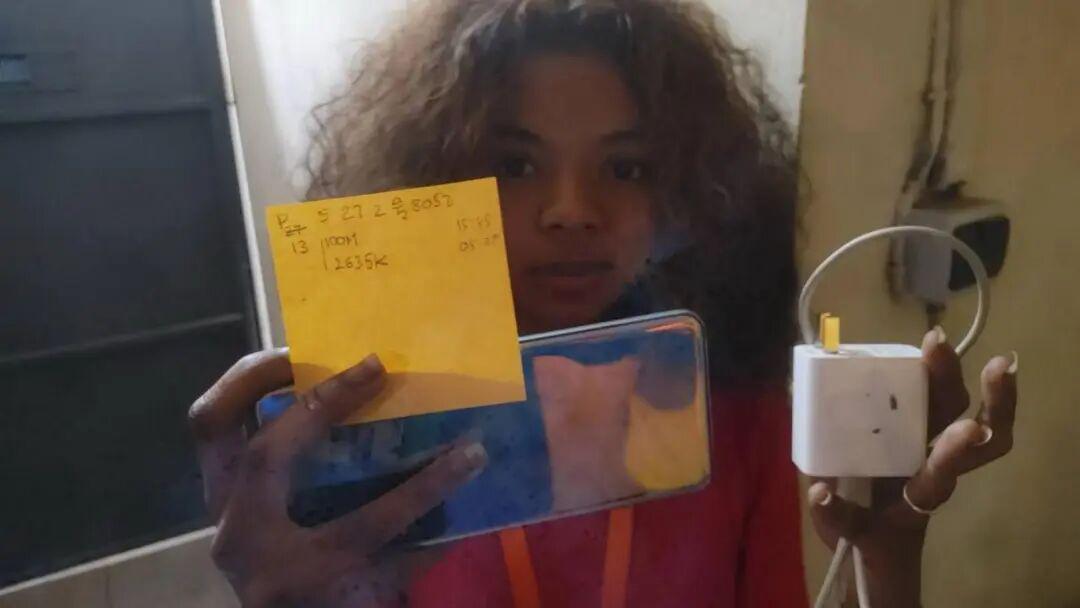
Workers in the Workshop and Work Records
Despite encountering all sorts of management issues, Brother Zhong still prefers to focus on the workers’ strengths; he believes that the root cause of many problems does not lie with the workers themselves. “These are different people shaped by different cultures.”
Sometimes, this complex kind of “simplicity” brings him some pleasant surprises.
As a result of intensified domestic crackdowns and transnational joint operations, telecommunications fraud rings that had been based in Southeast Asia have been steadily relocating in recent years, with some moving to Madagascar. The profiles of the telecommunications fraud operatives these rings are trying to recruit locally closely match the workers needed by Brother Zhong’s studio:young, computer-literate, familiar with the internet, fast typists, and quick thinkers.
Simply put, they also need the brightest young people.
Zhong Ge admitted that the salaries offered by telecom fraud rings are much higher than those at gaming studios, but he found that many young people are unwilling to take those jobs. “These kids are Christians, and they know deep down that this is a sin.” In contrast, although the pay at gaming studios isn’t as high, “he has a clear conscience.He knows he hasn’t harmed anyone.”
Moreover, objectively speaking, these young people who are willing to stay in the studio and play games for more than ten hours a day aren’t really lazy. Although their efficiency in mining HAV coins doesn’t match that of studios in China—which routinely exceed 25 million—and their daily output is only around 15 million, in Brother Zhong’s eyes, that’s already pretty good.
Not to mention that the vast majority of these young people had never played video games before and had to start from scratch; even the local network connection to the Chinese servers alone limited their efficiency. Fiber-optic cables that stretch across half the globe result in a latency of nearly 500 milliseconds. As Brother Zhong put it, “‘By the time you hear the gunshot, you’re already dead. When have Chinese kids ever played games like this?’”
Even with a production capacity of 15 million Haf coins, the output value would still be considerable once scale is achieved.Brother Baobao has done the math: based on 15 million per person, the output value per shift can reach 30 yuan; for a 24-hour period, that’s 60 yuan. With 50 workers, the total monthly output value comes to nearly 90,000 yuan.
05
The Risks of “Gold Rush”
It’s not just the telecom fraud parks that are poaching employees from Brother Zhong’s studio; an increasing number of Chinese people are also flocking to the “run-and-steal” business in Africa.
When Brother Zhong and his son discovered this business opportunity, the market was still a blue ocean. At the time, Brother Zhong analyzed the situation: “Rich people don’t understand Africa, nor do they understand games. As for people who understand games, they only know how to play—not how to make money.As for those running game studios, they’re unaware of the labor cost differences in Africa. And those who’ve established a foothold in Africa don’t understand games. This created a knowledge gap, which is why this relatively small niche went largely unnoticed.”
That assessment was correct at the time, but in the Information Age, information gaps never last very long.
Brother Baobao’s experience confirms this trend. He posted a video about African game studios, “which went viral overnight, racking up 20 million views, and lots of people reached out to me wanting to get into this business.” But this was followed by a flood of copycats, and in just one year, “over a hundred studios across Africa went out of business.”
Faced with intensifying competition, “Brother Baobao” is planning to pivot toward running a platform. He intends to consolidate all domestic and international game power-leveling services in Africa and seek partnerships with major Chinese companies. Of course, this path also means more headaches: “If I were to go back to China now to build systems, do R&D, develop software, and create apps, I wouldn’t know where to start.”
Zhong Ge, however, takes a very matter-of-fact view of the intensifying competition: “This is something that is beyond human control. Labor will naturally flow to areas where labor costs are lower—this is an irreversible trend.”
But coming to Africa to “strike it rich” is far from as simple as spotting information gaps. Brother Zhong believes that the real test here isn’t your business acumen, but whether you can withstand cultural conflicts in employee management, the widespread lack of infrastructure, and the ever-present security risks.
In the second half of last year, a coup took place in Madagascar—the most significant upheaval in decades—which ultimately resulted in the military seizing power and the ouster of the former president.In the early days of the unrest, Wealth Plaza—owned by a prominent Chinese businessman—was surrounded and looted by tens of thousands of people. Brother Zhong still remembers the scene: “After the merchandise had been completely looted, those who arrived later began smashing tiles and pulling out electrical wires, carrying off everything in sight—shelves, light fixtures, and more. Finally, when there was truly nothing left,they set Wealth Plaza on fire.”
That night, he could hear the sound of AK-47 gunfire coming from outside from time to time.The next morning, Brother Zhong stepped out of his home and saw three bodies about 300 meters away. In December, a Chinese couple who had lived in Malaysia for over a decade was brutally murdered in their home. “It wasn’t until four days later, when the stench of their decomposing bodies wafted out, that neighbors discovered them.”
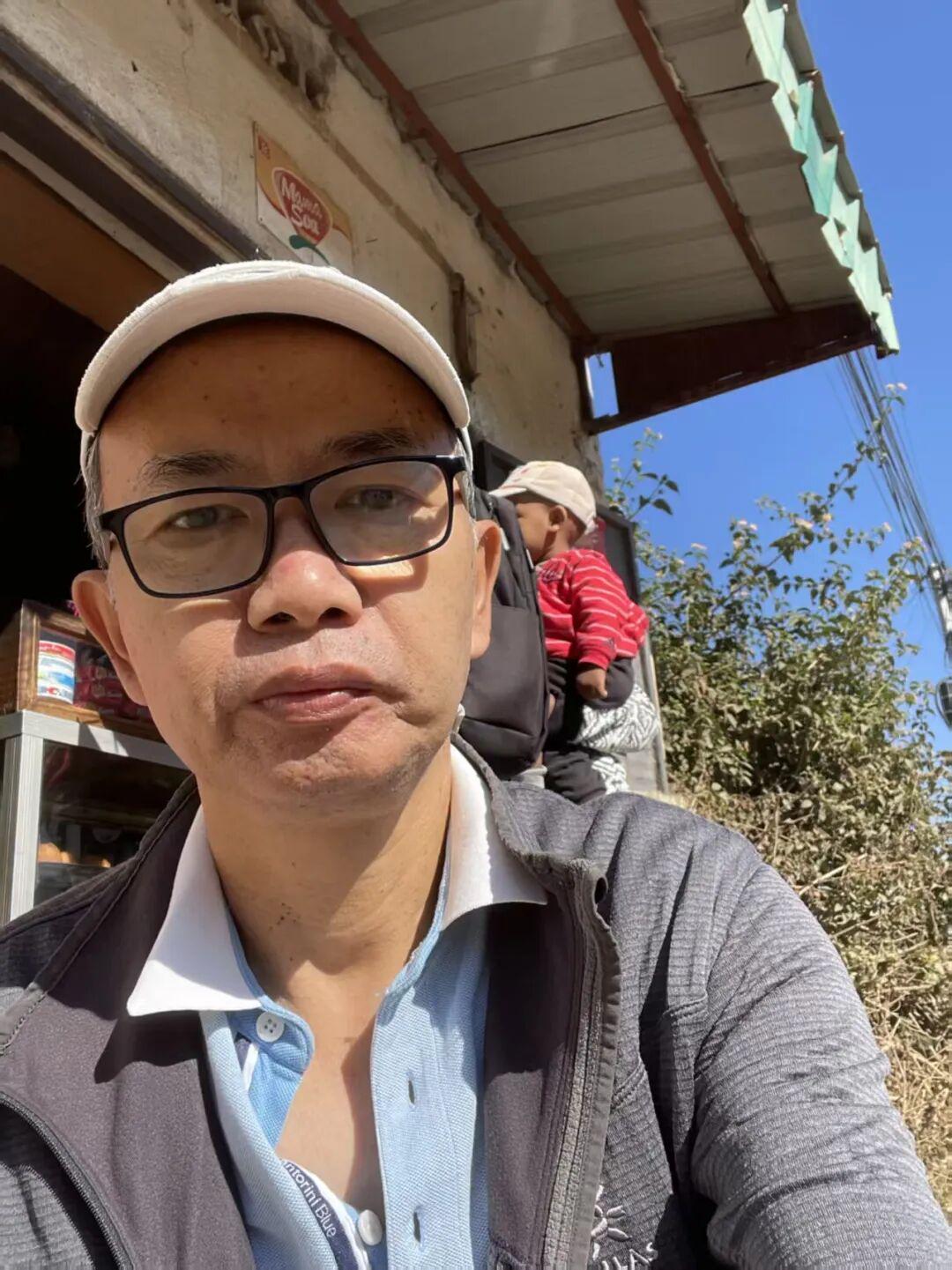
Brother Zhong on the Streets of Madagascar
Zhong Ge said that these are all “probabilistic events”—not everyone will encounter them, but if you do, it means it’s all over. Zhong Ge can’t do much about it; all he can do is strengthen his security measures. He lives in a villa in an affluent neighborhood, surrounded by high walls topped with barbed wire and guarded by professional security personnel.
In Madagascar, he doesn’t have much of a nightlife; every day after work, he goes straight home and bolts the door. Brother Zhong jokingly refers to his place as a “little prison”: “Once it gets dark, you just settle in quietly.”
When discussing the local business environment, Baobao pointed out another issue that Chinese people often overlook: the government’s attitude.Unlike local governments in China, which are busy attracting investment, doing business here requires a different approach to managing relationships with local authorities: “No matter how many young people you hire or how many jobs you create for them, you have to pay them money—otherwise, they won’t let you operate.”
06
It’s all just a phase
As more and more African knife-making workshops emerge, discussions about them on domestic social media platforms are becoming increasingly lively.
But these discussions aren’t necessarily just about novelty. Brother Zhong sometimes comes across overly sensationalized comments that make him feel uneasy—such as people joking about “electric batons,” directly referring to these workers as “cyber slaves,” or making other discriminatory remarks.
Zhong Ge knows that when more people pay attention and discuss something, it naturally brings traffic benefits. “The short-term benefits are definitely there—it’s attracted domestic attention and become a hot topic, a trend, and a buzzword that everyone is talking about.”
In the age of the “eyeball economy,” popularity translates into more orders and revenue. Yet Brother Zhong believes that the downsides of this kind of traffic outweigh the benefits; when people enthusiastically share and consume those terrible jokes based on stereotypes, they are essentially reinforcing existing prejudices.
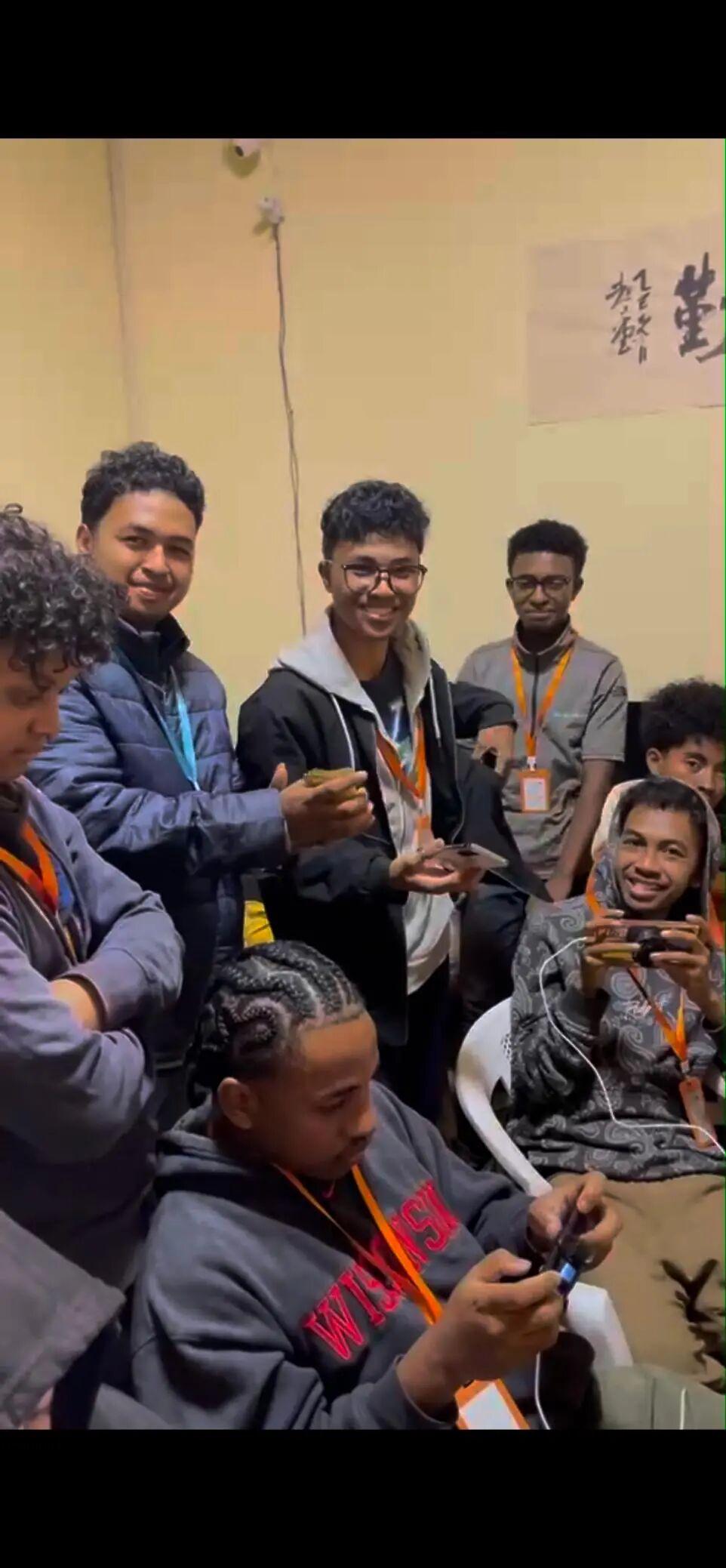
This is Brother Zhong’s favorite photo; he says it looks “full of youth and vitality.”
Sometimes, when the comments in the livestream go too far with their jokes, Brother Zhong can’t hold back his anger and snaps back, “While you’re making fun of them, if you were to compare yourselves in soccer, dancing, or long-distance running, you wouldn’t even be fit to tie their shoes.”
Brother Zhong had mixed feelings toward these young people, who were about the same age as his youngest son. He sensed the natural cultural divide between them and was troubled by the strike and everyday management conflicts, but he also saw in them kindness and a vision for a better future.
During the interview, Brother Zhong emphasized more than once that the perceptions people in China have of these young Africans—whether it’s that they’re lazy, unfamiliar with things like video games, or prone to theft and robbery—are all deeply rooted in the poor socioeconomic conditions in their home countries, rather than being the fault of any individual. In his view, people are the same no matter what country or region they come from.“We should view everyone with an eye of equality. Everyone comes into this world for a time, and everyone deserves to live a good life. There’s no need to look down on anyone.”
原创文章,作者:gallonwang,禁止转载:https://youxichaguan.com/en/archives/207569