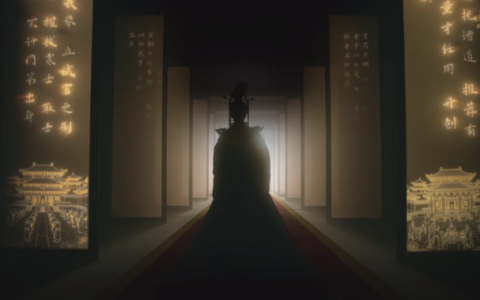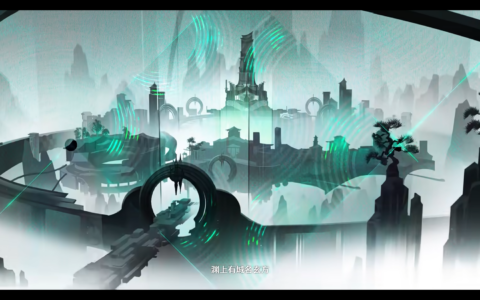
Not long ago, Professor Yang Zichu from the School of Digital Media at the Beijing Film Academy told Teahouse that more than 20 students from the first cohort of the Game Art Design program will officially enroll at the school this September. They are bound to be a group of students with special significance, who, four years from now, will enter the workforce with China’s first-ever degrees in Game Art Design.
In April 2025, the Ministry of Education released the *Catalog of Undergraduate Majors at General Higher Education Institutions (2025)*, in which the Game Art and Design major was included in the undergraduate catalog for the first time. China University of Communication, Beijing Film Academy, and Shandong University of Art and Design were among the first institutions to offer this program.

Like a pebble dropped into a pond, ripples spread out in concentric circles. By early May of this year, several universities—including the China Academy of Art, Zhejiang University of Media and Communications, Nanjing University of the Arts, Nanjing University of Media and Communications, Guangxi Arts Institute, and Liaoning University of Media and Communications—had also issued announcements stating that they had officially received approval to offer a degree program in game art design.
More than twenty years—that’s how long it took for game studies to emerge from the shadows into the spotlight.Among the universities mentioned above, several—led by the Beijing Film Academy and the Communication University of China—have systematically offered game-related courses since the beginning of the century, incorporating games as a sub-specialization within programs such as digital media arts and animation. Meanwhile, some universities had repeatedly applied to establish dedicated game majors, only to receive formal approval last year.During this period of waiting for recognition, we witnessed Chen Xinghan rise from a graduate of a formal game education program to become a globally renowned producer, and we also saw student projects like *Daughter of the Volcano* and *Raccoon Coin Pusher* become phenomenal hits, selling hundreds of thousands of copies.
I met Professor Yang Zichu at the Beijing International Board Game Expo last August. At the time, he and a group of students had set up a booth where they explained and offered demo sessions of the board games the students had created to the board game enthusiasts passing by.Creating board games is one of the internationally recognized training methods for game design. By building a minimal prototype using pen and paper, students can develop an abstract understanding of the “foundations” of a game—such as numerical models, gameplay mechanics, and the flow of enjoyment.
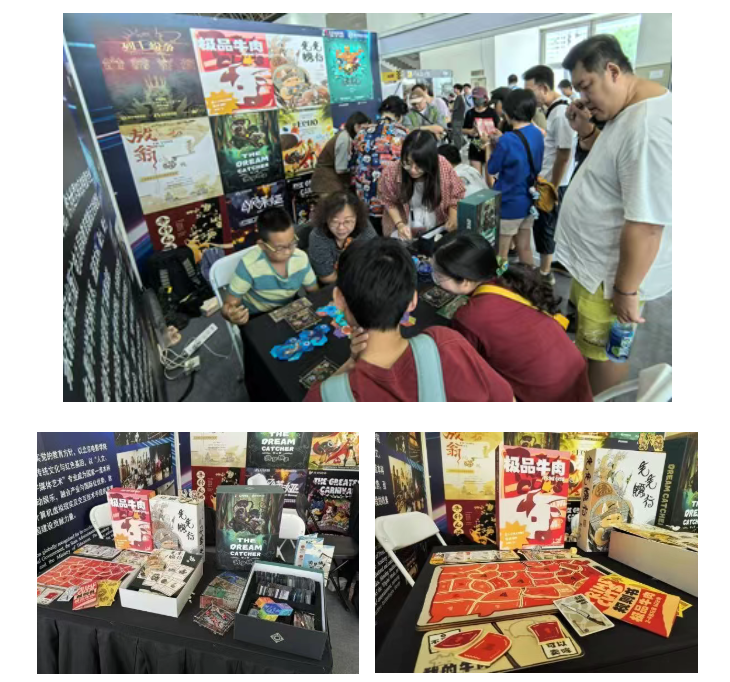
I later learned that this was a preparatory training session for Beijing Film Academy students before they specialized in game development during their junior year. This was followed by a collaborative project known as “Da Lian Chuang,” in which teams of students worked together to develop a game over the course of their entire junior year. This was also one of the most important course projects during their four-year undergraduate program.
The story picked up again this past May. Professor Yang sent a WeChat message—in his dual roles as homeroom teacher for the graduating class and curator—inviting Tea House to visit the Beijing Film Academy to view the graduation project exhibition of the School of Digital Media, where we could see the individual works of undergraduate and graduate students as well as collaborative projects by third-year students. The seeds sown through board games had borne fruit after a year of nurturing.
The stories behind these achievements can also be seen as a prelude to the era of professional game education in China.
01
On-site
When I walked into Studio 1 at the Haidian Campus of the Beijing Film Academy in mid-May, the opening ceremony for the graduation exhibition was underway. Several professors and deans from other universities were touring the venue and taking notes, while representatives from companies such as Mihoyo, Perfect World, and Youku sat in the audience during the ceremony.
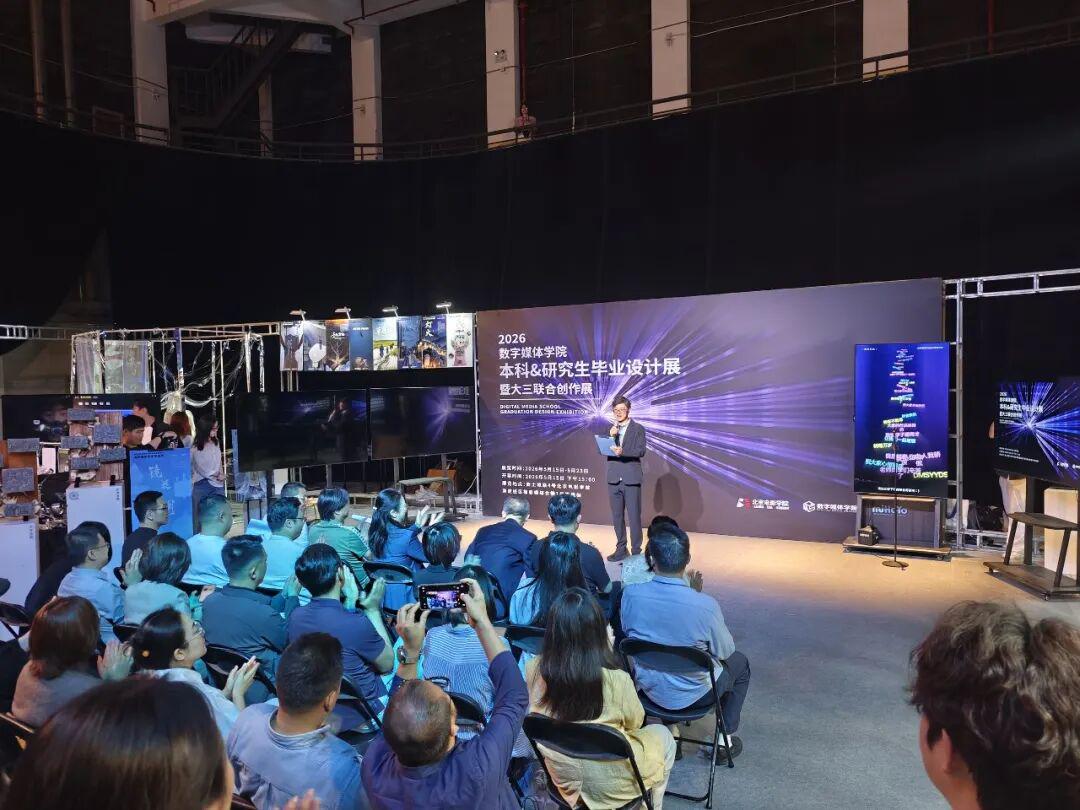
The scale of the exhibition was larger than many visitors had anticipated. A total of 70 works created by 58 students were on display, including 26 games and interactive entertainment projects—making this the largest exhibition ever held by the School of Digital Media at the Beijing Film Academy.The overall atmosphere was somewhat reminiscent of a regional indie game expo: visitors could try out the games hands-on, with the students who created them standing nearby to explain their work. Many students were still unaccustomed to such events; after welcoming wave after wave of players, they would collapse, exhausted, and sit slumped on the floor nearby.
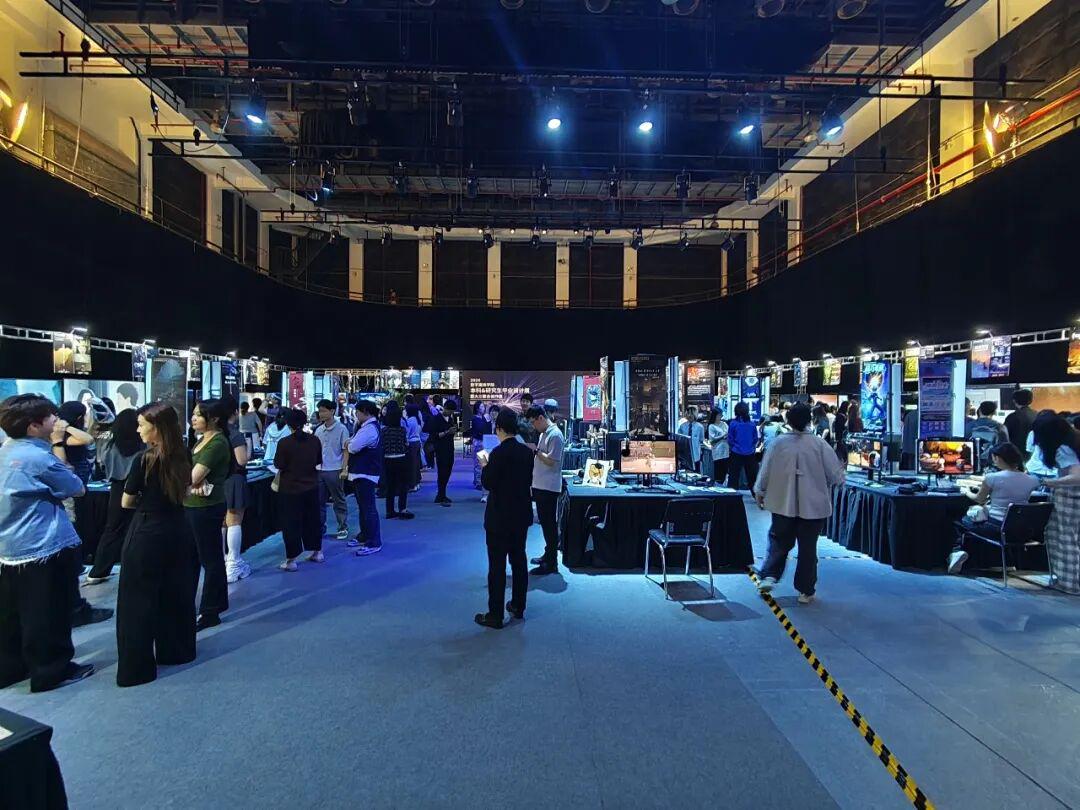
The design of the exhibition area corresponds to several key milestones in the academic journey of students at the School of Digital Media since their enrollment.
With the centerline of the studio serving as the dividing line, one side of the final project exhibition features interactive video works, while the other side showcases games and interactive entertainment works.Before the game major was officially established as a separate program, incoming freshmen were all enrolled in the Digital Media Art program. For the first two years, students did not specialize in a specific track; it wasn’t until their junior year that they were required to choose one of two tracks—Interactive Entertainment (Games) or Interactive Media—to continue their studies.
Once the direction of the game was determined, the next step was hands-on game project work. During their junior year, students formed teams to collaborate on projects, and the resulting works were displayed on the most prominent large screen at the graduation exhibition;In their senior year, students complete their individual capstone projects, with their works displayed in the area featuring over a dozen computers at the center of the venue—meaning that, by the time they graduate, every undergraduate student’s personal portfolio will include two substantial, complete game projects.
These games aren’t necessarily polished yet.Of the dozen or so games I tried at the event, the one that came closest to release-quality was a graduate student’s final project: a wuxia-style first-person action game where players unleash skills and defeat giant bosses. The protagonist’s hand gestures when casting spells, the spell effects, and the enemies’ hit reactions were all natural and fluid, and the ancient-style scenes, though small, were exquisitely crafted.

The creator of the final project told me that he had studied game development for seven years at the School of Digital Media at the Beijing Film Academy and has now joined the development team for a martial arts game with a high DAU at NetEase—having grown from a student into a “professional” working on a top-tier project.
The maturity of senior students’ individual graduation projects ranks second. Limited by the productivity of solo development, their presentation is relatively rudimentary, but they generally feature a clearer core gameplay concept—in terms of game design, these projects already have their own “hook.”Once the genre direction—such as idle games, roguelike card games, or turn-based strategy games—has been established and the basic “scaffolding” is in place, these projects can continue to flesh out their content within the existing framework, provided there are sufficient development resources.
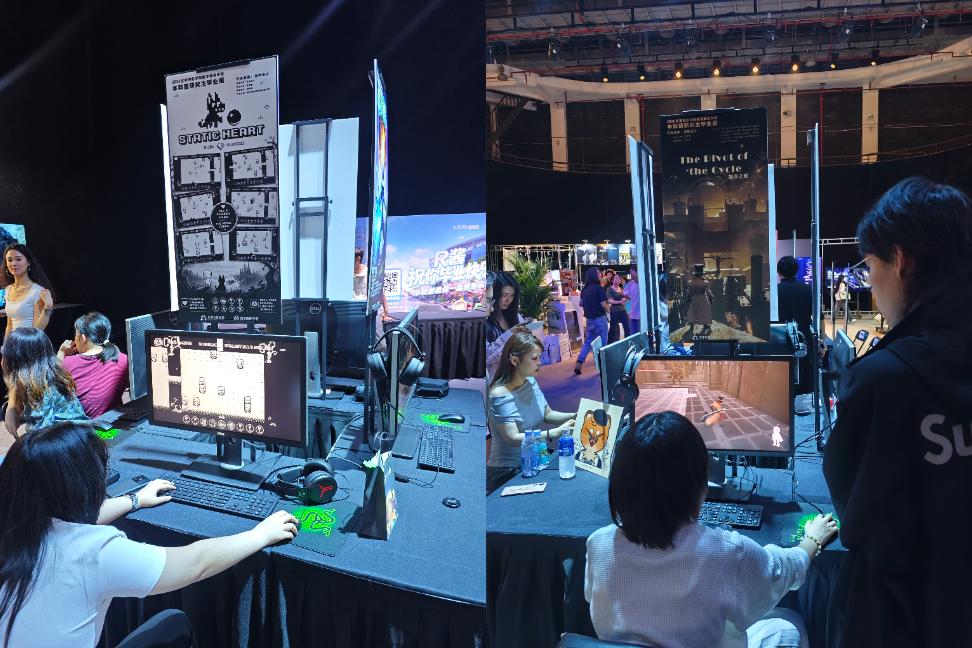
In comparison, the collaborative projects created by juniors generally still carry a sense of raw, inexperienced naivety. As the book *The Art of Game Design* points out, every game creator needs to quickly get their “first ten games” out of the way.Most of the collaborative projects gave me this “first ten games” impression. The majority of student groups opted for narrative-driven works incorporating puzzle-solving elements. As art majors, most students excel at visual art and world-building, whereas areas such as level design, game mechanics, and balance design require a longer period of training and experience to master.
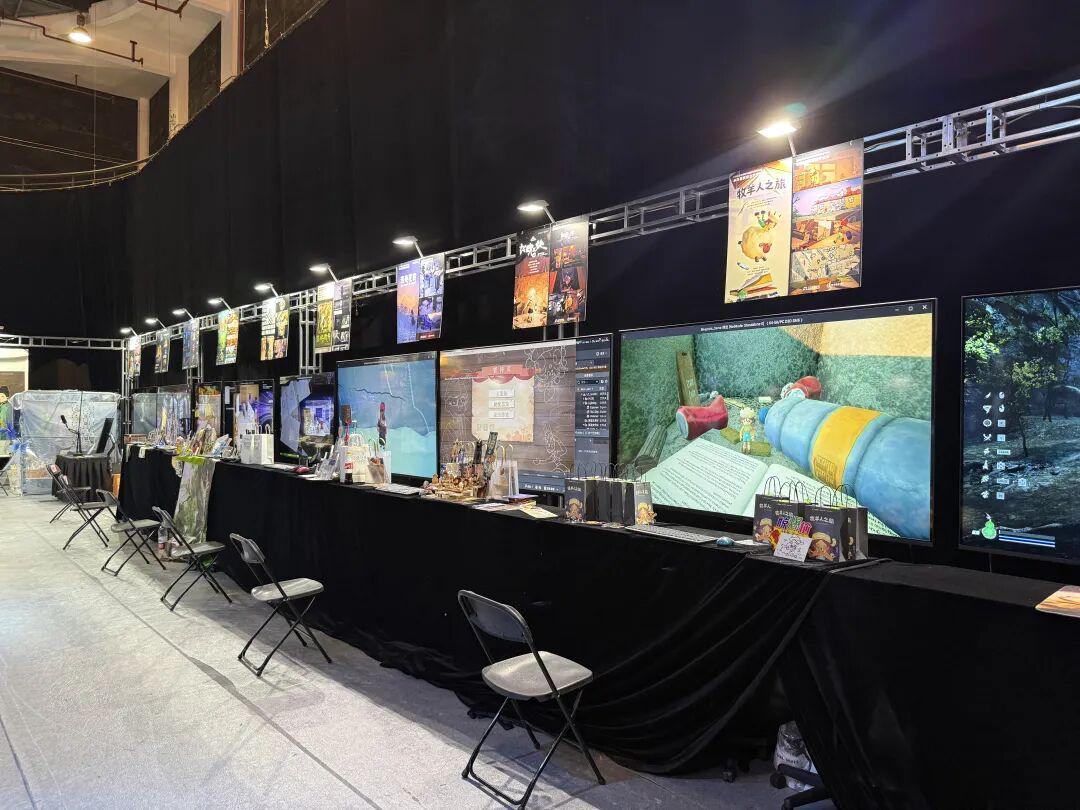
This is indeed the first time most of the students have been deeply involved in a game project. For some of them, they’ve rarely even had the opportunity to get such a close look at game development before.
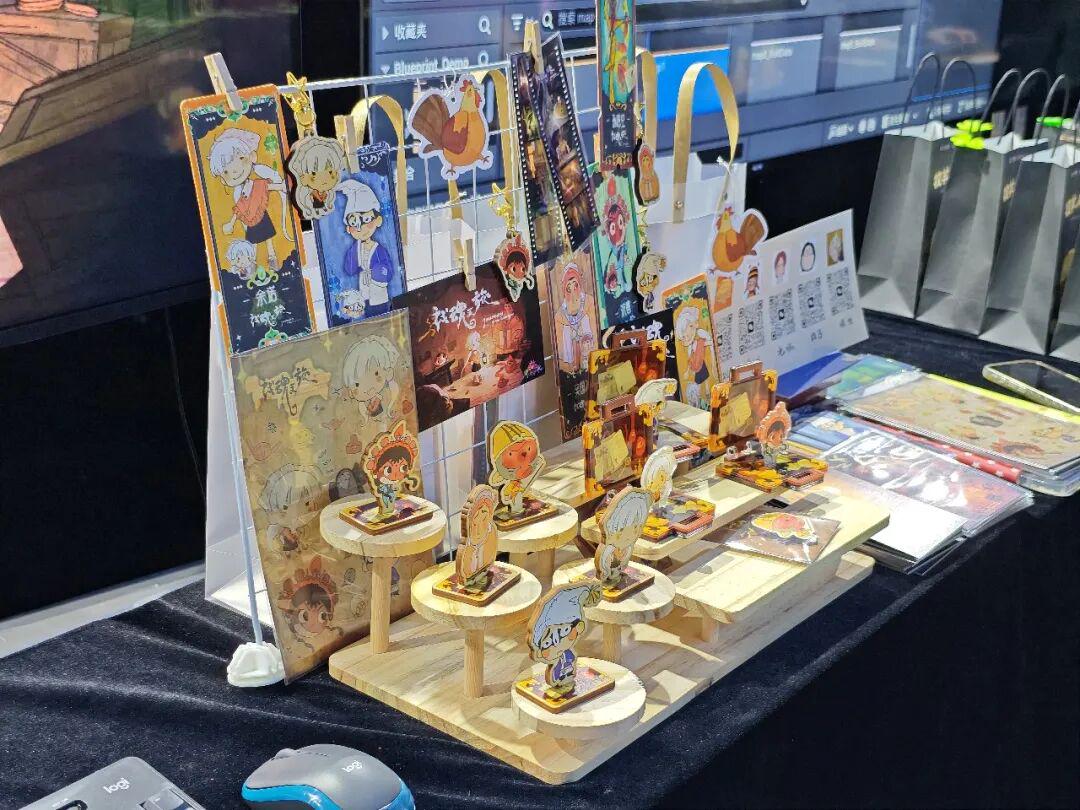
Although they are still relatively inexperienced, the juniors have put a great deal of effort into presenting their work in the best possible light and have created a variety of merchandise.
Contrary to popular belief, not everyone in the game development track at the School of Digital Media is a hardcore gamer who’s played thousands of games or a precocious developer who started tinkering with game engines at an early age. In the eyes of Professor Yang Zichu, the more common scenario is a group of high school graduates entering college with little more than a vague sense of what lies ahead.Born in the era of the mobile internet, many of them are encountering a computer for the first time simply because their assignments require it. For most, their gaming experience is primarily limited to mobile games, so learning to use WASD to control characters in the Unreal Engine is the first challenge many freshmen face when they begin exploring game development.
But that is precisely the point of education. Its purpose is not to make the strong even stronger, but to provide a ladder so that those who seek knowledge can climb higher. From being a complete novice in gaming when they first enroll to graduating four years later with a more mature sense of gaming aesthetics and development skills, the faculty at the academy will do their utmost to bridge the gap between these two points.
02
Groundbreaking
Lüyue never expected that the course of her life would change during her junior year at Sanlianchuang. She was one of the student developers who built their careers in gaming from the ground up.
Today, Luyue is an independent game developer. Her studio is called “Ant Walk Studio,” and her project is a collaborative game called *Hot Spring Well*. A few months ago, she began sharing her development progress on Xiaohongshu, where she has 6,000 followers, and her posts consistently receive nearly four-digit numbers of likes.I spoke with her about the journey that led her to this point.
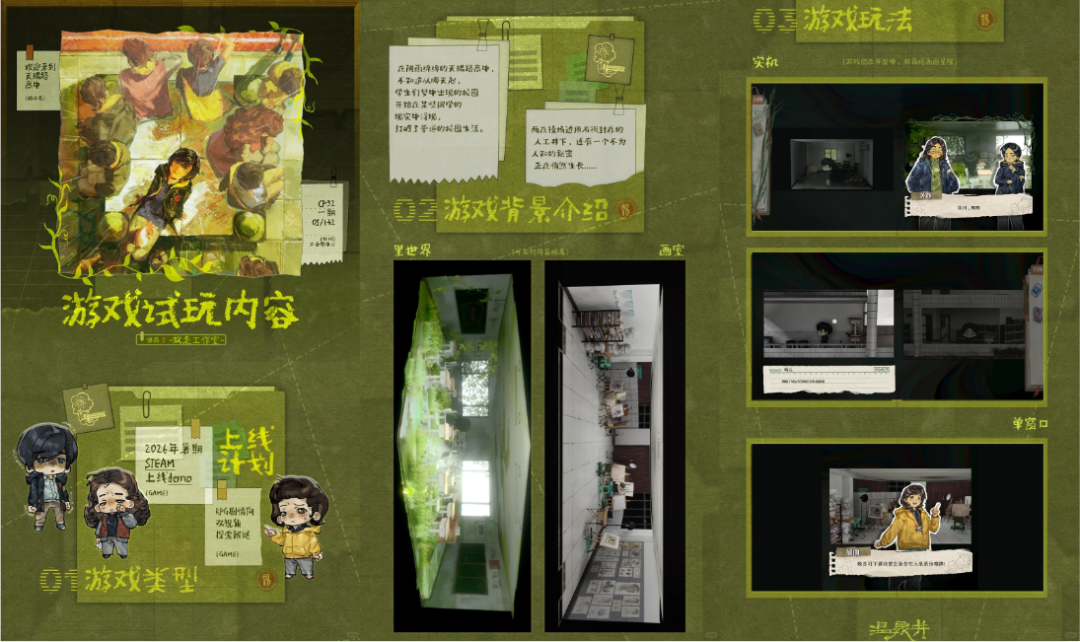
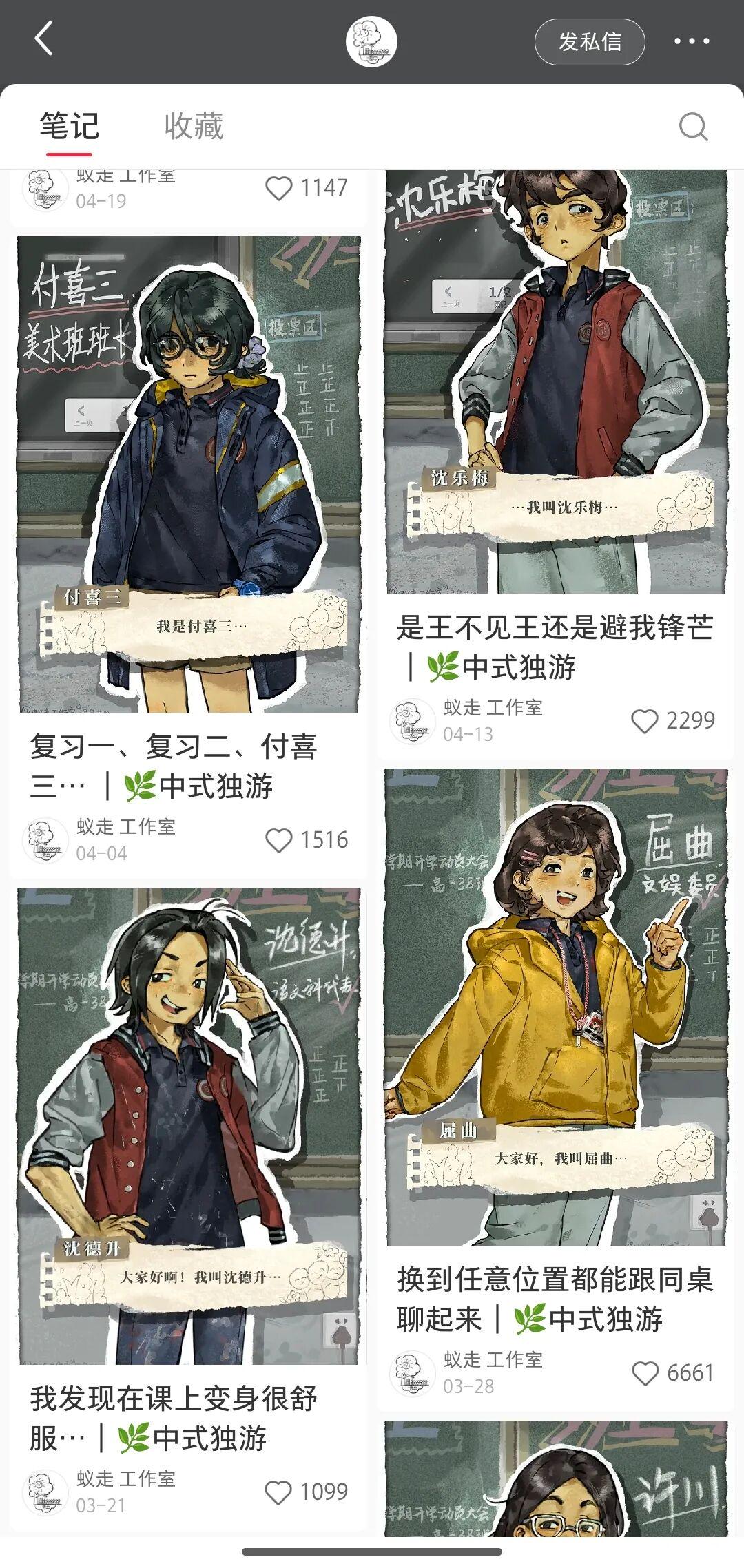
Like most teenagers, Lü Yue once had only vague goals for the future; for the most part, she was drifting aimlessly down the river of life—but since her scores on the arts entrance exam were more reliable, she ended up majoring in Digital Media Art at the Beijing Film Academy;She had many interests, such as Japanese and Korean idol culture and anime and manga culture, but she hadn’t yet decided to turn any of them into a career. During middle and high school, she was very fond of anime-themed mobile games, and her instinctive longing for the worlds within those games—like a beam of light in the distance—gradually drew her toward the world of gaming.
She showed me her course schedules from previous years: her freshman year focused primarily on foundational general education courses related to visual media and interaction design; in her sophomore year, she took on more courses in development skills, such as “Scene Design” and “Interactive Engine Applications,” which covered hands-on training in professional software like Maya, Blender, and the Unreal Engine 5.Following the school’s educational pathway, students are first taught the skills needed to bring their game ideas to life, and then provided with a creative space to refine their work through repeated iteration. By the third year, as collaborative projects move forward, more “hardcore” game-related courses are added to the curriculum—such as game scriptwriting, game sound design, and PBR material creation, among others.
There is also a junior-year course titled “History of Chinese Game Science and Art”—covering topics ranging from the emergence of early arcade games to why Sony has been driving the development of hyper-realistic, cinematic games—that traces the main thread of gaming history through the technological advancements behind the games.Professor Yang believes this is one of the school’s most important courses; a game developer’s depth of understanding and knowledge of games determines how far they can go in their career.
Seasoned gamers may not find the content of this course all that unfamiliar.But Lü Yue saw new possibilities in it: at first, she viewed games merely as a pastime. As the historical context behind them gradually came into focus, she began to realize that games have accompanied the development of technology and society all along, and have grown into an important medium for conveying human emotions and artistic expression. This marked Lü Yue’s first shift—from simply liking games to truly valuing them.
The second turning point came in May, when she took *The Hot Spring Well* to CP32 in Hangzhou. There, people didn’t see her as a junior in college, but as an independent game developer. At the event, she connected with other indie game developers at neighboring booths, listening as they shared their experiences with game development, securing investment, and distribution.
She found a sense of belonging through her solo game development. More importantly, she experienced the power of a great game to bring people together. She found fellow enthusiasts and partners to collaborate with, and after *Hot Spring Well* went viral on Xiaohongshu, even some high school friends she hadn’t spoken to in a long time reached out to her, offering to contribute art and music to the project for free.
Lü Yue’s collaborative works are unique. She formed her own group at school, and her other collaborators were all her high school classmates from that year.
The inspiration for *Hot Spring Well* comes from Lü Yue’s own high school.During high school, she and her classmates used to sketch all kinds of game-like interfaces on paper, dreaming of turning their high school into a game—though at the time, she didn’t know much about game development. But by her sophomore year of college, after learning about an opportunity for collaborative creation, she quickly decided she wanted to bring her old classmates on board to turn their imagination into reality.
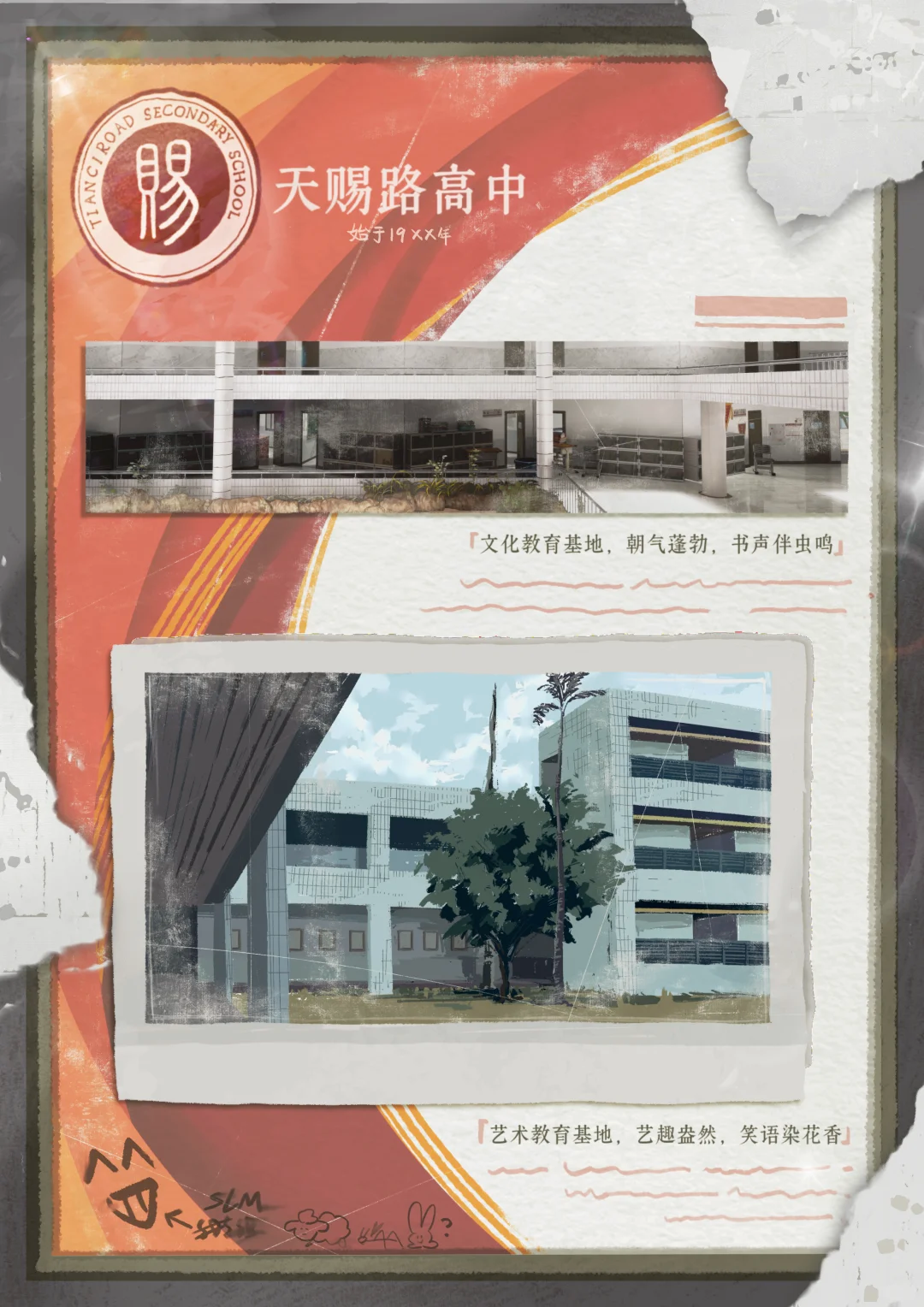

Lianchuang’s advisor had urged her to think it over carefully, pointing out that factors such as working with people outside the school and remote work would make collaboration—especially over the course of a year—more challenging. However, Luyue remained steadfast in her decision, and in the end, her advisor gave her the freedom to proceed as she saw fit.
She didn’t disappoint her teacher either. Drawing on the game development process she’d learned in the Lianchuang guidance classes, she managed this collaboration—which seemed destined to be riddled with “pitfalls”—with remarkable efficiency. Besides her, there were eight or nine other students—all artists.She divided the students into three groups—characters, environments, and props—assigned a team leader to each, used spreadsheets to track each group’s development progress, set monthly delivery milestones, and ensured everyone submitted their work on time. As the only programmer in the group, Lü Yue was responsible for coordinating between teams, driving progress forward, and assembling the art assets into a cohesive whole.
Setting up a Xiaohongshu account is actually part of building team cohesion. Lüyue told me that she hopes the positive feedback on social media will motivate other participating students to stay involved long-term—it’s a clever way to incentivize the team.A student project has gradually taken on the form of a real project team. Just like a real project manager and producer, Luyue drives the entire organization forward in an orderly and methodical manner.
According to their current plans, a public demo for *The Hot Spring Well* will be released on Steam in August or September, marking the start of the next phase for the game.
Professor Yang Zichu also told me that, following the launch of independent admissions for the Game Art Design program, the college will further refine and upgrade its existing curriculum to help students immerse themselves in the atmosphere of game creation at an earlier stage. Combined with more targeted admissions for the game design program, these efforts aim to further enhance the professional competence of future graduates in the field of game design.
Luyue’s story is hardly representative of all students. But it does at least illustrate that, beyond skills, game-based education can truly offer students an opportunity to find their place in the world.
A student who was initially unsure of their direction can gradually discover through courses and projects: what they’re willing to invest their time in, what kind of people they want to work alongside, and whether they’re truly willing to enter the gaming industry.
03
Accession to the WTO
But if we look beyond graduation, the issue becomes even more complex. In my on-site interviews with more than a dozen student developers, I also heard specific expectations regarding the curriculum and the transition to the job market.
For example, one senior student believes that after four years of coursework, the skills graduates have acquired are more in line with those of an independent game developer: they have a broad range of knowledge but lack sufficient depth in each area. After graduation, she chose to accept a job offer in the design industry.
Lüyue also told me about the experience of a senior she knew when he applied to a major tech company: His academic background wasn’t an issue—his enrollment in the game design program at the Beijing Film Academy didn’t hold him back during the resume screening stage; nor was the portfolio he’d built at school—it wasn’t difficult to pass the initial screening.However, after several attempts, this senior student gradually realized that, in addition to assessing technical skills, positions at major tech companies also place a high value on other soft skills—such as a candidate’s ability to articulate their understanding of job responsibilities in a structured manner and to foster closer collaboration with colleagues in other departments. These types of skills are difficult to acquire solely through classroom instruction and must be gradually developed through practical project experience and job search preparation.
This also touches on a long-standing debate within the industry: What kind of talent should game programs actually aim to cultivate?
Yang Zichu told me that, in line with the educational objectives of the Beijing Film Academy, the School of Digital Media aims to cultivate leading talents with an industry-wide perspective who can understand game creation from a higher perspective. This aligns with the overarching guiding principle of higher education in China: “a broad scope and a solid foundation.”
When it comes to corporate hiring, companies place greater emphasis on job fit. Especially given the recent contraction in industry hiring, professional skills that allow candidates to quickly integrate into industrial workflows are more likely to be favored. The level of specialization may be further broken down into product categories, functions, or even specific products.Both perspectives have a basis in reality, but ultimately, a continuous balance must be struck between talent development and industry needs.
Even overseas, where professional education in game design began earlier, there has been extensive discussion regarding the “educational objectives of game design programs” and the necessity of pursuing such studies.For example, a survey report released in 2023 by the University of York and the Screen Industries Growth Network noted that, of the 733 game-related undergraduate programs in the UK, only 5.5% offered internships within the industry. This reflects that there is still room for further alignment between university curricula and industry needs.
I brought up this topic with Professor Yang Zichu. He did not shy away from the public debate about universities being “ivory towers,” but from the college’s perspective, their goals align with those of the students: to help more students become the talent the game industry needs.
According to data provided by the school, the School of Digital Media has maintained a 100% high-quality employment rate in recent years. The most common career paths for students include joining major tech companies, pursuing further education, and starting their own businesses. The school has also been actively promoting two-way collaboration with the industry to ensure that its curriculum continues to align with industry needs and changes.
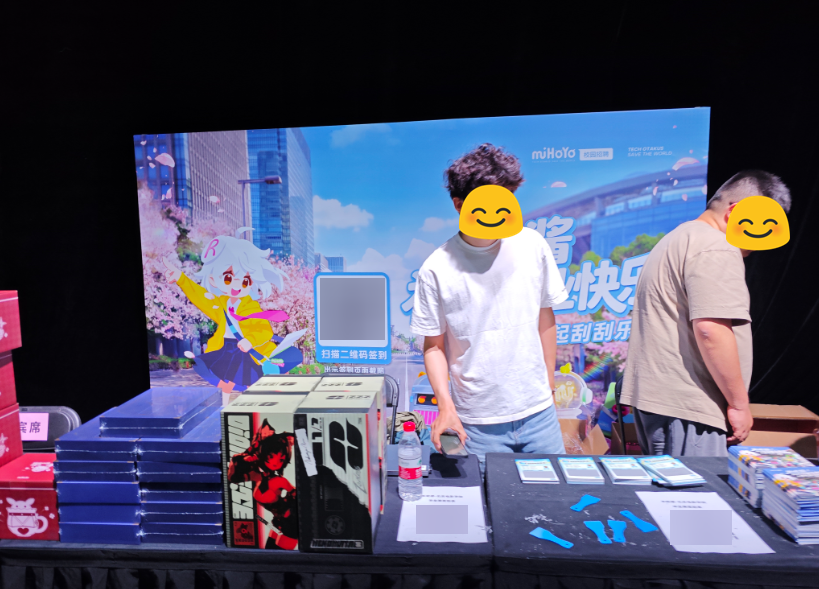
On the one hand, they invite companies to get involved. In fact, this graduation project exhibition was sponsored by miHoYo.Mihoyo staff set up a campus recruitment booth in one corner of the venue. Professor Yang told me that Mihoyo maintains a close relationship with the college. The company has previously expressed a need to recruit for emerging positions such as “game director.” It is difficult to find suitable candidates for such roles through open recruitment, but for the Beijing Film Academy—which has a strong background in both film and gaming—these positions align perfectly with the students’ areas of expertise.
The School of Digital Media at Beijing Film Academy also hosts the “Digital Media Navigation Season” event year-round, inviting leading industry companies such as NetEase, Alibaba, and Tencent’s TiMi J3 Studio to campus to give presentations and share their creative experiences.After these events, students often have the opportunity to interact face-to-face with industry professionals and corporate HR representatives to gain timely industry insights. The university also periodically invites developers from leading companies to campus to teach courses and deliver lectures, striving to bring students closer to the industry.
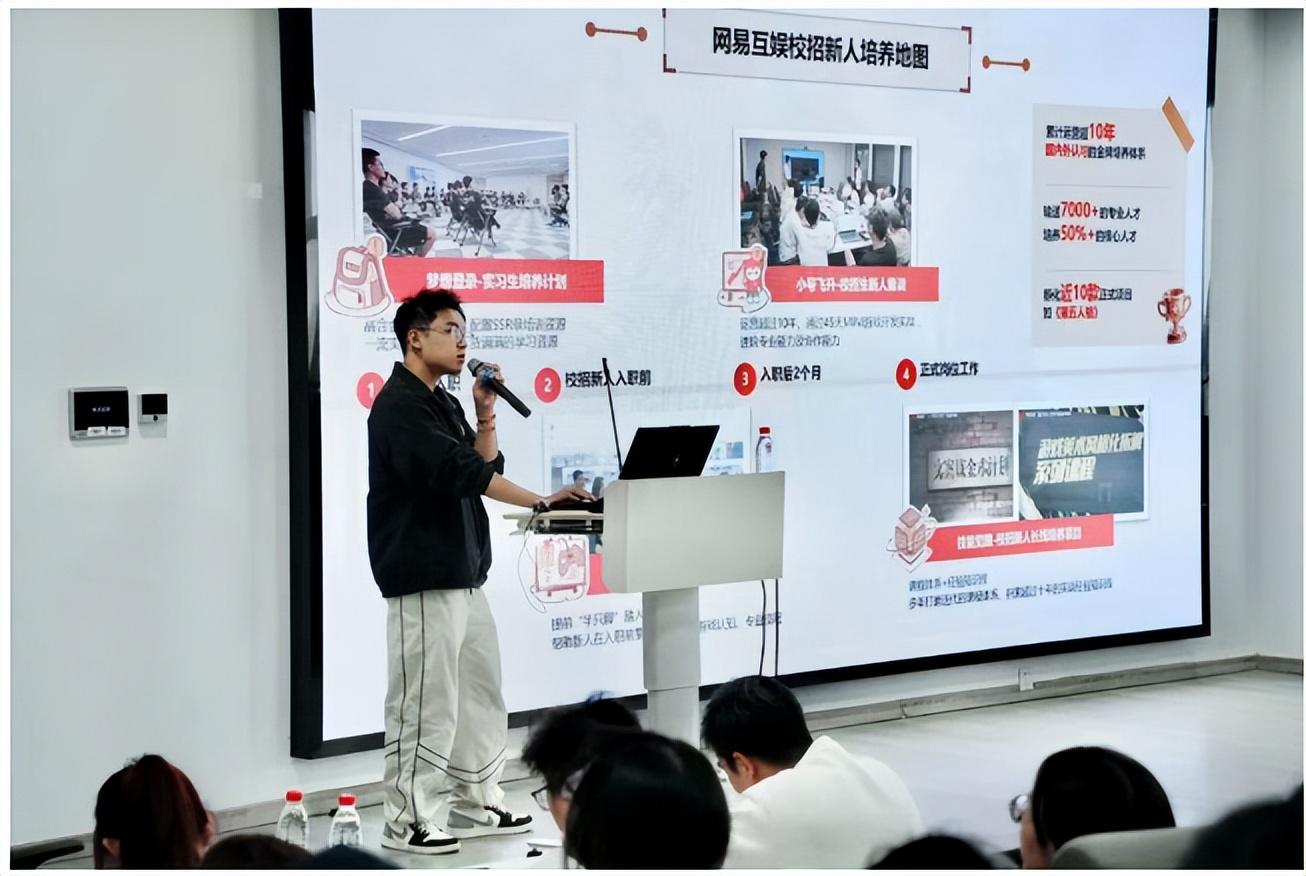
A student told me that representatives from a major tech company’s project team came to campus for an event and, after seeing the students’ work, offered them job offers on the spot. This kind of situation is not uncommon in the history of the gaming industry.
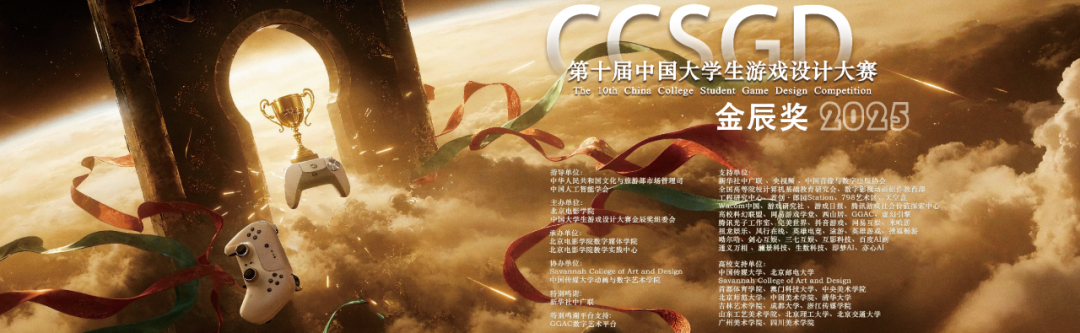
On the other hand, the focus is on encouraging students to reach out to the world. Professor Yang told me that the college’s student council actively submits entries for various awards and participates in industry competitions such as the Tencent Game Development Competition.The Beijing Film Academy has successfully hosted ten editions of the “Jinchen Award” China College Student Game Design Competition, attracting outstanding game works from universities across the country to the academy for exchange and collaboration, thereby fostering more extensive external engagement to avoid working in isolation.
The ideal outcome is for students to develop into the kind of “T-shaped talent” described in miHoYo’s employee handbook: individuals who, while specializing deeply in their own professional fields, also possess the ability to explore and apply their skills across different functions. However, within a limited timeframe, it is difficult for a student to achieve the ideal balance of both breadth and depth.
Colleges and universities offer a broad perspective, a comprehensive creative experience, abundant resources, and a pathway to advancement. Companies, on the other hand, use more rigorous criteria to assess whether students can quickly integrate into the industry pipeline.
The journey from campus to the workplace has already been supported by the school. But to truly enter the professional world, students still need to complete the final leg of the journey through hands-on experience and self-motivation.
04
Vision
As the list of colleges and universities approved to offer game design programs continues to grow, game education is moving from the underground to the mainstream, transitioning from a niche field to an official academic major, and evolving from an overlooked field into a formal pathway for talent development. Young people can now, at long last, openly list their interest in game creation on their college applications. But this new era of game education has only just begun.
According to the “Public Notice on Application Materials for Undergraduate Majors at General Higher Education Institutions” released annually by the Ministry of Education, a total of four universities applied to offer a game design major in 2024, and this number surged to 13 in 2025.
Colleges and universities across the country have shown a great deal of interest in offering game-related majors. Professor Yang told our reporter that after the Beijing Film Academy received approval to establish a game major, they likely received inquiries from dozens of other institutions regarding the program and its talent development plans.
This is a passion that has been many years in the making.
Over the past two decades, China’s gaming industry has grown into a massive sector. Game companies have increasingly refined their division of labor across areas such as game design, art, programming, storytelling, audio, publishing, and operations; as project scales continue to expand, companies’ demand for high-quality talent has become increasingly clear.
However, as enthusiasm surges, new problems are sure to follow. Currently, approved game art design majors fall under the category of design studies and are mostly offered by art colleges. Art entrance exams remain the primary pathway for students to enter game-related majors.Some universities also applied last year to establish a “Game Science and Technology” major—classified under the engineering discipline—but have not yet received approval from the Ministry of Education. Technology and art are the two wheels driving the development of the gaming industry, but for now, only one of them has begun to turn.
Beyond that, game education must continue to address many more questions. Should curricula place greater emphasis on general education, or should they be more closely aligned with the industry pipeline? Should schools cultivate creators with a broader perspective, or specialists who can quickly enter the workforce? Faced with the disruption caused by rapidly advancing AI technology to traditional game pipelines, how should game education keep pace with these changes?
It is difficult to find ready-made answers to these questions in a single academic catalog. They require universities and the industry to gradually work them out through repeated practice. We can already see the beginnings of some answers in the student works from the Beijing Film Academy.
Game-based education cannot carry everyone to the finish line. What it can do is set up a ladder there, giving more young people the chance to climb upward. For the Chinese gaming industry, this ladder has come a little late—but at least it’s finally here.
原创文章,作者:gallonwang,禁止转载:https://youxichaguan.com/en/archives/206843