Over the past year or so, there has been a great deal of discussion within the industry about the game *ARC Raiders*.
After all, everyone is well aware of the broader industry landscape in recent years: major console titles are generally slow to materialize, and overseas giants are barely hanging on by drawing on their reserves; it’s becoming increasingly difficult to find innovative new gameplay concepts, while remakes of older games and hybrid titles are on the rise. Against this backdrop, *ARC Raiders* has emerged as a game that manages to combine both quality and originality, making it all the more remarkable.
Nexon, the parent company of the development team Embark Studio, recently reported positive results in its financial statement, noting that *ARC Raiders*, which launched last October, has sold nearly 16 million copies;A report by Circana (a U.S. gaming market research firm) indicated that it was the most-played new game on Steam in 2025. As a result, Patrick Söderlund, the head of Embark Studio, was promoted rapidly—rising from CEO of the subsidiary to Chairman of the parent company, Nexon.
So when *ARC Raiders* made its debut under the name *Arc Hunters* at Tencent Games’ recent press conference, it naturally became one of the titles in the industry spotlight—people are incredibly curious about how it will perform on the Chinese server. It clearly has the makings of a blockbuster, but there are also some variables worth discussing.
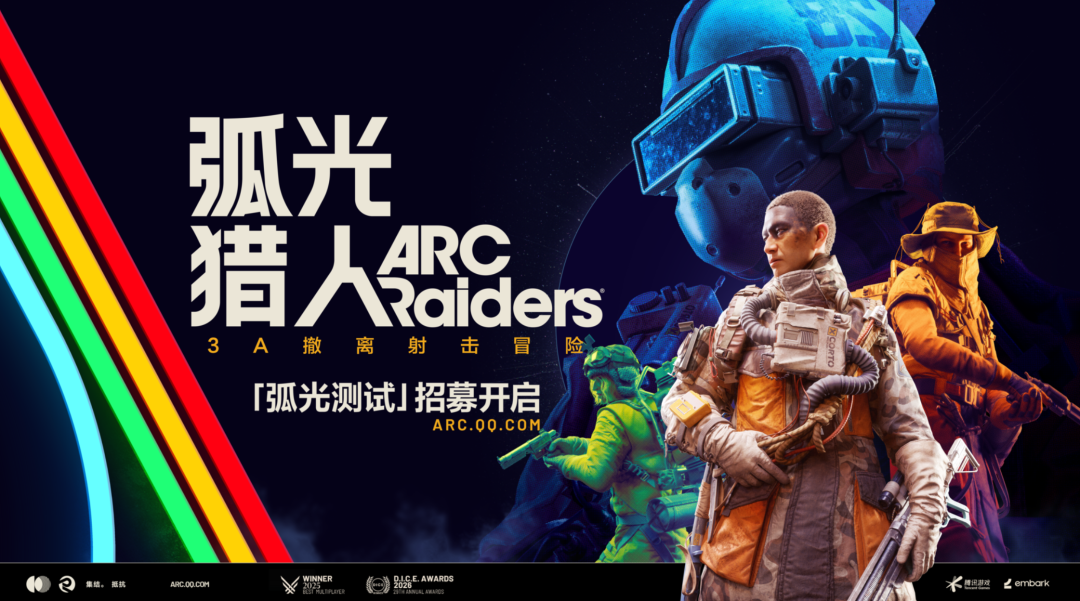
The day before yesterday, *Arc Hunter* officially announced that it would launch its first closed beta test for the Chinese server, the “Arc Test,” on June 24. Within two days, the test’s promotional video surpassed 5 million views on Bilibili.
Just the other day, Tea House and several other media colleagues met with Lao Xu, the development producer for the Chinese server of *Arc Hunter*, and Fei Ge, the publishing producer.
During the interview, an interesting phenomenon was observed: over the course of two hours, every industry colleague present asked the same question from different angles and using different phrasing: Given how competitive the domestic shooting game market is and how players’ perceptions of “search, shoot, and retreat” gameplay have already solidified, how do you ensure that Chinese players will appreciate the unique features of *Arc Light Hunter*?This is actually a concern shared by many ARC players as well.
However, the two producers’ responses were surprisingly consistent: *Arc Hunter* is not a “search-and-fight” game at all, nor do they want to jump on the bandwagon and label it as such.
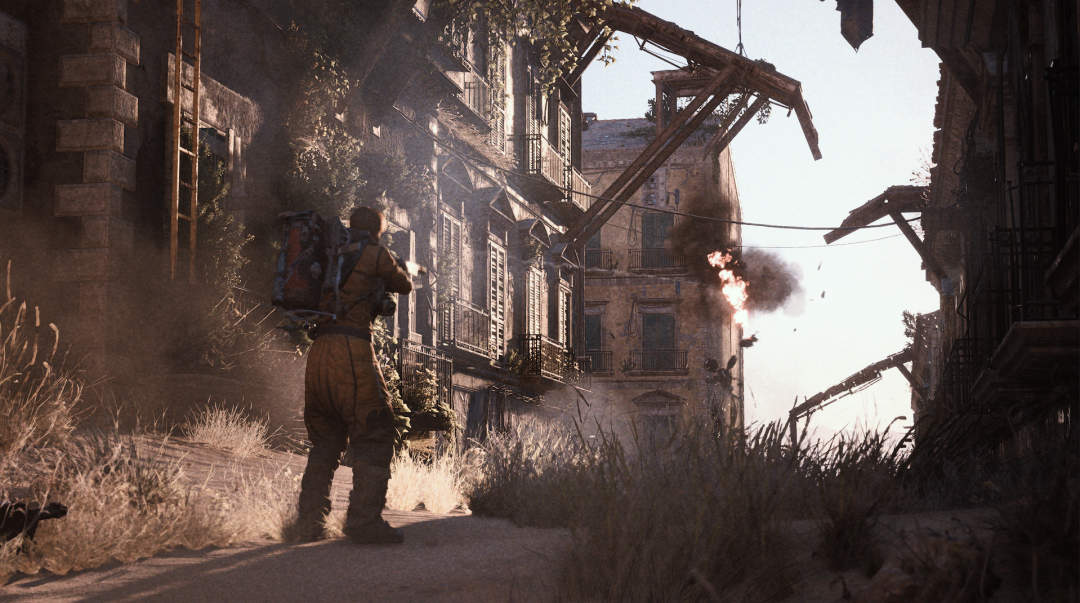
Lao Xu and Fei Ge are very determined; they’re aiming to emulate industry milestones like *PUBG* and *Counter-Strike*. Rather than relying on existing genre labels, they’re pushing forward with the launch of the Chinese server with the expectation that *Arco Hunter* will define a new genre—the “escape adventure”—in the domestic market.
To start off by aiming to be the “pioneer”—most people’s first reaction upon hearing this would undoubtedly be, “That’s way too cocky,” but for *Arc Hunter*, this direction might actually make perfect sense.
01
The “Adventurous Misfit” That Walked Away from the Shooting Category
To understand this internal consistency, we need to go back to the gameplay of *Arc Hunter* itself.
Looking solely at the overall framework, *Arco Hunter* isn’t all that different from conventional loot-and-escape or PvE/PvP games: players enter the map to scavenge resources, then carry those supplies out of the map to complete missions, upgrade gear, and advance their progression.But if we rewind to last October, the reason it won over overseas players was the uniquely distinctive experience it offered within this framework.
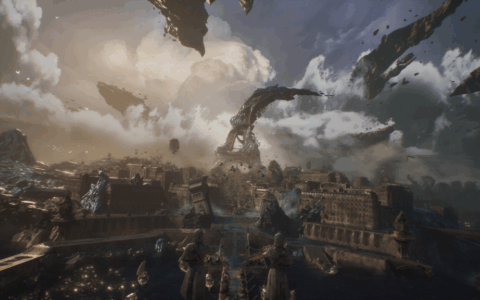
As Fei Ge summarized, there are three specific aspects of differentiation: First, Speranza’s distinctive post-apocalyptic aesthetic; second, the PVE map ecosystem composed of dozens of ARC robots; and finally—the aspect with the broadest impact and the one that many players find most innovative—a complete set of “gray social” experiences filled with human realism.
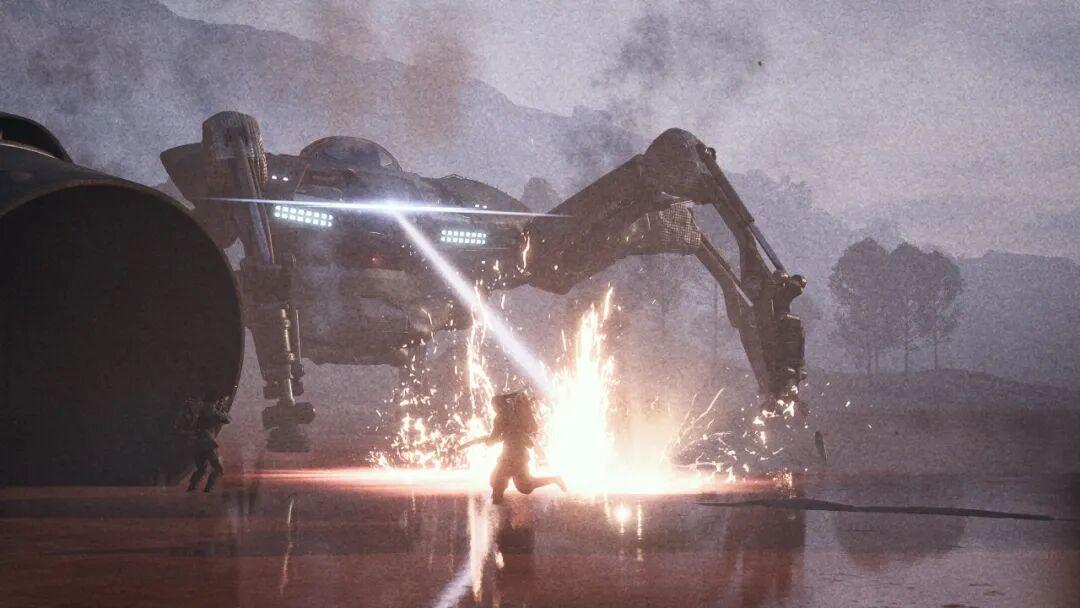
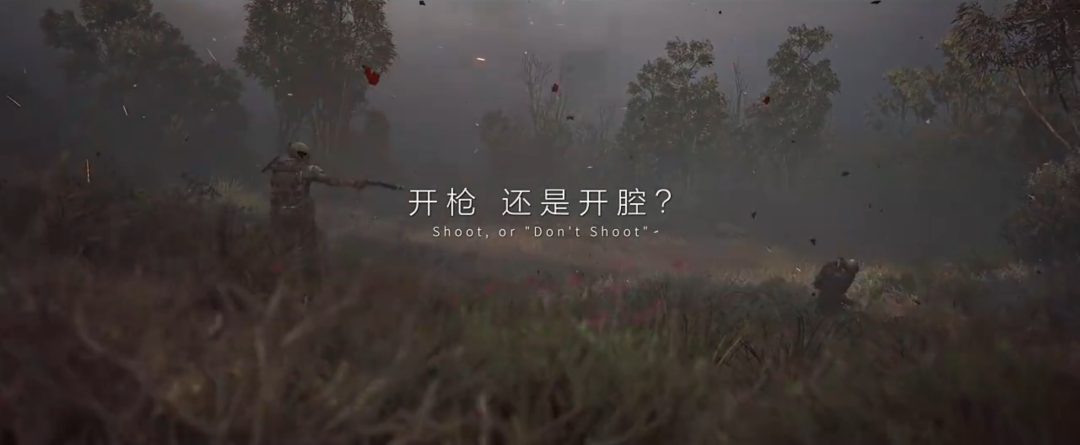
If you follow fan-created content for *ARC Raiders*, you’ll notice that most of it isn’t the high-octane kill comps typically seen in shooters—instead, it’s mostly hilarious pranks that spring from social interactions among players.For example, after taking down two players in quick succession, a player might ask them over voice chat to each tell a joke—whichever one is funnier gets rescued; or, playing the hero, a player might step in to help another player counter-kill a “backstabber,” then team up to retreat together.The game’s most iconic catchphrase is a roulette voice line: “Don’t Shoot!” When players run into each other and recognize one another, exchanging this phrase serves as an unspoken code to maintain peace.
*ARC Raiders* is more like a “sociologist” within the evacuation genre. The reason “gray social interaction” is “gray” lies in the fact that the lines between friend and foe are constantly shifting. The game itself incorporates a wealth of social mechanics, making it possible for players to build trust with one another.
For example, you can use the “Nearby Mic”—which is enabled by default—to shout to everyone nearby, and the sound system has been optimized to convey a sense of direction, making communication more realistic and seamless; you can use the first-aid and healing items in your inventory to treat players from other teams, and you can also use the emote wheel to perform a dance for other players.Of course, negotiation cannot guarantee absolute peace. *ARC Raiders* also features a distinctive “Player Behavior Matching System,” which, to a certain extent, sorts players who prefer PVE or PVP combat into different matches.These mechanisms work together to create a truly unique atmosphere: the post-apocalyptic world remains dangerous, with suspicion and betrayal lurking at every turn, yet even in the midst of despair, a glimmer of human warmth persists.

The issue is that when this experience—which leans more toward PVE cooperation—enters the domestic market, its distribution channels are bound to change.On the whole, Chinese shooter players seek a direct, intense “thrill of combat,” and nearly all existing shooter titles with high DAU feature distinct PvP competitive elements. When players see the phrase “search, fight, retreat,” they quickly form a set of fixed expectations: accumulating resources, defeating opponents, and improving efficiency—all while pursuing more stable returns amid high-pressure competition.
This is also why the Chinese server team is reluctant to simply refer to *Arc Hunter* as a “search-shoot-retreat” game. While using established labels is certainly an easier way to attract the attention of shooter fans, it may also lead players to enter the game with misplaced expectations, causing them to overlook its most distinctive features.
Lao Xu believes that “evacuation adventure” is a more accurate description of the *ARC* experience: “*ARC* is set in a post-apocalyptic survival scenario; when you travel from Speranza to the surface, you’re essentially embarking on a post-apocalyptic adventure. It’s like hiking in the deep mountains—you might encounter wild beasts or environmental threats.You might also encounter other adventurers—some hostile, some not. The adventure offers a wide range of options; the gun in the player’s hand isn’t necessarily meant for a fight to the death. Choosing to cooperate or confront others is both permitted and allowed by the rules.”
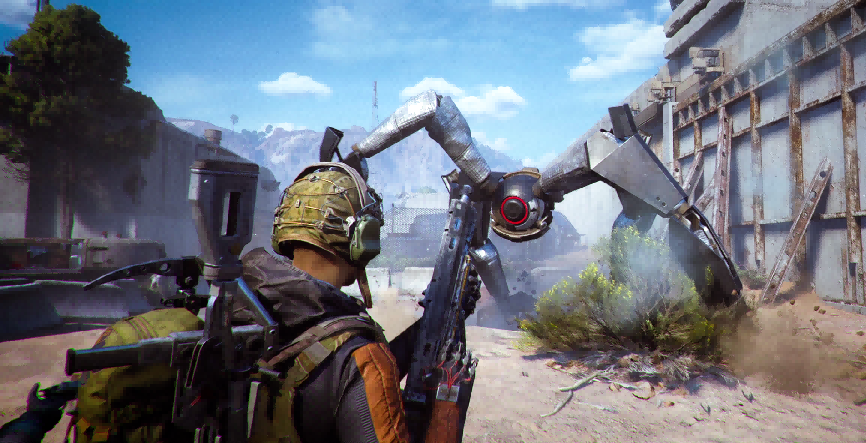
This description actually quite cleverly moves beyond the binary classification of PVE and PVP in shooter games, segmenting the gaming experience from a perspective that sets it apart from the mainstream to highlight the strengths of *Arc Hunter*;Defining the experience of a single match as an “adventure” also makes it easier for players to draw parallels with major single-player console titles, linking it to the high quality of *Arclight Hunter*.
As the publisher, the decision not to blindly follow genre trends and to challenge the “definition of the genre” actually reflects the Chinese publishing team’s strong understanding of *ARC Raiders*’ unique features and opportunities.However, this also places higher demands on the subsequent publishing process: not only must the game reach users and build brand awareness, but it must also reshape player expectations and popularize the entirely new genre concept of “evacuation adventure.” Both producers agree that while the approach of “pioneering a new genre” will inevitably face resistance, it is a path they must take.
As Fei Ge told Teahouse: “Even if we’re actually developing a PVP-heavy ‘search-fight-retreat’ game and emphasize these features in our marketing, I don’t think it’ll be any easier to launch—after all, there are already so many top players in the ‘search-fight-retreat’ genre.”” Fei Ge believes that no matter how the gameplay mechanics are promoted, what ultimately determines whether players stay or leave is still the game’s most fundamental attribute—whether it’s fun.
And *Arc Hunter* happens to be a game that’s “fun” enough. In a sense, *Arc Hunter* has already redefined its genre overseas, successfully helping many players overcome their initial struggles with the game’s high-pressure early-game PVE environment and encouraging them to continue playing deeply over the long term. Now, the Chinese server is set to go through this process all over again.
It is worth noting that the “Mouse Culture,” which has become increasingly popular with the rise of “Search, Shoot, and Retreat” games, actually reflects the fact that—even within the increasingly competitive shooting game market—there remains a niche for experiences centered on social interaction, cooperation, and low-intensity competition.
Over the past while, many industry professionals have shared their thoughts with Tea House during conversations about what they envision as “the next trend in shooting games after ‘Search, Shoot, and Retreat.’” When it comes to which title is best positioned to drive change, it’s hard to find a more compelling candidate than *Arc Hunter*, which has sold nearly 16 million copies overseas.
02
Winning Amid Change
Throughout this exchange, we could also sense from the many initiatives undertaken by the Chinese server team that they are not passively waiting for changes in the domestic shooter market; rather, they have made extensive preparations through localized R&D for the Chinese server to drive the process of “defining the genre.”
Lao Xu stated that Tencent and Embark Studio have maintained a very close partnership in this collaboration for the Chinese server release, with both sides demonstrating sufficient trust and respect for each other’s areas of expertise.The Chinese server team respects Embark Studio’s vision for the product and its world-building, while Embark Studio, in turn, respects Tencent’s insights into the Chinese gaming market and has granted the Chinese server team the authority to implement in-depth localization modifications.
Therefore, what the Chinese server team can do at this stage is to ensure that localization goes beyond simply adding Chinese subtitles and voiceovers, or translating in-game art assets such as signs. Based on an understanding of Chinese players’ preferences and the game’s performance on international servers,we are conducting more in-depth localization centered on new content and system optimizations, allowing Chinese players to more directly experience the “adventure” fun of *Arc Hunter*.
For example, Old Xu observed that in previous international server versions, players might lose a sense of purpose after playing for dozens of hours—unlike the simple accumulation of assets in “Search, Fight, Retreat,”players in *Arc Hunter* often have more diverse and specific objectives during a match, such as scavenging for items to upgrade workbenches.
The Chinese server will implement a series of changes in response. According to the team’s current plans, they aim to raise the level caps for progression-based content—such as talent trees and workbenches—while optimizing the quest structure and volume to fully meet the needs of progression-oriented players and provide them with long-term motivation to stay engaged and return to the game.
There’s also the issue of playstyles and “gray-area social interactions” that have drawn the most attention; many of the player controversies related to these topics in the past ultimately boiled down to the act of “backstabbing.” The mainstream view outside the game classifies this issue as a clash between the preferences of PvP and PvE players.Xu’s assessment of the matter is that the playstyles of both types of players deserve equal respect and tolerance. Essentially, what players on the Chinese server want is less “chaos”—they need a way to more easily determine whether the opponent they’re facing leans toward confrontation or cooperation.
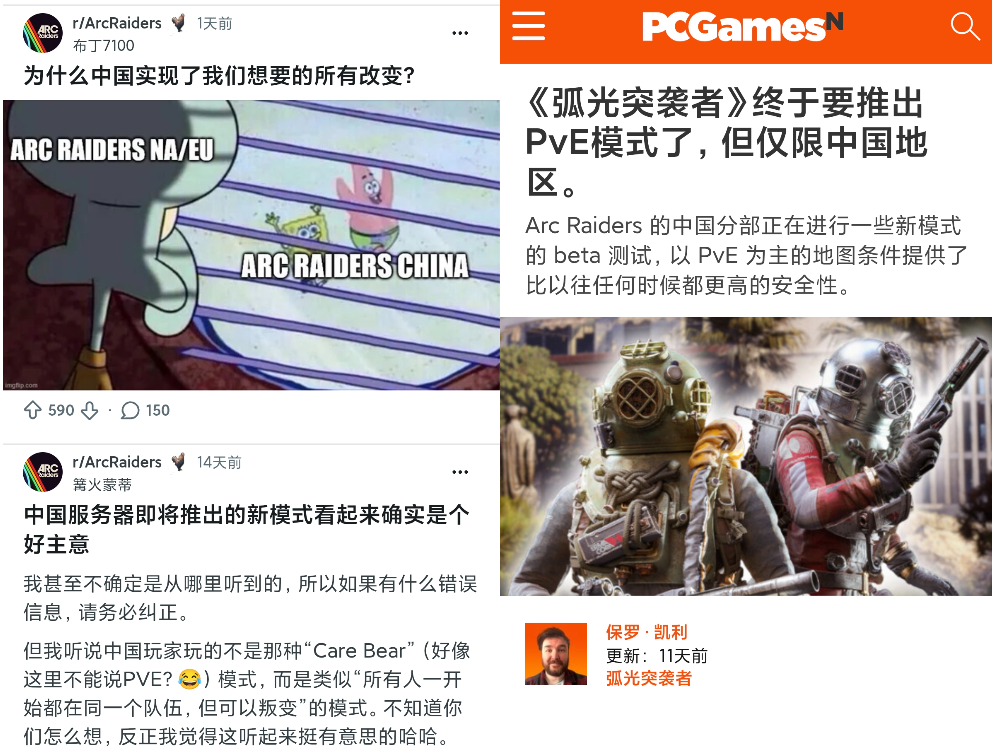
During a previous small-scale technical test, the Chinese server team implemented a “Security Mode.” At the start of the game, all players spawn as friendly units. If you want to deal damage to others, you must select “Defect,” which not only marks you with a special indicator but also broadcasts your coordinates across the entire map.At the same time, the Chinese server released a preview of upcoming events, including the “Security Protocol.” Lao Xu stated that the core objective is to reduce the occurrence of “backstabbing” without compromising the PvP experience.
Although it was only a small-scale test, news of the new mechanism quickly caught the attention of overseas players and media, with many overseas players openly expressing their hope that these changes would be implemented on international servers. Even within the domestic community, opinions on the matter have generally been quite positive. Clearly, this change has transcended the player community and addressed a universal pain point.
In terms of the game’s future operations, Tencent’s Chinese server team—which “understands GaaS better”—will also help strengthen the long-term operations of the Chinese server version.In fact, the player base overseas has seen some decline due to factors such as the decision to extend the update cycle from two months to six months in the international version. According to current plans, *Arc Hunter* will further increase content density on top of the international version’s original two-month expedition cycle by introducing different map events and playable content each month.
Fei Ge stated that future updates for the Chinese server will proceed simultaneously along two tracks: one track will incorporate updates from the international server, while the other will feature localized content developed by the Chinese server team.These two tracks will eventually converge, gradually forming a relatively independent main storyline for the Chinese server. Should the international server team wish to incorporate content from the Chinese server in the future, the Chinese server team will maintain a positive and open attitude. Additionally, the Chinese server team will closely monitor player feedback during future testing and make real-time adjustments to the aforementioned content plans.
Conclusion
It’s not hard to imagine that this highly collaborative and deeply trusting approach will ultimately allow the Chinese version of *Arc Hunter* to combine the strengths of both Chinese and international teams, resulting in a more compelling localized version—and making the game’s inherent “variability” more tangible rather than vague.
There are still many challenges ahead for *Arc Hunter*, and going head-to-head with the mainstream is bound to be a daunting undertaking. But regardless of whether it ultimately succeeds in “redefining the shooter genre,”*Arclight Hunter* is certainly not destined to be ordinary—in today’s shooter market, it offers a uniquely distinctive approach: an evacuation shooter that allows players to experience a more complex and irreplicable emotional journey through high-pressure survival, social interaction with strangers, and ad-hoc cooperation.
Lao Xu believes that *Arc Hunter* presents a new vision for the single-match experience in future first-person shooters. With the official launch of the Chinese server beta on June 24, we’ll see whether this title—which has already proven itself overseas—can carve out a new path in the domestic market and gradually inspire more people both within and outside the gaming industry.
原创文章,作者:gallonwang,禁止转载:https://youxichaguan.com/en/archives/205784