On August 13, 2021, indie game developer jakefriend hit “send” on Twitter, revealing a letter of intent for a 500,000-Canadian-dollar investment. The deal was intended to provide funding and publishing support for his hand-drawn adventure game *Scrabdackle*, but he chose to turn it down.
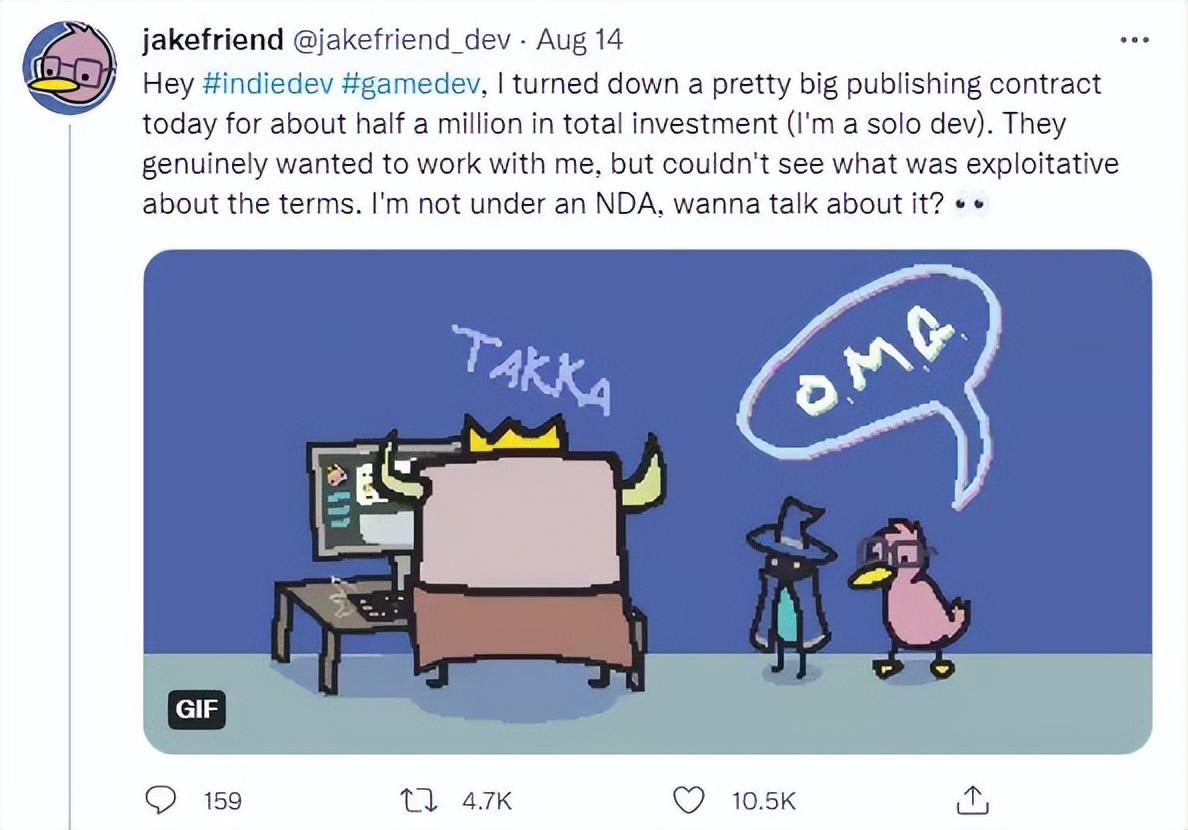
The reason for the rejection was equally blunt: the publisher was being a bit too greedy. According to the terms, the developer would not receive any profit share until the publisher had recouped $200,000 in marketing costs and $65,000 in development funds. This meant that even after selling 24,000 copies of the game, the developer’s earnings would still be zero.The breach of contract clauses were even harsher: if unilaterally found in breach, the developer would lose all intellectual property rights to the game, be required to repay the development funds in full, and be held indefinitely liable for all costs incurred by the publisher in hiring a third party to complete the game.
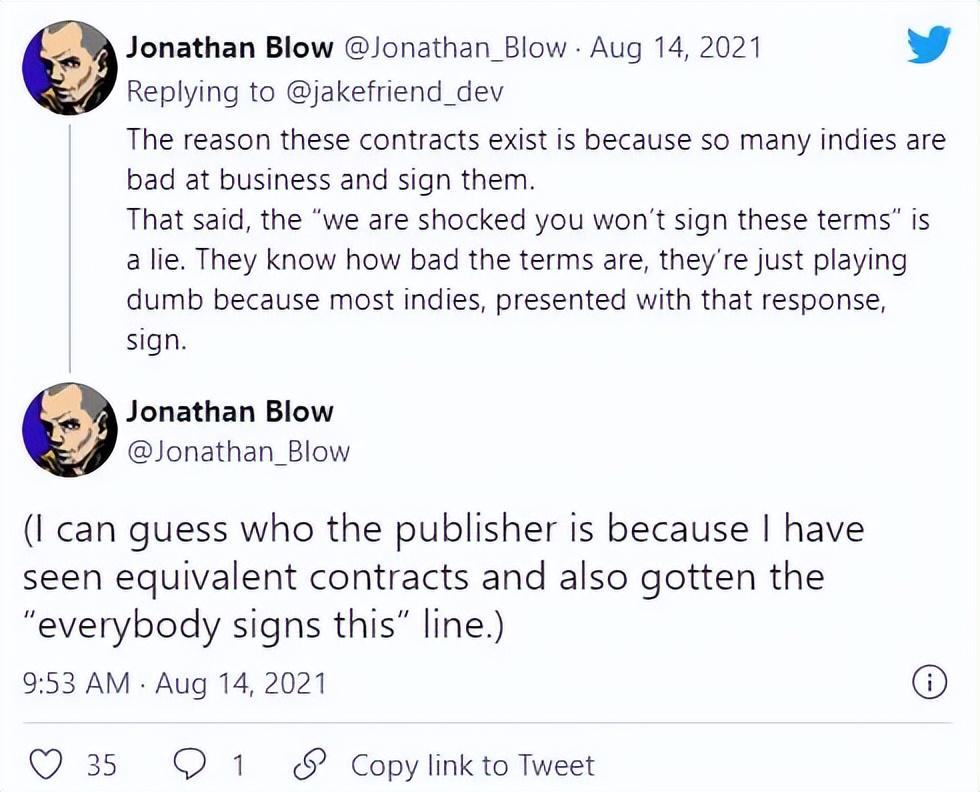
Creators are not only responsible for production but also bear the full risk of product failure, while investors use contractual terms downstream to hedge their risks, allowing them to move forward or retreat with ease.
Jakefriend’s story is just one example, and what his experience reveals goes far beyond a mere issue of industry ethics.
There have always been various conflicts between game publishing and development, stemming from the inherent nature of games—particularly indie games—themselves:
When launching a game, market returns must be taken into account, which means focusing on the game’s market appeal and transforming unique creative concepts, gameplay, and aesthetics into tangible revenue streams.A game must either have a stable revenue model, proven successful gameplay mechanics, or a strong marketing strategy. Ideally, each step should involve competitor analysis and model breakdown, with a focus on layered risk mitigation to prevent investors from losing their entire investment.
Game developers, on the other hand, must possess the self-awareness and determination of artists to bring their games to life. They must innovate and conceive ideas that have never been seen before; otherwise, they are merely rearranging existing game elements. At the same time, they rely heavily on market feedback to determine whether these ideas are actually fun.
The conflict between publishing and R&D often becomes an awkward inevitability. Publishers seek to find stable returns on capital in the uncertain world of gaming, turning market returns into a precise mathematical model.
In extreme cases, to meet financial targets, publishers may threaten to withhold funding to force monetization schemes or even push unfinished games to market.Conradical Games, the developer of the indie title *Ghost Outbound*, faced exactly this situation: publisher Digerati released a console version with quality issues without the developer’s approval. To protect the game’s reputation, lead creator Conrad Grindheim was forced to file a DMCA takedown request against his own game, demanding its removal from console stores.
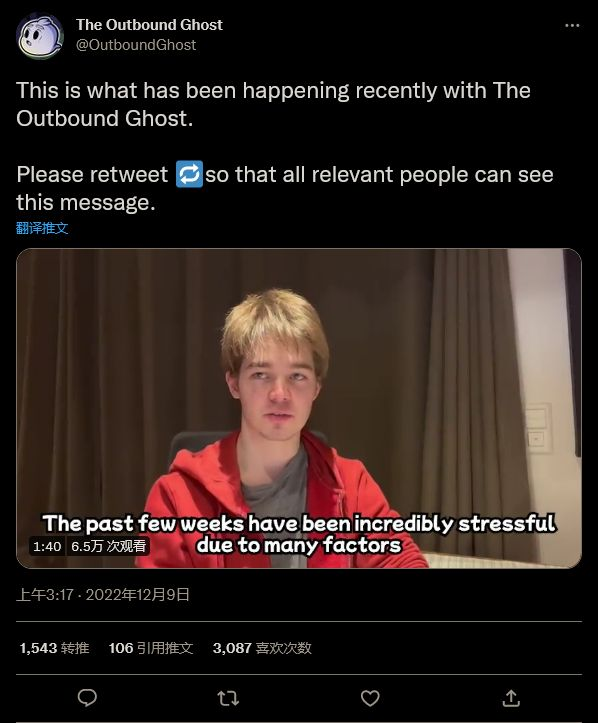
(It wasn’t until late 2024 that Conradical Games regained control of the game through a settlement and announced the re-release of a fixed version titled *The Outbound Ghost: Reborn*)
It’s hard to strike a balance between art and business, and the independent market is extremely fragmented. Creators generally lack funding, which leads to them having little bargaining power, struggling with contracts, being vulnerable when it comes to copyright, and facing constant restrictions on their creativity—not to mention the risk of having their work exploited for free.
However, a group of successful individuals who are well-versed in game development and capable of managing market expectations have resolved to change this situation. They have chosen to establish their own game publishing label to bridge the gap between publishing and development.
After amassing substantial funds through their respective hit titles, Innersloth, Poncle, Ghost Ship Games, and SUPERHOT chose neither to leave the industry nor to accept lucrative buyout offers. Nor did they transform into the very kind of capital-driven entities they once opposed; instead, they sought to establish a more equitable support system for creators within the industry.
So the question is: can a new publisher founded by indie game developers who’ve been through the wringer avoid or resolve these issues?
01
Innersloth and Outersloth: Transparent Contracts and Rules as a Driving Force
Thanks to the global viral success of *Among Us*, developer Innersloth has amassed a staggering fortune.
Even after achieving success, CEO Forest Willard and Community Director Victoria Tran could never forget the humiliation they endured in their early days—while developing their game, they had been subjected to unfair “shadow contracts” by traditional publishers.The two have never let this go; even after achieving massive success, they cannot forget the fear they once felt—that sense of hanging by a thread and being at the mercy of others.
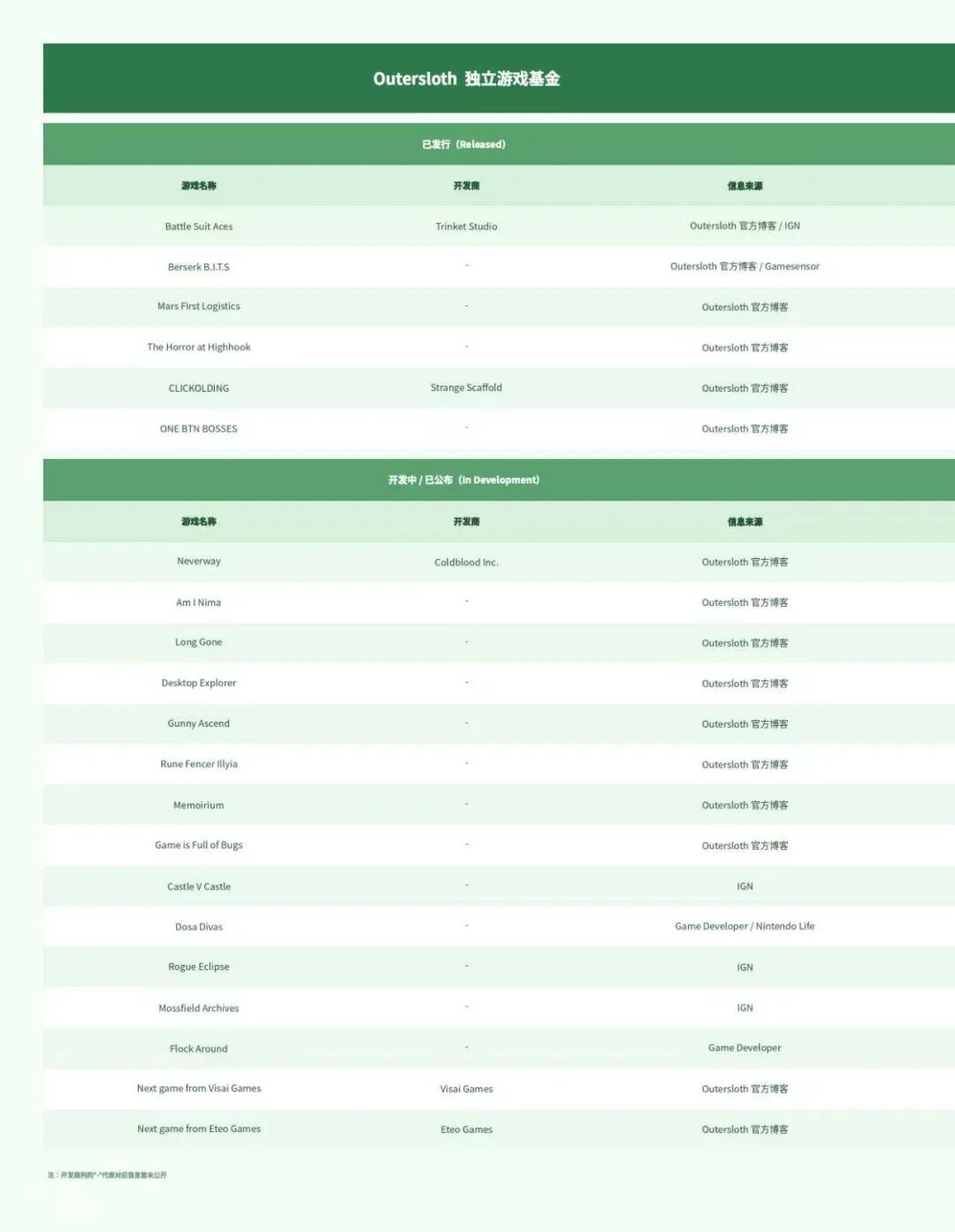
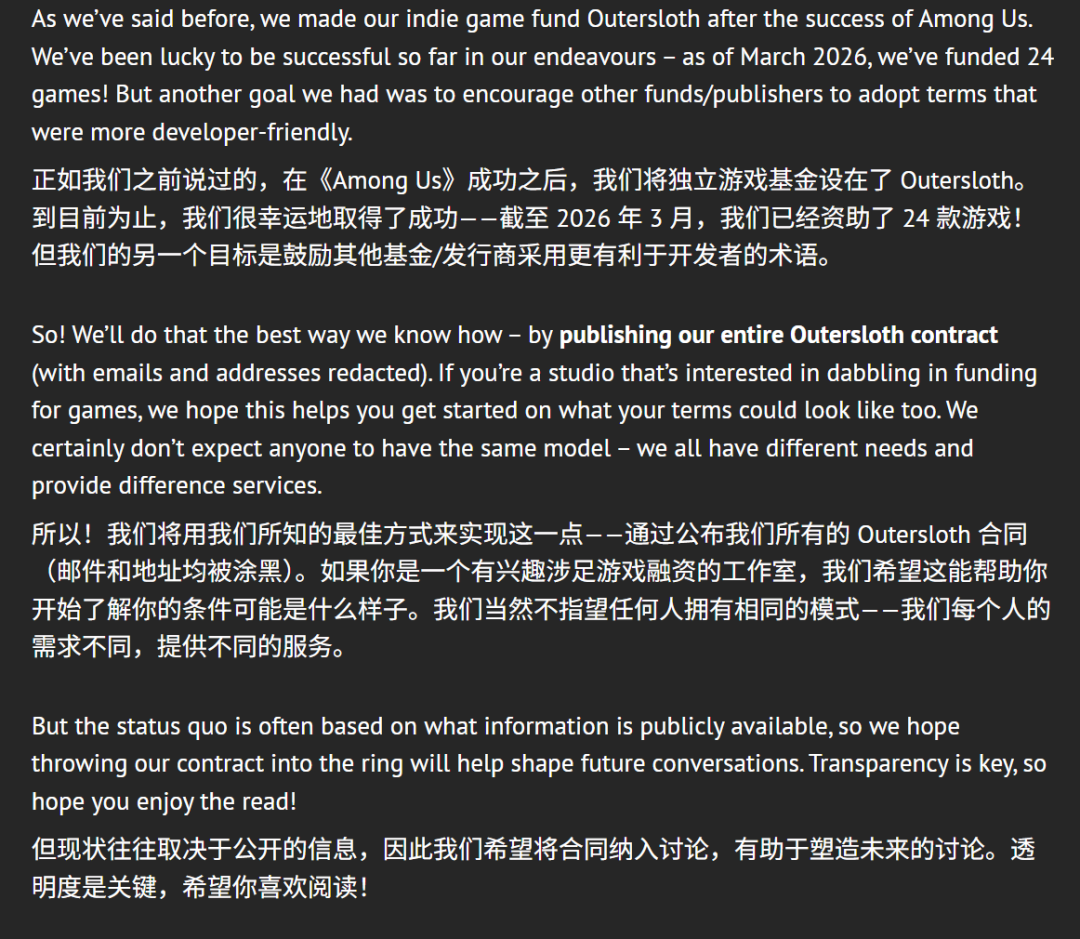
During GDC 2024, Innersloth officially unveiled Outersloth, its investment division that had been operating in secret for two years, and took a step that is unusual in the industry: it published the full text of its standard contract on its official website.
(Official information from Outersloth)
Traditionally, information asymmetry has been a key advantage for publishers in negotiations, covering not only the distribution of future revenue but also payment terms, IP rights, and various issues related to international distribution.This leads to a situation where, in practice, publishers can exploit contractual provisions to extract an excessive share of the game’s revenue, while developers often lack a common understanding of complex, non-standard contracts.
Victoria Tran chose to take the opposite approach. Outersloth’s terms are very straightforward: before the development advance is recouped, the two parties split the profits 50-50; once the investment is recouped, the royalty rate drops to 15%, and the developer receives 85% of the profits.
In addition, the contract includes a seven-year sunset clause: seven years after the game’s release, the contract automatically terminates, and all control and revenue revert to the developer. This also prevents future disputes over IP ownership, allowing creators to place their full trust in the publisher.
Forest Willard explained, “No one should have the right to make endless financial demands on creators.”
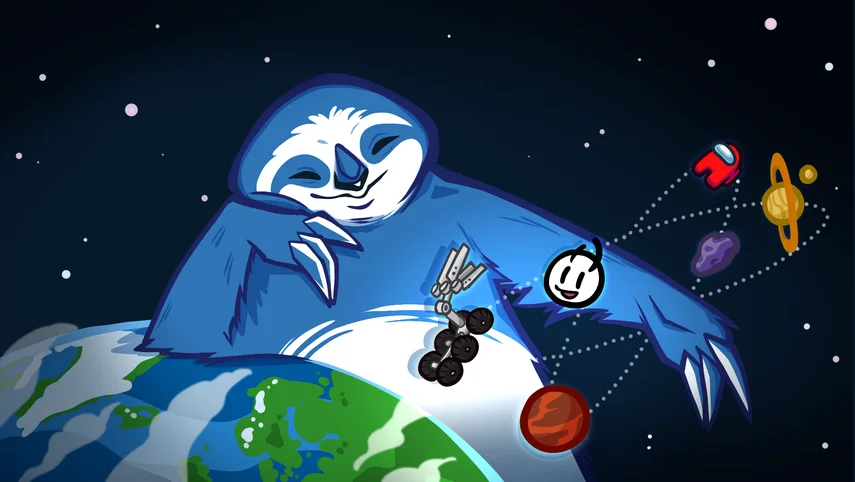
Outersloth’s terms achieve two things: first, they prevent opacity in the relationship between developers and publishers by clarifying revenue-sharing and partnership arrangements, thereby alleviating creators’ concerns and ensuring that games do not become tools that harm both the publishing and development sides; second, they encourage creators to think strategically about monetization, since, after all, no one wants to see their bank account suffer.
On a deeper level, Outersloth also hopes to spark a movement against the industry-wide race to the bottom—by using transparent terms to pressure traditional publishers into improving their terms and conditions, thereby enabling Outersloth to secure high-quality projects.
The reason they don’t over-monetize their games isn’t just because the founders have been through tough times; it’s also because they have a confidence that traditional publishers could never match: a hit like *Among Us* provides a steady stream of cash flow.Outersloth has absolutely no need to rely on game investments to turn a profit; its parent company, Innersloth, provides a safety net. This allows the publishing division to avoid constantly worrying about ROI, freeing them to some extent from the constraints of financial returns and enabling them to confidently explore games they believe in.
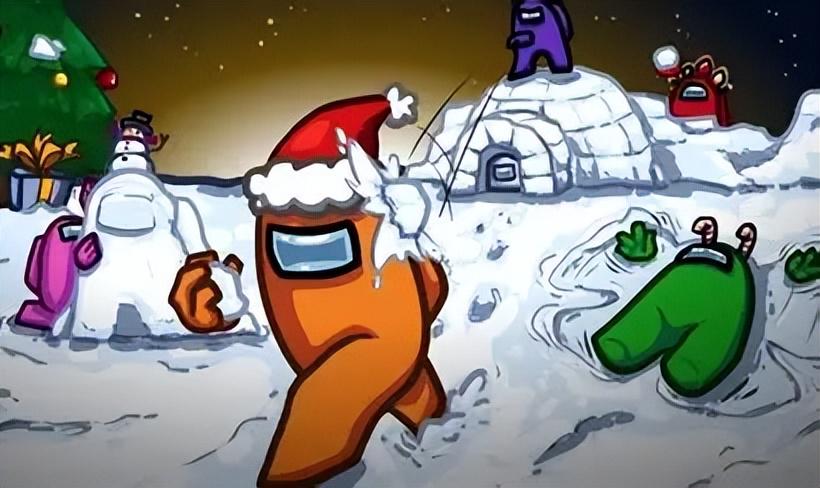
With this confidence, they can afford to reject any and all speculative capital. They have outright rejected roughly 50% of business proposals, turning down projects driven by short-term gains and blind trend-chasing; of these, about 30% were immediately dismissed simply because they involved generative AI.
In addition, Outersloth has completely abandoned traditional quantitative risk control models. The review criteria Victoria Tran outlined border on the whimsical. She put it bluntly: “I only value games that have ‘soul.’”

At Outersloth, they believe that if the team itself isn’t excited about a game, it’s impossible to successfully market it. As a result, they ruthlessly weed out poorly crafted proposals—those with nothing but dry text and no accompanying visuals—right from the first round.Among the remaining projects, they rely entirely on intuition, their own taste, and whether the concept resonates with them to identify the right ideas.
As a result, their approval rate is quite low—barely over one percent—and new projects continue to pour in.
And sometimes, precisely because we don’t stick to conventional approaches, we end up with unexpected surprises in terms of commercial success.
Traditionally, publishers have faced the challenge of simplifying and standardizing the ever-changing preferences of players. This inevitably leads them to search for elements of successful, profitable games in new titles, in an attempt to cobble together a viable business model based on past successes.
However, this doesn’t mean that games not on the list can’t be profitable; it simply means that the risks associated with innovation are shifted onto the developers due to financial pressures.
In 2023, Xalavier Nelson Jr., the head of Strange Scaffold, found himself in a crisis. In addition to the immense pressure from development itself, the ongoing struggle to secure funding left him exhausted, and he considered giving up on several occasions.
Throughout a series of presentations and demos, he was repeatedly turned down by traditional investors for one simple reason: the game lacked any long-term business strategy.
“If your goal is to secure a $200,000 budget from traditional publishers, they’ll tell you that a game that defies conventional business logic simply can’t survive. Investors will definitely demand the inclusion of long-term retention mechanisms.” Nelson realized with despair that, under the logic of traditional capital, there was simply no room for such bizarre ideas to survive.
Outersloth made a timely appearance, funding Nelson’s experimental game *Clickolding*.It’s a bizarre game set in a dimly lit motel room, where a masked, gun-wielding man sits in the corner, forcing the player to press a pedometer using the mouse or the spacebar; the soundtrack is eerie and foreboding, it’s priced at just $2.99, and the playtime is about 40 minutes.
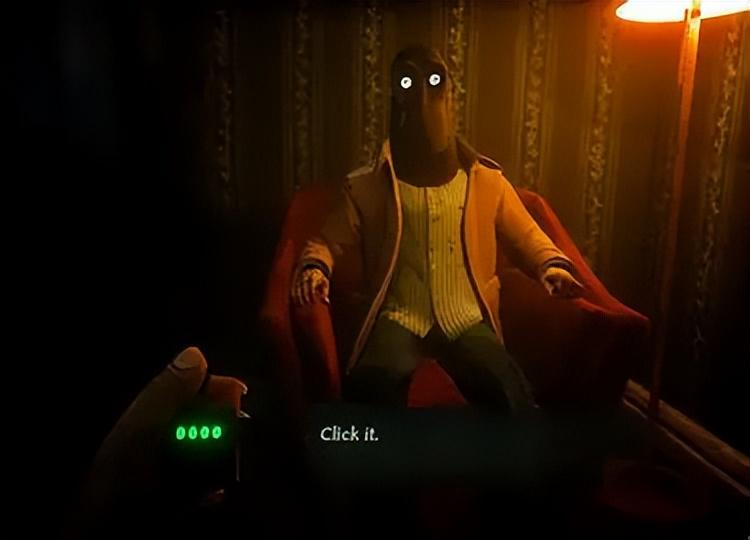
With support from Outersloth, the Strange Scaffold team completed this project in two months.
Despite being a game that clearly catered to a niche audience, it ultimately sold 80,000 copies and was named one of the 40 best games of 2024 by the renowned entertainment outlet The A.V. Club.
From an ROI perspective, *Clockolding* performs quite well: it has low costs, a short development cycle, is sufficiently secure, and generates relatively substantial profits for a game of this scale.
This is also the mission Outersloth has set for itself: to bring those highly controversial, unconventional projects—ones that could never survive under traditional business models—into the mainstream conversation, and to prove that fun and creativity, even when fraught with uncertainty, aren’t necessarily the enemy of business.
02
Ghost Ship Games: The Right Answer for 2A Games
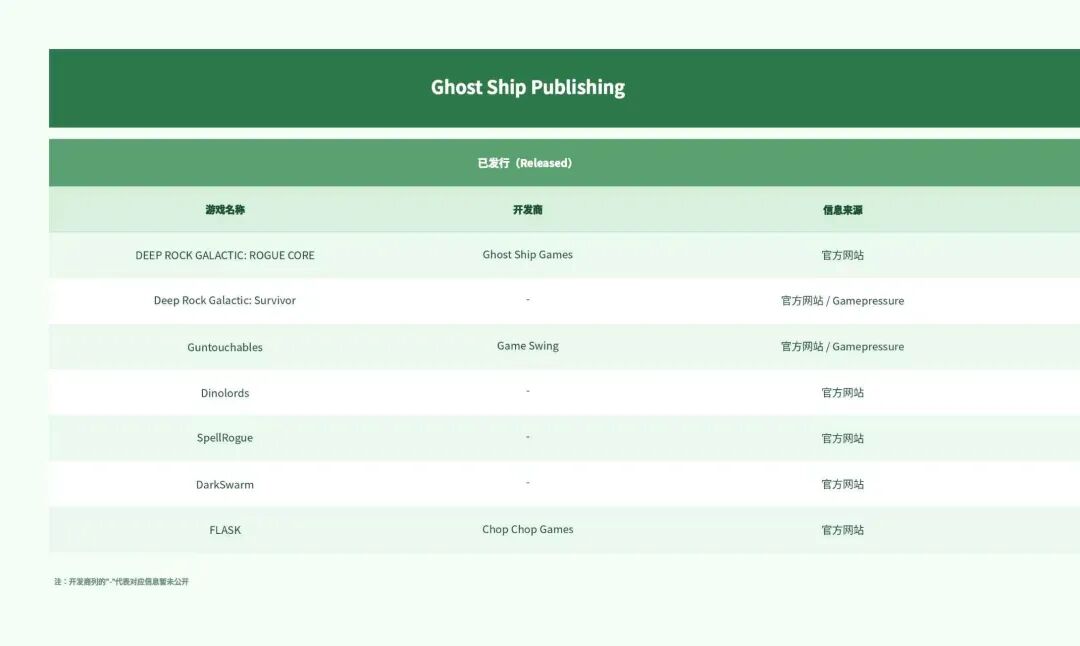
If a company were willing to open up IP licensing for its core titles, allowing creative small and medium-sized teams to capitalize on the popularity while maintaining the utmost respect for the original games, would it succeed?
The Danish studio Ghost Ship Games has taken a path that is completely different from Outersloth’s financial backing.
As the developer of the phenomenally successful cooperative shooter *Deep Rock Galactic*, Ghost Ship Games has not only achieved long-term success with over 8 million copies of the base game sold, but was also acquired in 2021 by Coffee Stain, a subsidiary of the Swedish investment giant Embracer Group.
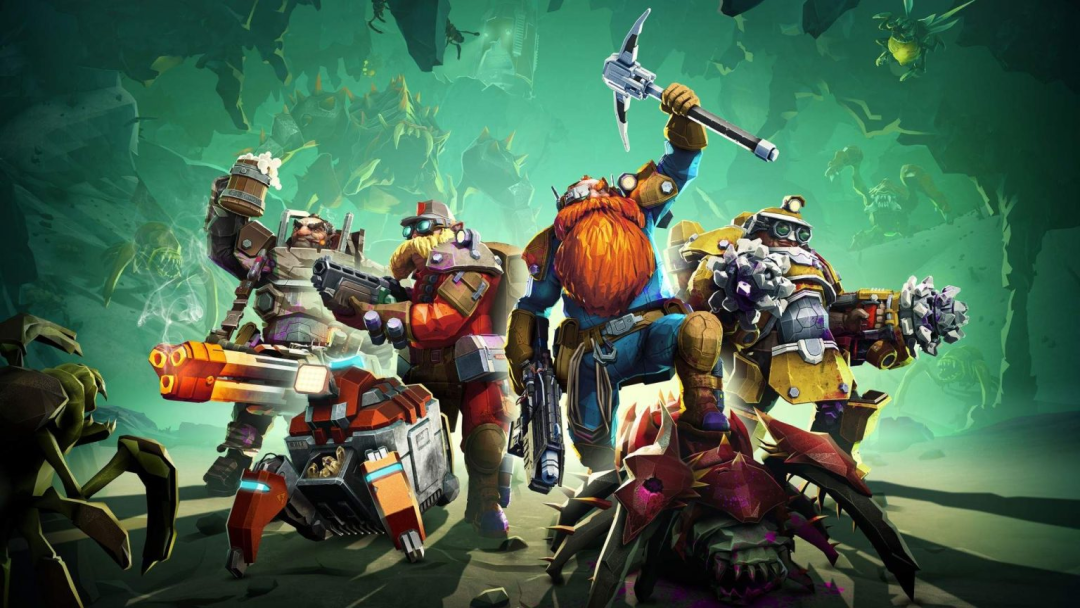
CEO Søren Lundgaard and Game Director Mikkel Martin Pedersen found themselves with considerable financial resources. Recognizing the gaps in Denmark’s local publishing ecosystem and fully aware of how difficult it is to create an original hit, they launched Ghost Ship Publishing.
When it comes to publishing, Ghost Ship does not blindly pursue diversification across genres. They understand that their strengths lie in creative gameplay and market insight, as well as the substantial capital and public recognition derived from their IPs—these are the greatest resources they have to offer.
Consequently, they chose to open up their IP and share their expertise with the development team, resulting in deep involvement.
However, this involvement does not use commercialization as a means to pressure the author; rather, it ensures both creative freedom and market expectations through two key measures.
First, transparency: the development team must maintain constant communication with players to ensure that feedback is addressed in a timely manner.
Second, flexibility: Ghost Ship avoids investing in games that are too asset-intensive; it steers clear of AAA titles and instead favors 2A games that prioritize gameplay and deep mechanics, ensuring a stable return on investment.
First and foremost, the IP-sharing strategy is the cornerstone of Ghost Ship’s entire distribution model and reflects Ghost Ship Games’ roots as a game developer.
Major publishers and studios often treat high-quality IP as their exclusive domain, firmly controlling the economic benefits derived from IP distribution. IP serves as the core collateral for publishers to hedge against investment risks, a legal weapon to control the fate of creators, and a moat to prevent brand value from being diluted.
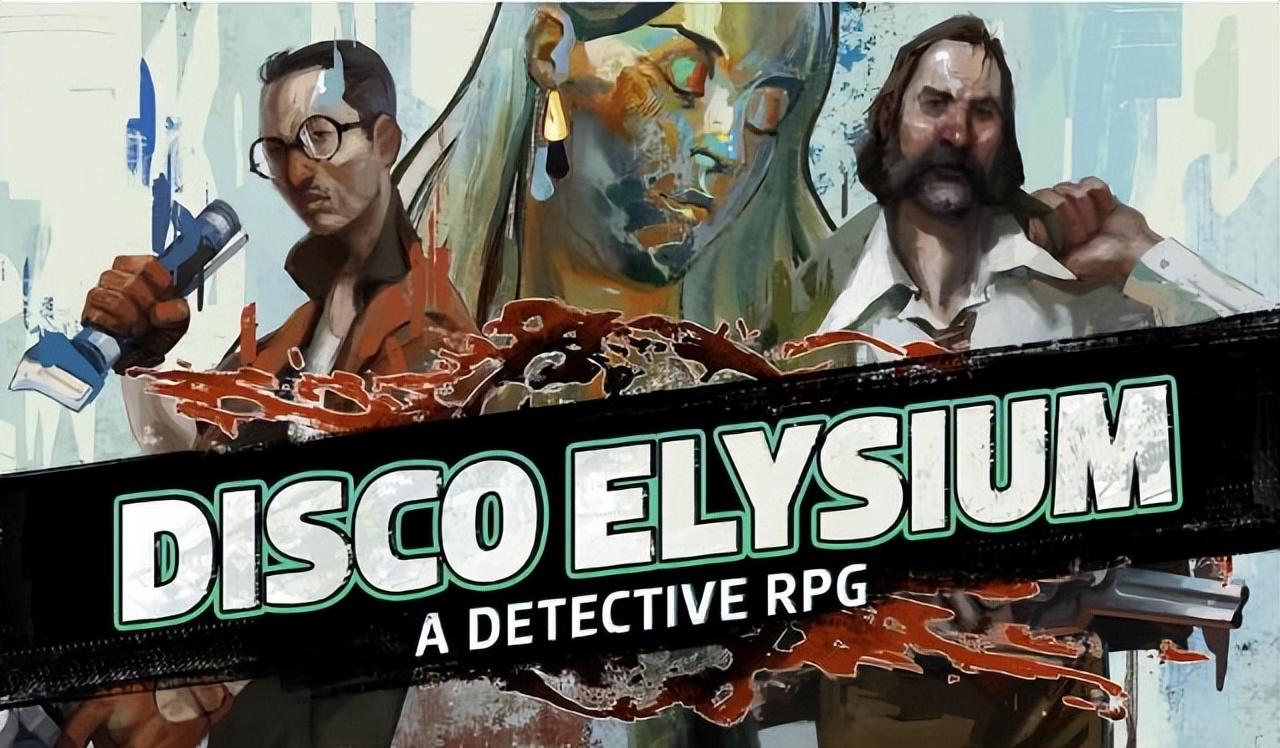
The founder of *Disco Elysium* was forced out by corporate maneuvering, and countless independent developers have lost control over their own works due to contractual terms; IP clauses have long been the crux of the power imbalance between publishers and creators.
Instead, Ghost Ship’s leadership—Søren Lundgaard and Mikkel Martin Pedersen—are willing to license their most valuable core asset, the *Deep Rock Galaxy* IP, to small development teams lacking resources, and take on the responsibility of publishing their games.
Their approach is that, rather than letting a flood of copycat products flood the emerging market, they would leverage their own IP portfolio to support external teams in developing products in different categories based on the same IP.
Developers don’t have to worry about their own IP being exploited, and they can benefit from the traffic and brand endorsement of top-tier IPs.
Second, open development. Ghost Ship is a strong advocate of the Early Access model. They require developers to engage with players from the earliest stages of development, exposing core mechanics and creative concepts to real players, and using long-term community feedback to facilitate rapid trial and error and agile iteration—rejecting the practice of wasting budget on development behind closed doors.
They’ve chosen to be “guides” for game developers, walking development teams through the turbulent waters of the Early Access phase and helping game creators navigate the pitfalls of community backlash.Lundgaard and Pedersen frequently stream playthroughs of the current version during “fireside chats” on Discord, offering expert feedback;
This allows the game to keenly capture market sentiment while avoiding the backlash that comes from forcing commercial elements onto players. When it came to *Ghost Ship*, the developers faced a wishlist that far exceeded expectations, so they made the bold decision to delay the release to give their team more time to polish the game’s quality.
Alex Skronski, Marketing Director at Ghost Ship, refers to this approach as “hard-working marketing”—treating the community as an equal partner in dialogue and using feedback to inform development and marketing strategies.
Third, 2A titles take priority. When it comes to product selection, Ghost Ship has completely ruled out linear narrative games that rely on large-scale production, instead focusing exclusively on games with deep mechanics, unlimited expandability, and experiences built primarily through players’ spontaneous interactions during gameplay.
This decision was made because Ghost Ship not only keeps development costs in check but also incorporates the key elements that made *Deep Rock Galaxy* a success—procedurally generated maps, highly flexible class combinations, and a thriving long-term community ecosystem—to ensure the game achieves a certain level of commercial success.
To sum it up in a nutshell: Let others win the way you do, and help your fellow players who share your approach get ahead first.
These strategies are best exemplified by *Deep Rock Galaxy: Survivor*, an auto-shooter developed by Funday Games and published by Ghost Ship.
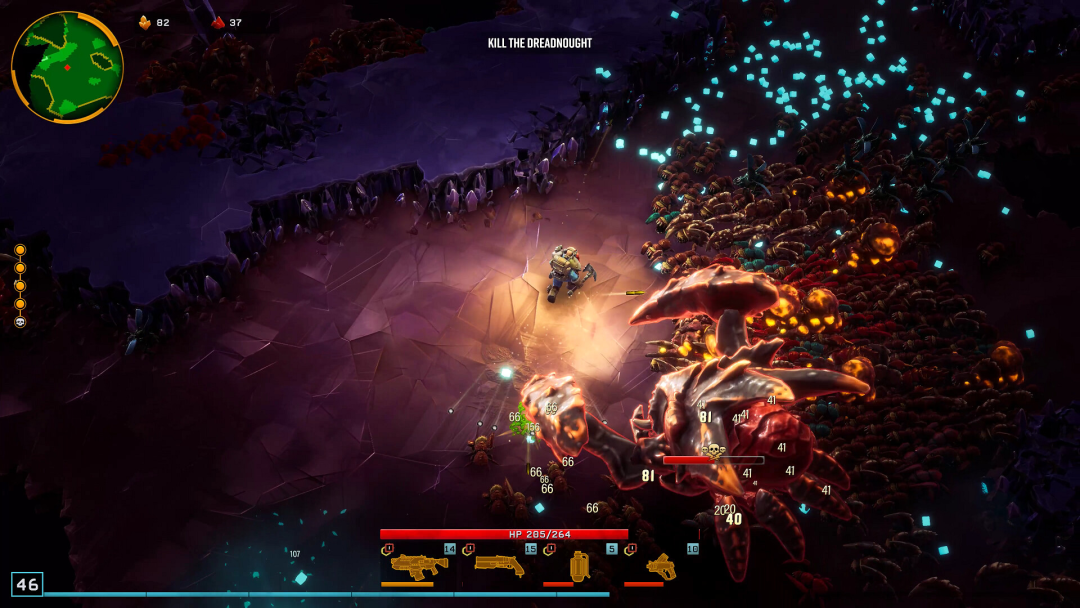
The project originated in 2022 at the Gamescom in Cologne, Germany,Søren Lundgaard and his former student, Funday co-founder Anders Leicht Rohde, were chatting over drinks when they came up with an idea—to integrate the mining mechanics from *Deep Rock Galaxy* into the auto-shooter genre.
Without delay, Rohde built a rough but playable core prototype within a week. Even before a formal contract had been signed, Ghost Ship not only provided funding but also granted Rohde a royalty-free license to the *Deep Rock Galaxy* IP.
The development process was also highly collaborative, featuring a thorough competitive analysis—the team collectively studied approximately 30 similar products, analyzing their successes and failures one by one;
There was also discussion about gameplay balance—an intense debate erupted internally over whether to include a “sprint” button. Søren initially advocated strongly for it, but after simulating the gameplay, he realized that sprinting would fundamentally undermine the strategic fun of planning mining routes. He was eventually persuaded, and the game retained its minimalist movement controls.
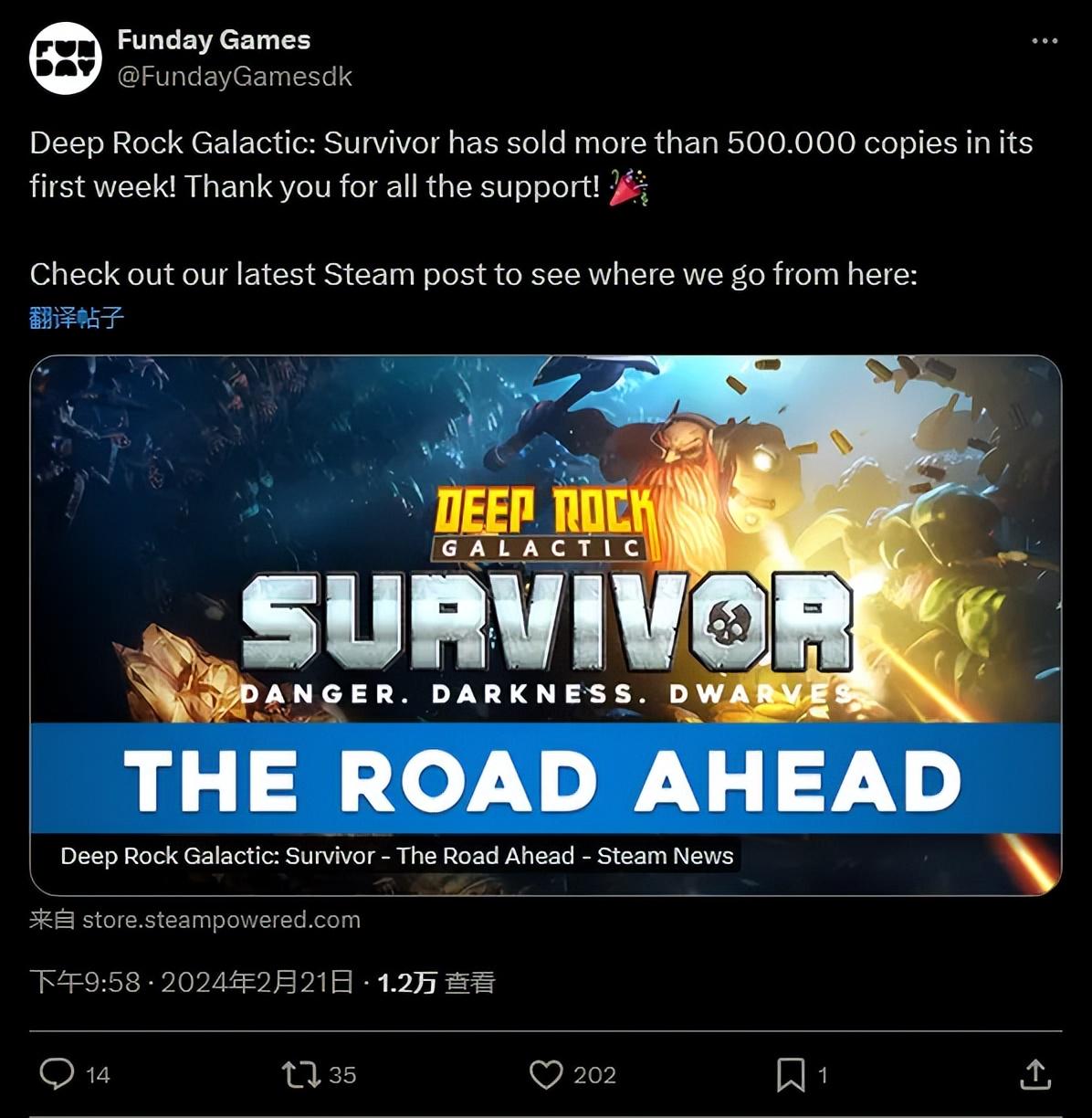
The commercial results have also been quite impressive. Priced at $9.99, *Deep Rock Galaxy: Survivor* launched in February 2024, selling over 500,000 copies in its first week and reaching a peak of nearly 57,000 concurrent players;Total sales have reached approximately 1.4 million copies, with a median playtime of 12.2 hours and an average of 28.9 hours; estimated gross revenue from the buy-to-play model exceeds $11.1 million; and the game maintains a steady 86.4% “Overwhelmingly Positive” rating on Steam.
By granting free licenses for its core IP to small external teams to explore niche markets, Ghost Ship has enabled its own publishers to generate substantial commercial returns without significantly increasing internal R&D costs, thereby extending the IP’s lifespan; developers, in turn, have benefited from the traffic generated by established IPs and received in-depth technical support.
This approach—redefining IP as a lever rather than a monopolistic asset—provides the entire industry with a quantifiable and verifiable roadmap: by empowering small external teams to explore new possibilities, publishers can not only extend the lifespan of their IPs without significantly increasing R&D costs, but also build an IP moat that cannot be easily replicated through resource sharing.
03
The SUPERHOT Team: Building the Infrastructure for Commercialization
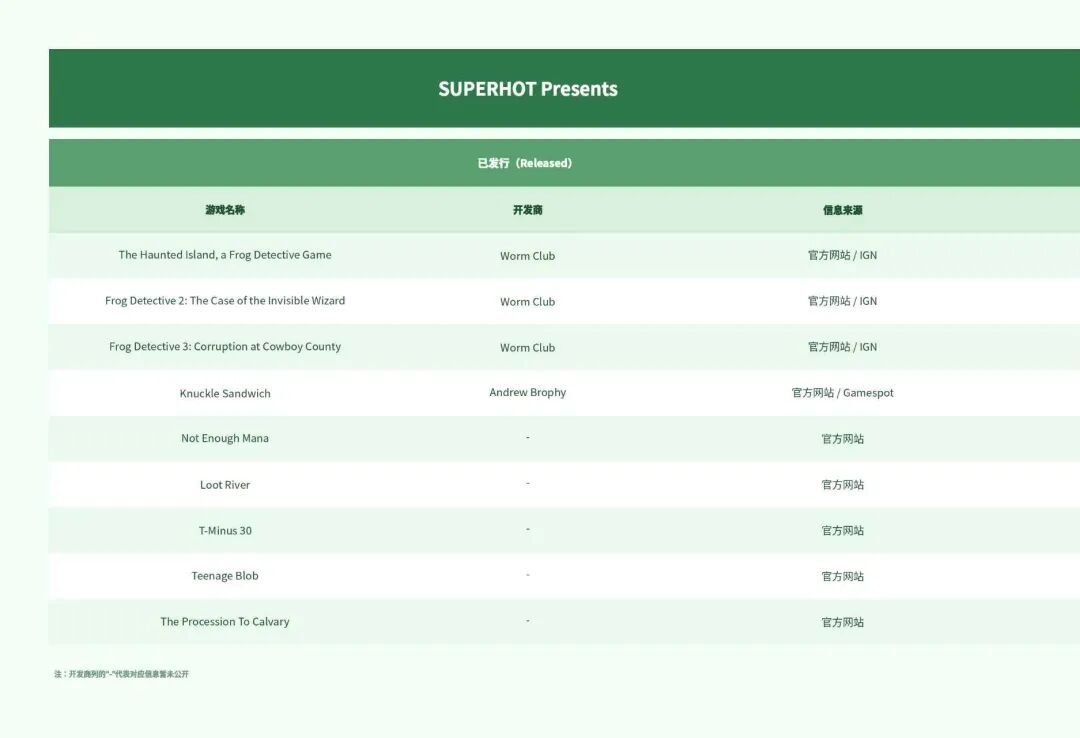
The support this team provides to developers can be broken down into two main areas:
Within the team, they incubate publishing and investment funds that assist cash-strapped developers under extremely lenient terms. In this sense, they resemble Outersloth—but with even more flexible terms and a more laid-back approach—though they do not provide direct support for commercialization.
In addition, drawing on the painful lessons learned from SUPERHOT’s commercialization experience, the CEO developed a SaaS platform specifically designed to help indie game developers analyze data, providing them with the infrastructure needed for business analysis.
To put it simply: they’re very generous with investments—they’ll open their wallets for anything quirky—but they generally don’t engage in distribution processes like Q&A sessions;
From a commercial perspective, we focus on empowering others by providing the tools they need to achieve digital equality.
First, let’s start with the first point.
In 2014, the Superhot team stood out at the “7-Day FPS Game Jam” with an innovative prototype featuring a time-freeze mechanic, and successfully raised double their initial funding goal on Kickstarter;After nearly two years of intense, round-the-clock development, the full version of *Superhot* was officially released on Steam in February 2016, followed by *Superhot VR* in December of the same year, which quickly topped the global PC VR game sales charts.
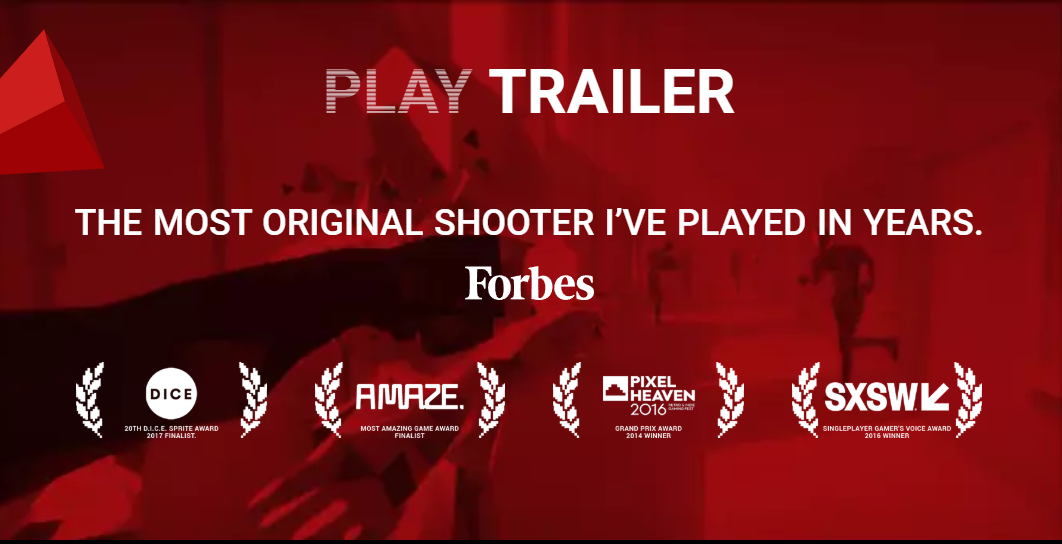
In other words, after the base version of *SUPERHOT* sold over 1.2 million copies and the VR version sold 800,000 copies, this team—which had once been on the brink of bankruptcy—continued to harbor a deep-seated sense of “survivor’s guilt.”
During the studio’s toughest times, SUPERHOT survived entirely thanks to crowdfunding from players on Kickstarter.
Callum Underwood, Director of Special Projects, looked at the massive sum of money on the books and made a decision. “Back when we had no money, it was the community that helped us. Now we’re going to reinvest this money back into the industry.”
SUPERHOT Presents was created specifically for developers who don’t need—or even dislike—traditional publishers.
First, SUPERHOT has completely eliminated most restrictive clauses: they never demand any form of control over the game’s IP, they don’t micromanage the game’s art style or narrative direction, and they don’t force their way into the game’s release schedule.They’ve even streamlined the review process to the extreme—no need to create those overly formal pitch decks.
In fact, all it often takes is for a developer to send an eye-catching gameplay GIF to the official Superhot Twitter account to get them to shell out the cash.
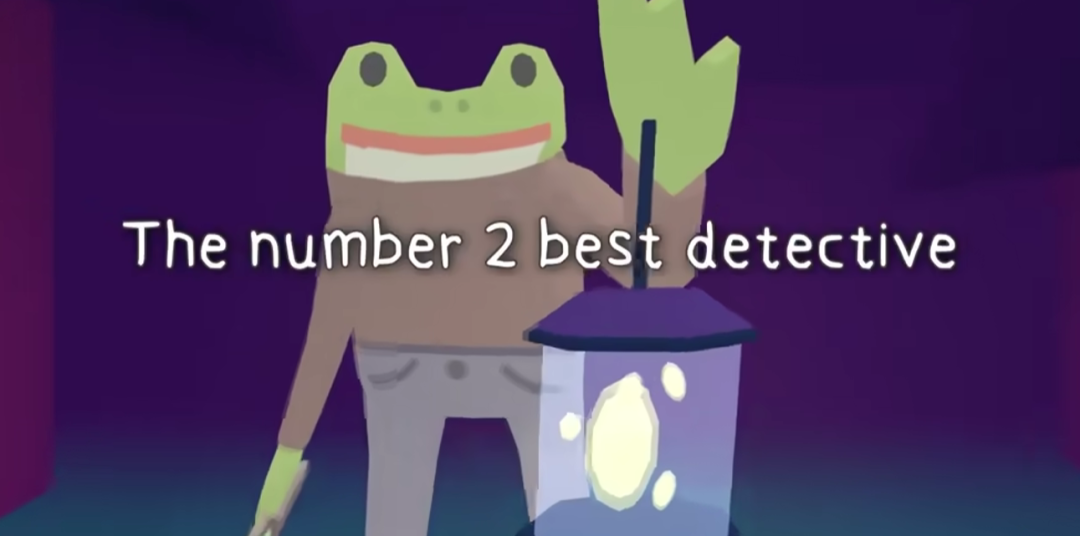
Underwood himself makes no secret of this; he says he makes decisions based on “gut instinct and cold, hard cash,” and that they specifically seek out works that are “cool, fun, and unusual.”Take Grace Bruxner’s *Frog Detective*, for example—a short narrative game with no action elements or puzzle mechanics, where the protagonist’s main task is to investigate a sloth haunted by a ghost.
In addition to investment, SUPERHOT will share their business expertise, particularly in business development (BizDev), including assistance with contracts, introductions to platform partners, and data analysis recommendations. They will also make their game proposal templates available to the entire community to help developers plan their projects more professionally and increase their chances of securing investment.
As a result, the *Frog Detective* series has sold over 500,000 copies in total, with the original game earning an overwhelming 92% “Overwhelmingly Positive” rating on Steam and generating $580,000 in revenue from digital sales alone.Another title, the pixel-art RPG *Knuckle Sandwich*, developed by Andrew Brophy over the course of more than a decade, received funding from *SUPERHOT* during its most challenging final development phase. With an 85.5% approval rating and solid sales, it has been hailed by critics as “the weirdest and most endearing game of the year.”
Provided that the intellectual property rights belong entirely to the developers and are not subject to creative interference, these unconventional titles have not only survived but have also built a loyal base of paying users in the commercial market.
However, they are well aware that failing to help game development teams achieve commercial success would be irresponsible toward the game developers and publishers themselves.
But is there a way to help independent developers sell their games without interfering with their creative autonomy?
In 2018, the SUPERHOT team struggled immensely with monetization. Due to their overly haphazard approach, they had no understanding of how to reconcile cross-platform sales data or how discounts on different platforms affected one another, which left them feeling anxious and panicked at one point.
It was at this very moment that the leadership of the SUPERHOT team came to fully realize that the reason traditional publishers have long held such a dominant position in revenue-sharing negotiations lies not only in their financial strength and distribution capabilities, but also in their monopoly on data—including cross-platform sales conversion rates and regional pricing models—data that most developers know nothing about, yet which forms the foundation of pricing and marketing strategies for distribution channels.
Promoting a game relies on strategies such as discounts, co-promotions, and localization, but marketing must also be grounded in reliable data and feedback. The biggest challenge independent developers face when self-publishing is being locked out of access to business data.
Therefore, drawing on his own experience and faced with a complete lack of out-of-the-box business intelligence solutions on the market, Tom Kaczmarczyk decided in 2018 to divert internal R&D resources to build a business data analytics tool and make it available to creators.
Their data platform, IndieBI, is designed to address this issue: it allows developers to break down sales figures by region and hardware platform, conduct anonymous comparisons of actual performance against similar games on the market, and accurately measure the price elasticity of sales resulting from different discount levels.
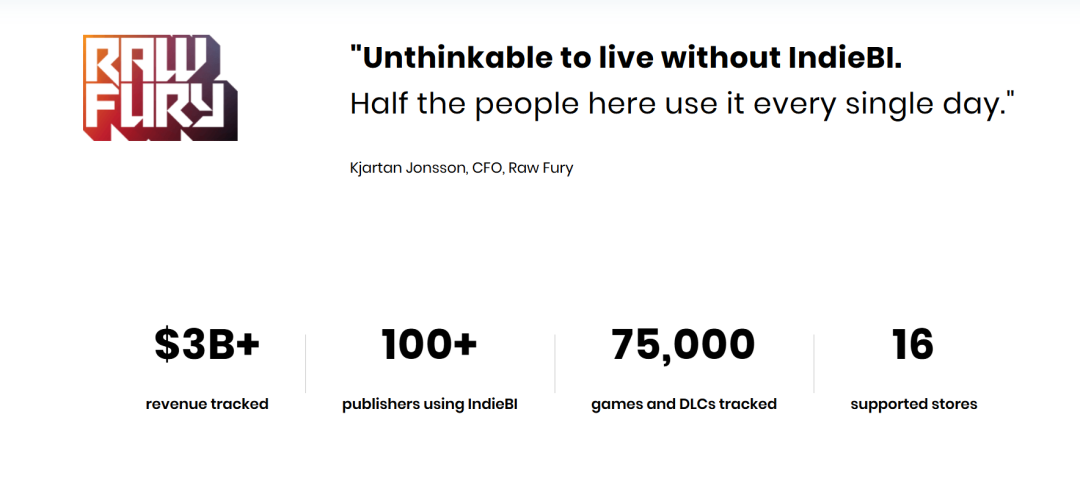
Under this framework, developers not only receive funding without creative interference but can also leverage IndieBI to optimize monetization through targeted marketing and long-term sales strategies.
This is precisely where the SUPERHOT team’s significance to the industry lies.
It fully understands that, as a mid-sized publisher, it lacks substantial influence over distribution channels and cannot expand the game’s market presence. Therefore, it focuses solely on two practical pain points: first, the funding challenges faced by non-mainstream games, and second, providing R&D teams with tools for informed business decisions. In fact, this approach has also reduced independent game development teams’ reliance on distribution channels.
As Kaczmarczyk, the head of the business team, put it, this is “an effort to help developers become smarter and more likely to succeed.”
04
Poncle Presents: Good Intentions Can’t Replace Hard Work
If he had the chance to say one thing to his past self, Poncle, the developer of *Vampire Survivors*, would say this to himself from two years ago:
“You’re so high and mighty. You’re such a big shot.”
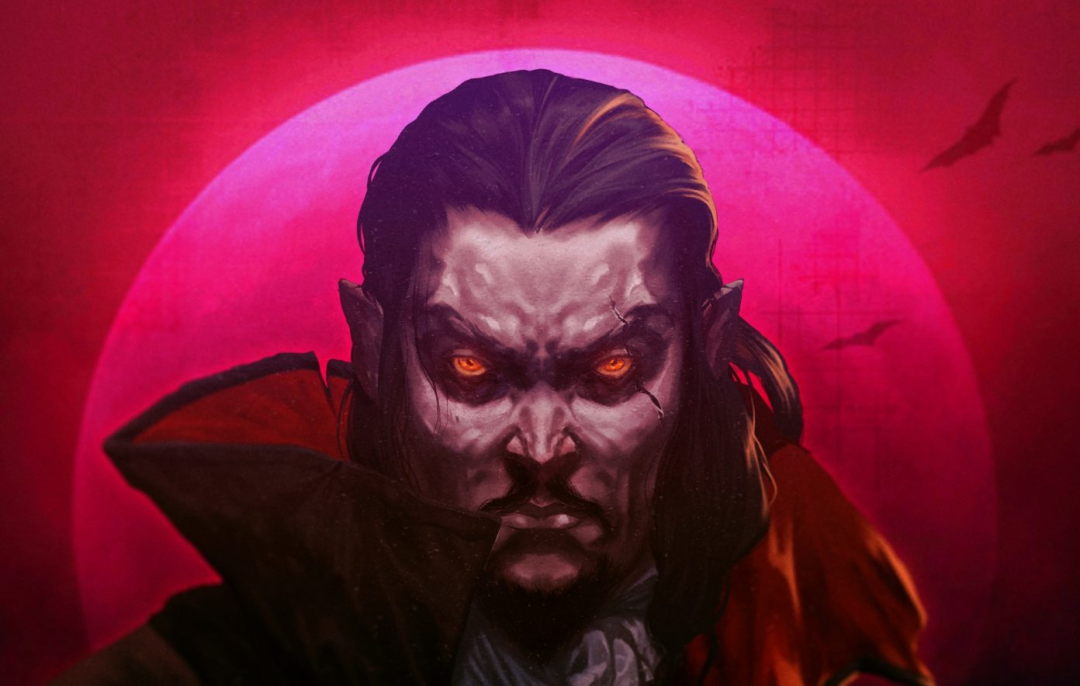
After *Vampire Survivors* surpassed 27 million players and achieved tremendous commercial success, the British indie studio Poncle and its founder, Luca Galante, decided to launch their own publishing company in September 2024.
By now, you’ve probably guessed it—yes, this guy’s original intention was also to give back to the gaming community.
In an interview with GamesRadar, he admitted, “We’re lucky that *Vampire Survivors* was a success. Although we made some missteps early on, we learned a lot, and we want to share those lessons with other indie developers.”
But unlike the first three, his approach to distribution was far more radical, adhering to a single principle: rebellion.
In other words, “Whatever traditional publishers do, I’ll do the exact opposite.”
Having worked on mobile slot games in his early career, Galante is extremely wary of—and deeply opposed to—the way capital will stop at nothing to turn a profit. Galante believes that many publishers view games merely as financial products and ruthlessly cut off funding if a game doesn’t become an instant hit.
With this in mind, Poncle Presents has established an extremely strict set of criteria: we categorically reject any F2P models that attempt to exploit players’ attention, as well as Web3, blockchain technology, and AI-generated games.
Taking their anti-capitalist stance to the extreme—even at their own expense—Poncle Presents rejects all copycat games that attempt to replicate the success of *Vampire Survivors*.
His criteria for evaluating investment value are simply whether a game demonstrates depth in its mechanics and the developer’s sincerity.
In fact, Galante has stated that regardless of the game’s commercial success, the company will “continue to provide support” after its release. The core principle is: “Once you release a game, you have an audience—and no matter how large or small that audience may be, it deserves to be treated fairly.”
Everything looks great, but there’s just one problem: the game simply isn’t selling.
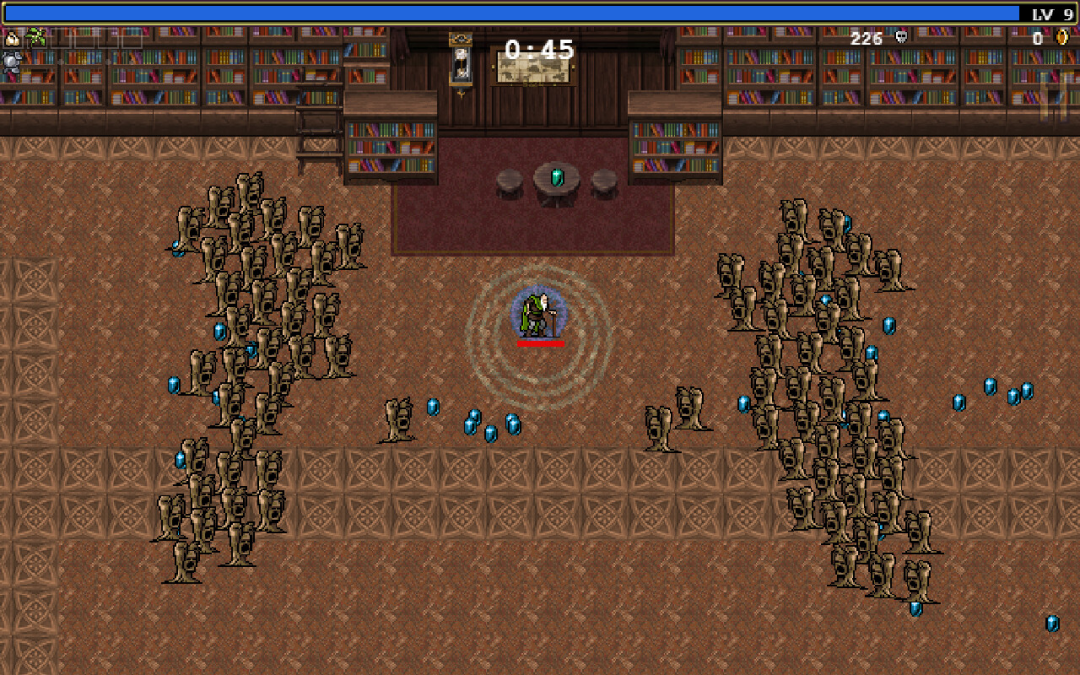
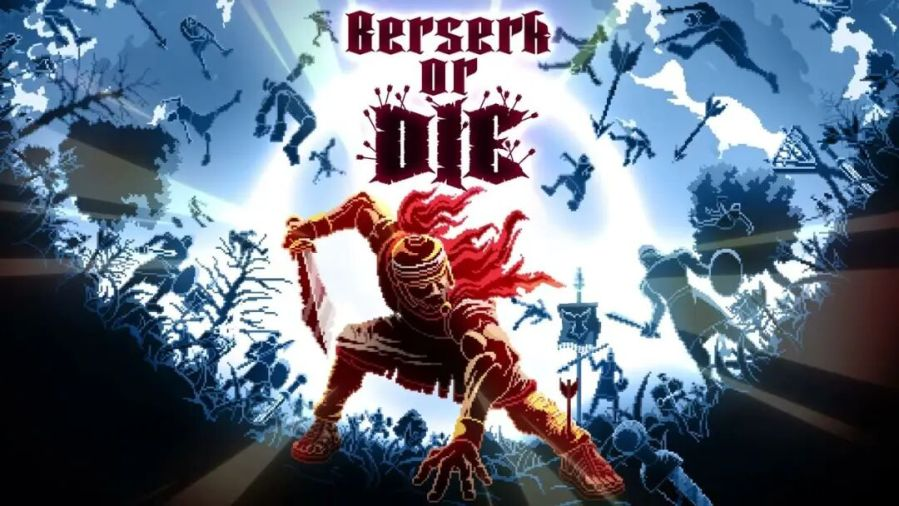
To date, Poncle Presents has released two indie titles:”Kill the Brickman,” a brick-breaking roguelike developed by Doonutsaur, and “Berserk or Die,” developed by Nao Games. Both are priced under $5 and have performed rather poorly, with their Steam positive reviews barely exceeding three digits.
Poncle Presents has completely shed its commercial focus, as well as its professional marketing team, global PR network, in-depth understanding of platform algorithms, and long-term user acquisition strategies;
Not only that, but because market tools have long been neglected, Poncle Presents’ distribution strategy is often out of step with the product’s features.
It’s important to understand that publishing and investment are not simply about putting money into a product and selling it; rather, they constitute a complex, systematic endeavor involving multilingual development, cross-cultural operations, KOL relationship management, and long-term version management. In the market, these aspects have become highly industrialized; capital is not the only barrier to publishing, and good intentions cannot substitute for professional expertise.
Poor market performance ultimately led Poncle to decide to suspend its third-party game publishing operations entirely. Reflecting on the situation, the founder said, “We naively believed that as long as we were willing to invest our heart and money, we could support those projects. Now we realize that to publish games efficiently, we also need a more robust organizational structure.”
Poncle has now learned from its mistakes and shifted its strategic focus. Although the company has decided to pause third-party publishing, it has found a more effective way to empower others in another area—by developing the “Vampire Survivors Engine” and licensing it to other brands and studios for the development of Survivors-style games.
Compared to a full-scale release—which requires significant resources for marketing, QA testing, and platform negotiations—“helping other developers create games using our engine” is undoubtedly a more pragmatic and effective approach.
05
Redefining Value Anchors
On the surface, the stories of the leaders at Outersloth, Poncle, Ghost Ship, and SUPERHOT are often portrayed as tales of a group of unrealistic idealists who insist on going against the grain.
But is that really all there is to it?
At least in the first three cases, every team with an indie game background clearly understood the challenges of monetization and, while preserving the essence of indie games, made continuous efforts to address them—whether through legal provisions, their own IP, or digital tools.
Their efforts are not simply about being contrarian or calling for “de-commercialization,” but rather about helping works that appear risky find their own commercial value, thereby bridging the gap between the market and creativity.
Damn it
And this, after all, is the very essence of venture capital; after all, business and innovation are not always at odds.
In a mature business system, the fundamental role of capital is to assume financial risk in exchange for profit.
The reality, however, is that a significant number of publishers exploit this imbalance of power and responsibility to shift all commercial risks onto creators, who are in a weaker position. Creators not only face the heartbreak of seeing their hard work go to waste if a project fails, but also risk losing everything they own if they breach their contract.
Unlike mature content markets, the gaming industry lacks a system that guarantees long-term commercial success, leaving the most junior developers to bear the greatest financial risk.
However, a healthy business model can help all stakeholders in the industry earn their fair share of profits.
This is also the greatest value of independent game developers’ publishing labels: they navigate the balance between creativity—which thrives on uncertainty—and the market—which demands certainty. Ultimately, their goal is not to prove that they are more ethical, but to reestablish a mutually beneficial relationship between publishers and developers.
After all, capital should serve creativity, not devour it.It remains to be seen whether these rebellious experiments can completely overturn the old system, but they have at least lit a campfire for independent developers groping in the dark—one that won’t burn them—thereby preventing the massive profits generated by game creation from ultimately turning against the industry itself.
|(Note: This content was generated by AI; please use it with caution.)
原创文章,作者:gallonwang,禁止转载:https://youxichaguan.com/en/archives/198339