Match-3 games are one of the most popular genres in the casual gaming market.
According to DataEye statistics, the number of match-three mini-games in development in 2025 exceeded 6,000, representing a year-over-year increase of 91.34% compared to last year, making it the category with the highest growth in the number of titles in development within the mini-game market.
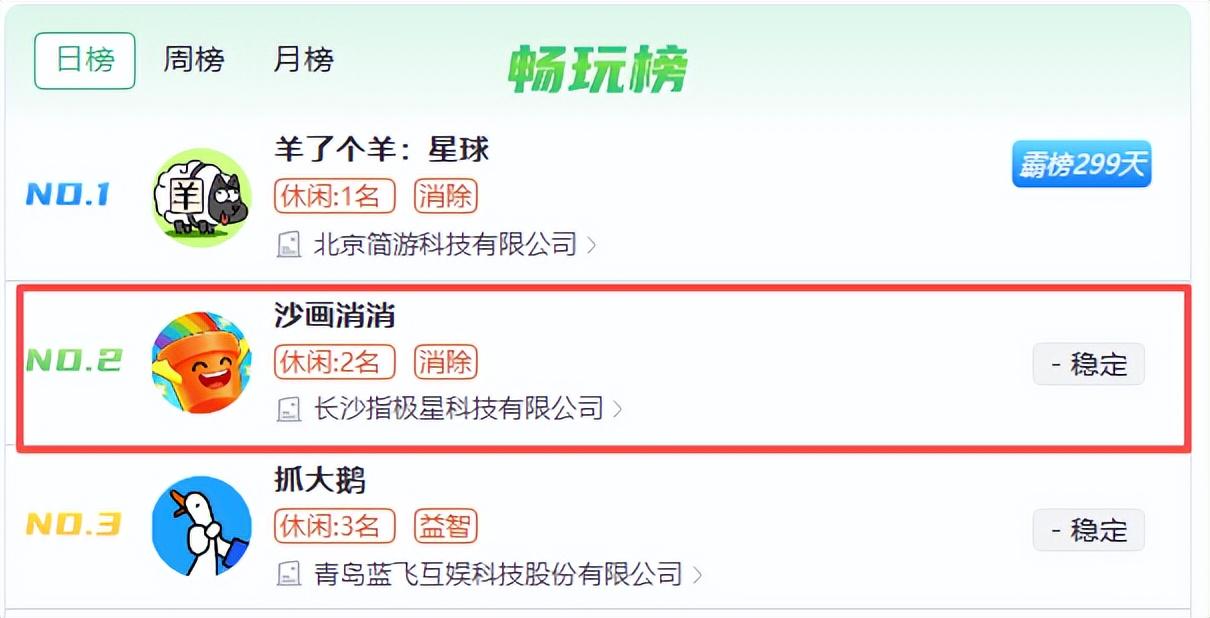
Recently, another game from ZhiSe Network, titled *Sand Art Match*, has made a name for itself in the “match-3+” genre thanks to its unique blend of themes and gameplay.Since first entering the top 3 of WeChat’s “Most Played” chart on May 18, the game has maintained its position at the top for over a month, emerging as a “dark horse” worth watching this early summer.
As of today, the game still ranks second on the Most Played chart, trailing only *Sheep Sheep*.
- Familiar content, a different experience
Specifically, *Sand Art Match*’s use of sand art as its theme and its “match-and-merge” gameplay mechanics are both common elements in the casual gaming genre. However, when these familiar elements are skillfully combined, they create a new synergy.
Above each level is a beautiful sand painting, and below it are buckets of sand labeled with different colors and numbers.Players simply tap a sand bucket to send it onto the conveyor belt in the center, where it automatically collects sand of the same color from the base of the sand painting. Once the bucket has collected the required amount of sand, it disappears. When three sand buckets of the same color enter the conveyor belt, they automatically merge into a single large bucket with a capacity equal to the sum of the three.

Once all the buckets and sand have been cleared, you’ve successfully completed the level. If the conveyor belt becomes full and there is no matching sand on the bottom layer of the board to clear, you’ve failed the level.
This color-matching and elimination gameplay is very similar to VOODOO’s previous release, *This is Blast!*, and the popular mini-game *Electric Blast* from Shenzhen Yuren Technology.
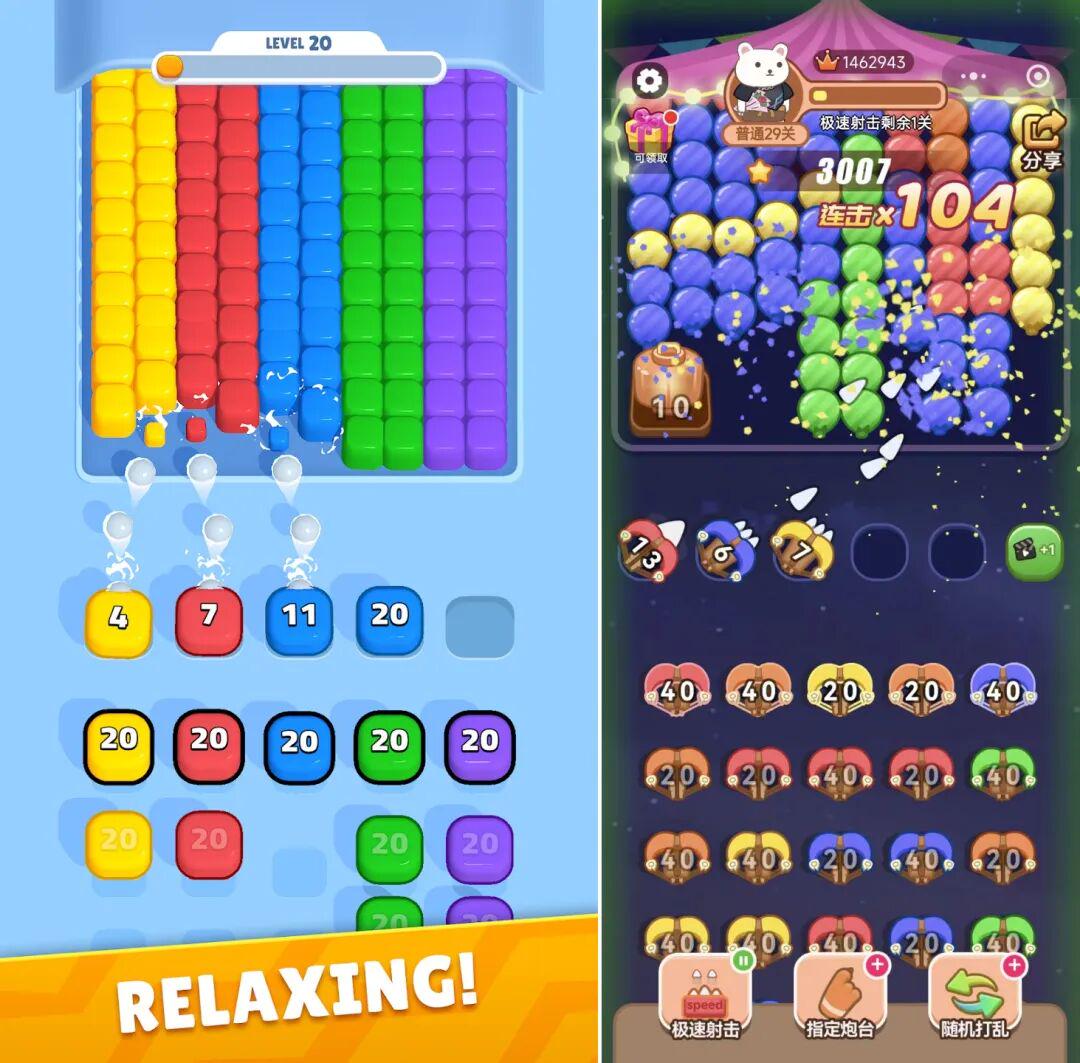
“This is Blast!” and “Electric Blast”
However, what makes *Sand Art Match* unique is its choice of sand art as a theme. When the sand at the bottom is cleared, the sand above flows naturally due to gravity, constantly altering the color distribution on the screen.This natural randomness, stemming from the properties of “flowing sand,” often disrupts the optimal elimination paths players have planned, significantly increasing the variability and replay value of each level. This injects a fresh sense of uncertainty and strategic depth into a familiar gameplay framework.
- A change in rhythm boosts dopamine stimulation
During the match-three process, the visual feedback is incredibly satisfying: the sand flows smoothly into the bucket, and consecutive matches continuously update the combo counter, vividly amplifying the positive feedback from every move.
In addition, the game features meticulous design in terms of pacing. During gameplay, the conveyor belt’s speed is not fixed but adjusts dynamically based on the situation: when there are still empty slots on the conveyor belt, it moves relatively slowly, giving players ample time to observe and think through their next strategic move;However, once the conveyor belt is full and the player is temporarily unable to perform effective actions, it automatically speeds up.
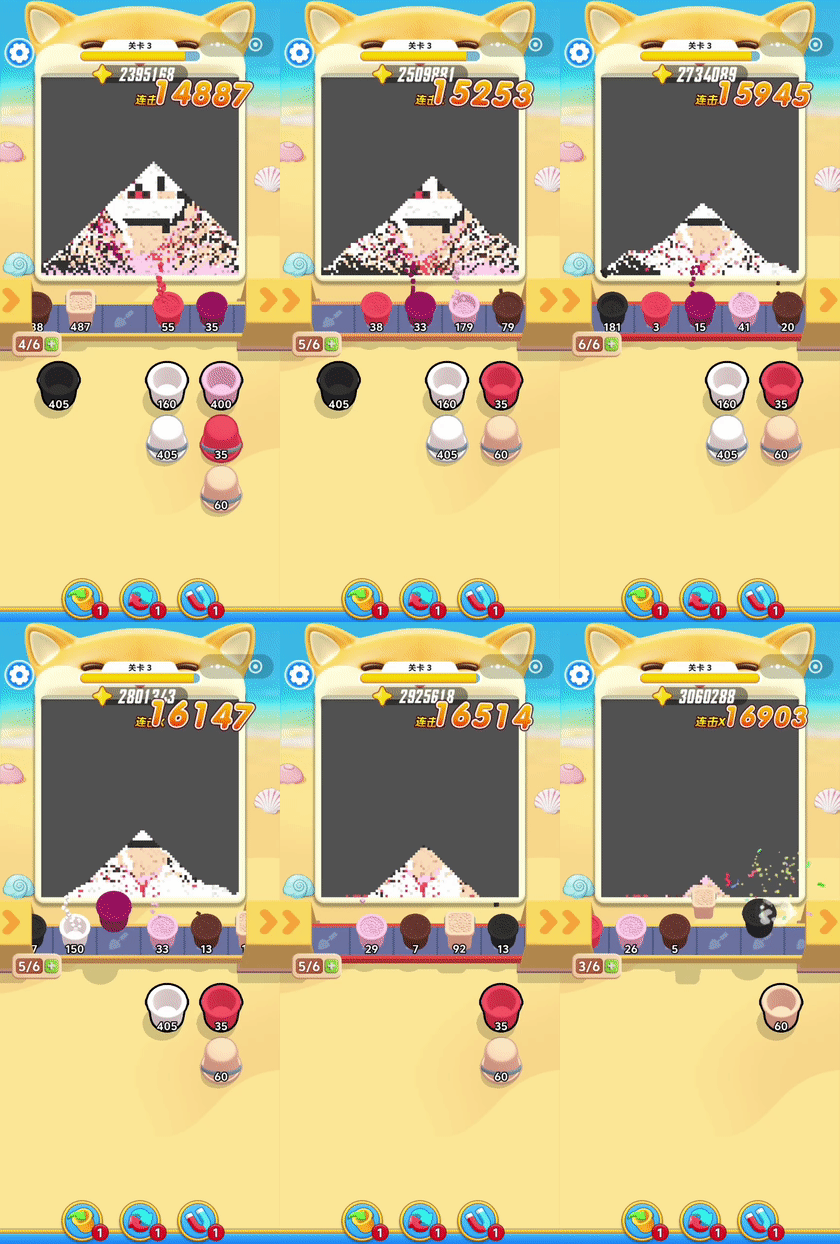
This well-balanced shift in pace not only aligns with the player’s decision-making flow but also subtly builds tension, creating a clever cycle between “thinking phases” and “pressure phases,” which further enhances the game’s strategic depth and immersive experience.
- Multi-layered content design ensures strategic gameplay
In terms of core gameplay, *Sand Art Match* offers a remarkable depth of strategy.
First, the shifting colors and constantly changing layout caused by the “quicksand” are random and ever-changing. This requires players to maintain a dynamic perspective at all times, adjusting their strategies on the fly based on the real-time distribution of colors to make the best choices regarding the sand buckets in the front row.
Second, while the order in which the sand buckets appear is fixed, the distribution of sand on the screen is variable. This often creates a strategic dilemma: a particular color of sand that is stuck at the bottom of the screen may have a corresponding sand bucket that is far down the queue.
At this point, players must carefully plan their moves within the limited space on the conveyor belt, strategically allocating and combining sand buckets to free up more space, and find ways to move “key back-row buckets” onto the transfer points. This mechanic transforms simple tap-to-match gameplay into a light-hearted resource management challenge that requires foresight, coordination, and spatial planning.
In addition, to continuously enhance the variety and long-term replayability of the levels, the game will gradually introduce a variety of special mechanics as you progress, constantly expanding the strategic depth.
For example, the “locked barrel” requires a key from another barrel to unlock; the “question mark barrel” must reach the first row to reveal its actual color; the “frozen barrel” is visible but must be “thawed” by moving or eliminating a specified number of other barrels;the “barrel hidden in a box” has an unknown color and also requires moving or eliminating a specified number of other barrels to open it.
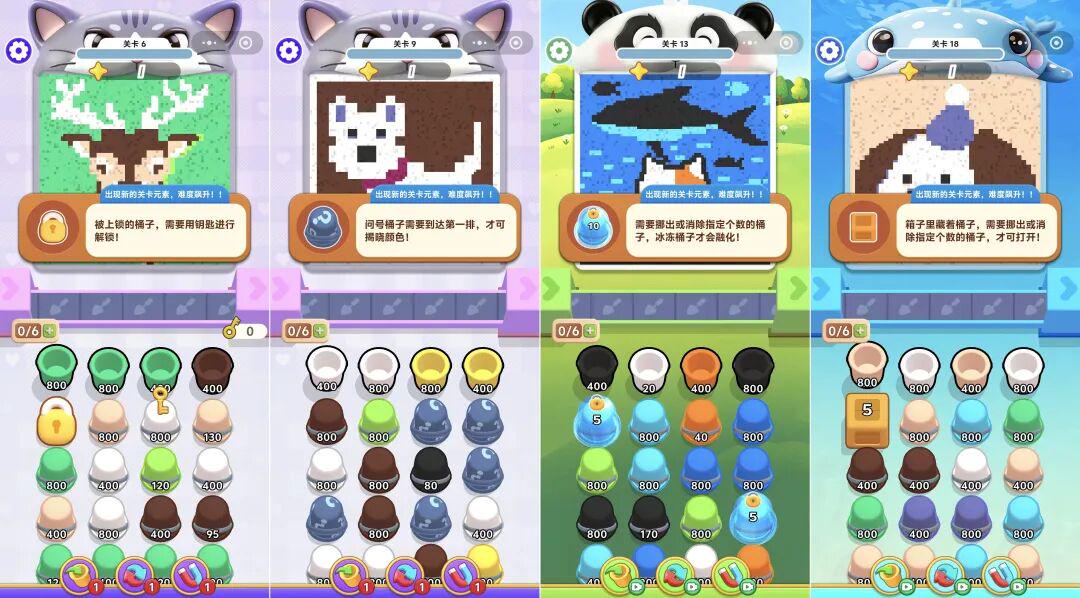
These mechanisms add variety to the levels and offer multiple paths to completion, while also further testing players’ ability to plan their resources and chain actions in dynamic situations.
- Cleverly designed checkpoints guide players through the conversion process
In terms of level difficulty, *Sand Art Match* also adopts ZhiSe Network’s signature “dual checkpoint” design.During the middle and later stages of a level, the game naturally introduces challenges such as limited maneuvering space and misalignment between the sand bucket and the target sand. When players are fully immersed and in a “flow” state but encounter a bottleneck, they will voluntarily watch an ad to obtain power-ups and overcome the current challenge.
If a player fails a level, a pop-up will appear showing their current progress and a warning that their winning streak is about to end, prompting them to watch an ad to revive their character. As an incentive, players can not only remove one sandbox from the field but also gain an additional conveyor belt space, offering better value than using a single tool alone.
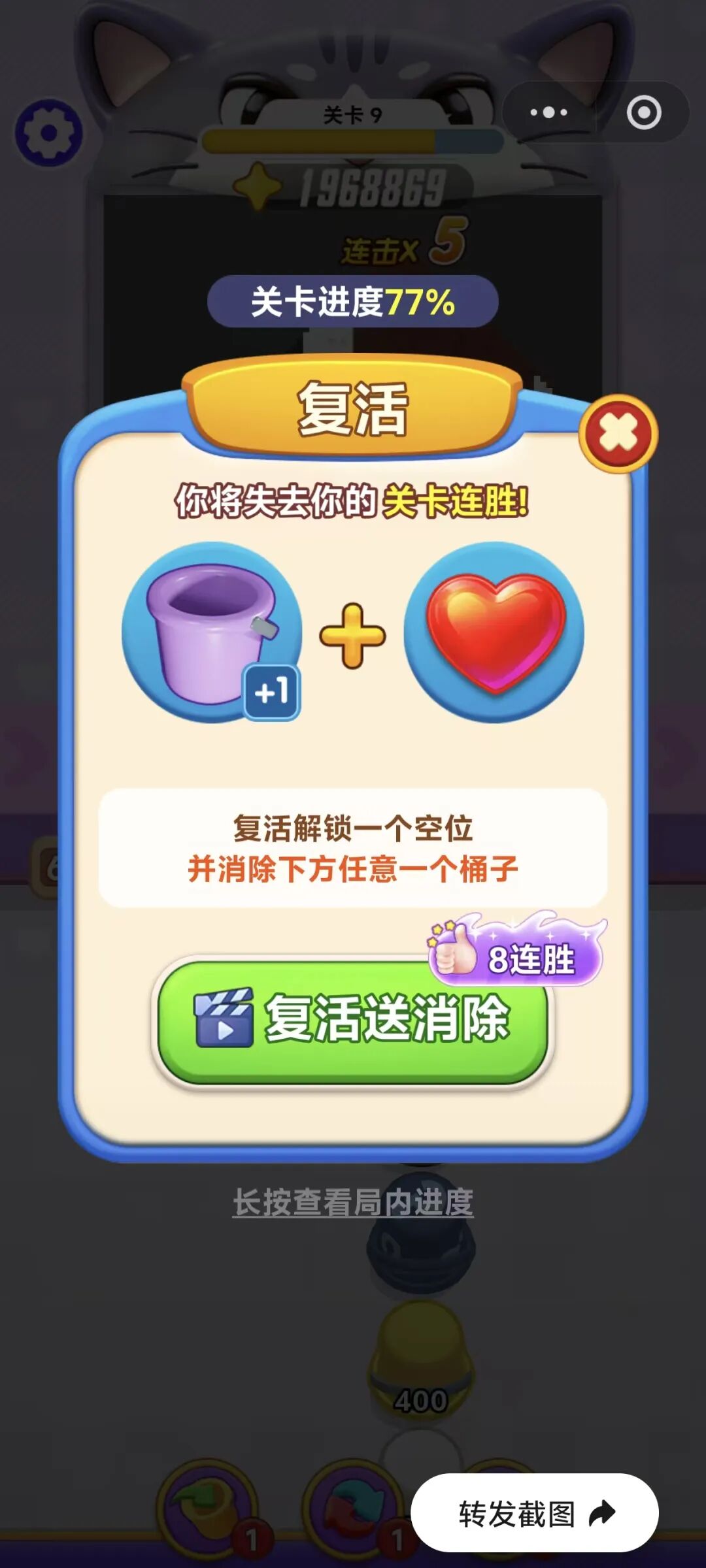
This “give hope, minimize loss” design effectively leverages players’ aversion to loss, thereby driving high conversion rates during periods when player engagement is low.
In terms of overall level design, the game handles the difficulty curve with remarkable precision, creating an experience that alternates between relaxed and intense moments. Approximately every five levels, a “sudden spike in difficulty” level is introduced to control the pace at which content is consumed and keep players engaged with a sense of challenge.Following these high-difficulty levels, there is often a “rewarding level” with fewer color variations and lower pressure to complete, which serves to balance the experience and maintain players’ sense of accomplishment and motivation to keep playing.
All in all, *Sand Art Puzzle* is by no means a groundbreaking innovation, but through its clever reimagining of classic gameplay, seamless integration of themes and mechanics, and precise control over its monetization strategy, it has ultimately succeeded in standing out in a highly competitive market.
This may suggest that what the current mini-game market needs is not a radical overhaul of gameplay mechanics, but rather a deep understanding of the player experience, continuous refinement of content details, and the ability to create fresh experiences within a familiar framework.
原创文章,作者:gallonwang,禁止转载:https://youxichaguan.com/en/archives/198368