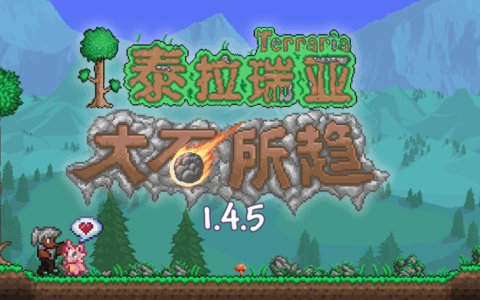
In the world of gaming, if there’s any creature whose life is worth less than a blade of grass, it’s got to be the goblin.
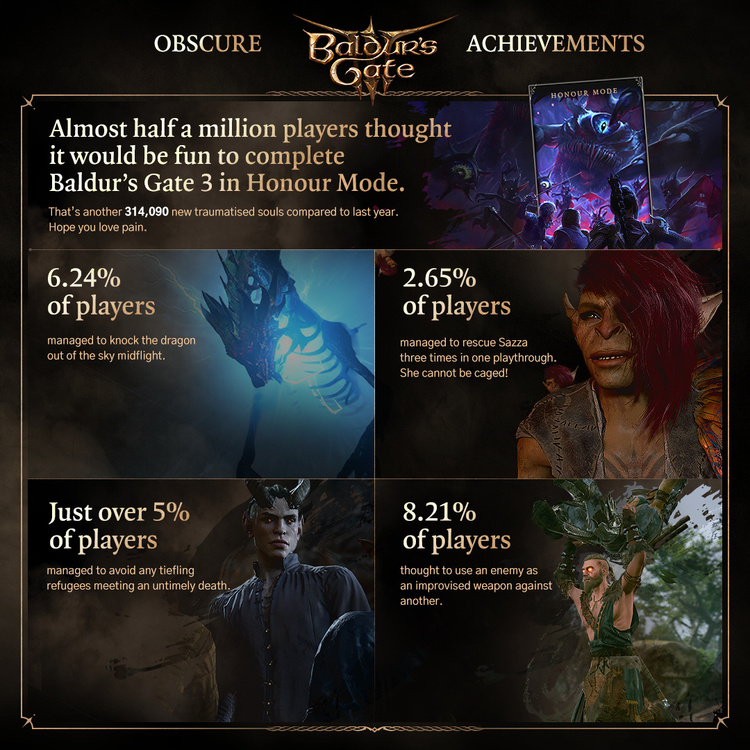
Last August, marking the two-year anniversary of the official release of *Baldur’s Gate 3*, Larian Studios released some interesting statistics, revealing that only 2.65% of players had earned the “Let Her Go” achievement (rescuing Saza from the Emerald Grove, the Goblin Camp, and the Tower of the Rising Moon in a single playthrough).In the game, Saza is a member of the “Goblin” race—the very creatures we all know as goblins. Furthermore, countless green-skinned goblins have met their end at the Goblin Camp, clearly demonstrating players’ distaste for the goblin race.
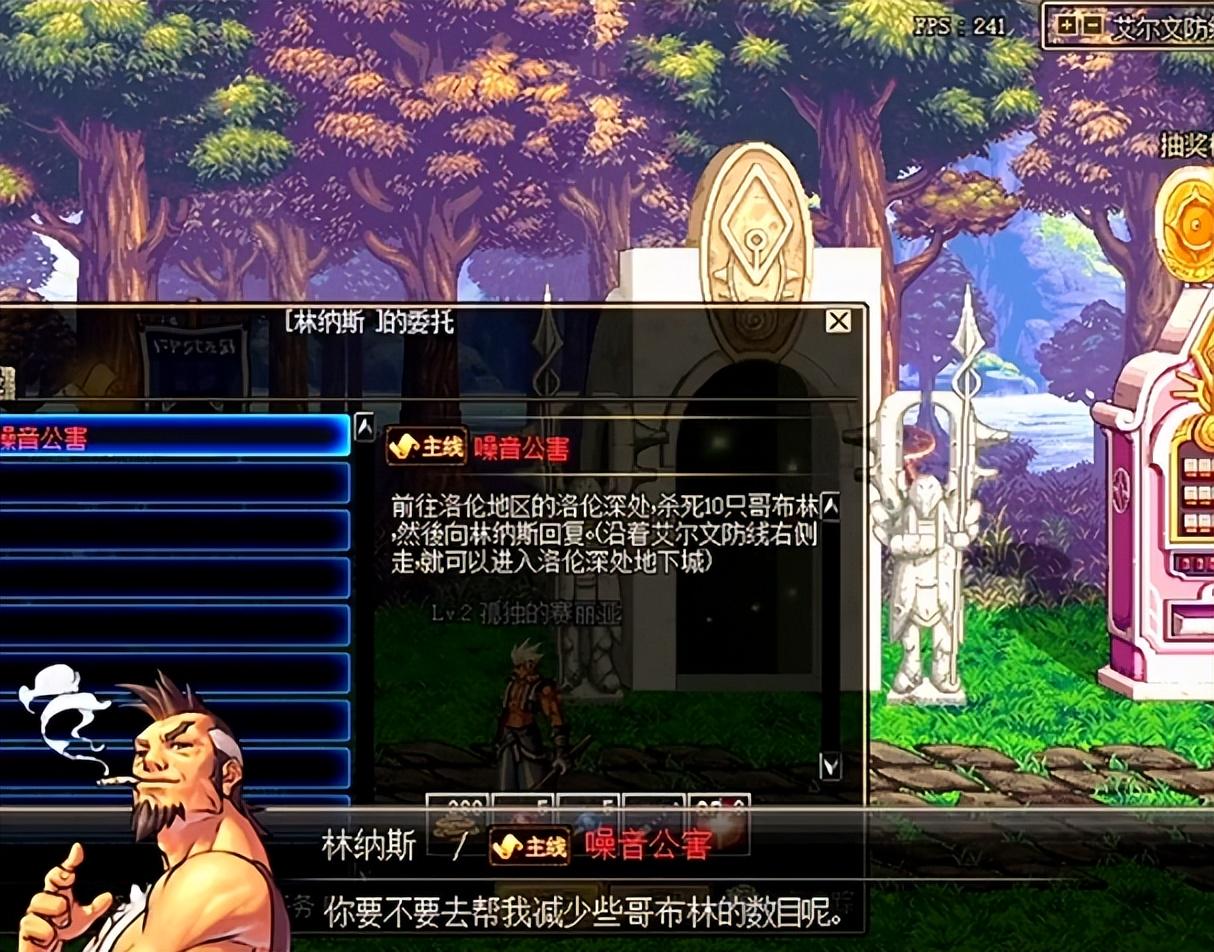
In *Dungeon & Fighter*, a game familiar to Chinese players, the goblins in the Loran newbie village from older versions have been slain hundreds of billions of times by warriors over the past decade or so; if their corpses were laid end to end, they could circle the Earth dozens of times.and those cold goblin corpses have long since been transformed into the warm experience points and cultivation materials that help countless new warriors level up.
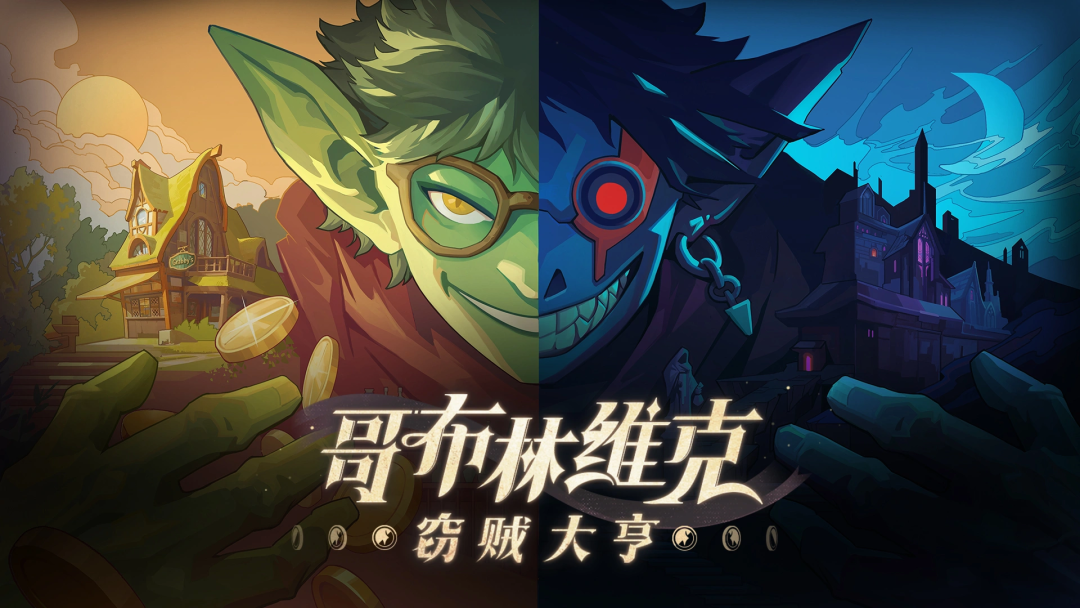
But as the saying goes, even a clay figurine has its limits. After countless ages of being slaughtered by human warriors and looked down upon by dragons and elves, this band of green-skinned monsters has finally decided to stop playing nice.Recently, a stealth-and-shop-management hybrid game developed by the Chinese studio Art Thieves, *Goblin Vik: Thief Tycoon* (hereinafter referred to as *Goblin Vik*), has given players the chance to “rebel.”According to producer Lindro, *Goblin Vik: Thief Tycoon* surpassed 50,000 copies sold within two weeks of its release.In this game, players take control of Goblin Vik, running their own small shop by day and raiding dungeons for loot at night. They can even inflate the prices of their “bargain finds” by tenfold to sell them to humans and elves, giving them a taste of what it’s like to be “scammed.”
01
The perfect protagonist for “greed”
Why did *Art Thieves* choose goblins as the main characters?
Despite being one of the most unremarkable NPCs in the gaming world, it has risen to become the main character. In fact, even in everyday life, whether you’re a gamer or not, you’ve likely heard the name “goblin” at least once.In 2024, a goblin meme even went viral online. Numerous memes depicting goblins as “overconfident” or “daydreaming” spread rapidly across the internet, breaking out of the gaming community and entering the public eye.
(Funny internet memes about goblins)
In recent years, management games featuring internal and external cycles—or even day-night cycles—have surged in popularity once again. Players must make the most of their resources and time to achieve their business goals at a comfortable pace.Lindro, the head of Art Thieves studio, shared that he was inspired by games like *Dive Dive Dave* and *Darkest Dungeon* and wanted to create a management game centered on the theme of “greed,” allowing players to experience the thrill of strategic gameplay and decision-making.
Thanks to the “goblin meme” breaking into the mainstream, goblins have become a cultural symbol that audiences in both the East and West can easily relate to—they represent sneakiness, lowliness, and evil.Lindro believes that these seemingly derogatory traits actually make the goblin image deeply ingrained in people’s minds, fitting the definition of “greed,” and thus allowing for a more story-rich and vivid portrayal. Compared to simply being a masked thief, goblins are far more iconic,This is why Art Thieves chose goblins as the protagonists, and it has become the primary reason many players click into the game: they simply want to see how the goblins turn the tables.
The story begins with a letter left by the protagonist Vic’s father after his death, in which he sadly informs his son that he has accumulated a massive debt and that the bank is about to seize the shop that has been their family’s livelihood. On his deathbed, the father expresses regret for having lived an honest life and urges his son to “put greed above all else.”
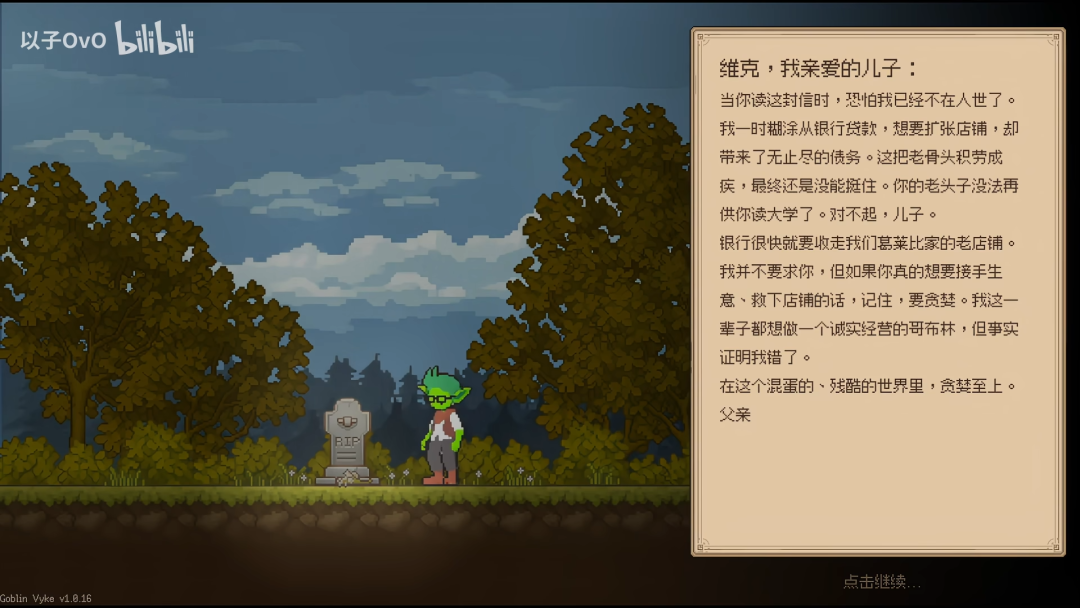
(The screenshots in this article are taken from a full walkthrough live stream by Bilibili creator Yizi OvO.)
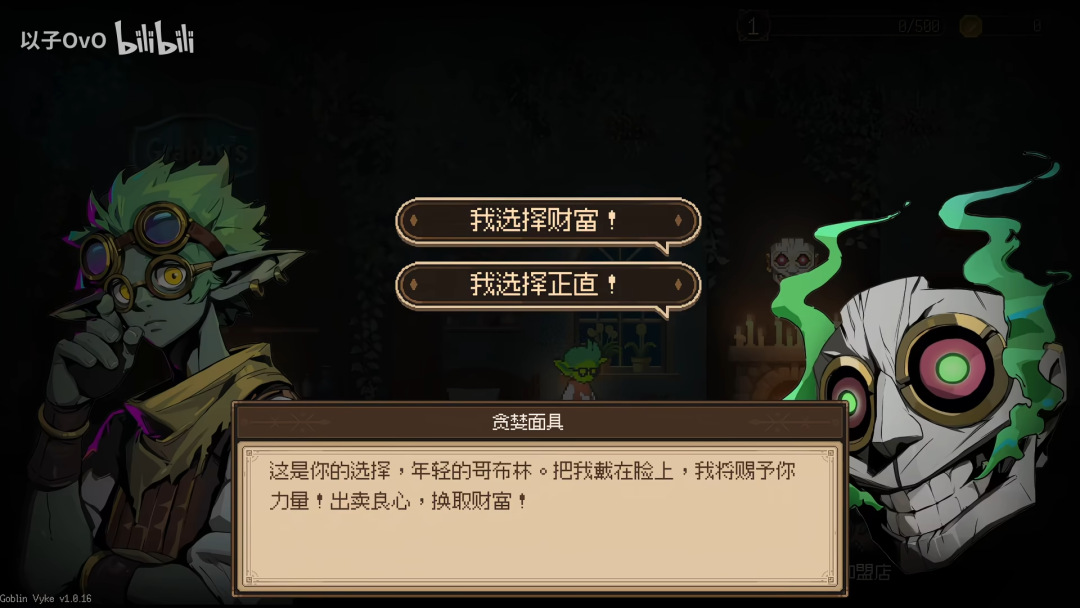
Back at the shop, Lucius, his father’s former creditor, burst in. Faced with the shop on the brink of bankruptcy, Lucius taunted Vic and warned him to come pay the rent every four days; if he failed to pay, the shop would be repossessed.Just as Vic was at a loss, the Mask of Greed hanging on the shop wall spoke up, telling him that a goblin who isn’t greedy can’t make money, and urging Vic to go to the dungeon to steal treasures from monsters and heroes.After several rounds of internal struggle, Vic chose to put on the Mask of Greed and entered the dungeon to steal.
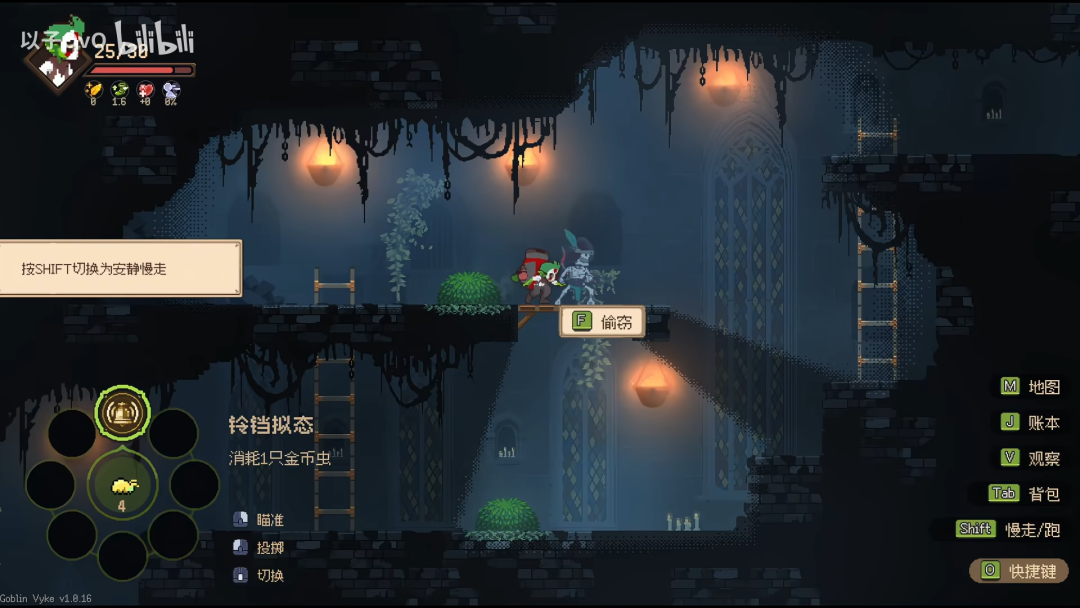
Inside the dungeon, Vic has no weapons; he cannot initiate attacks. Instead, he must sneak up on enemies to steal their loot, or lure them into traps, kill them using the mechanisms, and then loot them. The game also uses QTE mechanics during theft sequences.The unarmed gameplay forces players to carefully plan their routes and make clever use of environmental objects. Additionally, *Goblin Vic* only features automatic saves at the start and end of each day, with no additional save points. If you die in the dungeon, you’ll have to start all over from the beginning.
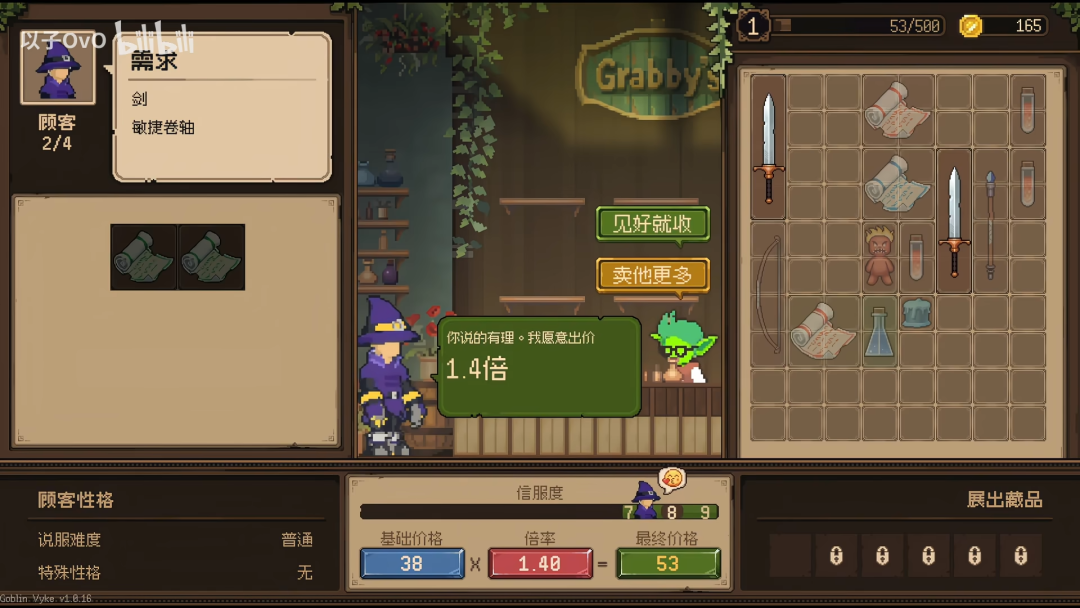
During the day, Vic sells the loot he has stolen from the dungeon. When selling, players can raise the price of items by rolling dice and using the “Brag” skill; if the roll exceeds the target, the transaction automatically fails.
In terms of the reduced number of save points and the roll mechanics, Lindro doesn’t simply encourage players to be “greedy.” In *GoblinVik*, greed is a double-edged sword.The game’s mechanics constantly remind players of the dual nature of “greed”—“greed made him what he is, but it may ultimately destroy him.” When to be greedy and when to hold back is entirely up to the player, encouraging a more strategic approach to gameplay.
02
feeling one’s way forward
The Art Thieves team is very small, consisting of just three people, including Lindro, yet they managed to develop *GoblinVik*, a game with a playtime of around 30 hours, in less than two years.As the founder of Art Thieves, Lindro is primarily responsible for game design and project management, while his partner Barney handles the technical aspects. Before forming the studio, they both worked on the same project at Tencent TiMi Studios.
Every work environment has its own unique rhythm. Lindro and Barney eventually felt that working at Tencent was a bit of a “waste of their lives,” so they both resigned one after the other.A year after leaving their jobs, a serendipitous opportunity brought them back together. Their complementary personalities and skills made them an instant match, and they decided to create a game of their own. The third member of Art Thieves is Barney’s wife, who handles modeling, animation, and environments; she met Barney while studying in the United States.
Once the framework for *GoblinVik* was set, Art Thieves never looked back. The three of them pulled together as a team, leveraging their individual strengths to handle every aspect of the game, big and small.
But at times, they felt like complete novices. Lindro admitted frankly, “The hardest part was the art.” Since they didn’t have a lead artist, the game’s art style in the early stages was essentially a “patchwork” of different elements. With no prior art experience, they had no choice but to feel their way forward.Especially when it came to the environments, Lindro had no choice but to dissect *Dead Cells* frame by frame, studying how it layered its scenes. He learned as he went, even consulting the art director from his time at Tencent. But Lindro himself found the whole situation both amusing and exasperating: “After he finished explaining it to me, he asked if I understood.and I said I sort of got it, but honestly, I didn’t understand a thing (laughs).”
A studio without a lead artist certainly made game development in this area a real struggle, but the three of them gritted their teeth and persevered.Looking back on those days now, Lindro states bluntly, “For our next project, we absolutely must hire a lead artist—we’re hiring right now!” Although the storm caused by the art issues has passed, it has made the team acutely aware that in game development, the absence of any single component can lead to an indefinite extension of the development cycle.
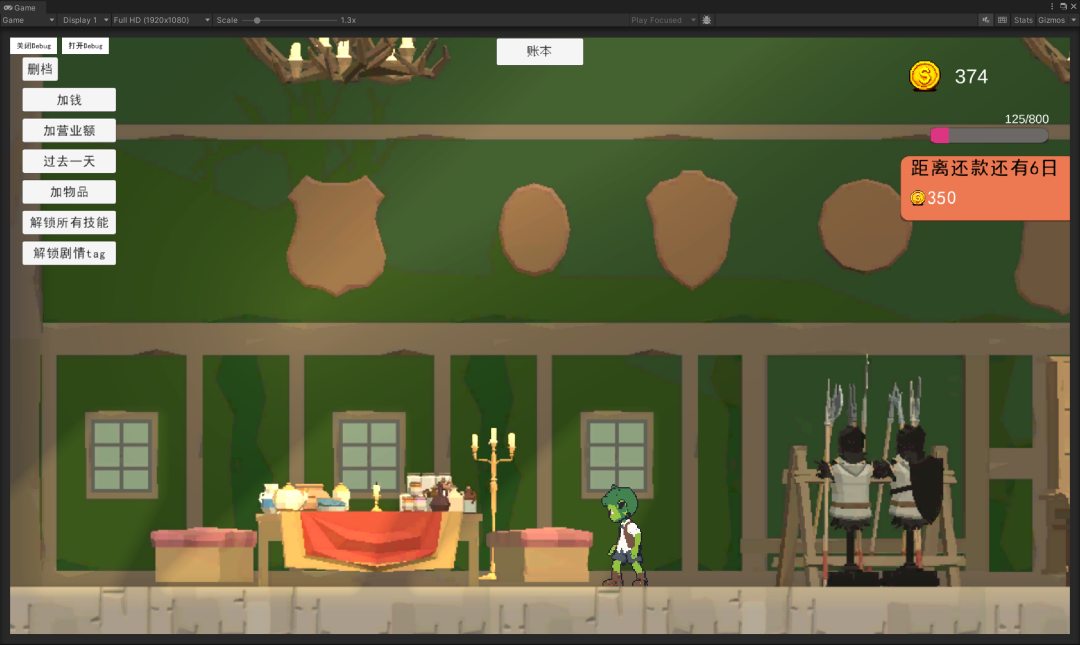
(Early development screenshots from *GoblinVik: Thief Tycoon*)
During the development of *Goblinwick*, one crucial decision was made: to remove combat.
“I think our design skills are our studio’s biggest strength, and our weakness is that we don’t have any money. But we’re using our strengths to make up for our weaknesses!” Lindro said with a self-deprecating laugh. Their experience at major tech companies has indeed given the three of them a wealth of development insights and production experience, which is precisely why they’ve chosen to leverage their unique ideas to build their competitive edge.
If we choose to join the fray, not only will the workload for Art Thieves—a team of just three people—skyrocket exponentially, but the final result may fall short of expectations, and it will certainly extend the development timeline.Opting not to engage in combat and instead focusing on stealth may seem like a “more challenging design with a narrower audience,” but from a project positioning perspective, it actually has a higher chance of success—because it’s unique enough.
“If I were to make a 2D side-scrolling combat game, I’d probably end up competing with the crowd that plays *Hollow Knight*.” Rather than chasing trends, the small but dedicated team at Art Thieves prefers to follow a path that aligns with their product’s identity. A goblin that can sneak and strategically take down enemies has indeed proven successful.*GoblinVik* gives players caught in the heat of melee combat a moment to catch their breath. They can take their time to think, bide their time, and avoid being swept up by raw combat stats—instead, they can simply calm down and plan their stealth route.
For small teams developing indie games, it’s not simply a matter of scaling down the experience gained at large studios; rather, they must reinvent a development approach that fits within their own resource constraints.
03
In the Face of Public Criticism
After the *GoblinVik* demo was released, 80,000 people played it, with a median playtime exceeding 70 minutes—an outstanding figure in the industry that made the studio team very happy.However, after the game’s official launch, while its popularity remained strong, its Steam reviews shifted to “Mixed,” sparking extensive discussion as many players held differing opinions.
In response to the players’ constant calls, Lindro has given the matter some thought. To him, *GoblinVik* isn’t a casual game in the traditional sense, but rather a somewhat hardcore Metroidvania-style game.As a player who personally enjoys strategizing and thinking through challenges, he wanted to incorporate more puzzle-solving and strategic elements into *GoblinVik*, ensuring players aren’t just mindlessly looting.
Lindro also admitted that the current difficulty scaling isn’t well-designed. “You don’t know what kind of habits the players coming in have. It’s like I opened a restaurant, lots of customers came, but I didn’t serve them well—that’s my problem, not the customers’.” During the conversation, Lindro took a serious tone when mentioning players’ complaints that the game was “too difficult.”
Throughout the entire development process, he didn’t really have any so-called “ingenious ideas” or personal obsessions; instead, he devoted himself entirely to the game. To solidify the foundation of the strategy game, he chose to gradually increase the difficulty of the levels to ensure variety, but this also became one of the reasons why some casual gamers found the game too difficult. He said, “’From a product positioning perspective, this is how it had to be designed—this is where I won’t “compromise.”’ Consequently, in future updates and adjustments, Lindro has chosen to explore a balance that both preserves the game’s core and caters to the gaming experience of a broader player base.
There are also players who go on a relentless save-and-load (SL) spree because they didn’t roll the perfect numbers. Although Lindro himself takes a more laid-back approach when playing games like *Darkest Dungeon*—accepting whatever outcome comes his way—he was still willing to leave some wiggle room for players who enjoy saving and reloading in pursuit of a perfect playthrough. He simply didn’t anticipate that some players would still feel dissatisfied with the limited number of save slots, which has also given him a lot to think about.
These two points are merely the most frequently mentioned aspects in player feedback; many players have raised questions from a variety of other perspectives as well. Faced with these comments, Lindro did not rush to defend himself, but instead took note of each one. Every player’s approach to the game deserves respect, and all the producer can do is make the menu at this “restaurant” a little more varied.
“Goblinwick” may not be perfect yet, but through repeated listening and adjustments, it is slowly evolving into something that appeals to more people.
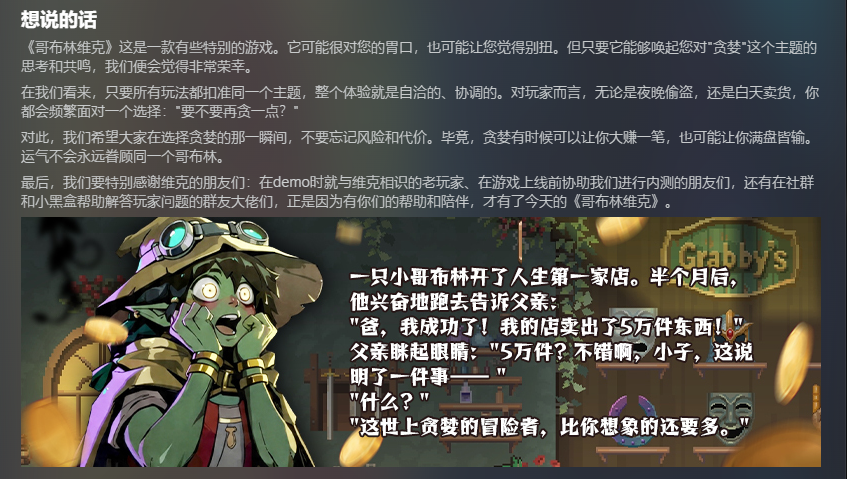
(A message from Art Thieves in the Steam updates for *GoblinVik: Thief Tycoon*)
Conclusion
Looking back on the journey of *GoblinVik*, it was really a form of “greed” unique to indie developers—not greed for money, but greed for expression:We wanted to cram all the strategy, puzzle-solving, and hardcore gameplay we love into a single game, while also hoping that every player—no matter their preferences—would find it enjoyable. This kind of “greed” often brings pain, but it was precisely what drove the three of us to start from scratch after leaving our jobs at a major studio.
Fortunately, a group of community players willing to help answer questions, players on social media who love the game and are eager to create comprehensive collection guides, and those “old friends” who have stood by Vic since the demo phase have proven that this passion is a sign of love and recognition.
Lindro shared this moment: “There are three hidden levels at the end of the game—three carefully crafted psychological traps. Some players will recognize the design behind the high difficulty and say, ‘This design is amazing’—and in those moments, I feel that all the hard work was worth it.”
“Greed” is actually a very complex concept: it is both a game mechanic and an expression of the creators’ artistic vision; it allowed the team to differentiate themselves, but also saddled the game with issues of difficulty and mismatched expectations;It makes *GoblinVik* seem a bit rough around the edges, but it also ensures it doesn’t feel like an assembly-line product—instead, it becomes a work where the creators’ ambitions, the limits of their capabilities, and their growth process are all clearly visible.
原创文章,作者:gallonwang,禁止转载:https://youxichaguan.com/en/archives/198163