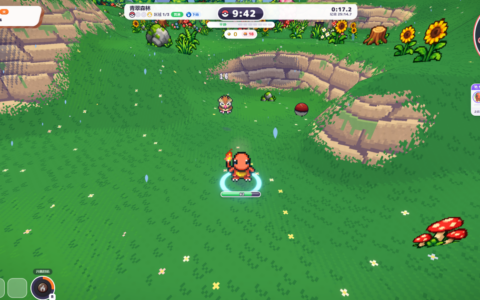
DianDian Interactive’s move into this new market has been even more decisive than expected.
While its two flagship titles, *Endless Winter* and *Kingshot*, continue to dominate the global market and rake in a combined $200 million a month, the company behind them, DianDian Interactive, has quietly deployed significant resources to enter a seemingly entirely different new arena: the mobile RPG market.
In 2025, monthly revenue for its new merge game *Tasty Travels* surged, and in April of this year, it successfully broke into the top 7 on the global revenue charts (Source: Sensor Tower).At the same time, more new merge games across various genres—such as *Hotel Legacy: Merge Game*, *Just Desserts*, and *Family Farm Merge*—have successively entered testing phases. In just over a year, DianDian Interactive’s portfolio of merge mobile games has begun to take shape.
Such a rapid and aggressive expansion is rare in the industry as a whole, and it is clear that “Two-in-One” has become a new strategic focus for DianDian Interactive. Their goal is not merely to create a single hit title, but to systematically apply the mature capabilities they have developed in the SLG sector—such as industrial-scale production and long-term global operations—to the synthesis genre, and to fully engage in the competition within this market.
With the entry of this major player, the competitive landscape and future trajectory of the Erhe market are set to undergo a new round of changes.
01
The Erhe Circuit is undergoing major changes
It comes as no surprise that the “Two-in-One” initiative has become DianDian Interactive’s new strategic direction.
At a previous investor meeting, Century Huatong had repeatedly mentioned that casual games—a sector characterized by its large market size and strong long-term prospects—would be the company’s core growth driver in the future.
Among the various profitable casual game genres, “match-3” games have undoubtedly seen the most rapid growth in recent years. According to data from third-party platforms such as Sensor Tower, the global market for match-3 mobile games—which is dominated by this genre—saw growth rates exceed 110% for two consecutive years in 2023 and 2024,and surged by 95% year-over-year in 2025, surpassing $2.4 billion. This growth far outpaces the global mobile game market’s 1.3% growth rate, making it one of the fastest-growing segments.
More importantly, the strong emergence of domestic manufacturers, led by Lemon Microfun, has not only reshaped the competitive landscape in the 2-in-1 market but has even fundamentally rewritten the competitive logic of the category.Recently, the overseas industry analysis platform naavik.co noted in a blog post that Chinese manufacturers in the 2-in-1 market have, through a “heavy-industry approach,” overturned the “lightweight experience” long championed by European and American manufacturers, achieving a comprehensive dominance in commercial efficiency.
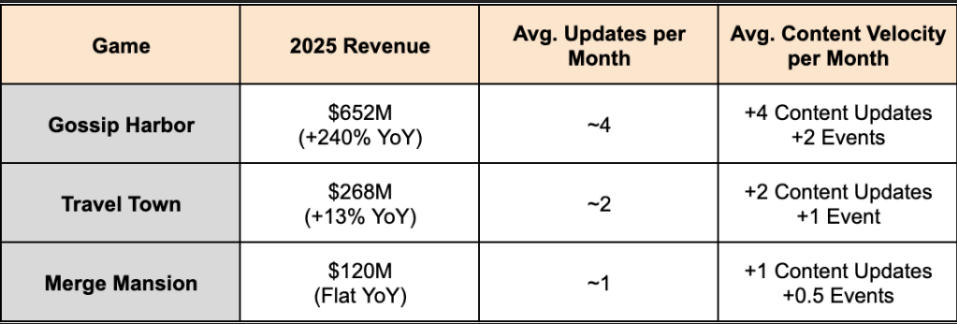
Comparison of content update efficiency among several leading 2-in-1 products; Image source: Naavik
At the same time, the focus of competition in the binary options market has shifted entirely to a contest of comprehensive capabilities, including team productivity, in-depth system design, and long-term operational expertise.
On the one hand, the gap between R&D efficiency and content production capacity will directly determine the game’s revenue growth rate. Frequent version updates provide players with a steady stream of “content fuel” that drives continued engagement, serving as a key driver for maintaining long-term user retention and activity, as well as fueling sustained revenue growth.
On the other hand, more complex game systems and deeper monetization strategies are accelerating player spending. Only by refining the core gameplay loop to perfection and pairing it with a robust underlying numerical framework can development teams strike a long-term balance between ensuring a quality player experience and expanding monetization opportunities.
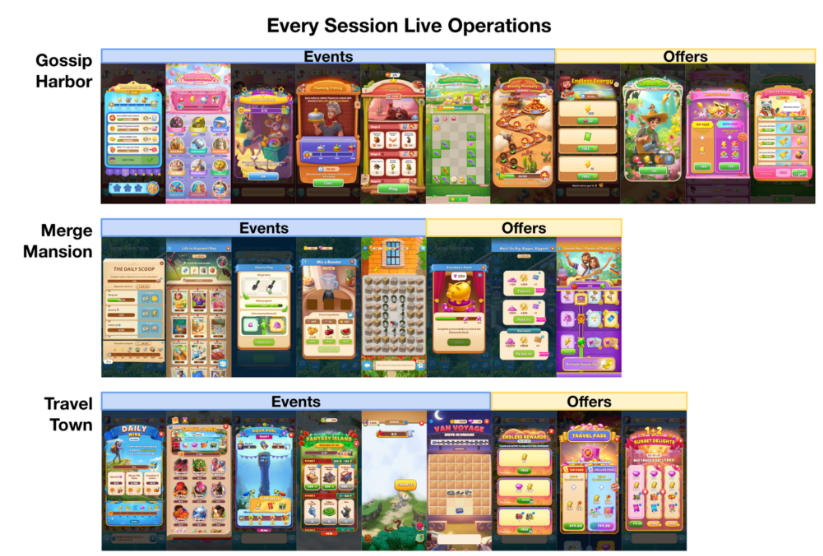
Operational density of several leading 2-in-1 products; Image source: Naavik
As a leading player in the SLG sector, DianDian Interactive’s competitive advantage is clear.
First, DianDian Interactive has established a mature, industrial-scale R&D and operations system in the SLG sector, including project management tools that support large-scale team collaboration and a data-driven decision-making platform. Applying this proven industrial pipeline to the casual gaming sector to compete against established Western casual game teams is nothing short of a game-changer.
Second, the expertise in game mechanics and monetization design that DianDian Interactive has accumulated through years of deep involvement in the SLG genre is one of its core competitive advantages. This expertise enables the company to confidently manage the various complex systems within merge games, giving it a head start in expanding the depth of monetization within the genre.
More importantly, DianDian Interactive possesses an innate knack for long-term operations.The success of its flagship title, *Whiteout Survival*, is itself a “marathon” that has spanned several years. This ability to plan product lifecycles on an annual basis and maintain user engagement through frequent events and version updates aligns perfectly with the current competitive logic in the casual gaming sector, where “content drives growth and operations determine the ceiling.”
Given the company’s strategic goal of pursuing long-term growth and its established strengths in industrialized R&D and operations, the two-player game sector—which continues to grow rapidly and is evolving toward more complex gameplay—naturally emerges as the optimal choice for DianDian Interactive.
02
Its first hit product has already generated over 1 billion yuan in revenue
While European and American developers were still debating whether to create a “heavy” game, DianDian Interactive had already entered the market with a mature production pipeline, creating its first hit merge game, *Tasty Travels: Merge Game*.
According to statistics from DianDian Data, since its launch, *Tasty Travels* has generated cumulative global revenue exceeding $161 million, equivalent to 1.094 billion yuan.
As the first step in successfully breaking into a new market segment, *Tasty Travels* also faced its share of challenges. The game entered testing as early as the beginning of 2024, but its performance remained lackluster for over a year afterward, consistently hovering outside the top 500 on the U.S. free game charts.It wasn’t until mid-2025, following continuous gameplay refinements and accumulated user acquisition efforts, that the game suddenly took off, with revenue surging 28-fold year-over-year in 2025 (Source: Sensor Tower).
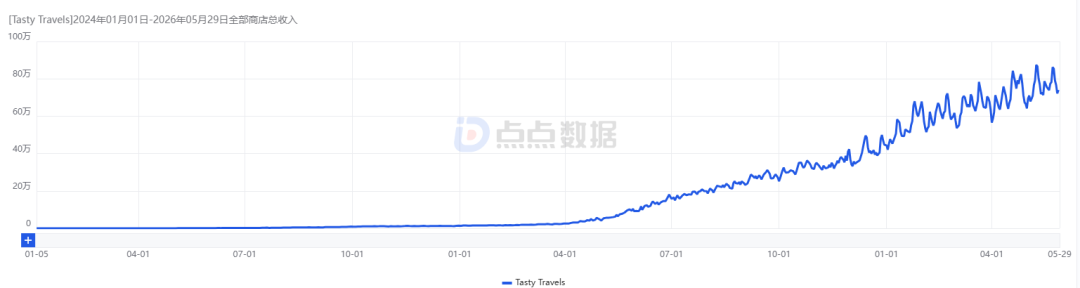
Revenue Trends for “Tasty Travels,” Image Source: DianDian Interactive
To this day, the game’s revenue continues to grow, with monthly revenue exceeding $20 million. It has consistently ranked among the top two in the global match-3 mobile game charts, fundamentally reshaping a market previously dominated by established titles.
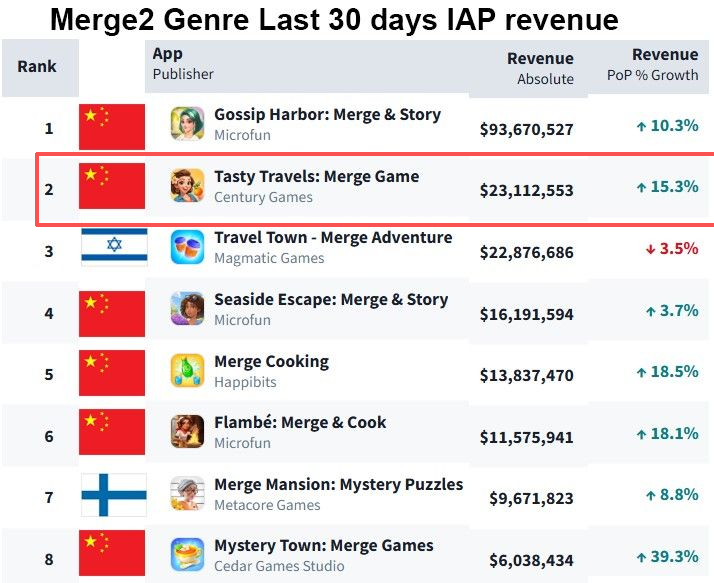
These excellent results are primarily attributable to the team’s optimization and refinement of the product content.
In terms of theme selection, *Tasty Travels* did not rely on the well-worn “soap opera” tropes or borrow plotlines from “empowering female lead” stories—such as the “single mom’s rags-to-riches” narrative—to drive the game’s progression. Instead, it opted for the more universally appealing theme of “global culinary travel.”This choice of a less melodramatic theme not only avoids direct competition with top-tier blockbusters but also provides the content foundation for the game to break out of the traditional female user base of casual games and achieve broader audience reach.
While reducing the emphasis on the storyline, the game has further focused on optimizing gameplay within the standard “combine—manage—unlock—combine again” framework, leveraging the gameplay itself to drive user growth and retention.
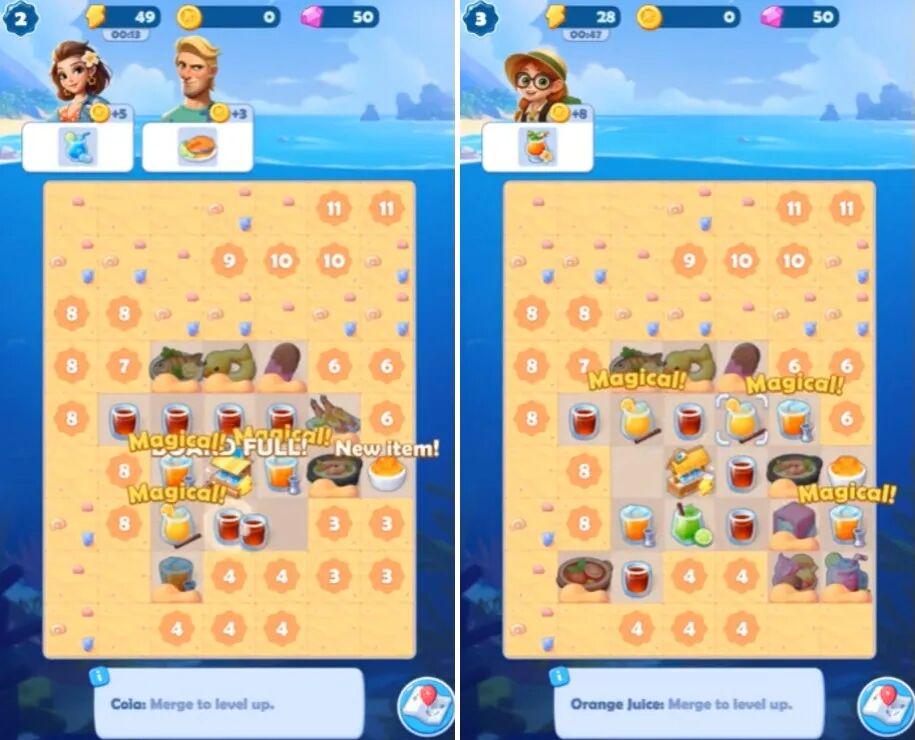
For example, during the early stages of unlocking the board in the game, an additional “level lock” feature was introduced.In the synthesis board, certain grid squares are clearly marked with specific numbers; these squares can only be unlocked once the account level reaches the corresponding value. Other squares without numbers follow the traditional adjacent-unlock model: gray items that are already visible can be unlocked by synthesizing them, gradually expanding into the surrounding areas.

The strict requirements of the “level lock” tightly link spatial expansion with overall progression, transforming the abstract concept of “leveling up” into concrete spatial rewards. This provides early-game players with clear short-term goals, helping them quickly grasp and focus on the synthesis mechanics.
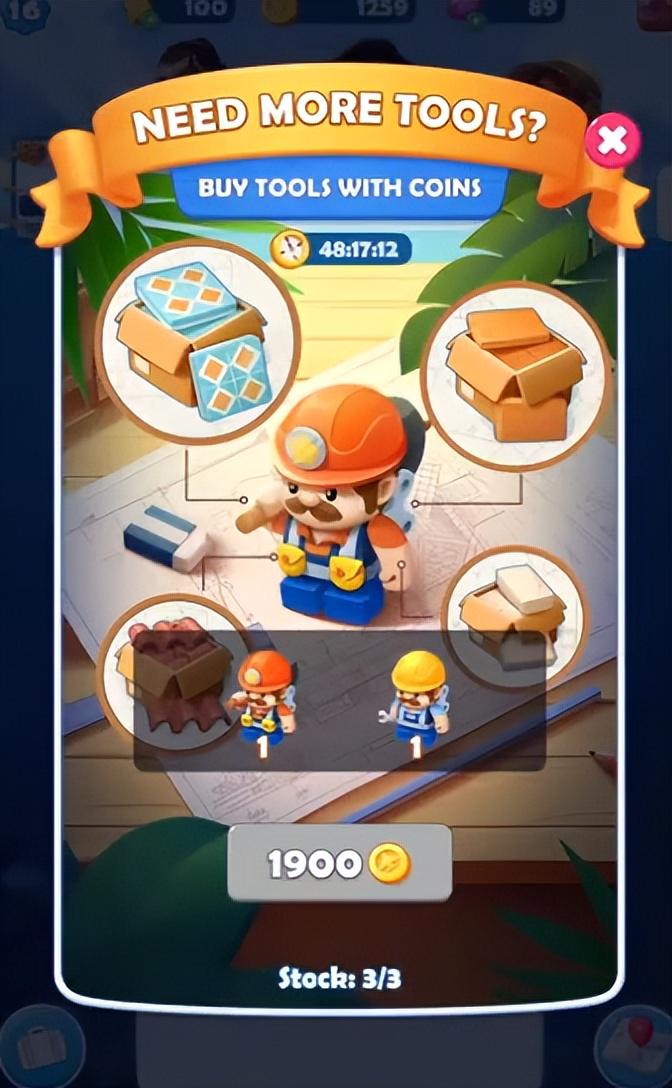
In the later stages of its simulation management module, *Tasty Travels* introduces additional scarce resources such as construction workers and building materials.Construction workers act as special “generators” that produce various basic building resources. To upgrade structures, players must combine and upgrade these resources. This design further increases players’ resource consumption requirements, effectively expanding the game’s long-term depth.
At the same time, to address highly repetitive crafting operations, the game has added a variety of more intuitive and satisfying visual cues.For example, when a generator drops a high-level item, a “Magical!” effect pops up; when a new item is produced, a “New Item!” notification appears. This instant visual feedback quickly stirs players’ emotions, amplifying the sense of surprise and achievement during crafting, making the crafting experience even more addictive.
What’s even more interesting is that this game also incorporates “side gameplay” commonly found in the SLG genre, adding popular hyper-casual elements like “Merge Watermelons” and “Bubble Shooter” alongside its core mechanics.This kind of high-frequency, satisfying thrill not only serves as the best material for user acquisition campaigns but also fills the gaps during downtime when players have exhausted their energy, thereby extending user retention time and reducing churn.
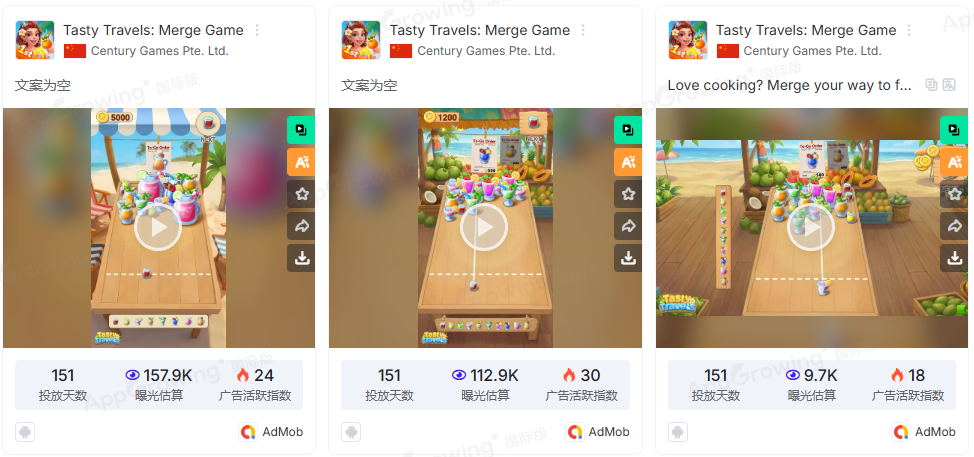
Gained significant exposure through its secondary gameplay content. Image source: App Growing International Edition
Eye-catching user acquisition creatives, addictive core gameplay, and a steady stream of long-term content have enabled the game to continuously attract new users while effectively engaging existing players and driving monetization.Ultimately, after a year of dedicated effort and strategic development, *Tasty Travels* achieved a significant surge in both downloads and revenue, successfully establishing itself among the top titles in its category.
03
Enable matrix layout
After *Tasty Travels* gained a firm foothold, DianDian Interactive significantly ramped up its resource allocation, launching three consecutive tests of new merge-and-match games across different genres: *Hotel Legacy: Merge Game*, *Just Desserts*, and *Family Farm Merge*, in an effort to capture more market opportunities through a multi-pronged strategy.
Among these, *Hotel Legacy: Merge Game*, which first appeared in January of this year, features a hotel management theme. Its overall gameplay is very similar to *Tasty Travels*: players merge hotel items to meet customers’ various needs, while earning coins to repair and upgrade their facilities, gradually expanding their hotel empire.

Following *Tasty Travels*, this game is the most promising new title from DianDian Interactive in the match-3 genre. According to DianDian data, *Hotel Legacy* has been launched in nearly 170 regions. After ramping up marketing efforts in mid-April, its monthly revenue surged by 392% month-over-month, reaching $150,000.To date, the game has accumulated 870,000 downloads and generated over $690,000 in revenue. The United States remains the largest contributor to revenue, accounting for 29.9%, followed by the United Kingdom at 12.6%.
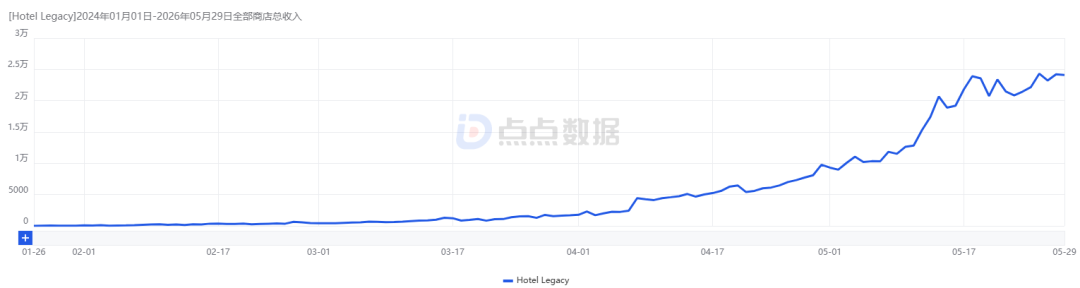
Revenue trends for *Hotel Legacy*, Image source: DianDian Data
In addition, in March and May of this year, DianDian Interactive launched *Just Desserts*, a restaurant management simulation, and *Family Farm Merge*, a farm-themed game, in select regions. Currently, both games are still in the early stages of testing, and third-party platforms have not yet been able to gather more meaningful data.
However, one thing is certain: as more new games of this type are released, DianDian Interactive’s competitive edge will only become more pronounced.
This advantage is most evident in the user acquisition phase. With multiple competing products in the same market segment, the publishing team can simultaneously test creative assets of different styles across multiple games during the same timeframe, quickly identify the most effective assets, and rapidly apply those successful strategies across the entire product line.
The operations team can also promote new titles to existing users through established products like *Tasty Travels*, thereby directing existing users to new games at a low cost, reducing user acquisition expenses, and achieving a “self-sustaining traffic cycle” within the ecosystem through precise user profiling and cross-promotion.
Establishing a core framework with a flagship product, then rapidly building a product portfolio through fine-tuning and replication, and leveraging a multi-project parallel strategy to fortify competitive barriers—ultimately securing a leading position in the relevant market segment—has become a well-established and widely adopted approach across various market segments.
Today, the maturation of AI technology has hit the “accelerator” for the implementation of DianDian Interactive’s matrix strategy.Management revealed during a briefing: “With the support of AI, the company is able to update, test, and iterate its casual game portfolio at a rapid pace.” Combined with its existing industrial-scale R&D and operations capabilities, the strategic advantages of DianDian Interactive’s product portfolio will be further unleashed, and its lead in the market will continue to expand.
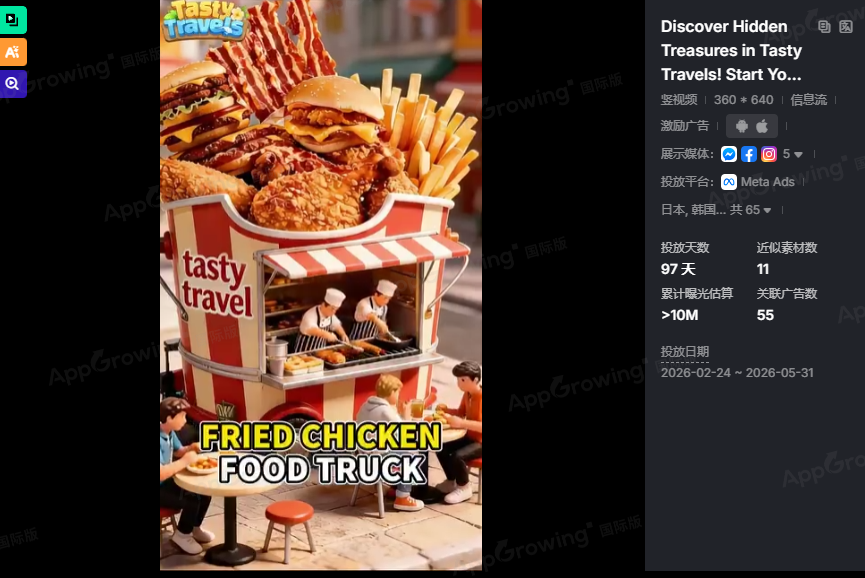
“Tasty Travels” has produced several AI-generated clips with over 10 million views each
Taking all these factors into account, it is clear that DianDian Interactive has significant growth potential in the 2-player mobile game sector. The most anticipated development at this point is the arrival of the next breakout hit, which will further reshape the competitive landscape among developers in the global 2-player mobile game market.
04
A flood of new games is coming
In addition to DianDian Interactive, many other leading domestic companies have also set their sights on the highly promising “2-in-1” market.
Youta Network, another SLG developer, launched *Hollywood Merge*, a new match-3 game with a fashion-themed twist, earlier this year. Thanks to its glamorous and stylish presentation, the game’s revenue has been on the rise since its launch. According to DianDian Data, the game’s monthly revenue exceeded 15 million yuan in April of this year.
Beijing Blue Aoyi, continuing to build on their expertise in horror themes, has created *Haunted Merge: Horror Story* (known as *Clever Escape* in the domestic market),This game, which blends Chinese folklore with a subtle horror atmosphere, has seen a surge in metrics since the beginning of this year, performing particularly well in mainland China, Hong Kong, and Taiwan. According to SensorTower data, its cumulative revenue has surpassed the 60 million yuan mark.
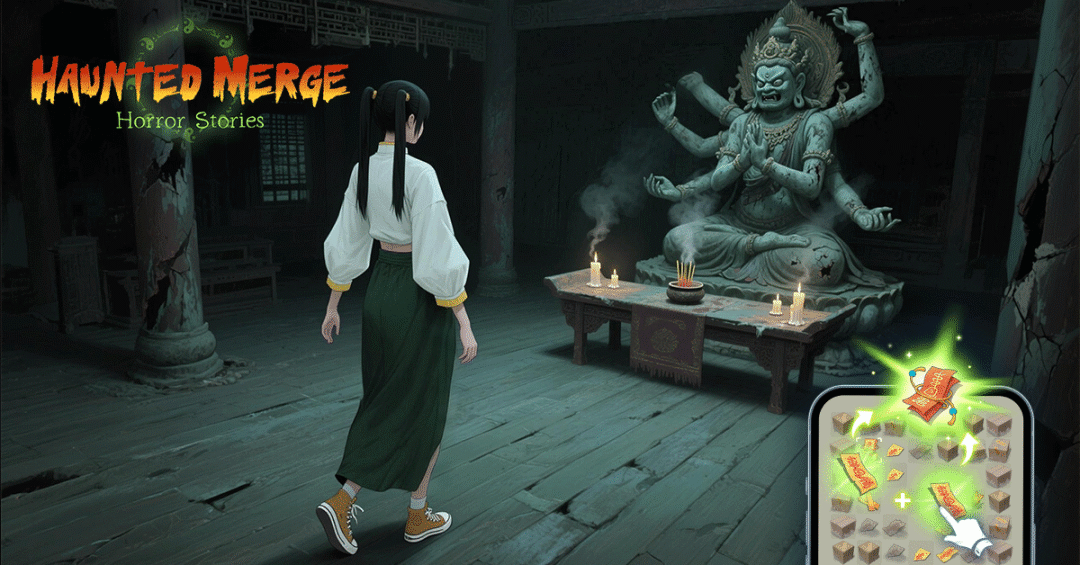
《Haunted Merge: Horror Story》
Even industry giant 37 Interactive Entertainment has explicitly stated that strategy games (SLG) and casual games will be its primary focus in the near term. The company has already built up a substantial pipeline of high-quality titles in the strategy and casual genres, which are expected to be rolled out to players gradually in the second half of this year and next year.
As the team currently leading the revenue charts in the merge-and-cook mobile game market, Lemon Microfun has not rested on its laurels.Launched early last year, *Flambé: Merge and Cook* has performed exceptionally well, with monthly revenue exceeding 70 million yuan over the past two months, making it the company’s third major revenue driver in the merge-and-cook genre.At the same time, they have also launched a beta test this year for their new horror-fantasy title, *Whisper Castle*, further exploring the potential of new genres.

《Whisper Castle》
From breakthroughs in individual areas to an arms race in niche genres, Chinese developers are leveraging their advantages in industrial-scale research, development, and operations to establish new dominance in the global “2-in-1” market. It is foreseeable that as new products from various developers flood the market, the “2-in-1” gaming sector—a space once dominated by Western titles—will transform into a new battleground where Chinese developers set the rules.
原创文章,作者:gallonwang,禁止转载:https://youxichaguan.com/en/archives/198140