2026: The Year of Polarization for MMO RPGs.
On the one hand, this is a banner year for MMOs. At the recent GDC 2026, NC America CEO Jeonghee “JJ” Jin stated that the MMO market is entering an upswing, and new, extremely lightweight titles like Minimo have begun to emerge.

On the other hand, however, the traditional MMORPG genre has been stuck in a prolonged slump over the past few years. Most established players, both domestically and internationally, have opted to follow a safe, well-trodden path—pushing the boundaries of graphics with increasingly aggressive updates while making minimal changes to gameplay and progression systems. As a result, new players find it difficult to get started, while veteran players have grown weary of the same old experience.
The atmosphere of the workplace has seeped into the gaming world. Many players go to work in real life, then return to the game to “work” there as well, mechanically going through the linear cycle of “choosing a class—leveling up skills—collecting gear—running dungeons.” They invest dozens of hours each week, only to find that daily quests have carved the open world into tedious sections connected by teleportation points, ultimately resulting in the dreaded “one-stop” experience that everyone dreads.
The concept that MMOs embody—namely, “bringing countless people together to live in an imaginary world”—remains as compelling as ever today; however, opportunities often go to those who can deconstruct existing gameplay mechanics.
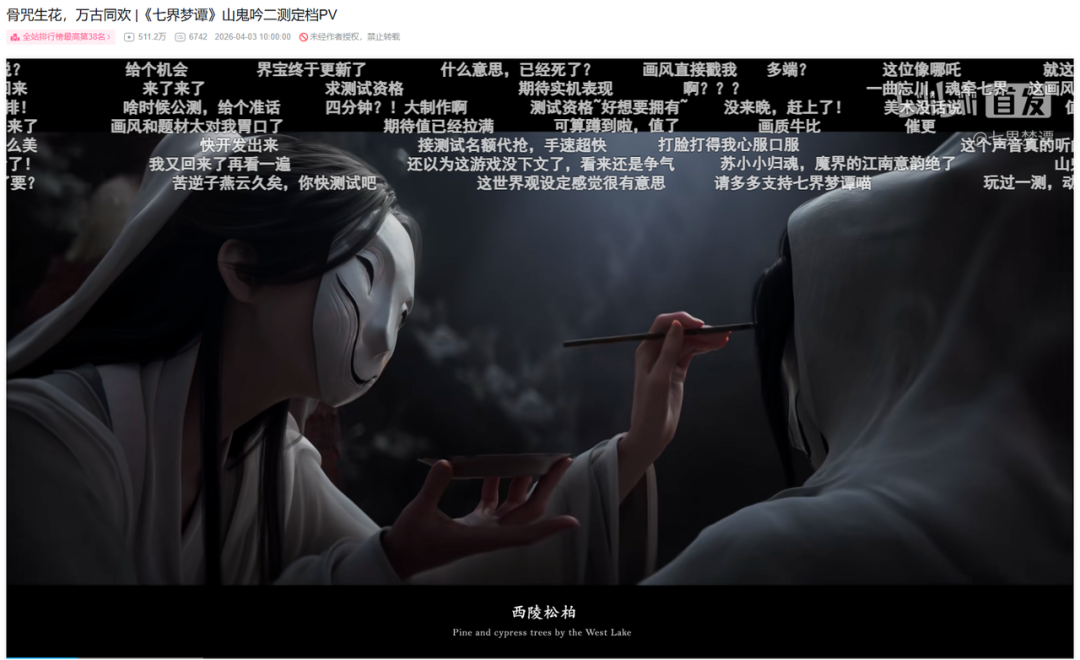
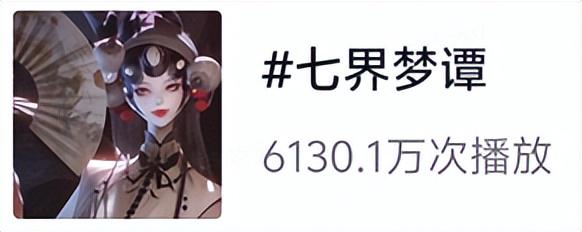
Against this backdrop, a single game has sent anticipation soaring throughout the entire MMO community. In April 2026, *Dreams of the Seven Realms*—developed by Feiguangge Studio and published by Zilong Games—released a promotional video for its second closed beta, titled “The Mountain Spirit’s Lament.” The video quickly surpassed five million views on Bilibili, while its rating on TapTap remained steady at 9.3, and the number of pre-registrations climbed to over 1.26 million.
This game was incubated and funded in its early stages by FunPlus, with Shanghai Shiyi serving as the independent developer and operator. Additionally, the project has entered into a joint publishing and strategic partnership with Zilong Games, and Feiguangge and Zilong have jointly established a dedicated publishing team for *Seven Realms: Dream Chronicles* to jointly advance its launch and operations in China.
Most of the team members responsible for game development are true veterans of the industry. The producer, “Tian Shao,” previously served as the lead designer for *A Dream of Jianghu*, and the core members of the team mostly come from classic projects such as *A Dream of Jianghu*, *Nishuihan*, and *JX3*—in other words, they are all seasoned veterans with years of experience in refining MMOs.
This is a rather common game. As an MMO, its aesthetic world is uniquely mystical and otherworldly; its class design doesn’t even follow the traditional “warrior, mage, priest” division, nor does it feature complex playstyle systems. Yet, since its first beta test last year, player anticipation and enthusiasm have remained high. Given the absence of a major studio’s brand name and a massive marketing campaign, these factors alone are worth examining.
So, will a newcomer to this established genre manage to break free from the clichés of the field? With this curiosity and anticipation in mind, I participated in the small-scale media test for *Dreams of the Seven Realms*.
The experience is intuitive; this is truly a MMO that stands out from the crowd. It replaces the rigid class trees with unique combat and progression systems, establishes a distinct aesthetic, and builds a rich, multi-layered, mystical worldview step by step. However, there are also some troubling issues with the combat.Most importantly, it offers a fresh approach to addressing the chronic issues plaguing existing MMOs and demonstrates considerable feasibility.
01
Delegating decision-making authority
First, in terms of gameplay, the biggest surprise I encountered during the testing process in *Seven Realms: Dream Chronicles* came from its transformation and aerial combat systems.
The game has completely eliminated the traditional warrior-mage-priest class hierarchy. The three major schools introduced in the second beta—Contract, Crimson Calamity, and Frozen Abyss—are all damage-dealing schools, each offering two specializations tailored for PvP and PvE, respectively. At the same time, the damage-absorption, healing, and crowd control roles from the warrior-mage-priest system have been fully transferred to a separate system known as “Transformation.”
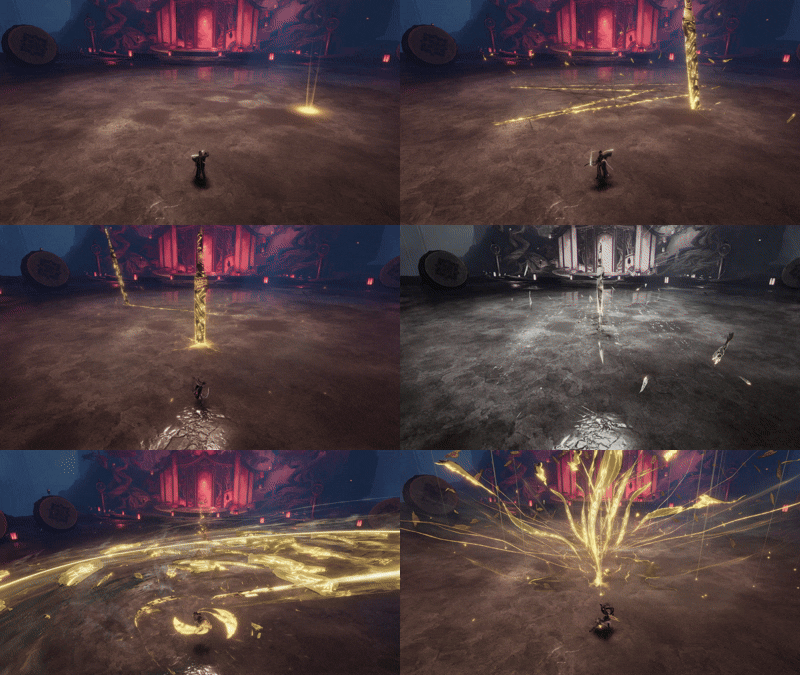
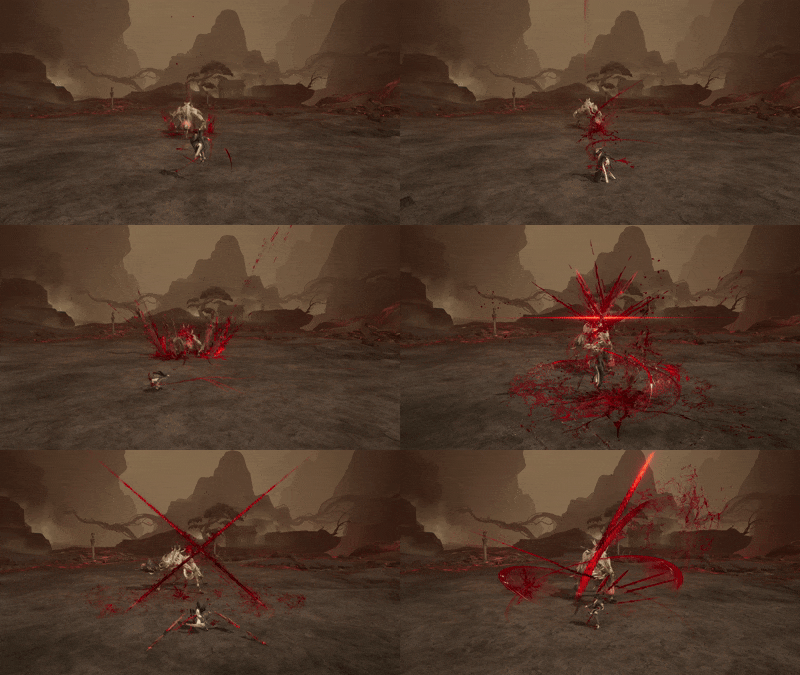
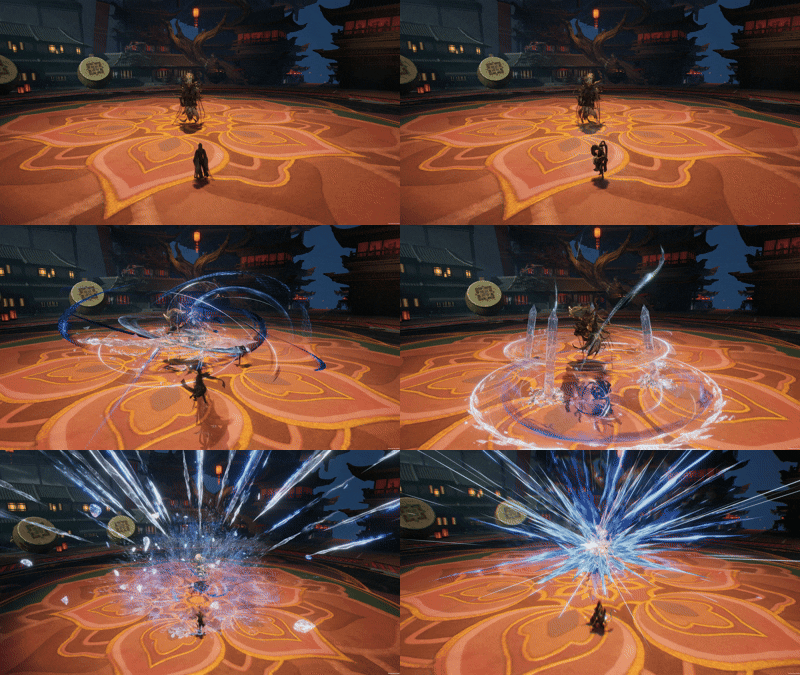
The transformation mechanism works as follows: After defeating specific spirits in the wild, players can unlock the transformation skill through the main questline, thereby obtaining the corresponding spirit’s complete skill set and attribute model.
In the dungeon experience, this system takes on a very concrete form: there are no class restrictions in dungeons, and all four players can bring different transformed monsters into the instance. The skill mechanics are also quite diverse, with evasion, blocking, interrupting, and transformation layered together. When you encounter situations that require tanking damage or healing, you simply switch to the appropriate transformation—for example, using Nian to tank and Feilian to heal. Each transformation also has its own cooldown.
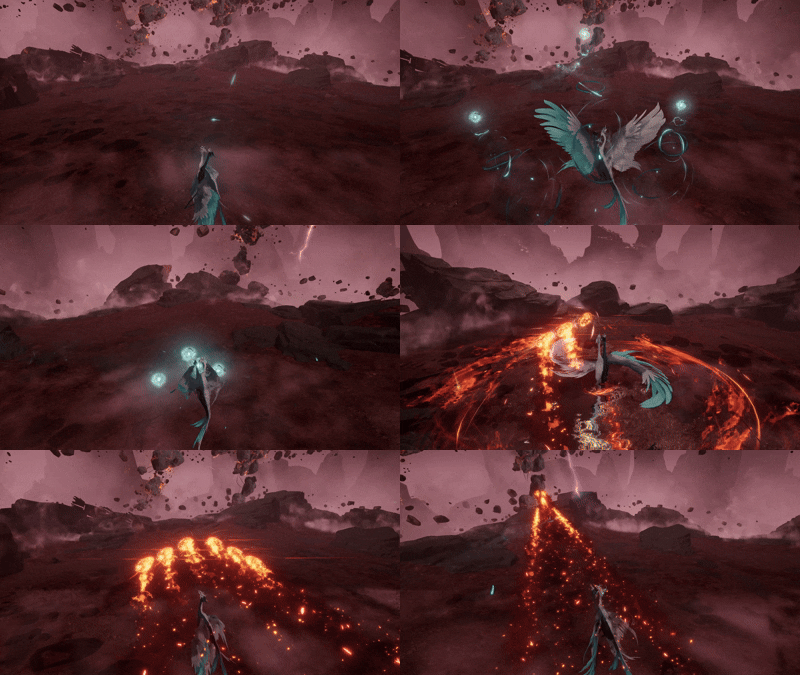
Air combat, meanwhile, revolves around the three great artifacts—the Ancient Sword, the Killing Kite, and the Yan Kun—to form a three-dimensional tactical framework.The Ancient Sword specializes in close-range assaults, launching a two-stage flying sword charge to penetrate enemy formations and trigger high-density combo attacks, designed to tear through enemy anti-air defenses and engage in close-quarters aerial combat; The Killing Kite focuses on mid-range airspace control, automatically applying tracking markers and strikes to designated targets across a wide area, enabling it to counter highly maneuverable aerial swarms and execute area suppression;Yan Kun is positioned as an ultra-long-range sniper, capable of both strategic ground bombardment and the precise elimination of elite targets from a safe distance.
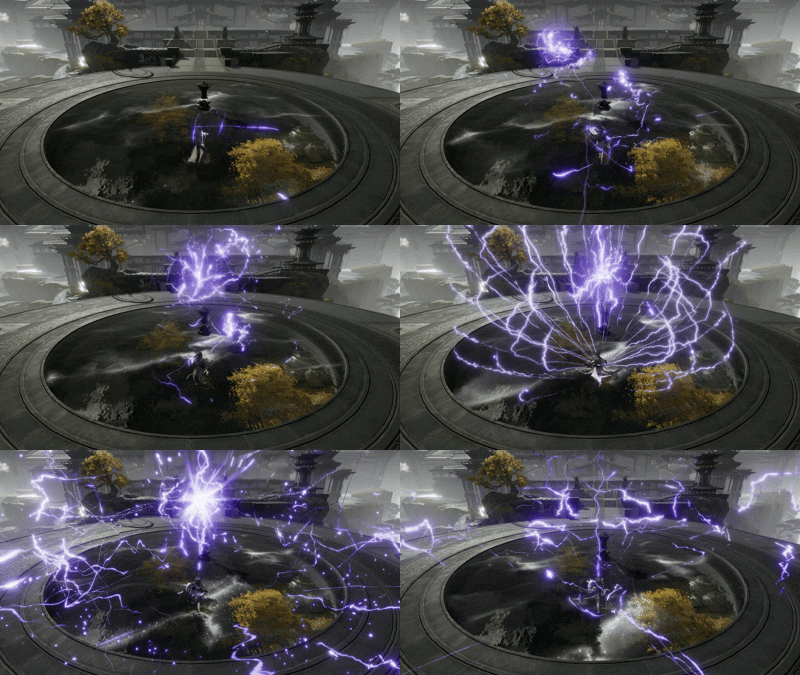
These two systems, when combined with the game’s class specializations, are designed to address the issue of class rigidity in traditional MMOs—more specifically, the diminishing returns associated with the linear gameplay experience that results from choosing a specific specialization.
Specifically, in traditional games, the depth of the player’s experience stems from their choice of class, and developing any class requires a significant investment of time and resources. Once invested, these resources become sunk costs, and the linear progression often locks players into a one-way path:From the moment a character is created, the next dozens or even hundreds of hours of gameplay are often predetermined. Leveling, skill trees, equipment stats, and enchantments—every aspect is linear and non-transferable. The marginal utility of the experience rapidly diminishes after prolonged investment, ultimately leaving only quests, costs, and social interactions to drive players to log in.
Switching playstyles or classes, or filling a gap in the team, not only requires leveling up a new character from scratch, but it also disrupts your social circle—when your buddies ask you to join a guild battle and you tell them you’re not playing as a frontline character anymore, how are they supposed to organize the lineup?
At its core, this system effectively trades players’ freedom of choice for the system’s stability—designers want players to stick to a single class to facilitate economic modeling and balance, but this deprives players of the opportunity to experience different yet fully realized combat dimensions through their characters; however, if the prominence of playstyles and classes (i.e., the investment required) is reduced, it becomes difficult to foster a deep connection between players and the world.
Therefore, if one were to judge the shape-shifting and aerial combat systems solely based on their gameplay descriptions, it would be easy to mistake them for nothing more than a “Black Monkey”-style transformation mechanic. However, their true value may lie in the fact that they enhance the value for money of the experience by giving players more control over their choices.
With the “Transformation” system, the focus of the player’s investment shifts from “characters” to the bestiary. Every boss you encounter becomes a spirit you unlock, with each one’s progression saved separately and accessible at any time. In high-pressure boss battles, you’ll need to take damage, heal when your health is critically low, and seamlessly switch back to damage-dealing mode for a burst attack during the boss’s weakened phase—all of which can be accomplished by cycling through the Transformation system.
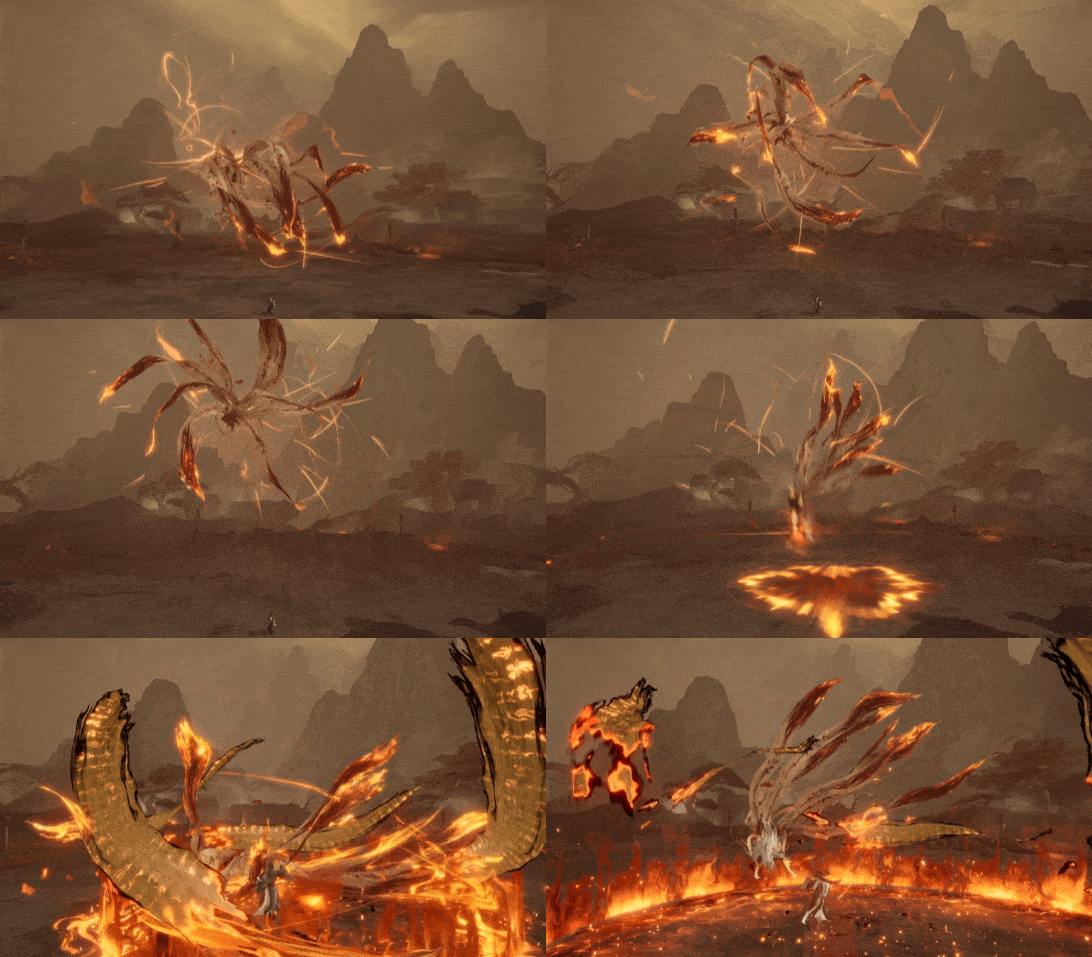
A single account can cover all roles in the team pool, effectively eliminating the problem of being unable to form a team due to a lack of specific roles at the system level.
During the gameplay experience, the biggest surprise with the Shapeshifting system comes from its pacing—whereas traditional tank-DPS-healer roles rely on the team pre-assigning targets and aligning within fixed time windows, the Shapeshifting system delegates tactical decisions to individual players. In dungeons where multiple players fight monsters together, players must adapt dynamically by assessing the situation in real time and managing 30-second cooldowns. This raises the ceiling for individual skill, and the positive feedback from quick reactions is much more frequent.
Similarly, aerial combat employs a multi-dimensional approach to enhance the gaming experience. Both aerial and ground combat feature distinct skill systems, which enrich the gameplay and add depth to character development—players can unleash Yankun’s bombing skills mid-air, then quickly dive to the ground and switch to a transformed form—whether for blocking or healing—to engage in ground combat.
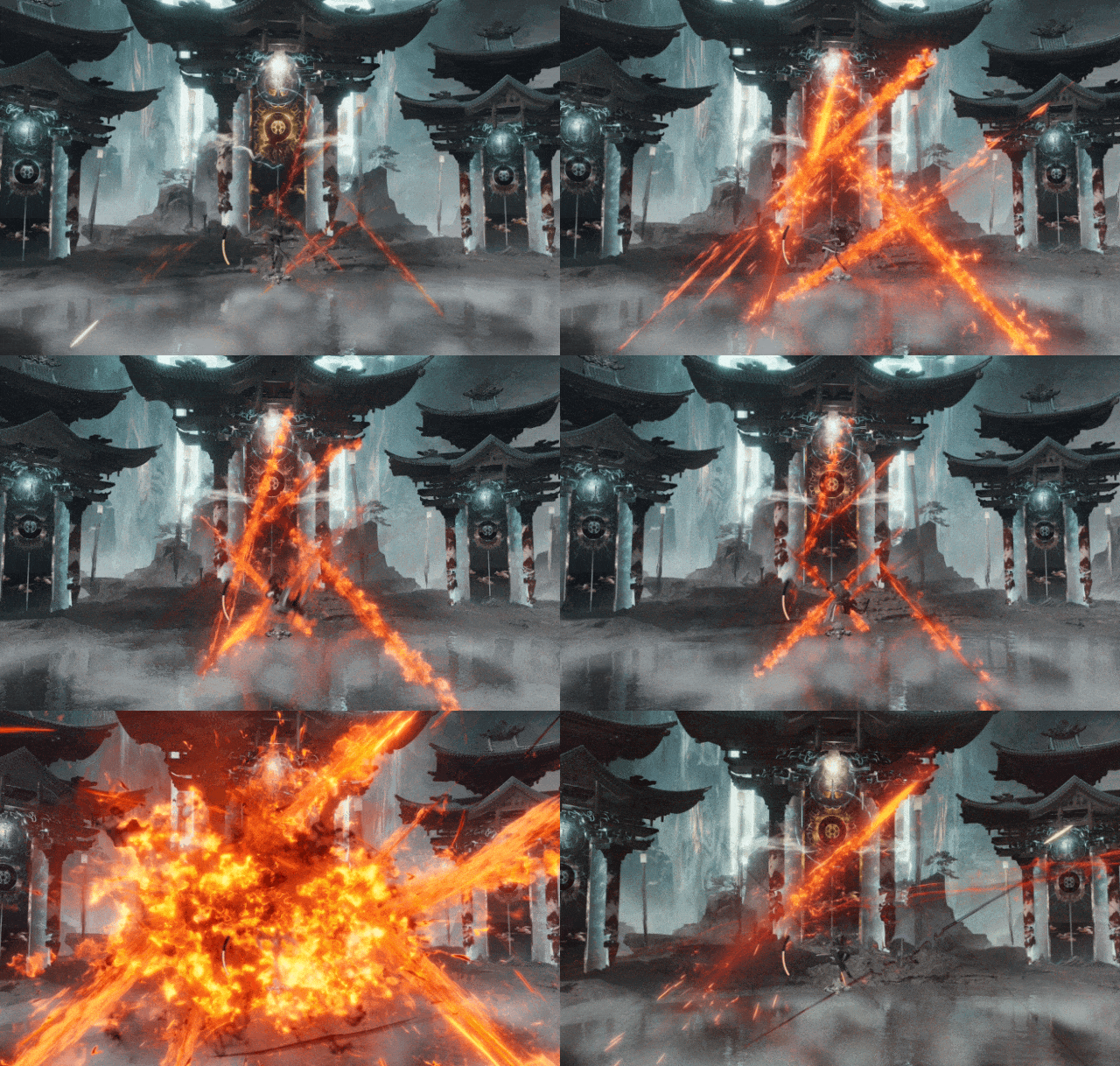
Many previous fantasy MMORPGs have featured sword-riding flight mechanics, but most of the time they served merely as a means of travel or as superficial gimmicks in limited gameplay modes. In contrast, *Dreams of the Seven Realms* has integrated aerial combat into daily battles—players can fight monsters, engage in PvP, and unleash ground-shaking attacks in the sky, and flying monsters and aerial world bosses even spawn randomly in the open world.
The development of the aerial combat system has, in turn, branched out further due to the existence of the magical artifact system. Take the “Killing Kite” class as an example: players can choose to build and develop area-of-effect or long-range support artifacts to provide long-range AoE damage and act as the team’s turret; alternatively, they can opt for speed-boosting or defensive support artifacts to focus on survival and drawing aggro.
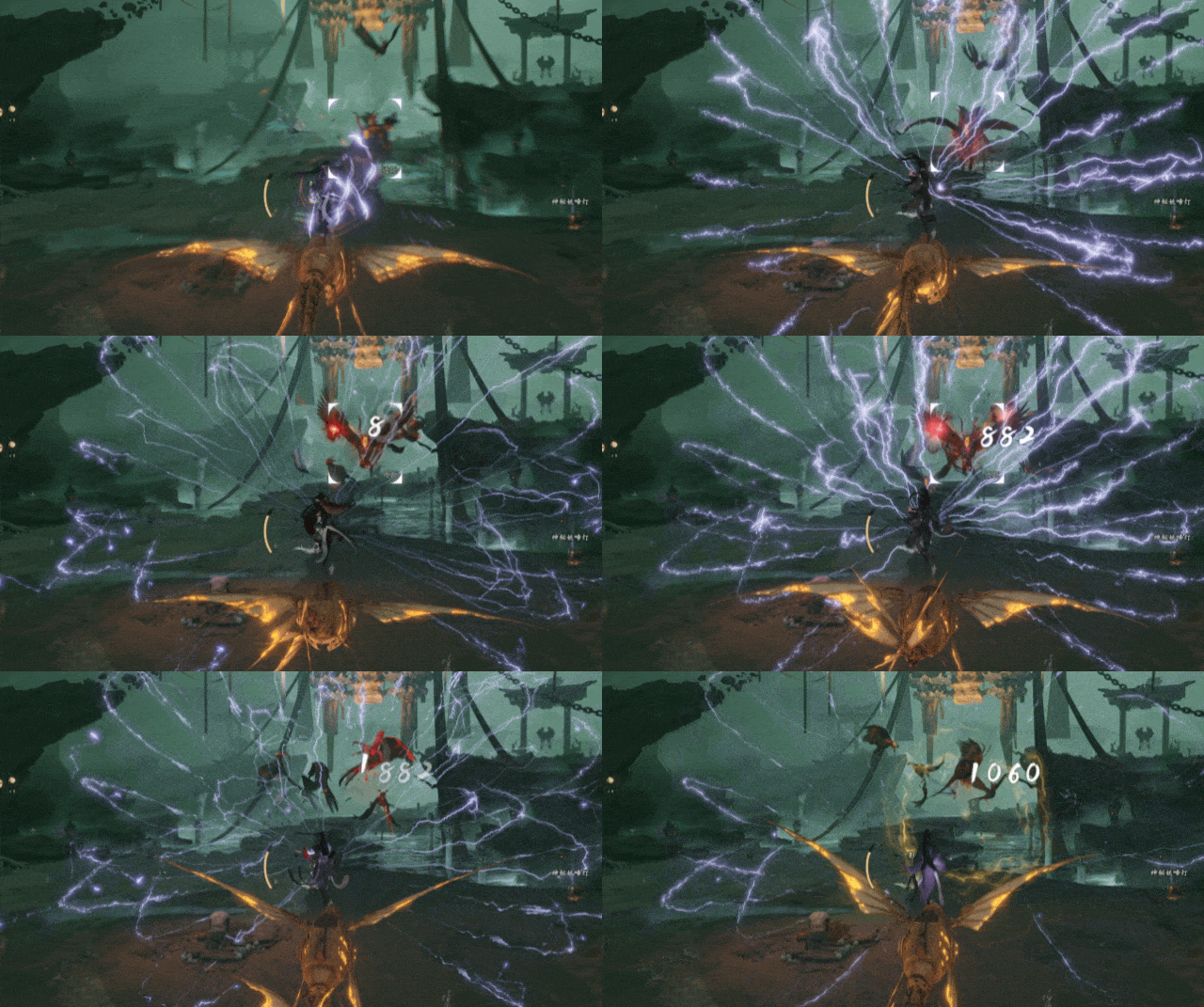
This expansion of the vertical dimension adds a third layer of tactical depth to dungeon design, faction battles, and open-world monster hunting. Enemy positioning and projectile trajectories can no longer be predicted using two-dimensional logic; attacks can come from directly overhead, and these three-dimensional strikes from blind spots greatly increase the unpredictability of combat.
Similar to shape-shifting, the core motivation for players comes from the expansion of functional and tactical experiences, rather than from simple numerical progression.
Therefore, these two systems are most likely designed to address two conflicting needs essential for the long-term operation of an MMO: accessibility and depth of experience. With a similar time investment, players gain exponentially more in terms of class and gameplay variety, eliminating the monotony that comes from playing a single class for extended periods. Furthermore, both shape-shifting and aerial combat offer non-linear, horizontal expansion, allowing for high resource reuse and lower trial-and-error costs.
However, during testing, these systems revealed a significant flaw in actual combat: the combat mechanics were not as logically sound as anticipated.
First, regarding the visuals: while characters can switch forms and skill sets, there aren’t enough visual effects to clearly indicate their new roles. With multiple targets, effects, and movements all happening simultaneously, it’s very easy to misjudge the situation. In multiplayer dungeons, when multiple players are rapidly switching forms at the same time, combined with the targeting logic of randomly spawning bosses and shifting role assignments, the situation can quickly spiral out of control.
It’s understandable, really. The developers’ original intention was likely to create a multiplier effect between the base game, aerial combat, and transformation skills, but in practice, the core experience still feels like “just clicking wherever the light is.”
Doing away with the warrior-mage-priest roles has only completed the first half of the journey—allowing everyone to take on any role—but the second half remains unfinished: ensuring that everyone knows what role others are currently fulfilling. Role switching has brought tactical freedom, but it has also created information noise, which is currently the most glaring unfinished business.
02
Possible Worldviews
Beyond its gameplay, the most striking and impressive aspect of *Seven Realms: Dream Chronicles* lies in its theme: set against the backdrop of the Late Tang Dynasty—a period rarely explored in the realm of creative works—the game also draws heavily on a wealth of supernatural legends, ultimately forging a uniquely Chinese worldview steeped in the mystical and the eerie.
For example, the protagonist nearly met his end right at the start,the game’s guide character is essentially a servant of the underworld, and the world is teeming with folk legends related to death. Take the “ghost soldiers colliding with evil spirits” that appear right at the beginning—this phenomenon can be traced back to accounts of ghostly soldiers in the *Book of Jin: Biography of Wang Ningzhi*, the *Book of Northern Qi*, and the *History of the Jin Dynasty*; it also finds substance in the *Miscellaneous Records of Youyang* and the *Comprehensive Records of the Taiping Era*.
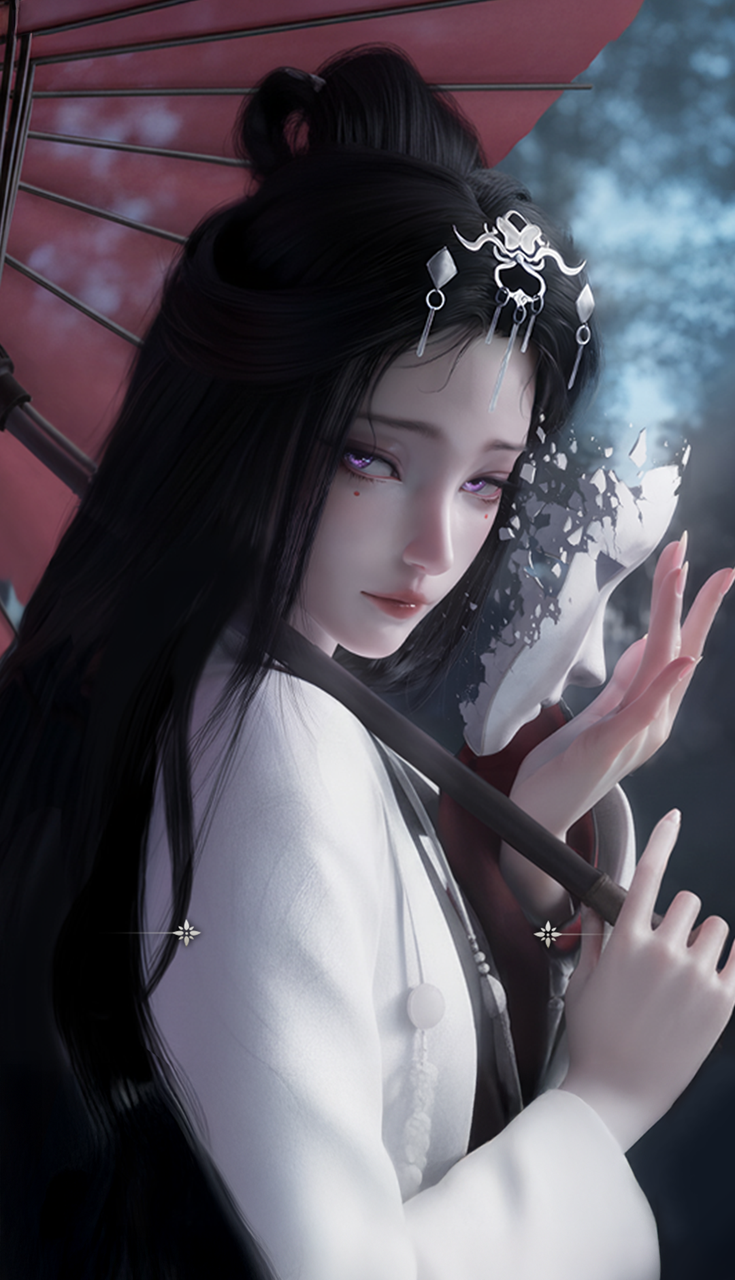
The abundance of supernatural tales centered on death not only possesses a chilling and novel atmosphere but also holds narrative potential. On one level, it can facilitate visual expression; on another, it can broaden our conception of the world. Most importantly, it can engage with specific historical contexts, returning to the narrative mission that defined the genre of supernatural fiction at its inception.
Plus, the game features “Cemetery Cultivation,” which blends coffin-carrying with rhythm gameplay. And most importantly, the male and female ghosts are definitely quite alluring…
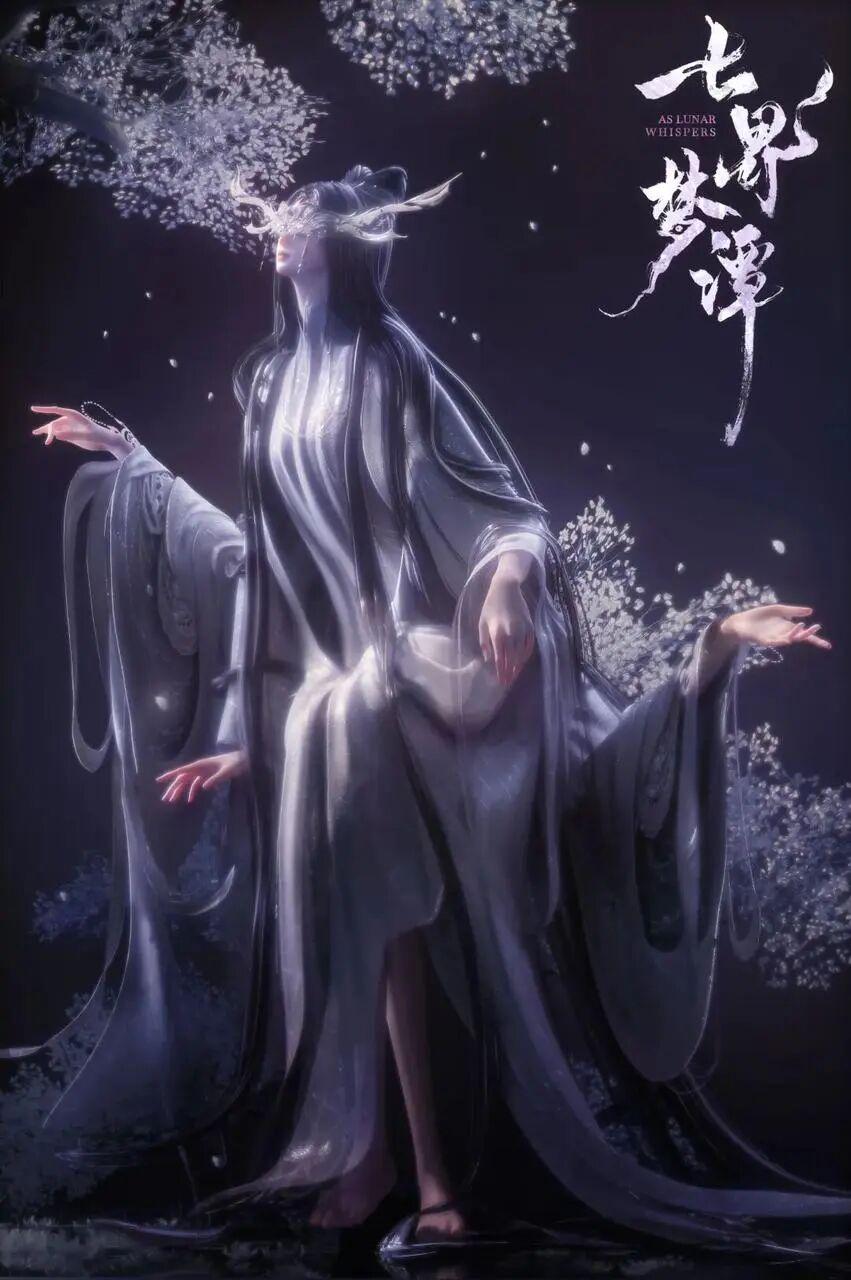
This is particularly rare in the MMO sector.
Every MMO that truly manages to remain in players’ memories for more than a decade has a unique and irreplaceable worldview.
As a genre of games that often accompanies players for years, the core appeal of MMOs lies in the emotional connection built upon a specific narrative framework.
Ancient mythologies, primordial eras, wuxia, Western fantasy… World-building and aesthetics are the first things players notice when they enter an MMO, and they form the very foundation of the gaming experience. Yet it cannot be denied that today’s games have become overly inflated in terms of their world-building and concepts. Drawing from the same pool of mythological or wuxia IPs, using the same terminology, and telling the same formulaic stories makes it truly difficult to capture players’ interest.
In this context, the challenge facing MMO developers is to create a game world that is both deep and expansive, incorporates popular elements and features, offers fresh ideas, and ideally has cultural roots.
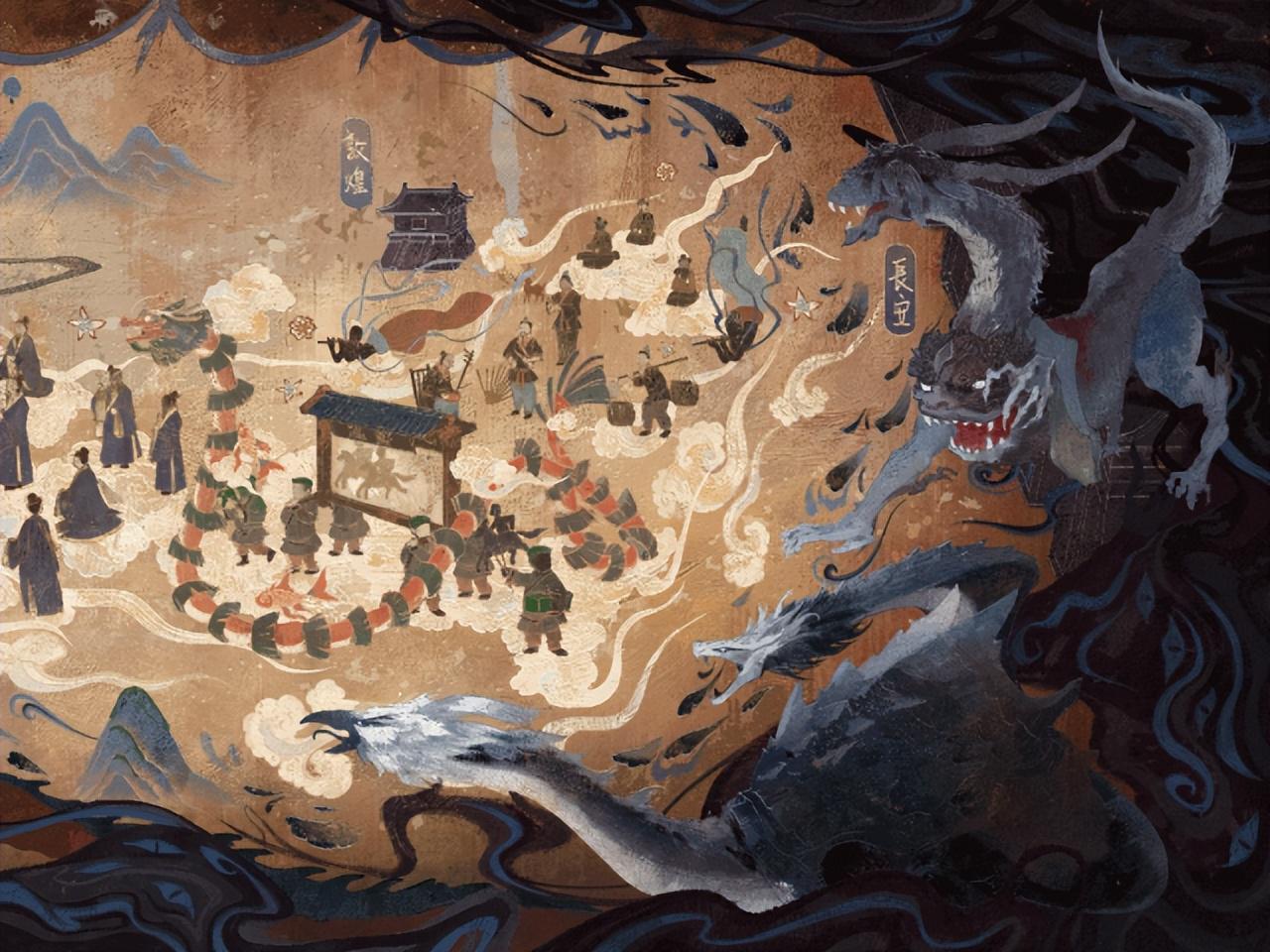
The approach taken by *Dreams of the Seven Realms* on this issue is quite unique among domestic MMOs.
First and foremost, the themes of the eerie and the horror have become the defining codes of various subcultures in this generation. In the visual arts, we see psychological horror and simulated horror; in literature, there are rule-based ghost stories; in gaming, all kinds of horror-themed creations have emerged; and in mini-games, micro-horror themes have become wildly popular. Even on the fashion runways, we’re seeing “ghost aesthetics”—where people literally dress up like ghosts—become a trend.
There are good reasons why the horror genre is so popular. Whether it’s the pervasive sense of psychological unease, the turbulent global landscape, or simply people’s fundamental curiosity and desire to explore, all these factors help explain its appeal. However, for content creators, recognizing its popularity is one thing; knowing how to capitalize on it effectively is quite another.
The strength of *Dreams of the Seven Realms* lies in the fact that it has found ample historical context and literary inspiration for this popular supernatural genre, rather than allowing it to remain merely at the level of sensory stimulation.
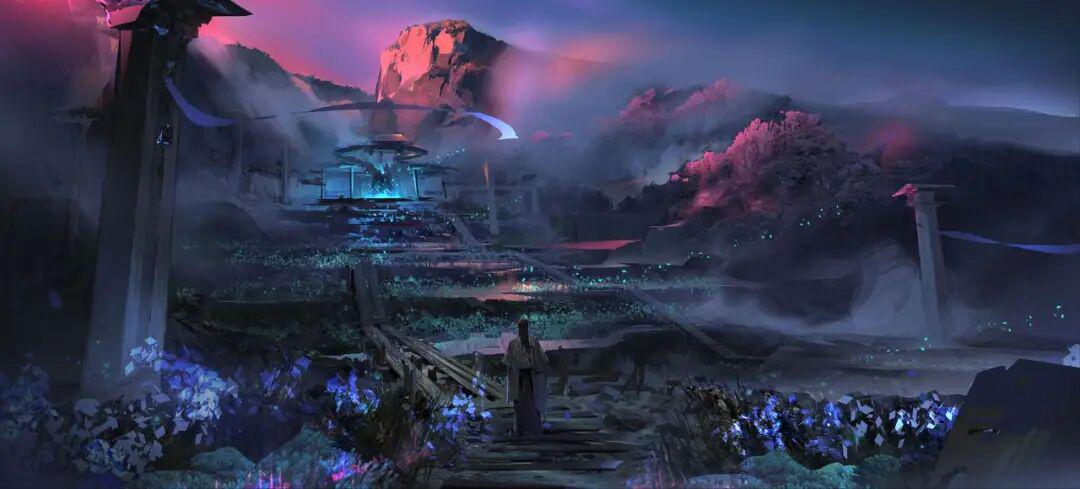
For example, it precisely anchors its historical framework in the Late Tang Dynasty. Why the Late Tang? Because this was a period of chaos in Chinese history, offering a glimpse into the final days of a once-glorious dynasty: turmoil at the frontiers, a displaced populace, the secession of regional warlords, the Niu-Li factional strife, and the rise of eunuchs to power. The emergence of warlordism brought about massive upheavals in the social order and marked the transition between civil and military cultures.
In this world, while there are rampant evils and calamities, it is also easy to find shining examples of humanity, compassion, and morality. The design of the game’s promotional video—which has garnered over five million views—is full of Easter eggs waiting to be discovered: Lady Su, Consort Xue’s zither, Mawei Slope…
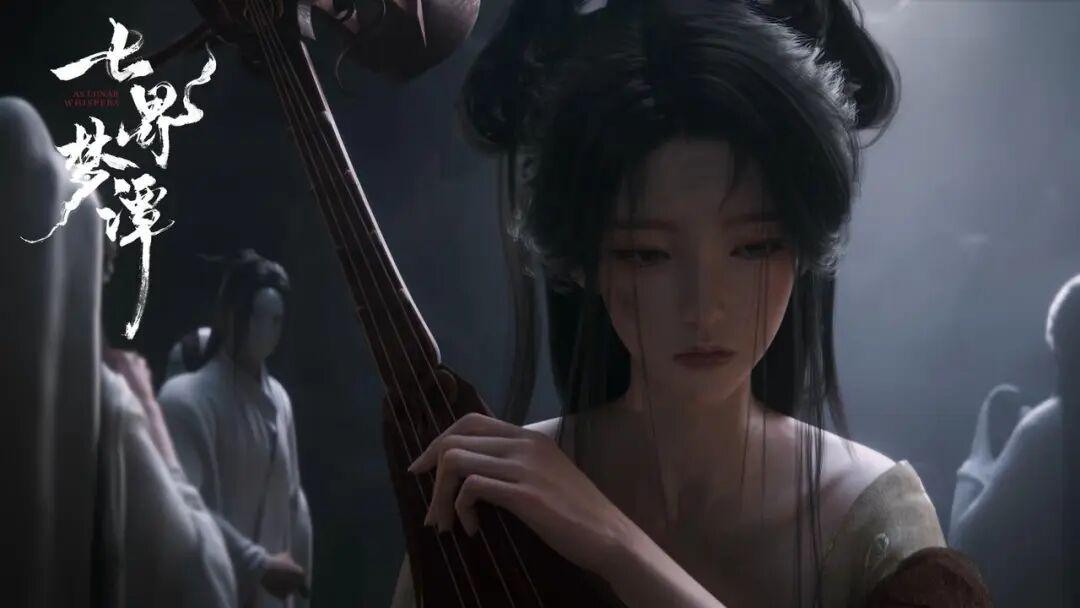
This turbulent era also gave rise to a wealth of supernatural literature—works characterized by subtle yet profound themes, rich imagery, and bizarre plots—such as *The Book of Strange Tales*, *Records of the Mysterious and Strange*, *The Chronicles of the Xuan Room*, and *The Miscellaneous Notes of Youyang*. These works provide games with a vast array of vivid characters and stories.
Building on this foundation, *Dreams of the Seven Realms* features the poet Li He—a figure who is highly distinctive in the history of Chinese literature yet has rarely been referenced in the gaming world—as the central character who anchors the entire narrative framework.
In the game, Li He is portrayed as the “Soul of Poetry, Faded Form”—a guide who wanders between the realms of the living and the dead because his earthly attachments have not yet faded. He possesses knowledge of the secrets of the Seven Realms and personally guides players through the core gameplay mechanic known as “Soul Refining.” A frail, melancholic, and somewhat gloomy male ghost, he is deeply familiar with the rules of reincarnation across the Seven Realms and often offers hints through poetry or metaphor.
The development team has woven him deeply into every key turning point of the main storyline, with his verses and metaphors serving as direct sources of information for mission clues.
In fact, the team name “Feiguangge” is taken from the opening line of Li He’s poem “Lamenting the Shortness of the Day”—“Feiguang, Feiguang, let me offer you a cup of wine.”
By the way, here is the full poem:
Fly away, fly away; let me offer you a cup of wine.
I do not know how high the blue sky is, nor how thick the yellow earth is.
All I see is the cold moon and the warm sun, which together wear away my life.
Eat bear and you’ll get fat; eat frog and you’ll get thin.
Where is the Divine Lord? Where is the Supreme One?
In the east there is a tree, beneath which lies a dragon holding a candle.
I will sever the dragon’s legs and devour its flesh, so that it cannot return by day nor lie in wait by night.
The elderly die of natural causes, and the young do not weep.
What does it mean to “swallow gold and white jade”?
Who is like Lord Ren, riding a blue donkey through the clouds?
Liu Che’s Maoling Tomb is filled with decaying bones, while Ying Zheng’s cypress coffin was a waste of money.
As the “Poet-Ghost,” the most essential aesthetic quality of Li He’s poetry is its “strangeness”—“Ghostly rain falls on the wild grass” and “’On autumn graves, ghosts sing the poems of the Bao family’—that indescribable presence lurking within the gloom can be described as a Chinese Cthulhu born a thousand years too early. It represents another facet of Chinese aesthetics: not one of carefree vastness or ethereal beauty, but rather one of darkness, depth, and intensity, like a basin of black blood.
Rather than relying on the conventional, ethereal style of traditional Chinese literature, *Dreams of the Seven Realms* combines this “strangeness”—as seen in literary history—with popular culture, distilling it into a unified aesthetic system. Immortals are no longer portrayed as light and ethereal; instead, they are entangled with death, obsession, and impermanence.
It is precisely this tension between the “immortal” and the “mysterious” that creates a genre niche virtually unexplored by previous xianxia MMOs.
03
Downsizing at the Central Factory
In 2026, Feiguangge Studio, as a small-to-medium-sized development team, faces a highly concentrated competitive landscape in the MMO sector.
In this environment, every design choice made by small and medium-sized manufacturers is essentially a decision regarding resource allocation: where to focus limited R&D capacity, and which tasks to resolutely avoid.
In terms of theme, Feiguangge has made some extremely precise cuts, resulting in a theme that stands out clearly—differentiation itself is a product’s greatest cognitive asset during the testing phase.
On the system side, the shape-shifting and aerial combat mechanics represent highly refined, minimalist innovations. The ability to switch between forms opens up new gameplay variations; while the development costs are far lower than those of redesigning an entire class, the rewards for player progression are multiplied. The core concept is that “one system does the work of multiple systems.”
The common thread running through these choices is clear: the path to growth for small and medium-sized developers in the competitive world of MMOs lies in niche segments overlooked by the mainstream, where they trade breadth for depth and the right to define the market for the right to follow. In this context, differentiation is the only effective core strategy.
Of course, this approach isn’t without its costs. It remains to be seen whether the high degree of freedom will come at the expense of the steady appeal offered by the traditional daily quest system, and whether issues with the combat mechanics revealed during testing will be resolved.
However, for teams considering how to enter the MMO market, the second closed beta of *Seven Realms: Dream Chronicles*—*Mountain Spirit’s Chant*—has provided a clear benchmark: rather than becoming a more expensive follower on an existing path, flexible deconstruction and creativity are the true competitive advantages for developers of this scale.
原创文章,作者:gallonwang,禁止转载:https://youxichaguan.com/en/archives/196484