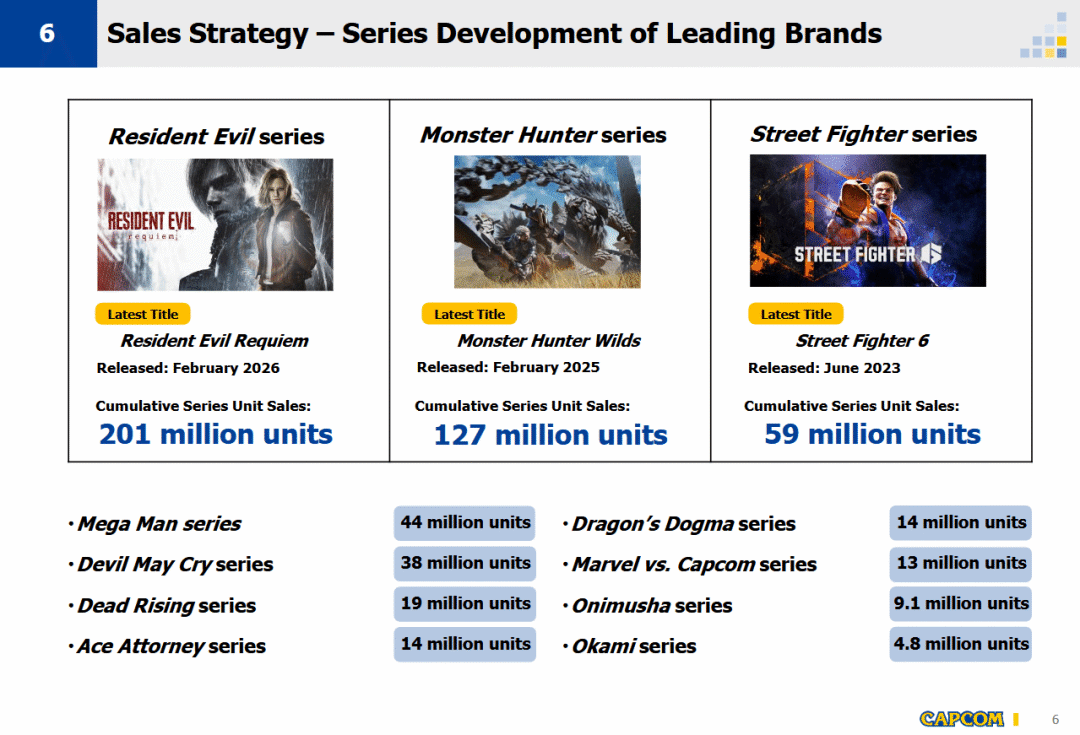
If you were to rank the difficulty of adapting IPs into mobile games, I’d say *Monster Hunter* would likely be near the top. It’s not because the IP isn’t big enough—quite the opposite; it’s too big.Capcom’s latest financial report shows that Monster Hunter has surpassed 127 million units in global sales, with the latest installment, *Monster Hunter: World*, selling over 10 million copies in its first month—setting a new record for the fastest-selling title in the company’s history. Among buy-to-play games, this figure is likely second only to those few “giants” we can all think of.
Behind those 125 million copies sold lies a group of the world’s most “discerning” players: they can recite the frame rates of every strike in the Katana’s “Irritating Slash” with their eyes closed; they can judge the jump timing of the “Dragon Ascension Slash” purely on muscle memory; they can dodge the Dragon Cart while sharpening their blades and pulling teammates to safety; and they can chat and laugh as monsters battle each other, remaining completely unscathed.
Therefore, bringing this experience to mobile devices is, in essence, not merely about creating a new mobile game, but rather a monumental undertaking that involves condensing a movement language built on 1,000 hours of practice into a system that can be controlled with just a few fingers.
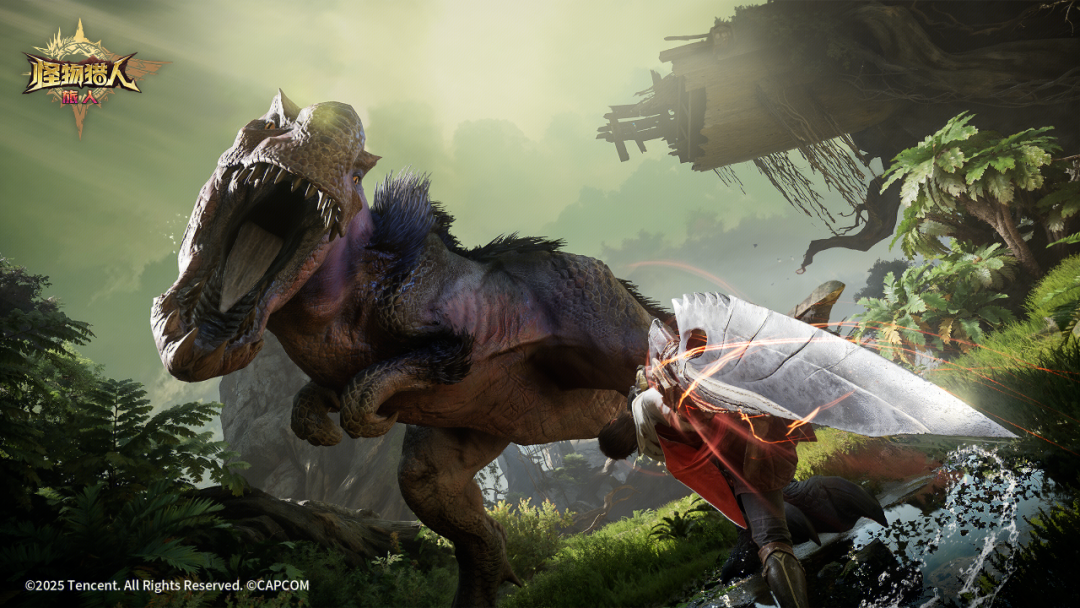
However, at the end of April, Tencent’s TiMi Studio Group launched an early access test for *Monster Hunter: World*. To be honest, after playing it for a while, I have mixed feelings. In some areas, TiMi has truly exceeded expectations, while in others, it’s “pretty much as good as it gets.”

While the *Monster Hunter* series itself continues to scale back its content to appeal to a broader audience, the challenges facing *Monster Hunter: World* are only going to become more severe.
01
An adaptation is not a “free adaptation”
First, let’s talk about combat—the aspect that veteran hunters care about most. The good news is that the combat system retains Monster Hunter’s core mechanics: the Great Sword requires a charge gauge to sharpen its blade, and the Dual Blades can activate Demon Mode, so veteran hunters won’t have to unlearn their muscle memory. The bad news is that controller support isn’t available yet.

To accommodate mobile gaming habits, *Monster Hunter: World* not only offers two control schemes but has also undergone extensive optimization and adjustments.
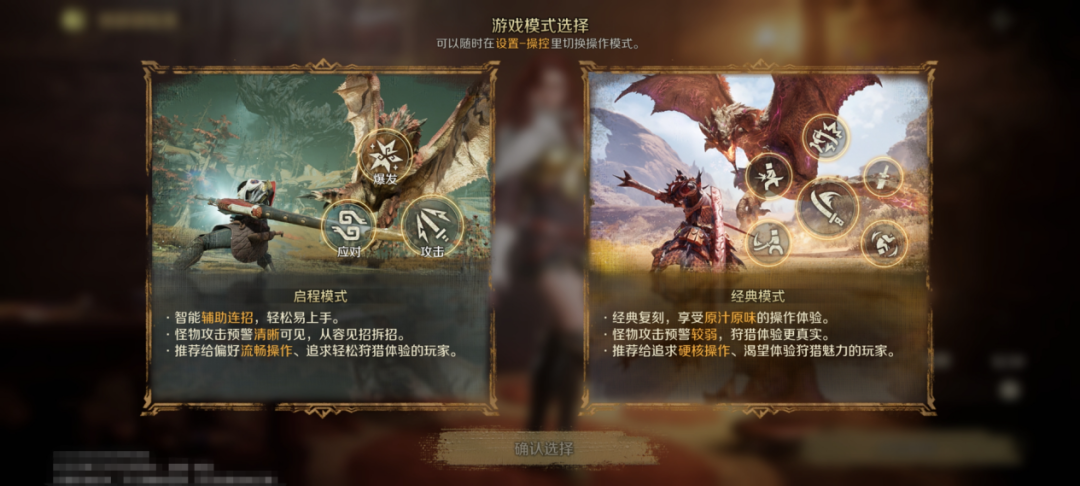
Most actions have been consolidated into four categories: normal attacks, power-ups, parries, and burst attacks. Taking the Ethereal Blade as an example, the damage-dealing mechanics now work as follows: normal attacks build up the Qi gauge; the Qi Blade Chain Slash triggers the Rising Blade; the Iaido Slash performs a parry; and the Qi Blade Thrust unleashes the Dragon Ascension Slash. Finally, the character also has an additional Ultimate Ability.
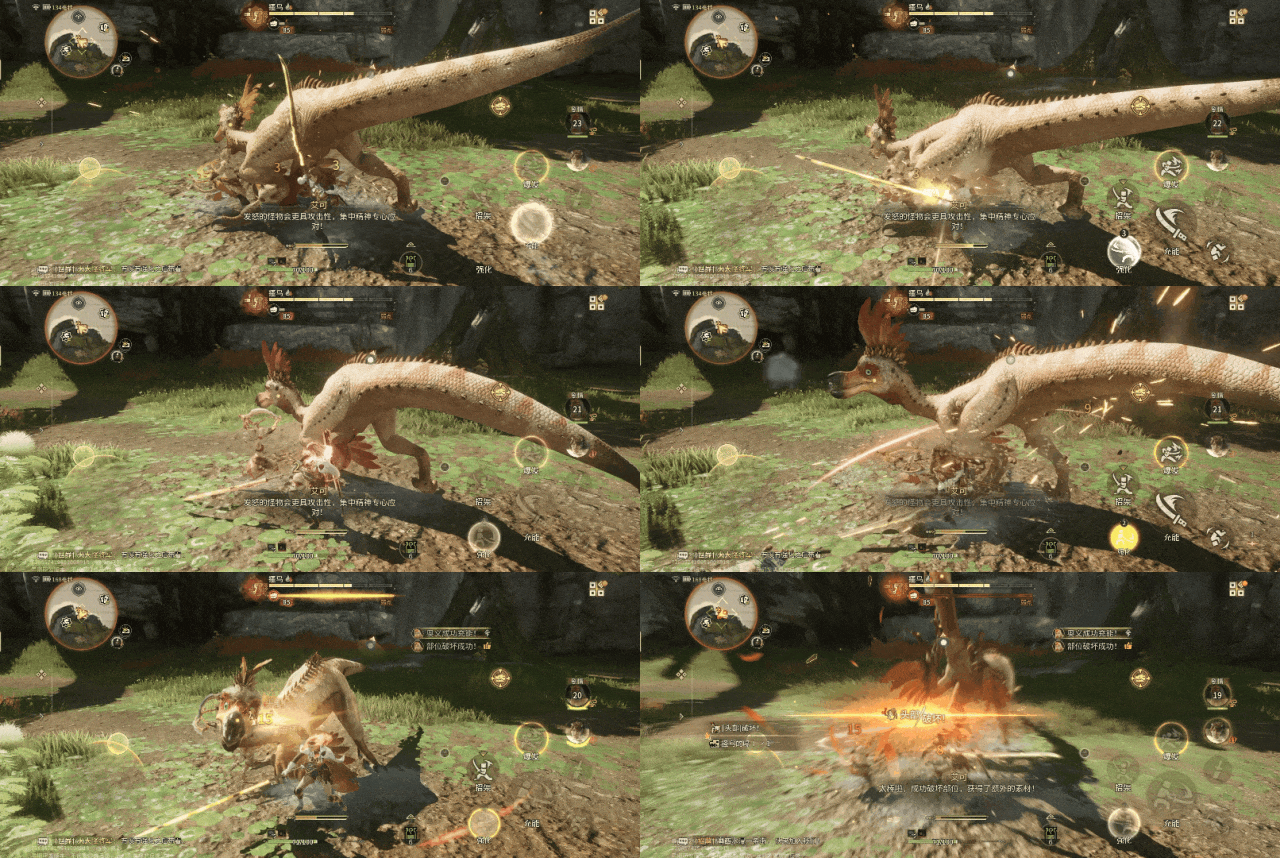
At first glance, this setup looks a lot like the “standard formula” for today’s action mobile games; the mere mention of the “four buttons plus a special move” setup is enough to send a shiver down the spines of veteran hunters. But in reality, none of the skills have cooldowns; they are limited only by the Qi Gauge, the game’s core resource.
In other words, you’re not just managing a “cooldown cycle”—you’re engaged in a real-time battle for resources. Without a Qi gauge, you can’t cast any skills at all; without a Blade Charge, you’re just scratching the surface. At the same time, you need to constantly anticipate the monster’s next move: should I block, use Blade Charge, or go for a burst damage combo?

This design brings combat back to the core of the Monster Hunter experience—it’s not just about using whatever skills you have, but about deciding on a strategy based on the resources at your disposal and the monster’s movements.
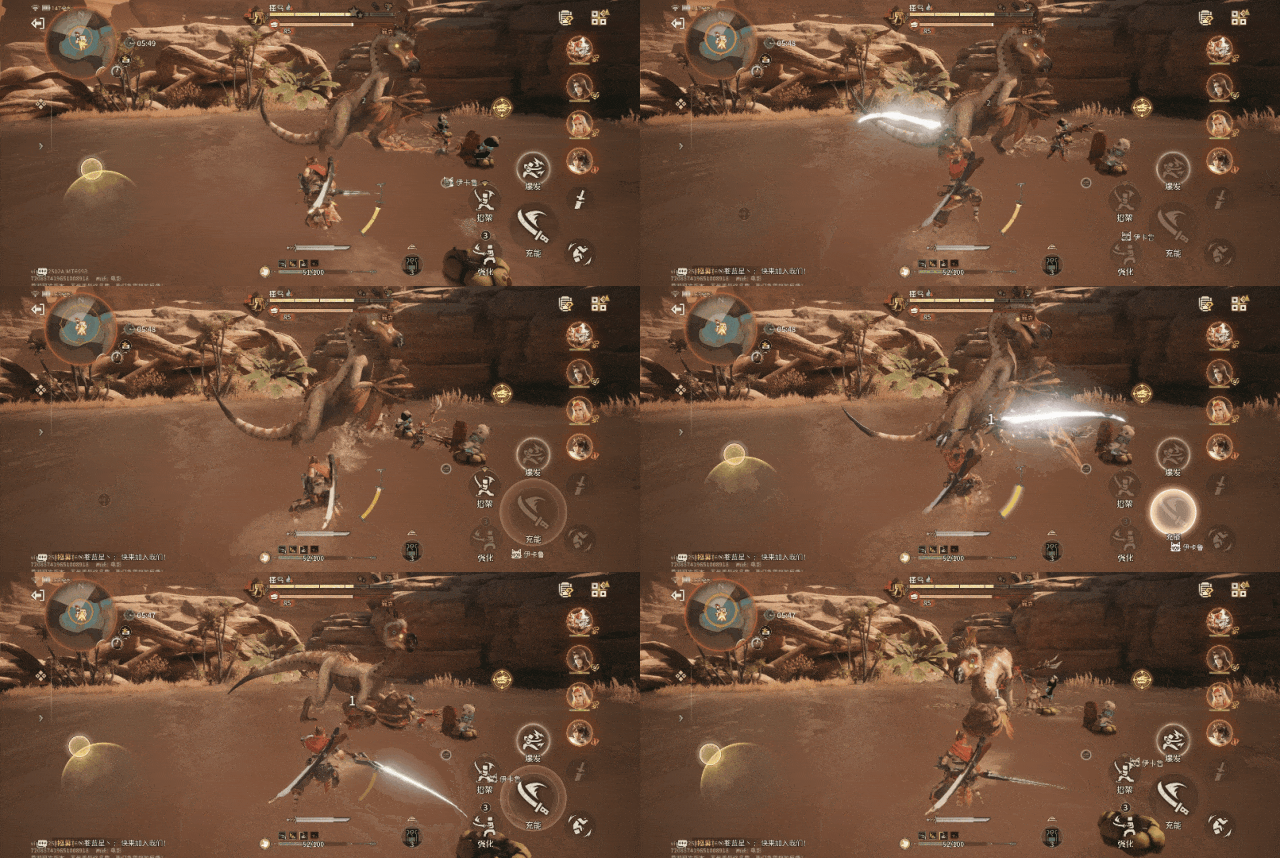
Of course, on the other hand, the intuitive advantage of simplified controls is that players can quickly get the hang of different weapons without being put off by a flood of skills and cumbersome combo moves. But getting started is just the first hurdle; the ceiling for mastery hasn’t been lowered by the simplified controls. While it’s not difficult to grasp the basic mechanics of different weapons, it’s the details and level of proficiency in actual combat that truly determine success or failure.
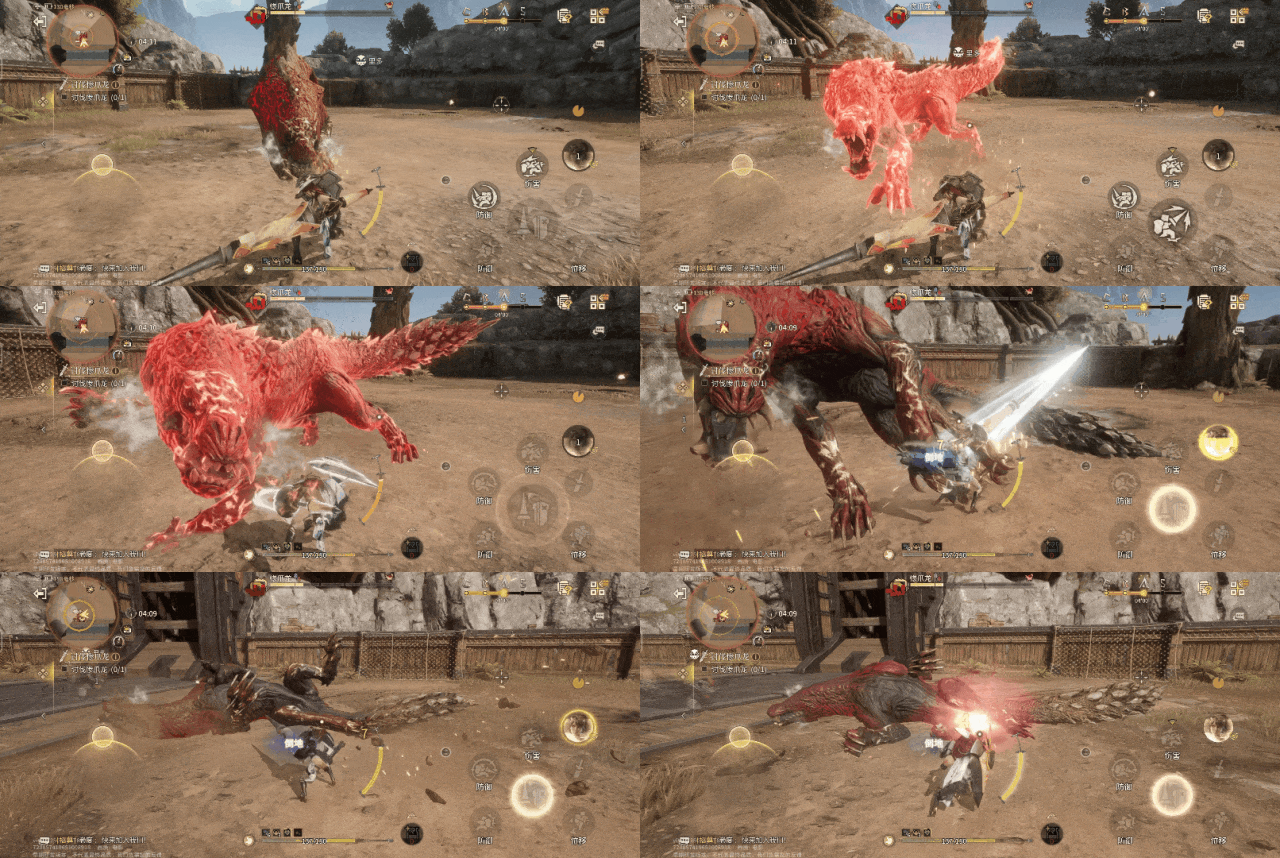
For example, the startup and recovery times, as well as the feel, vary greatly from weapon to weapon, and it takes a lot of hands-on experience to gradually master each weapon’s unique mechanics. As a main katana user, I once tried dual blades, but after entering Oni Mode, I just started mashing the buttons—it looked flashy, but it was actually just a mess.
Not to mention, different weapons also hide a host of skill variations. Take the Ethereal Sword, for example:Pressing a directional key during a normal attack triggers a dash slash to dodge attacks, while holding the button for the Iaido Slash enters a sheathing stance—releasing it just as an attack is about to land delivers the thrill of a perfect parry. These skill variations, born from different inputs, completely shatter the traditional pattern of simply pressing buttons to activate skills. Whether in terms of gameplay or action, they more than make up for the limitations of mobile gaming.

My conclusion is that *Monster Hunter: World* has lowered the barrier to entry for weapons, but the ceiling for mastery hasn’t dropped at all. For veteran hunters, this is a given, but for newcomers, it might feel like a wall.
In addition, unique mechanics such as parrying, stun locks, and limb destruction are all featured in the game. As for the rolling mechanic—which had previously drawn a lot of criticism—the development team has added the ability to launch a counterattack immediately after a perfect dodge, making the overall combat rhythm much more intense.
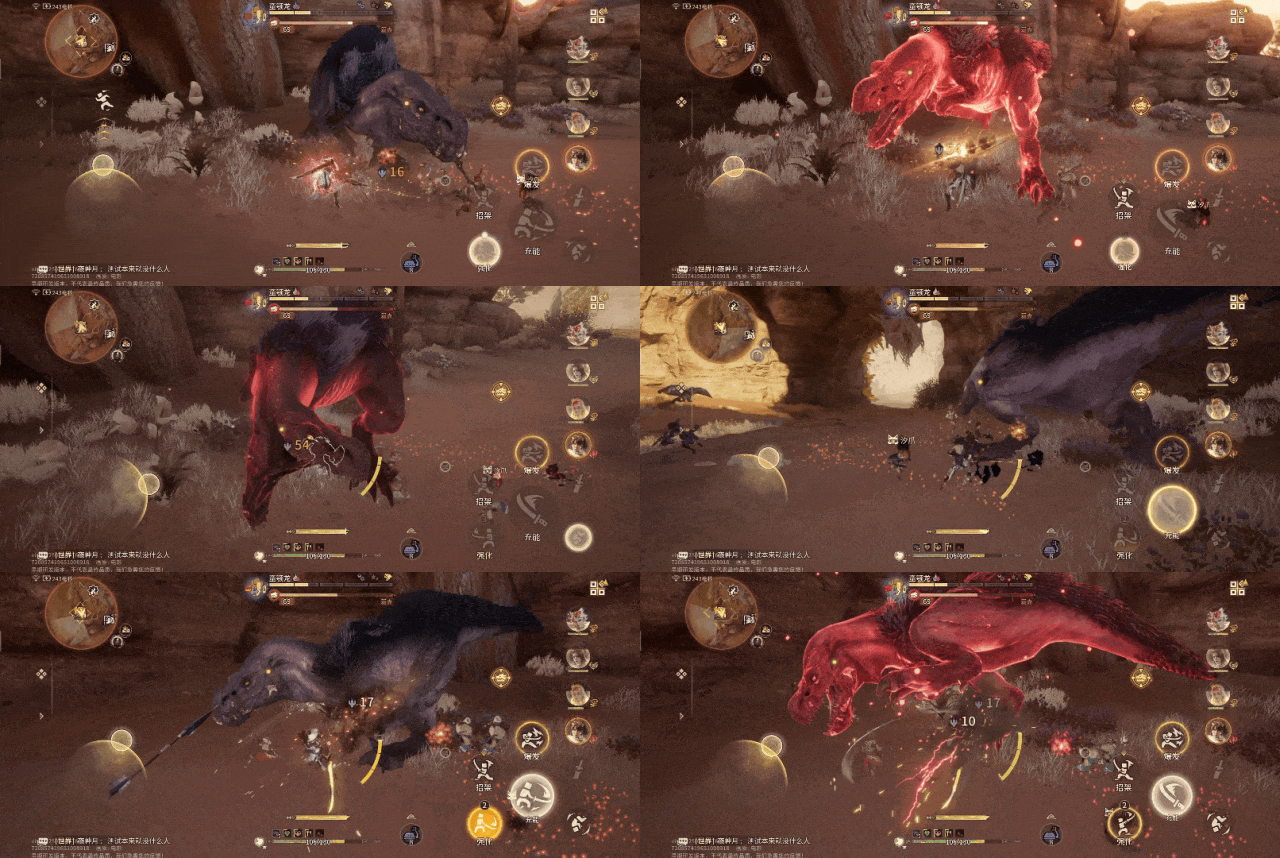
At the same time, the lock-on feature makes it much easier to complete quests that require damaging specific body parts. Veteran hunters might feel like this is a bit of a cheat, but for mobile gamers, asking them to manually aim at the Female Fire Dragon’s head using a touchscreen is, in itself, a bit “unfriendly to the user.”
02
Your Elune Cat is finally doing more than just being cute
In addition to the combat mentioned above, the Palico system has also undergone a major overhaul in *Monster Hunter: World*.In previous Monster Hunter games, the Aelo Cat mostly served as a “cute” sidekick, at most acting as a cat-drawn cart to bring you back after a defeat. However, in *Monster Hunter: World*, companions are now tied to specific character roles. Characters in the game are divided into three classes: the “Attacker” excels at dealing high damage, the “Breaker” specializes in suppressing monsters and applying debuffs, and the “Support” can buff and heal teammates.
In contrast, Ailu Cat can deal massive damage, Monkey can summon turrets on the spot—which, when they hit, prolong the monsters’ knockdown duration—and Meidoli can restore health and boost attack power all in one go.
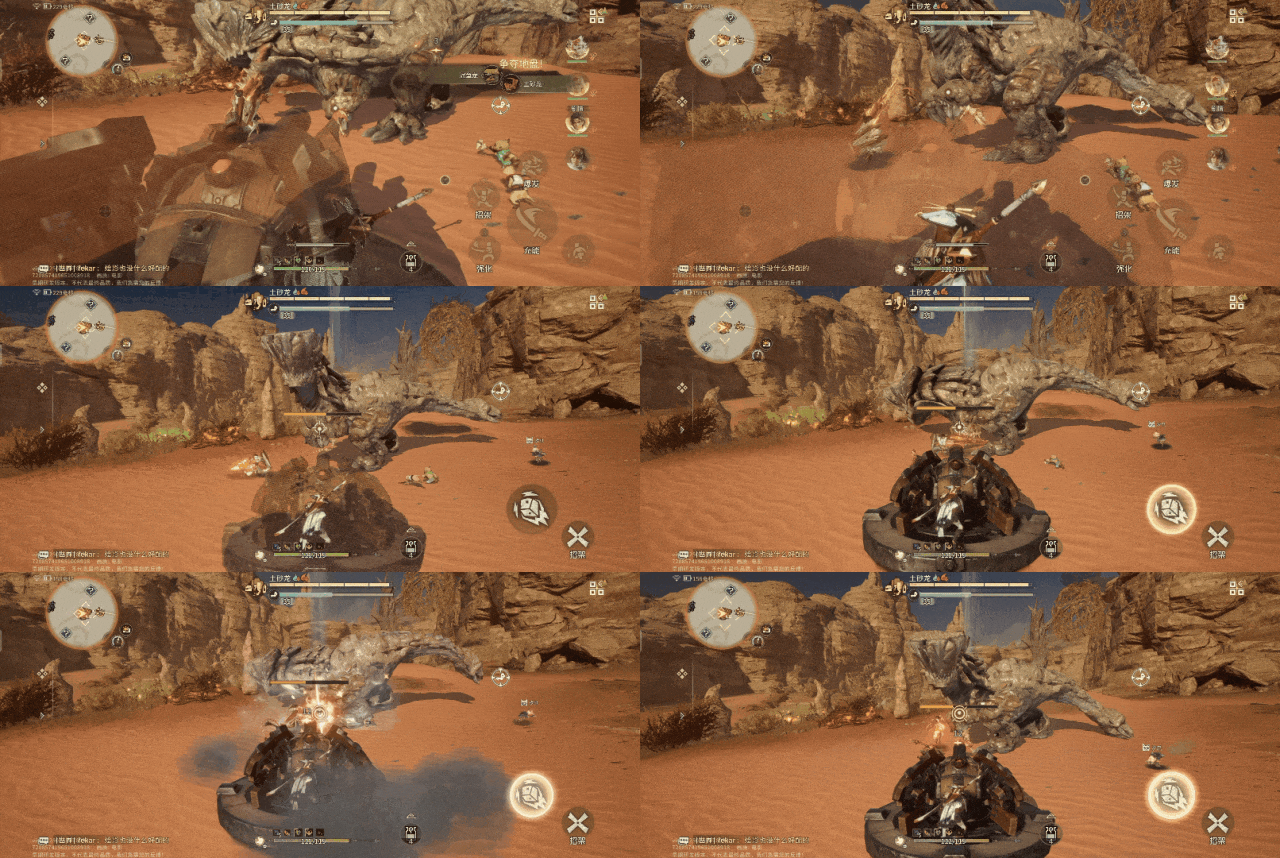
Many people might think this is just adding a “pet accessory” to combat, but in practice, the functionality of companions expands the scope of combat to a certain extent.I often find myself facing monsters with low health, only to suffer a crushing defeat due to a split-second mistake—only to stage a dramatic comeback thanks to Meidoli’s “last-second rescue.” Especially in multiplayer co-op, this functionality is amplified through coordinated team roles, truly integrating decision-making and gear selection into the combat experience.

While the changes to companions might be considered reasonable, opinions on the character progression experience are likely to vary.As is well known, Monster Hunter’s progression follows a straightforward formula: players hunt monsters to obtain materials, craft corresponding gear, and grow stronger. In World, players can customize their initial character’s appearance just like in the original series, then master a wide range of skills through extensive practice. Alternatively, they can choose to “Recruit an Adventurer” and experience a different combat style using one of the game’s pre-set character classes.
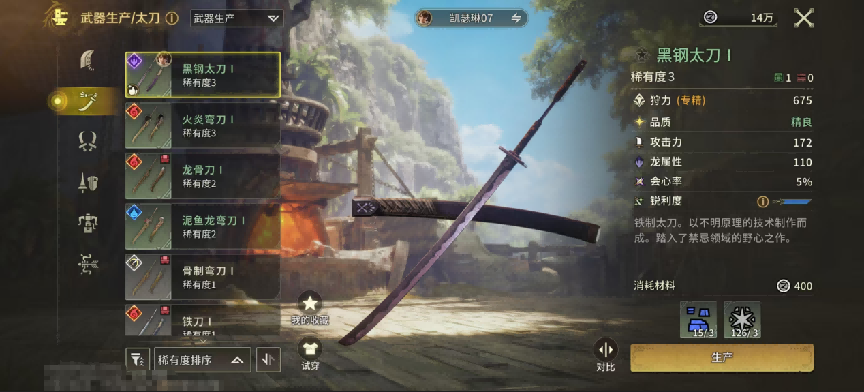
Unlike the original characters, Adventurers have fixed equipment types and roles, but they possess a skill set that differs from the original weapons. For example, the Katana Adventurer Midori can immediately activate “Sharpening” upon a successful parry, skipping the “Ki Blade Combo” step; her damage-dealing skill, “Moment of Insight,” allows her to perform a “One-Strike, Two-Cut” attack, followed by two additional high-damage strikes.
In addition, when players lack the “optimal party setup,” adventurers can join a group as temporary teammates, allowing solo players to experience the thrill of hunting in a party.
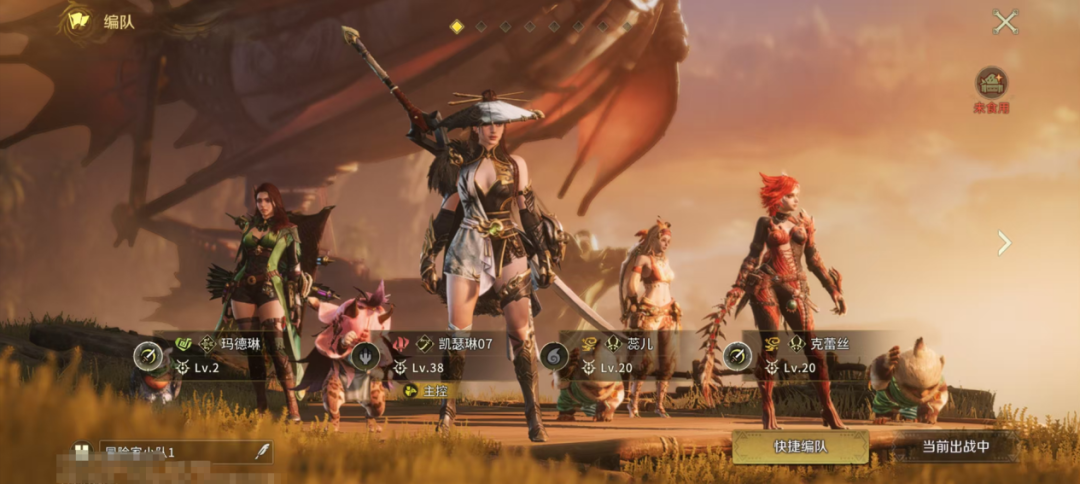
In my view, the Adventurer class essentially serves as a “gentle slope” for new players—a character designed to lower the skill barrier so they can quickly get the hang of weapon mechanics, while providing plenty of positive reinforcement to build their confidence. After all, you don’t want new players to get three consecutive “cat-carts” right off the bat, do you? That would just lead them to quit the game, uninstall it, and walk away in one fell swoop.
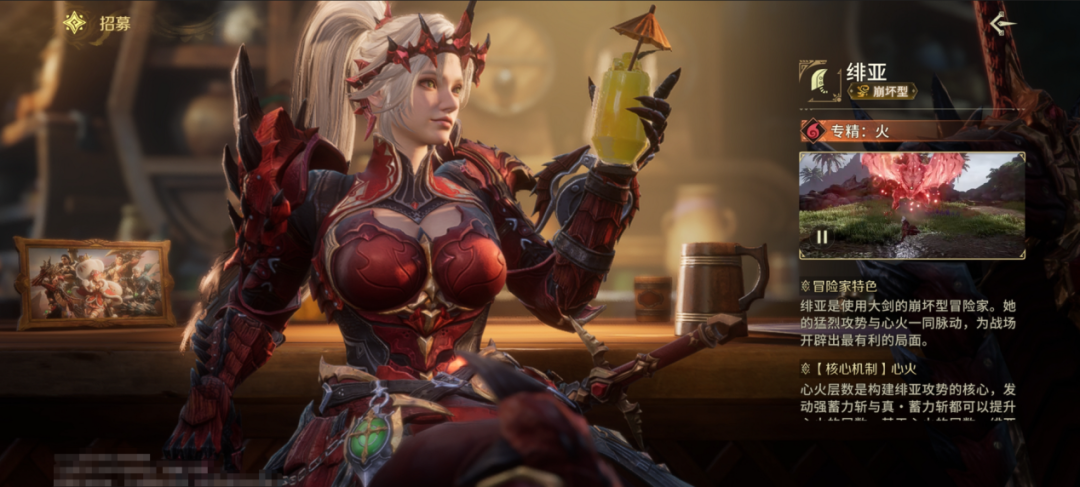
Other progression mechanics are more in line with mobile gamers’ habits, such as hunting monsters to collect illustrations for the Art Gallery and unlock set bonuses, as well as leveling up characters and companions and upgrading skills—almost all of which revolve around various hunting activities. Compared to the linear “hunt—materials—equipment” cycle of traditional Monster Hunter games, this approach enriches the gaming experience to a certain extent.
03
It has its flaws, but it also has its surprises
To be honest, *Monster Hunter: World*’s map design might leave some players feeling a bit disappointed, as it doesn’t feature a seamless open world but is instead divided into multiple zones. I had previously asked the development team about this in an early interview. Taking into account the need for smooth performance and graphical quality on mobile platforms, the team carefully evaluated both the seamless and zoned approaches before ultimately choosing the latter.
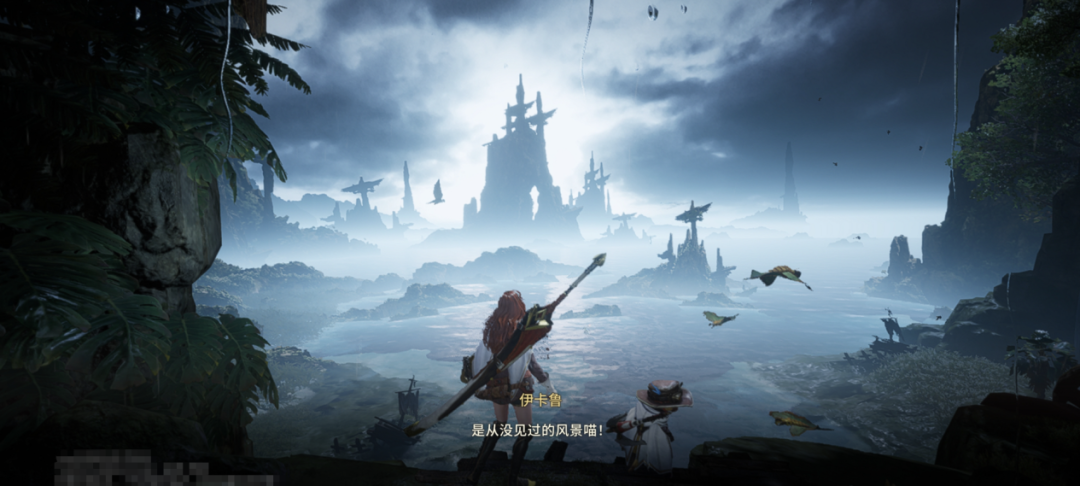
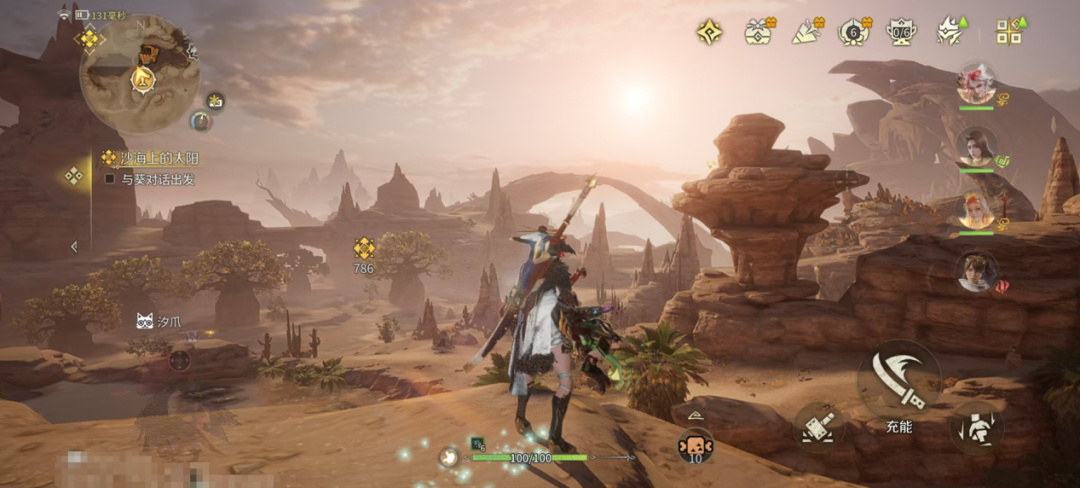
However, based on my experience over the past few days, I personally feel that the ecological density in each individual region is truly impressive. Although the current beta version only unlocks the Forest and Desert regions, I can still appreciate the extremely rich level of detail. For example, the Forest region features frequent changes in elevation and is dotted with numerous high mountains, while the Desert region consists of endless sand dunes across a barren, gently sloping landscape.
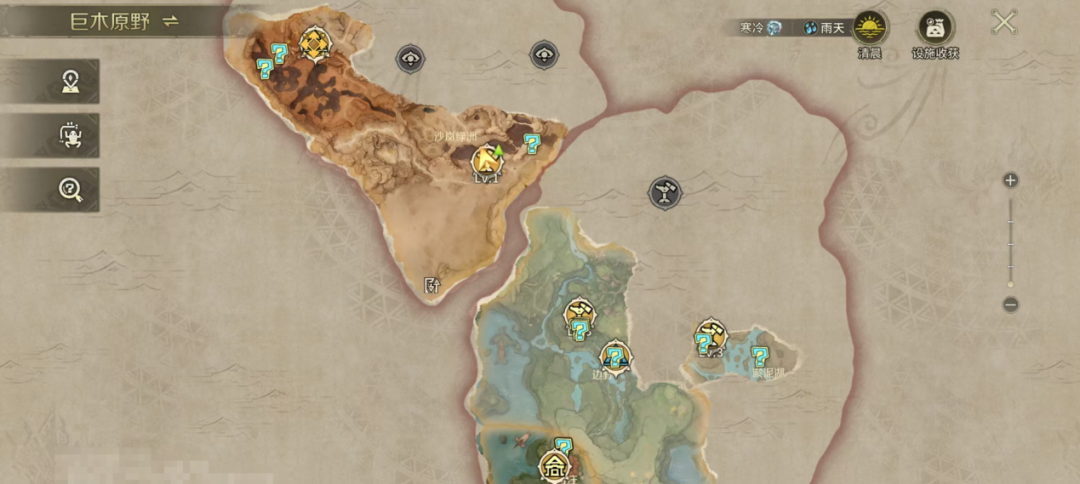
In addition, the forest areas are home to a wide variety of flora and fauna, each occupying its own ecological niche; it is not uncommon to see different types of monsters fighting over territory or prey. Meanwhile, water-loving monsters, such as the mudfish dragon, are often found near lakes.
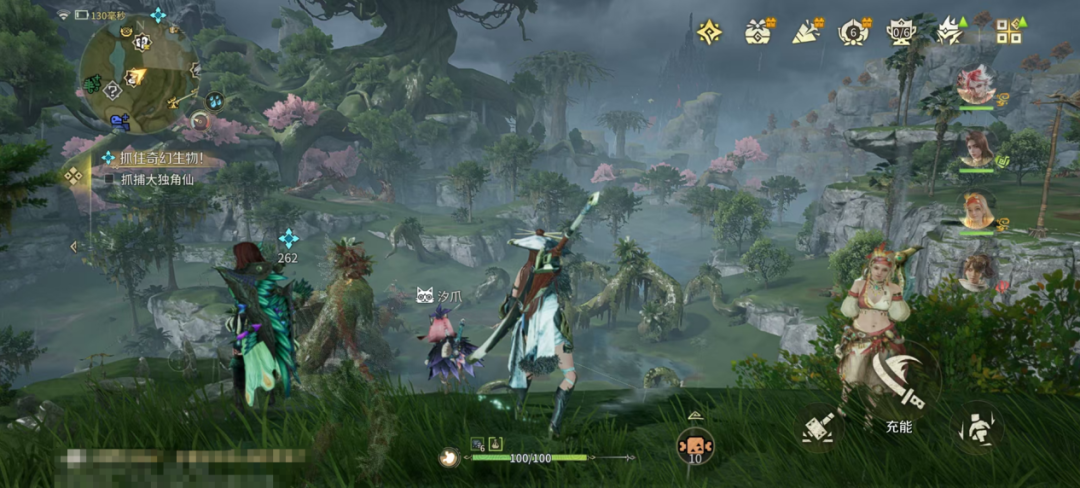
Of course, the development team is also well-versed in the “environmental effects” found in the regions of Monster Hunter Legacy. In the forest areas, it often rains, causing temperatures to drop, while in the desert areas, extreme heat can lead to heatstroke, and sometimes even small sandstorms can occur, slowing down the player’s movement speed.
As I mentioned earlier, in addition to adhering to the core mechanics of traditional hunting, *Monster Hunter: World* also introduces a host of bold innovations, with the region-based gameplay serving as a massive testing ground.
For example, players can build their own blowers, zip lines, and even set up temporary camps, allowing them to move quickly across complex terrain. Various watchtowers can unlock unexplored areas of the map and serve as fast-travel points. After further upgrades, players can deploy even more structures.
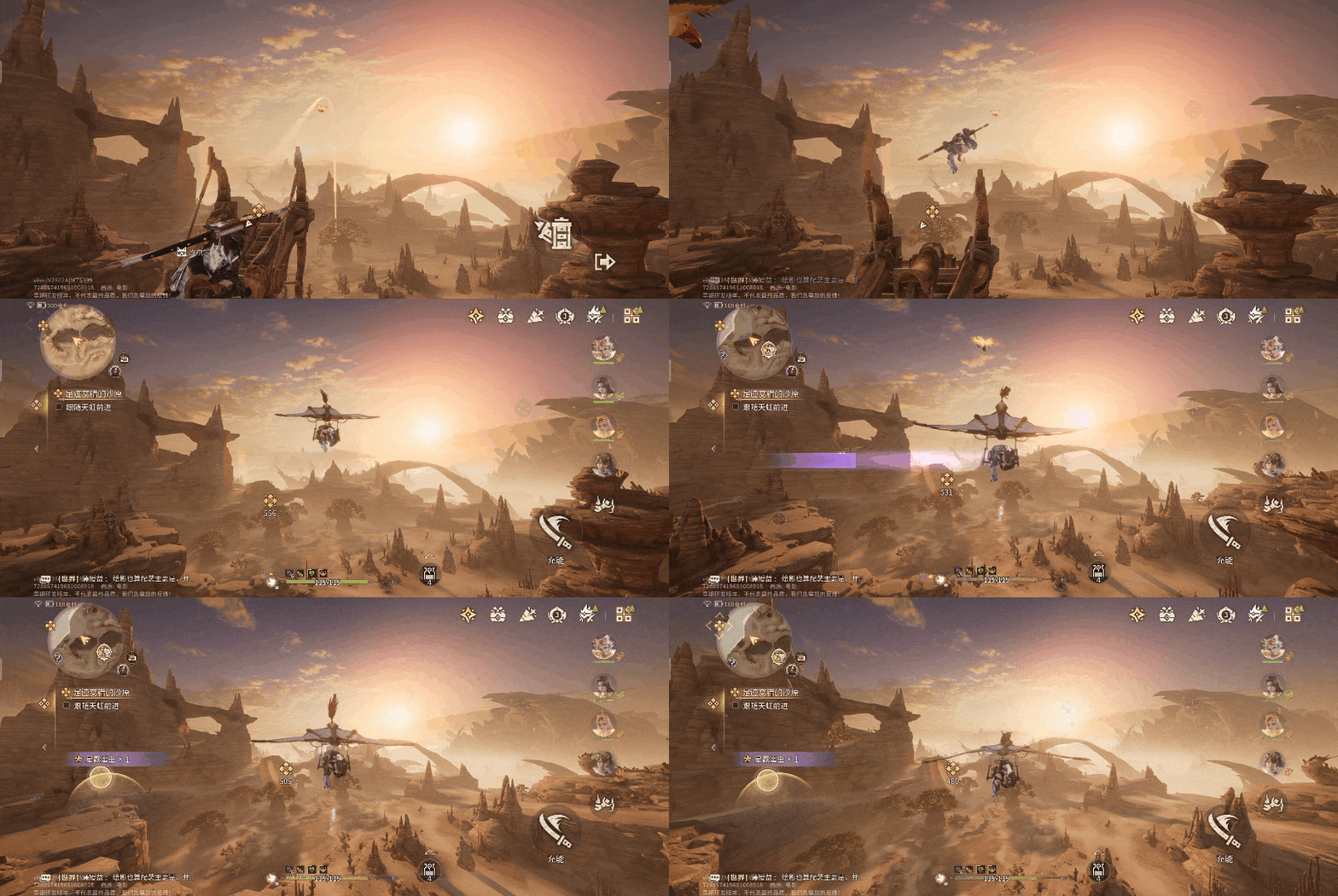
In addition, a variety of mini-games give *Monster Hunter: World* a bit of an open-world feel. Activities such as unlocking treasure hunts in the wild, catching butterflies to obtain materials, and helping the Beastfolk to earn rewards further enrich gameplay in the wilderness and expand the exploration possibilities of the series.
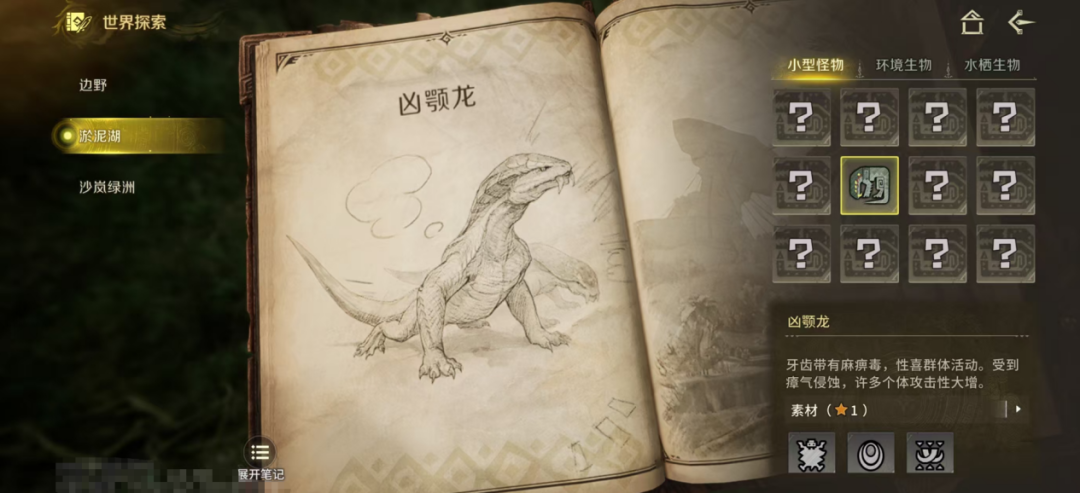
In my view, this system is more like an “extended tutorial” that helps players quickly get familiar with the game’s mechanics and advance the story outside of combat. Once they’ve moved past the tutorial phase, players will experience the true core fun of Monster Hunter through the co-op gameplay.
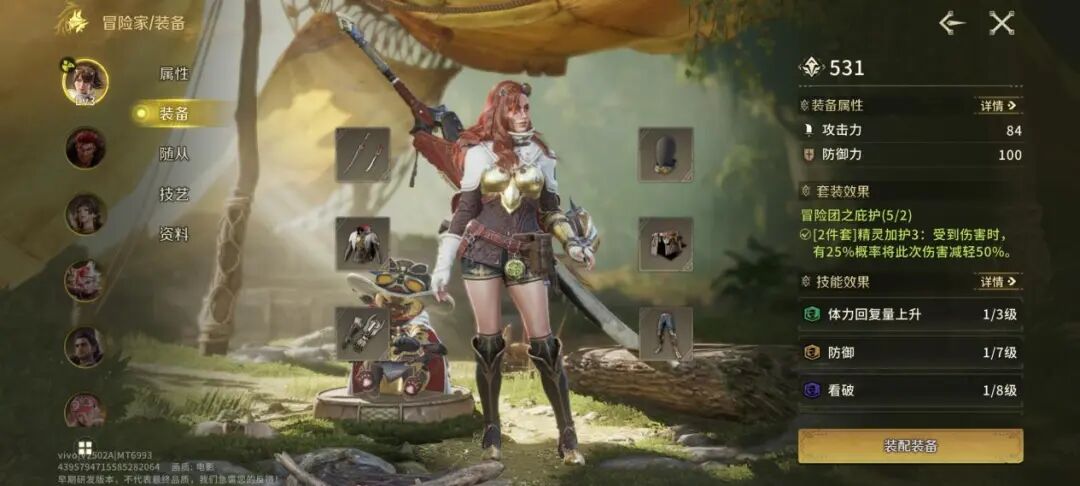
The Adventure mode covers nearly all the core gameplay elements of the traditional Monster Hunter series. For instance, the Nest Hunts offer a true Monster Hunter challenge: not only have the monsters’ health and aggression been significantly increased, but the limitations on Cat Carts, time, and items further capture the essence of the series. The various objectives involving breaking specific body parts also make the challenge considerably more difficult.
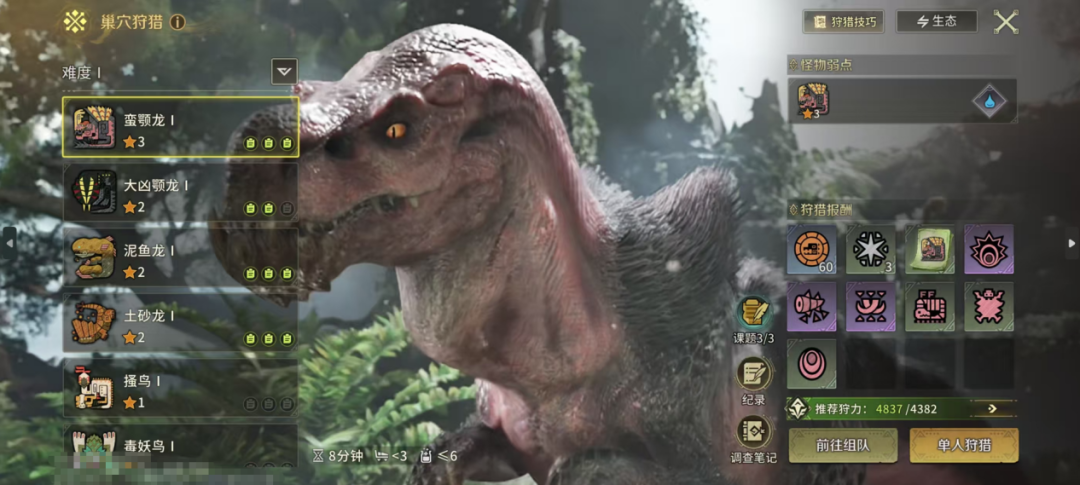
Multiplayer co-op raids against multiple monsters, competitive tournaments with identical setups to climb the leaderboards, and tower-climbing trials are all helping to continuously refine the game’s ecosystem. It’s fair to say that in these areas, Tencent has returned to its comfort zone, with a constant stream of events and content updates aimed at solving a single problem: providing a massive volume of content to keep players satisfied.
Conclusion
After playing *Monster Hunter: World: Traveler*, I’ve been pondering one question: What exactly does a *Monster Hunter* mobile game need to get right to be considered a success?
Is it faithful to the original? *Monster Hunter: World* is indeed faithful in many ways: the meat-tearing feedback is still there, the Cat Food is still there, the limb-breaking mechanic is still there, the parrying mechanic is still there, and the core attack mechanics and gear are all intact. Even the environmental destruction—like falling rocks and vines—and the special attacks they inflict on monsters have all been faithfully recreated.
But faithful reproduction is just the bare minimum; the real challenge lies in the fact that when you play Monster Hunter on your phone, you expect to squeeze the entire original experience into a screen that’s less than 7 inches wide and has only a few buttons. Essentially, this process of compression means “sacrificing some elements.”
Tencent has removed the “Sharpening” mechanic from the grinding process, turning it into a weapon-specific trait; it has eliminated the need for manual potion-drinking combos, replacing them with a single-button action; and it has done away with the tedious process of manually aiming at Glimmer Beetles and monster body parts, replacing it with one-button targeting.
But compared to what they left behind, what they kept is actually more noteworthy: they retained the resource-based competition with monsters, the combat mechanics that differentiate based on weapon handling and controls, and the core principle that “skill determines success or failure.”
I don’t think *Monster Hunter: World* is a game that will please every player. But it’s clear that it aims to strike a solid balance between staying true to the original and introducing innovative changes.
Right now, it’s hard to say for sure whether it has succeeded, but the market and players will provide the answer in the future. At the very least, you can tell that *Monster Hunter: World* is a solution they’ve carefully considered and are trying to offer.
原创文章,作者:gallonwang,禁止转载:https://youxichaguan.com/en/archives/196418