We are no strangers to motion-controlled games.
Whether it’s the Nintendo Switch’s revolutionary title *Ring Fit Adventure*, which combines RPG adventure with fitness; the *Just Dance* series, a party-starter that supports up to six players dancing together; or the wide variety of motion-controlled mini-games on mobile devices—such as fishing games, action mimicry games, fruit-slicing games, and virtual sports—they have all attracted a large number of players to give them a try.
However, the Joy-Con controllers and Ring-Con accessories required for Nintendo’s motion-controlled games have deterred many players due to the high overall cost, while motion-controlled games on mobile devices suffer from limited tracking accuracy and relatively dull content. These “pain points” have kept the motion-controlled gaming genre from gaining significant traction in the market.
Recently, Shenzhen-based startup Feituxingchi unveiled its core proprietary technology—FitX AI, the world’s first human-centric spatial intelligence engine—for the first time. The team also debuted a mobile motion-sensing gaming platform developed using this engine.
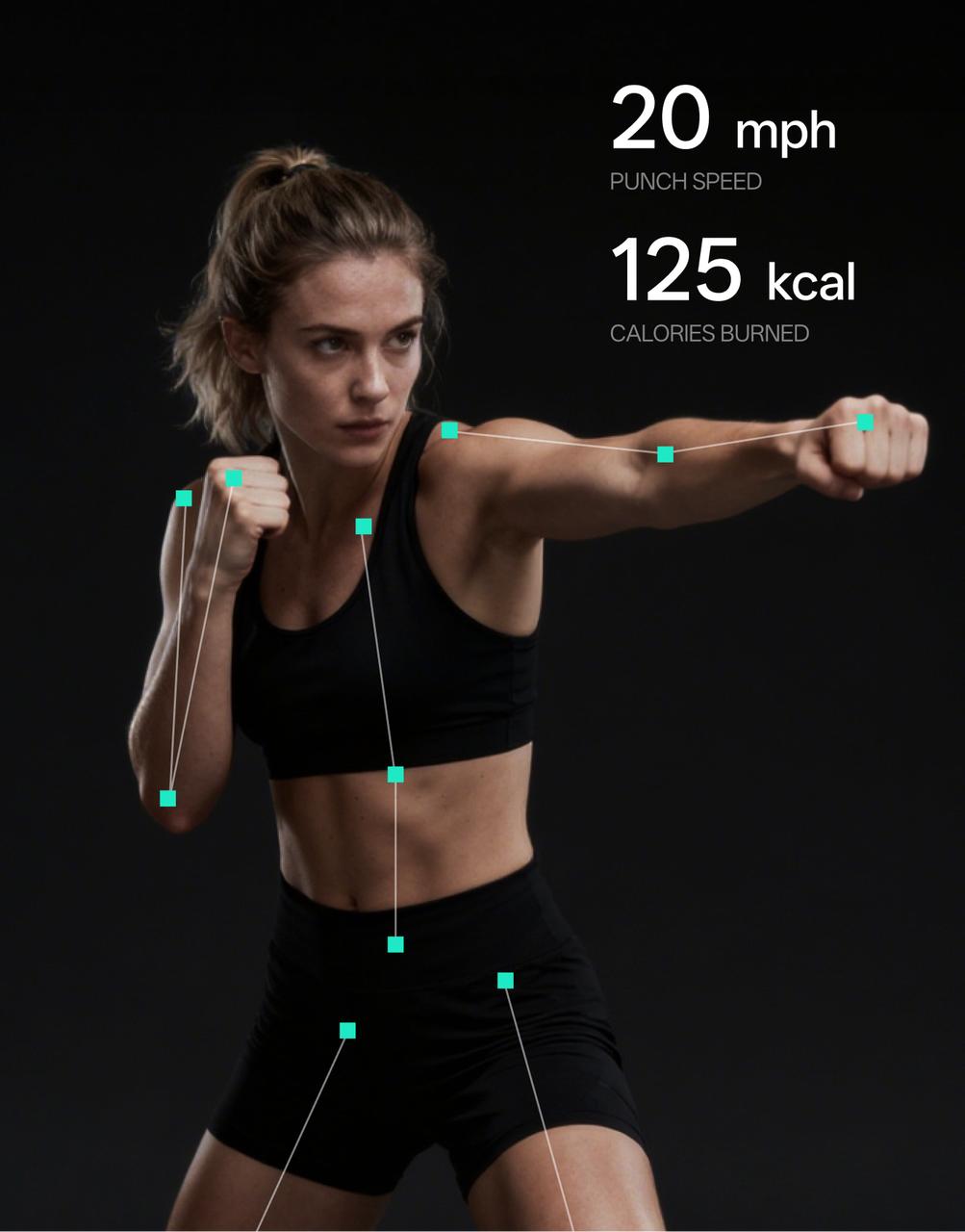
Using FitX AI, this game has successfully broken free from the gyroscope-based tracking framework typical of traditional motion-controlled games. Using just a smartphone, it can accurately track 133 3D key points on the human body while simultaneously processing spatial information in 2D, depth, and 3D. In terms of cost, portability, and game content, it has delivered a decisive advantage over traditional motion-controlled games.

01
Market Challenges: Hardware Barriers and User Experience Bottlenecks Remain to Be Addressed
Motion-controlled gaming is nothing new. As early as a decade or so ago, consoles like Microsoft’s Kinect and Nintendo’s Wii used peripherals such as cameras and sensors to enable motion-controlled gameplay, freeing players from the constraints of traditional controllers and allowing them to control games through body movements.
In recent years, with technological advancements, motion-controlled gaming has taken two distinct paths: one is the route of dedicated peripherals, exemplified by the Nintendo Switch, which offers relatively precise tracking through high-quality accessories; the other is lightweight motion-controlled gaming on mobile devices, which utilizes existing smartphone sensors to enable basic motion tracking.
On the Switch, *Ring Fit Adventure* requires the Ring-Con accessory, while *Boxing 2* uses the Joy-Con controllers (which feature built-in gyroscopes, accelerometers, and HD vibration). These games have indeed received a positive market response—some users have reported developing a six-pack thanks to *Boxing 2*, while another review noted that it is “the best option for portability.”
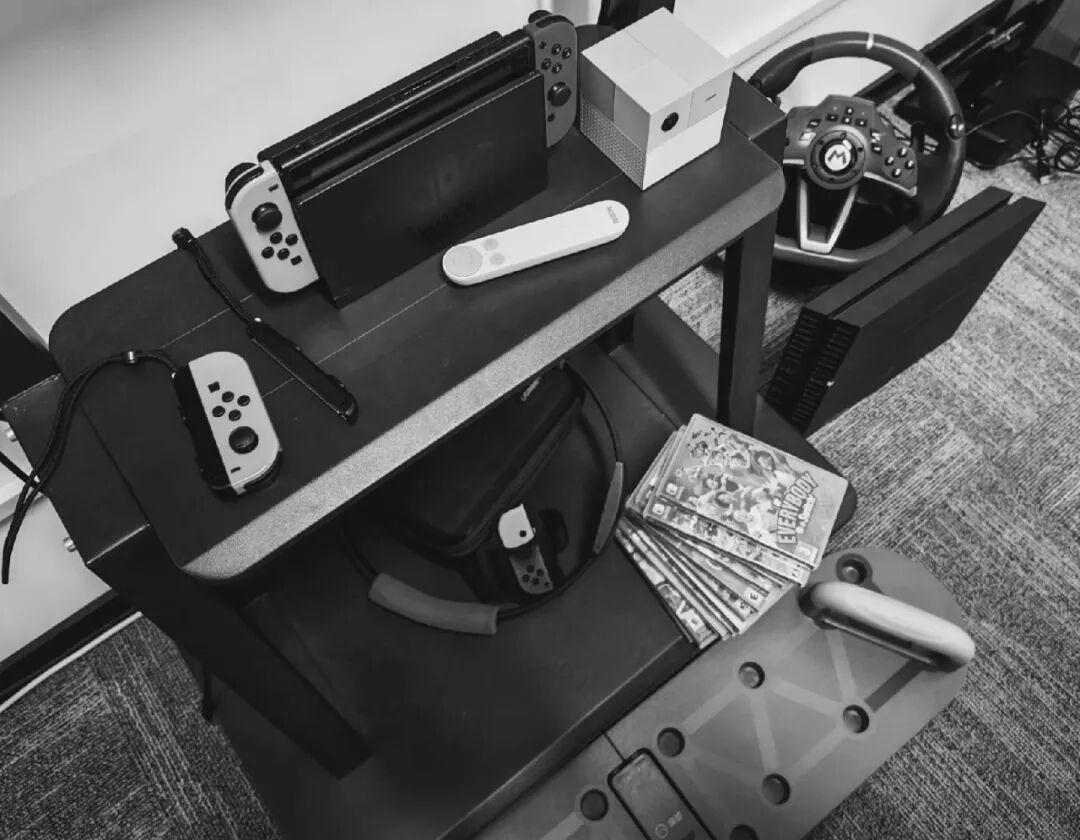
However, the high initial cost has deterred many potential players: a Switch console bundled with a game cartridge and accessories often costs more than 2,000 yuan; player retention is low, and the only sales model available is individual game purchases. Motion-controlled gaming solutions offered by other major manufacturers also have significant hardware barriers—Sony and Microsoft rely on dedicated cameras or console devices.
Although motion-based games on mobile devices have a low barrier to entry, they are limited by the accuracy of smartphone sensors and the lack of advanced algorithms, which means they can only recognize simple movements and are unable to accurately capture complex ones. This results in monotonous gameplay and repetitive experiences, causing players to lose interest quickly.
The market faces a dilemma: either pay a high price for a high-quality motion-controlled gaming experience, or settle for a low-cost, subpar one. Recognizing this industry challenge, the FitX team repeatedly emphasized during our discussions: “We aim to build a motion-controlled gaming ecosystem that truly belongs to the masses, using our proprietary spatial intelligence engine, FitX AI, to strike a breakthrough balance between experience and cost.”
02
Elevating the Experience: From Precision Strikes to Multiplayer Parties
Ultimately, technology should enhance the user experience. Based on the information released by the team so far, the core logic behind FitX’s gameplay design is as follows: building on high-precision motion recognition, it packages the core “exercise” experience within various game frameworks, combining the benefits of physical training with the fun of gaming to meet the diverse needs of everyone from hardcore fitness enthusiasts to casual players. Its current core gameplay revolves around boxing, featuring three main modes, as well as casual gameplay tailored specifically for players seeking a lighter workout.
Boxing Gameplay: A blend of rhythm, strategy, and arcade nostalgia
- Boxing Training: The Perfect Blend of Rhythm and Precision
Players need to follow the rhythm of the dynamic music and the icons that appear precisely on the screen to throw corresponding jabs, hooks, or uppercuts.The biggest difference from traditional video workouts is that FitX AI evaluates the trajectory, speed, and accuracy of every punch in real time, ensuring your movements aren’t just “formally correct” but truly “masterful.” It’s like a strict music conductor, and your fists are the instruments, working together to perform a fat-burning symphony.

- Boxing Showdown – Strategic Turn-Based Combat
In this mode, your punches possess different attributes. Different types of punches deal varying damage to the boss, adding a strategic dimension to the gameplay.Even more exciting is that specific punch combinations can trigger powerful special moves; for example, a "left-right hook followed by a straight punch" might unleash a fiery smash. This greatly encourages players to not only pursue strength and speed but also to think strategically about combos, cleverly transforming a workout into a tactical boss battle.

- Food Frenzy – A Retro Arcade Extravaganza That Gets You Moving
This is a tribute to classic side-scrolling platformers. Players no longer need to press buttons; your body’s orientation directly controls the character’s direction of movement. By waving your arms up and down or marching in place, you can make the character move or stop.Every punch you throw is reflected in real time on your character as they fend off an “evil army” made up of hamburgers and french fries. This mode truly embodies the concept of “your body is the controller,” delivering an incredibly immersive experience and a good workout.

Casual Games: Lightweight, Fun, and Great for Breaking the Ice
- Happy Shake – The Challenge of Spatial Localization and Posture Mimicry
This is an extremely innovative rhythm game. A hexagonal play area appears on the screen, and players must move their arms to one of the six corresponding positions at the exact right moment, guided by the music and incoming sound balls. Additionally, the game occasionally requires players to strike specific poses that match those of the characters on screen. This not only tests players’ sense of rhythm but also challenges their physical coordination and spatial awareness, offering a rich and varied gameplay experience.

- Squat Battle – Simple and Straightforward Party Competition
Designed specifically for social gatherings, the rules are intuitive and easy to grasp. When little monsters like "French Fries" enter the highlighted area, two players compete to see who can perform a standard squat faster, triggering the hammer to drop and score points. Though the rules are simple, the game is highly competitive. With friends cheering or teasing, it instantly energizes the party atmosphere, making it the perfect icebreaker.

- Rhythm Slash – A Thrilling Visual and Auditory Experience
An exhilarating experience similar to *Rhythm Sword*. Players must follow the dynamic music, watch for the directional arrows on the incoming blocks, and swing their arms in the corresponding directions. FitX AI’s high precision and low latency ensure that every swing receives instant, accurate feedback. Combined with stunning lighting and visual effects, this delivers a visceral sense of impact, allowing players to let loose and lose themselves in the rhythm.

As demonstrated by the detailed analysis of the model above, the FitX’s “elevated experience” is by no means just empty talk.Leveraging world-leading motion recognition technology, it embeds the core concept of “exercise” into various game formats—such as “rhythm,” “role-playing,” “strategy,” and “party competition”—ensuring that the game content combines professionalism, playability, and sustainability. This truly enables users with diverse preferences to find a reason to stick with their exercise routines.
According to reports, the FitX team is currently developing a variety of sports-related features, including tennis, golf, and dance, with the aim of catering to a wider range of user preferences and providing an enhanced experience for different demographics.
03
Beyond Gaming: Redefining the Sports and Entertainment Experience
In addition to its wide variety of game modes, FitX—powered by spatial AI technology—features a series of unique design elements that create a comprehensive, closed-loop fitness and entertainment experience for users:
Personalized AI Coach: The system uses AI-powered analysis to automatically generate a fully personalized workout plan based on the user’s height, weight, fitness level, and daily exercise habits. During workouts, the AI coach provides professional guidance—including real-time corrections, step-by-step movement breakdowns, and adaptive pacing and intensity—to ensure proper form, efficiency, and safety, delivering an experience far superior to traditional video workouts that lack feedback.
Seamless social sharing and motivation: The game automatically tracks users’ workout results and historical data, and intelligently generates highlight reels of their personal training sessions. Players can easily share these highlights on social media with a single tap, effectively satisfying their desire to showcase their achievements and receive positive reinforcement, thereby significantly boosting their motivation to stick with their exercise routine over the long term.

Intuitive Gesture Controls: The game supports a wide range of gesture controls. While standing in a ready position, players can perform actions such as switching screens, starting a game, and making selections using preset gestures—such as raising a hand or waving an arm—without touching the screen. This eliminates the need for players to constantly shift their focus between their current position and the phone, providing a smoother, more natural, and immersive interactive experience.

Innovative Multi-Player On-Screen Interaction: Current technology already supports the real-time differentiation and precise tracking of multiple users’ motion data. This capability provides a solid technical foundation for gatherings with friends and family interactions. Whether it’s the existing “two-player squat” competition or the expanded range of party games to come, these features are designed to create joyful shared experiences and enhance social engagement.

04
Technological Breakthrough: A Human-Centered Spatial Intelligence Engine and the Zero-Peripheral Revolution

At the heart of FitX AI lies a human-centric spatial intelligence engine developed in-house by Feituxingchi. Unlike most solutions on the market, which can only identify approximately 18 to 23 2D body landmarks, FitX AI can accurately capture a total of 133 3D landmarks covering the entire body, including the hands and face.
This means that the system can not only detect the range of motion in your arm movements, but also capture subtle wrist rotations, finger positions, and even the focused expressions on your face, providing a solid technical foundation for richer interactive experiences such as gesture-and-expression-linked controls.
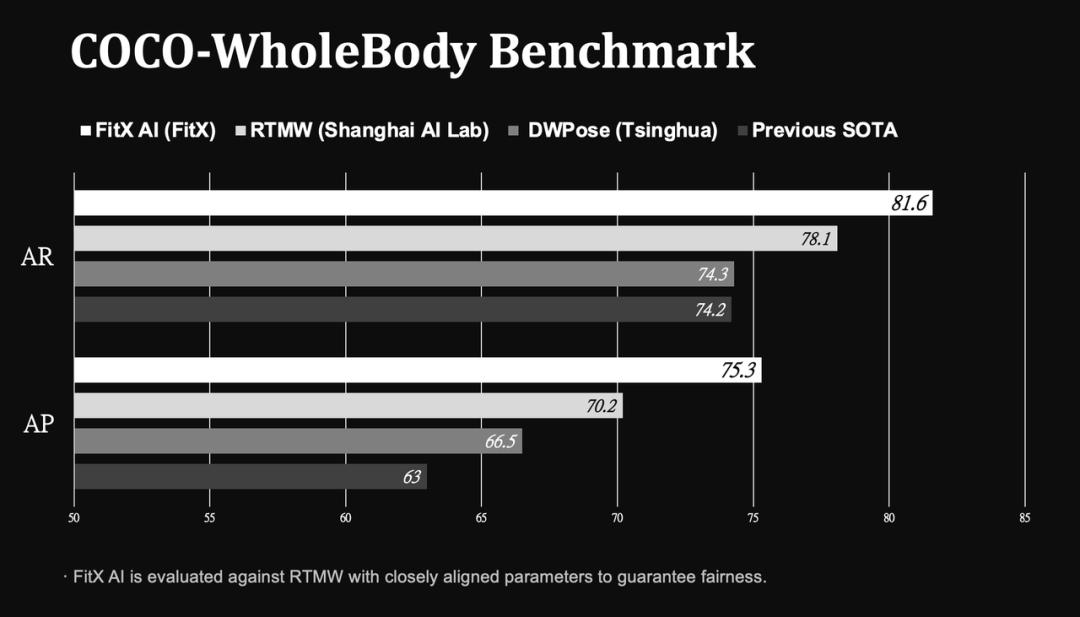
According to official data, this technology has achieved world-leading accuracy on authoritative datasets such as COCO-WholeBody and H3WB.

Particularly noteworthy are the system’s rich input capabilities and real-time output. FitX AI requires only a smartphone’s monocular RGB camera as input to simultaneously output 2D pose, depth information, and 3D pose (with future support for human body meshes). This human-centric spatial intelligence engine’s ability to generate combined outputs enables it to perform more stably and accurately than traditional solutions when dealing with complex movements, partial occlusion, or rapid motion.
FitX AI offers significant advantages in terms of deployment and real-time performance. It does not rely on dedicated hardware or expensive NVIDIA graphics cards; instead, using cutting-edge model distillation techniques, it successfully deploys algorithms—which would otherwise require high-performance servers to run—onto mobile devices.

According to official claims, the game runs smoothly on the iPhone 12 and Android phones priced around 2,000 yuan, with frame rates exceeding 100 FPS and extremely low latency. After optimization on the client side, its speed is approximately 6 to 10 times faster than Google’s comparable open-source solutions, making it the “world’s leading mobile true 3D motion capture solution.”
05
Market Outlook: Rebuilding the Connection Between Interaction and Entertainment
Based on its existing technology platform and ecosystem roadmap, FitX has a clear and promising path for future expansion.
The FitX team plans to lower the barrier to content creation by launching the PUGC and Agent Editor, enabling creators, trainers, and even ordinary users to design their own levels and movement challenges. This will ensure that game content continues to be updated and self-evolves, overcoming the limitations of static content in traditional motion-based games and fostering a self-sustaining content ecosystem.
In addition, the team will open up its SDKs/APIs and motion data services to industries such as fitness, education, entertainment, and robotics, sharing its proven leading technologies to drive the digitization and intelligent transformation of offline scenarios and expand into broader commercial frontiers. We will continue to advance the application and collaboration of our technologies in cutting-edge fields such as embodied intelligence (teaching robots to move), metaverse avatars, and professional sports training analysis, enabling the same core technology to shine in diverse scenarios.
The FitX team and its underlying spatial intelligence technology undoubtedly represent a "game-changing breakthrough" for the existing motion-sensing gaming market and the broader home fitness sector. According to data from QYResearch, the global motion-sensing interactive gaming market is projected to reach 95.46 billion yuan in sales by 2031, with a compound annual growth rate of 9.6% (2025–2031).The new "phone-as-motion-control-device" model, epitomized by FitX AI, aims to capture a significant share of this massive market. The team plans to first validate its product and establish a growth flywheel in overseas markets, creating a virtuous cycle of "content—data—model—product," ultimately earning the trust of users worldwide.

The team boasts a well-balanced talent pool, enabling seamless collaboration across the entire value chain—from R&D and publishing to operations—centered on "AI + interactive content." CEO Dr. Wang Jiaze graduated from The Chinese University of Hong Kong and has eight years of experience in AI research and engineering implementation. He has previously worked at Amazon AWS AI Lab, Huawei Noah’s Ark Lab, and SenseTime MMLab.Co-founder and Chief Scientist Troy is a full professor and doctoral advisor specializing in AI at a renowned domestic university, having published over 40 AI papers in top-tier conferences. The team also includes game operations and design experts from industry giants such as Tencent and ByteDance, who have been responsible for the operational strategies of phenomenon-level games like "Honor of Kings" and "Genshin Impact."
With a team that brings together top AI scientists, seasoned gaming experts, and professionals in the sports and health sectors, the company’s vision is clear: to turn every smartphone into a high-performance AI-powered motion-sensing device; to foster a product culture centered on a closed-loop process of “perception, understanding, decision-making, and feedback”; to build an open ecosystem for content and developers; and ultimately to strive to become the “new Nintendo” of the AI gaming era.
The future of motion-controlled gaming may no longer require a wide array of peripherals and consoles. With the emergence of products like FitX AI, your next motion-controlled gaming device doesn’t have to be a traditional console—it could fit right in your pocket, ready to be activated at any moment, turning your living room into a gym and your body into a controller.
原创文章,作者:游茶妹儿,禁止转载:https://youxichaguan.com/en/archives/194650