Recently, the puzzle game “Organize to Relieve Stress,” known for its refreshing visuals, has been performing well, ranking in the top 10 of the iOS free game charts for four consecutive weeks.In addition, its mini-game version surpassed numerous popular titles such as “Tencent Happy Doudiu” and “Sheep Sheep,” claiming the No. 1 spot on WeChat’s popularity rankings.

Thanks to this game’s strong performance, “Teahouse” turned its attention to the publisher behind it, Wuhan-based “Zhidi Zhuoyue Information Technology.”The company’s release pace is remarkably fast; since early last year, it has released 56 titles in quick succession, many of which have become “minor hits” that made it into the top 30 of the iOS free app charts.According to research, many of these games were developed by overseas teams and had already been released abroad, where they achieved a certain level of success; “Zhidi Zhuoyue Information” subsequently acted as the distributor to introduce them to the Chinese market.
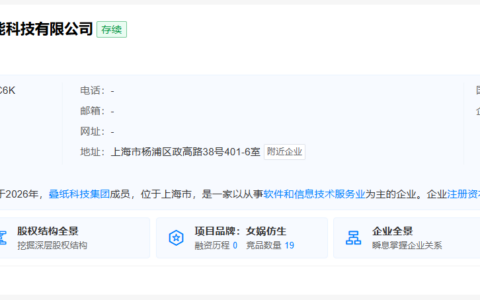
Even more interestingly, through searches and cross-checks on “Tianyancha,” “Teahouse” discovered that the company shares the same office address as Wuhan Duobit, another low-profile manufacturer of leisure products. “Teahouse” speculates that Duobit is likely involved behind the scenes with this company, which has been churning out hit products one after another.

Founded in 2014, "Duobit" is officially positioned as a comprehensive cultural enterprise that integrates in-house development with product operation, distribution, and industrial investment.For many years, Duobit has focused on the development and distribution of casual games, having independently developed over 100 hit titles, including *Blow & Fun* and *Bubble Shooter*.According to data from its official website, the company currently has more than 200 products under its umbrella, with business operations spanning over 170 countries and regions. Its cumulative number of global downloads has exceeded 800 million, and its team size has surpassed 500 employees.
Meanwhile, over the past two years or so, this long-established manufacturer appears to be trying to accelerate its business growth by introducing overseas products through distributors and expanding its own games into international markets.
01
Expanding products that are popular overseas into the Chinese market
The more than 50 products released by Zhidi Zhuoyue Information Technology over the past two years consist primarily of casual games and span numerous popular genres, including simulation, puzzle, mystery-solving, and tower defense.

Many of these games have already been released in overseas markets, and among them are quite a few blockbuster hits from world-class casual game developers such as VOODOO, Lion Studios, and CrazyLabs.It is likely that Tabit’s deep understanding of the domestic casual mobile game market and its extensive publishing experience are the factors driving its popularity among overseas developers as a partner for expanding their services into the Chinese market.

Thanks to the hard work of the China server team, these products have performed well since entering the Chinese market, with many games making it into the top 30 of China’s free iOS charts. Among them, the ones attracting the most attention recently are “Organize to Relieve Stress” and “Don’t Take My Seat.”
The original version of “Tidy Up to Relieve Stress” is “Satistory: Tidy Up” by the Vietnamese development team PixOn Games.The game features over 100 puzzle stages, including pet grooming, baking, stress-relieving tidying, and interior remodeling. Players can advance through the stages by completing the specified tasks within the time limit.Key in-game items are represented by “bones,” and players can earn “bone” rewards by logging in daily, clearing stages, and more. Additionally, if you run out of time, you can use a “bone” to extend the time limit and continue the challenge.

With its diverse stage designs, simple and intuitive controls, refreshing and minimalist graphics, and soothing game music, this game offers a relaxing and stress-relieving experience that has garnered significant support from casual gamers. As a result, creative content produced using actual gameplay footage has attracted considerable attention both domestically and internationally.In addition to live gameplay demos, we released numerous hands-on videos for the international version. Meanwhile, for the domestic version, we created promotional materials that garnered even more attention by introducing the game in conjunction with popular, realistic stress-relief content—such as “polishing a horse’s hooves”—that had become a trending topic on Japanese social media, ultimately achieving remarkable promotional results.

In terms of monetization, the international version employs a hybrid monetization model, in which “bones” serve as a key item that encourages players to make in-app purchases. By making in-app purchases, players can acquire more “bones,” hide ads, or extend the time limit for clearing stages indefinitely.However, although the international version has reached a cumulative total of 3.21 million downloads since its release in mid-June of this year, in-app purchase revenue has been relatively sluggish, with cumulative revenue totaling just over 157,000 RMB (Data source: DianDian Data).
Following its release in China, the monetization model was changed to a purely ad-supported model that is more appealing to casual gamers in China.Combined with a localized promotional strategy, the game has maintained a spot in the top 10 of the iOS free app rankings for one month within less than two months since its entry into the Chinese market in early August, and the mini-game version quickly rose to No. 1 on WeChat’s popularity rankings.
During the recently concluded National Day holiday, the mobile game “Declutter to Relieve Stress” saw its download numbers reach a peak, setting a new record of 354,000 daily downloads on October 6.Furthermore, the game’s cumulative downloads have already surpassed 4.37 million, easily exceeding the download volume across all international regions. When data from the mini-game version is included, it is highly likely that the user base for the Chinese version has already reached several times that of the international version, demonstrating the capabilities of the Chinese version’s operations team.
Another popular game, “Don’t Take My Seat,” is *That’s My Seat*, developed by the international team “magiclab.” This game was released earlier; it launched in major international markets last July, and the Chinese version was officially released this April.
The core gameplay of this game consists of logic puzzles. Set in various locations—such as classrooms, cafeterias, train cars, and wedding venues—each character has their own unique seating preference.Some characters dislike sitting next to certain others, some prefer to be alone, children need to be accompanied by a guardian, and pets must sit in designated seats… Players must assign seats to the characters based on these requests.If you follow the rules and everyone is satisfied, you clear the stage. Of course, if you face a difficult challenge, you can use items like “Seating Hints” or “Clear One Rule” to lower the stage’s difficulty. Clearing a stage rewards you with coins, and failing a stage consumes stamina required to attempt it.

In addition to the main story stages, the game features entertaining story stages based on current real-time topics. Players can use the coins they earn by completing the main story to unlock even more challenging brain-teasing experiences.For example, in the Chinese version, several high-difficulty stages were added based on a story featuring the popular influencer “Jia Kang Ge” traveling across China. The addition of these story stages not only enriched the game’s content but also expanded the opportunities for players to keep up with current trends.

In terms of monetization, the international version continues to use a hybrid model: in addition to ads, players can purchase additional coins and item packs directly to speed up their progress in the game. Meanwhile, the Chinese domestic version continues to use an ad-only monetization model.
With its wide variety of levels and challenging gameplay, this game has been well-received both domestically and internationally, ranking in the top 15 of the free iOS app charts in several regions overseas, including the United States.Since its release, the game has been downloaded over 21.75 million times, and in-app purchase revenue has exceeded 2.876 million U.S. dollars (20.51 million yuan).The Chinese version reached its peak in downloads between May and June of this year, repeatedly ranking No. 1 on the iOS free game charts during that period. Although its popularity has leveled off somewhat, cumulative downloads have already surpassed 5.17 million (Data source: DianDian Data).
02
Expand the sales of more products overseas
Not only has Dobit introduced games that are popular overseas, but in recent years, it has also achieved significant success in expanding into international markets. There are signs that Dobit is actually the force behind “Smart Imagine/ZeroMaze,” a mobile game publisher active overseas.
In recent years, the company has closely monitored market trends and released dozens of titles across various genres for overseas markets, including stacking puzzles, car-themed puzzles, organization games, and simulation games. According to DianDian Data, the company’s makeup simulation games *Makeup Beauty* and *Beauty Makeover*, the coloring games“Car Coloring Games” and “Mermaid Coloring,” as well as the pachinko-style “Bubble Pop: Bubble Shooter,” have all surpassed 10 million downloads. Among these, “Makeup Beauty” has surpassed the 50 million mark, and the total number of downloads across all products exceeds 100 million.

Image source: DianDian Data
However, since all of the above products employ an advertising-centric monetization model, in terms of revenue, 99% of the in-app purchase revenue from the two accounts comes from a single game called “Blossom Sort.” Although the game’s performance was mediocre when it was first released in August 2023,but after launching a large-scale advertising campaign in the second quarter of 2024, its revenue surged, peaking at $1.524 million (approximately 10.87 million yuan) in monthly revenue in December 2024.Furthermore, as of today, the game’s cumulative revenue has exceeded 18.72 million U.S. dollars (approximately 133 million yuan), making it one of the most important revenue sources for these two accounts.
"Blossom Sort" is a stacking puzzle game themed around flower arrangement.Each stage consists of vases filled with various flowers, and players must organize and sort the haphazardly arranged flowers. When you place three flowers of the same type in the same vase, they form a bouquet and are cleared. Once you’ve cleared all the flowers, you’ve completed the stage.

In later levels, the development team has increased the difficulty by introducing various obstacles—such as caterpillars, butterflies, ice, spider webs, and bombs—in addition to the basic match-3 gameplay.Additionally, just like in other popular match-3 games, the game features a variety of power-ups, such as a hammer that clears entire bouquets at once, a shovel that breaks ice, items that refresh flowers, and time-extension items.Of course, in addition to using coins or watching ads, players can purchase the above items directly through in-app purchases, which serve as the game’s primary monetization points.

In terms of promotion, we created numerous creative assets for this game that are sure to be a hit. These assets not only showcase the game’s core gameplay but also fully capture the exhilarating feeling of “clearing” the board by focusing on highly popular gameplay elements such as “drawing lines to clear,” “matching colors,” and “organizing and storing.”

画像出典:App Growing Global
In addition to its highly addictive core gameplay and eye-catching, creative content, this title demonstrates meticulous attention to detail even during its service operation phase. Not only does it maintain a high frequency of content updates, but it also frequently hosts a variety of short- and long-term challenge events. Through a system that allows players to earn rewards by completing missions and competing against other players, the game stimulates ongoing player engagement.As a result, although the game’s revenue data showed a slight decline two years after launch, monthly revenue continues to hover around 1 million U.S. dollars to this day.
Following the huge success of *Blossom Sort*, the development team released *Grill Sort*, a barbecue-themed game, this past April.The gameplay is very similar to *Blossom Sort*: players sort stacked ingredients, and when they line up three of the same ingredients on the same grill, they disappear. The level is cleared when all ingredients on the stage have been eliminated.

Since its release, this game has achieved particularly remarkable results in Japan, China, Hong Kong, Macau, and Taiwan; in the Japanese market, in particular, it has consistently remained in the top 10 of the iOS free app charts for an extended period.Looking at revenue from in-app purchases, it totaled just 138,000 yuan in the first few months after release, falling far short of the previous title’s performance. However, the game is currently showing a sharp upward trend in revenue, with September’s revenue reaching 121,000 yuan—accounting for over 87% of its cumulative total revenue.Drawing on the example of “Blossom Sort,” which made a comeback in terms of revenue more than half a year after its release, there is a strong possibility that the new title could replicate a similar turnaround through future operational optimization.
In Closing
Looking back on Dobit’s growth trajectory, it’s clear that the company has accurately captured the trends of each era.In 2014, with the explosive growth of the mobile gaming market on the horizon, Dobit strategically entered the casual gaming sector. By pioneering the market with classic gameplay genres such as “Match-3” and “Five in a Row,” the company achieved profitability just one year after its founding.In 2018, as the industry’s first wave of overseas expansion swept through, Dobit successfully entered international markets with “Numpuz: Classic Number Games,” a title that fused a wide variety of mini-game elements. The game recorded over 100 million downloads worldwide, officially establishing Dobit as a global game developer.
Amid growing demand among domestic players for high-quality games, Dobit continues to focus on in-house development and overseas expansion while actively expanding partnerships with overseas developers, thereby charting a new course for growth through its strategy of introducing high-quality games.
Armed with its keen market insight and ability to continuously innovate, Chakan is confident that Tabit will continue to invigorate the industry and deliver even more wonderful experiences to players around the world.
原创文章,作者:游茶妹儿,禁止转载:https://youxichaguan.com/en/archives/194594