Ding! A red dot on my Bilibili feed reminded me that “Wang Miaoyi Studio,” a content creator I’ve been following for years, had miraculously posted a new video.
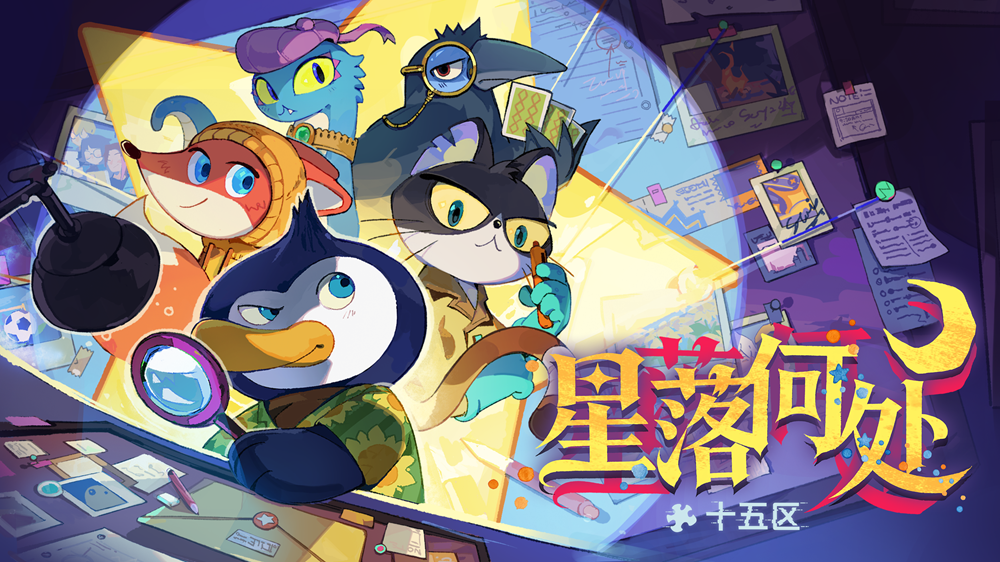
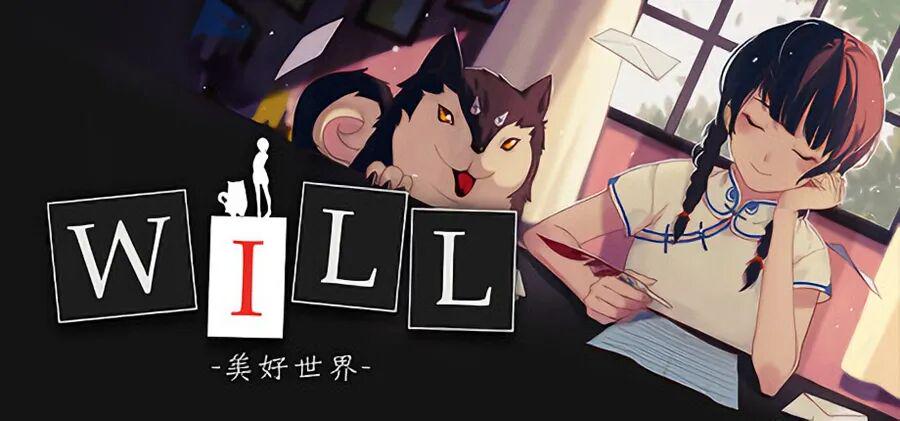
The producer of *Will: A Beautiful World* (hereinafter referred to as *A Beautiful World*) has finally released the first promotional trailer for his new game, *District 15: Where the Stars Fall* (hereinafter referred to as *Where the Stars Fall*), nine years and five months after the release of *A Beautiful World*.
“Beautiful World” was a real hit back in 2017. It received overwhelmingly positive reviews on Steam right after its release, and its revenue reached 2 million yuan within just six months.*Famitsu* awarded it a score of 34, making it the first Chinese-developed game to enter the Hall of Fame. Achieving such success with a debut title is enough to make fellow developers envious.
The success of *A Beautiful World* brought Wang Miaoyi both recognition and financial rewards, which later served as the foundation for her new work.
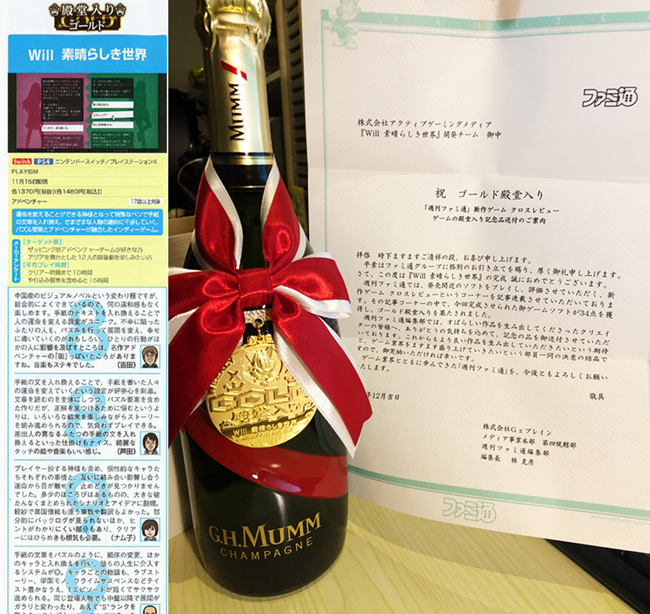
First Chinese-Made Game Inducted into Famitsu’s Hall of Fame
But Wang Miaoyi candidly told me that it was right after that incident that her original team disbanded, and she found herself in a slump for a long time, beginning to question her mindset and approach to her work. This may also be one of the reasons why her new work took nine years to complete.
Why would a producer with such an impressive track record start to doubt herself? What has she been through over the past nine years?
01
Why “A Beautiful World” Didn’t Make Her Happy
After the release of *A Beautiful World*, the game’s critical acclaim and sales soared, and the studio did indeed turn a profit—it should have been on an upward trajectory. In reality, however, internal conflicts erupted within the team. Wang Miaoyi became overwhelmed by matters unrelated to the game, grew exhausted, and ultimately dissolved the studio she had founded herself.
Q: It’s been quite a while since *A Beautiful World* was released, and since then, multilingual versions, a art book, and spin-off content have been released one after another. I never expected a single-player game to be supported for this long.
Wang Miaoyi: Yes, maintenance work related to *A Beautiful World* continued until around 2021.
The content set consists of the promises made during the initial crowdfunding campaign and does not constitute additional revenue. The translation work for versions in less common languages is handled by overseas fans and players, while I am responsible for coordination, testing, and localization—which involves a significant amount of work.
The bonus comic strips are published to expand on the story; they are drawn by external artists, and I review, edit, and publish them.
Looking back now, these tasks seem rather trivial and time-consuming, and friends in the industry have even said outright that they aren’t worth the effort. However, I personally find them quite interesting and have learned a lot of new things.
Q: Why was there such a long gap between the end of *A Beautiful World* and the launch of the new series, *Where the Stars Fall*?
Wang Miaoyi: Actually, after *A Beautiful World* was released, I had already begun conceptualizing my next work and had produced some early drafts of *Where the Stars Fall*.
In 2021, I met the art director I’m currently collaborating with; we hit it off right away and officially began development on *Where the Stars Fall*.
However, many of the game’s early design concepts were rejected during my discussions with the art director. The frequent back-to-the-drawing-board process slowed down progress. Combined with the fact that *Where the Stars Fall* is far larger and more complex than *A Beautiful World*, that’s why development has taken so long.
Q: How would you describe these past nine years?
Wang Miaoyi: It’s been a bumpy ride, but it’s paid off in the end.
After my last startup failed, I fell seriously ill and was bedridden for a week, too weak to get up. I realized that the mindset of “I absolutely have to prove myself” was unhealthy.
Back then, I was determined to create *A Beautiful World*—I was set on making something truly innovative. I worked over 14 hours a day, fueled by two cups of American coffee, with absolutely no personal life—it felt like I wasn’t even living like a human being.
I later realized that the success of *A Beautiful World* was not only due to the game’s quality but also benefited from the market conditions at the time. If you’re not in the right era and approach game development with a “sink or swim” mentality, things can easily go wrong.
Now that I’ve adjusted my mindset, I place greater value on the joy of the creative process.
After getting past my period of self-doubt, I began to devote more of my personal time to enjoying life and tried a wide variety of new things.
I took a course in counseling, played board games, fell in love, and even got married…
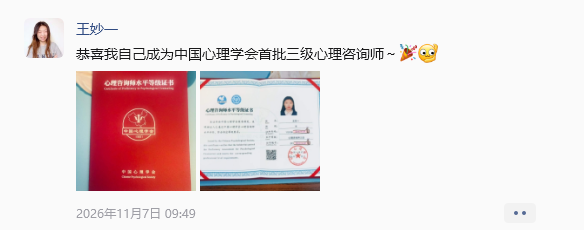
The Multitalented Wang Miaoyi
02
Looking back, the domestic gaming ecosystem has undergone dramatic changes.
Q: Over the past nine years, the domestic gaming ecosystem has undergone dramatic changes. Have you noticed this?
Wang Miaoyi: My most striking observation is that short videos have completely taken over people’s leisure time, and indie games are no longer as popular as they were during the *Beautiful World* era.
At the same time, as AI technology becomes more widespread and the number of new games skyrockets, players’ attention is severely fragmented, making it significantly more difficult for new games to capture players’ interest.
With layoffs happening all around us, people’s incomes are falling, and their willingness to spend on games is declining. For an independent developer like me, it’s quite difficult to create a game that generates high revenue.
Q: When summarizing the lessons learned from your previous startup, you once said that single-player games have a very low ceiling and that business failure is highly likely. Do you still hold this view in 2026?
Wang Miaoyi: Whether it’s a one-time purchase game or a free-to-play game, the success rate for hit titles is extremely low, and they’re all very difficult to develop. There’s no such thing as an easy-to-develop game genre.
That’s why I emphasize keeping a level head and avoiding letting the final outcome cause me long-term distress. Even if my new game doesn’t sell well, it’s okay—I can learn from the experience and make another one.
Besides, it’s highly unlikely that every single one of my future works will sell poorly, right? Hahaha (laughs)
Q: So, does that mean you still feel anxious when you’re making games?
Wang Miaoyi: I still get anxious. That anxiety stems from my desire to do a good job with my work, but I also worry about what will happen if I can’t do it as well as I’d like.
Whenever I feel anxious, I always reassure myself by saying, “Just go for it.” When I make some progress, I think, “Not bad—this should be fine,” and my anxiety eases again.
I’m not as anxious now as I was when I was working on *A Beautiful World*. Having a 3 or 4 on the anxiety scale is actually a good thing—it motivates me to make a great game. Having absolutely no anxiety at all isn’t good either; it makes you too relaxed.
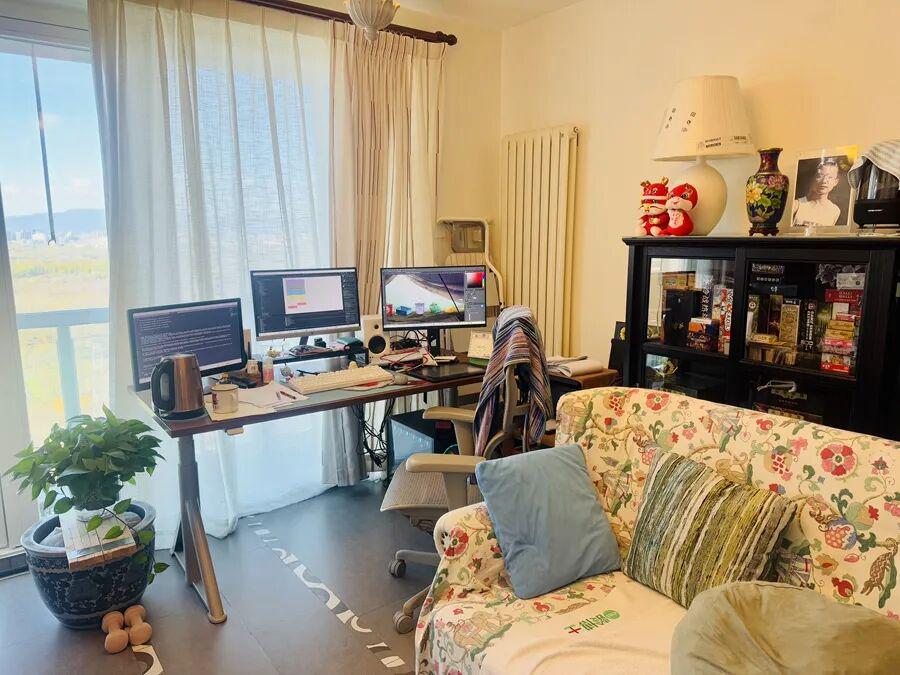
Wang Miaoyi’s Current Work Environment
03
Why is it still a one-person development team?
Q: Why do you still insist on developing games on your own? Do you have enough energy for it?
Wang Miaoyi: First of all, given the current challenging environment, with the exception of top-tier titles and a few blockbusters, the gaming industry as a whole is seeing declining profits, and building a team carries significant risks.
Second, I’m not good at management. Managers need to find people, secure funding, and identify projects, then trust others to carry them out—and that’s not my style.
There are times when I simply can’t be in two places at once, so I break down large-scale development tasks into smaller, more manageable tasks, set deadlines, and move forward step by step, thereby extending the overall development cycle and avoiding short-term, high-intensity pressure.
I’m currently handling the marketing and promotion myself, and I’ll decide whether to seek out a distribution or PR partner in the future based on market conditions.
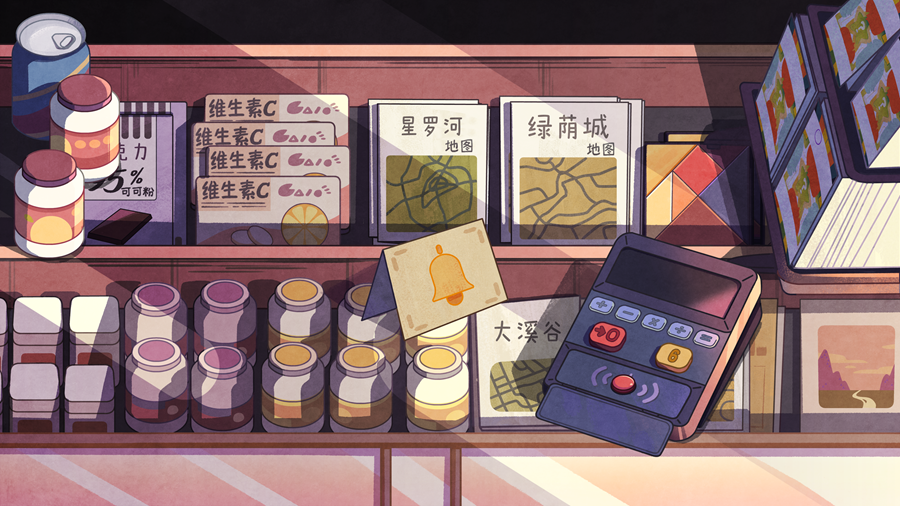
Where Do the Stars Fall?
Q: For this new project, we’re collaborating with an art director. How does this differ from typically hiring an external art team?
Wang Miaoyi: This art director is primarily an animation director and is extremely professional; she has also been involved in the development of other indie games in the past.
In the past, I was the art director; I assigned the illustration tasks and ultimately reviewed them to ensure a consistent style. However, the quality of each illustration depended entirely on my own skill level, even though I didn’t have a formal background in art.
Once we had a professional art director on board, I explained our requirements to him, and he was responsible for determining the style, creating sketches, and guiding the direction. He then handed the sketches over to others to turn them into initial drafts.
Previously, since I wasn’t very skilled in art, some of my gameplay designs were rather abstract, and I intentionally avoided incorporating art elements. However, the art director believed that art with good details is what truly makes for good art. So, after some discussion, many of the designs were scrapped and redone, becoming much more concrete.
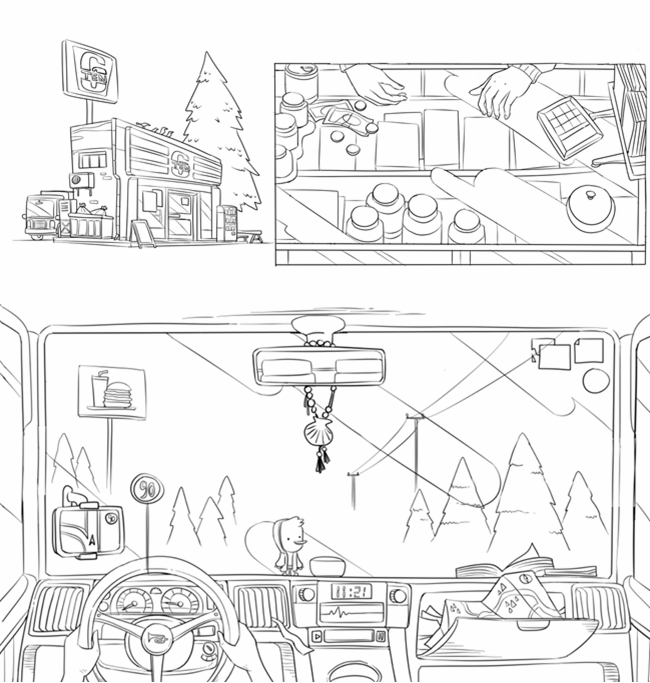
Design Drafts
Q: What is the current status of *Where the Stars Fall*? When do you plan to release it?
Wang Miaoyi: I estimate that the project is about 60% complete; there is still a lot of content—such as the script and gameplay mechanics—that needs to be developed.
As things stand, it is likely to be released in late 2027 or 2028.
Q: What aspect of your new game do you most want to resonate with players?
Wang Miaoyi: The “star” in the title *Where Does the Star Fall?* alludes to those who once shone brightly in society. But they have suffered setbacks, lost their luster, and fallen from grace. Where else could they possibly fall?
I think a lot of people want to be recognized by others and to shine in front of them. But in reality, what we ultimately need is a peaceful place to call home.
I hope that as players go through the game, they’ll draw parallels to their own experiences and find it moving.
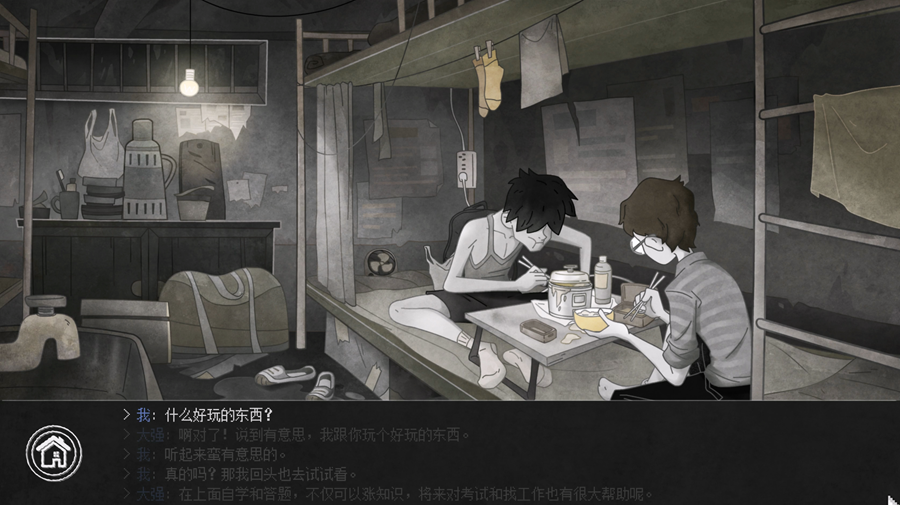
Where Do the Stars Fall?
04
Setting Out Again
In the comments section of the trailer for *Where the Stars Fall*, quite a few veteran players of *Beautiful World* have come to “catch up.” Many of them were still in middle school when they played *Beautiful World*; now they’ve been working for several years—time really flies.
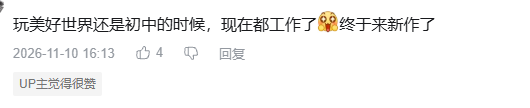
Those kids who used to play games are all working now.
Witnessing the growth of these young gamers, Wang Miaoyi was delighted for them. She revealed that during the expo, a student who had just finished the college entrance exam came up to her and said he planned to major in computer science and work in the gaming industry in the future.
The story of *A Beautiful World* touched and inspired a generation of players, and now Wang Miaoyi is back with *Where Do the Stars Fall?*, setting out anew with her reflections on the present. May *Where Do the Stars Fall?* resonate just as deeply with a new generation of players.
原创文章,作者:游茶妹儿,禁止转载:https://youxichaguan.com/en/archives/224482