“It’s hard to secure funding for pure gaming projects, and capital is shifting toward AI,” the Teahouse wrote in an article published in the middle of this year.
There is a practical challenge behind this: it is difficult to accurately predict a game project’s market performance in the early stages, yet costs such as R&D, marketing, and operations are relatively predictable. As players’ expectations for graphics, gameplay, and content volume continue to rise, investment in projects is increasing, while game pricing has not kept pace.
As a result, investing in games is often viewed as a one-time bet with an unpredictable outcome: if the project succeeds, the revenue may be sufficient to support the team in developing its next product, and further funding may not be necessary; if the project fails, it will be even more difficult for the team to secure additional funding.Shen Li, former head of Tencent’s NExT Studios, once summarized in a public interview that traditional VCs are reluctant to invest in games for two reasons: the difficulty of making early-stage assessments and the difficulty of exiting investments.
However, “capital shifting toward AI” does not mean “capital leaving the gaming industry.”Yang Wenfeng, founder of BBX Ventures, told Teahouse that capital flowing into AI could also attract new investors to the gaming sector; in the future, large-model companies may further enter the gaming industry in search of commercial applications and consumer users. For the gaming industry, AI is both a new competitive factor and a potential source of funding.
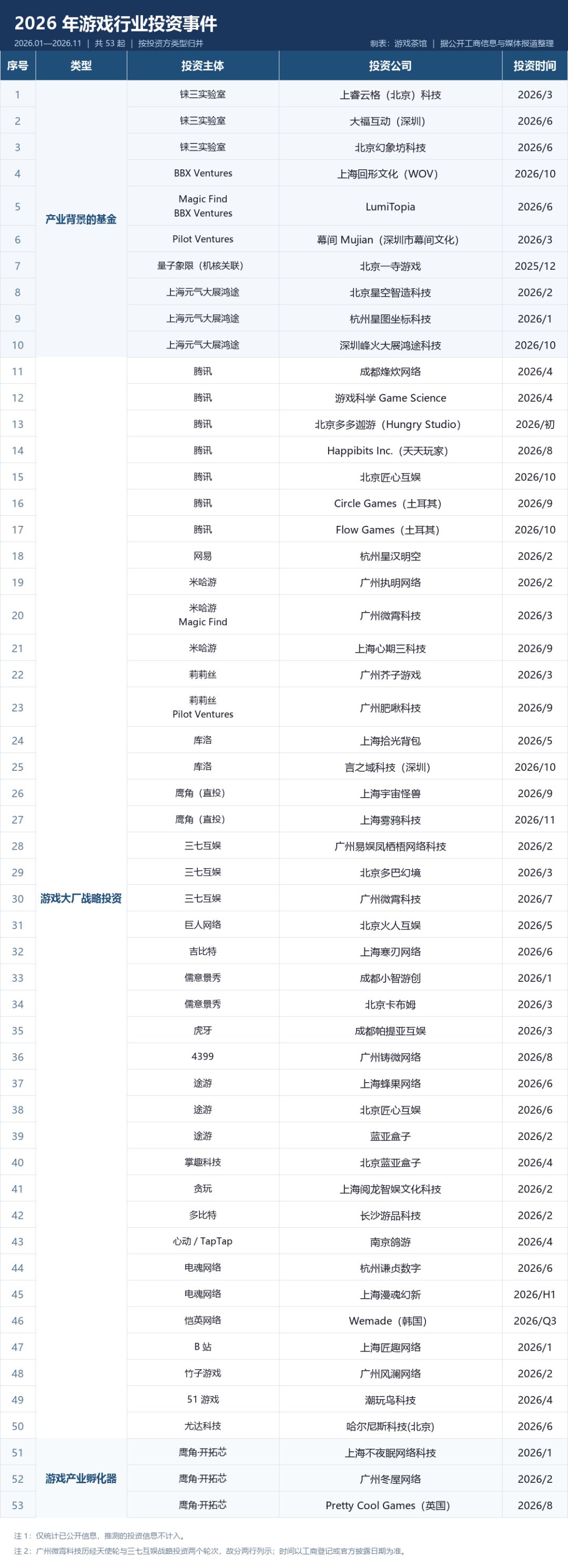
Teahouse compiled 53 publicly disclosed investment deals as of November 11, 2026; nearly half of the portfolio companies had been in operation for less than two years. On the one hand, well-known producers are leading startups and securing funding based on their track records; on the other hand, the AI boom is also attracting non-gaming capital in search of new application scenarios.
In 2026, who will still be investing in games? And what kind of future are they betting on?
01
Who’s Investing: Game Developers, Publishers, and Incubators
Based on the 53 records compiled by Teahouse, investors are not limited to traditional VCs. Industry-backed funds, strategic investment arms of major tech companies, and incubators constitute the main players in the current gaming investment landscape. The lines between them are not always clearly drawn: some institutions not only invest in projects but also participate in R&D, publishing, or incubation.
Let’s first look at industry-focused funds. These types of institutions are often founded by individuals familiar with game development, publishing, or operations, who hope to leverage their industry experience to identify promising teams and improve the efficiency of their early-stage evaluations.
Pilot Ventures, founded by Yuan Jing—former co-founder and CEO of MuTong—represents a multifaceted approach: Yuan Jing herself is involved in Magic Find’s LP network; for firms like this, founded by industry veterans, investment does not necessarily stop at equity but may also extend to product development and distribution.
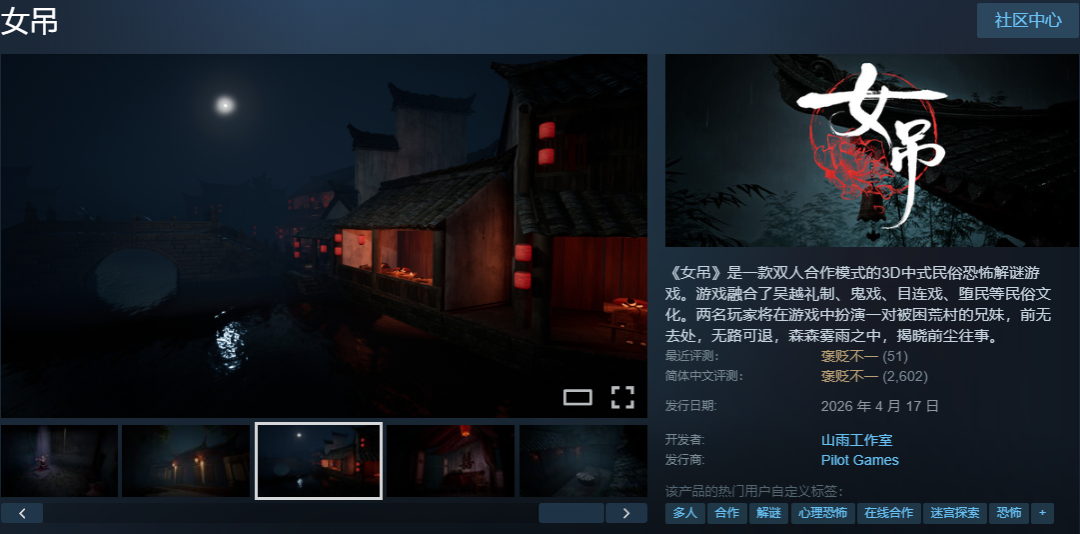
Pilot’s previously self-developed two-player cooperative Chinese horror game, *The Hanged Woman*, was released in April of this year. They are also the investor and publisher of *Dream Diver*, which was developed by Aomi Games—a studio that previously received investment from miHoYo and is known for titles such as *Journey Through Mountains and Rivers* and *I Play Mahjong in the Underworld*.
Shao Yun, founder of Magic Find Ventures, previously served as head of NetEase’s Tianxia Division and senior vice president of NetEase Games; co-founder Fang Da was formerly in charge of NetEase Games’ investment operations. The fund’s limited partners (LPs) include institutions such as Sequoia Capital and IDG, as well as game companies and industry professionals. Its investment strategy involves leveraging industry experience to identify early-stage teams and then using industry resources to help advance their projects.
Weixiao Technology, founded by Li Kaiming, the former producer of *Shuitu Zhibin*, is an example of this interwoven network of investments. Public information shows that Weixiao’s shareholders include investment entities affiliated with miHoYo, IDG, and 37 Interactive Entertainment, as well as Magic Find, founded by Shao Yun.Li Kaiming has previously worked on the production of *Shuitu Zhibin* and *Endless Lagrange*, and possesses experience in game development and team management. For investors, this is not merely a proposal for a “new project,” but a startup led by a producer with proven product experience.
Yang Wenfeng, founder of another up-and-coming U.S. dollar-denominated fund, BBX Ventures, is also a veteran of the gaming industry. He has received investment from Sequoia Capital and has held positions at leading international companies such as Forgame, Youzu, Scopely, and DiDi.
BBX focuses on the intersection of AI and the broader entertainment industry. Its portfolio includes both *Lianlian Zhongxu*, a 3D game targeting female audiences that began testing this summer, and WOV, a spatial AI content platform that transforms IPs into immersive 3D interactive experiences.The team behind *Lianlian: The Final Chapter* consists of members from companies such as Tencent Games, Google, and Paper Games, and is working to build long-term content around the IP.

Shanghai Yuanqi Dazhan Hongtu is a domestic direct investment platform established by Yuanqi Capital in partnership with multiple industry players. Founded in November 2025, both its team and investors have backgrounds in the gaming industry. Founder Hu Xiaoyi previously served as a product manager at Tencent’s TiMi Studios before leaving in 2015 to establish Yuanqi Capital.Xindong and Wangchen Technology are direct shareholders of Da Zhan Hong Tu; while Zhangzu Technology is a limited partner (LP) in Genkirakira L.P., another U.S. dollar-denominated fund under Genki Capital.This fund under Genki Capital previously invested in the angel round of Youyi Technology, founded by Ding Shenghao, the former head of core cloud gaming technology at MiHaYou. Youyi Technology’s product is *Ing*.
This year, Dazhan Hongtu has primarily invested by taking equity stakes in entities developing new projects: Starry Sky Zhisheng, the developer of *Epoch: Mutation*, established a new project subsidiary, Beijing Starry Sky Zhizao Technology Development Co., Ltd., in which Dazhan Hongtu holds a 20% stake;Suzhou Tanxingzhe, led by independent developer Wang Lei, established Hangzhou Xingtu Zuobiao Technology to develop the sci-fi strategy game *Star Forge*, in which Dazhan Hongtu holds a 30% stake; Dazhan Hongtu has also invested in the new company founded by Zhang Yaping’s team.
Among these 53 entries, strategic investments by major game companies were the most common category.Companies such as Tencent, NetEase, miHoYo, Lilith, Kulo, 37Games, Gibit, 4399, and Tuyou all appear on the list. When evaluating projects, in addition to equity returns, they may also consider synergies with existing releases, filling gaps in their portfolio, and expanding their product pipeline.
This year, Tencent invested in Fengchui Network, the developer of *Fenghuo yu Chuiyan*, acquiring a 12.5% stake; this Chinese-style open-world game ranks highly on Steam’s Wishlist chart.
NetEase, meanwhile, has taken a stake in Starry Sky, the developer of *Shadow Rush: Crimson Moon Kill*. The continued investment by companies such as miHoYo and Lilith in startup teams led by game producers also indicates that major studios have not completely withdrawn from early-stage projects; rather, they are focusing their investments more narrowly.
The third category is incubators. They often provide more than just funding; they also offer office space, R&D support, distribution resources, and team management, and as a result, may get involved before the traditional angel round.
Rhenium-3 Lab is a typical example of this.Together with Shougang Fund, it co-founded the Yaomeng Guild, which begins providing support to teams even before they establish their own companies. During an incubation period typically lasting 3 to 9 months, R3 provides teams with office space, funding, and R&D support to help projects complete their “vertical slice” development before establishing independent companies and securing the next round of financing.Lai San previously invested in *Honey, I Like You*, and according to YouSha statistics, it was also one of the most active investment firms in 2025.

“Kaituo Xin,” an incubator brand under Eagle Corner, also employs a similar support model. According to Kaituo Xin, it has invested in nearly 30 teams, 12 of which have launched their first titles and entered a “virtuous cycle.”It has previously invested in “Shanghai Sleepless Night,” a team of students from the Communication University of China, which won an award at the KaituoXin College Student Creation Competition for its game *Write It Off*; this year, it also invested in the British studio Pretty Cool Games, founded by core members of *Human: Fall Flat*.
Jike’s incubation system, on the other hand, aims to integrate game jams, investment, and publishing: Quantum Quadrant invested in a game called “Yisi,” which originated from a game jam project, and the game was subsequently published by Jike.
Given the background of these organizations, not all of the funding comes from outside the gaming industry. Some funds come from game companies and industry professionals; some investors are veterans who have developed products and led teams themselves; and publishers and incubators link investment with product support.Gaming investment exhibits a certain degree of “internal circulation”: capital, producers, publishing, and incubation resources are constantly being recombined within the industry. However, this does not mean that all investments are simply insiders betting on one another; rather, industry experience is becoming a key channel through which capital flows into the gaming sector.
02
Capital still focuses on people, but the screening process has become more diverse.
Among this year’s investment cases, a producer’s past experience with products remains the most compelling endorsement.
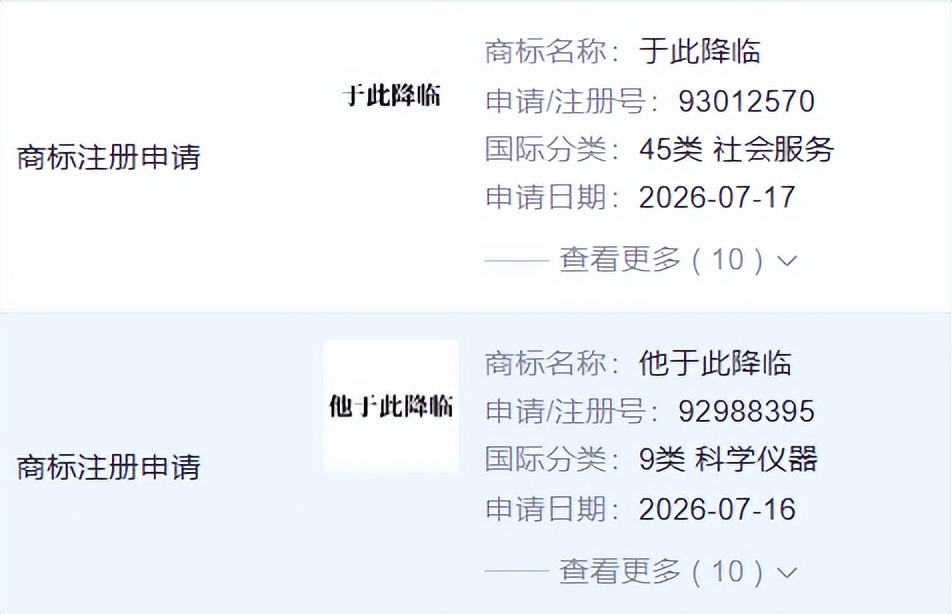
Mihoyo and Lisi Capital have jointly invested in Guangzhou Zhiming Network. The company’s founder, Xuanzi, previously served as the producer of NetEase’s *Beyond the World*. Guangzhou Zhiming has registered trademarks such as “Descending Here” and “He Descends Here,” leading to speculation that the company may be developing 2D story-driven games aimed at female audiences.
Xinqi San Technology, founded by the former team behind *Full Moon Night*, has also received investment from institutions such as miHoYo. According to public information, Xinqi San is currently developing a new roguelike title titled *Crazy Toy House*.
After Yu Yang, former technical lead of *Star Rail*, founded Shiguang Backpack, Kuro acquired a 10% stake in the company; the company is currently developing a multiplayer cooperative PVE shooter.
Zhuwei Network, founded by Chen Ge—the former lead game designer of the original *Shuitu Zhibin*—received a 22% stake from 4399 this year; as early as August 2025, Zhuwei Network had already secured investment from South Korea’s Nexus.
Jiezi Games, founded by Jin Tao—the producer of *Onmyoji*—secured Pre-A round funding with participation from Lilith; NetEase also licensed the *Onmyoji* IP to the team and adopted collaborative models such as revenue sharing.Jin Tao and his core team members had previously developed several successful products; after founding Jiezi, the team rapidly expanded and launched new projects.
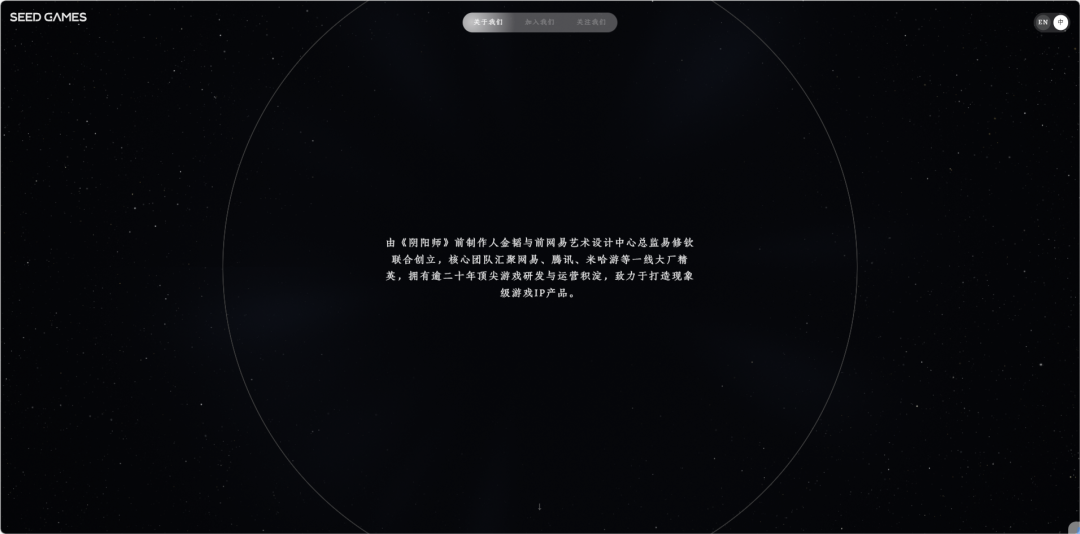
Together, these projects reflect a “people-first” approach: Investors are willing to evaluate new projects based on the team’s track record—what they’ve accomplished in the past, their ability to build a team, and whether they’ve gone through a full product lifecycle. While a track record cannot guarantee the success of a new project, it does help alleviate some doubts about the team’s ability to execute.
It’s not just star producers who have secured investment this year. On the other end of the spectrum are teams that have already gained initial validation through their work, competitions, or testing. Creative competitions for student teams, Game Jam prototypes, and playable demos all allow investors to see the potential for these ideas to become reality.
The producer of *Loving Finale* once mentioned that the team was unable to secure external funding during the project’s initial planning phase in 2024; it wasn’t until this year, when a demo of the product was ready, that they received their first round of external funding. For a team without a star producer, the work itself can serve as another form of proof.
03
Is AI a Threat or a Boon to Gaming Investments?
In the gaming investment sector, the amount of money being invested in AI is also clearly on the rise.
BBX is a newly established fund. Although the team has a background in the gaming industry, since its inception in late 2024, it has focused on the intersection of AI and the broader entertainment sector.
In the view of founder Yang Wenfeng, investments in non-AI ventures are viable in any era, but the age of AI represents a rare opportunity in human history that must be seized without delay. The companies he invested in this year—*Lianlian Zhongxu* and WOV—represent two distinct directions: AI and gaming products, and a spatial AI interaction platform, respectively.
In an interview with Game Grape, Shao Yun noted that the game team’s use of AI could influence investors’ assessment of the team’s technical openness and its ability to serve a larger player base in the future.
“AI games are becoming a ‘neither fish nor fowl’ investment product,” an AI game producer once told Teahouse. This year, compared to individual game titles, platform and toolchain projects have found it easier to gain traction in the investment narrative; meanwhile, games that rely purely on AI as their core selling point must repeatedly prove that their gameplay and business models are viable.
“Mujian” is a case study in the field of AI interactive platforms. “Mujian” is an AI-powered interactive gaming platform that has completed two rounds of financing totaling approximately $10 million. Shao Yun and Yuan Jing participated as follow-on investors in the angel round, while Yunjiu Capital and Jinqiu Fund led the two rounds, respectively.

Some companies founded by well-known producers are also exploring AI. Guangzhou Feijiu Technology, founded by Dai Yanqi—the fourth-generation lead designer of the PC version of *Fantasy Westward Journey*—is reportedly exploring AI-powered virtual worlds and has secured investment from Lilith Games.
However, this does not mean that the emergence of AI has diverted funds away from the gaming industry. Yang Wenfeng believes that AI will bring new gaming experiences and attract new investors; even large-model companies may become investors in the gaming sector.“Model developers are now actively engaging with the gaming industry—companies like Kimi and the model providers behind ChatGPT—so I think we’ll see model companies launching gaming funds in the future,” he said.
Yang Wenfeng mentioned that in the future, investors may invest in games for a variety of reasons, and returns may not be measured solely by revenue and sales: some investors hope to obtain user data, others focus on specific interaction metrics, and still others value the in-game assets that can be used for 3D generation. He believes that games can become one of the rich forms of user data in the AI era.
Conversely, the technical capabilities of AI gaming companies may extend beyond gaming itself. For example, in addition to developing games, BanTu Technology is also exploring technical areas such as behavioral modeling and providing services to clients in the gaming and embodied intelligence sectors. This suggests that the integration of gaming and AI is not necessarily limited to the sales of a single product, but may also extend to tools, technologies, and other application scenarios.

HalfMap Technology Products
External funding for the gaming industry does not come solely from market-oriented institutions. Local industrial funds and state-owned asset platforms have begun to incorporate gaming into their industrial strategies: Shanghai’s “Ten Measures for the Gaming Industry” propose supporting the establishment of gaming industry investment funds; the previously announced Shanghai Gaming Industry Special Fund has a planned total scale of 1 billion yuan, with an initial fundraising target of 500 million yuan.Hangzhou’s Binjiang District has launched a 500 million yuan special fund for the “New Three Cultural Sectors,” explicitly covering online games; meanwhile, Shenzhen Nanshan Strategic New Industries Investment and DreamSky have jointly initiated a 200 million yuan strategic investment fund for the gaming industry, with the funds to be channeled through Nanshan’s gaming incubation platform, “Youtopia.”
The announcement and establishment of these funds do not mean that all the capital has already been invested in specific projects. However, they do at least indicate that gaming investment is becoming part of discussions on local industrial policy, incubation spaces, and the integration of technology.
This year, Game Teahouse’s “Golden Tea Awards” also introduced two AI gaming awards: the “2026 Breakthrough AI Game Award” and the “2026 Outstanding AI Service Provider Award.” An AI gaming sub-forum and salon were also held on the day of the awards ceremony.
Judging by public investment records from 2026, the landscape of gaming financing is becoming increasingly diverse: industry funds, strategic investments from major companies, incubators, and local capital are all exploring different approaches to evaluating, supporting, and monetizing gaming projects.As for whether AI will attract the next wave of investors, and whether the gaming industry can secure new valuation models based on data, technology, or platforms, transaction activity and product performance over the next year or two may provide clearer answers.
原创文章,作者:游茶妹儿,禁止转载:https://youxichaguan.com/en/archives/224506