In 2026, China’s gaming industry will be both a paradise and a hell.
From a gamer’s perspective, this year is a rare bonanza for gaming: the release schedule is packed with dozens of major titles from top studios, all waiting to be explored by players, with excitement and anticipation at an all-time high.But for developers, every genre—from monster-catching to open-world and first-person shooters—has become fiercely competitive. After all, each company is fielding products they’ve poured their heart and soul into, betting their future on them.In the past, high-quality visuals alone were often enough to attract attention; but this year, developers must pull out all the stops to secure a slice of the limited market pie.
In this environment where everyone is under pressure, it becomes all the more clear who truly possesses the “hard power” to stand out. Take NetEase’s *Sea of Forgetfulness*, for example—in just a few days, on May 28, they will launch their third beta test, the “Dawn” test.
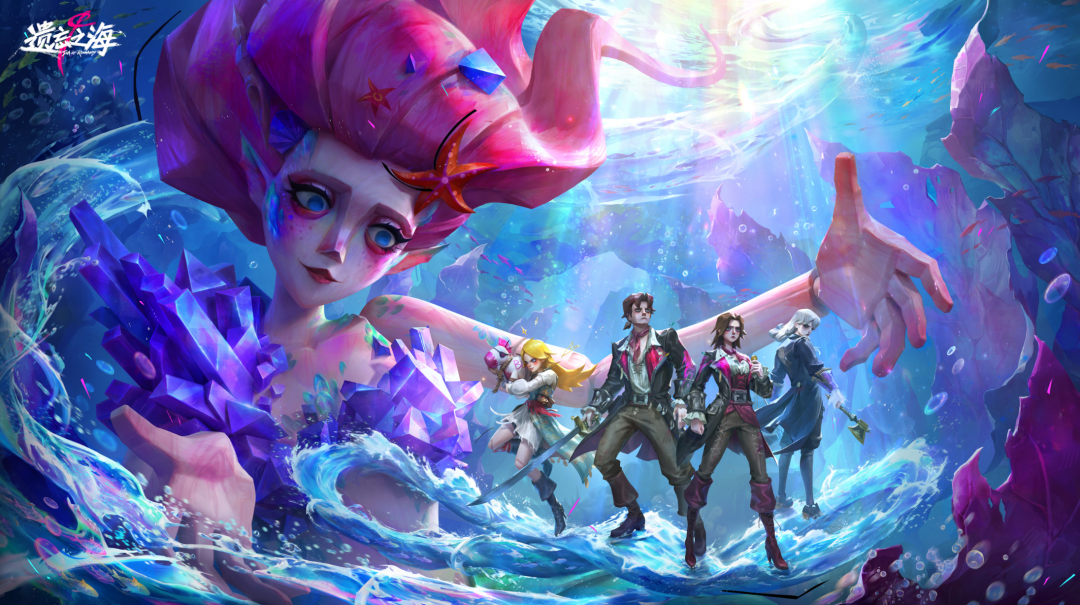
Since officially obtaining their publishing license in late April, they immediately began working intensively on preparations for a series of closed beta tests, with every step attracting massive spontaneous attention from players. Late last month, they released a promotional video for the beta recruitment, which surpassed 6 million views on Bilibili within just a few days;They appeared at NetEase Games’ 520 launch event, with many calling it the most memorable product of the day; during the subsequent preview livestream, they unveiled the latest updates on core mechanics and monetization strategies, and the viewership surpassed one million shortly after the stream began.

Looking beyond the event, *The Forgotten Sea* has already climbed to the top of the pre-registration charts on multiple platforms, including TapTap and Bilibili, garnering over 23 million pre-registrations across the web.Players lining up in the comments section of the official account to request access or urge the launch of the open beta—these phenomena and figures send a clear signal: in an era where new games are launching in droves, *The Forgotten Sea* stands out as the most prominent titan among them, with its gameplay, presentation, and every other aspect receiving widespread acclaim from players.

Teahouse Jun was also among those drawn in.After experiencing the first two tests, I feel that *Sea of Forgetfulness* clearly has the makings of a hit: it features a wealth of high-quality 3C elements while maintaining its own unique stylistic flair; its open-world framework—a blend of “land and sea adventures” linked by a roguelike loop—is truly one-of-a-kind in the global gaming industry.During the preview livestream for the third beta, they unveiled a radically overhauled gacha monetization model. In an era where open-world games are highly homogenized, they’ve achieved a rare level of differentiation, raising our expectations for quality and content and making us optimistic about its future potential.

It’s clear—this time, NetEase is out to shake up the entire open-world gaming market.
01
More than just a polygon warrior
Taking a closer look at the discussions surrounding the third beta test of *The Sea of Forgetfulness*, players expressing anticipation for the game on social media can generally be divided into two categories.
One group consists of players drawn to the game’s art style—the entire set of bizarre, puppet-inspired visuals, paired with a laid-back, lively atmosphere, is sure to appeal to the masses;The other group consists of veteran players who participated in the first two betas. They can recite the Princess’s skill lines by heart, know every nook and cranny of Autopia City, and have their own ideas about how the game could be improved for the third beta.
The latter group of players is particularly worth mentioning. Given the limited player base in both test phases and the relatively small overall user base, the game has still managed to retain a loyal core player base, demonstrating that the core experience of this treasure-hunting adventure is quite solid.
During the second beta test, Tea House also analyzed what makes *Sea of Forgotten* so enjoyable. It possesses a rare sense of coherence: when you launch the game, you truly feel as though you’ve become a Jack Sparrow-style captain and a part of this mysterious and wondrous fictional world, exploring the deepest secrets of the Sea of Forgotten.
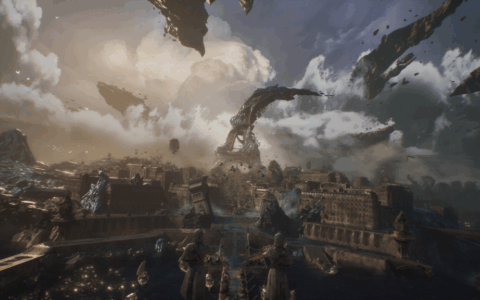
At the start of the game, you are rescued after drowning in the Sea of Oblivion and brought to the small town of Otopia.Although you’ve lost all memory of your past, that doesn’t stop you from enjoying life to the fullest: helping neighbors catch chickens, competing in drinking contests with the local gang boss, and building relationships with the town’s eccentric residents—all while soaking up the vibrant atmosphere amidst the chaos.This immersive experience is underpinned by a massive amount of content; there are over a hundred mini-games to play against NPCs alone, and some—such as Mahjong and Goose Chess—can even be played online with other players, ensuring an experience that never gets boring.
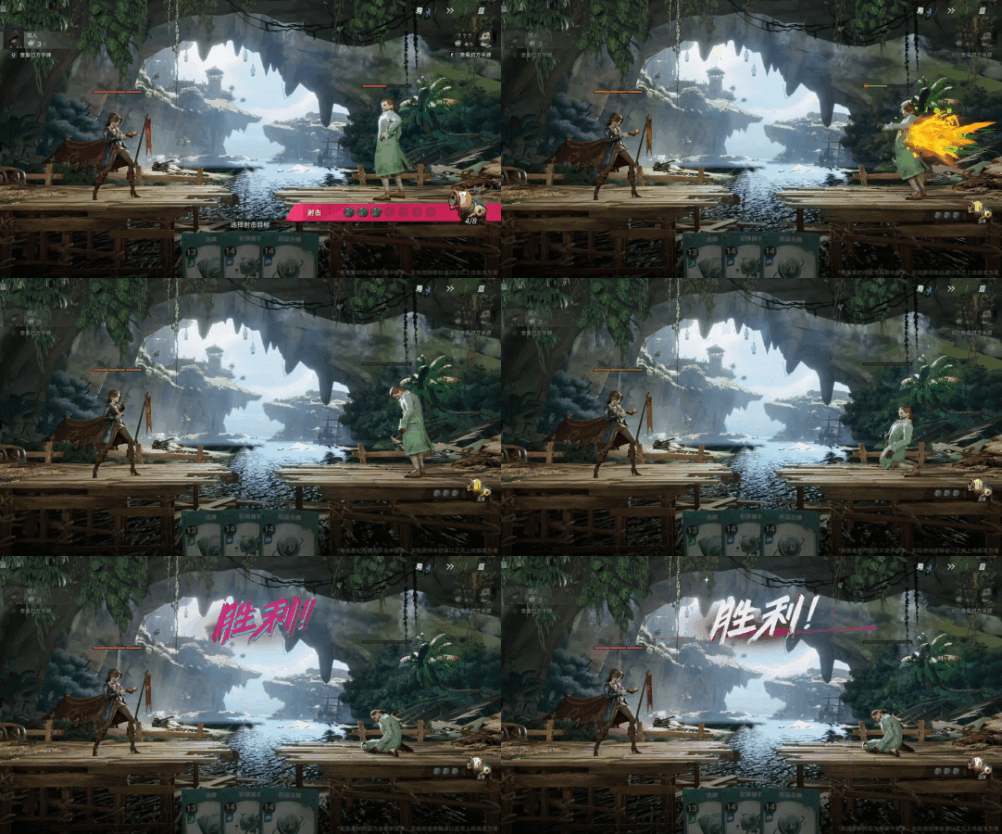
Once you’ve rested up in Autopia, you can set sail on an expedition called “The Journey of Oblivion.”The new content officially announced during this preview livestream further clarifies the game’s core theme of “oblivion”: according to the livestream, “the ultimate destination of memory is oblivion; forgotten memories sink to the ocean floor and converge in the Sea of Oblivion.”On your voyages, you can salvage fragments of others’ lost memories, and the companions behind these memories will join your party as playable characters, gradually expanding your fleet.
It’s clear, then, that this game’s core appeal lies in its replayability across multiple playthroughs—each voyage is a massive roguelike adventure set across 256 square kilometers of ocean.This world features a complex marine ecosystem and various island types, including the main island, outlying islands, and scattered islets. By battling the powerful rulers lurking throughout the world and collecting the resources and items they drop, you can enhance your team’s strength for this expedition.
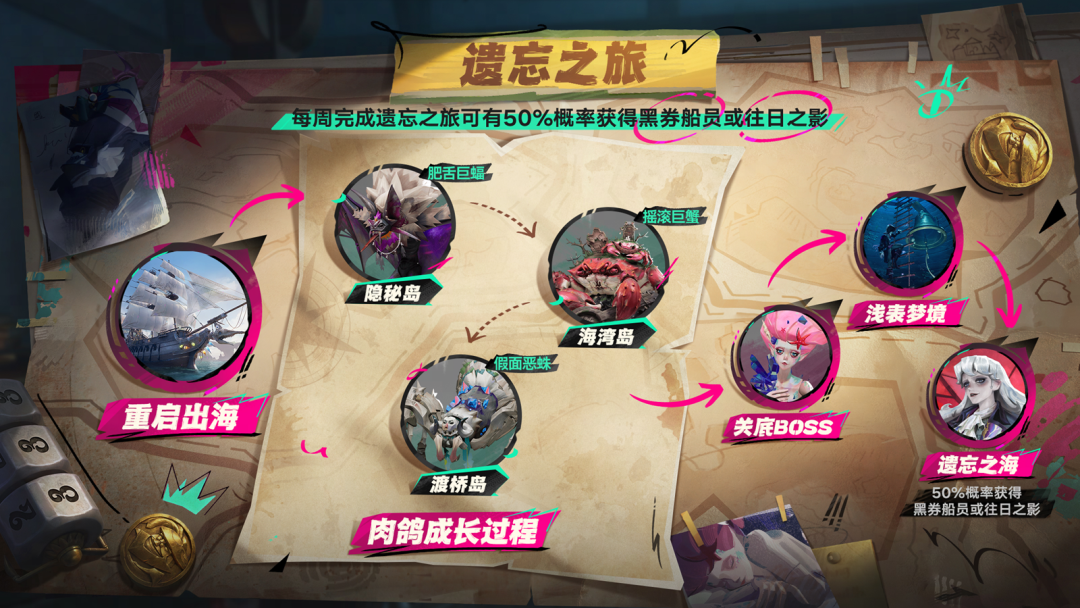
A complete journey through Oblivion consists of several key stages: setting sail again with your companions, growing stronger through roguelike combat, defeating the final boss of the second beta—the mermaid Morian—and then entering the Great Tower of Memories. Once you’ve completed the “Superficial Dreams” trial, you’ll gain access to the Sea of Oblivion to recover your memories.
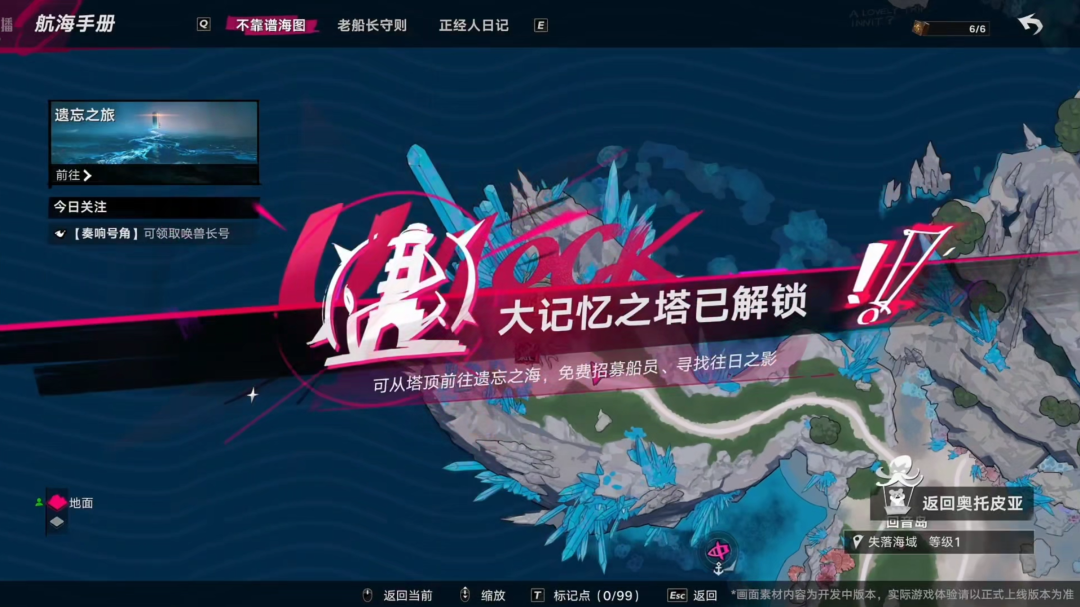
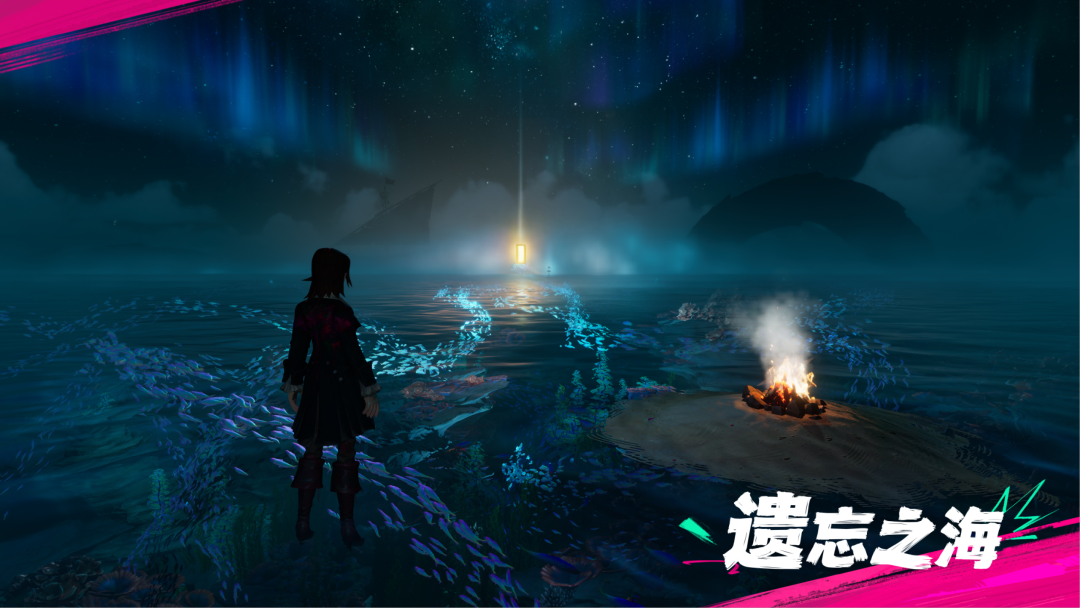
How you proceed from there is entirely up to you. In the second beta alone, there are over twenty bosses of various sizes scattered across the islands and the open sea, most of which are optional and have no set order.However, each boss drops different key class-change items and weapons, and these drops introduce randomness into the build process—from skill choices to class selection and equipment affixes. As a result, the game’s roguelike loop becomes quite distinct: depending on your playstyle,the game can spawn a wide variety of gear-building strategies.
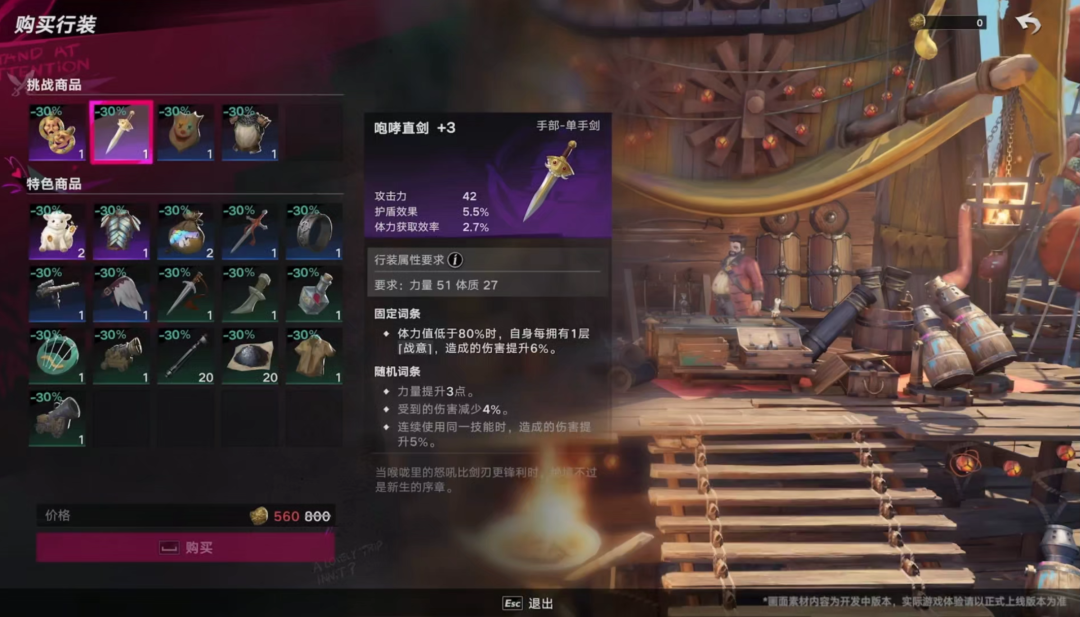
For example, you can focus on steady progression, experiment to discover dark arts strategies, or compete with other players to see who can complete the game fastest at a low level. These choices ensure that every “Journey of Oblivion” feels different from the last, keeping the experience fresh.Moreover, you’re in complete control of the pace of your exploration. Even when you don’t feel like fighting, you can choose to relax on the safe main island, take in the scenery, search for treasure chests, or advance the story. The game’s replayability is exceptionally well-crafted.
Teahouse Jun has noticed that some people have drawn parallels between *Journey of Oblivion* and *Elden Ring*, and it’s actually quite apt. The two share many similarities: free exploration of a vast open world, no fixed order for boss battles, and different challenge routes leading to varied builds and outcomes.This experience, which grants players a high degree of autonomy, has led many players to willingly play through *Elden Ring* a dozen or more times. This opens up a wealth of possibilities for *Sea of Forgetfulness* in terms of its long-term replayability.
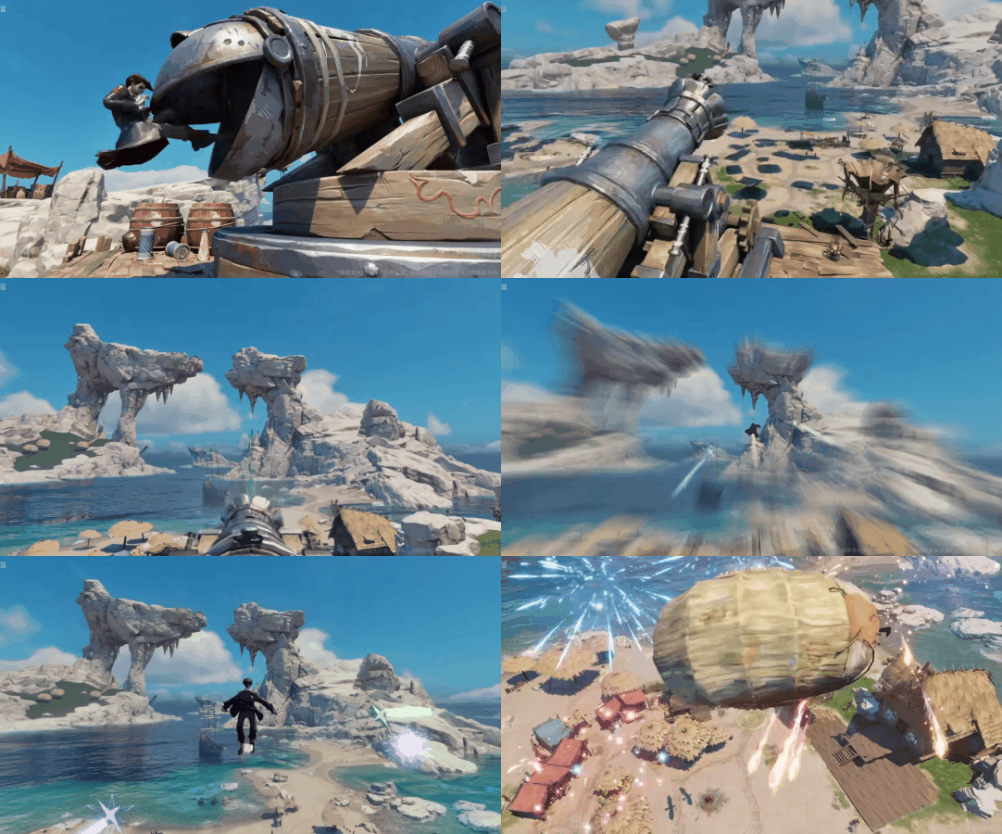
The difference is that, according to estimates provided during this preview livestream, a single playthrough of *Sea of Forgetfulness* averages around 3 hours, and skilled players can complete it in as little as 1.5 hours, making the time commitment more manageable compared to large-scale single-player games.Even more noteworthy is an official announcement from the development team: completing the “Journey of Oblivion” will grant players a free in-game top-tier Black Voucher Crew Member (equivalent to SSR tier) or a “Shadow of the Past”——a weekly event where players have a 50% chance of obtaining a Black Voucher crew member (equivalent to SR tier) or a “Shadow of the Past” (a crucial cultivation item).
In other words, in a game where “character gacha” serves as one of the primary monetization methods, *The Forgotten Sea* doesn’t just rely on gameplay mechanics to encourage repeat play; it also positions character merchandise as the “ultimate prize” within the game’s main loop, using high drop rates to incentivize players to repeatedly engage in this “forget-remember” cycle.
This is clearly a rather bold move that has attracted significant industry attention.
02
Carving out a path through long-term operations
The introduction of the “Black Ticket” system sends a clear signal. It indicates that the *Sea of Forgetfulness* development team has keenly identified the problems that are gradually becoming apparent in the current gacha monetization model.At a time when most open-world games still treat gacha mechanics as the “standard solution,” *The Forgotten Sea* is resolutely challenging this industry convention while presenting a viable alternative.
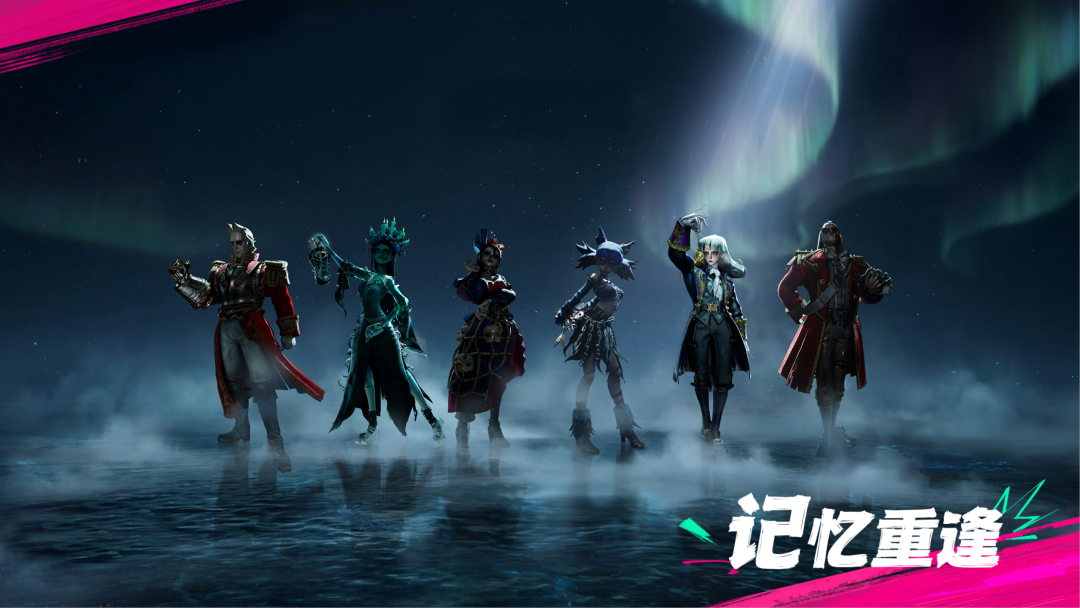
Several commercialization strategists from major game studios have shared with us the view that “unlucky gacha results are good for long-term retention”: During a game’s open beta, all server launch bonuses are maxed out; players aren’t short on resources, and gacha mechanics—which offer the thrill of a blind box—can still provide a positive experience.But after playing through a few major updates, players inevitably return to the grind of daily life. When they painstakingly save up gacha resources only to miss the guaranteed drop, the negative feedback is intense. Even if they do draw a limited-edition character, they’re left playing a game of suspicion against the designers, “gambling” on whether there will even be a suitable role for that character in the future.Over time, this erodes player morale and undermines the game’s long-term viability.
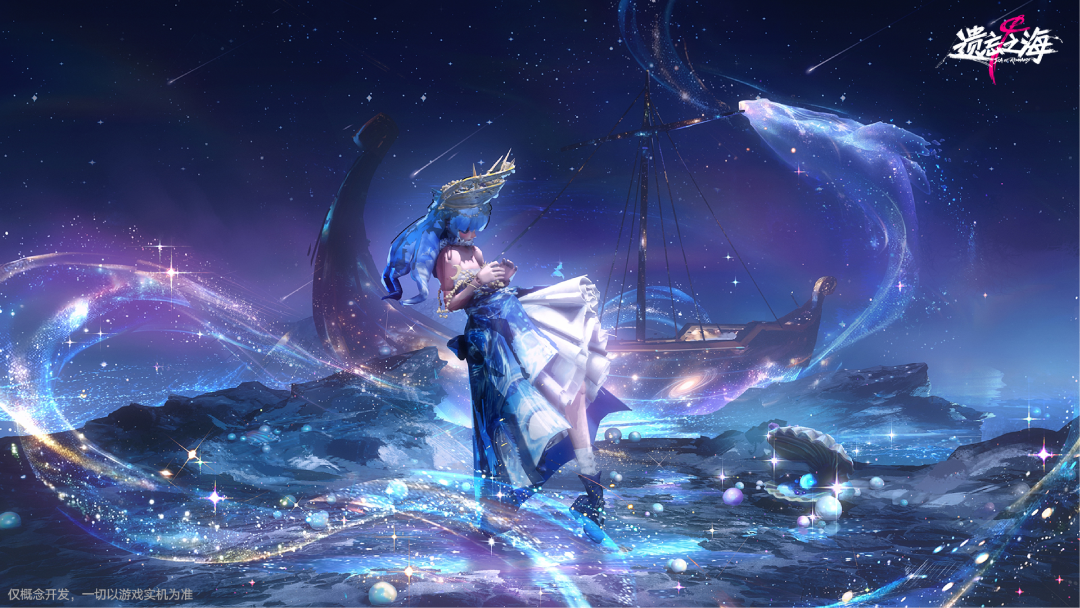
The designers of *The Sea of Forgetfulness* made it very clear during the preview livestream: in their design, the game’s monetization will primarily come from cosmetic items, such as character outfits and accessories, and the decision to purchase these items will largely be up to the players.
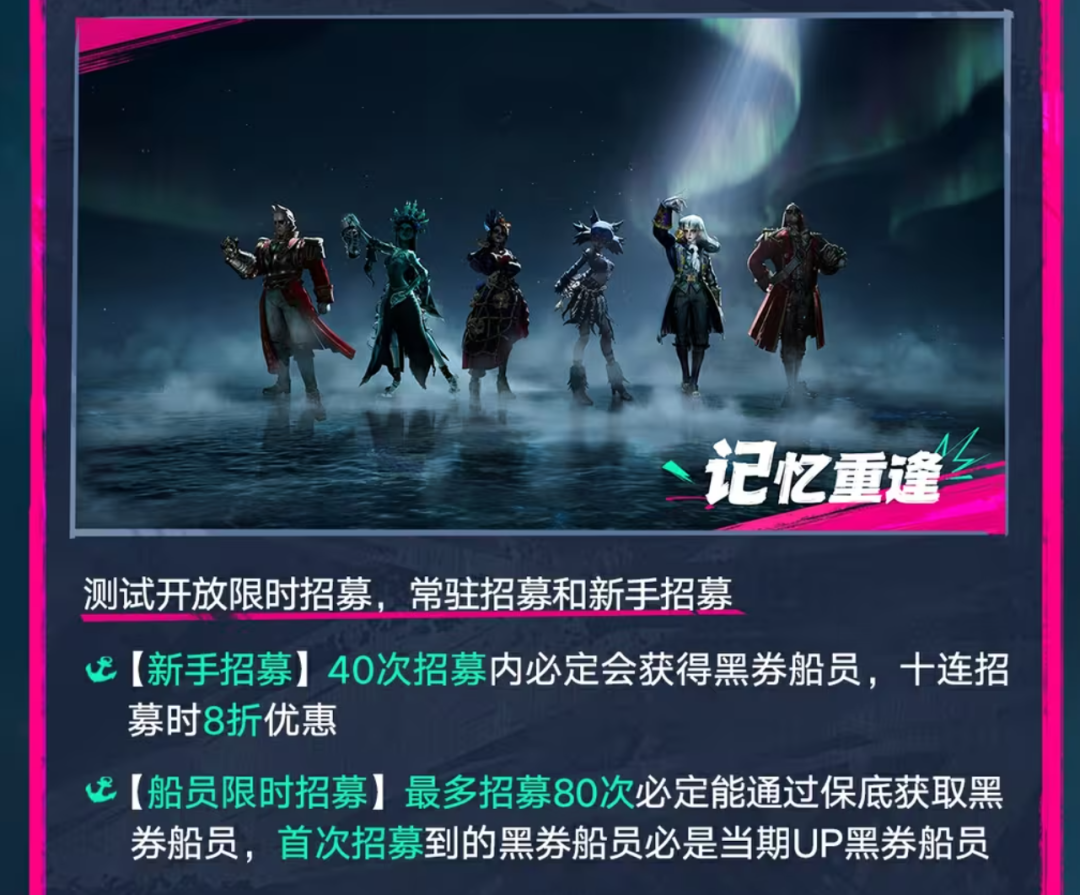
With in-game cosmetic purchases providing the necessary commercial support, the approach to character acquisition can be significantly more relaxed. According to the project team’s vision, success in the Trials of the Forgotten Journey relies primarily on leveraging roguelike mechanics to build effective decks, while powerful crew members merely serve to slightly increase the margin for error.In this test, even when obtaining crew members through gacha pools, the guaranteed reward is triggered after a maximum of 80 pulls, and the first guaranteed reward in each pool is always the featured black-ticket crew member—making it a reality that the first small guaranteed reward never misses.
Combining gacha mechanics with the core gameplay of roguelike games is a particularly clever move. It ties high-value goals to the incremental objectives within the core loop. While this sacrifices some monetization potential, it addresses the more critical long-term question of “why players play.” It also provides players with a psychological buffer regarding the gacha system.
Not only that, but the development team has turned these promises into reality: all Black Ticket characters and Shadows of the Past can be obtained through the Journey of Oblivion, with a guaranteed drop of a Black Ticket character or a Shadow of the Past within a maximum of three weeks. So, as long as you put in the time, you’re sure to eventually add your favorite character to your roster.

This set of safety net rules has actually created a strong sense of anticipation among players, making them more willing to return to the Forgotten Sea time and time again. And just as you might expect, once this entire set of monetization changes was announced, it quickly garnered widespread attention and acclaim from players.
Of course, NetEase isn’t the only company that has recognized the increasingly apparent shortcomings of the gacha model, but most companies are reluctant to challenge a payment model that has already proven itself.At times like this, the industry needs a giant like NetEase to exert top-down influence—they possess a deep understanding of long-term operations, have more data to support their decisions, and, moreover, hold additional cards up their sleeve when it comes to monetization.
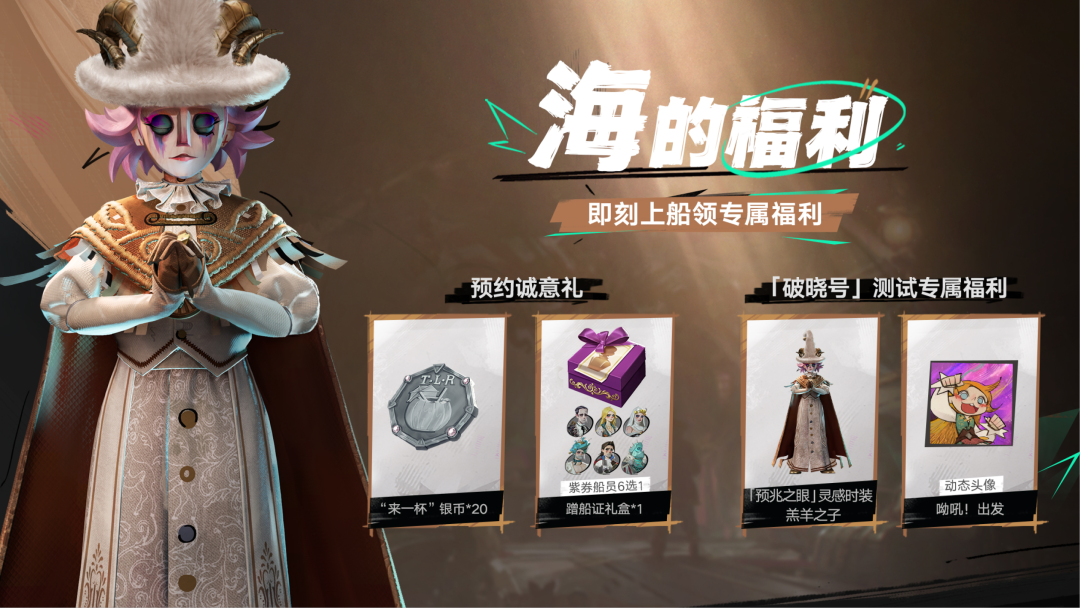
For example, during this preview livestream, *Sea of Forgetfulness* teamed up with *Identity V*, another title from Joker Studio, to offer players exclusive rewards, including special avatars. This sparked a wave of excitement among fans of both games, driving up the popularity of both titles.The project team also mentioned during the livestream that they are considering many players’ suggestions and may explore more cross-promotions between their sister titles in the future.

Joker Studio’s long-term operational capabilities have been widely recognized within the industry in recent years—their “arsenal” includes not only high-quality game content but also cross-IP collaborations, creative brand campaigns, and player community management.So what kind of sparks will fly when these strategies are combined with the open-world framework of *Sea of Forgetfulness* and its inherently whimsical, meme-friendly tone? At the very least, we have every reason to believe it will become the industry’s next enduring benchmark.
03
The Chinese Approach to Next-Gen Open-World Games
Since 2020, the boom in domestically produced open-world games has been going strong for about six years. By the time *The Forgotten Sea* came along, the challenges it faced were actually greater than those faced by its predecessors.
Many themes and ideas that are easy to conceive and test have already been exhausted by those who came before us. Players’ views on the industrialization of gaming have also gradually shifted from “novelty” to a more sober perspective.The first-mover advantage of established titles and their years of accumulated content have created moats so deep that they are virtually impenetrable, making it even harder for new products to displace them. For instance, a 2025 industry report by Newzoo noted that contemporary players spend two-thirds of their annual gaming time on long-running titles that have been live for over six years.
This also means that if a new product offers nothing more than incremental updates, it will struggle to capture players’ interest. But *Sea of Forgetfulness* is different—it delivers a comprehensive set of groundbreaking updates that break through the ceiling.We could even say that *Sea of Forgetfulness* has the potential to redefine industry standards for open-world games in many ways.
For example, based on our conventional understanding of long-term operations in open-world games, expanding the scale of content typically involves starting with the map area and continuously adding new regions.However, many hints in the live stream for *Sea of Forgetfulness* suggest that not only can the landmass expand, but the in-game ocean can as well—the vast 256-square-kilometer ocean is not the end of the story.
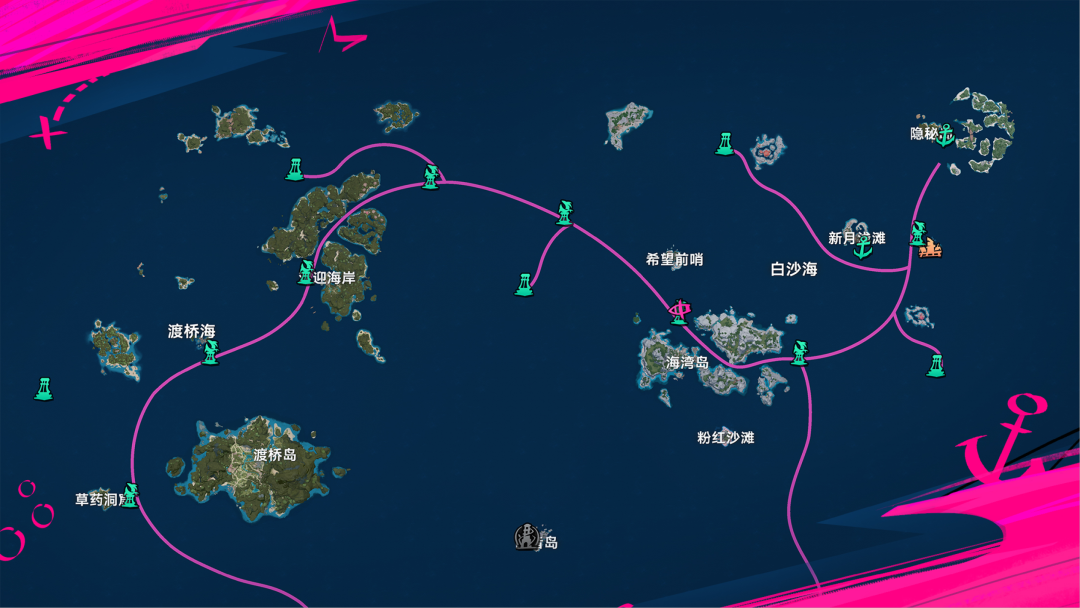
For example, as players who participated in the second beta test have already noticed, the sheer variety of ways players can interact with the world in *The Forgotten Sea* likely ranks among the top in the global market for similar titles. This is underpinned by an immense investment in R&D and robust industrial-scale production capabilities.
While it’s a game that requires hard work, it’s also one that requires smart work—it taps into a niche in the market where differentiation is becoming increasingly rare.For example, the art style of *Sea of Forgetfulness*—featuring puppets, the grotesque, a trendy aesthetic, fantasy, and a nautical vibe—had its mass appeal previously validated by *Identity V*, and is largely a style that only Joker Studio could pull off.They further enhanced this aesthetic with additional motion capture and voice acting, delivering a comprehensive upgrade to the narrative experience and creating an atmosphere reminiscent of a “stage play at sea.”
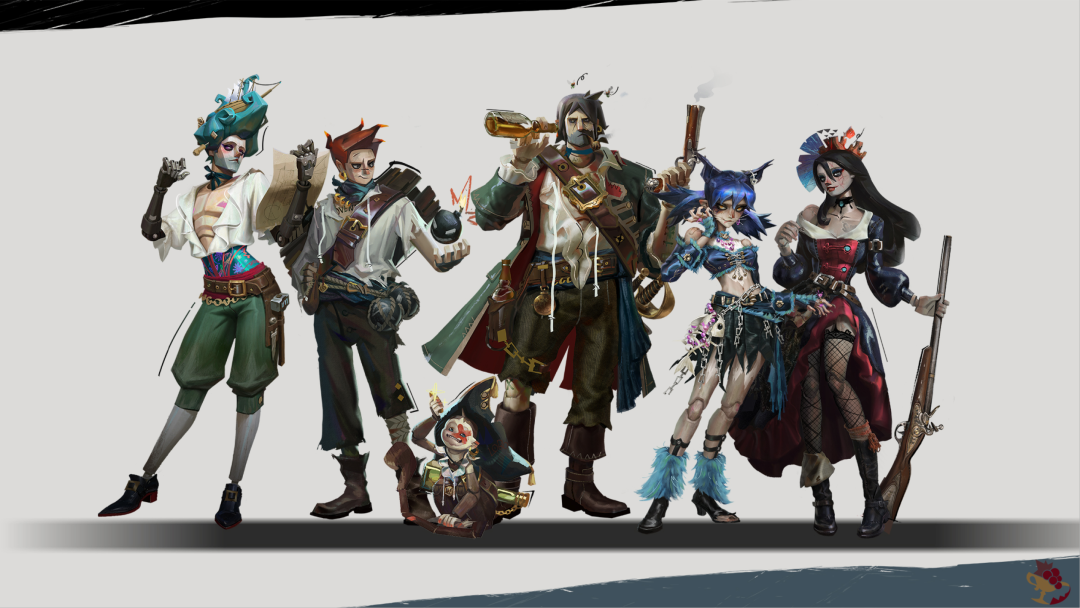

While it isn’t a typical anime-style product, the eye-catching appeal of its art style is actually on par with the impact created when anime-style games first broke into the mainstream on a large scale.This is also what sets *Sea of Forgetfulness* apart from many niche anime-style games. Its potential user base extends far beyond traditional anime fans, potentially encompassing open-world gamers, turn-based RPG enthusiasts, maritime adventure lovers, casual players, and even a broader audience drawn to the game’s art style and character charm.
If we imagine the game’s powerful and substantial content as a lever, and its carefully chosen stylistic differences as the fulcrum—combined with NetEase’s strong commitment and significant investment in this flagship product—then the sheer scale of the market this product could ultimately tap into is truly something to imagine.
While it’s true that new games face an uphill battle to break through, the overall progress of the gaming industry is largely driven by the next generation of games. *Sea of Forgetfulness* serves as an excellent example of this “next-gen” trend; while it may be difficult to replicate, it at least demonstrates that the future of gaming still holds a wide range of possibilities for evolution.
Whether in terms of pre-registrations or player engagement on social media, the numbers surrounding the third closed beta test for *Sea of Forgetfulness* clearly indicate that it is highly likely to become the next game to shake up the open-world genre.
According to NetEase’s Q1 earnings report, *Sea of Forgetfulness* is expected to launch officially in the third quarter of this year—and the global open-world gaming market is bound to face fierce competition in the second half of the year.
原创文章,作者:gallonwang,禁止转载:https://youxichaguan.com/en/archives/197717