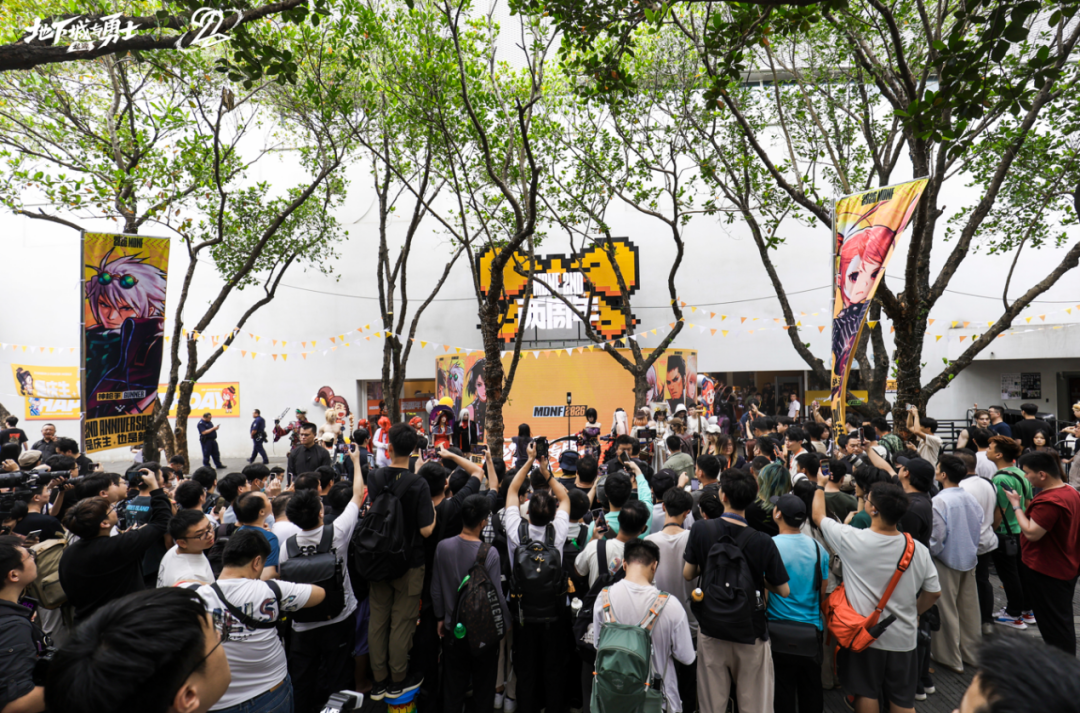
At 1:55 p.m. on May 16, at Hall B10 of the Shenzhen OCT Cultural Park, when I rushed over, the entrance was already packed with *DNF* mobile players peering inside.
I walked around the impenetrable crowd a few times, intending to find a few players to interview, when I heard some people chatting nearby.
“Is this an event for the DNF mobile game? I didn’t realize there were still so many people playing it.”
“Players are always saying they’re quitting, but you can actually see them logging in every day. Especially during events like the anniversary celebration—when they give away two Sky sets—even the ones who really did quit come back. They may complain and make a fuss, but they wouldn’t dare mess with the Sky sets!”
“I heard Charlie’s coming today too. We’ve got to give him a proper welcome.”
At 2 p.m., the crowd outside the venue began streaming inside, while not far away, a large group of DNF mobile game players was still making their way over.
In fact, signs of this “buzz” had already emerged during the online press conference the day before.On May 15, the DNF Mobile 2nd Anniversary online launch event attracted nearly 4 million players on Douyin. Highlights included a drone show at Shenzhen Bay, the giveaway of two sets of “Sky” gear to celebrate the anniversary, the upcoming launch of the newly developed Black Dragon raid, and a host of upcoming events in the pipeline. After the event concluded, the hashtag “DNF Mobile 2nd Anniversary: Great Again” quickly shot to the top of the trending list.

Shortly thereafter, a flood of “unofficial” video guides on how to claim the rewards appeared on platforms like Bilibili and Douyin, with many influencers exclaiming that the campaign was a massive hit.

Meanwhile, on online social media platforms, many players have openly commented, “Free-to-play players are celebrating the New Year early—logging in to claim the Sky rewards first,” and “The developers seem sincere, which makes me want to give the game another try.”


In my memory, the DNF mobile game has been somewhat “low-key” over the past year, but at the in-person 2nd-anniversary celebration, I truly felt what it means to be bursting with enthusiasm. There was a guy wearing a T-shirt that read “Dungeon & Fighter is my one and only” who showed up on time for two years in a row, and another player who, during an interview, showed off his perfect attendance record spanning 700 days since the game launched.
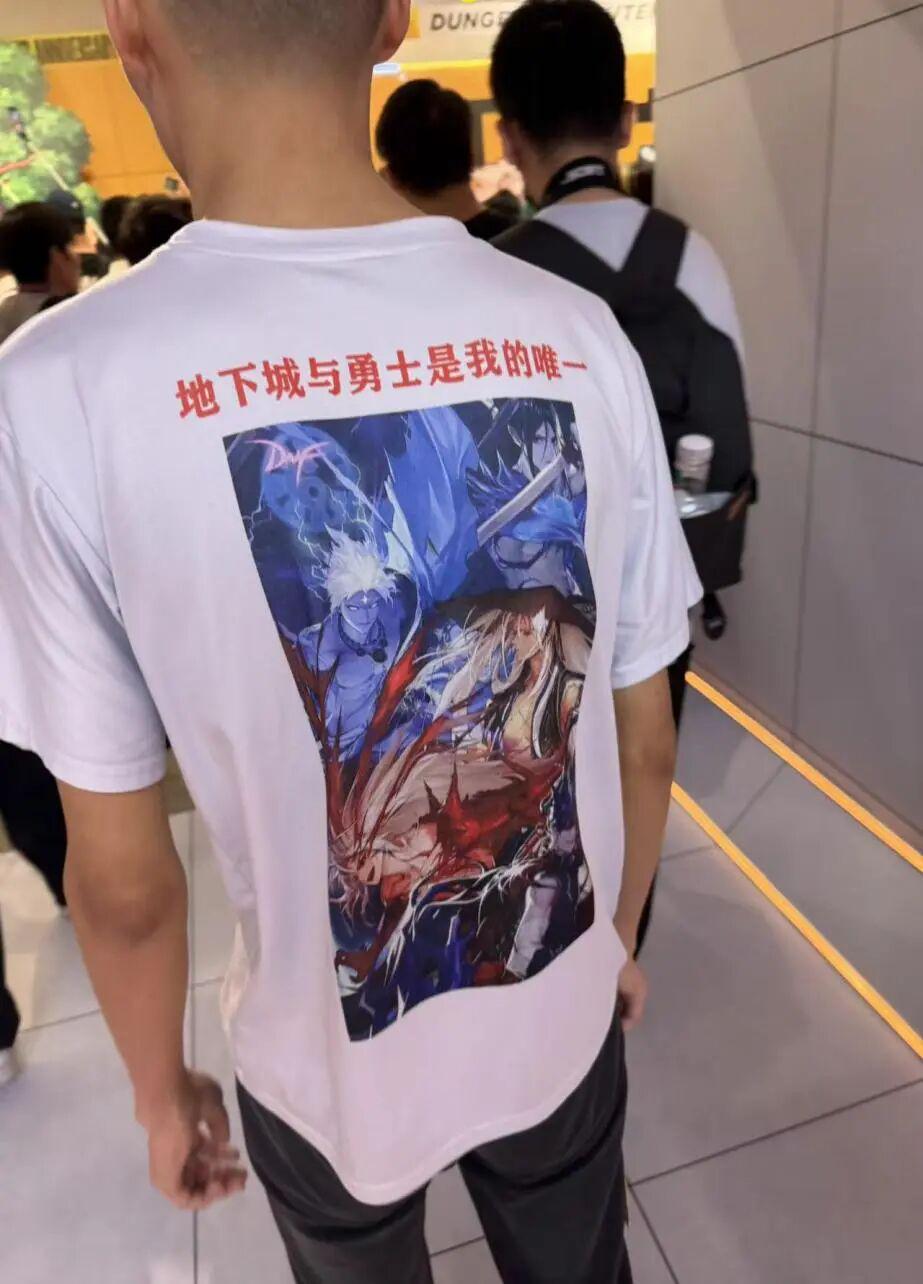
Now, five days after its 2nd-anniversary launch event, the DNF mobile game has once again climbed to No. 2 on the best-seller charts, which speaks volumes.
Two years later, the DNF mobile game is undergoing a “rebirth.”

01
New Student
What is the most important thing for a product to achieve a “rebirth”? I believe it is the courage and determination to confront problems head-on.
Looking back at the performance of the DNF mobile game in the second half of last year, most of the issues centered on three major pain points: gameplay issues such as lag and disconnections; prolonged content droughts that left players with nothing to do; and a collapse in farming rewards that led to an imbalance in the game’s economy.
In fact, when Kahn first appeared as the producer of the DNF mobile game in January of this year, he immediately addressed these pain points and took swift action. As a result, Version 80 was released in March, and the second awakenings for all classes were rolled out in April.
At the same time, the “C” key’s one-click output switching redefines the value of each class; the three new Abyss characters share the same entry ticket, increasing the utility of secondary characters and boosting farming rewards; Ultra Weapon materials are now tradable, providing casual players with a stable way to monetize their in-game assets; and the removal of Equipment Mastery has lowered the barrier to “keeping up with the latest version.”
When you put all these gameplay changes together, you can see the development team’s true intentions: to let grinders make a profit, help returning players catch up, and ensure that whales have a great time.
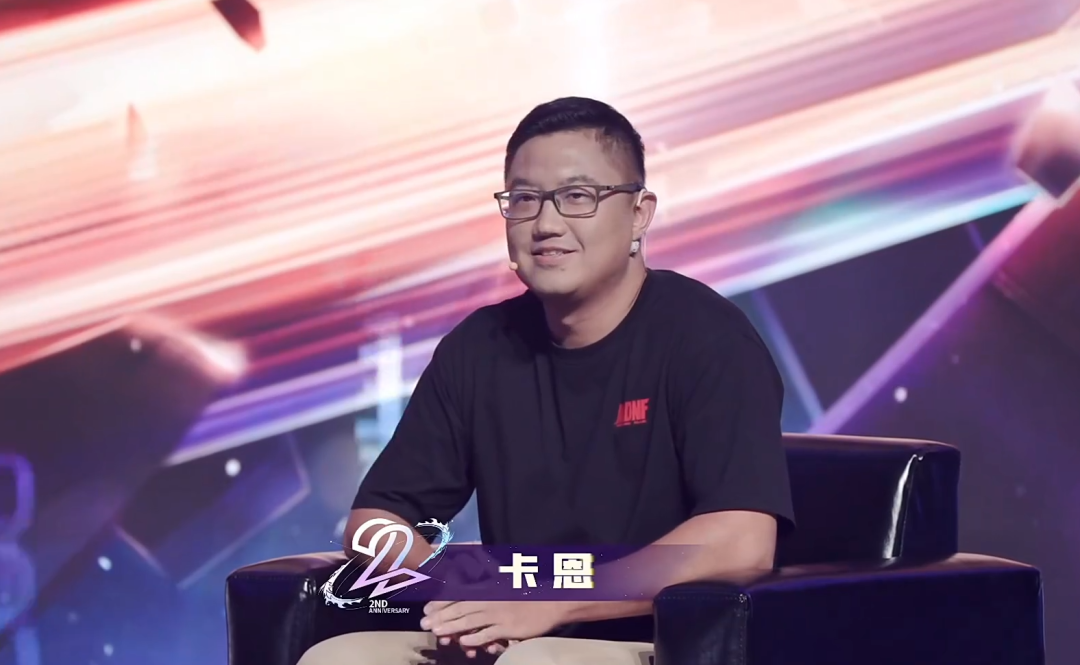
However, being on the right track doesn’t mean the issues can be resolved quickly; essentially, this is more like the ultimate challenge facing the genre. So, at the DNF Mobile 2nd Anniversary event, when Kahn took the stage once again, he didn’t rush to present a grand vision for DNF Mobile right off the bat. Instead, he sincerely acknowledged the shortcomings of the March update: insufficient gold, low farming rewards, difficulties in leveling up alt characters, and a lack of interactivity in dungeon grinding.and the economy system still needs improvement.
So much so that for the first 20 minutes of the press conference, he focused on just one thing: addressing pain points and solving problems.
In his view, these are not isolated issues, but rather the result of misalignments in both design and execution. Therefore, the upcoming version update in May is more of an ongoing effort to resolve and address these issues.

First, the most common concerns raised by players—the difficulty of upgrading stars and a shortage of gold—will be addressed in the DNF Mobile 2nd Anniversary update. The update will significantly increase the supply of gold and provide gold refunds to compensate players for their past investments. Additionally, the upcoming Black Dragon raid will offer players more equipment progression paths through raid weapons, Super Star Upgrades, and equipment fusion.
Second, regarding the issues of insufficient returns and high cultivation costs for secondary characters, Kahn offered a solution: secondary characters are not merely farm characters; many players also hope to fully experience the core gameplay and have the opportunity to provide additional cultivation resources for their main characters.With this in mind, the development team focused on two key areas: First, lowering the entry barrier—for example, the Magic Resistance requirement for the Black Dragon raid’s Normal mode has been significantly reduced, allowing alt characters to join raids and obtain more resources. Second, the new cultivation resource “Ore” obtained from the Timeless Realm can be directly listed on the “Point Voucher Marketplace,” where players can set their own prices and trade freely, further accelerating the circulation of in-game and real-world economies.
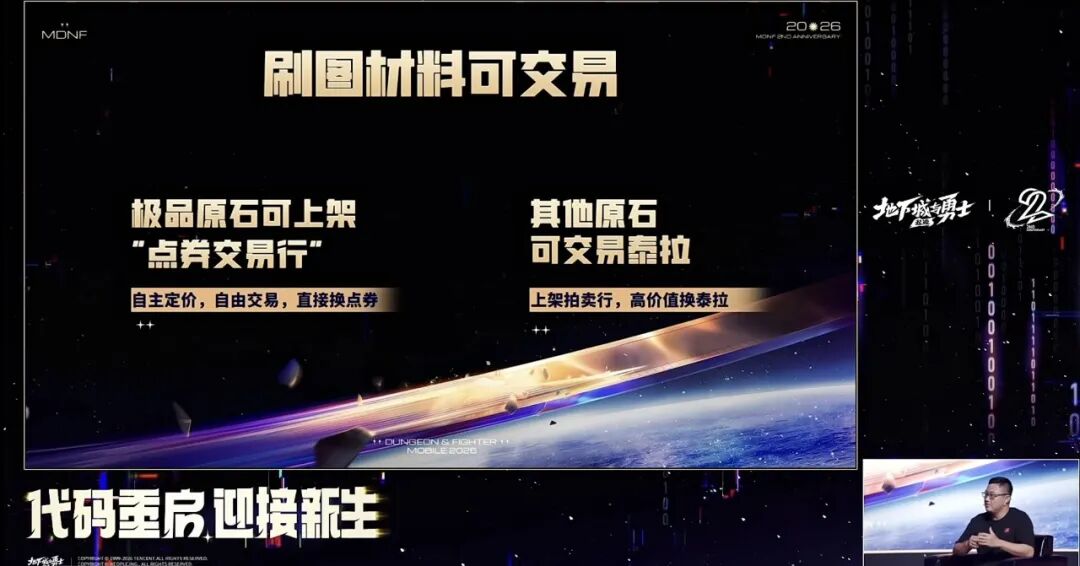
On the other hand, we’re expanding the range of scenarios where secondary characters can be used. For example, the upcoming “Character Swapping” feature will allow players to field three characters at once, switching between them to tackle different combat challenges. In addition, the development team will further optimize the progression options for players with multiple characters based on the release of new classes, efforts to reduce the burden of managing multiple characters, and players’ current progression status.
Grinding and looting have always been the lifeblood of DNF’s economic ecosystem, and players’ core expectation is that their efforts will yield tangible rewards. However, in Kahn’s view, this is more akin to a balance of supply and demand. The problem is that the current gameplay lacks variety and social interaction, so prices naturally cannot be sustained. Whales feel their purchases aren’t worth it, while casual players feel their returns are declining—inevitably, the entire economic system will collapse.
In the short term, the upcoming Black Dragon raid introduces a Heroic mode designed primarily for top-tier players to challenge themselves. With its increased difficulty and opportunities to showcase skills, it fully satisfies the competitive spirit of high-spending players. Additionally, all modes offer a chance to obtain pink cards, which will encourage more players to participate in auctions. The all-new 6-star raid weapons will also provide fresh motivation for character progression.
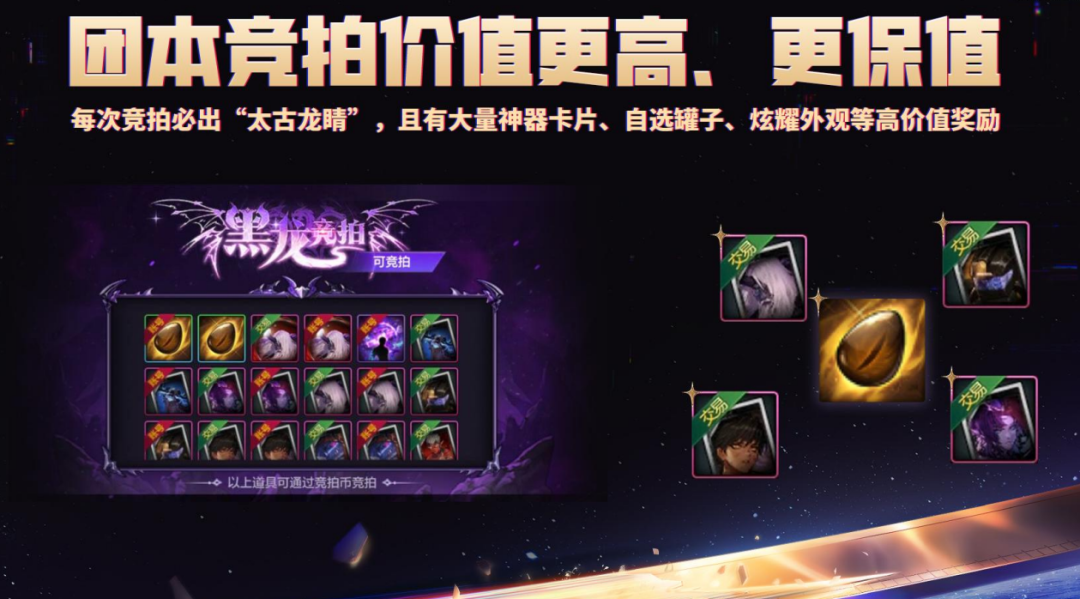
In the long run, the DNF mobile game will continue to introduce new gameplay features and gradually build out more social channels, making the game feel more rewarding for skilled players. Once the consumption mechanisms and in-game economy are fully established, the economic balance of the gold-farming system will naturally be sustainable.
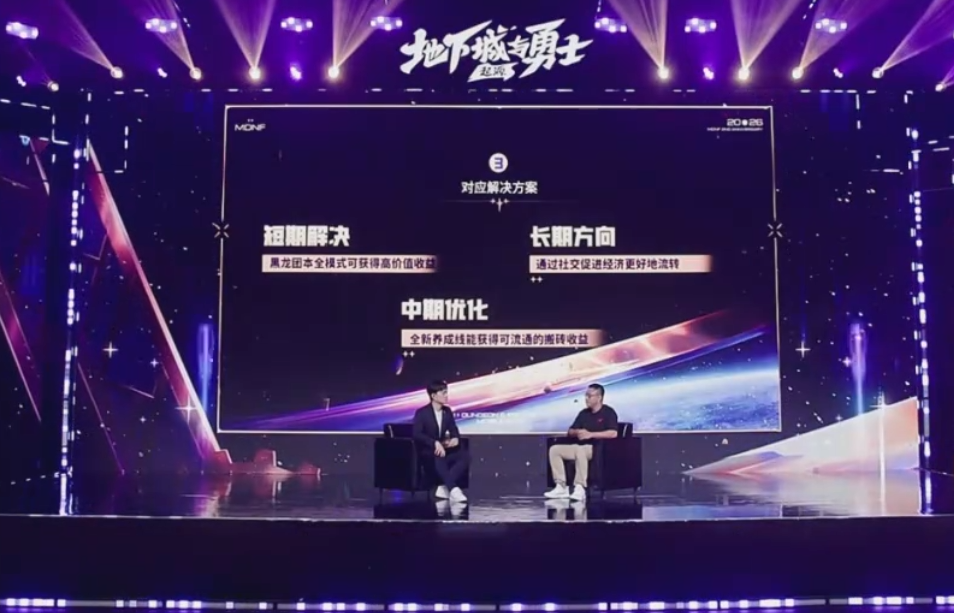
Finally, regarding the poor combat experience and the lack of interactivity—which currently feels like nothing more than mindless button-mashing—these issues will be specifically addressed in the May update. For example, in the Black Dragon raid, aside from the Phase 3 boss, monsters in Phases 1 and 2 can be controlled using grab skills in most situations. Similar adjustments have been made to the bosses in the Transcendence dungeon.At the same time, we will reduce the difficulty of weekly raids, Transcendence raids, and Dimension Invasion battles, and in the future, we will introduce more engaging combat mechanics in new game modes to avoid the awkward situation where players and bosses simply “fight each other without interacting.”

To be honest, this approach to addressing the issue may not be perfect, but it shifts the development team’s stance from “we’ll explain” to “we’ll fix it.” This sincere attitude is probably exactly what players want to see.
02
Attitude
Some people might wonder why DNF Mobile didn’t make such sweeping changes in the first two years, only to suddenly “come to its senses” now. When I met with Charlie, the “real-life” game designer, in person, he gave me some answers.
For the development team, innovating gameplay isn’t particularly difficult, but the challenge lies in the many hurdles that must be overcome before the changes can be implemented. The most pressing issue is whether the core player base of the DNF mobile game will accept these changes. To give a simple example, if a new gameplay mechanic like “Search, Attack, Retreat”—which has nothing to do with traditional DNF gameplay—were added to the mobile game, how would core players react?

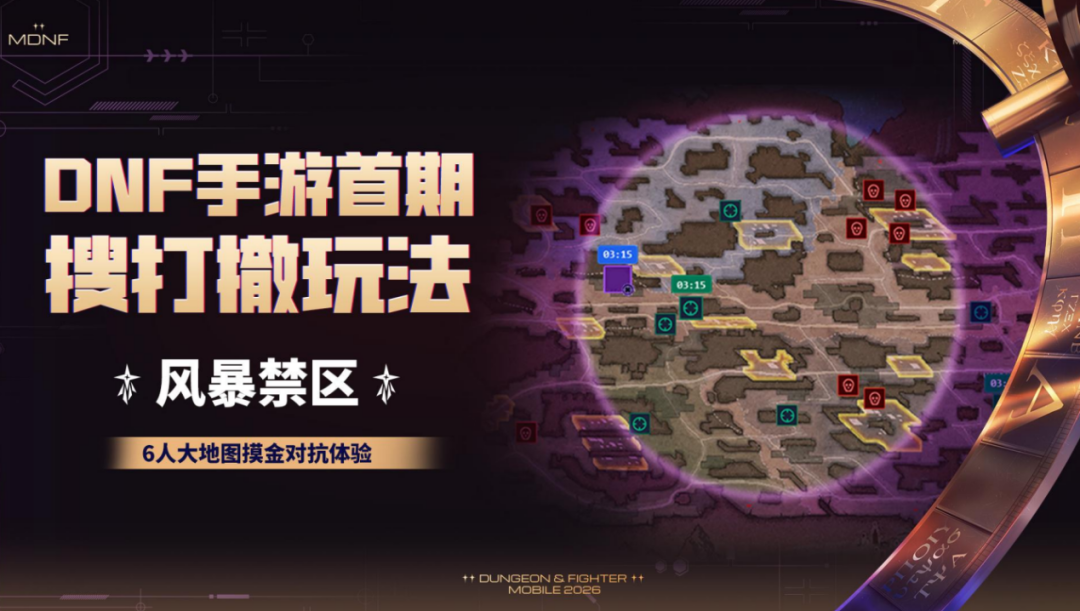
In addition, due to limitations in mobile device capabilities and engine technology, many gameplay features are extremely difficult to implement. The development team once faced this dilemma: for the “Search, Attack, Retreat” gameplay mechanic, should they create a single, comprehensive map, or piece together numerous rooms made up of individual tiles?
Finally, the question is whether these new gameplay elements align with DNF’s original style.Charlie was very candid with me, explaining that innovative gameplay doesn’t mean simply jumping on whatever trend is currently popular. For example, the thrill and randomness of treasure hunting in “Search, Fight, and Retreat” align with DNF’s core essence. The inspiration for the character-switching mechanic, on the other hand, comes from fighting games. In fact, during the design process, the development team focused heavily on character traits and skill functionality to ensure a satisfying blend of strategy and action.
Ultimately, the reason these gameplay mechanics work is rooted in the development team’s own experiences and insights as players.
“I want to clear up a common misconception: many players think that producers and designers don’t actually play games, and that they just pluck numbers out of thin air when designing gameplay. But in reality, we spend a significant portion of our time playing the game, reflecting on player feedback as we play, and discussing potential solutions.”

He gave me a concrete example: when the new Battle Mage class was first released, he felt that using the “Radiant Dragon Crescent Slash” on bosses didn’t cause any stun, so players and monsters were essentially “fighting on their own,” with no interaction and no sense of satisfying combat. As a result, “returning to action-oriented gameplay” became a central focus in subsequent updates.
However, some issues cannot be resolved with a single update. For example, players have been complaining about lag for quite some time. The development team made a round of optimizations back in March, but the results fell short of expectations. So, at this press conference, Kahn brought up the issue again and presented a solution. Even if it cannot be resolved immediately, the team will provide monthly updates on their progress.
“The DNF mobile players we met in person were really friendly. They all said they wanted to ‘give me a taste of my own medicine,’ but when we actually met, they just gave me a few light taps on the shoulder. So all we can do is keep addressing issues head-on and never shy away from them. We’ll just get things done first and deal with any problems as they come up.”

In his view, while resolving players’ issues is certainly important, it is even more important to first demonstrate a sincere and dedicated approach to the work.
03
Changes
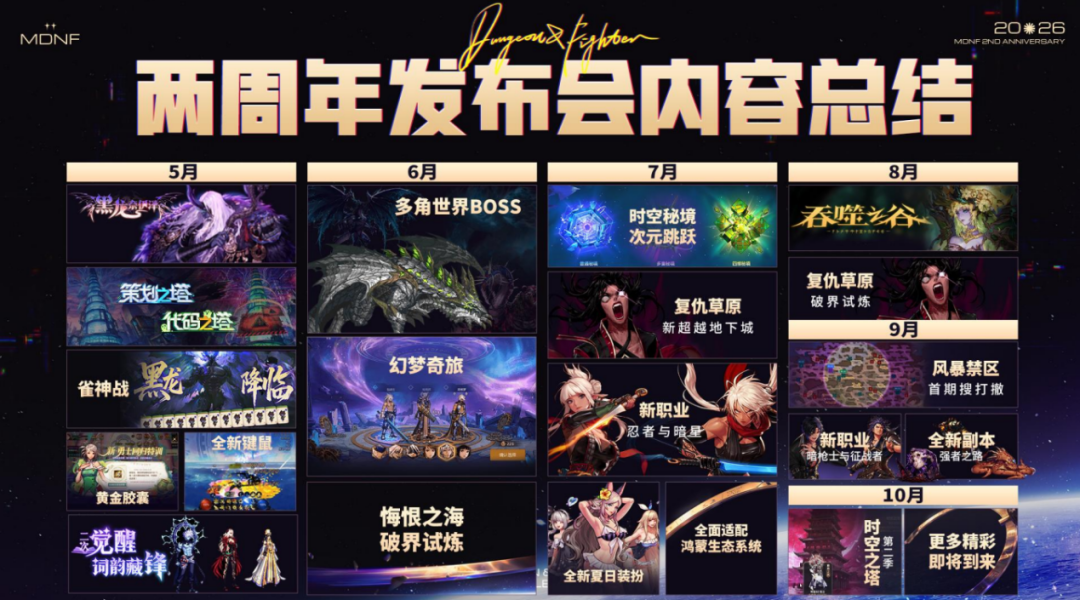
If the approach to resolving these issues demonstrated the developers’ sincerity, then the subsequent flood of content update plans has thoroughly solidified players’ long-term confidence. With a new gameplay feature launching nearly every month—alongside new classes and dungeons released simultaneously with the Korean server—DNF Mobile has achieved a “monthly update” content schedule for the first time.
In June, “Fantasy Journey” will introduce the “Roguelike” gameplay mode to *DNF Mobile* for the first time. Players will form teams of three to experience a day-and-night cycle. During the day, players can freely explore the open world, earning random powerful stats by defeating enemies and completing various event quests. At night, they must fend off waves of enemies and defend their home.
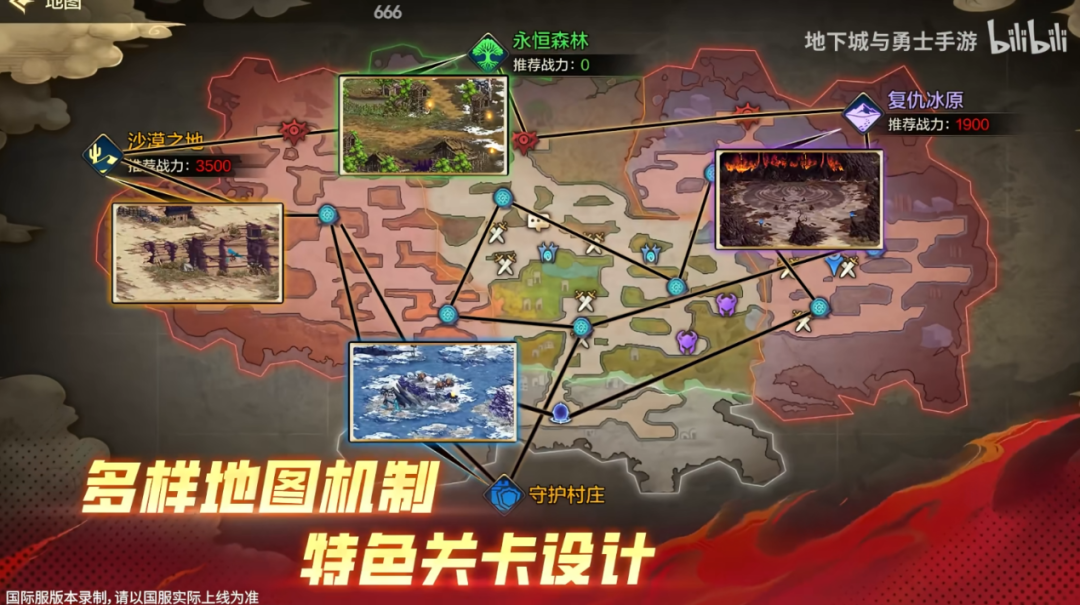
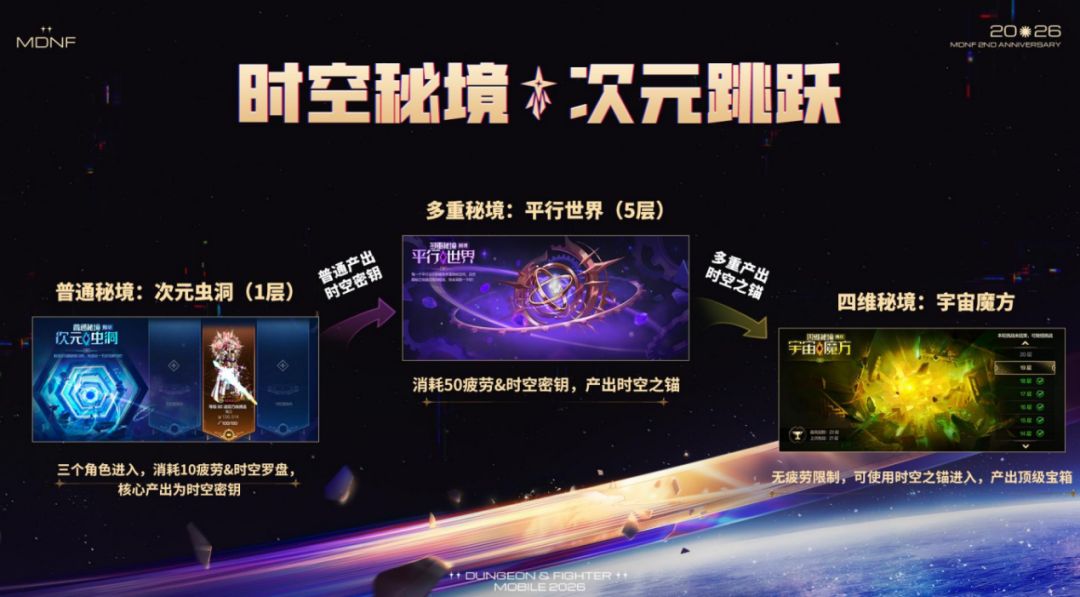
The July “Realm of Time and Space” offers a fresh tower-climbing experience with a greater sense of progression, randomness, and visual appeal. Multiple modes—including Normal, Multi-Dimensional, and 4D—will deliver entirely new experiences with distinct styles. Additionally, a “Star Core” cultivation system will be introduced to complement this gameplay. Players can enhance their account-wide stats by embedding, refining, and synthesizing the raw stones obtained.
In August, the Corner Legion introduced a brand-new team-swapping mechanic, allowing players to select three characters to tackle dungeons together.Unlike the support skills from the previous PC version, this new mechanic is more akin to the character switching found in fighting games. Players can not only freely control any character at will, but when switching characters, they also unleash that character’s unique abilities. For example, during a hands-on demo, I discovered that Hua Hua’s energy shield not only reduces damage but also allows the current character to continue attacking freely while it’s active—a sense of strategic satisfaction that was previously unheard of.
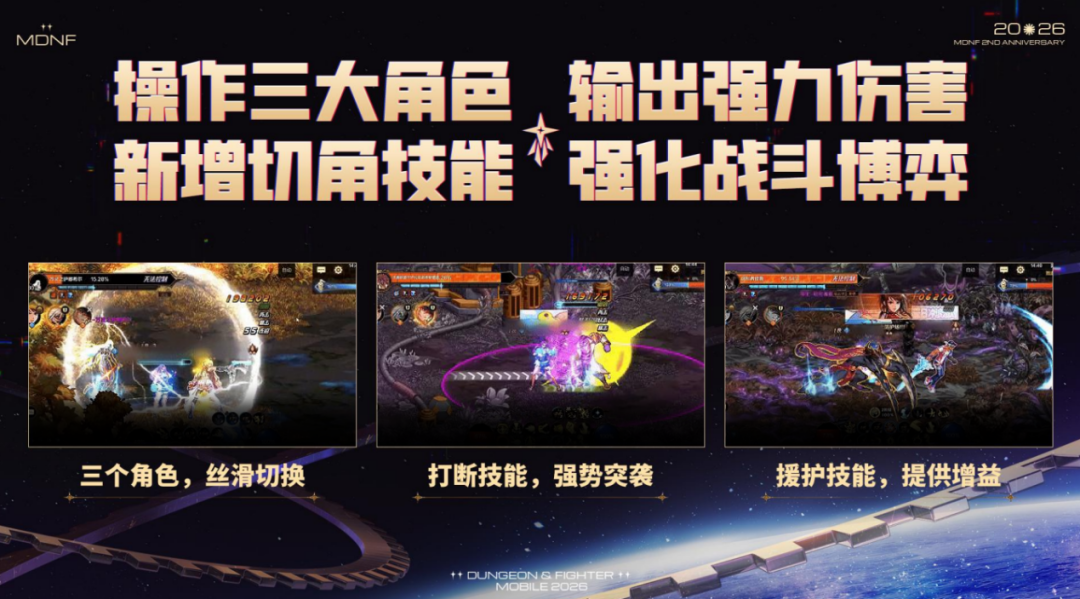
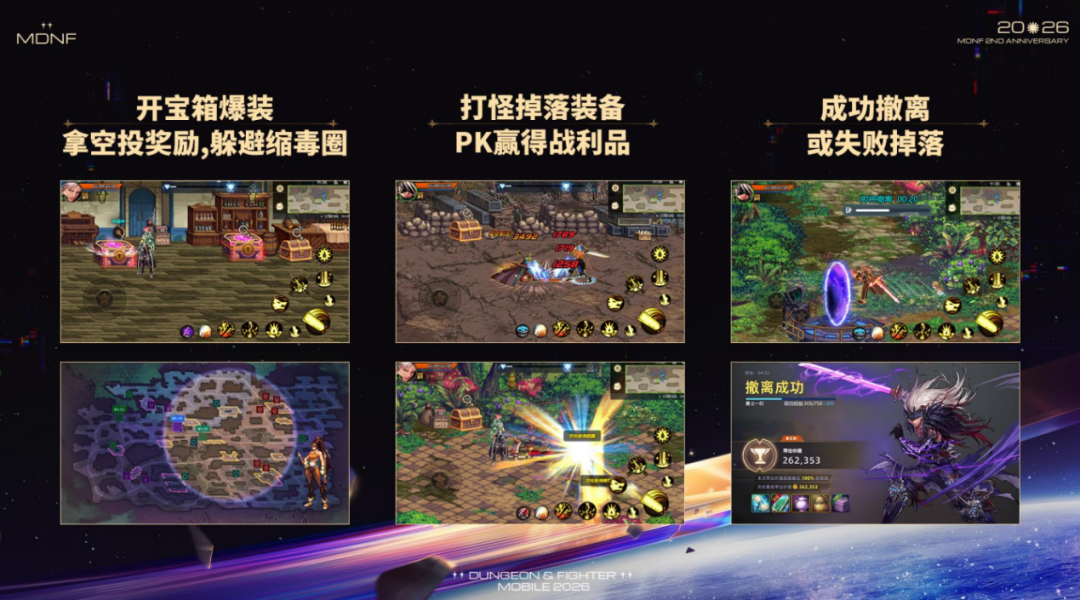
In September, “Storm Zone” in Search, Attack, and Retreat will introduce large-scale multiplayer gameplay on a single map—a crucial expansion of the game’s core mechanics. In October, Season 2 of the Tower of Time will also introduce updates to the core gameplay, enhancing the sense of honor for lords and optimizing the survival and tower-climbing challenge loop.
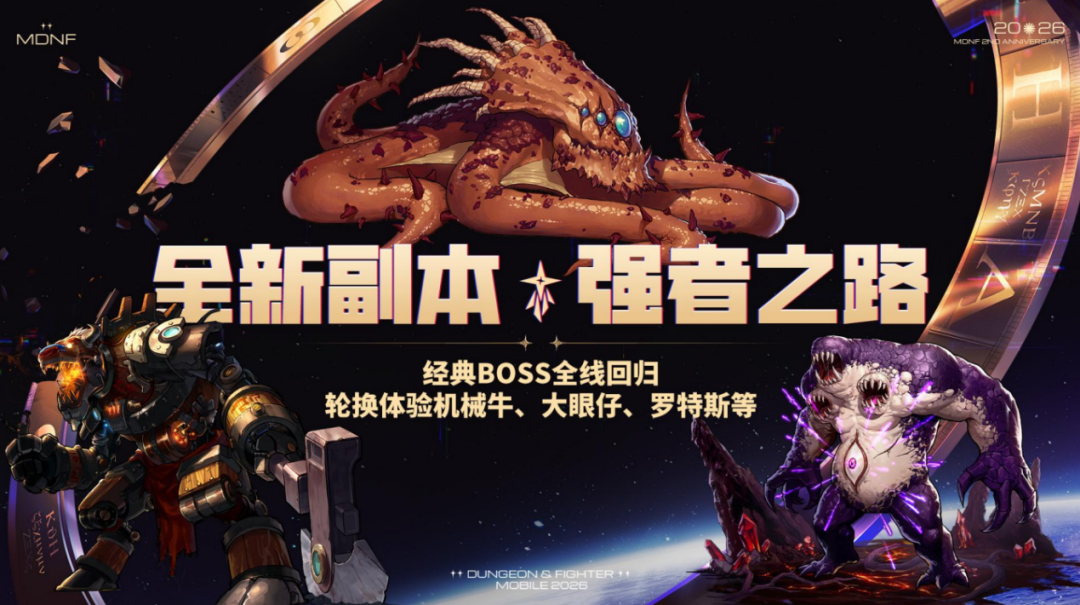
In addition, the “Path of the Strong” mode—which veteran players have been eagerly anticipating—will make a grand return with a major overhaul. Along with it will come a host of classic DNF bosses known for their relentless challenges, such as Big Eyes, the Mechanical Bull, and Rotus. Features like solo play, team-up modes, casual gameplay with friends, and leaderboards will revitalize the original thrill of these challenges, offering players a fresh experience steeped in nostalgia.
The upcoming release of a large volume of content addresses the past issues of insufficient production capacity and excessively long gaps between updates. However, from another perspective, the division of labor between the Korean and Chinese servers is becoming increasingly apparent.
Why is that? The Korean server’s content focuses on the “core elements”: new classes, new dungeons, and new raids—these form the backbone of DNF. Meanwhile, the Chinese server’s in-house, exclusive content has chosen a new direction: roguelike elements, multi-character switching, and “search-and-fight” mechanics. These all emphasize the fun and thrill of action gameplay, offering experiences that are virtually unparalleled within the traditional DNF framework.
In my view, this division of labor sends a very important signal: the Chinese server’s in-house development team is gaining more influence and is increasingly eager to explore new gameplay experiences beyond the traditional DNF framework.
Previously, the development team had stated that the Chinese version of the DNF mobile game would forge a new gameplay path through in-house content, proposing a gameplay framework described as “the main course takes center stage, the main dishes serve as supplements, and the side dishes offer experimentation.” Looking at it now, new raids, multi-class play, and Abyss farming are the main course; roguelike elements, search-and-destroy missions, and character-switching mechanics are the main dishes; and the Mahjong Battle is the side dish.
For the current DNF mobile game, the biggest concern isn’t a lack of content, but rather the “stagnation” caused by an experience that has remained largely unchanged over the past two years. The monthly content cycle developed in-house for the Chinese server is a direct response to this “stagnation.” By introducing a wealth of innovative content, the game aims to rekindle players’ enjoyment of action-packed gameplay and thereby rebuild their long-term trust.
Conclusion
In my view, the game’s return to the top two spots on the bestseller charts is no coincidence. What truly drove this surge wasn’t the release of two Sky Sets, but rather Producer Kahn’s attitude at the 2nd-anniversary event: he addressed past issues head-on with the utmost sincerity, clearly explaining to players what had been accomplished, what still needed improvement, and what was planned for the future.
Unlike our first-anniversary event, where we talked first and acted later, this time we did the exact opposite: we took action first, and then took the stage to discuss it.
Version 80 has been released, new classes have been added, the Co-op C update is complete, and the Black Dragon raid is available for testing—and only then did Kahn step forward to address the shortcomings, outline solutions, make commitments, and offer rewards. This isn’t just a change in the art of communication; it’s a shift in the logic of problem-solving.
That’s why, at the offline celebration held a day later, some players happily returned to the game thanks to the substantial monthly updates, while others regained their trust because they felt the developers were sincere. There were even some players who, still harboring doubts, went to confront the developers face-to-face.

“Bringing players onto the stage” and “stepping down from the podium” are, at their core, two interconnected actions designed to foster player relationships. The former elevates players from “recipients of notifications” to “invited evaluators,” while the latter transforms producers from anonymous online identities into “real” people who can be met face-to-face.Together, these two actions form a comprehensive mechanism for rebuilding trust—not through a single statement, a PowerPoint slide, or outright disregard and evasion, but through a closed loop that can be repeatedly verified: I create—you verify—and if there are issues, we make adjustments.
Whether this system can remain viable in the long run may be the real test that *DNF Mobile* faces after its second anniversary, but judging by both the game’s current performance and the overwhelming enthusiasm of players at the offline celebration, it seems they’ve at least chosen the right direction.
原创文章,作者:gallonwang,禁止转载:https://youxichaguan.com/en/archives/197524