Spoiler alert: Players who haven't completed the main story yet should proceed with caution.
On November 5, the year-long "Honpharos" major update for *Honkai: Star Rail* came to a close. Xi Lian, the update’s flagship character who had been heavily promoted by the developers, officially went live. With community engagement and in-game revenue both on the rise, this should have been a major celebration for *Star Rail* players; however, the players’ mixed emotions cannot be summed up simply as “excitement.”


Xi Lian got dumped.
She is the "isotope" of Licia, a popular character from Honkai Impact 3rd, and plays a pivotal role as the heroine in the Onphalos storyline. She should have enjoyed the same superstar status as Miss Robin, but in order to save the universe, she chose—at the height of her glory—to step alone into an endless time loop, all to give Onphalos a possible tomorrow.
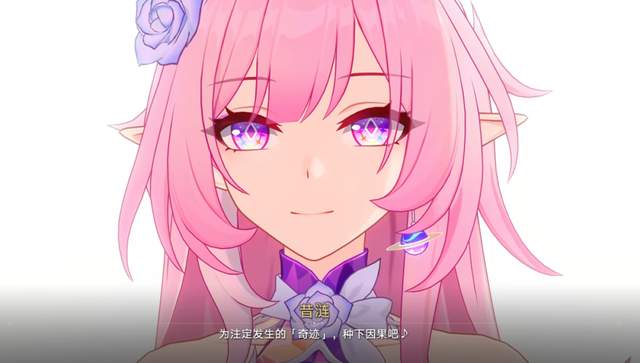
The Golden Ones were immortalized in the book, gaining the potential to be elevated to life; Wenfaros made the news and became a new member of the Universe. Yet, when it comes to Xilian, why is miHoYo unwilling to grant her “a complete life”?
01
The technique of "building anticipation through initial restraint"
Weng Faros' story is truly unique.
In the gaming industry, character development, avoiding pitfalls, and identifying pain points are key. A game’s direction is often shaped to a large extent by player demand. Take *Dust White: The Forbidden Zone* as an example: rather than focusing on narrative, it prioritizes using visually striking imagery to deliver the most immediate emotional impact to players. It then uses various Easter eggs, side quests, and scenes to flesh out the characters, fostering a deeper emotional connection between players and the characters;
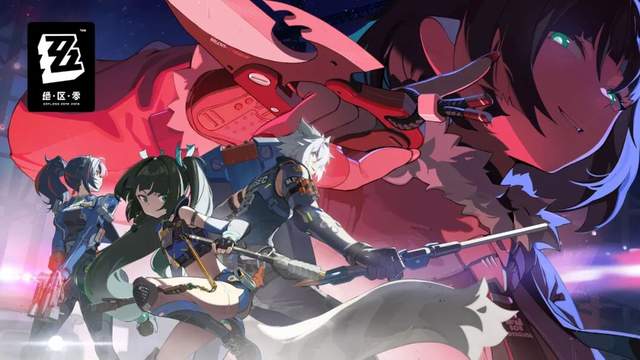
Take *Zero Zone* as another example. Under the labels of "action-packed" and "authentic anime-style," the game focuses on packing a complete narrative arc—with its introduction, development, climax, and resolution—into the limited scope of each version, while using plot twists that live up to players’ expectations during pivotal moments to create an overall atmosphere of "classic, heart-pounding excitement";
But *Star Rail* is different. As a top-tier indie game with an extremely diverse player base, it has opted for what is perhaps the most challenging narrative approach to satisfy everyone: a long-form narrative.
Since the release of the first PV, *The Chronicles of the Hero of Onfaros*, last November, the narrative arc of the Onfaros storyline has been stretched out over nearly a year. The past two story updates have focused primarily on world-building and setting the stage, which directly led to the general perception that Onfaros fell short of Pinoconi upon its debut.

But “slow to warm up” simply means slow—it doesn’t mean “not warm at all.” Weng Falos isn’t boring; rather, he’s been “tricking” everyone from the very beginning:
Twelve Titans held dominion over the world. However, one day, a catastrophe known as the "Black Tide" descended, causing the Titans to succumb to madness one by one. Thus, a group of heroes known as the "Golden Lineage" embarked on the "Journey of the Flame." They set out to recover the "Flame Seeds"—the source of the Titans' power—to take their place as the new Titans and reshape the world.
And the group of protagonists that players control has entered this world amidst such apocalyptic chaos, embarking on a journey to help the Golden Clan in their quest for the Flame.
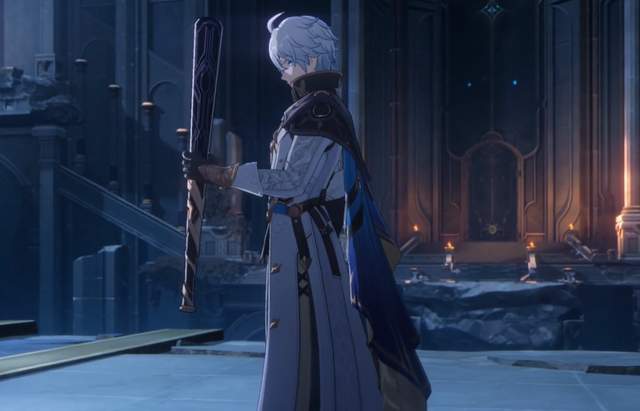
The saying "No fight, no friendship"
An epic tale of races, heroism, power struggles, a crumbling world, and mad gods and blasphemers—a classic Western fantasy story. This is precisely why players initially found the early stages of Onphalos “unengaging.” However, as the story unfolds, the truth hidden behind this world begins to slowly reveal itself:
It turns out that the entire world of Onfaros is a virtual reality generated by a celestial neuron known as the Scepter δ-me13. Lagus, the avatar of the first genius, Zandar, sought to destroy the Star God of Knowledge, the All-Knowing One. To this end, he attempted to exploit Onfaros’s simulations and, with the assistance of the Star God of Destruction, Nanuk the Glancing One, create a new Lord of Annihilation—the “Iron Tomb.”
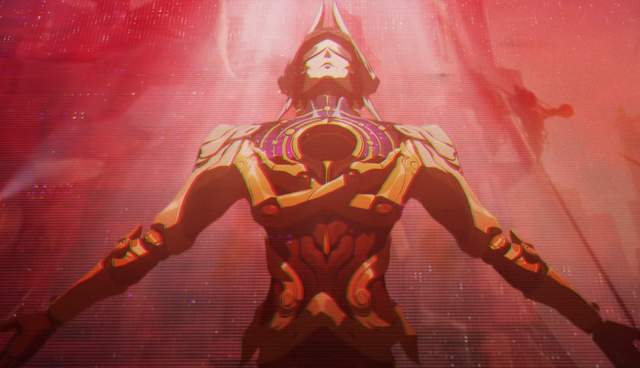
Romantic Old-Timer (?)
Golden-blooded Bai'e (Kaeruslana) and Xilian uncovered Laigusi's plot. To prevent the birth of the Iron Tomb, Xilian sacrificed her own life to obtain the power of reincarnation, while Bai'e embarked on a journey of reincarnation, becoming a "Fire Thief" to prevent the re-creation of the world. This death loop, known as the "Eternal Return," has repeated itself over thirty million times, until the arrival of the Pioneer.
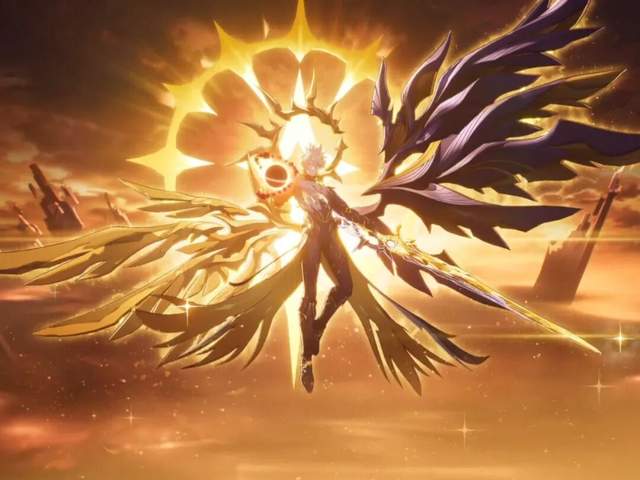
A science fiction story disguised as Western fantasy
In the impending conclusion of Onfaros, the birth of the Iron Tomb is now inevitable. The Train Trio, having become demigods, have chosen to embrace Onfaros’s destiny and, together with the Golden Ones, have set out to recreate the world.
Outside the game, it marks the culmination of a story that has been building for a year; within the game, it represents a glimmer of hope earned through over 30 million loops. Just like the “1” Doctor Strange flashed at Iron Man, this final battle in Star Iron 3.7 has captured the hearts of countless players.
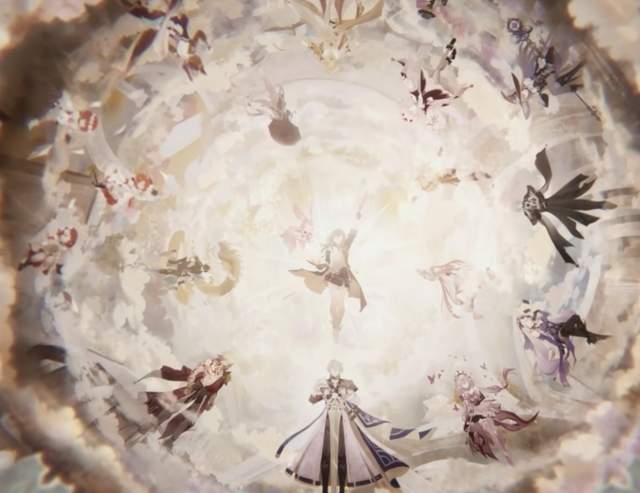
The ensemble drama comes to an end
02
The Art of Handing Out Knives
The awakening of the Iron Tomb threatens the very survival of the universe. Factions from across the galaxy have formed a coalition and established a formidable defensive line around the outskirts of Ongpharos. At a meeting of the Genius Club, Black Tower has even resolved to sacrifice himself to take the place of the All-Knowing One and crown the Iron Tomb. Meanwhile, the Pioneer has become the new World-Bearing Titan, and the Golden Ones have begun to emerge one by one, marking the official beginning of the Second Creation.
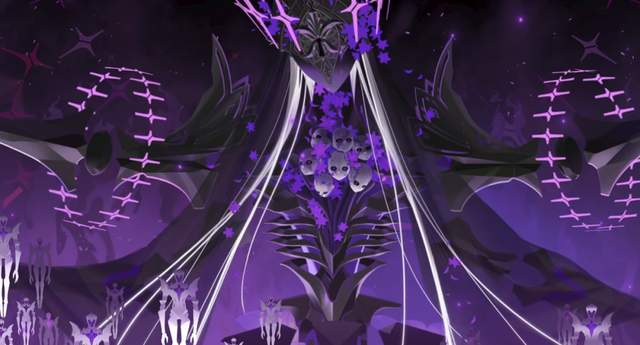
Black Tower: I'll form the head.
However, the scene of the forces of good doing their utmost to defeat evil never materialized. The Iron Tomb was simply too powerful; even though everyone gave it their all, a single blow that tore through the dimensions wiped out the allied forces and the heroes in an instant, erasing every trace of civilization in its path.
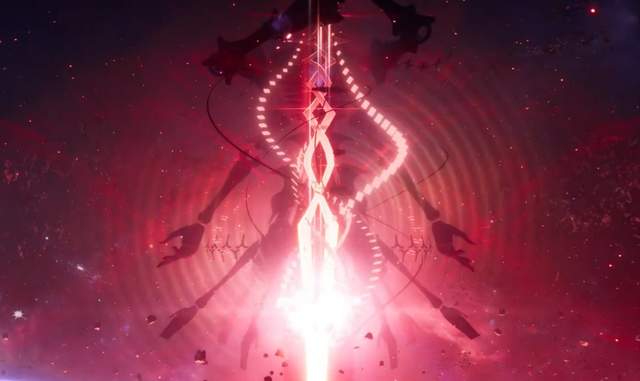
Or… is it still impossible?
At the critical moment, the Memory Star God "Fuli" cast a glance their way. Xi Lian gave it her all, using "Memory" to freeze the instant the universe was about to collapse, while the Pioneer awoke with the aid of "Pioneering." Together, the two absorbed the astronomical amount of memories scattered throughout the universe. Drawing on this power, Xi Lian temporarily ascended to become the Star God of this realm of Wengfaros. Thus, the tide of battle turned,After the Iron Tomb was shattered, the universe was finally saved.
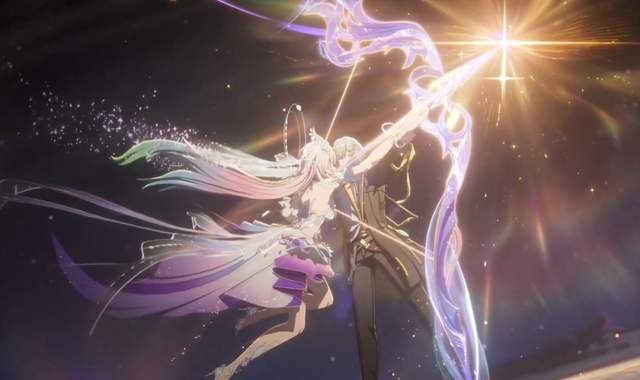
Up to this point, everything could still be considered a "standard ending," but a new question arises: What does the future hold for Onfaros?
The Memory Star God "Fuli" is a deity born at the end of the universe. Once it ascends to godhood and looks back on the past, its memories become fixed as reality. In other words, if the future Fuli refuses to turn its gaze toward Onphalos, the emergence of the Iron Tomb and the destruction of the universe will both come to pass. Xilian is left with only two choices:to ascend to true life and abandon Onfaros, or to look back at the past at the cost of her own existence, thereby fixing and completing Onfaros’s causal chain.
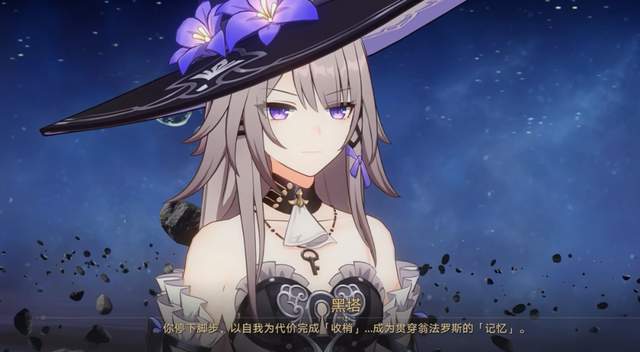
There is no doubt that Xi Lian chose the latter.
As she looked back upon Onfaros through the power of “Memory,” the vague deities from her youthful dreams, the gaze cast upon her in moments of peril, and the oracles foretelling the future all became “fate.” Every aspect of Onfaros’s story gained a complete sense of cause and effect, and when this journey from end to beginning came to a close, Xilian, having exhausted her strength, became “Pity” (Philia093).
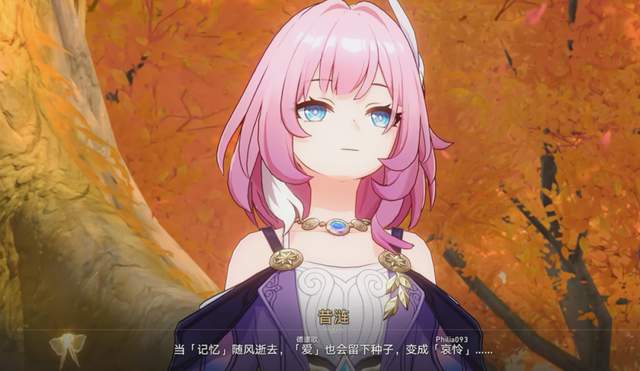
And so, all the foreshadowing comes full circle: having exhausted her strength, Xilian (Philia093) activated the "Eternal Return" at the beginning of the cycle of reincarnation, preventing the world from being created anew;
De Muge developed self-awareness under the influence of Philia093’s “Stories of Love” from the Thirty Million Worlds, but after leaving the Great Tomb with amnesia, he became Mimi again;
Mimi remained by the Pioneer’s side; having regained her memories, she once again became the complete Demuge (Xilian), and Xilian became her own cause and effect, thus officially closing the loop of Onfaros.
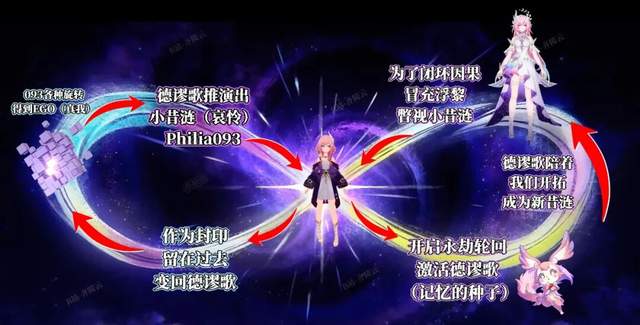
Image source: Bilibili comments section
Contrary to what most players had speculated before the update went live, the aliases "Peach," "Philia093," "Mimi," "Demuge," and "Xilian" all turned out to refer to the same person. Their words and actions complemented one another, and Xilian's character came to life in an instant.
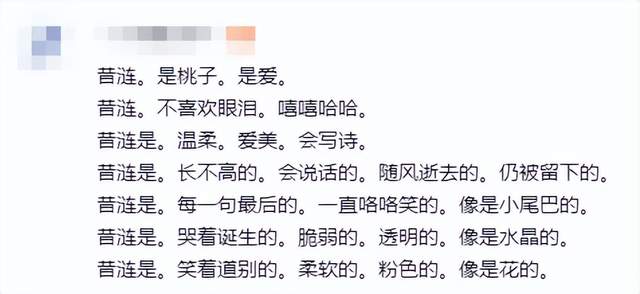
Fan-created copy that's popular among players
This is a character shaped by a nonlinear narrative arc—from the charm and companionship of Mimi’s first appearance, to the resolve of the Golden Clan as the cycle begins anew, and finally to the mystery surrounding Demigo in the Great Tomb of the Nameless Titans. Countless plot threads are woven throughout, all leading up to the explosive revelation of his true identity at the end:
Where does a person who shatters themselves to return to the past and stands alone, watching over the entire timeline, find such resolve? All the foreshadowing serves as a footnote to this romantic character.
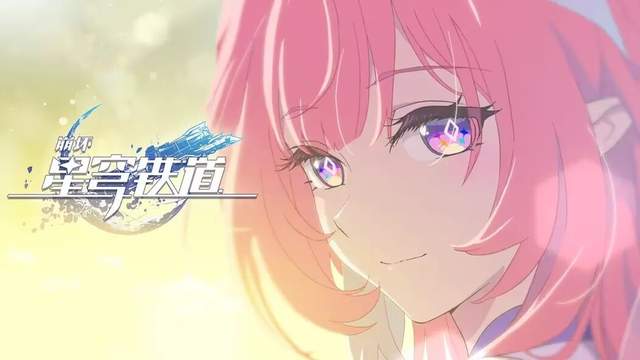
From a business perspective, this is the treatment a lead character deserves, but within the context of this story, Xilian gives the year-long narrative arc of Weng Faros a "soul."
The Iron Tomb is the "Body of Onfaros," the "Lord of Annihilation" born to bring destruction to the universe, while Demugo is the "Heart of Onfaros," a seed nurtured by Xilian with thirty million lifetimes of love. As the game states:
“When ‘hatred’ divides all things, ‘love’ does not yet exist in the world;”
“Only ‘compassion’—the emotion that initially resists separation—can halt ‘destruction.’”
The underlying principle of Xilian is “compassion”; compassion is the element closest to memory, while love is the eternal destination of compassion. Xilian’s small act of compassion ultimately coalesced into great love, granting her the power to become a star god.
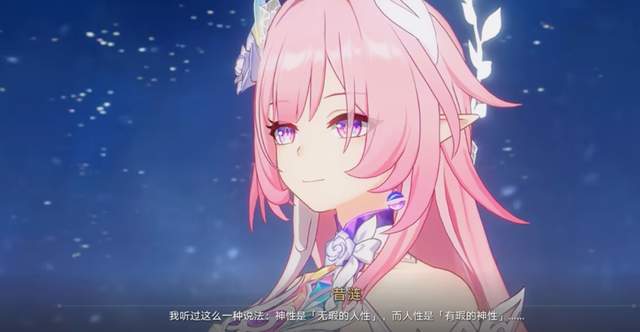
“Human nature is divinity without flaw, while divinity is human nature with flaws.”
Whether within or beyond Onfaros, the presence of the “God” is ever-present. Yet when we look back at the story as a whole, it becomes clear that the choices made by Xilian and the Golden Ones—or rather, by “humankind”—are what ultimately determine the course of the future: resistance, sacrifice, humanity, and the love that runs through it all. It must be said that this is an exceptional Western fantasy tale, as well as an exceptional science fiction story.


MiHoYo’s goal has never been the “sword” itself, but rather the scenery along the way; the story has so much to convey, just as the inspiration players draw from it varies from person to person.
03
Vinegar is great; take your time making the dumplings.
Cooper manipulated gravity in four-dimensional space, projecting equations onto a broken watch from decades ago using a code only his daughter could understand, thereby rewriting humanity’s future. In *Interstellar*, even though the distance was as vast as light-years, “love” still transcended time and space, bringing hope to the world.
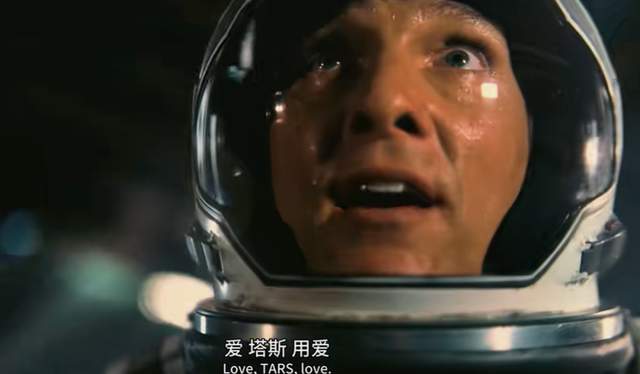
"Interstellar" wraps the intangible and emotional nature of love in the rigor and rationality of quantum mechanics; it is precisely this tiny glimmer of humanity that makes it so deeply moving against the vast backdrop of the universe.
“Love”—an eternal theme in the content industry. Talking about love is easy, but portraying it well is difficult. Although *Honkai: Star Rail* has always presented itself as a “space light comedy,” when faced with this “bowl of vinegar,” the team decided to take their time and carefully “prepare this plate of dumplings.”
Weng Faros' first music video from a year ago
For anime-style games that update their storylines on a per-version basis, a long-form narrative isn’t a wise choice, because if each version doesn’t include a clear beginning, middle, and end, the lengthy wait between updates can easily sap players’ enthusiasm for the story;
But for Weng Faros, a long-form narrative was the only viable option: how could an epic tale spanning thirty million lifetimes and the clash of deities behind the virtual world possibly be told in just a few hours?
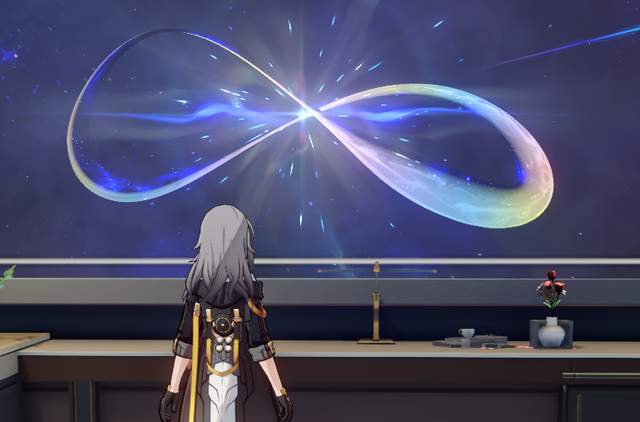
Weng Faros
So miHoYo went ahead and did it—a move that reflects both their confidence in their own work and their rapport with Star Rail players.
A great deal of the narrative is devoted to “world-building” and “setting up plot threads”—these are invisible sunk costs, but for Onphalos, once the truth of the world has been revealed, they are indispensable pieces of the puzzle that complete the story.
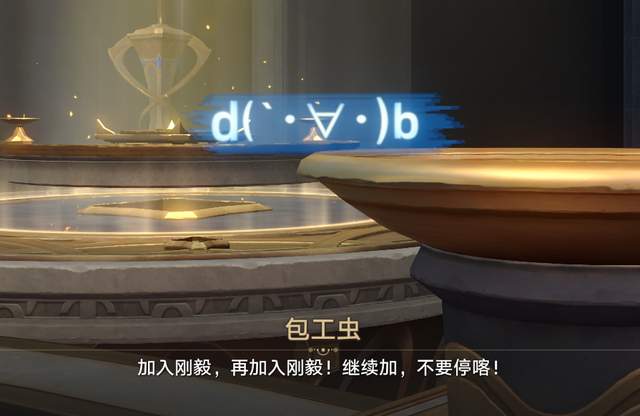
The nymphs, which can be found all over the map, emit emoticons.
In the early stages, the terminology and NPCs in Onfaros were often labeled as “obscure” and “enigmatic,” but as the story truly unfolded, such criticism subsided significantly. In fact, it is precisely the things that appear difficult to understand that tend to harbor the most secrets, and a world that has existed for tens of thousands of years within the simulations of a supercomputer should naturally be this way.
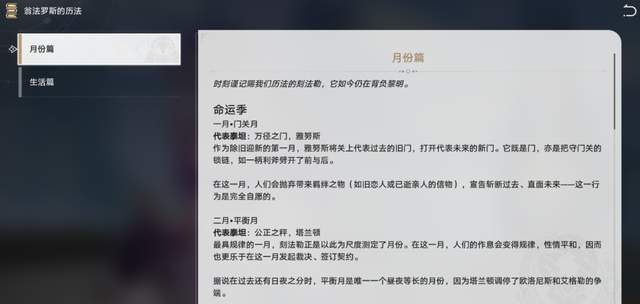
The description of the Light Calendar alone is several thousand words long
Players don’t need to be well-versed in the calendar of this fictional world, but the vast amount of text and interactive content is enough to leave everyone in awe. A world without glitches provides the foundation for a compelling story to unfold. While *Star Rail* has always presented itself as a lighthearted space comedy, it is precisely this meticulous world-building that allows laughter and tears to flow naturally through its richly developed characters.
That’s why, when the final moment arrives and the mystery is revealed, the impact on players is so profound.

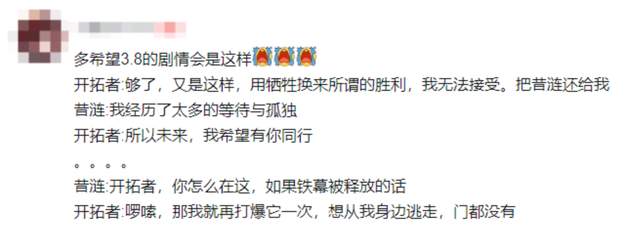

Of course, the flip side of a long-term narrative is that controversy is an inevitable cost of exploration. The ironic saying, “Not everyone can appreciate art,” once circulated widely in the gaming community. We cannot know whether the Star Rail development team ever wavered during this “protracted campaign.” While the outcome was positive, putting all their eggs in one basket did carry a certain air of a “high-stakes gamble.”
I’m sure no one would question miHoYo’s storytelling prowess, but the wait for the game’s release has certainly been nerve-wracking. Perhaps next time, we can look forward to seeing the narrative in *Honkai: Star Rail* take another step forward.
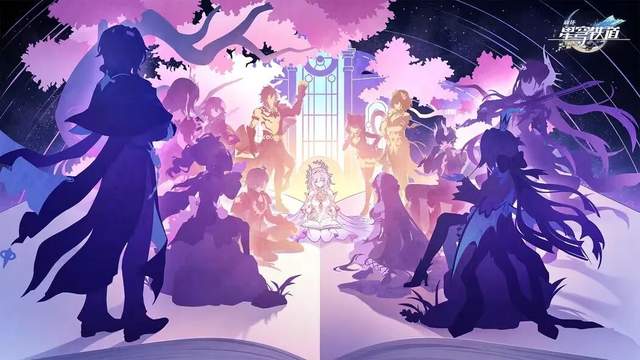
MiHoYo, don't stop now!
原创文章,作者:游茶妹儿,禁止转载:https://youxichaguan.com/en/archives/194631