On November 18, Tencent released its third-quarter financial results, reporting total quarterly revenue of 207.336 billion yuan, an 8% increase year-over-year. Total revenue from the gaming business reached 66.5 billion yuan, up 5% year-over-year, with *Valorant: Source Operation* and *Operation Delta* both setting new records for daily active accounts.
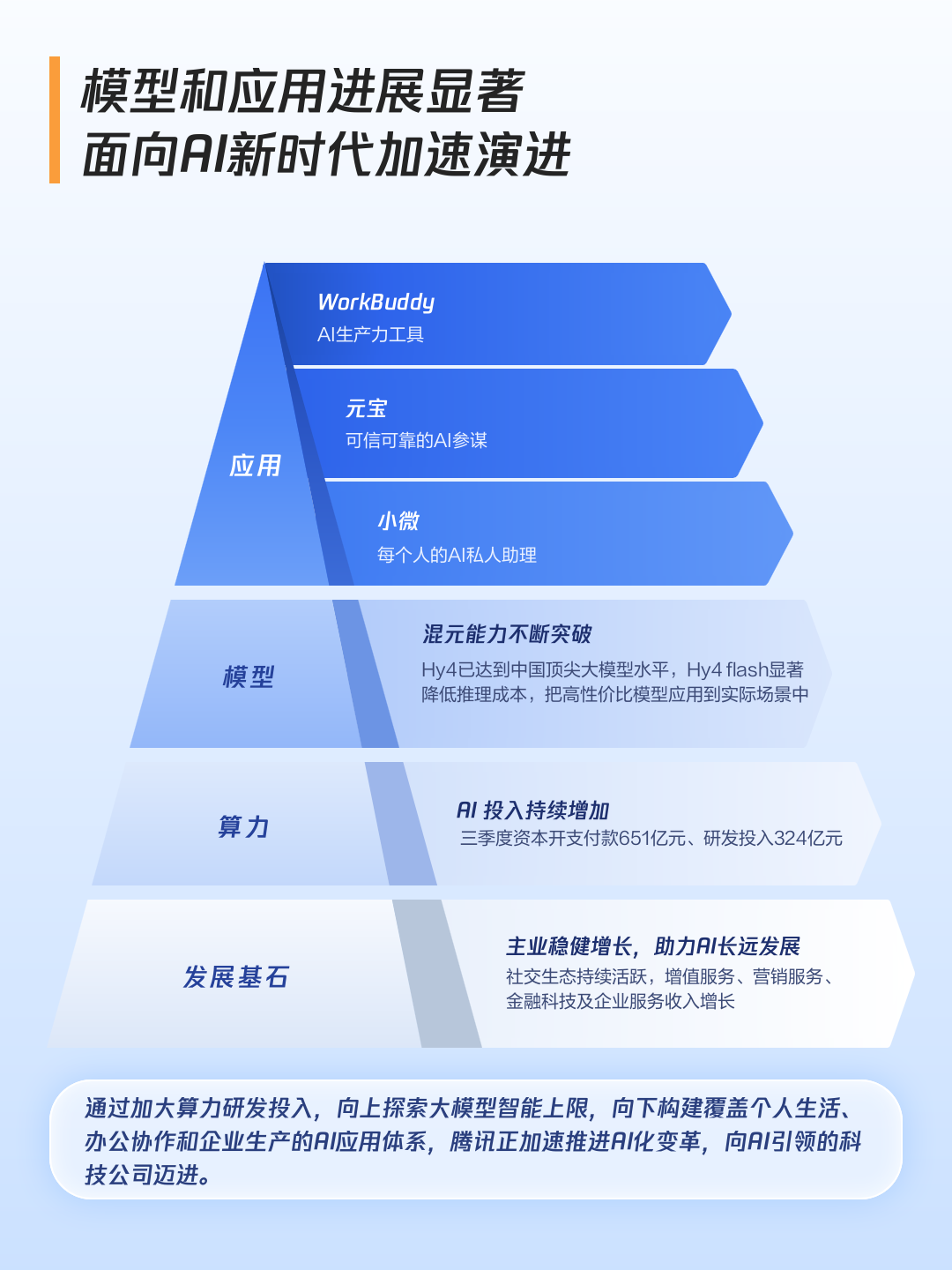
In terms of data, Changqing Games has maintained a steady growth trajectory. However, AI took center stage in this quarter’s earnings report: the Hy4 model has joined the top tier in China, WorkBuddy has rapidly become a hit with 10 million daily active users, and the company has allocated more than 86 billion in advance payments to purchase computing power,echoing the stern remarks made by Tencent’s executive leadership regarding the AI wave during the company’s recent 28th anniversary celebration: “The wave is already upon us.”
No one can remain unaffected by this wave of AI, and the gaming industry is no exception. What particularly caught our attention is that, although gaming AI was not mentioned in the financial reports, the comments regarding gaming and AI made during the earnings conference calls shed some light on the challenges currently facing the gaming industry and gaming AI.
For example, James Mitchell, Tencent’s Chief Strategy Officer, noted that “the pace of innovation in the gaming industry has slowed” when discussing the challenges facing the gaming industry. Executives also spoke openly about the controversies surrounding game AI, such as AI-driven decompilation and the resulting proliferation of plagiarized games.
Following Tencent’s earnings report, NetEase CEO Ding Lei also admitted during the earnings conference call, “AI currently addresses efficiency issues, but its contribution to creativity isn’t as significant as people imagine.””Epic Games CEO Tim Sweeney, during his visit to China in October, declared that “companies that neither invest in nor resist AI will be left behind by the times,”yet in the latest industry survey organized by the Game Developers Conference (GDC) this year—which covered 69 countries—only 40% of game developers reported using generative AI in their work, while 55% of industry professionals held a negative view of AI. With such conflicting perspectives, AI finds itself caught in a paradox.
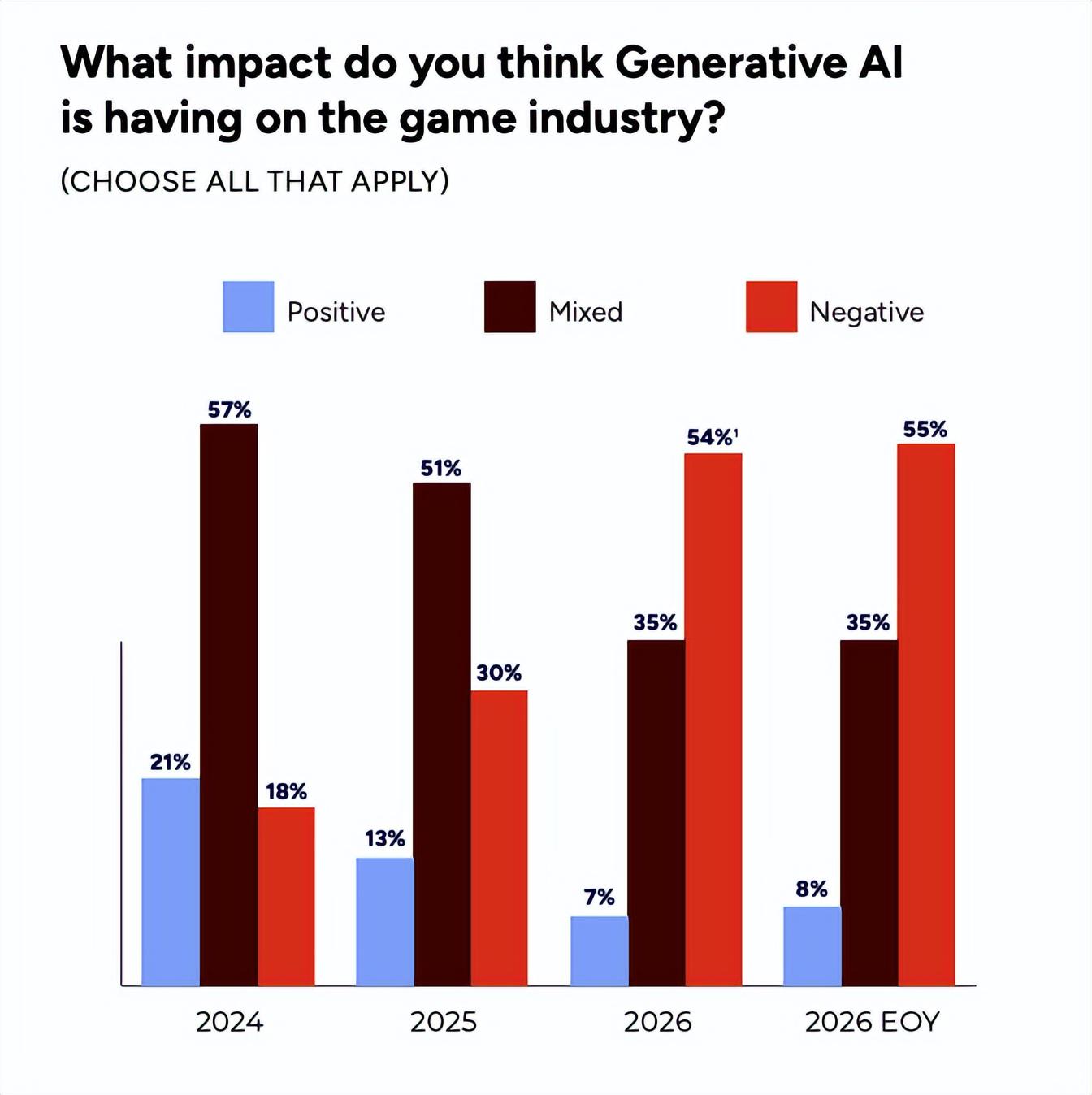
GDC 2026 Annual Report,
Game developers’ negative sentiment toward generative AI has reached an all-time high
Over the past two years, the gaming industry has been among the most enthusiastic adopters of AI. Yet while AI-native apps like WorkBuddy have surged at a rate of tens of times their previous growth, and entertainment formats such as short videos have skyrocketed in the wake of AI, a truly compelling, native AI game that redefines the genre and delivers a disruptive experience has yet to emerge.Gaming has always been a key industry driving cutting-edge technologies such as chips, graphics, and virtual reality. Why does it seem to be lagging behind in this current cycle?
The AI wave is sweeping over one peak after another, and the gaming industry has reached a point where it must address these questions.
01
Bottlenecks in the Native Experience and Breakthroughs Amid the Cracks
Back around 2023, large language models emerged just as the gaming industry was facing a crisis: the traditional AAA paradigm was gradually being crushed by high costs, and mobile gaming, after a period of rapid growth, was also nearing its peak. At the time, AI was seen as a silver bullet to rescue the industry. Three years have passed, and the gaming industry has yet to reach a turning point.
“Innovative experience” is a key term.Unity CEO Matthew Bromberg stated earlier this year that the industry has been focused on optimizing established gameplay mechanics and monetization models in recent years, leading to homogenized experiences and causing top-tier blockbusters to lose touch with players. Players are unable to directly benefit from cost reductions in development; instead, they are left with increasingly uninteresting gaming experiences—this is the real crux of the AI controversy.
Tencent President Liu Chiping even put it more bluntly during this earnings call: “The gaming industry isn’t short on games; simply increasing supply (based on AI) won’t help change the dynamics of the industry—namely, how games are distributed and how to attract large numbers of players.”
When we focus on products like WorkBuddy—the secret to their exponential growth in the AI era lies not only in improved efficiency, but also in how they’ve redefined the creation of a spreadsheet or a poster using Harness’s capabilities, bringing a brand-new, native AI-era workflow to people’s daily work scenarios.
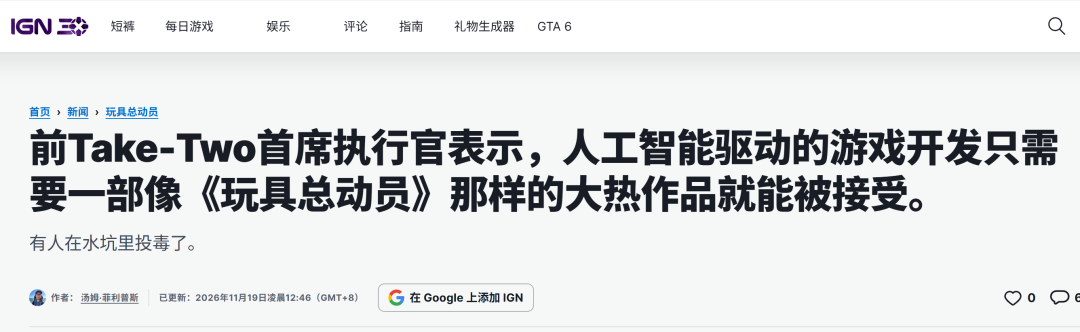
However, in the gaming industry, this kind of native experience—one that can truly revolutionize the core gaming experience and help the industry attract and nurture a new generation of users—has yet to emerge. Ben Feder, former CEO of Take-Two, once used a very apt analogy: AI games are missing a “Toy Story moment.”
These phenomena and shared insights naturally lead to one conclusion: the lack of a truly authentic gaming experience is the biggest bottleneck currently preventing the gaming industry from making further strides in the AI era.
The other side of the coin is that this gap also reflects the underlying creative principles. We’ve seen many ambitious games that challenged AI-native gameplay emerge—only to vanish in the tide of the market.The composition of a gaming experience is extremely complex—it is a comprehensive integration of graphics, rules, input, sound, and other elements. This means that innovative experiences designed to reshape players’ perceptions must be holistic solutions that integrate multiple aspects, making them inherently more challenging to achieve than single-point technological innovations.
This is another insight that Teahouse wants to share: the emergence of an AI-native gaming experience is bound to be a long-term endeavor.We cannot expect new gameplay mechanics to “fall from the sky”; new paradigms need to gradually take shape over a longer timeframe, relying on continuous iteration. This is also a decisive difference between the gaming industry and the internet industry, and one of the core reasons why the gaming industry appears to be moving more “slowly” in this technology cycle.
As Tencent Senior Vice President Ma Xiaoyi explained in greater detail last year, he believes that the emergence of AI-native gameplay is primarily hindered at the engineering level—specifically, by the limitations of large language models.Secondly, it requires organic emergence: “Native AI gameplay isn’t something a genius comes up with in an office; it must be developed through daily use by thousands upon thousands of people.” He also mentioned that within Tencent Games, the company is encouraging all teams—whether in-house development, publishing, or investment subsidiaries—to experiment with AI every day, seeking to foster the emergence of new AI gameplay.
Perhaps it is precisely because of this level of exploration that Tencent Games has produced several intriguing prototypes of AI-native gaming experiences this year.
Take *King’s Chess*, which entered open beta this year, for example: Lingbao AI accompanies players throughout their matches, providing voice-based recommendations on buying cards, building teams, and selecting talents based on their current hand, the lineup on the board, and the stage of the game.
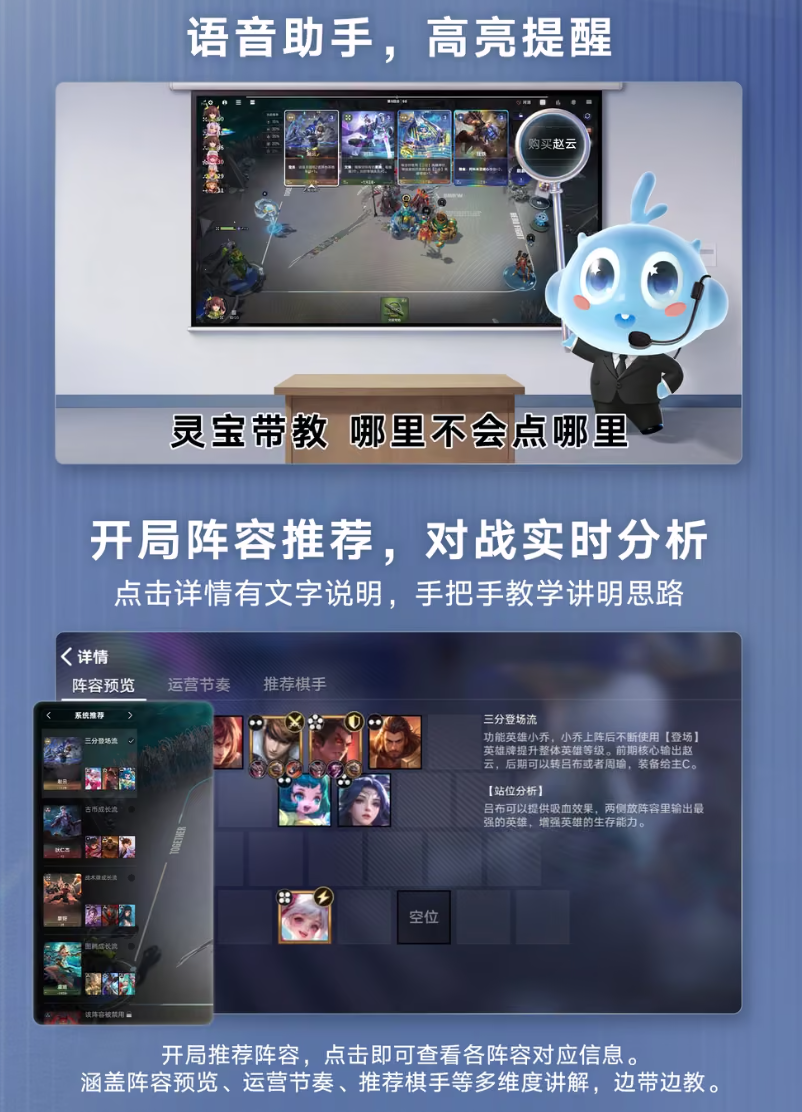
During the open beta, many industry peers told Tea House, “Lingbao has truly breathed new life into this game”—hero strategy battle games have historically suffered from a steep learning curve, with card effects, talent combinations, and deck-building strategies all requiring a significant investment of time to master.It’s as if a patient and encouraging coach were guiding players throughout the entire game—newcomers experience significantly less negative feedback in the early stages, and when they lose a match or get stuck, the AI provides emotional support and strategic guidance, alleviating the frustration often associated with solo gameplay.Reportedly, over 95% of new players in *King’s Chess* use the Lingbao AI every day.
Although it isn’t strictly speaking an “AI-native gameplay experience,” it does make effective use of the intelligent capabilities of large AI models—such as dialogue generation, scenario recognition, and strategy planning—to provide new players with a highly personalized early-game flow experience that’s completely different from anything they’ve experienced before.
Improved gameplay experiences attract more players, which in turn leads to more positive long-term retention metrics for the game. AI has truly become an integral part of both in-game and out-of-game experiences, as well as the game’s long-term operational strategy, serving as the foundation for expanding the game’s audience. The positive impact of this AI application on the game as a whole is virtually unprecedented in the industry.
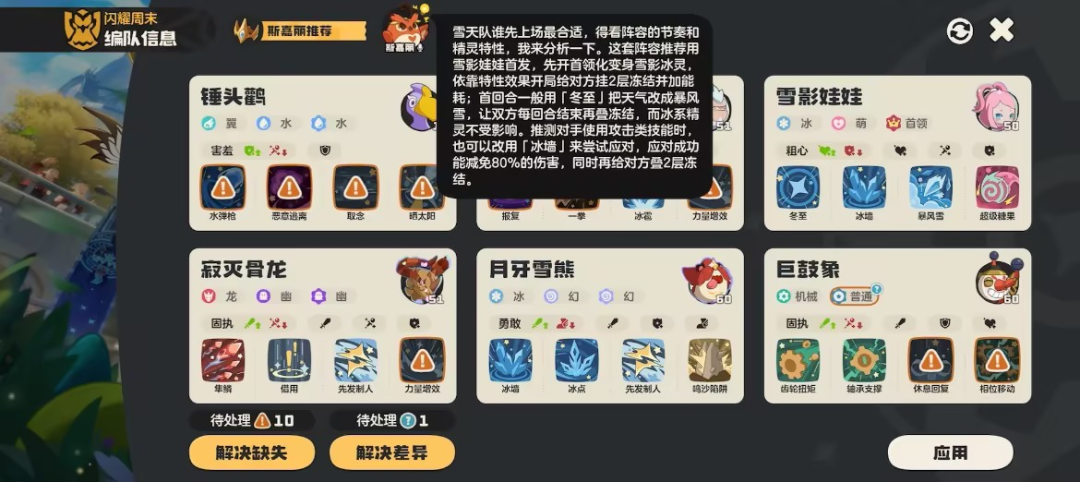
“Scarlet,” the AI coach introduced earlier in *Lock Kingdom: World*, serves a purpose quite similar to that of the Lingbao AI, helping players get started with the challenging PVP creature battles. Both of these AI systems represent further iterations of early native AI gameplay mechanics, such as “smart NPCs” and “AI teammates.”There have long been numerous precedents within the Tencent ecosystem to lay the groundwork for this.
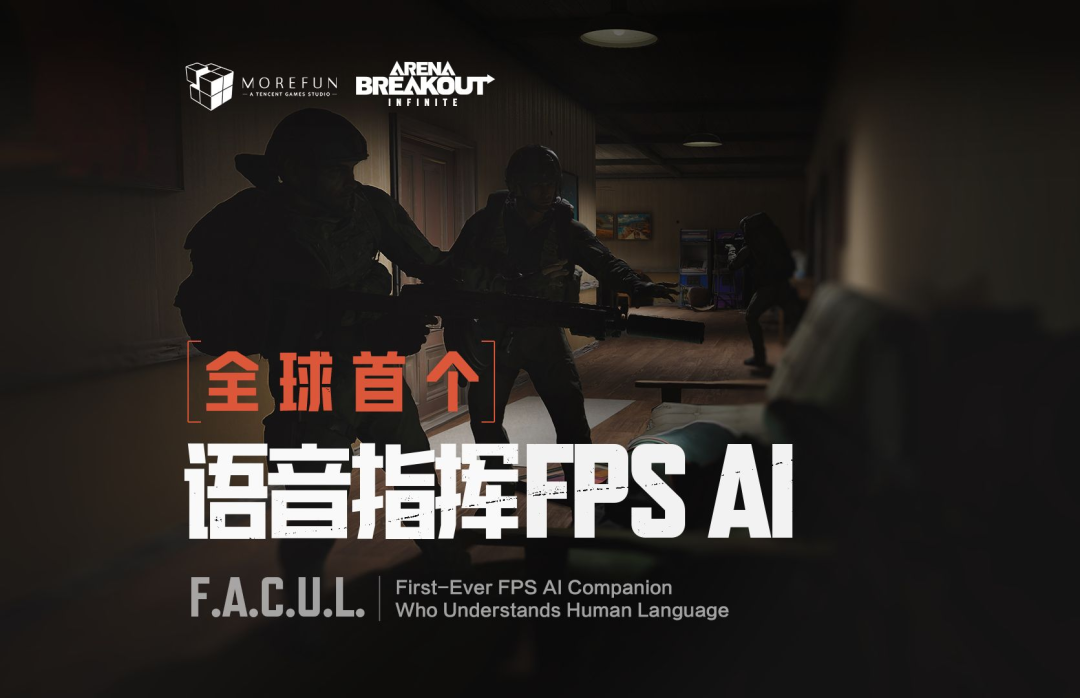
For example, in 2024, Tencent Magic Cube unveiled its AI teammate system, F.A.C.U.L., for the first time at Gamescom; in 2025, *Peacekeeper Elite* launched AI teammates with long-term memory capabilities;”Honor of Kings” also first introduced Lingbao as early as 2024. After more than two years of continuous iteration, this year’s Lingbao can now help players track cooldowns, assess the game situation, and purchase gear. The increasingly mature “Lingbao” technology is also gradually being integrated across games within the same IP.
When viewed together, these applications form a complete timeline of evolution, illustrating the “incremental” nature of AI-native experiences as they develop over time. Tencent’s numerous explorations since the early days of the large-model trend have enabled the company to develop early prototypes of AI-native experiences—staying one step ahead of the industry.
These pioneering examples from Tencent also point to the greater potential of this path toward enhanced user experience: it’s no longer a case of “a mountain that seems close but is far away”; through continuous exploration, accumulation, and building on each other’s progress, there truly lies a major breakthrough in AI-native games on the other side of the horizon.
02
The highway ahead
To be honest, the pace at which AI-native gaming experiences are emerging is indeed slower than the industry initially anticipated. However, when we eventually achieve a truly native experience and look back, this may turn out to have been a temporary phenomenon caused by technical limitations.
Looking at the bigger picture, the upcoming year of 2027 is highly likely to be a year that accelerates the emergence of AI-native gaming experiences—and a window of opportunity for game companies to gain a competitive edge amid this wave of large language models. There are numerous signs collectively pointing to this.
First, the capabilities of large language models have taken a significant leap forward. The most significant advancement in the AI industry in 2026 is undoubtedly that AI tools and capabilities have collectively crossed the threshold of practical usability. This generation of large language models has made progress in areas such as long-term tasks, multimodal understanding and generation, long-term memory, and long-context processing.Top-tier large models have begun tackling mathematical Millennium Problems, and improvements in inference efficiency driven by model framework optimizations have enabled Flash models to significantly reduce inference costs while delivering results of comparable quality.
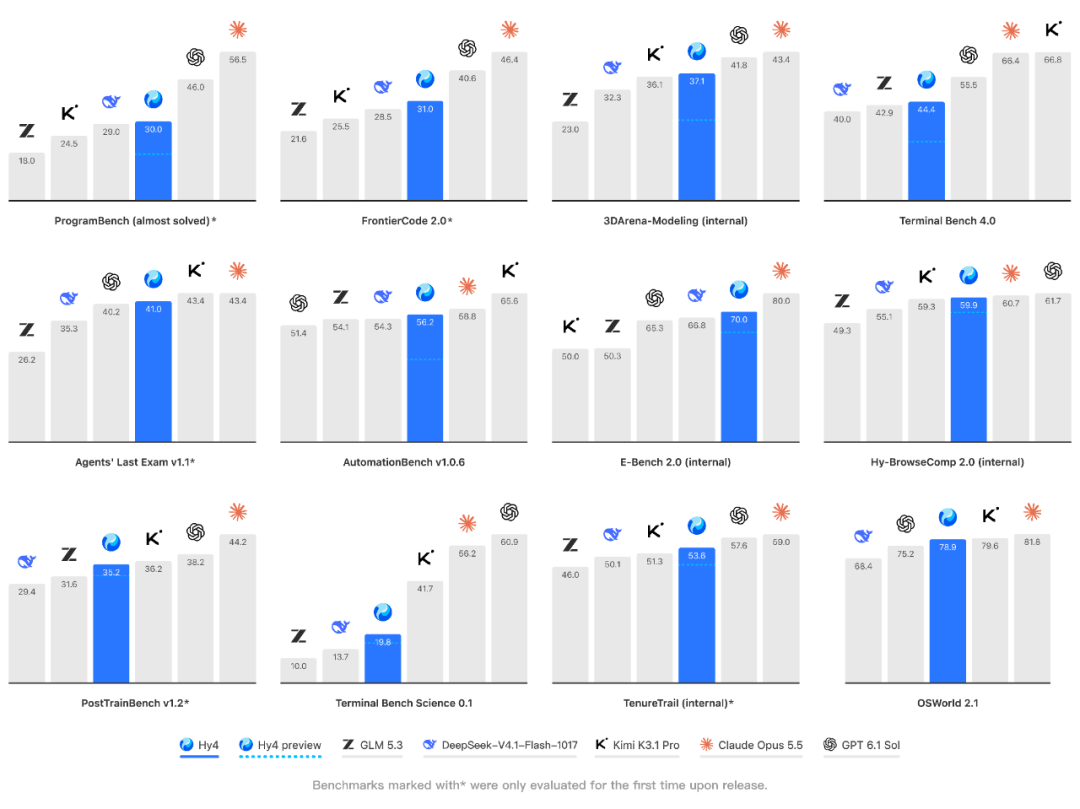
These leaps forward have effectively cleared the way for the emergence of AI-native gaming experiences. Large-scale models now offer new possibilities for content generation and have reduced computing costs per user. As engineering constraints begin to ease, the next step is to explore how AI can evolve from being merely a “usable tool” to delivering a “deep, immersive experience” within gaming scenarios.
The second trend is directly related to the gaming industry. Top-tier large language models are making a major push into the 3D domain.
Recently, OpenAI’s GPT-6 Astra significantly enhanced its 3D capabilities, enabling it to operate 3D software and perform modeling directly. Game engines are following this trend closely.In an October interview, Epic Games founder Tim Sweeney told our reporter outright that they have opened their doors to nine large-model developers in China and the U.S., providing them with the engine’s source code for fine-tuning.
At the time, an Epic Games executive who was present outlined a timeline for Teahouse Jun. By early next year, when the next wave of large models is released, the 3D engine capabilities of these models are expected to see a “Astra moment”-style, leapfrog improvement.
At the same time, Unity is also actively working to integrate AI tools such as Claude Code and Cursor. Godot is open-source, lightweight, and community-driven; its engine source code is readable and modifiable, making it well-suited for agent integration. Since the beginning of this year, it has become the top choice for many AI developers, and its adoption rate has increased significantly.
Large-model providers quickly followed suit, with Kimi K3.1 Pro enhancing its capabilities for 3D game development.Tencent’s Hy4 took a more direct approach, collaborating with game developers at IEG to refine data and evaluation metrics, and adapting the model to mainstream engines such as UE, Unity, and Godot. The deep integration of game engines and AI not only boosts productivity but also opens up a wealth of new possibilities for exploring gameplay mechanics.
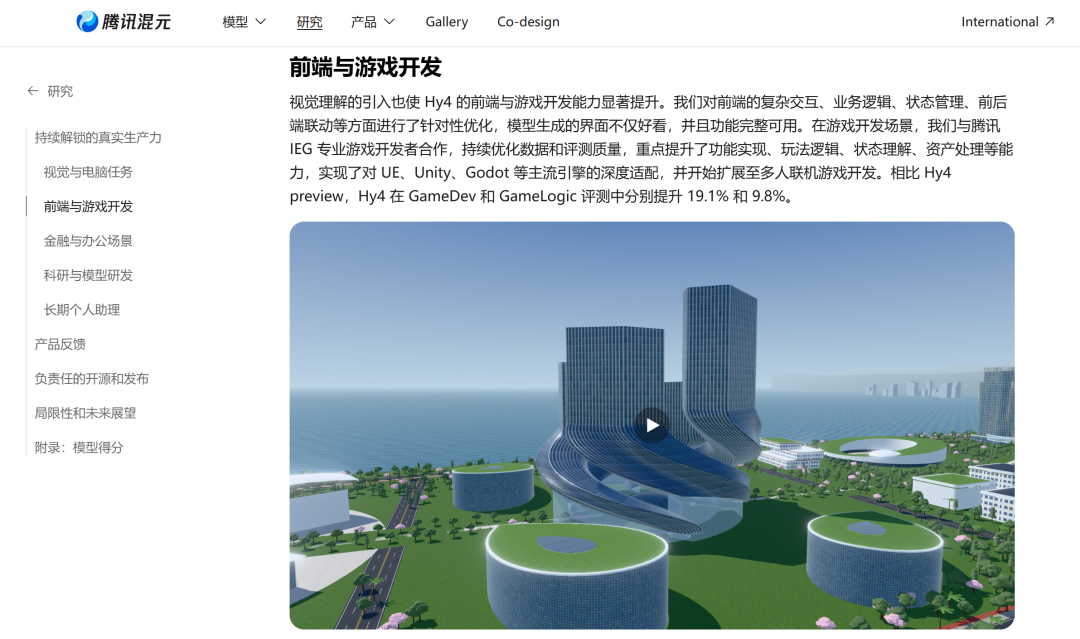
The third point was also mentioned during Tencent’s earnings call. Liu Chiping stated that AI-powered game creation tools are expected to drive the development of the UGC gaming platform ecosystem, enabling the platform to feature both first-party and third-party content—including professional content produced by game development teams as well as space for users to create their own content—thereby ushering in a new, sustainable paradigm.Roblox has already provided evidence of this—their financial report shows that more than 80% of the top 100 games by playtime on the Roblox platform were developed using AI.
These three points collectively point to an opportunity: the broader generative capabilities of large AI models—which open up more possibilities for innovation, accelerate R&D and improve efficiency, and enable faster trial and error—can all serve as catalysts for the rapid emergence of AI-native experiences.
And you’ll find that such an industry shift is just around the corner—and Tencent has already established a presence in all three of these areas.
For example, in the realm of large language models, Tencent’s Hy4 has just caught up with the top tier, and its capabilities are still growing rapidly. In terms of game engines, Tencent is a long-term shareholder of Epic Games, and the Unreal Engine has deep partnerships with Chinese developers.On August 25 of this year, Tencent led an investment in W4 Games, which provides commercial services for the Godot engine. Aside from Unity—which has recently been the subject of acquisition rumors—both the Unreal Engine and Godot, the two major mainstream engines, have forged closer ties with Chinese developers like Tencent. This close collaboration, facilitated by their proximity, opens up even greater possibilities.Within Tencent Games, there are also several AI-native game engine projects, such as MagicLomix from the Public Technology Division and the Tian Gong Engine—which Photon recently open-sourced—all of which are paving new paths for AI-native development.
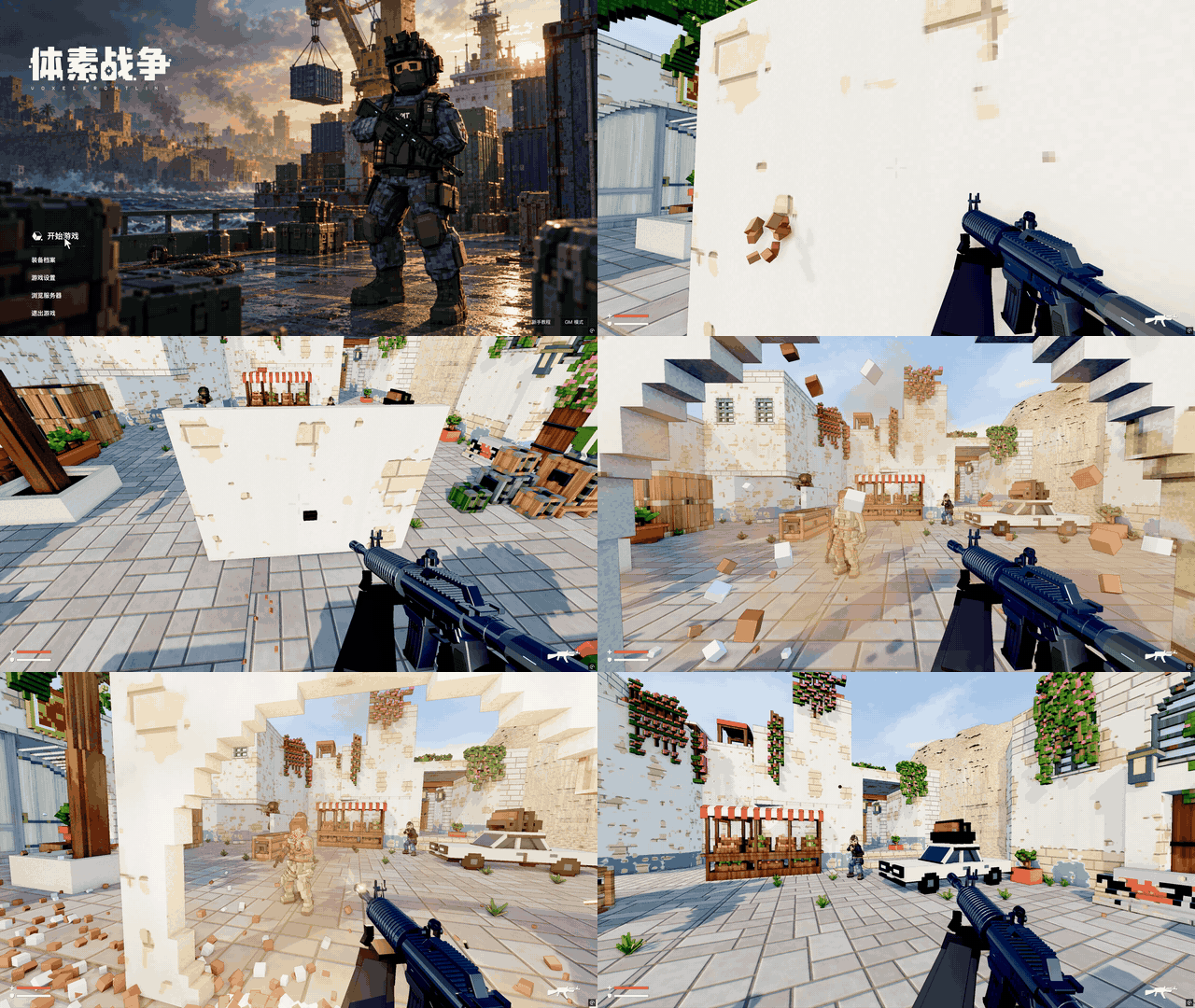
A destructible voxel game created using the Tiangong Engine—*Voxel Frontline*
On the UGC front, Liu Chiping specifically highlighted the UGC system for *Peacekeeper Elite* during the earnings call. Earlier this year, the game’s developers announced that “Oasis Qiyuan,” its UGC platform, had surpassed 58 million daily active users.At Tencent Games’ mid-year press conference, Oasis Qiyuan publicly demonstrated an AI creation assistant that allows players to create a complete level—including both scenery and gameplay mechanics—using everyday language in as little as 15 minutes. The accumulated experience from these in-depth UGC explorations within the Tencent ecosystem will provide a head start in the next generation of AI-powered UGC initiatives.
At this point, you might be wondering why Tencent Games seems to have such “good luck” and always manages to stay perfectly in sync with the times. But to be more precise, it’s actually the result of their sustained exploration and broad strategic布局 over the long term; when opportunities arise, they’re always able to respond calmly and adapt to whatever comes their way.
In fact, looking back at history, gaming was one of the earliest entry points for Tencent Group’s exploration of AI—as early as 2017, Tencent AI Lab collaborated with the *Honor of Kings* team to develop “Juewu,” using reinforcement learning across millions of matches to enable the AI to understand the gameplay logic of MOBA games. This was long before the era of large language models.
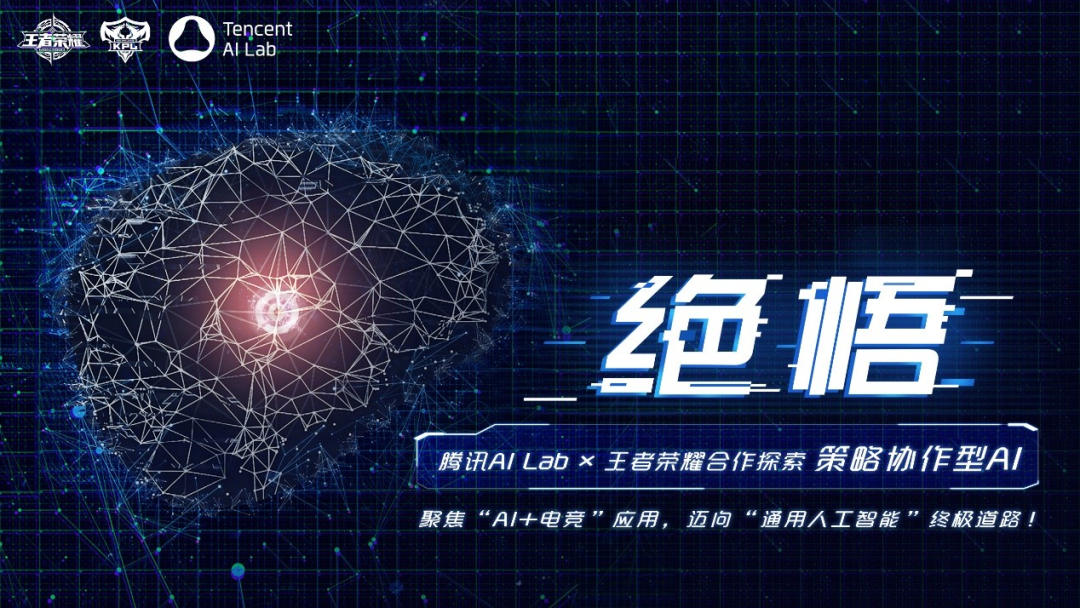
The exploration has continued uninterrupted ever since. When the LLM wave truly arrived in 2023, Ma Xiaoyi was among the first in the industry to recognize that the gaming industry stood at a crossroads with AI, and he proposed a distinction between “AI for Games” and “AI in Games”—the former referring to the application of AI in game production, while the latter describes how AI is integrated into the gaming experience.
At the time, he revealed that “Tencent is evaluating ways to improve efficiency at every stage of production”—the “for Game” initiative gained momentum early on, and that momentum has continued to the present, resulting in a more frequent stream of tangible outcomes.
For example, the “LAP” smart game asset platform developed by Photon has delivered significant results this year; in areas where it has already been implemented internally, efficiency gains have ranged from 20% to 95%.Tencent Games’ Public Technology Division has also developed a series of innovations, including the Motus AI animation production pipeline and MagicDawn AI-driven cross-engine rendering technology. At events such as this year’s Game Developers Conference (GDC) and the Developer Forum at Gamescom, the division delivered numerous public presentations featuring internal case studies, earning widespread recognition from developers worldwide.
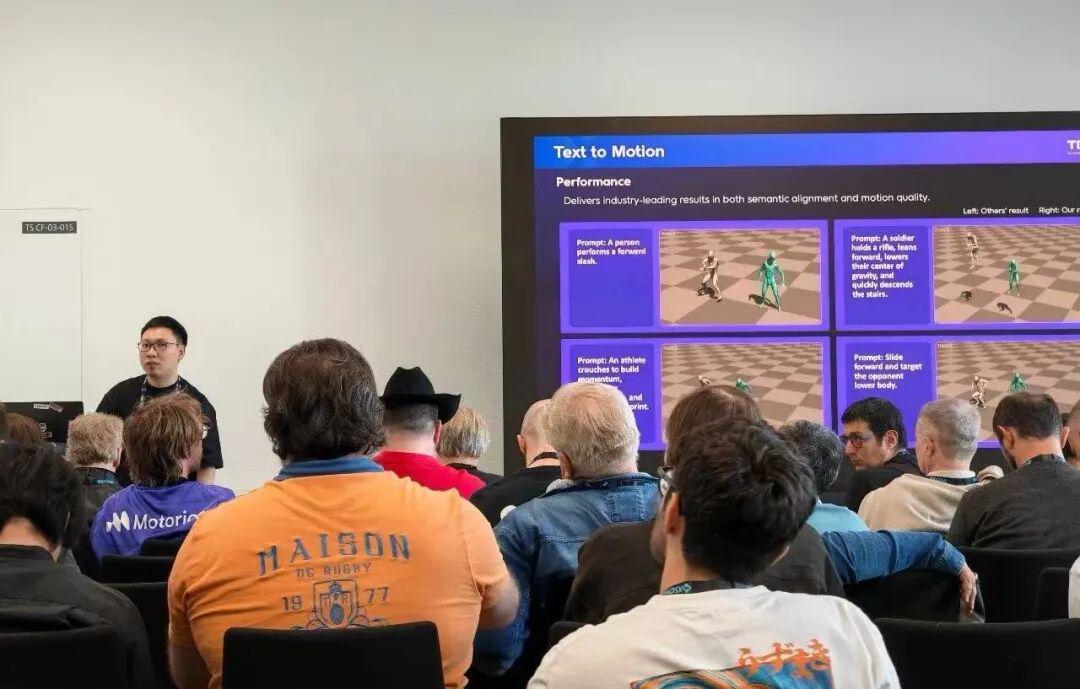
In hindsight, when viewed from the perspective of the industry cycle as a whole, “AI for Games” may have been an inevitable preliminary stage leading up to “AI in Games.” These explorations into the industrial-scale production capabilities of AI have laid the groundwork for more extensive in-game testing in the next phase.
As a result, we can see that many major companies have begun exploring large-scale, AI-native gaming experiences this year, in addition to their existing achievements in AI industrialization: aside from the Tencent Games examples mentioned earlier,miHoYo has incorporated its self-developed intelligent NPC ecosystem into *Starburst Valley*, while the team behind the *Honkai* series has even unveiled “Gamer,” a foundational visual-language-action model capable of autonomously controlling gameplay; Ubisoft has spun off its AI teammate development team into a subsidiary called Motherbrain, dedicated exclusively to researching native gaming experiences such as intelligent NPCs and AI game masters.
As for Tencent, throughout its decade-long journey of AI exploration, it has continuously tackled the most cutting-edge technical challenges of each cycle. This leads us to expect that, during the next phase of accelerated growth in AI-native gaming experiences, Tencent will live up to its status as a leading industry player: raising that banner high to lead the way for others to follow.
03
Into the Depths of the Sea
Recently, a metaphor describing Tencent’s various departments as “half army, half navy” has been widely circulated.
Evergreen Games’ steady, conventional mindset has led many to instinctively equate Tencent Games with the Army. But on the contrary, they have always been navigating the seas: with the nation’s largest gaming business at their disposal, having navigated more than a decade of AI exploration, they now possess a portfolio of mature AI achievements, backed by a robust AI industrialization pipeline.On the path of AI exploration, they have set sail earlier and traveled farther than the vast majority of gaming companies worldwide.
What’s more, Tencent Games is in a unique competitive position: while ByteDance and Alibaba are both offloading their gaming assets, Tencent’s ability to create synergies between its gaming business and the group’s AI model operations is its unique “trump card.” The virtual gaming environments—with their real-time interactions and dense player feedback—serve as the ideal training ground for AI models.The long-term “evergreen game” strategy may take on new meaning in the AI era. Not only does it provide a low-cost platform for trial and error in AI-native gameplay, but the rapid emergence of new gameplay mechanics and the incorporation of player-generated content are also expected to drive the evolution of evergreen games into “evergreen platforms.”
Throughout the industry-wide adjustment cycle, Tencent Games has already stood out as an exception with its countercyclical growth; and if we follow the path charted by AI exploration, it’s not hard to imagine how Tencent Games will be further empowered in the upcoming AI industry cycle specific to gaming.
What we can see right now is that while people are waiting for the native gaming experience to “break through the barriers,” Tencent is already gearing up on the front lines, striving to be the one to knock out the first brick and let the first ray of light shine through.
原创文章,作者:游茶妹儿,禁止转载:https://youxichaguan.com/en/archives/224804