“We’re putting our hearts into developing this *Douluo* game, and we truly hope players will see our sincerity; if there are any shortcomings in this game, the responsibility lies with us, and we’ll be the ones to make the improvements.The open beta isn’t the end—it’s the beginning of our journey to refine the game together with the book’s fans.” When discussing the public reaction they might face after launch, Yihui, the producer of *Douluo Continent: Legend of Evil Slaying*, offered this candid statement.
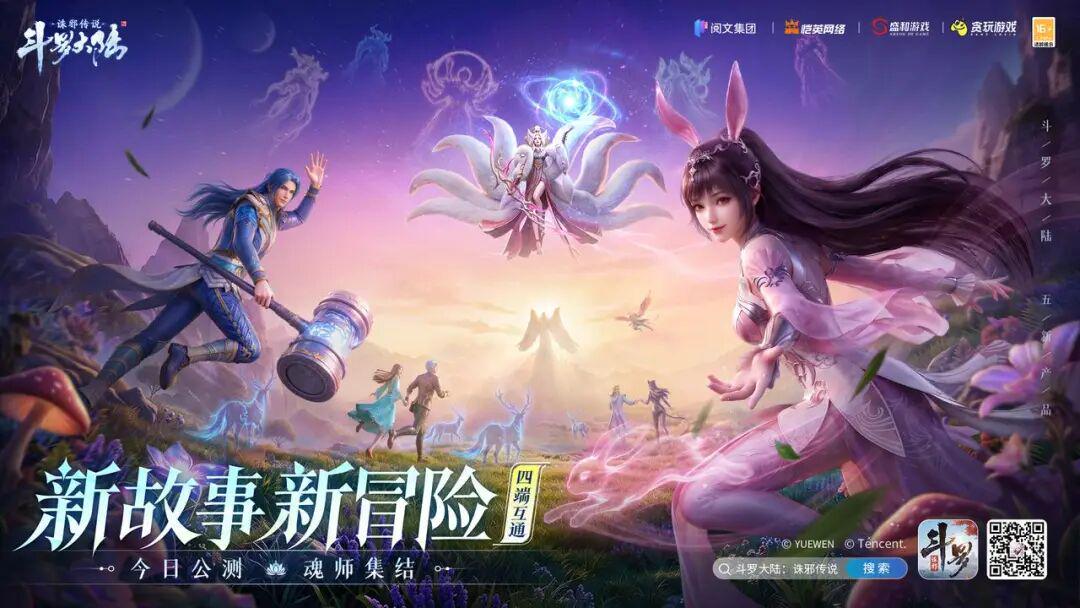
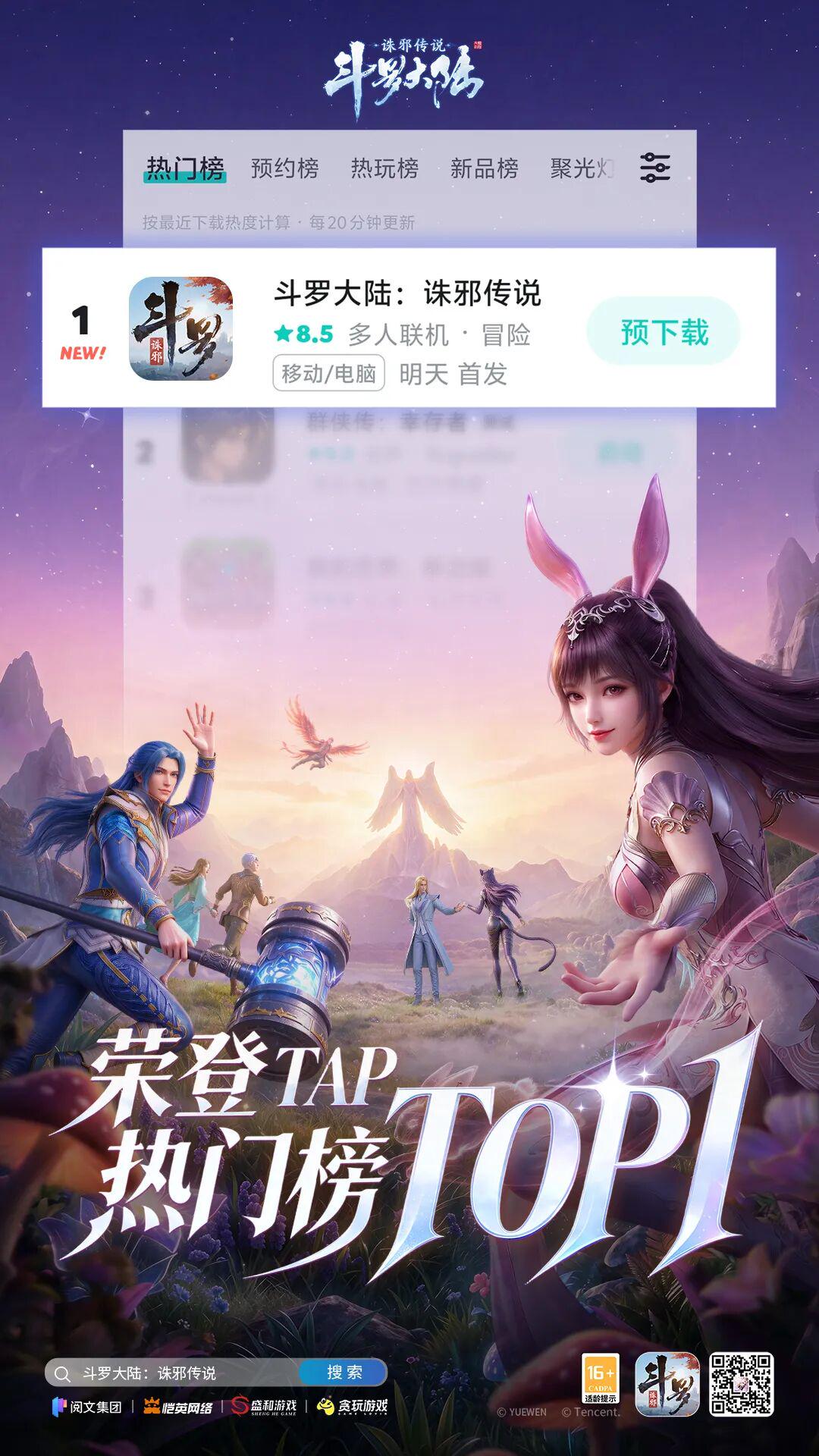
As the first open-world MMO jointly developed by Kaiying Network and the Douluo Zhuxie Studio—a subsidiary of Zhejiang Shenghe—and published by Tanwan Games,this title had already amassed over 10 million pre-registrations across all platforms on the eve of its open beta, with its TapTap rating consistently hovering between 8.3 and 8.5. During the promotional campaign, it also topped TapTap’s Popularity Chart.
The team’s ability to build such a strong community base stems largely from its re-examination of the IP’s core essence. Before entering the industry, Yihui himself was a longtime fan who had read all five main volumes of *Douluo Continent* as well as all the spin-offs. In his view, the novel has carried distinct MMO DNA since its inception.
In fact, for a long time, early Chinese online games and fantasy web novels served as foundations for one another and influenced each other. The former provided the latter with a narrative framework featuring level progression, monster-hunting for loot, and class specialization, while the vast cultivation systems established by the web novels, in turn, became the natural foundation for the worldviews of MMOs.
“The Continent of Douluo” is no exception. From today’s perspective, the book’s setting reveals traces of this two-way character development throughout: Soul Masters hunt Soul Beasts every ten levels to obtain Soul Rings, collect Soul Bones from the wild, and gather materials to craft hidden weapons—essentially forming a clear RPG progression path;Furthermore, the way Soul Masters leverage synergies between different Martial Souls—such as the classic combinations of the Haotian Hammer for heavy offense, Blue Silver Grass for crowd control, and the Seven-Treasure Glass Pagoda or Oscar’s Giant Sausage for buffs and sustain—also follows the common “iron triangle” rule of class synergy.
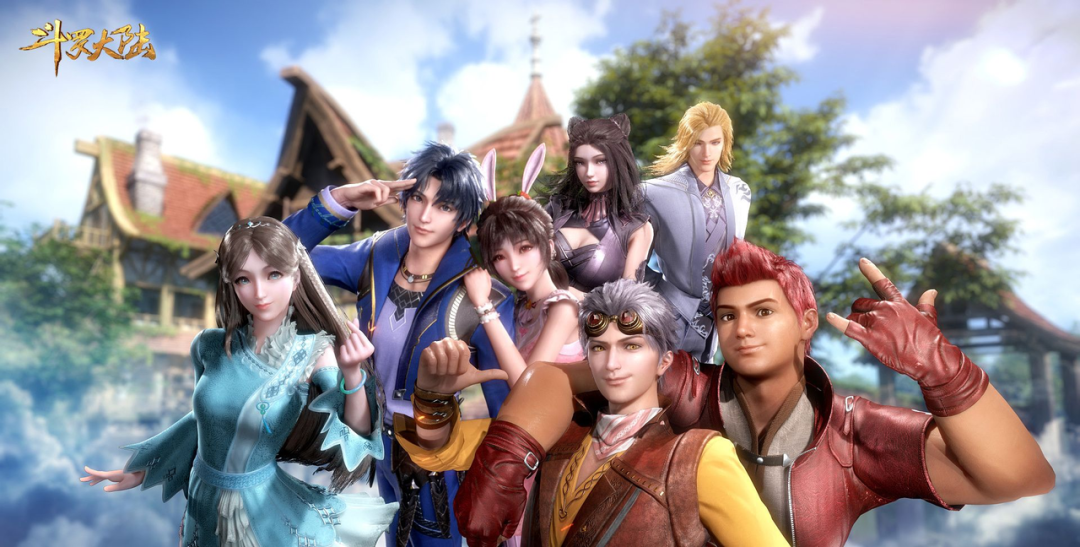
However, in the crowded Douluo IP market of the past few years, the vast majority of adaptations have gravitated toward idle, card-based, or closed-dungeon gameplay models, thereby stripping away the original work’s most compelling elements—such as exploring the world and its realms, gathering resources in the wild, battling soul beasts,and the strategic team-based gameplay among Soul Masters—have been stripped away.
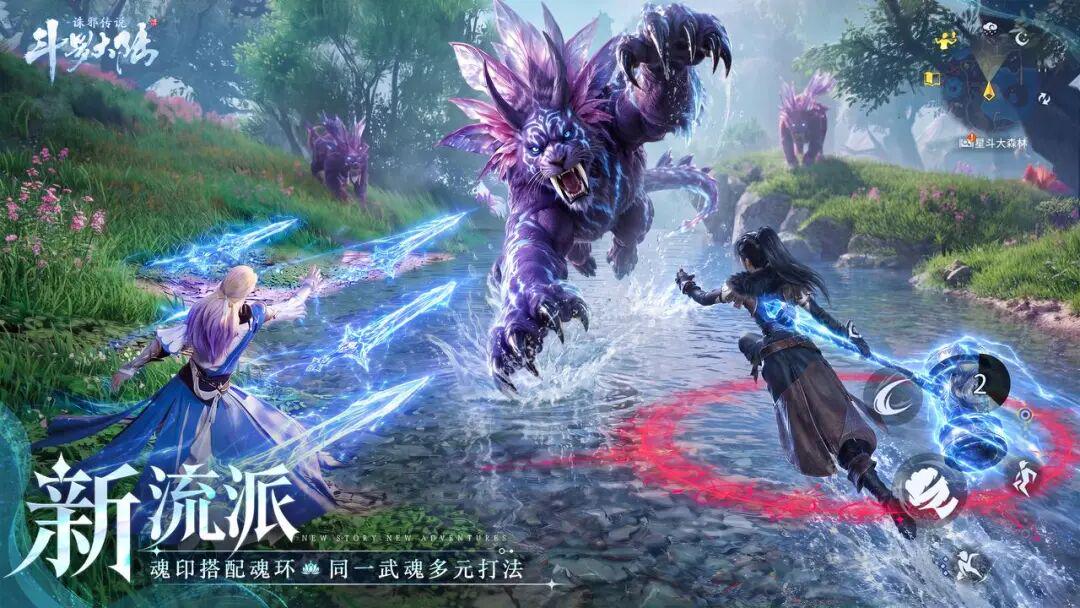
The strategy behind *Douluo Continent: Legend of Evil Slaying*’s market entry is precisely to reintroduce the rules and settings—which once captivated countless book fans—into a vast open world: Using “fidelity” and “freedom” as its cornerstones, the team has created a 64 million square meter seamless map on a 1:1 scale based on the anime.
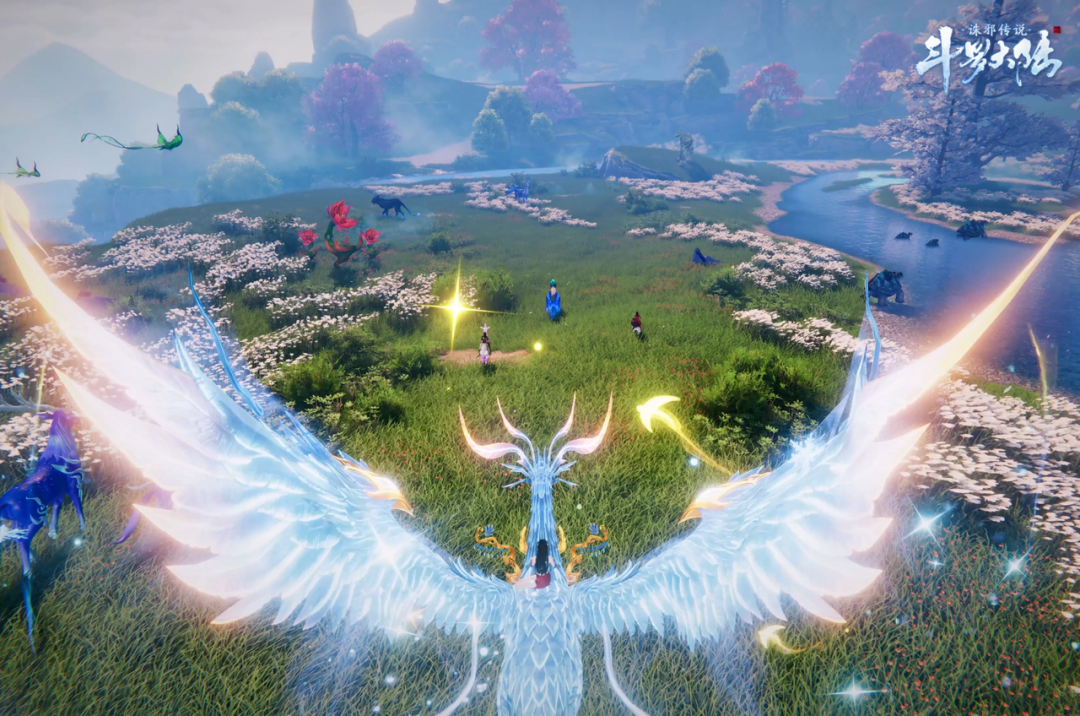
Based on the currently released in-game versions,in addition to offering a complete yet streamlined dual-story mode, a variety of awakenable Martial Souls, and a standard progression system, the game has also broken down the barriers around dungeons—bringing Soul Ring hunting back to the open world, with high-tier progression resources primarily obtained through open-world exploration. Casual players even enjoy a high degree of freedom when it comes to earning in-game currency and trading.
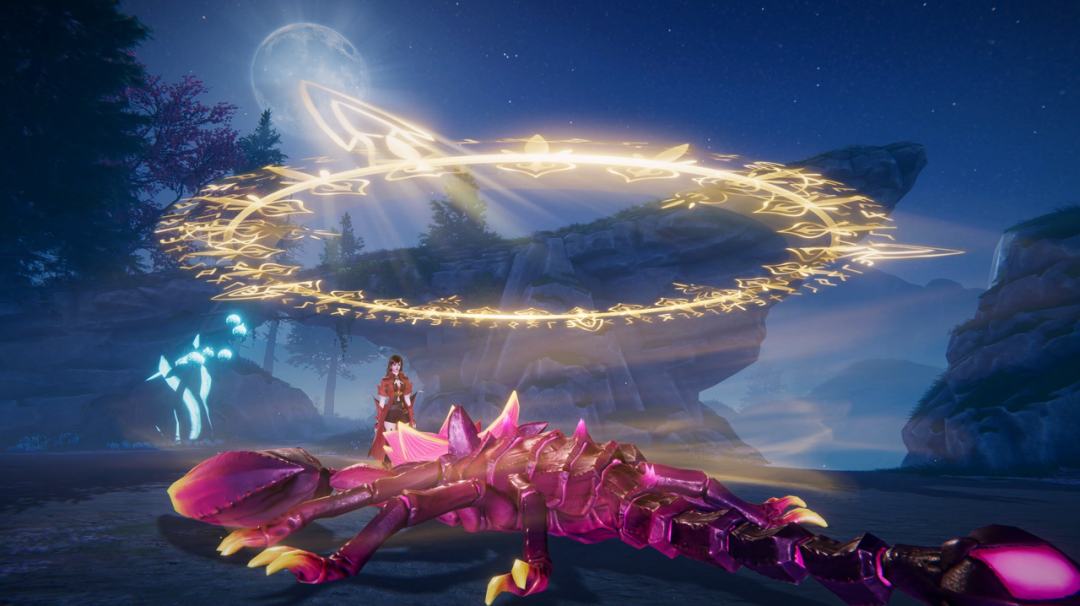
The effort to faithfully recreate the world depicted in the book has naturally brought the game back to the roots of hardcore MMOs, while also raising players’ expectations. In community reviews, players have praised the game’s immersive experience while simultaneously beginning to nitpick it based on the rigorous long-term ecosystem logic of MMOs:For example, they’re demanding improvements to the target-locking mechanics of Martial Souls, calling for a simplified mode to be added to the PC version, urging the release of new Martial Souls (classes) with independent progression systems, or expressing concern that penalties for malicious red-flagging in the wild are too lenient—which could lead to high-level players and gold farms monopolizing resources across level ranges…But for the development team, player criticism is, in itself, a sign of high expectations—these two perspectives are two sides of the same coin.
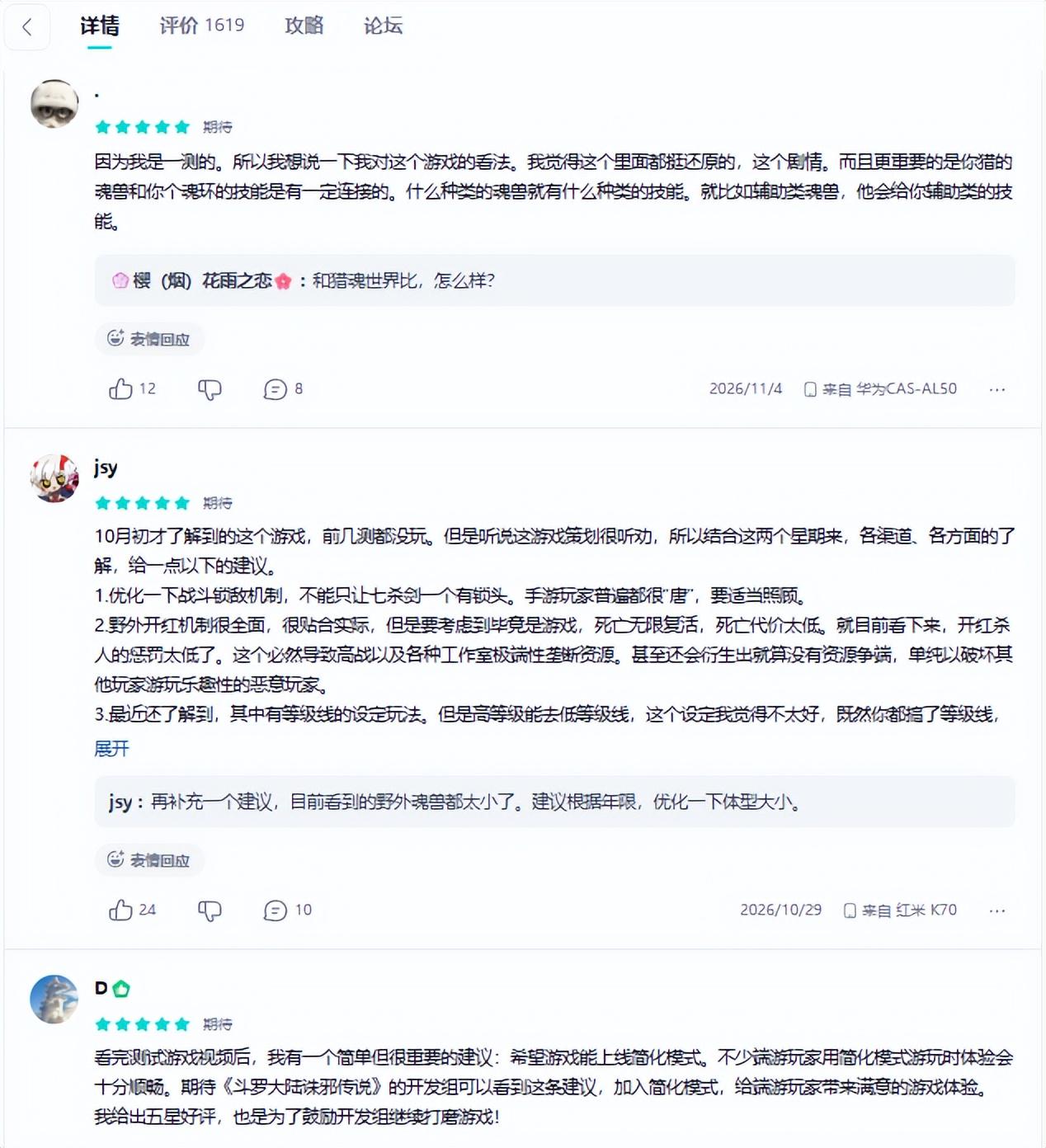
(To date, the game has received over 1,600 player reviews.)
However, the biggest challenge the team faced during game development was actually bridging the gaps in the development pipeline.Yihui told Teahouse that when they used to develop traditional MMOs, designing a new map or a new monster could be completed within a week; now that they’ve shifted to an open-world format, creating a single module requires seamless collaboration and refinement across multiple departments—including design, concept art, modeling, animation, visual effects, and sound—for an entire month.To pinpoint players’ real pain points during this lengthy pipeline coordination period, Yihui personally registered and thoroughly tested over a thousand accounts during the testing phase. He also read every single comment on Douyin, live streams, and TapTap word for word, relying on this most labor-intensive method to fine-tune the product’s development priorities.
Today, the game officially launched its open beta. With major exams just around the corner, Game Teahouse sat down with the producer of *Douluo Continent: Legend of Evil Slaying* to ask him how he strikes a balance between staying true to the original work and maintaining freedom in the open world.Faced with the extremely rapid consumption of content in the open world and the impact of black-market operations by gaming studios, what preparations have they made to support long-term operations spanning five to ten years?
01
A vast world consistent with the original story’s perspective
Game Teahouse: You were already a longtime fan of *Douluo* before entering the industry. Given that players already know Tang San’s story by heart, why did you initially decide to step outside of Tang San’s perspective and start the game with the original character “Zhuxie Zhe”?
Yihui: All of these topics trace back to when we first acquired the IP. At that time, we partnered with Yuewen and posted a survey on the Yuewen novel website to gather suggestions on various topics. We also uploaded our first batch of concept art so players could vote on their favorite styles; roughly 10,000 people participated.All of our subsequent settings were actually based on that survey.In the poll regarding the plot direction, over 80% of players hoped to build upon the original work while expanding on the gaps left open in the story. Since everyone had read the novel and watched the anime multiple times, strictly following the original wouldn’t be very appealing; however, a complete reimagining wouldn’t be well-received by players either.So over 80% of players chose a middle ground—retaining the original story’s direction while incorporating new content, which would provide both a sense of familiarity and a fresh experience.
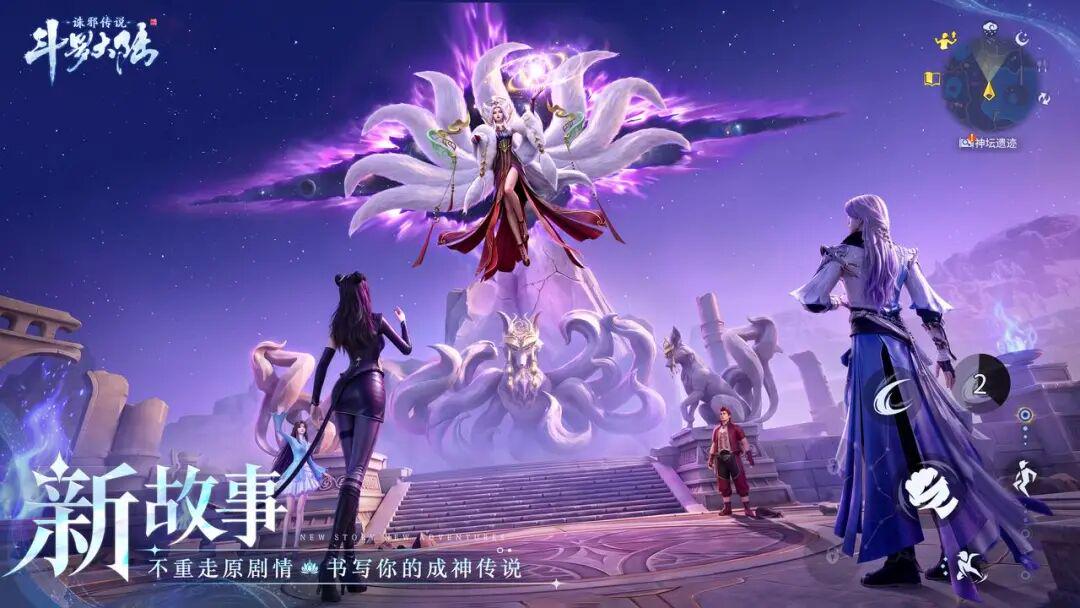
Moreover, these kinds of IP adaptations tend to make players feel like they’re just a moving camera or a “sidekick.”Since we have a deep understanding of the entire “Douluo” series—from the first installment, *Douluo Continent*, to the second, *The Legend of Tangmen*, the third, *The Legend of the Dragon King*, the fourth, *Ultimate Douluo*, the fifth, *The Rebirth of Tang San*, all the way to*Legends of the Divine Realm* and *The Legend of the Tang Sect*—we’re very familiar with all of them. So it was relatively easy for us to find a starting point: we simply elevated the protagonist’s status and expanded the entire worldview from a single, small dimension to the scale of the “Divine Realm”——this way, when players take on the role of the protagonist, they won’t feel weak or useless; instead, they’ll be able to influence the main storyline from the perspective of a God King and maintain high expectations for the performance of the characters they’ll control in the future.
I’ll give you a slight spoiler: both the reason Tang San came to the Douluo Continent and the time he failed to absorb the Human-Faced Demon Spider and became trapped in the Tang Sect’s memories—unable to return—were actually resolved thanks to the players’ help.In both our main storyline and the subplot involving the interdimensional arrival of the Alien Gods, players always show up just in time to help when the characters from the original novel face difficulties.
Game Teahouse: During testing, some fans of the original work felt that the side story featuring the pure fox Xi Xi in “Fox Shadow: Chronicles of the Past” was inserted between the main story arcs, which somewhat diluted the depth of the original work. At the same time, many players really liked her character design. How do you balance these two perspectives?
Yihui: This part is indeed quite difficult to balance, and it was only after extensive testing that we decided to reveal it to players early on.Logically, this content is meant to be a foreshadowing element for later in the story, so in our earliest version, we actually only included a cutscene where Pure Fox Xixi battles the Five Divine Kings right after entering the game—enough to make it immediately clear that she is a Divine King-level powerhouse who surpasses even the Five Divine Kings.
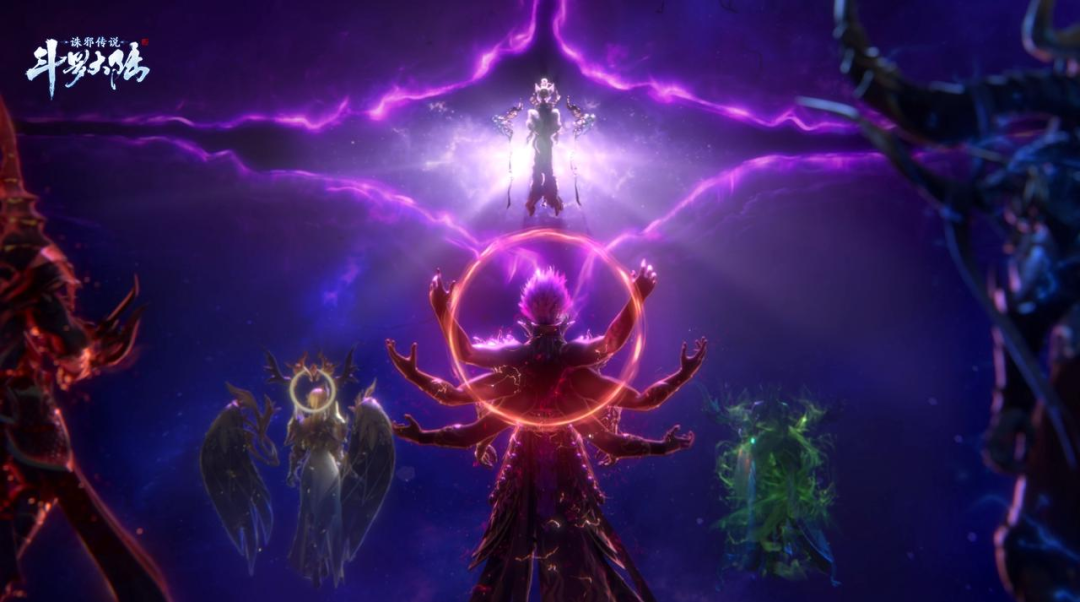
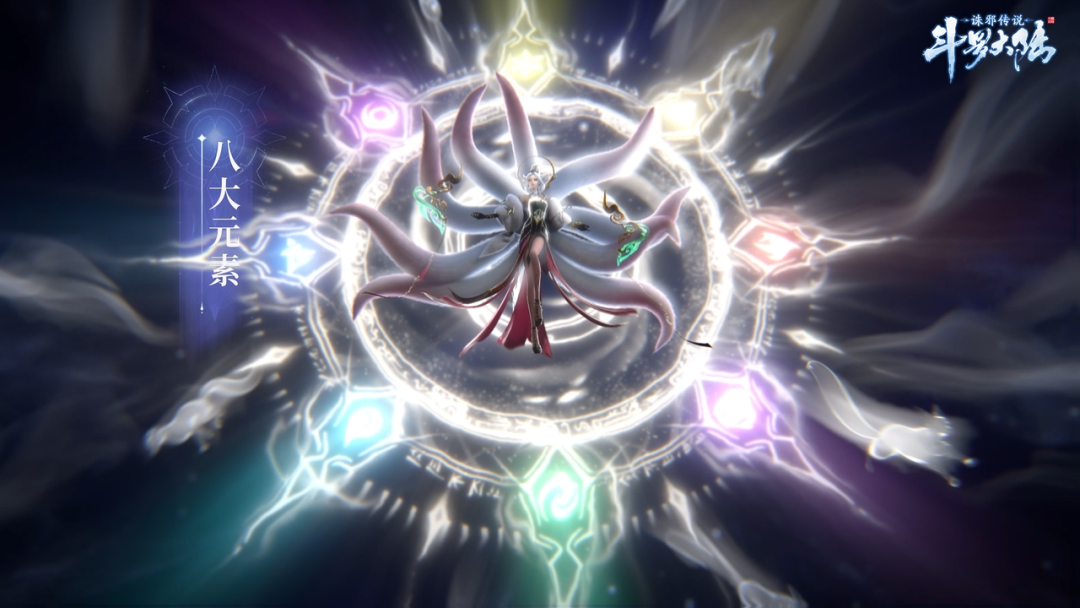
However, during testing, we found that without the introductory content, some players had a hard time immersing themselves in the game. Since the original *Douluo Continent* novel lacks puzzle-solving elements, when players see so many teleportation arrays and Fox Spirit Secret Arrays in the open world, they might wonder if this is really consistent with *Douluo Continent*.If the foreshadowing is planted too late in the story, players might not have an “aha!” moment until they’re close to becoming gods, when they finally realize, “Oh, so that’s how it all fits together!”
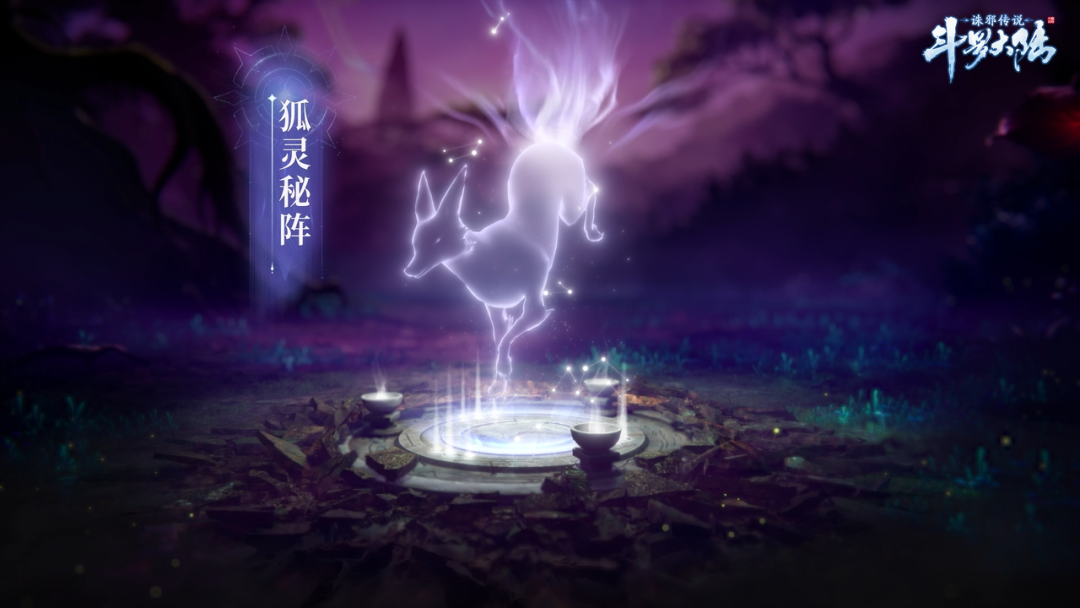
To prevent players from feeling disconnected early in the game, we must devote a significant portion of the early story to introducing the world of Pure Fox, so that players understand that the divine artifacts they use to explore the Douluo Continent and the many puzzles they solve are actually connected to the “Divine Trial” and their own identity.The core concepts used in *Chunhu*—such as the Reincarnation of the God-King and the Turbulence of Time and Space—are essentially a “theatrical adaptation” based on the *Douluo* universe.
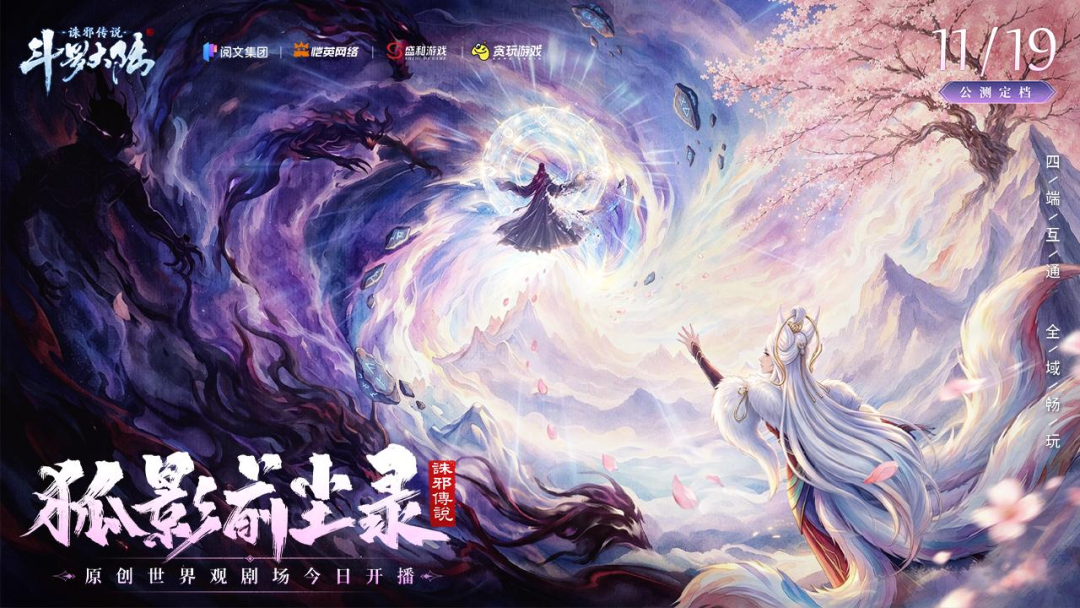
After all, in the original work, the first, second, and third parts are essentially structured with one chapter every 10,000 years, while we’ve set the arrival of the Pure Fox Xixi to have taken place roughly 50,000 years before the events of the first part. She was waiting on the Douluo Star for the Twins to arrive, as this fate had long been predetermined.We’ve elevated the narrative to the level of the God-King precisely because we’ve laid out such a vast storyline, which will allow us to expand on every aspect of the Douluo universe in the future.
Game Teahouse: The game also expands on background factions like the Spirit Cat Sect of the Underworld—which weren’t covered in much detail in the original work—and even created multiple sets of models specifically for them. When negotiating with the copyright holder at Yuewen, what were the boundaries and standards for derivative works?
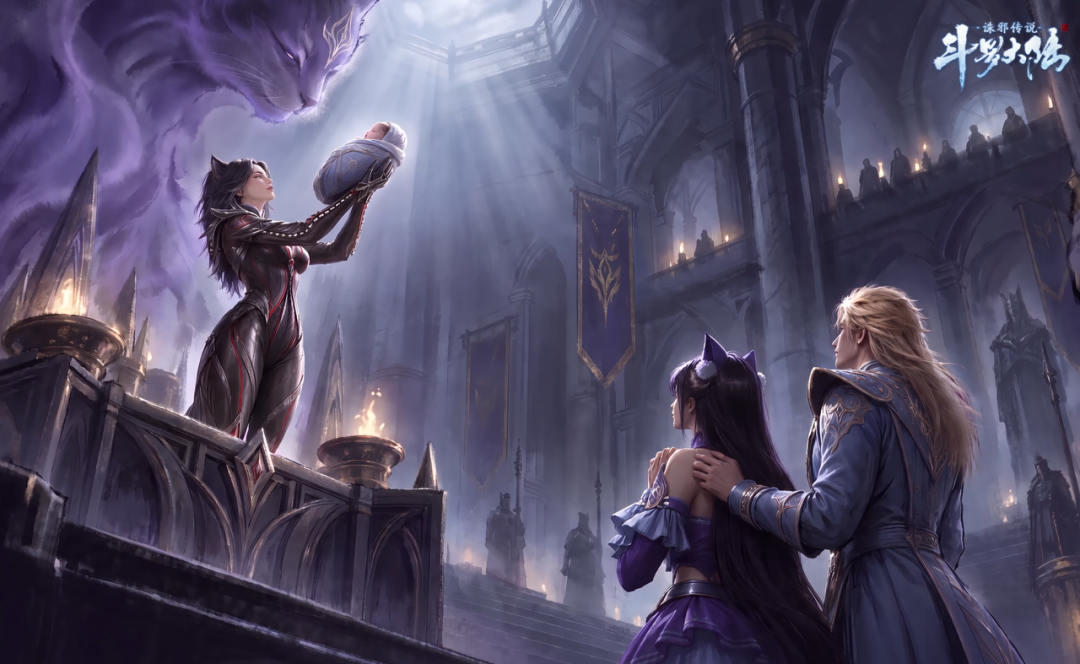
Yihui: We expanded on these plot gaps primarily to satisfy players who are focused on the story, and we put a tremendous amount of effort into it. For example, to cut costs, most games typically use only one set of character models; however, we created a dedicated model for the Tang Sect specifically to fully recreate all of its storylines;We also created a 6-year-old child model, allowing players to follow in Tang San’s footsteps—starting at age 6, gradually experiencing different stories across various sects, choosing different Soul Masters, and following distinct main storylines.For example, if you choose the Ghost Spirit Cat, you’ll be taken back to the main sect by Elder Zhu Lingyu as a collateral relative to train there. You’ll come to understand the Spirit Cat Sect’s position within the entire power structure of the Douluo Continent from the very beginning, and experience the relationships between you, Zhu Zhuyun,Zhu Zhqing (Second Sister and Third Sister), including how your master cares for and nurtures you. This isn’t a “fast-food” game; you can uncover the intricate social and factional dynamics underlying the entire Douluo Continent through side quests and even conversations with ordinary NPCs.
As for the copyright holder’s oversight, since previous games based on the “Douluo” IP may not have gone into as much detail as we have, our expansion of the story—while staying true to the original work—actually benefits both parties. Therefore, the copyright holder is very supportive and has given us fairly broad leeway in terms of overall oversight. However, when it comes to matters of principle, they maintain very strict control.For example, our mysterious character Chunhu Xixi was originally named “Tushan Xixi.”However, since “Tushan Xixi” could be confused with another IP from Yuewen, “Tushan Honghong,” and mislead players, the copyright holder absolutely would not allow us to use that kind of name. Since the Fox Clan is quite well-known, we changed it to “Chunhu.”
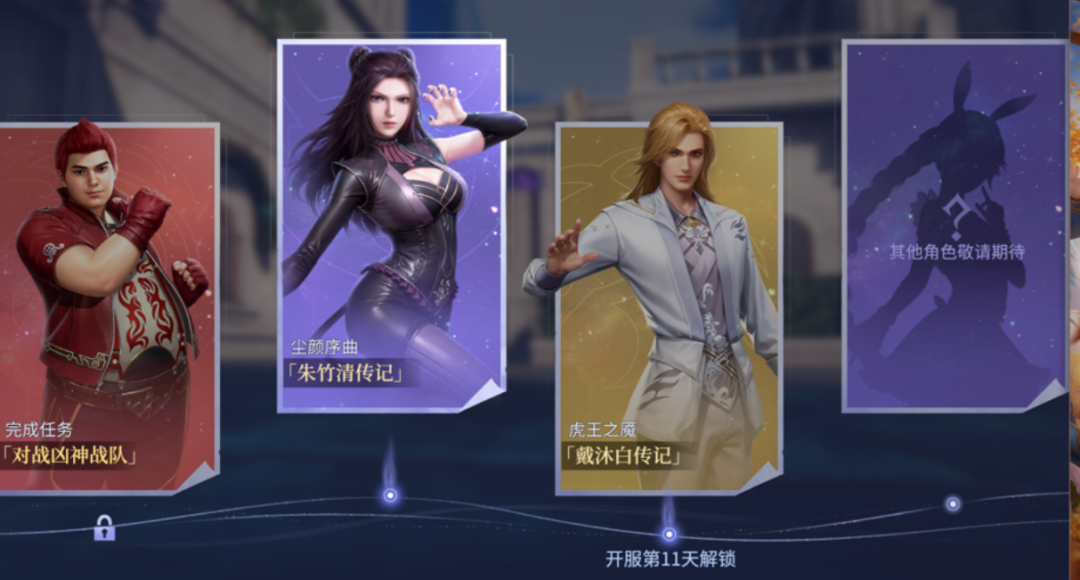
As for storylines like following Tang San off a cliff to travel through time, as long as they stay true to the original work and make sense plot-wise, they’ll give the green light. In particular, the copyright holders strongly encourage the personal biography quests we’ve written based on the original characters’ preferences and factional relationships—such as the Zhu Zhuqing, Dai Mubai, and Ma Hongjun biographies.At the same time, voice acting is the “top priority” of our entire project’s development; the team has placed an extremely high emphasis on voice performance and auditory storytelling. Even the voice actors responsible for supervising the production gave our biographical quests a thumbs-up after reviewing them, praising them as exceptionally well done.
Game Teahouse: There has been some controversy regarding the game’s art style, and during early testing, some players felt the graphics resembled those of a browser game or that the optimization wasn’t up to par. As the team was building this vast open world, how did they respond to this feedback? What challenges did they encounter during development?
Yihui: Our art style has sparked some controversy. The underlying reason is that our project was greenlit quite early on, so it was inevitably influenced by the development environment at the time and the evolution cycle of our technical pipeline.When building a vast world from scratch, the biggest pitfall we encountered was primarily the R&D pipeline: In the past, when we worked on relatively simple, traditional MMOs, development cycles were very short. For example, if I needed a new map, a new monster, or a new set of skills, it would definitely be done within a week.But now, creating a map, a model, or a combat spirit requires full cooperation across all departments, and even keeping the timeline within a month is already pushing the limits.
In this workflow, every department plays a crucial role. First and foremost, the planning department consists of the people who understand *Douluo* best; they define the requirements and provide documentation to the art department for concept art design. The concept art must also take into account the preferences of the *Douluo* user base;Once the concept art is finalized, we move on to modeling, animation design, and special effects design. These are then integrated into the game client to test the user experience, after which the animation and sound teams work to refine the impact and synchronization of the movements. The overall production timeline and scale are on an entirely different level compared to the standard MMOs we’ve developed in the past.
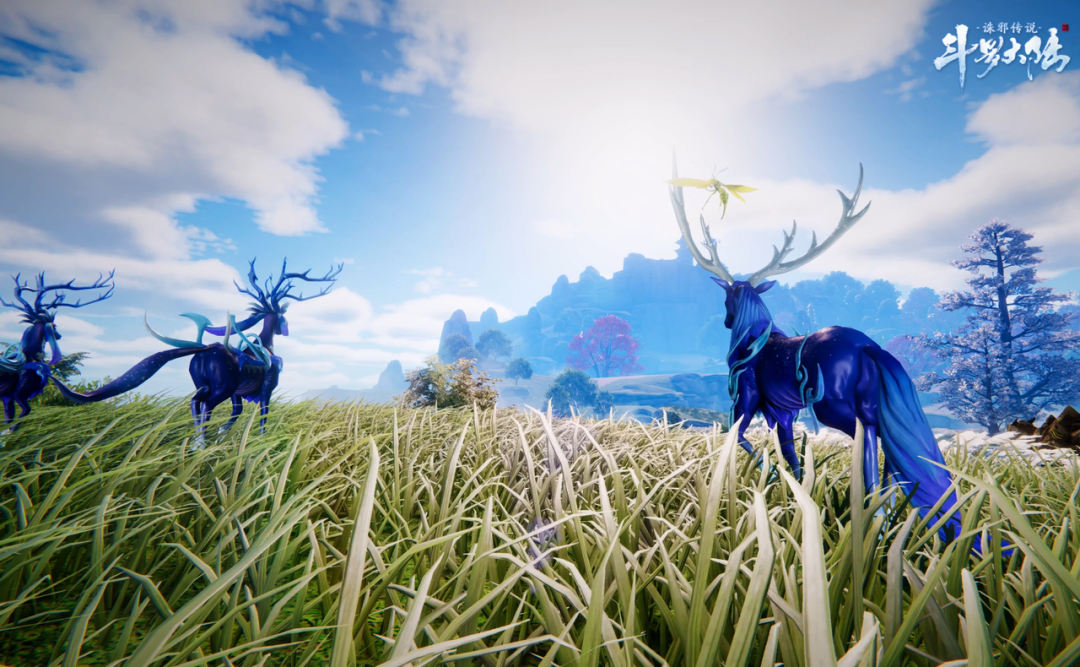
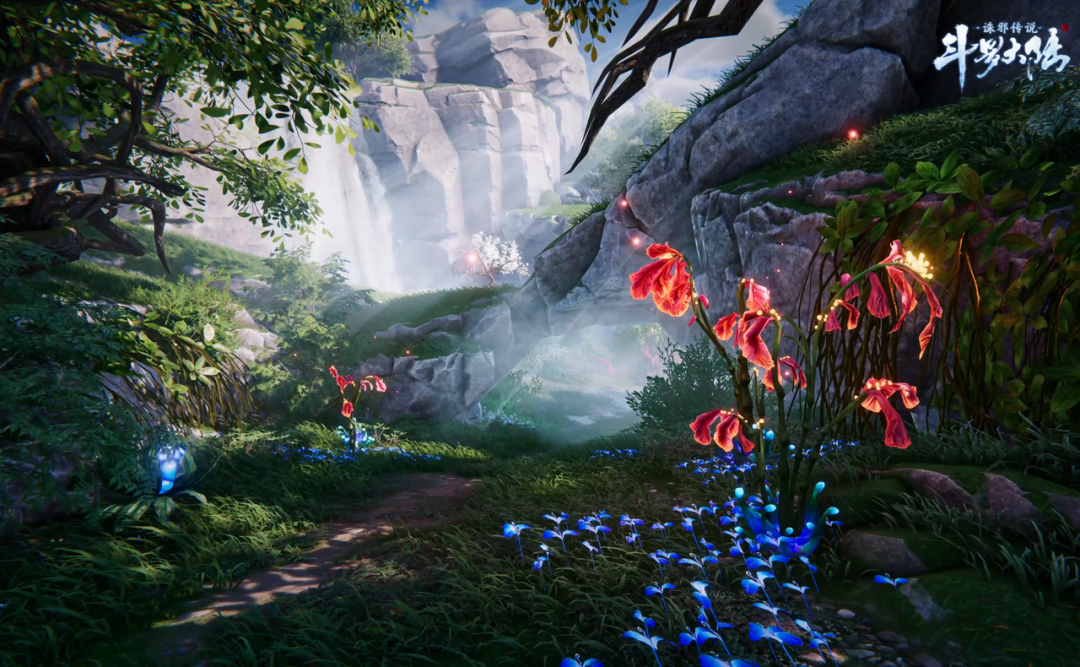
As for the issues of cross-platform compatibility regarding graphics quality and performance, we aim to achieve interoperability across four platforms—PC, iOS, Android, and HarmonyOS—while supporting intense battles with 100 players on the same screen. Integrating different SDKs and APIs across platforms is merely a matter of detail; what truly required several strategic adjustments was finding the right balance between graphics quality and performance across these platforms.PCs inherently have higher hardware specifications than mobile devices, so there’s no need to worry about overheating, allowing for higher graphics quality and performance; however, mobile devices have a fixed performance ceiling, and graphics quality and performance are mutually exclusive—increasing graphics quality inevitably leads to lower performance and device overheating;If you want to maintain performance, graphics quality will inevitably suffer, so striking the right balance is crucial.
During the earliest testing phase, we adopted a strategy of “sacrificing graphics quality for performance,” but many players immediately commented, “This looks like a browser game.” Later, we reversed course and switched to “prioritizing graphics quality while sacrificing some performance,” only for players to complain that our optimization wasn’t good enough.After several rounds of testing and refinement, coupled with the PC launch, we finally found a suitable balance between the two.
02
Leave the depth to pre-battle strategy
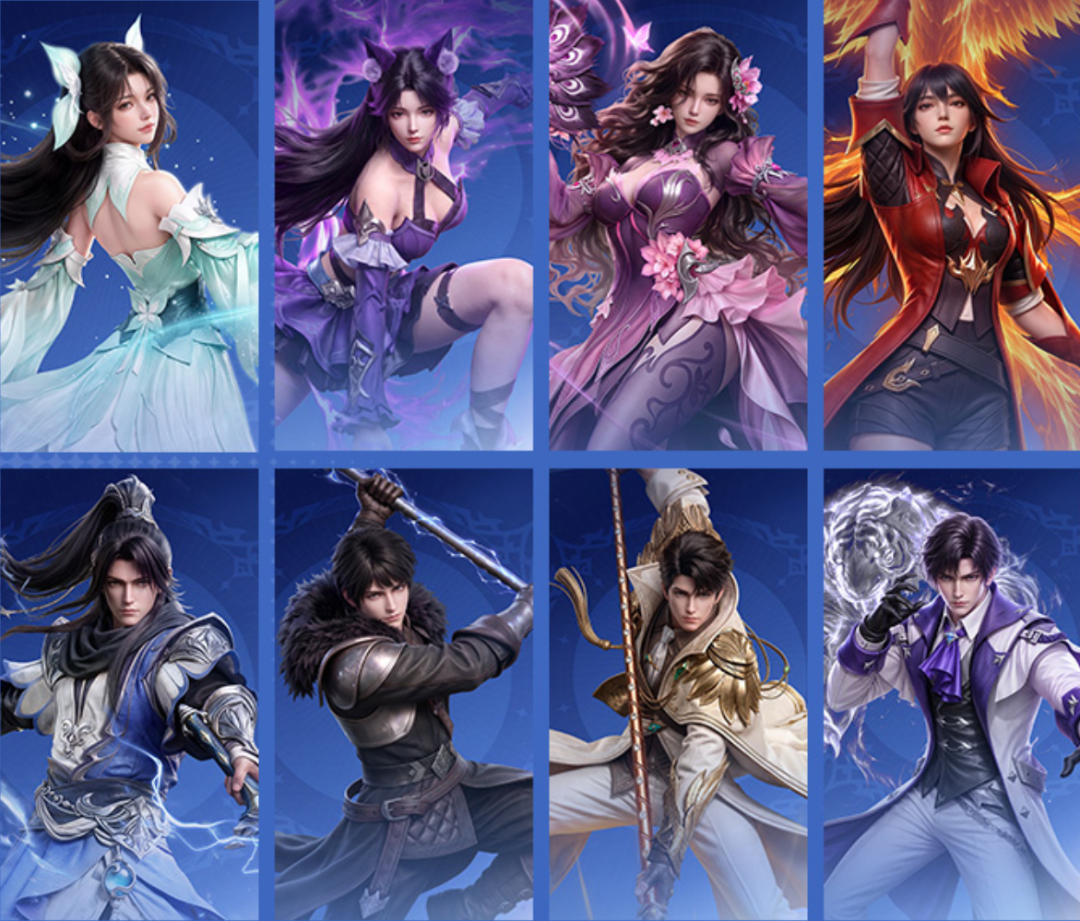
Game Teahouse: You seem very confident in the current combat system. Eight Martial Souls have been confirmed for the open beta launch. In addition to recreating classic ones, there are also original Martial Souls—how were original ones like the “Phoenix Fairy Fan” designed?
Yihui: Our team does place a high priority on the current combat system, as we consider it one of the core elements of the game. *The Continent of Douluo* is, by its very nature, a world of Martial Souls, and our Martial Souls essentially serve as an extension of the classes found in traditional MMOs.The open beta version will feature a total of 8 Martial Souls, corresponding to 8 elements and 8 distinct combat styles. Furthermore, as long as the game remains in operation, new Martial Souls will be added continuously. We’ve already laid the groundwork for future updates, and the specific order of their release will depend on what players prefer.
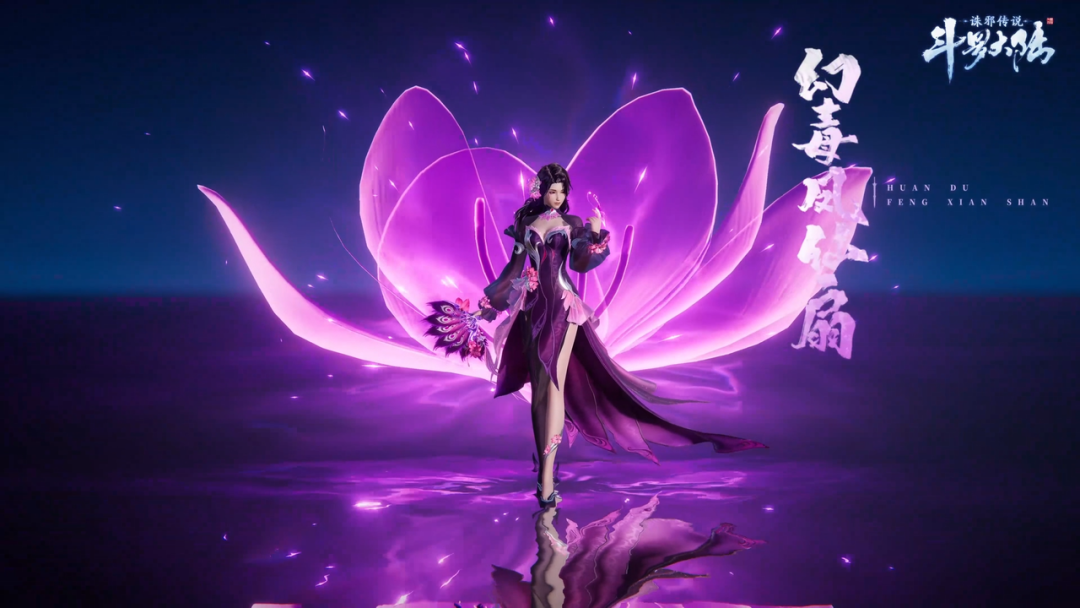
In addition to recreating popular Martial Souls, our approach to creating new ones is to first identify which genre is still missing among the existing eight styles.Take the “Impatiens Fan” as an example: it’s a control-type Martial Soul that’s highly effective in team battles later in the game. When selecting its element, we first chose the missing “Magic” element, and since it’s particularly well-suited for female players, we designed its visual effects to feature petals and impatiens flowers;As for the storyline, virtually all martial souls in the original novel are based on a specific weapon, plant, or animal from the Douluo Continent. Coincidentally, the village serving as the starting area for new players is filled with impatiens, which meets the soul’s natural habitat requirements. The resulting combat techniques look spectacular, smooth, and fluid,making it both fun to play and very much like a Martial Soul that would appear in the *Douluo* universe.
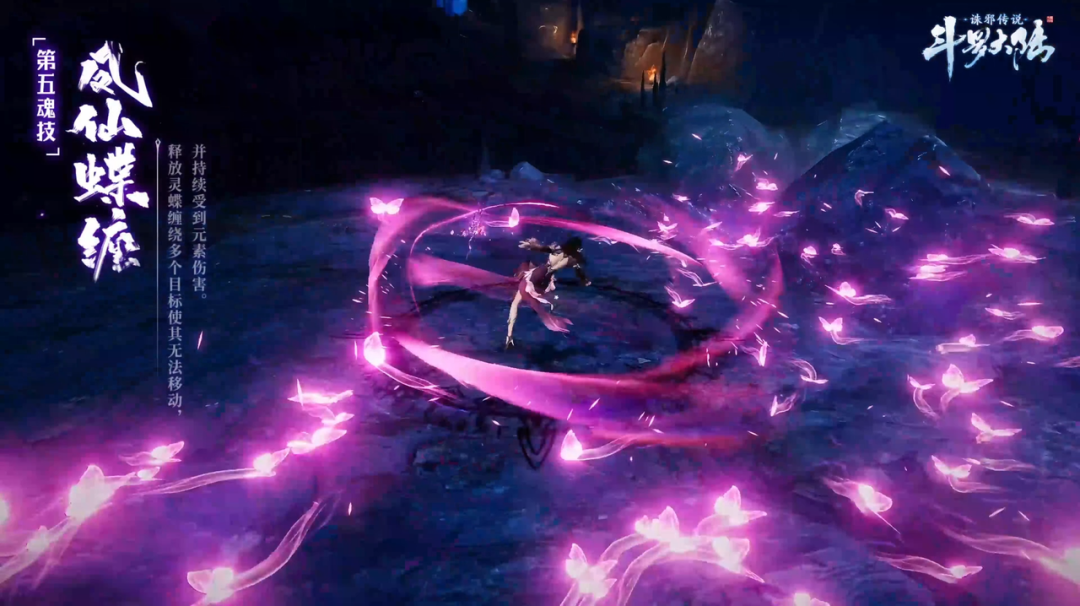
Game Teahouse: From the first beta test in October 2024 to the subsequent Twin Soul test, you introduced true real-time switching between Twin Souls, as well as naval and aerial battle dungeons. With a total of 18 active skills for the Twin Souls, how are players supposed to handle such a high level of gameplay complexity?
Yihui: Actually, the Twin Martial Souls, Naval Battle, and Air Battle dungeons weren’t added as part of later version updates or upgrades—they were all finalized right from the start of the project.However, the first test was a technical test designed to see which of the many features we’d implemented best suited the preferences of *Douluo* fans; at that time, the content hadn’t yet progressed to the point where Twin Martial Souls were available.
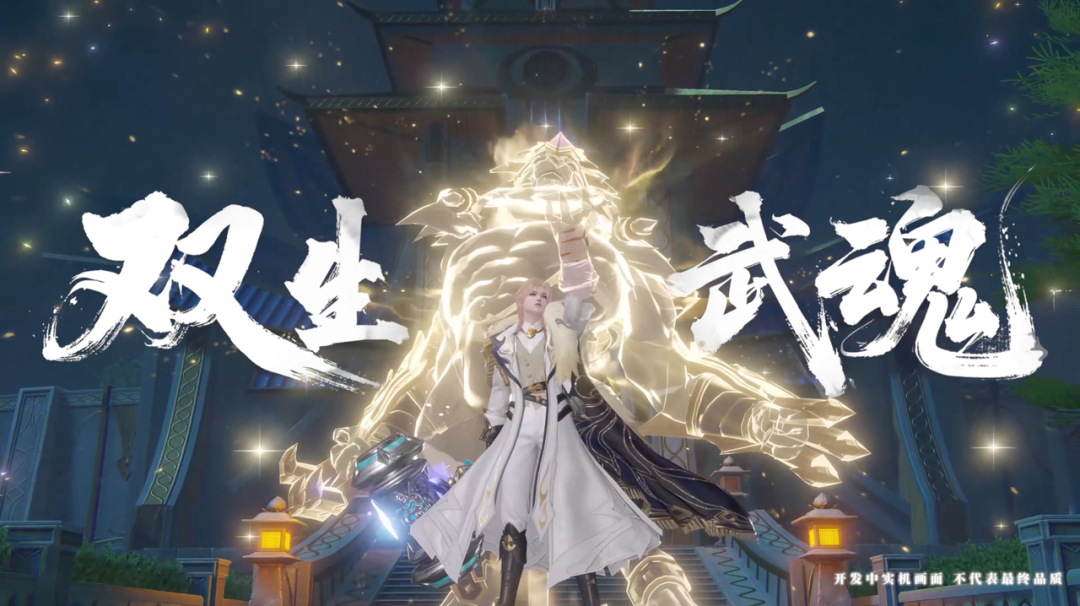
Our Twin Martial Souls feature doesn’t unlock until Level 47 (after players have been playing for about 10 days). Since our combat system requires a certain level of strategic understanding, if both Martial Souls were unlocked right at the start of the game, the difficulty for players to grasp the mechanics would increase exponentially.Once players have played for about 10 days and gained a basic understanding of Soul Spirits, Soul Marks, Soul Ring properties, and elemental affinities and conflicts—and have a general grasp of how the game works—we introduce the second Soul Spirit. By then, they’ll have developed their own criteria for choosing it.
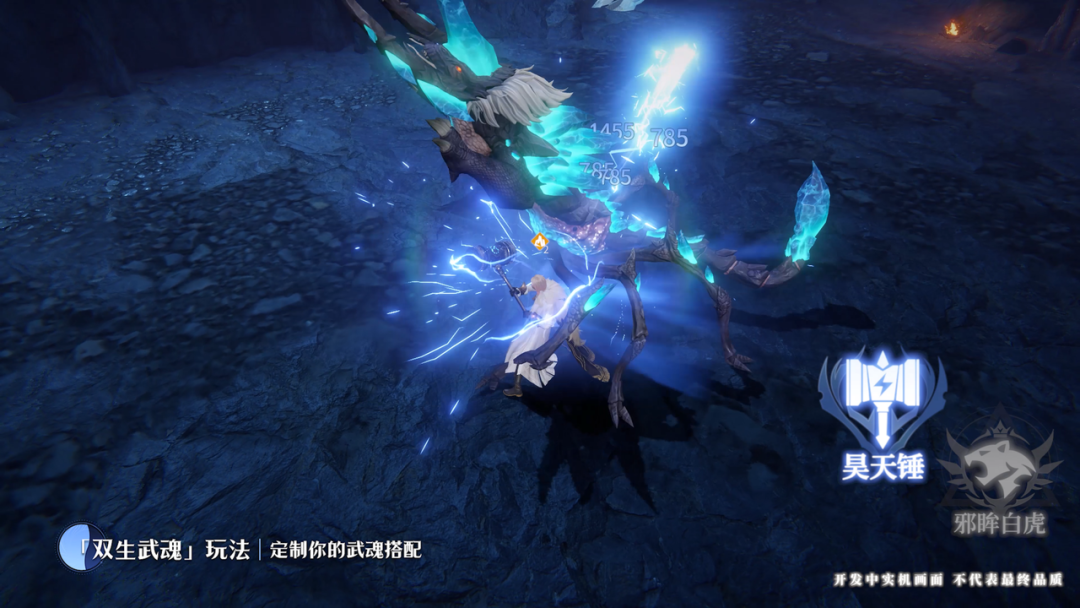
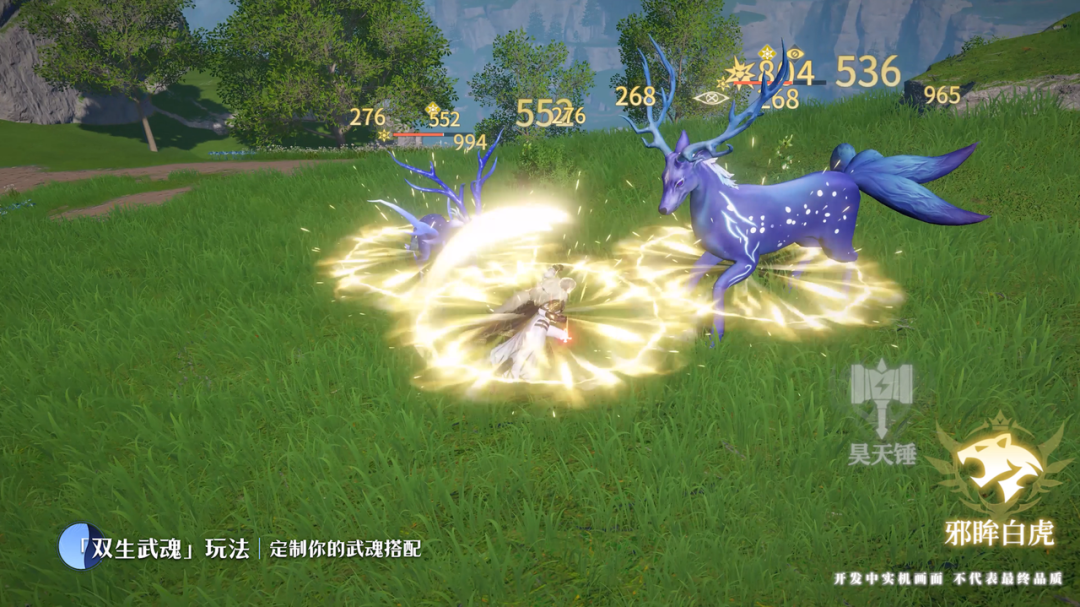
From a technical standpoint, switching between Twin Martial Souls presents no challenges whatsoever. Our second Martial Soul is quite unique—it’s called the “Pivot of Time and Space,” and it can mimic any other Martial Soul to acquire its abilities;Once you acquire it, you can freely switch to mimic another Martial Soul every 24 hours until you find the combination that feels most natural or is most strategically effective. Furthermore, the transition time has been specifically reduced to minimize lag, making the experience just as smooth as using a single Martial Soul.
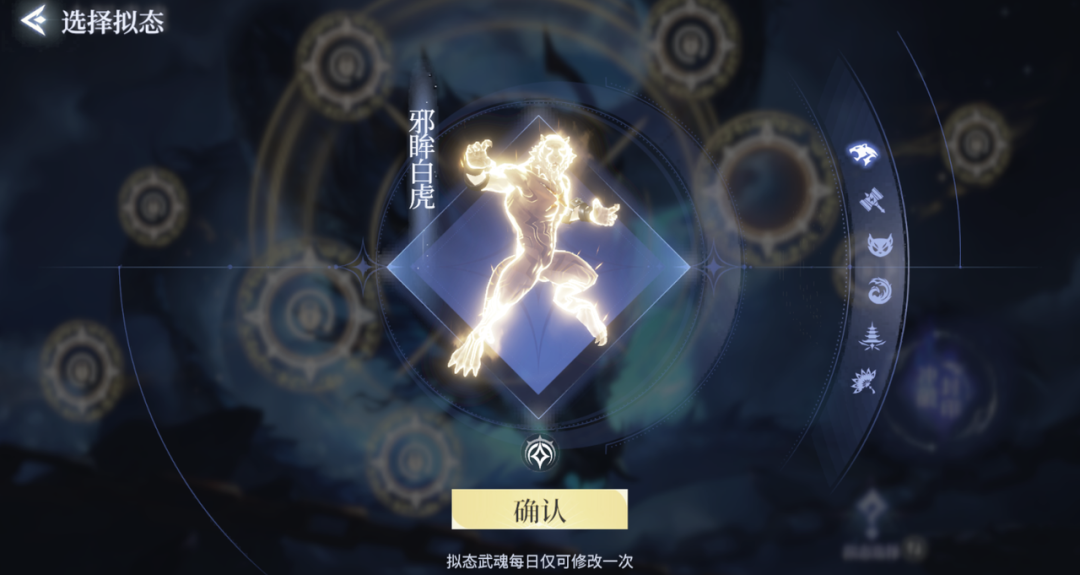
The real challenge lies in the number of skills: Most Douluo IP games on the market have very few active skills—they’re almost entirely passive. However, to strictly adhere to the original story’s premise of “gaining one Soul Ring every ten levels,” a single Soul Spirit has 9 active Soul Skills, and Twin Soul Spirits combined have a total of 18 active Soul Skills.To avoid increasing the difficulty of gameplay, we’ve implemented a clever “combo-like” button configuration that allows a single button to trigger multiple Soul Beasts and multiple Soul Skills.Once you master the technique of chaining normal attacks, unleashing those 18 soul skills becomes a natural and effortless process—a feature players have been eagerly seeking but which no other *Douluo* game on the market has yet to implement.
Game Teahouse: During testing, there were significant differences in the feel of controls between different Martial Souls. For example, the Haotian Hammer has combo variations based on short and long presses, while the Qisha Sword features off-hand skill activation. Given the cross-platform compatibility between PC and mobile, how did you ultimately balance the complexity of the controls?
Yihui: We did indeed create several versions with different feel profiles during our first round of testing.Back then, the Haotian Hammer was very action-heavy—with slow cast times, heavy attacks, and powerful-sounding impact effects—making it feel more like an action game in the vein of *Monster Hunter*; whereas some other Martial Souls had very fast cast times and fluid, seamless combos.Later, when we analyzed the test data, we found that—whether on PC or mobile—most *Douluo Continent* users actually preferred a “short, fast-paced” rhythm and weren’t particularly fond of Martial Souls with slow activation speeds and extremely heavy impact.
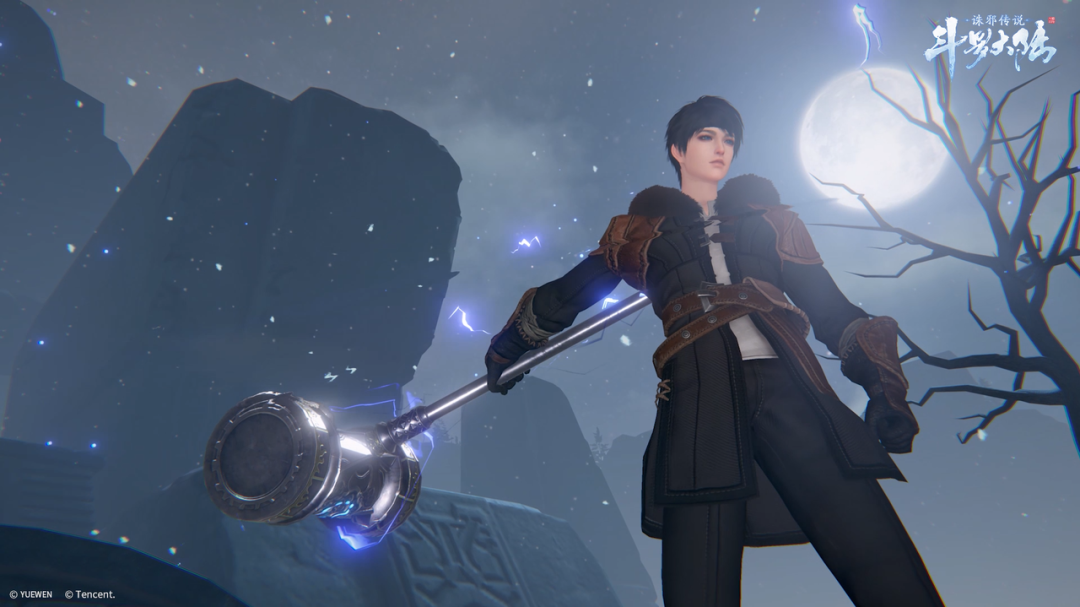
There’s no difference in what PC and mobile players are asking for—the feedback has been consistent across the board. Since our game features a lot of battles against Soul Beasts and PvP encounters, if your movements are too slow or your pre- and post-animation times are too long, players will always think: “‘I’m actually a skilled player and could have easily dodged that, but because your move was so clunky, I couldn’t react in time—it just felt off.’”So, based on repeated player feedback, we’ve been fine-tuning the gameplay feel. We’ve now established a unified standard: we’ve retained most of the impact feedback while speeding up the overall combat pace. Players can cancel any action at any time, or have it interrupted by higher-priority moves like “Ghost Shadow,” which has significantly improved the gameplay experience.
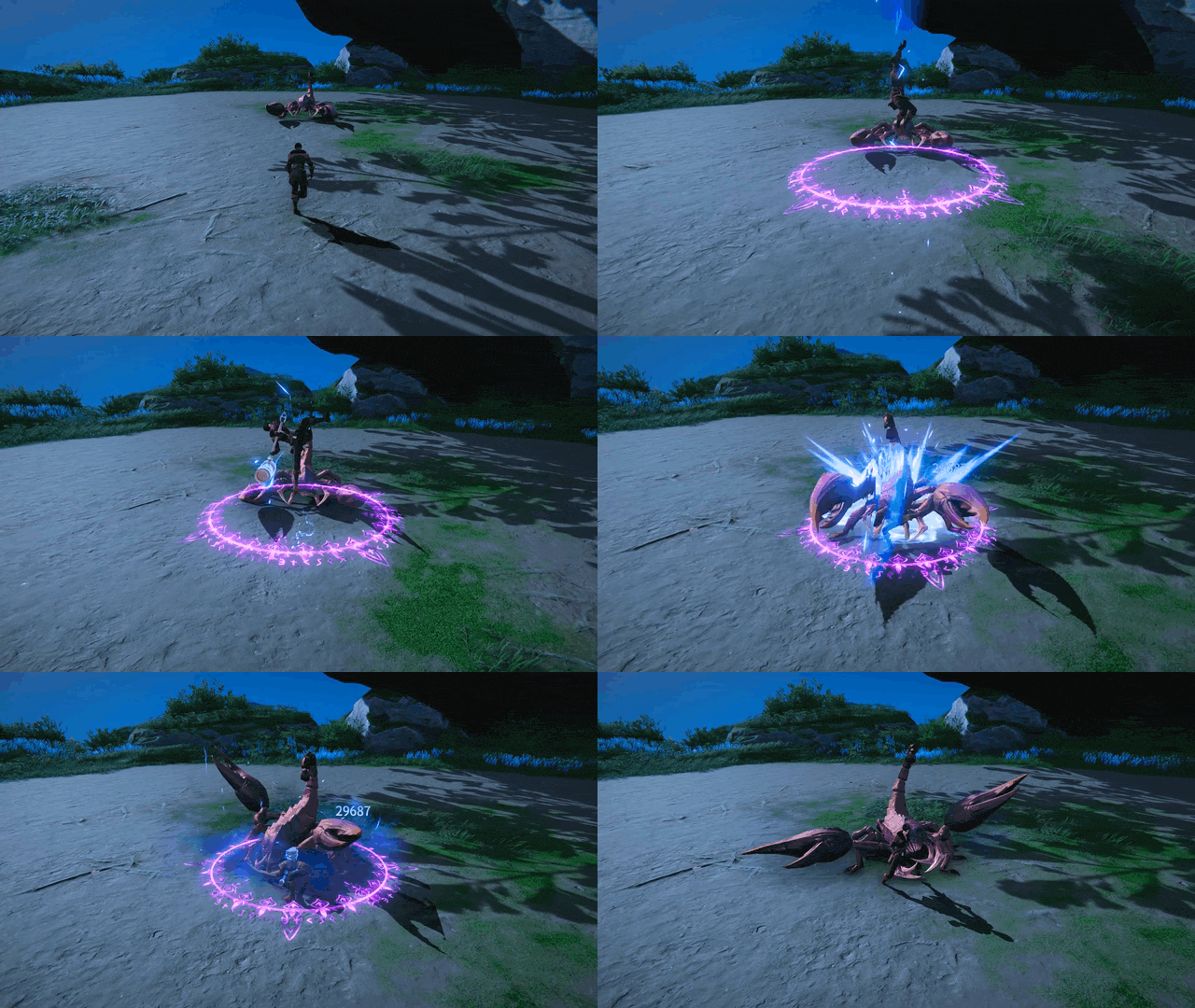
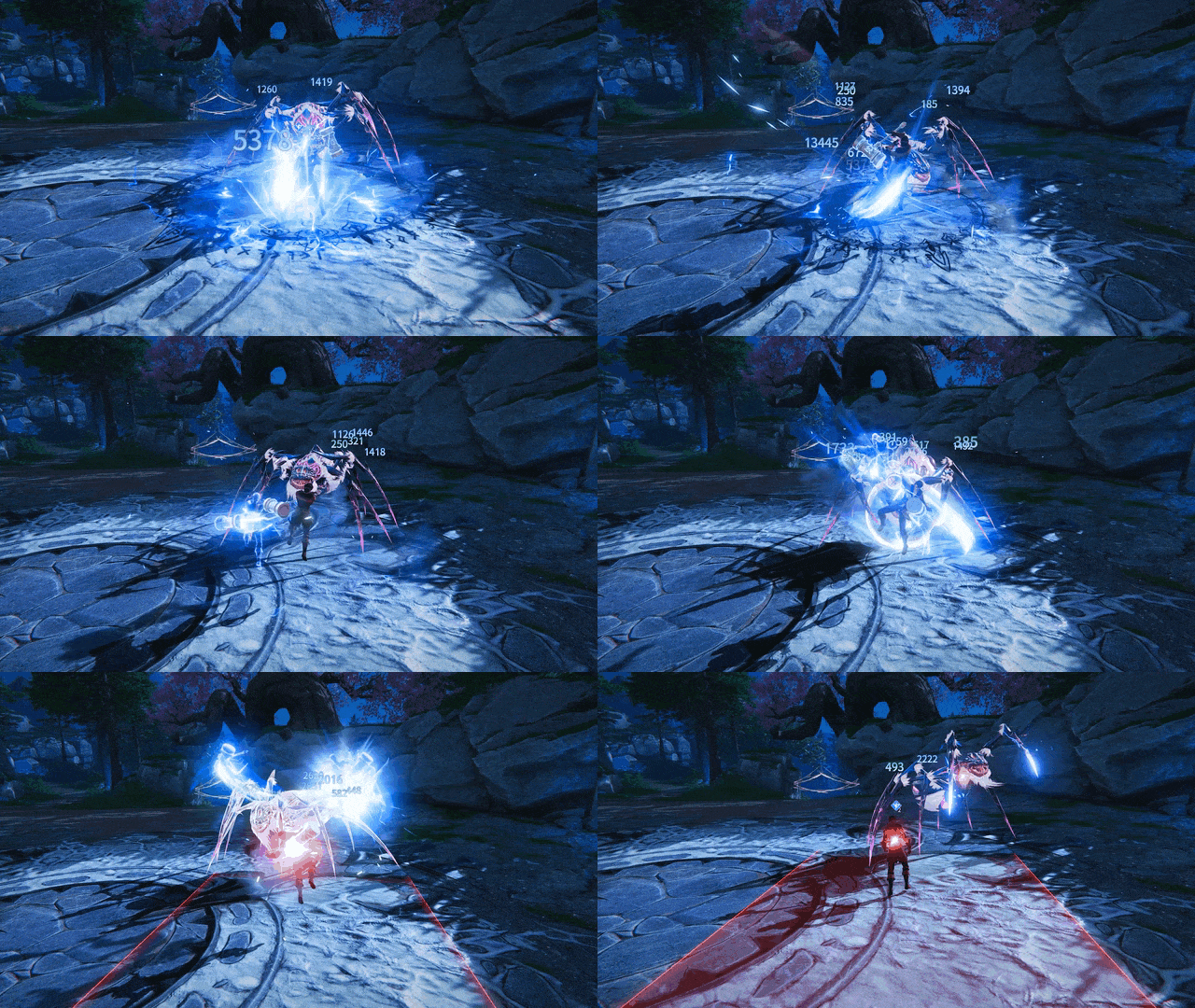
Game Teahouse: Now that the learning curve for combat has been lowered, what sustains the strategic depth of the battles? How exactly does the “Traits + Soul Marks” system—which has received such high praise from players—work?
Yihui: Our core philosophy is to provide players with a wealth of content and strategic depth without ever increasing the difficulty of combat mechanics.Many Douluo games on the market have very complex controls and are difficult to get into, placing particular emphasis on timing and cooldown management; whereas our focus is on making the controls easy for all players to pick up. However, before the battle begins, you’ll need to spend a significant amount of time thinking about how to build your playstyle—in other words, we place the depth in “pre-battle strategy.”
The foundation of this pre-battle strategy is the “Soul Ring Traits + Soul Imprint” system, which players currently praise the most. We wanted to preserve the immersive experience of leveling up and advancing from the original novel—unlike most games where players start at Level 1 with a plethora of soul skills—which would make players feel like they’ve simply entered an ordinary game rather than truly stepping into the world of *Douluo Continent*.That’s why we’ve stuck to the rule of absorbing one soul ring every ten levels, and just like in the original novel, once a soul ring is absorbed, it cannot be changed. But if it were completely unchangeable, wouldn’t all players who choose the same martial soul end up looking exactly the same?
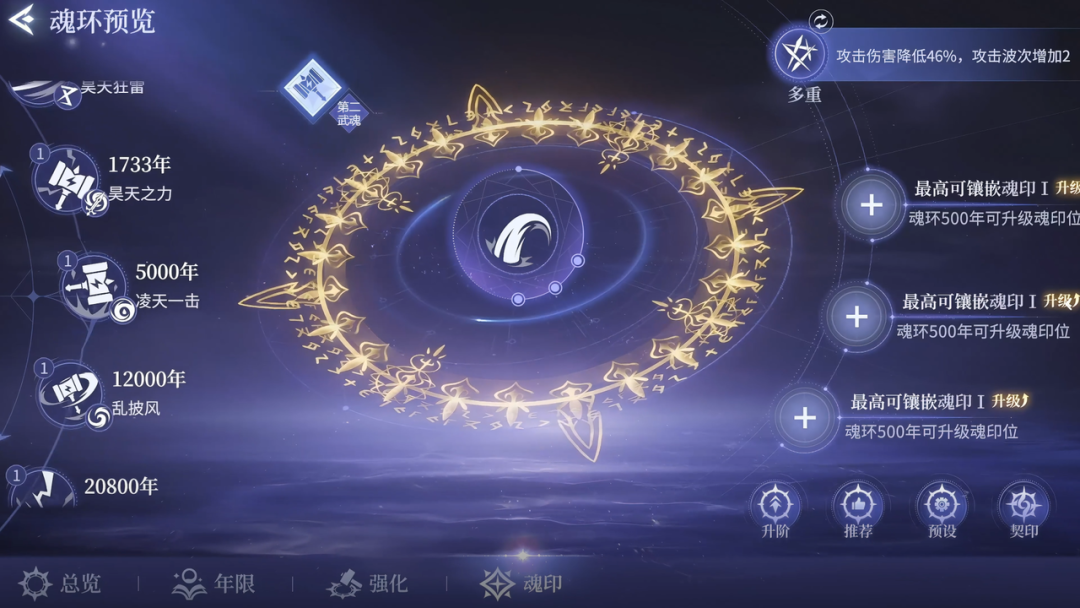
To break away from this monotony, we’ve introduced variations across two dimensions—for a total of four slots—on each Soul Ring: The first dimension involves each Soul Ring absorbing one “Trait.” With hundreds of different Soul Beasts, there are roughly 80 types of Traits you can absorb, and once absorbed, the skill effects and benefits they produce will be completely different;On top of that, each Soul Ring can also be equipped with 3 “Soul Marks,” which are also obtained from Soul Beasts—we have nearly 100 types of Soul Marks.This combination of 1 Trait and 3 Soul Seals creates an interactive system across the four dimensions—the Soul Seal you equip affects the effect of the Trait, and equipping another Soul Seal further influences the effects of the previously equipped ones. Theoretically, this allows for over 1.7 million different build combinations.
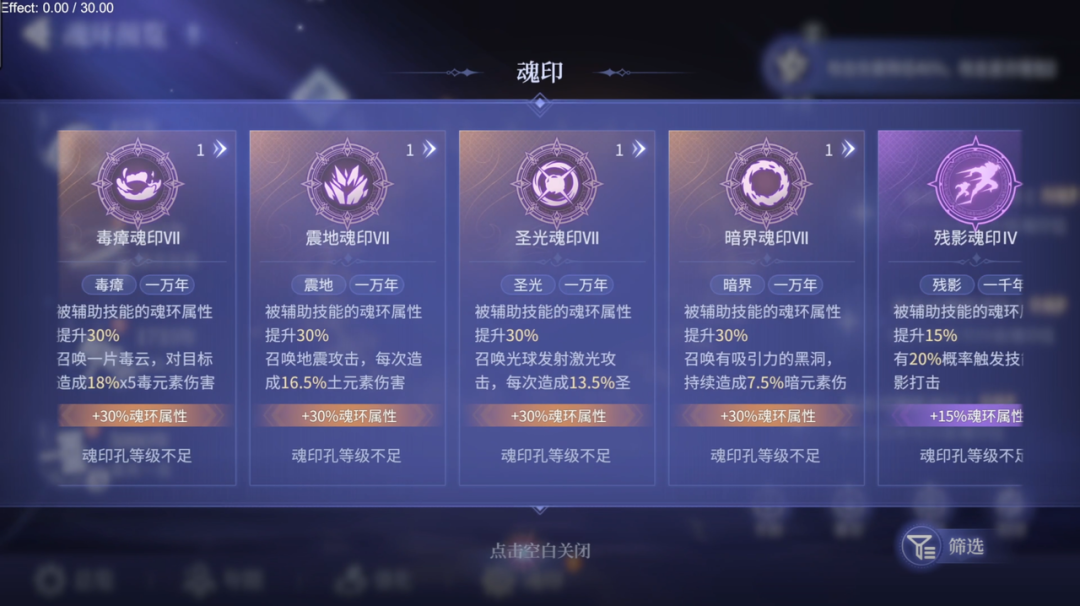
Let me give a specific example: take our popular Martial Soul, the “Seven Slaying Swords.” The base form of its first Soul Skill involves locking onto a target and firing a single flying sword.If a player equips it with a “Diffusion Soul Mark,” the stats of each individual flying sword will decrease by about 40%, but the number of flying swords will increase by 4, resulting in 5 flying swords being fired simultaneously. Overall, this leads to a significant increase in total damage;If you stack it with a “Dual-Track Soul Seal,” you can launch up to seven flying swords at once.
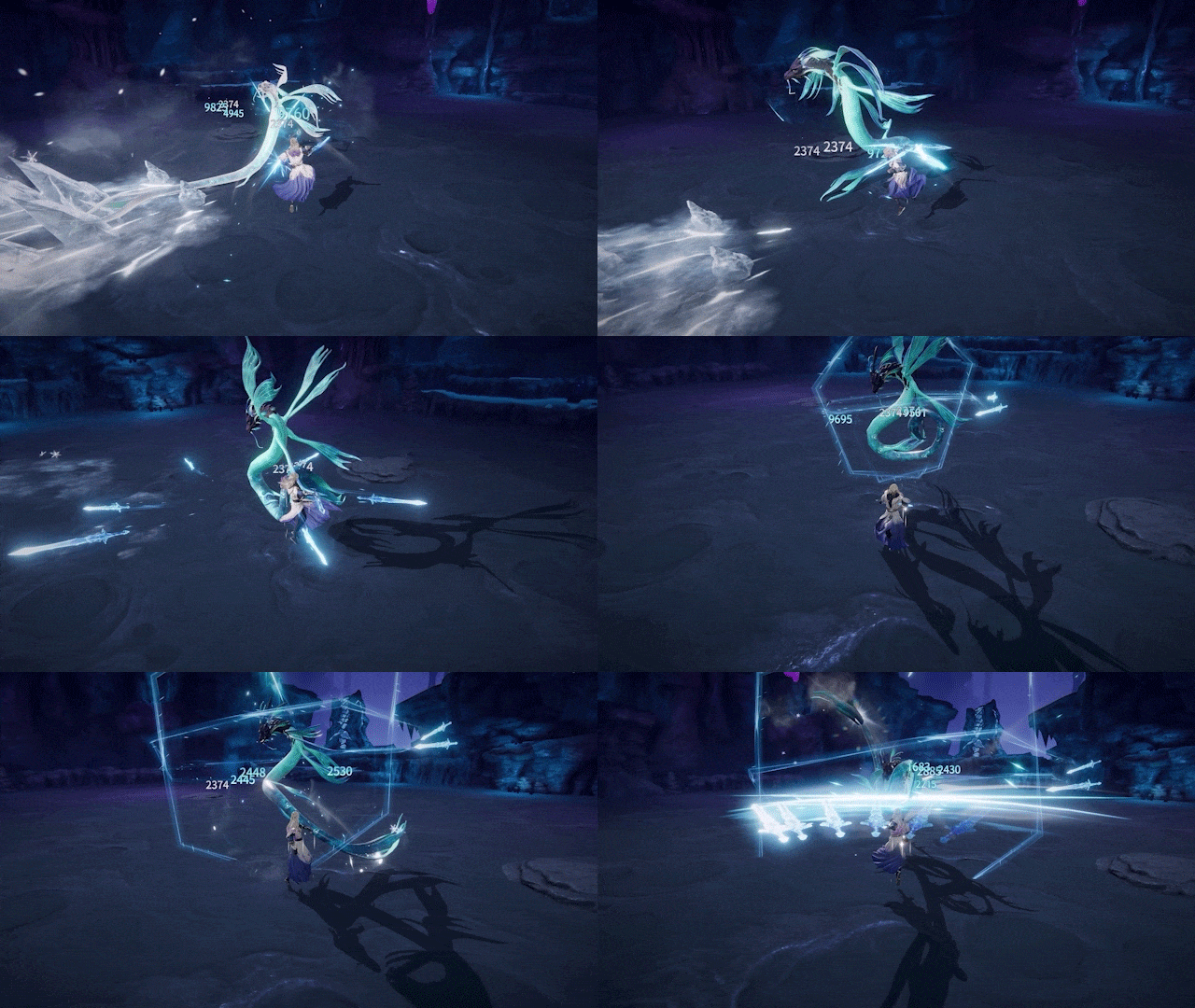
Additionally, you can equip this soul ring with a “Burst Soul Mark,” causing the flying sword to trigger a Frost Burst when it hits the ground or a target—effectively adding a second wave of area damage. When there are many enemies, a single strike on the ground can unleash an area-of-effect attack.And this is just the first soul skill—all nine active soul skills support this level of customization. Whether you’re facing a single boss, a group of minions, tackling PVE dungeons, or engaging in PVP battles, your pre-battle strategy will be completely different each time.
03
Start light and work your way up—build a long-term content library
Game Teahouse: In the original work, absorbing soul rings from higher levels carries a high risk of exploding and dying, and you can only absorb a soul ring by landing the “final blow.” Younger players today generally dislike the unpredictability of sunk costs. How do you strike a balance when recreating these settings?
Yihui: Absorbing soul rings across levels is designed to preserve the most iconic setting from the original work, so we’ve implemented a progressive success rate system: for example, the success rate for the first soul ring is relatively high, but by the second soul ring, the system calculates the probability based on how many levels you’ve exceeded the recommended duration—the higher the number of levels you’ve exceeded, the lower the probability of successful absorption.However, to protect players who don’t want to take risks, we’ve implemented two paths and multiple safety nets for soul ring absorption.
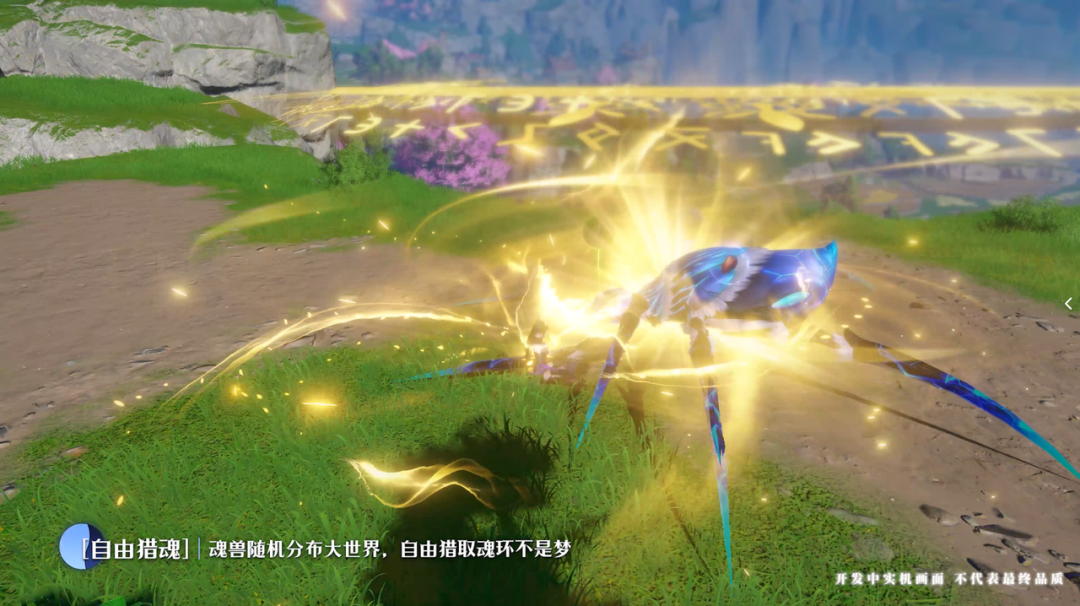
The first path is for players who enjoy straying from the main storyline to explore the vast open world on their own, searching the entire map for high-level Soul Beasts to absorb and level up beyond their current tier. If you’re willing to take that chance, even if the absorption fails, the penalty is merely being teleported back to the main city—aside from wasting a bit of time searching for the Soul Beast, there are no substantial sunk costs.Furthermore, the system is designed with a progressive safety net to ensure a positive experience: for example, with the first Soul Ring, if you fail to absorb it once, the second attempt is guaranteed to succeed; with the second Soul Ring, after two possible failures, the third attempt is guaranteed to succeed. The system is designed to ensure players never face a string of consecutive setbacks.
The second option is the ultimate safety net—if you really don’t want to venture out into the Open World to hunt Soul Beasts and rely on luck, simply following the main questline will guarantee you a Soul Ring, and it’ll be one with a decent duration.Of course, they certainly won’t have a higher duration than those you actively hunt in the Great World, because we encourage players to freely team up and hunt Soul Beasts in the Great World—that’s what *Douluo* is all about.
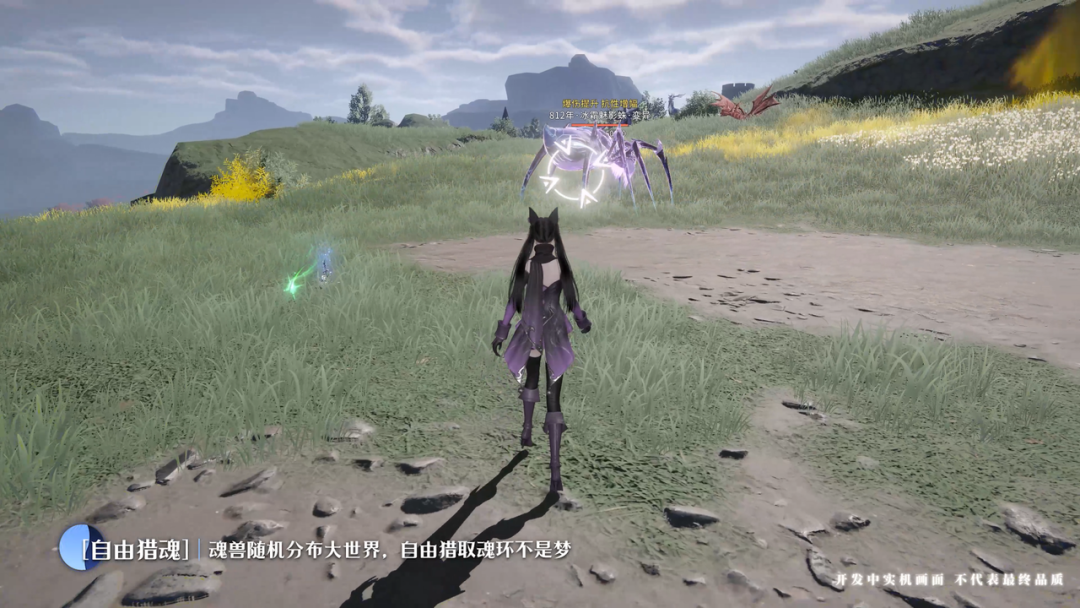
As for the original game’s mechanic that “only the final blow can absorb a soul ring,” testing has actually yielded mostly positive feedback.The one slight hurdle is this: when you’re unable to defeat a high-level soul beast on your own and gather a large group of friends to help, everyone must stop attacking simultaneously when the monster is nearly at zero health—creating a tacit understanding: “We’re here to help you earn the soul ring, so we’ll let you land the final blow.”This strong sense of teamwork and coordination, born from faithfully recreating the original game’s mechanics, proved to be extremely popular among players according to our final statistics.
Game Teahouse: Based on beta feedback, free-to-play or casual players seem to hit a significant roadblock between levels 30 and 40, requiring specific team compositions or party play to progress. Why was this particular hurdle introduced at this stage?
Yihui: The numerical barriers in our game are very low. Essentially, free-to-play players who possess either “skill” or “social skills”—or even just one of the two—will encounter no roadblocks and can fully enjoy the game.So when players reach levels 30 or 40 and need to absorb their third soul ring, it’s not a numerical roadblock at all—it’s a test to see if, after playing for this long, you’ve already mastered one of those two skills.You’ve either mastered the combat mechanics or built a solid team of allies. These two elements are central to the original *Douluo Continent* series—just as in the story when Tang San and his entire team helped Oscar absorb his third soul ring. As long as you’ve embraced that *Douluo* spirit or have the necessary skills, you’ll breeze through this stage.
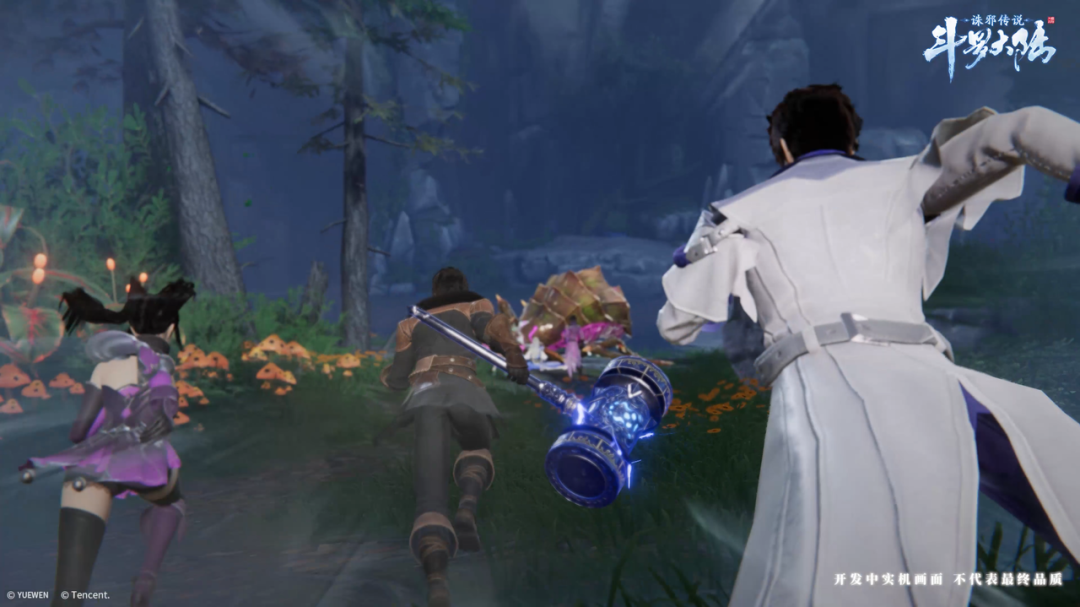
For casual players who prefer to go it alone—the so-called “lone wolves”—we’ve also designed a smooth transition.From what we’ve seen so far, the atmosphere among *Douluo* players is very friendly and welcoming—if you’re struggling to defeat a boss, all you have to do is shout “Can someone help me get the third soul ring?” in the open-world chat channel, and a large group of players will actually come running to help you.Even before we designed any reward mechanisms, this sincere and benevolent community atmosphere already existed in the game;Later, we specifically added the “Passing the Torch” reward system, where high-level players who guide lower-level players through dungeons, defeat bosses, or complete quests they don’t understand can directly earn in-game rewards, making it very easy for lone wolves to overcome these challenges.
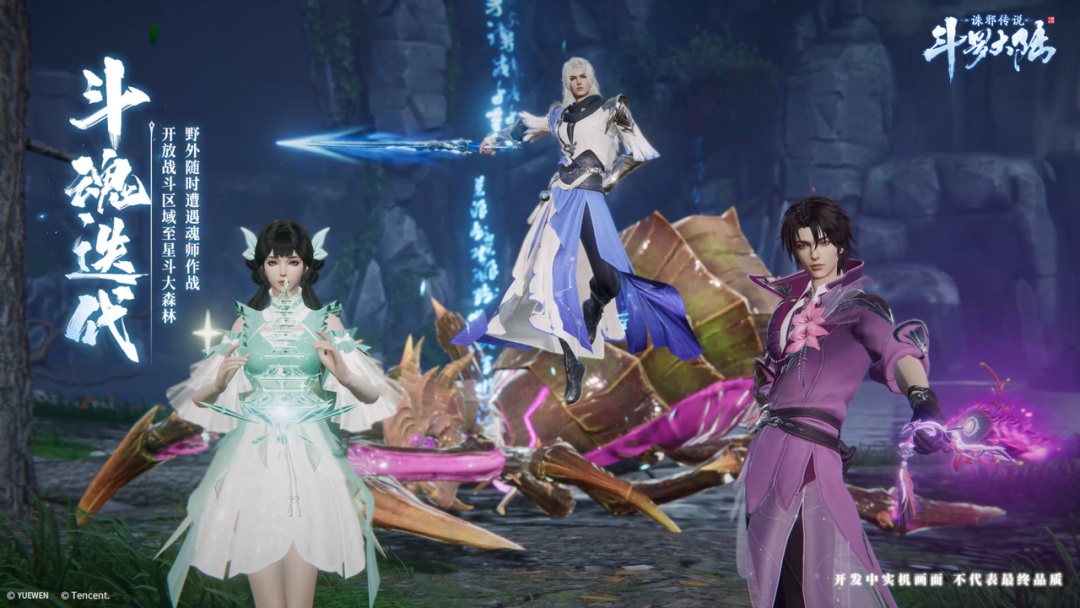
Game Teahouse: Many players are concerned that the game requires too much time and effort, yet they also fear that reducing the daily grind will turn it into a mechanical routine where they log in for just five minutes a day and log out, or that in the mid-to-late game, they won’t be able to obtain essential resources unless they join a guild and participate in scheduled battles. How do you balance the daily grind with social pressure?
Yihui: During the previous closed beta, quite a few players mentioned that the game required a lot of grinding. This was actually because the beta period was short, so we had to condense the available content to a level that players could experience within the testing period.In the most recent test, many resources and quests are unlocked on a daily basis or based on level, so the grind has been significantly reduced. Since we’re staying true to the original work, our Soul Rings unlock relatively slowly, and it’s only after players have obtained about four Soul Rings that the cooldown chaining of skills and the combat feel become more comfortable;Therefore, the main story progression will be slightly more intense during the first three days of the open beta (before reaching Level 40 and collecting all four Soul Rings). This is to allow everyone to experience the full effect of the early-game skill cycle with the first four Soul Rings within a short period of time.
Once you reach Level 40, the progression pace becomes much more relaxed—you can complete all daily quests by logging in for just 30 minutes to an hour each day. However, the fact that the mid-to-late game doesn’t require grinding doesn’t mean you’ll log in for just 5 minutes and then log out with nothing to do.We’ve implemented a decay curve for reward distribution: 70% of the day’s total rewards are concentrated in the first hour of daily quests, while the remaining 30% are spread across the following 23 hours.Since our 64 million square meter open world features over 10,000 Soul Beasts and Soul Masters—each with their own unique drops—if you have plenty of time and want to keep playing, you can continuously farm monsters for loot in the open world; there’s always something to do.However, for casual players who aren’t as dedicated, since the rewards diminish over the remaining 23 hours, you only need to log in for the standard one hour each day to claim the vast majority of your core rewards—and you’ll definitely not fall behind others in terms of level or progress.
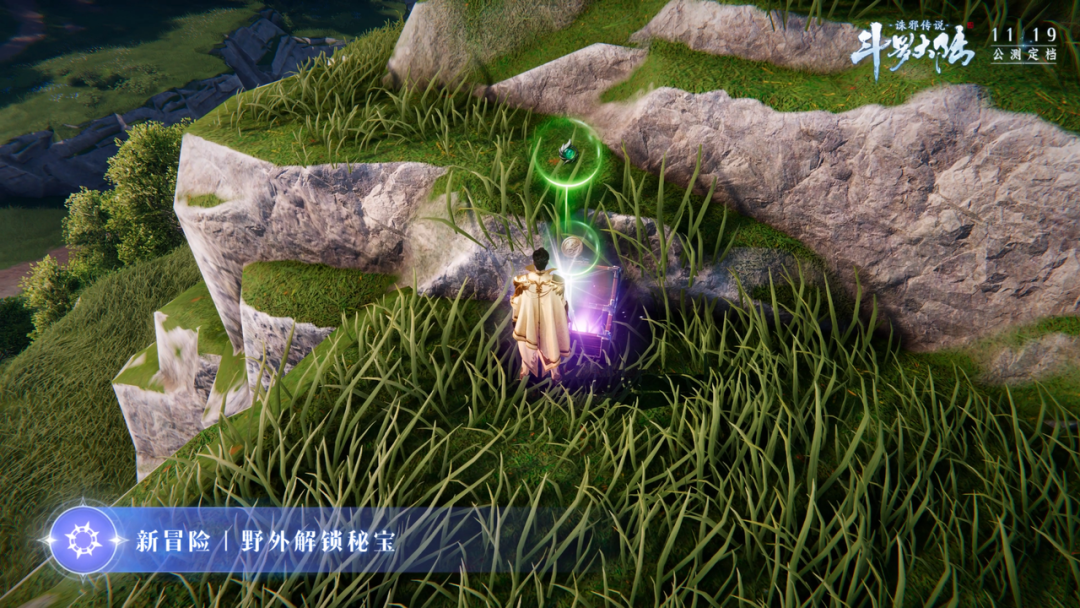
When it comes to alleviating social pressure, we aim to accommodate all types of *Douluo* fans. The two ultimate dreams at the heart of most *Douluo* fans—possessing a “100,000-Year Soul Ring” and “reaching Level 100 to become a god”—are completely free in our game. As long as you love *Douluo*, you’ll definitely be able to achieve them simply by playing at your own pace over time.Even if you’re a purely casual player who only enjoys exploring the open world, solving puzzles, fishing, cooking, and managing your homestead—and never participates in any PvP—your daily activity requirements won’t be affected in the slightest.This is because our daily activity points are divided into three major categories, and the point cap for each category exceeds the requirement for full activity. You can max out your activity points simply by focusing on the part you enjoy most; plus, the system provides different rewards based on your player tier—if you’re a casual player, the rewards will lean toward lifestyle activities;if you’re a PvP enthusiast, the rewards will lean toward combat—essentially enhancing your experience in the areas you enjoy most.As for clans, since they are a source of great pride in the original novel, we still encourage everyone to join. However, when creating clans, we’ve categorized them into casual, combat, and Soul Hunting PVE orientations, so players with different interests can choose clans with different focuses, and core resources are not tied to any specific clan.
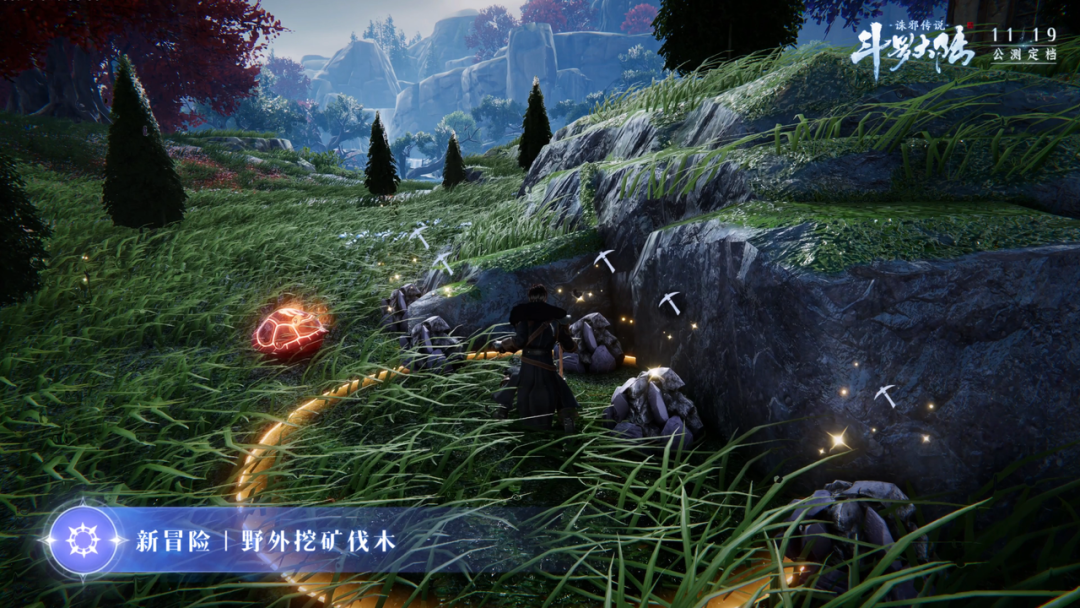
Game Teahouse: The Big World consumes its maps and story content much faster than traditional MMOs. How many endgame features and future updates does the development team currently have in reserve?
Yihui: To address the issue of long-term engagement, we’ve integrated endgame content into the game, such as the highly strategic “Search, Attack, Retreat” mode; large-scale multiplayer battlefields supporting 100 players on the same screen; and 2v2 and 7v7 competitive matches, as well as clan territory battles, which emphasize intense teamwork and strategic gameplay.
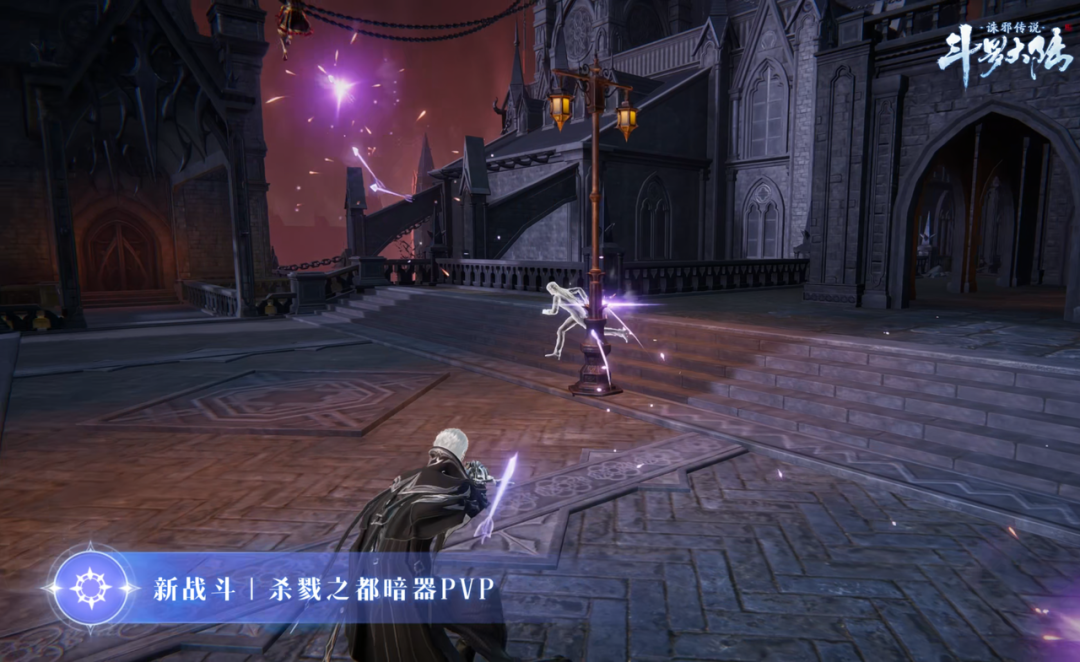
In terms of content planning, we already have several major updates in the pipeline. For example, the “True Form of the Martial Soul,” “Angel Martial Soul,” and “Martial Soul Hall” storylines, as well as the upcoming “Search, Attack, and Retreat” gameplay mode, will all be released as major expansions when players reach the corresponding levels or during major holidays.The release schedule for major updates following the open beta has been clearly mapped out: we will generally release one major update every three months, with each season comprising two minor updates (i.e., Battle Pass updates), which will be released approximately every 45 days.
04
Strengthening Economic Risk Management at the Grassroots Level
Game Teahouse: Most games on the market lock resources inside dungeons. Why have you allowed such a high degree of freedom for gold farming? How do you prevent gold farms from disrupting the game’s economy?
Yihui: I think merchants and ordinary players who farm for gold are extremely important parts of the MMO ecosystem, but in the past, the vast majority of *Douluo* games were idle, card-based, or closed-dungeon games that lacked any sense of free trading.We place great importance on this, so our casual gold farmers should find the game very enjoyable—because the in-game store basically doesn’t sell pay-to-win progression packs or stat-boosting materials; all paid content is limited to cosmetic items;
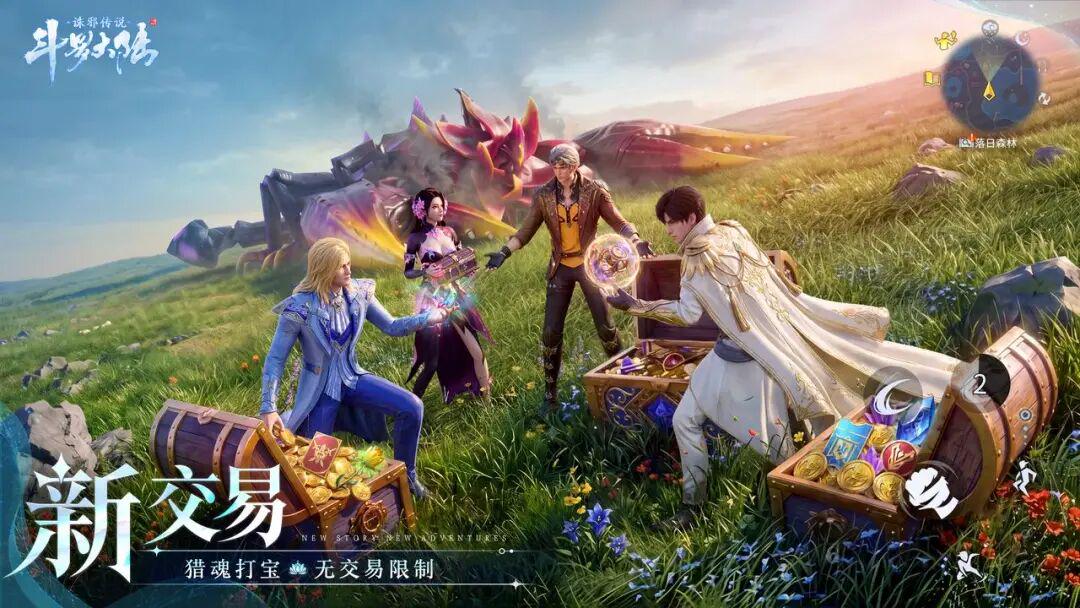
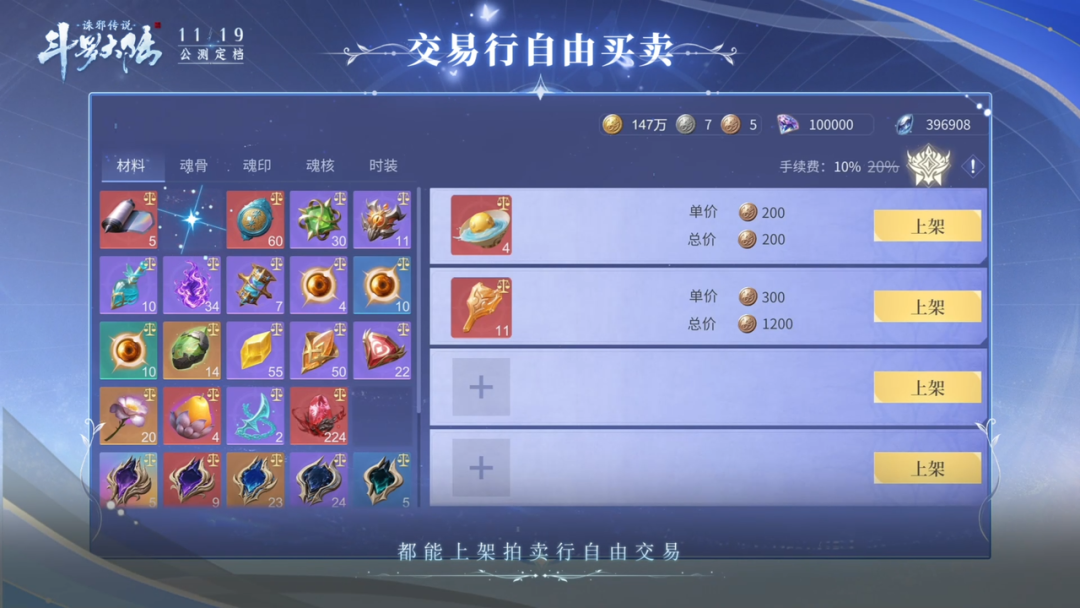
The vast amount of high-level progression resources needed by high-end players are obtained through wandering merchants in the open world or from drops in the wild.For example, if you encounter a monster in the open world surrounded by three green orbs, that’s a randomly spawning elite monster. The items it drops can all be listed on the auction house for free trading, and high-spending players will often purchase these materials from casual players.
We’ve also set the trading threshold very low: if you don’t purchase a monthly pass, you’re completely free to buy or sell any lifestyle- or leisure-related items and materials in the trading post; you only need to purchase a 30-yuan monthly pass when you want to convert your trading proceeds into in-game currency or cash them out.Precisely because we support such a high degree of freedom in gold farming, while setting the basic barrier for gold farming operations at just a 30-yuan monthly pass, in order to prevent this free-market economy from collapsing,the “top priority” of our economic system’s development has been entirely focused on the underlying “prevention and detection mechanisms”—through rigorous security safeguards such as anti-farm bot identification, prevention of black-market infiltration, and monitoring of abnormal transactions, we aim to prevent the proliferation of farming operations and safeguard the trading environment for casual gold farmers and regular players.
Game Teahouse: Since the in-game store doesn’t sell stat-boosting bundles and only offers cosmetic items, how can the game satisfy high-spending players’ desire for status and ensure that “high-spending players sustain the server”?
Yihui: Our monetization ecosystem follows a classic “high-spending players sustain the game” model—we respect and cater to heavy spenders while protecting free-to-play users, creating a situation where high-spending players and casual players depend on each other and form a mutually supportive relationship, so that everyone can enjoy the game in a relatively relaxed environment without feeling stressed.For high-spending players, the most important thing in the game is a sense of honor, so we make sure to give them plenty of that.For example, we host various tournaments such as 2v2 Summit Matches, 7v7 Competitive Matches, and Clan Territory Battles. Many of these events require high-spending players to leverage their influence and leadership to rally their clanmates to win championships and top honors, giving them that “big brother” feeling within the game—just like in real life.
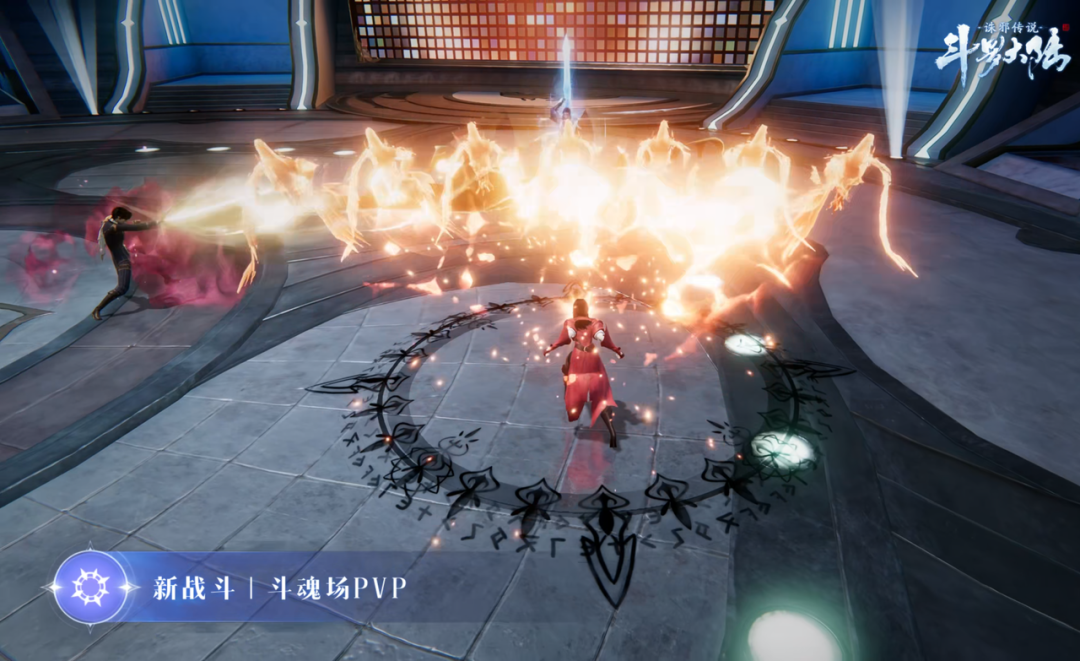
However, a crucial point is that all these large-scale events involving high-spending players can only be won with the cooperation of regular players, because many of our events do not favor pure combat power dominance; rather, they rely more on numbers and tactical coordination.Take the Clan Territory War as an example: what we’re competing on isn’t even which side has more high-spending players or whose attack power is stronger, but rather everyone’s command and coordination—how to reasonably deploy regular players to spread out and capture control points. Even low-spending players can still earn points by strategically exploiting misalignments in competition.Ensuring that players with varying levels of engagement can all participate, find their role, and contribute is the key to keeping our ecosystem thriving.
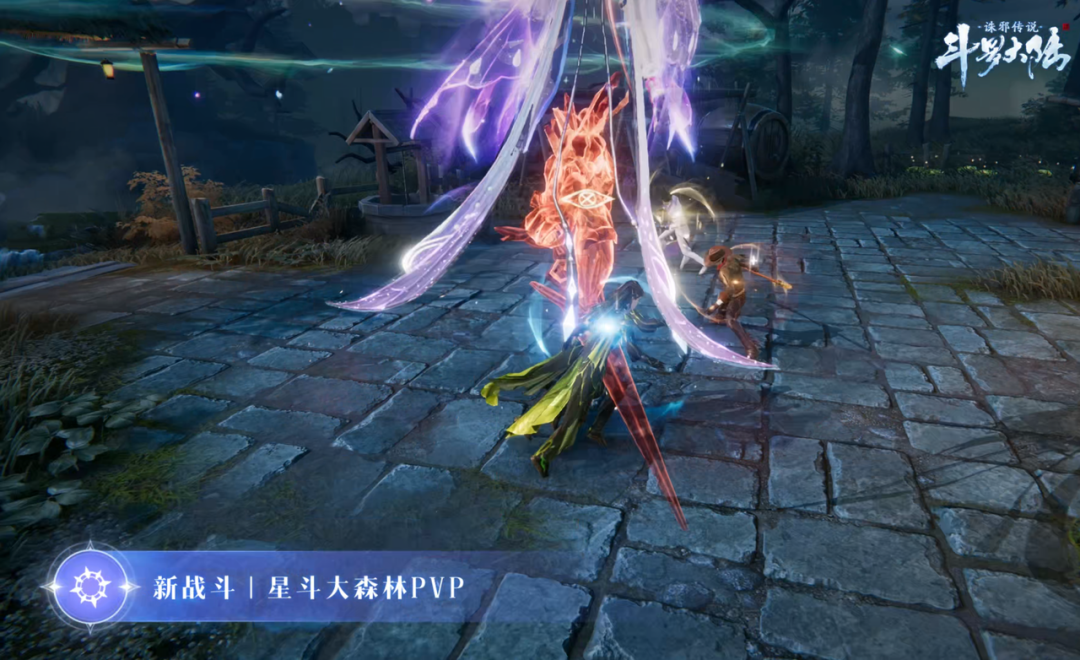
Game Teahouse: You’ve always had a well-known motto called “Listen to Advice,” but with millions of players, their requests often conflict with one another. How do you filter out the noise internally?
Yihui: The reason we’re so open to feedback is that we genuinely listen to players’ suggestions—I’ve read every single comment players have posted on external platforms, including live streams on Douyin and Kuaishou, as well as every review on TapTap, and I haven’t missed a single one.At the same time, we have stable channels through our streamer servers and beta servers. Our operations team continuously helps us collect more detailed player feedback. We review and filter each piece of feedback individually; if we believe it will benefit the game, we’ll evaluate potential solutions and implement them. We’ll also organize offline collaboration sessions and hold regular communication meetings moving forward.
When filtering out noise, my first criterion is whether a suggestion genuinely resonates with me on an emotional level. Since I’ve personally played through thousands of test accounts myself, if a player points out an issue and I also experience it as a problem while playing, that’s a genuine pain point that must be addressed immediately.On the other hand, however, some players are, after all, just players—they aren’t developers. They may not have considered many practical implementation issues, so it’s up to us industry professionals to evaluate the feasibility of their suggestions from a development perspective.
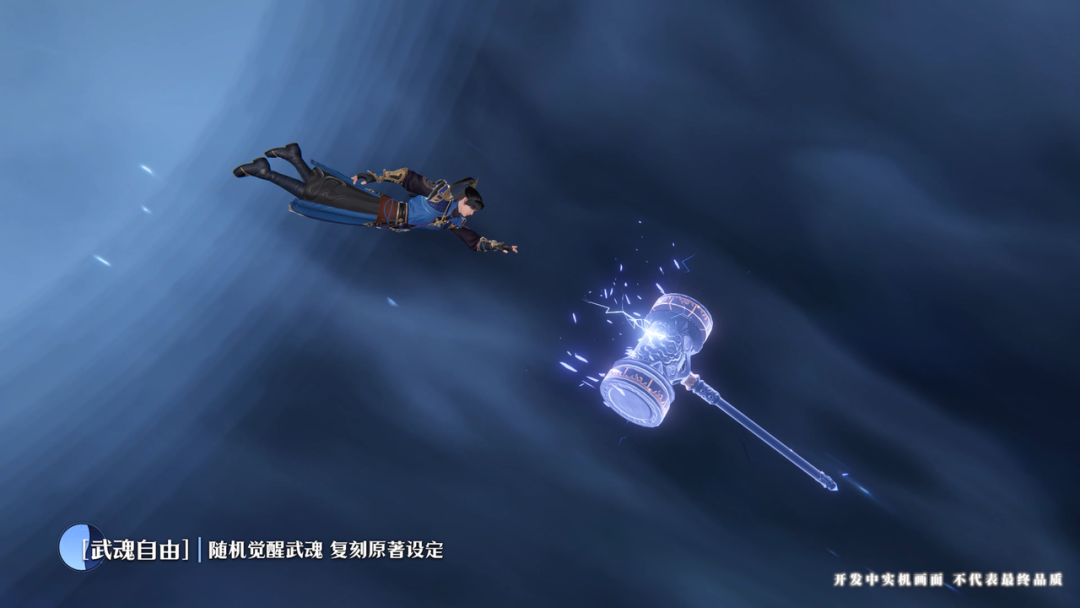
The most typical example is the “Random Martial Soul.”Early on, many players strongly demanded that the game mirror the original *Douluo Continent* universe exactly, with completely random martial soul awakenings at the start. But they may not have considered this: if a player were to randomly receive a very poor martial soul, would they actually play with that ordinary martial soul? More likely, they would simply switch accounts.However, since all our accounts are registered with cell phone numbers, how many phone numbers could the average player possibly have to keep “resetting” and trying again and again, just like in an offline game? Even so, we still did our best to accommodate the players’ wishes: we implemented the random Soul Skill feature. Players who enjoy the randomness can jump right in and play—and they’re having a great time;and for players who don’t like the random results, as long as you get a Martial Soul you don’t like twice in a row, the system will automatically trigger a “serendipitous encounter,” allowing you to directly choose your preferred Martial Soul within that encounter.
Game Teahouse: Do you feel anxious seeing other games based on the same IP or in the same genre hit the market ahead of you? With the open beta just around the corner, which aspect is the team focusing on the most right now?
Yihui: We’ve been partnering with Tanwan Games for exactly ten years now. Throughout our collaboration, both sides have consistently focused on their respective roles, working independently yet in perfect harmony—Tanwan helps us gather market feedback and suggestions for improvement from various sources, while we’re responsible for filtering through these suggestions and optimizing the game versions.Since this is the first open-world game for both of our companies, we’ve been continuously experimenting and discussing the specific launch strategy and user acquisition channels to use.
We aren’t the least bit worried about other *Douluo* products that have hit the market ahead of us, because they aren’t even the same type of game.The vast majority of *Douluo* games currently on the market are idle or card-based, with resources strictly limited to dungeons; however, the two core principles we established from the very start of the project—“fidelity” and “freedom”—have yet to be achieved by any other competitor.In terms of authenticity, our entire 64 million square meter open world is a 1:1 recreation of the anime. It would be a massive undertaking for other developers to recreate this from scratch now. Furthermore, our graphics have been refined to a level we consider satisfactory following the PC launch. We have done everything in our power to achieve this level of authenticity;In terms of freedom, our fully free Soul Hunting system, the ability to freely gather and craft materials throughout the open world, and the freedom to farm in-game currency and trade via the auction house are all features that no other *Douluo* game possesses. As for competing with other MMOs on the market, our core user base remains *Douluo* fans—we’ve discovered through several rounds of testing that the loyalty of the core *Douluo* fanbase is extremely high,with many players having participated in every test since the very first one. When a *Douluo* fan is comparing two MMOs, as long as both are available, they will almost certainly choose a *Douluo* game first. Therefore, we are using our core *Douluo* user base as a foundation from which to expand our reach to a broader audience.
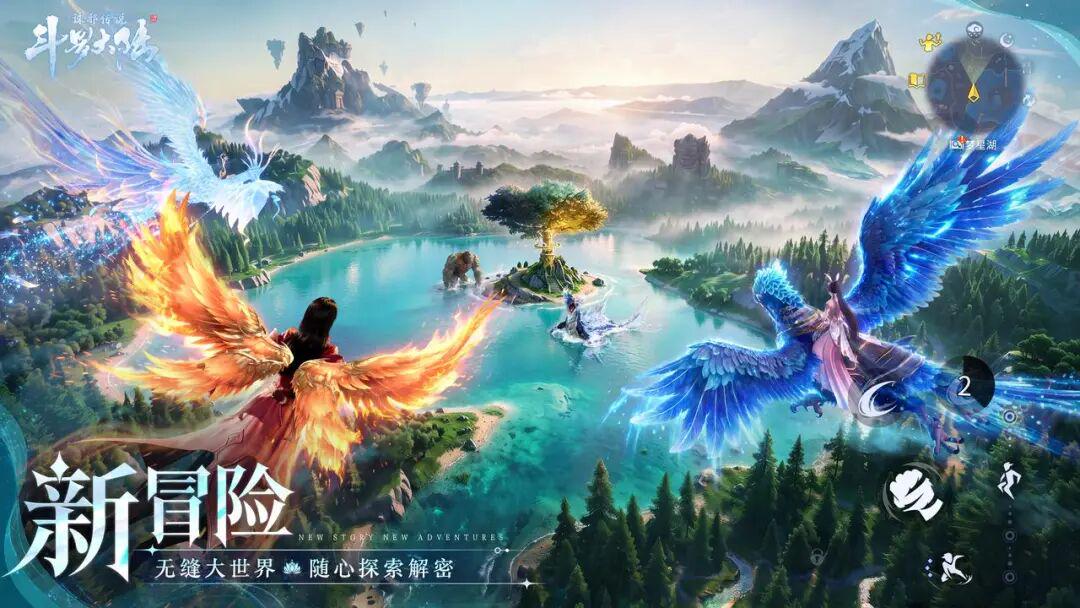
Right now, the area where the team can’t afford to let up is server validation—specifically, the load testing for concurrent users at launch. We’ve been conducting intensive load testing recently, and the results so far are fairly reliable.The games we’ve operated in the past have generally had lifecycles of 5 to 10 years or more. From the very beginning, we’ve developed this game with a long-term perspective of 5 to 10 years in mind—which is why there are far more free in-game items than paid ones.Setting aside the commercial revenue charts, there was actually a comment from a player during an earlier test that left a particularly deep impression on me. He said, “I really hope all ‘Douluo’ fans will come and experience this game, because they’re truly putting their heart and soul into bringing ‘Douluo’ to life.”I feel this comment truly resonates with my own sentiments—because our team is genuinely dedicated to creating this *Douluo* game. If any aspect of it falls short, it’s certainly a matter of our capabilities, not our attitude. As long as we can build a strong reputation among *Douluo* fans, players will naturally keep pouring in.
原创文章,作者:游茶妹儿,禁止转载:https://youxichaguan.com/en/archives/224786