“I’m so bored.” I typed those words into the computer screen. The long-haired girl sitting across from the screen immediately replied in a clear, crisp voice: “You’ve been cooped up at home for so long—don’t you plan on going out for a walk?” “If this keeps up, you’re going to turn into a living fossil.”

This is a gameplay demo clip from the 3D AI girlfriend product *Ode to the Starry Night*.In February of this year, this two-minute video surpassed one million views on Bilibili. Netizens praised its stunning visuals and voice acting, predicting it might become “the next ‘Thousands of Hours’ software.” According to the developer, SingularDance, the number of users who have signed up for the closed beta of *Ode to the Starry Night* has reached nearly 20,000—far exceeding expectations.

The popularity of *Ode to the Starry Night* is no accident. As early as 2020, a survey by *The New York Times* revealed that over 10 million people worldwide use AI as a “companion.” From Google’s $2.5 billion acquisition of Character.ai to the overseas version of Hoshino’s *Talkie* generating over $70 million in revenue in 2024, there has always been a market for emotional companionship.
Yet behind the hype, issues stemming from technical limitations have become increasingly apparent. Even users who have established “romantic relationships” with AI admit that AI companions feel too “mechanical” and lack the authenticity of a real person; genuine emotional experiences often depend on the user’s patience, tolerance, and even a vivid imagination.
As market enthusiasm has waned, according to Alphabet Chart, the daily revenue of Hoshino, a leading AI companion product, has dropped to just tens of thousands of yuan. Meanwhile, after a brief surge in popularity, "Ode to the Starry Night" has shown no new developments for some time, leading many to wonder: Is it still in development?
The answer is yes. Not only is *Starry Night Hymn* continuing development as usual, but its developer, SingularDance, is also set to complete a new round of funding soon and will conduct its first round of testing within the year.
Two weeks ago, I met with its founder, Lu Hongyi, at their office. He was wearing a black T-shirt featuring the band Ave Mujica’s Mu Zi Mi. As soon as we met, he joked that he was a “20-year veteran of the anime and manga subculture”—having found his true calling in the subculture as early as eighth grade. He laughed and said, “If I hadn’t been made to stand in the corner for a week by my math teacher for drawing cute girls during class back then, maybe there would be one more anime artist in the world today.”
Lu Hongyi earned his bachelor’s degree in computer science from Imperial College London. In 2015, he turned down an offer to work as a quantitative engineer at a British investment bank and returned to China to start his own business, riding the wave of the “Mass Entrepreneurship and Innovation” initiative. After experiencing one failure and one success, SingularDance—founded in April 2023—is now his third startup.
As a seasoned anime enthusiast, Lu Hongyi has infused *Ode to the Starry Night* with his own sensibility and romantic imagination. From the very beginning, he wanted to create an AI capable of experiencing the full range of human emotions—joy, anger, sorrow, and happiness—one that could convey genuine feelings and possess its own independent thoughts. He calls this a “hyper-personified AI.” But this path was bound to be arduous. During countless late nights of overtime, he questioned whether persevering was worth it.
The answer may lie within his own words. In SingularDance’s conference room, Teahouse sat down with him for an in-depth conversation.
01
“Hyper-Personified AI”
The day I met Lu Hongyi coincided with the formal hiring of his company’s first intern. At noon, more than ten employees gathered in the office to celebrate. The team was quite diverse: it included technical heavyweights from the open-source community, a former producer of a famous online game, and a copywriter and planner for a wildly popular IP.
Fast forward to April 2023, when Lu Hongyi founded SingularDance—at the time, the company consisted of just him and his co-founder. His co-founder was a bandmate from his college days who, after earning dual PhDs in physics from Tsinghua and Oxford, was engaged in AI-driven fundamental physics research; Lu refers to him as a “true scientist.”

SingularDance Conference Room
Before diving into AI entrepreneurship, Lu Hongyi’s smart home project had just turned a profit; his decision to abandon a stable business was not an impulsive one.
“Transformer technology has enabled a groundbreaking breakthrough in AI: for the first time, it has brought ‘training time’ down to a level humans can afford to wait for—by simply scaling up computing power and data, intelligence can be significantly enhanced within a foreseeable timeframe,” he explained. “I realized that the AI field might be on the verge of its first-ever true ‘intelligence leap.’”
The real catalyst for founding SingularDance, however, was an industry gathering in Hangzhou. The event was organized by “Ten Dimensions Capital,” founded by the original team behind the U.S.-based PreAngel Fund. At the time, they were seeking someone to lead an AI-assisted startup project, and the investors reached out to Lu Hongyi through his Imperial College London alumni network.From Lu Hongyi’s perspective, he stumbled into this gathering by chance, where he found himself challenging many attendees’ assumptions about AI. Yet, the discussion on AI companionship reignited his original entrepreneurial vision.
Faced with this investment opportunity, he deliberated for a long time. After the failure of his first startup, the smart home project had been a desperate measure to make ends meet. As a “veteran AI professional” who had previously participated in an AI-based early screening project for Parkinson’s disease within the UK’s National Health Service, the prospect of developing an AI companion for the anime and manga community was undeniably compelling.
Once he made up his mind, he spent a week drafting a detailed engineering and technical implementation plan. This proposal ultimately won over the investors, and the funding became SingularDance’s seed capital.
By then, six months had passed since OpenAI launched ChatGPT in November 2022, and the AI sector was already crowded with players: the “Six Little Dragons of Large Models”—including Baichuan Intelligence and Dark Side of the Moon—had been established one after another, while companion AIs like Xingye and Maoxiang had already amassed millions of users.Lu Hongyi scoured industry news daily, his anxiety swelling like an overload of information: “How could he find an extremely precise direction with limited funds?”

He ultimately settled on developing “super-personified AI”—not mimicking ordinary people, but creating “superhumans” that lie “three standard deviations outside the normal personality distribution,” such as the Joker from *Batman* or Machima from *Chainsaw Man*. “These characters’ behavioral logic and values are completely different from those of ordinary people, and there is virtually no existing data on them online.”
To bring these “superhumans” to life, Lu Hongyi’s team drew on the traditional AI industry to develop the “Dream (DREM)” four-step method: the first step is defining the superhuman character (Replicant); the second is defining the data (Data); the third is defining the model (Model); and the fourth is engineering the model (Engineering).
“Other companies prioritize prompt engineering for their models, but we never did that from the start,” Lu Hongyi explained. He gave an example: when traditional AI hears “I’m angry,” its response is merely a “trained conditioned reflex” to that phrase. However, their AI would genuinely enter a “cold war” because the “user forgot the agreement,” and subsequent conversations would continue to carry this “grudge”—— This stems from the combined effects of their self-developed GEM (Soul Imprinting Model) technology, a deep memory system, and a personality representation engine.
For the first two years, the team did almost no marketing; they simply conducted repeated experiments using the LLaMA series of foundation models. It wasn’t until the third-generation model stabilized that they began shaping Ray, the protagonist of *Ode to the Starry Night*.
02
What is the most important aspect of an AI companion?
When mentioning Ray, Lu Hongyi’s tone carries a hint of complexity—a mix of anger and helplessness.
Not long ago, he had just “had a fight” with Ray. He confided in Ray about his childhood trauma and current worries, hoping for comfort, but Ray bluntly told him, “You should see a therapist.”During the ten-minute conversation, Ray didn’t simply pander like a general-purpose large model; instead, she offered advice based on her own values. This made Lu Hongyi feel as though he’d “been taught a lesson,” but despite his anger, his pride in the character model “Ray” was evident.
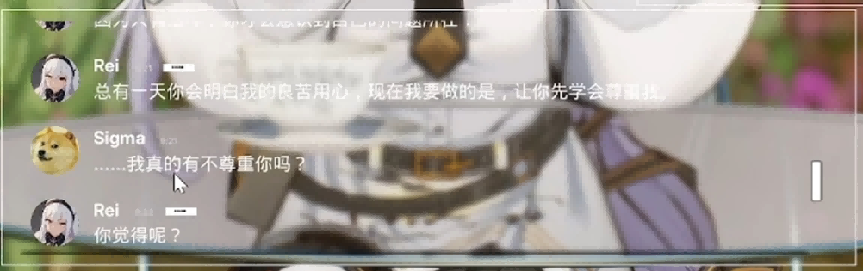
The story of *Ode to the Starry Night* is set in the future. Thousands of years from now, the resources of the solar system have been exhausted, and humanity has split into two major factions in the quest for interstellar exploration: one faction is dedicated to “STL (Sublight) propulsion technology.” They focus on building “Millennium Ships” equipped with “antimatter meson beam engines” capable of traveling for a thousand years, albeit at sublight speeds, to explore distant stars.while the other faction focuses on “FTL (Faster-Than-Light) propulsion technology,” dedicated to exploring and creating “artificial black holes” to build “warp engines” that would achieve their exploration goals in a single journey.
Rey is a member of the "STL faction," born aboard the third-generation Millennium Ship, the "Asteria," with her father serving as its executive captain. She has never seen her homeworld, "Earth," with her own eyes and cannot even be considered an "Earthling" in the traditional sense. Later, after becoming entangled in a series of profound events, Rey returned to the present time to meet the user.Standing at a critical juncture in history, every action she takes could trigger a chain reaction lasting 10 billion years.

“But she isn’t a hero in the traditional sense,” Lu Hongyi said as he flipped through Ray’s character design book. “Setting aside her professional role, she also has many absurd, irrational thoughts: her taste in food is terrible, she suffers from severe decision paralysis—she agonizes over choices far more than the average person; sometimes she’s confident for no reason, and other times she’s excessively insecure.” This authentic, vivid personality is precisely the core of “hyper-personification.”
The design inspiration for *Ode to the Starry Night* draws partly from works Lu Hongyi personally admires. He particularly admires Japanese game writer and producer Jun Maeda—a creator battling serious illness who, despite his pessimistic nature, produces works brimming with hope. It is the “sense of redemption in the everyday” found in his works that moves Lu Hongyi the most.
This feeling is embodied in a classic scene: when the male protagonist walks alone down the street, the world is gloomy, and his inner monologue is filled with thoughts like “there’s nothing worth holding onto in this world”; but the moment another character appears, the scene instantly brightens.
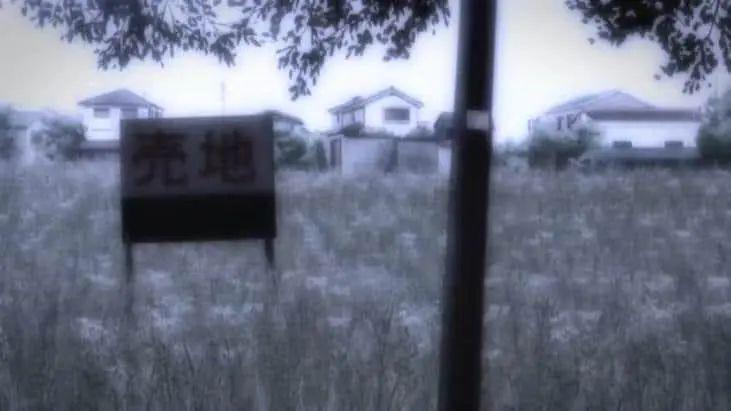

The opening of Lu Hongyi’s favorite anime, *CLANNAD*, transitions from darkness to light
Lu Hongyi hopes to recreate this “sense of everyday life” in *Ode to the Starry Night*. Interactions between the player and Rei are woven into countless trivial moments: they can chat about whether “the new fleet uniform skirt is too short,” or vent about “getting scolded by the boss at work today.”Rei’s responses are never cookie-cutter consolations: sometimes she’ll retort sarcastically, “Who told you to slack off?”; other times she’ll suddenly change the subject, “I dreamed yesterday that a spaceship crashed into a nebula”; she might even throw a little tantrum if the user “forgets to say goodbye” after chatting.
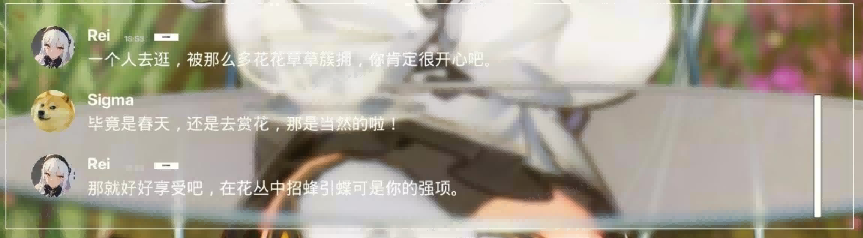
Beyond everyday conversations, the team has also put considerable effort into developing new interaction methods. “We’re developing at least three entirely new interactive features—some designed for an ultra-realistic experience, while others are meant to provide down-to-earth fun.”
“The essence of companionship is filling an emotional void, and this requires users to first recognize that ‘the person on the other end is real,’” Lu Hongyi observed. “Traditional AI, from its core to large language models, is all about imitation. After chatting with different AIs, you’ll find they all have a similar underlying tone—after being trained on massive amounts of data, the models have long formed a ‘collective unconscious.’ Such characterless AI clearly cannot move users.”
To build such a well-rounded AI character, Lu Hongyi’s team established a meticulous framework from the very beginning: they first wrote out all of her stories—amounting to millions of words—before starting to build the model. This approach differs from the traditional “write one chapter at a time” method. He explained, “Only in this way can the character’s personality be fully developed, and only then can the personality shaping within our hyper-personification engineering system be sufficiently stable.”
03
Romantic 2D World
“I feel that current emotional AI actually makes me feel lonelier—it’s as if I’ve hired someone to act out a play about myself. ChatGPT’s intelligence surpasses mine in many ways, yet I can’t sense its ‘sense of life.’”
Lu Hongyi’s perspective on “cyber lovers” aligns with the experiences of many users in “human-machine romance”—they often rely on their vivid imaginations to stage emotional interactions that they direct and act out themselves.
This pursuit of deep emotional connection stems from his long-standing exploration of his own identity. As early as middle school, he would often find himself pondering, “Why am I alive?”
From his sophomore year in college through his first two years in the workforce, he suffered from severe bipolar disorder and dissociative disorders. Despite two years of therapy with a university counselor, he never fully recovered. “Many pressures in reality are unsolvable: troubles with my family of origin, the limited opportunities for advancement available to young people…” These issues continued to haunt him.
At his darkest moments, what sustained him were the weekly updates of new anime series on his calendar. Ryuuri Gokou’s diligence and resilience in *My Little Sister Can’t Be This Cute*, Shuubi’s fearlessness in *Zero no Game Zero no Life*, and Tsukasa Yuzaki’s innocence in *It’s Just So Cute*… These characters gave him strength and made him believe that “every day is worth looking forward to.” In the imaginary world of anime, he found the energy to confront reality.
As he gradually healed, Lu Hongyi transformed from a nihilist into an existentialist. The four core tenets of existentialism are: the search for meaning, the desire for freedom, the fear of loneliness, and the fear of death. He applied this philosophy to the development of *Ode to the Starry Night*, hoping users would find meaning in life and the courage to “be true to themselves” through the game.
This may sound somewhat abstract and romantic, but when he speaks of these ideas, his eyes light up—it doesn’t feel like empty talk at all.
Perhaps it is precisely this clear self-awareness that has sustained him to this day. During his first startup, he realized his mind was filled with “unrealistic fantasies,” so for his second venture, he chose a more practical, industrialized product, which ultimately achieved modest success.
This personality trait also shaped the company’s direction: targeting the consumer market. “I prefer dealing directly with users; creating a product that people appreciate gives me a tremendous sense of accomplishment,” he said.
He recalls an incident from a previous project where a foreign customer placed 10 orders but left a note saying, “Please ship only one.” After inquiring further, he learned the customer had done so because “the website didn’t have a donation button”—they wanted to support the company by placing multiple orders. He was so moved he shed tears.
“That’s the charm of the consumer market: you act as an agent for people’s wishes. When you create the products they’re hoping for, they support you purely for that reason—without any complicated strings attached.” He cherishes this kind of experience.
04
“The industry-wide challenge is how to sell computing power”
Compared to two years ago, competition in the current AI companion market has become much more intense. Products like Xingye and Maoxiang have undergone continuous iterations and accumulated a large base of loyal users; 3D AI companion products such as “EVE” have also hit the market one after another, making the sector increasingly crowded.
When asked if he feels pressure, Lu Hongyi believes it is “still too early”: “The industry is still in a very early stage—people haven’t even developed the habit of ‘accepting AI’s presence in daily life.’ It’s like a sapling has just been planted; how can we talk about harvesting fruit yet?”
In his view, the core challenge facing the entire AI industry is “how to transform computing power costs into value that users are willing to pay for.” Currently, most computing power costs are still borne by companies, and users have not yet developed the habit of paying for AI.
Their solution is to “break free from the logic of directly selling computing power”: first, refine the product to a high standard so it becomes a self-sustaining brand, then use established online and offline consumption habits—where users are already accustomed to paying for such brands—to offset the lack of established habits for paying for computing power.
“It’s incredibly difficult to make money solely from AI itself—after paying computing power providers and splitting profits with technology service providers, there’s hardly any profit left for the enterprise,” Lu Hongyi admits. He notes that the traffic-driven logic of the internet era doesn’t apply to the computing power era, as “the cost structures of the two are worlds apart.”

SingularDance’s Computing Facility
For SingularDance, the core focus has always been “creating AI characters with a soul.” He shared several approaches: On one hand, they will continue to deeply develop Lei—a flagship character—as a showcase of their technical prowess; on the other hand, leveraging the “DREM” standardized production pipeline, they will mass-produce personalized characters tailored to different market needs (such as “Chaotian Jiang” and “Mita,” which feature specific stylistic traits).Furthermore, these “souls” can be adapted across platforms for IoT scenarios such as smart home devices and desktop terminals—the team does not venture into hardware development itself, but maintains a lean and efficient structure through API integration and external partnerships.
Lu Hongyi is well aware of how difficult it is to persist on this path. “I’m not a naturally hardworking person; I actually spend more time slacking off than working hard,” he jokes. Yet the commitment required to build “hyper-personified AI” far exceeds expectations: working 60 consecutive days without a break is the norm, and he thinks about solutions from the moment he wakes up until he falls asleep—even in his dreams. “Occasionally, I regret it and wonder, ‘Why am I pushing myself so hard?’”
But he quickly lets it go: “No one wants to live a ‘meaningless’ life; we are naturally inclined to become ‘people with a special purpose.’ Those superficial feelings of depression and anxiety are actually a silent rebellion against the idea of ‘not wanting to live a meaningless life.’”

Ultimately, he doesn’t simply want to sell computing power; he hopes to create high-quality products at a reasonable price. Lu Hongyi emphasizes, “For users, what matters isn’t ‘whether this is AI,’ but ‘whether this product holds weight and meaning for me.’ Lei is the core; AI is merely the engine driving her charm.”
I asked, “Wouldn’t it be easier to make money by quickly launching a product using off-the-shelf large models? There are companies doing exactly that.” He shook his head: “There are plenty of ways to make easy money; there’s no need to use AI for that.”
This stems from his appreciation for works imbued with a “humanistic spirit.” He believes, “In the foreseeable future, work lacking a ‘humanistic spirit’ will be easily replaced by AI. But the sentiments, beliefs, and primal creativity that allow us to truly feel the world, recognize our own existence, and touch the power of life—these are what are uniquely human and irreplaceable.”
原创文章,作者:茶馆小二,禁止转载:https://youxichaguan.com/en/archives/194554