A little over a week ago, Tea House received an invitation from G-Core to fly to Chaoyang, Beijing, to join them in celebrating the good news.
This is no small matter. With strong support from the Publicity Department of the Chaoyang District Committee of the Communist Party of China in Beijing and other relevant departments, Jike and the government have jointly established a seed fund worth tens of millions of yuan to invest in startup game teams. Their developer service platform “Baozao,” which has been in operation for over six years, has recently undergone a comprehensive upgrade and rebranded as “BOOOM Baozao Game Incubator.”
Zhao Xia (Simon), CEO of Jike, also told me that last month they moved their entire team into the Dongjin International Center in Chaoyang District, which serves as the new “headquarters” for both Jike and the Baozhao Incubator—an entire floor of the office building will be dedicated to the incubator’s workspace;The 3,000-square-meter space awaits developers to move in free of charge upon signing a contract. Warm sunlight filters through the crisp autumn breeze and the expansive glass curtain walls, flooding the interior with natural light.
In recent years, discussions about the gaming industry’s “move south” have frequently come up at industry gatherings. In the 1990s, the Zhongguancun Industrial Park gave birth to household names such as Kingsoft (Xishanju), Qian Dao Software, and Target Software, followed shortly thereafter by Perfect World and Sohu Changyou, which dominated the era of online gaming… The Beijing gaming scene has virtually become synonymous with the dawn of China’s commercial gaming boom.
But in this era of rapid change, the industry landscape is constantly shifting. In recent years, more teams have opted to settle in cities like Chengdu, where the cost of living is lower, or have relocated to Hangzhou or Shanghai, drawn by their more vibrant innovation ecosystems. Amid this shifting landscape of competition across different regions, Beijing’s status as a pioneer is gradually fading.
However, with the establishment of the Baozhao Incubator, Beijing’s gaming scene now has indie games as a meaningful pillar.
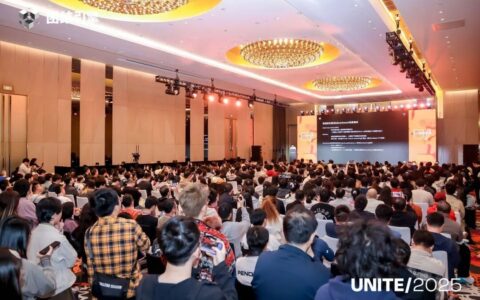
On October 18, the opening ceremony for the Chaoyang District Game and Esports Industry Specialized Park and the Baozhao Incubator was officially held at Dongjin International Center. Leaders from relevant departments, including the Beijing Municipal Bureau of Culture and Tourism, the Chaoyang District Government, and the China Audio-Video and Digital Publishing Association, attended the event, underscoring the high level of official attention the initiative has received.In its coverage, Beijing TV referred to it as “Beijing’s first gaming incubator” and praised it for “closely aligning with policies at both the municipal and district levels.” It will provide game developers with one-stop services including investment incubation, workspace support, and game license applications.
To celebrate this joyous occasion, on October 18–19, Jike also hosted an indie game market called “Unfold and Play” in the underground plaza of the Dongjin International Center, inviting dozens of indie game studios to set up booths and participate in investor pitch sessions.
Amid the bustling market festivities, several developers from provinces in North China independently told me that the North finally has a haven for indie game developers.
01
The "Useless Usefulness" of a Gaming Media Outlet
For Jike, the launch of this incubator also serves as a milestone in their long-standing efforts.
I’m sure most readers are familiar with Jike—in their early days, they gained recognition among gamers for their high-quality gaming culture podcasts.Over the past decade, however, they’ve devoted much of their energy to ventures that might seem “off-track” for a media outlet: organizing Game Jams and in-person game expos, launching a clothing brand, and even publishing games… At the time, no one could have predicted that these efforts, driven by a love for games, would eventually coalesce into a comprehensive publishing and incubation ecosystem—one that includes Jike itself.
For example, Erqi, the head of the Baozhao Incubator, told me that the incubator’s origins can be traced back to the first Game Jam hosted by Jike in 2019. Back then, they organized the event purely for “fun”—at the time, Jike was collaborating with a domestic open-source handheld console called GameShell, which featured a beloved retro-futuristic design and offered a high degree of programmability.This got Jike thinking: how else could they take this “fun” little geeky gadget to the next level? Without giving much thought to commercialization or returns, they decided to invite users to join in and create something together.
The "DEOT" handheld console developed in collaboration with Jike
The subsequent surge in registrations, however, took the team completely by surprise—according to post-event statistics, over 400 developers participated in Jike’s first Game Jam; by comparison, the world-renowned Game Jam event Ludum Dare took more than a dozen editions to reach that scale.
Outstanding Entries from Jike's First Game Jam
Even Jike itself didn’t realize at the time how appealing it was to “creator-type gamers”—in its early days, the Gadio Radio show featured in-depth analysis of console games and translations of cutting-edge materials. In an era when gaming was still viewed as a “frivolous pastime,” this content attracted a large number of hardcore gamers eager to delve into research and uncover the serious value of games.As a result, many Jike users embody both the roles of creators and players. Erqi even joked, “We aren’t worthy of our users.” It was precisely this somewhat spontaneous foray into a Game Jam that led Jike to establish a new direction focused on serving developers and to continue building the “BOOOM” brand.
There have also been many initiatives that came about quite by accident. For example, why did Jike launch its own clothing brand, “Gicos Industries”?—This is because the founder, Simon, was a professional fashion designer before entering the gaming industry. As for how Jike began exploring game publishing and incubation, it all started after hosting Game Jams for several years. Gradually, developers began approaching Jike, wanting to know if their creative projects had a chance to take the next step and be released to the market. Consequently, Jike decided to address these developers’ growing needs.
These aren’t exactly far-sighted strategic moves, but we can see that when Jike’s publishing team launched the hit indie game *CATO: The Butter Cat*,Gicos Industries quickly joined forces internally to launch IP-themed apparel and other merchandise, propelling Butter Cat to break into new markets once again—having successfully executed this strategy once, the same approach can be replicated for other new IPs, thereby granting Jike the ability to monetize its original IPs.
Selected merchandise created by Jicos Industries for "CATO the Butter Cat"
There are many more examples like this. It’s clear that what Jike has been doing over the years is essentially growing alongside its entire user base, gradually transforming from a simple media outlet into a platform that serves both players and developers and connects multiple stakeholders.For instance, by hosting events like Fusion, Jike has developed the capability to organize various online and offline activities, while also deepening its relationships with more independent developers nationwide. As its B2B brand has gradually gained recognition, Jike has not only maintained its influence among players but has also expanded its network to include industry stakeholders such as investors and media outlets.
Erqi also told me that in recent years, they have been paying close attention to the needs of indie game developers throughout the creative and commercialization process. For example, within the Jike App, they have launched a Developer Center and a Game Library feature to provide developers with promotional channels. They have also fully engaged the player community—which generally possesses a high level of gaming literacy—to offer developers more effective and actionable feedback on their work.Driven by a “passion for games” and a determination to “do something for developers,” Jike has successfully integrated and synergized its capabilities across community management, publishing, and events.
BOOOOM Game Library
It is precisely this comprehensive range of capabilities that made Jike a key partner when Beijing’s government agencies were considering ways to support the gaming industry and seeking a practical platform for implementing policies to promote high-quality, original games developed in Beijing. The two sides quickly reached an agreement, and the establishment of the Baozhao Incubator was immediately put on the agenda.
02
Bringing together the right timing, location, and people for developers
The global sensation surrounding *Black Myth: Wukong* has reshaped the public’s perception of the “high quality” of Chinese games, highlighted the medium’s ability to serve as a vehicle for traditional culture, and subsequently spurred the introduction and implementation of policies across the country to support high-quality game development—a trend that has been well established over the past year.Just four months ago, Beijing also released the "Support Measures for Promoting the High-Quality Development of the Gaming and Esports Industry in Beijing (Interim)," announcing rewards of up to 5 million yuan for the creation of high-quality online games. Through the establishment of the Baozhao Incubator, we can further see Beijing’s commitment to supporting the gaming industry.
Zhao Xia told me that he was deeply impressed by the candor and strong support demonstrated by the relevant authorities during this collaboration. Broadly speaking, the government has provided support for the Baozhao Incubator on both the financial and policy fronts. For instance, on the financial side, according to public information, Beijing Kunpeng Dayaya Industrial Investment Co., Ltd., Beijing Liangdu Investment Co., Ltd., and Jike jointly established Beijing Quantum Quadrant Game Technology Co., Ltd.By establishing this joint venture, the incubator has secured sufficient financial backing to support developers during the R&D phase.
At the policy level, Baozhao Incubator has not only secured 3,000 square meters of office space for free use by resident developers, but the Dongjin International Center where it is located also serves as the China Publishing Creative Industry Base and the National Copyright Innovation Base. The building houses several well-known publishing organizations. Zhao Xia revealed that in the future, Baozhao Incubator will engage in in-depth cooperation with the United Publishing Group regarding publishing licenses, ensuring that obtaining such licenses is no longer a hurdle for developers.
Clearly, strong support from official channels has significantly amplified the influence a media outlet can wield. For Jike members like Zhao Xia and Erqi, this new platform has enabled them to pursue their long-held aspiration—to do more for Chinese game developers—with unprecedented energy and peace of mind.
Zhao Xia told me that Jike’s current focus as an incubator is on early-stage teams in the 0-to-1 phase, since developers all enter the world of game creation through Jike.Erqi, meanwhile, explained that in line with this strategy, they have thoroughly researched the needs of developers in the early stages of their careers and identified bottlenecks across multiple areas, including developer networking, team management, player feedback, funding, publishing services, and office space. Drawing on the years of expertise mentioned earlier, Jike is able to provide targeted solutions that address developers’ pain points for each of these needs. This is the unique service advantage that Jike, with its focus on the gaming vertical, offers compared to traditional VCs and incubators.
Let’s take a look at that perennial core question in entrepreneurship: “Where does the money come from?” At the indie game market on the 18th, I attended a pitch and matchmaking event organized by Baozhao Incubator for developers. Representatives from several domestic venture capital firms, including Mihoyo Ventures and ZhenFund, were on hand to observe.
Beijing-based Lime Studio took to the roadshow stage this time with their self-developed yuri-themed visual novel, *Orange Scented Midsummer*.One of the team’s lead creators, Zijing, told me that prior to the roadshow, Baozhao invited successful indie studios, investment representatives, and the Jike publishing team to provide collective online mentoring and Q&A sessions for participants. Drawing on their firsthand experience, they helped the creators gain a better understanding of game financing and the overall commercial landscape of the gaming market, as well as refine their project presentation materials. As a first-time indie game developer, Zijing found this experience particularly rewarding.
Jin Di, the lead creator at Tunan Studio, told me that as a startup team with backgrounds as employees at major tech companies, they had previously struggled with a lack of opportunities to connect with investors and uncertainty about how to secure funding. However, following this roadshow event, their folk-mystery game *Secrets of the Flower City* and their planned future projects quickly attracted inquiries from three leading domestic venture capital firms.
"Secrets of the Flower City"
Similarly, for developers who enjoy networking, Baozhao Incubator offers occasional training camps and creative workshops; for inexperienced developers, Baozhao provides targeted training and mentoring, collaborating to identify best practices on issues such as monetization and team management; for developers whose projects are already at a certain stage of progress, Baozhao can assist in organizing online and offline player testing; and for projects in need of exposure, Baozhao can directly connect them with resources from Jike’s offline exhibitions…All these initiatives are aimed at a single core objective: enabling developers to focus on the development process itself and deliver their best work.
 |  |
Erqi also told me that they do not impose restrictive or exclusive terms on project teams; they are open to developers seeking other publishers, and they absolutely do not pursue short-term returns or exits. Instead, they hope to walk alongside developers through thick and thin.The comprehensiveness of their services, the flexibility of their commercial terms, and the resources and opportunities they can provide to developers—these exceptional conditions are all brought together at Baozhao Incubator, which will undoubtedly leave many entrepreneurs in awe.
As my conversation with Erqi was drawing to a close, she shared the following thoughts: “I believe that everyone who loves games harbors a dream of making them. But game development is a difficult endeavor. Developers are scattered across the country like stars in the sky. If we could find a way to bring everyone together, it wouldn’t be so hard. It’s a matter of chance, but if we can make things just a little bit better, I think that will be enough.”
03
The "Garage Era" of Independent Travel in China
Since the start of this year, I’ve participated in numerous gaming events at CJ, BW, and most recently at the Jike Market, where I’ve met hundreds of indie developers.Whenever I talk to them face-to-face, images of these developers sweating it out in a makeshift garage often pop into my mind—anyone with even a passing familiarity with business history has heard of the so-called American “garage culture.” Companies that now influence the world—HP, Apple, Amazon, Microsoft, and others—all began their entrepreneurial journeys in a small garage.
Of course, I’m not suggesting that owning a garage is a prerequisite for entrepreneurial success. The most valuable aspect of garage culture isn’t the garage itself, but rather the talent that has emerged from grassroots environments, the entrepreneurial spirit of breakthrough these individuals embody, and the external environment that nurtures the unbridled growth of that spirit. For independent game developers in China today, both our internal and external environments are currently at an exceptionally favorable juncture.
For example, there is unprecedented policy support—the number of game licenses issued each month continues to hit new highs, and many cities across the country have introduced support policies for high-quality games, ranging from hundreds of thousands to tens of millions of yuan.There is also a relaxed financing environment following the recovery of industry investment—in terms of incubators, aside from Beijing’s Baozhao Incubator, in Sichuan we must mention our Game Teahouse’s Youcha Incubator, and in Shanghai’s Caohejing there is the Independent Light Incubator. Top-tier companies such as miHoYo, Yingjiao, and Tencent also have dedicated incubation and investment programs for indie games.
Our talent pool is more abundant than ever—a significant proportion of the indie game projects we’ve seen this year are led by founders who have worked at major studios, and many of them are even designers who have spearheaded particularly well-known and successful projects. Some are seeking the joy of entrepreneurship through indie games, while others have grown weary of navigating commercial KPIs in mobile game projects and wish to rediscover the intrinsic value of gaming.These seasoned developers are also driving bolder innovations in gameplay, presenting more original prototypes that build upon the “usual suspects” like roguelikes and Souls-like titles.
In the market, whether it’s the successive blockbuster success of top-tier domestic AAA titles or the rise of smaller-scale games like *Escape from Yakov* and *Sultan’s Game* to the forefront of the market, these developments signal a resurgence in the value of high-quality content among gamers.
People often say that the best time to plant a tree was ten years ago; the second-best time is now. For China’s indie game scene, the best era may well be right now.
原创文章,作者:游茶妹儿,禁止转载:https://youxichaguan.com/en/archives/194614