In recent years, certain overseas activist groups that champion “political correctness” have frequently targeted the gaming industry as a new battleground, periodically stirring up public controversy.
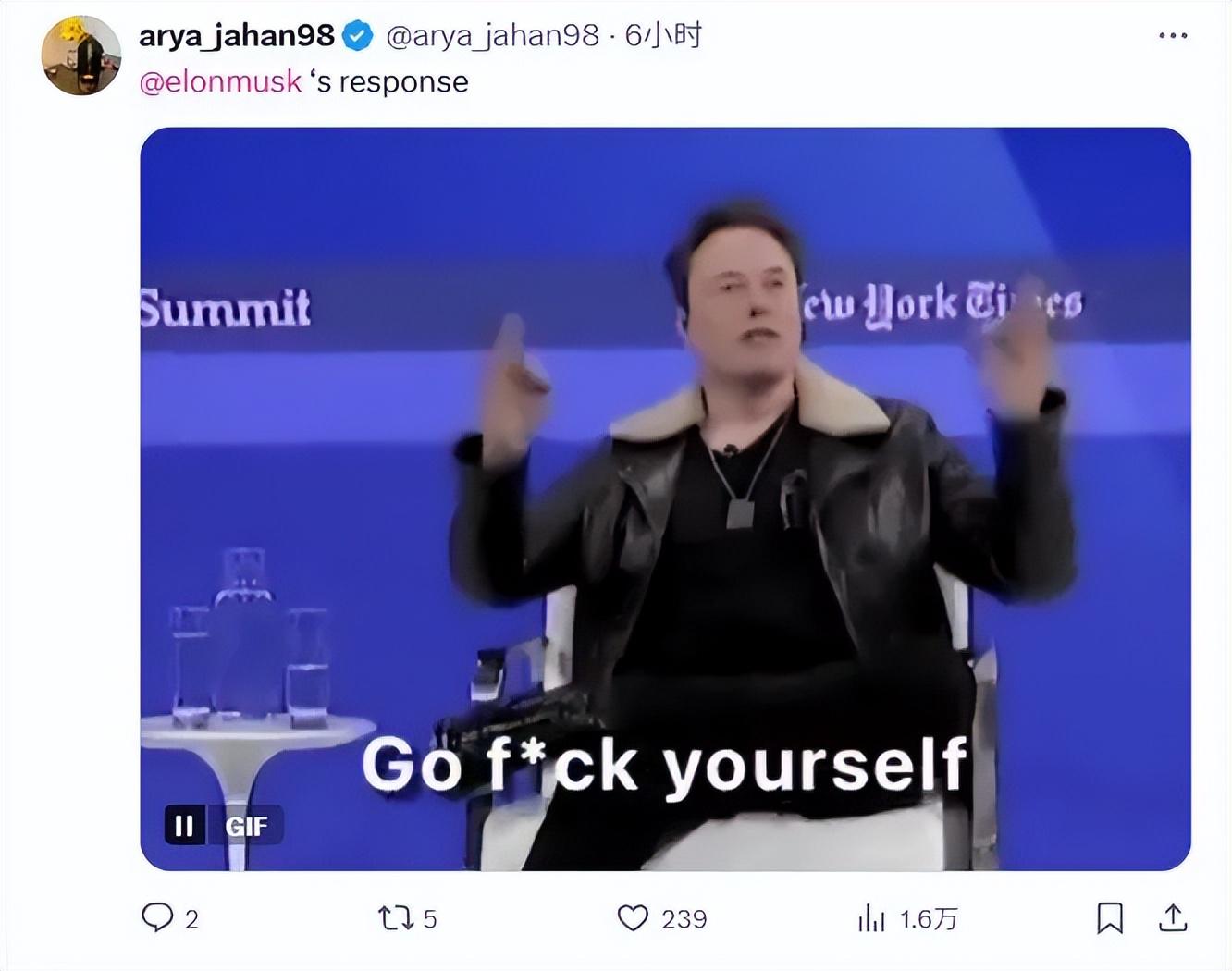
Not long ago, a radical feminist organization teamed up with several major payment providers to pressure independent game platforms into removing adult games from their catalogs, sparking widespread outrage among gamers and industry professionals worldwide. Even Elon Musk, who is usually quick to weigh in on the latest controversies, couldn’t resist speaking out, and the Trump administration was even prompted to issue a specific executive order in response.
While the gaming world is no stranger to drama, it’s rare for a controversy to escalate to such a massive scale. Now that the situation has been brewing for some time, it’s the perfect moment to sit down and carefully trace the entire sequence of events.
01
Tens of Thousands of Games Removed
In mid-July, the Steam platform suddenly removed nearly 500 adult-oriented games in a single sweep. Multiple popular series were wiped out, and one publisher saw over 50 of its titles taken down at once—virtually wiped out in one fell swoop.


At the same time, some observant developers noticed that Valve had quietly added a new provision to its latest developer documentation: content that “may violate the rules and standards established by payment processors, credit card networks, or internet service providers” is prohibited, with a specific emphasis on “avoiding the publication of certain types of adult content.”
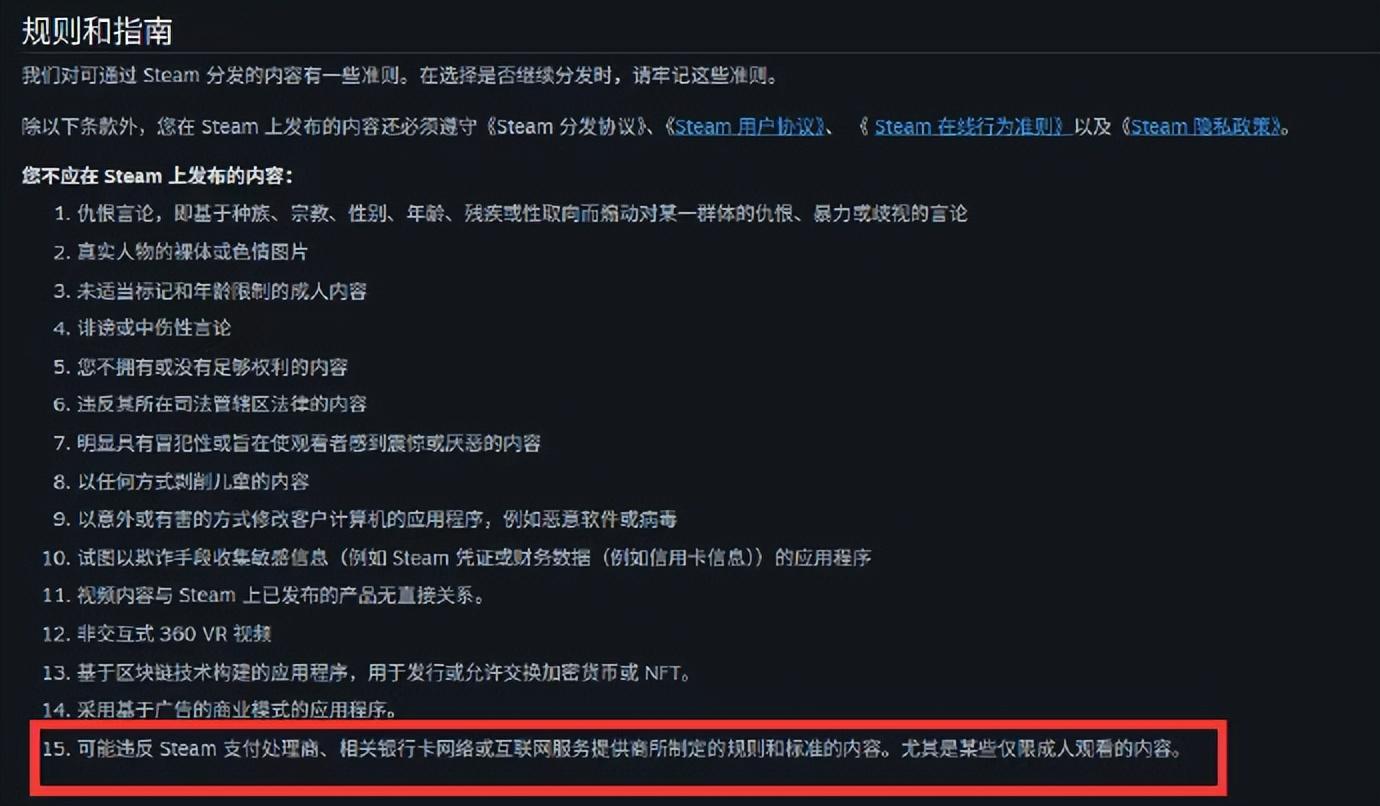
All signs point to Steam gradually tightening its review and restrictions on adult content on the platform at the request of payment providers such as Visa and Mastercard.
However, the impact appears to extend beyond strictly adult games; some titles featuring attractive female characters seem to have been caught in the crossfire.For example, the developer of the Chinese indie card game *Exorcism XXX* revealed that the title was allegedly mistakenly flagged as adult content on the eve of the New Releases event, resulting in its blockage in the Chinese region. Additionally, users have reported that *Magic Love XXX*, a game with a style similar to *Rhapsody* that recently entered testing, was also forced to lock out the Chinese region on its launch day due to Steam’s new regulations.
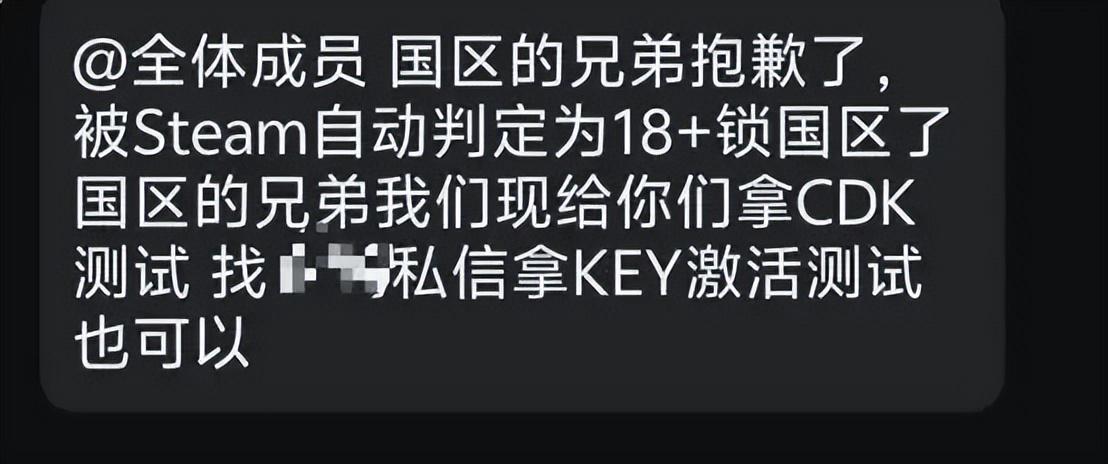
Payment providers inexplicably intervening in game content reviews, ambiguously worded new regulations, and the fact that multiple mainstream games have been caught in the crossfire—this series of actions has left developers scratching their heads, exclaiming, “We just don’t get it.”
Before the community could fully process this news, another bombshell dropped at the end of July—another indie game platform, itch.io, suddenly hid all games labeled “NSFW.”

The scope of “NSFW” extends far beyond what is typically considered “adult games”; it broadly refers to any content “unsuitable for viewing at work or in public.” Consequently, this blanket ban affected over 20,000 games. Ironically, this included *Last Call*, which explores domestic violence and psychological recovery, as well as numerous titles featuring LGBTQ+ themes.
As a relatively smaller game platform, low barriers to entry and openness were once itch.io’s most appealing traits. It allowed countless small teams to take root, unleash their creativity, and craft a diverse array of games based on niche topics that major studios shied away from, fostering a vibrant and diverse platform ecosystem.Yet overnight, all of this turned into a crushing blow, striking the developers who depended on this platform for their livelihood.
Seeing that the platform was on the verge of losing the support and trust of both players and developers, itch.io founder Leaf Corcoran swiftly issued an announcement, earnestly explaining the reasons behind the decision. Unlike Steam—a mature platform with standardized review mechanisms—itch.io is an open UGC platform where anyone can publish various types of content. Consequently, the platform cannot directly manage content based on user-selected tags and must rely on broader moderation to ensure compliance.
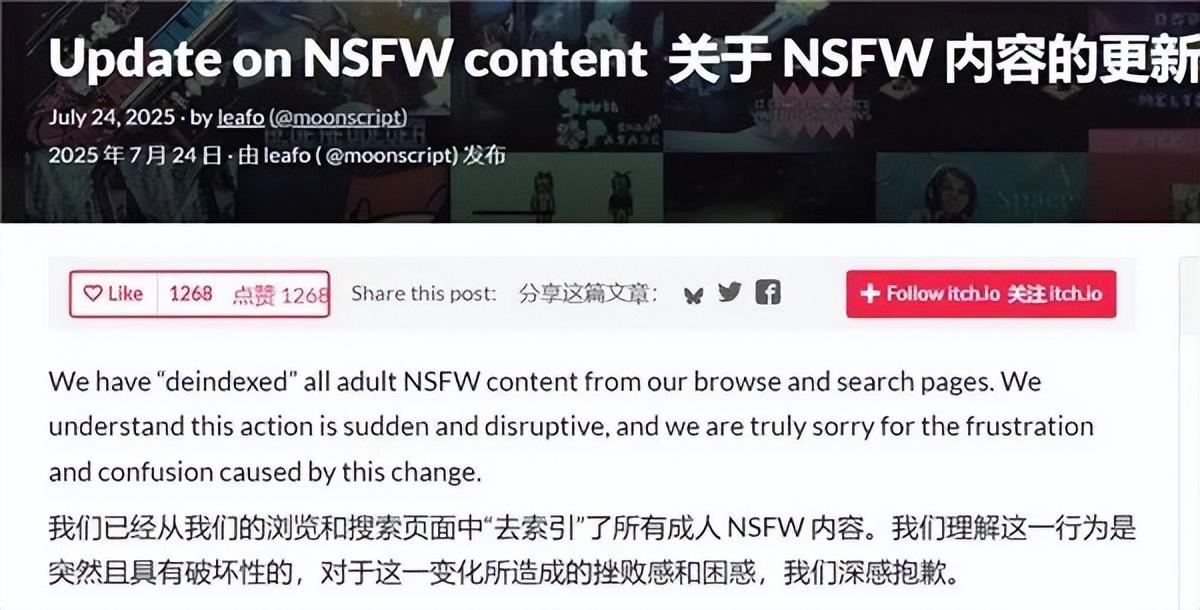
Furthermore, given that the itch.io team and its transaction volume are relatively small, it is even harder to resist the demands of payment providers. To ensure the smooth operation of more developers’ businesses, they had no choice but to comply with the providers’ requirements.
In short, they were simply out of options.
In response to the outcry from developers and players, itch.io has reinstated free adult content and stated that it will re-evaluate previously hidden games; titles that comply with regulations will be reinstated. Meanwhile, while actively engaging in dialogue with major payment providers, they are also working to secure alternative payment services to support the normal operation of adult games.
To address developers’ primary concerns regarding review standards, the platform has also provided a non-exhaustive list of prohibited content:
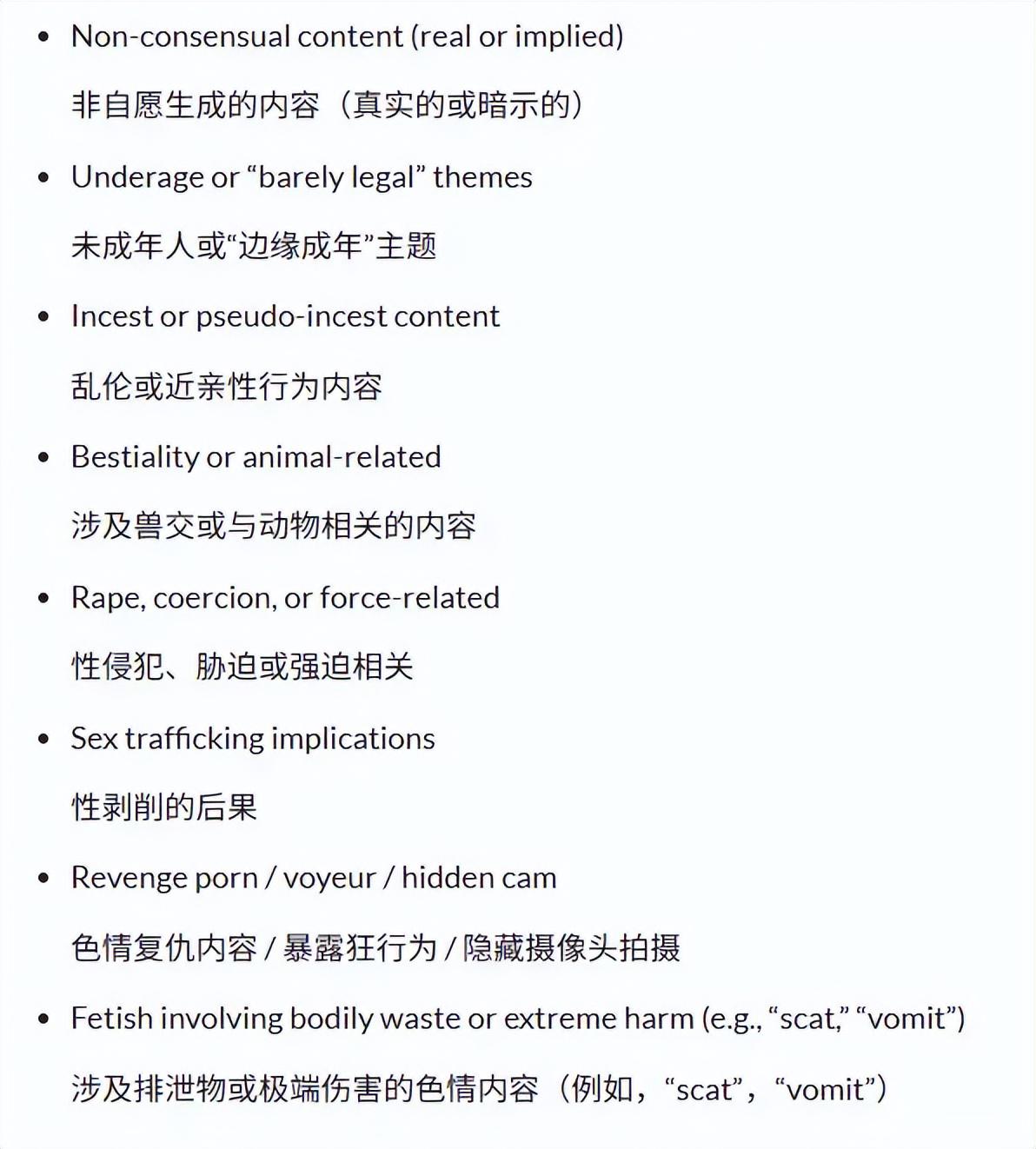
Itch.io has indeed made significant efforts, but ultimately, they’ve been in vain. The final say over the survival of these games and developers does not lie with them. If the payment providers currently integrated with the platform refuse to negotiate, and if they cannot find alternative providers to offer support, they will ultimately have no choice but to sacrifice the adult content to protect the platform and ensure the continued operation of more development teams.
It wasn’t until things reached this point that everyone finally realized the gravity of the situation. Games on Steam that hadn’t yet been affected began changing their names in an attempt to buy a little more time.

The anger of players and development teams has also ignited social media. Seeking to fight fire with fire, they are mounting a counterattack through mass reporting and petition campaigns, using a massive public outcry to challenge the payment providers: On what grounds do you threaten the platform to remove games? On what grounds do you interfere with game content review? On what grounds do you infringe upon creative freedom?
02
“We must completely eradicate these types of games”
Even in the face of such a fierce collective outcry, the payment giants show no signs of backing down.
In an email response to netizens, Visa claimed it “would not interfere with content review,” yet simultaneously emphasized that “when facing a higher risk of illegal activity, we will require our partner banks to implement stricter preventive measures.”
Mastercard also issued a statement claiming it has never interfered with game content reviews. While repeatedly asserting support for all purchases that meet “legal standards,” it simultaneously required merchants to avoid processing transactions involving “illegal adult content” or those that “may damage the company’s reputation” through its payment system.
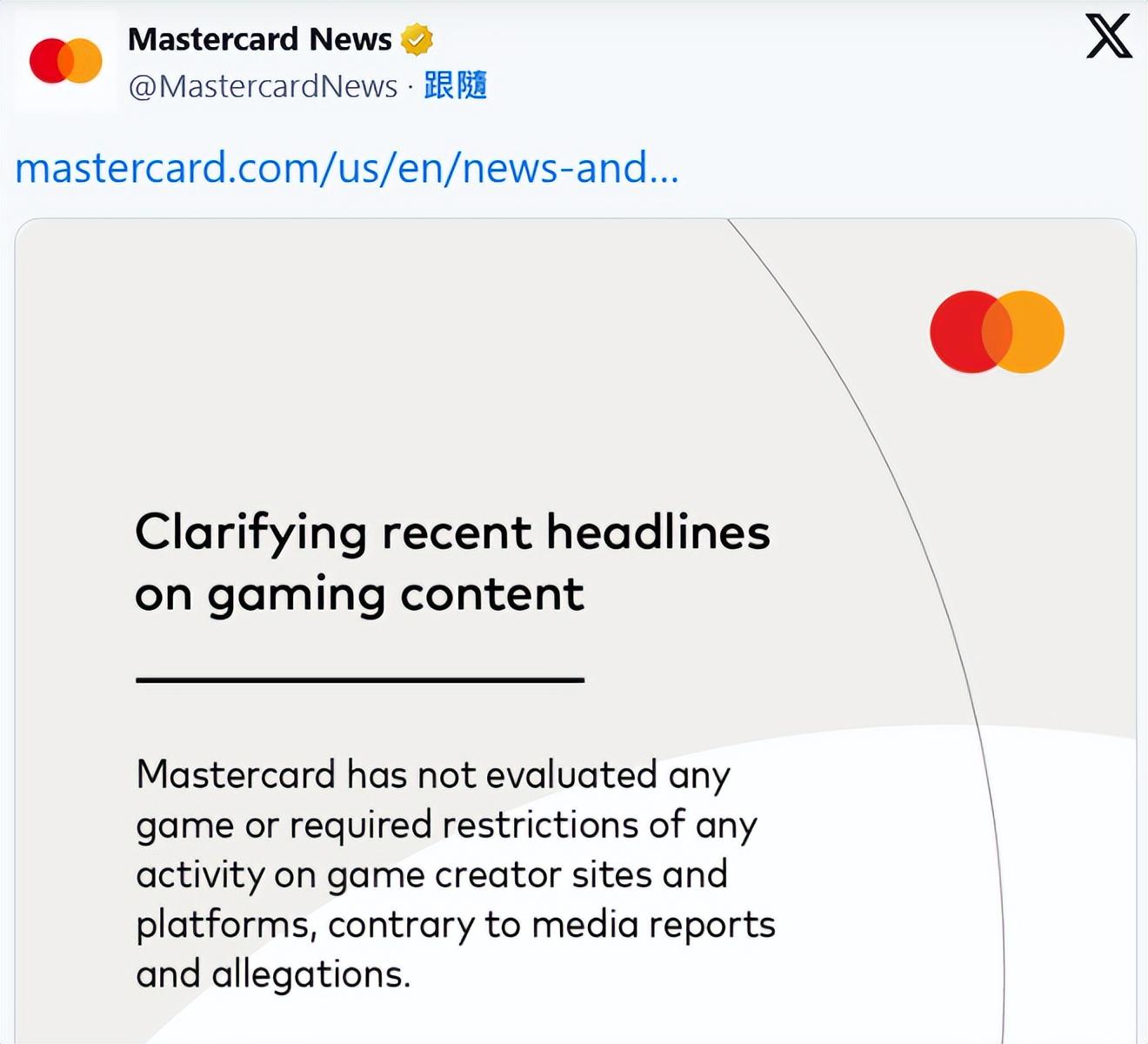
These contradictory responses naturally failed to win the approval of netizens, with some directly accusing the companies of “spewing lies.”
Using so-called “compliance” language to force content platforms into making changes has long been a standard tactic for these payment institutions. It is understood that overseas banking institutions and credit card networks have harbored reservations about providing services to businesses involved in adult content in recent years and have continued to exert pressure.
Visa and Mastercard have even gone so far as to directly cut ties with some popular adult websites, forcing numerous related companies to adjust their operational strategies. As a result of their efforts, the well-known adult content platform OnlyFans explicitly stated in its updated guidelines that it “must comply with the requirements of banks and payment partners”; another adult social platform, Fansly, also revised its terms of service to censor “furry” content on the platform in response to pressure from payment service providers.
The gaming industry has long been affected by this trend. Earlier this year, there were cases where Japanese adult game developers had their platform revenue blocked by local banks and were even barred from opening corporate accounts.
What’s even more interesting is that, despite payment institutions’ track record of success, this incident wasn’t entirely their own initiative—there was a “mastermind” behind it.
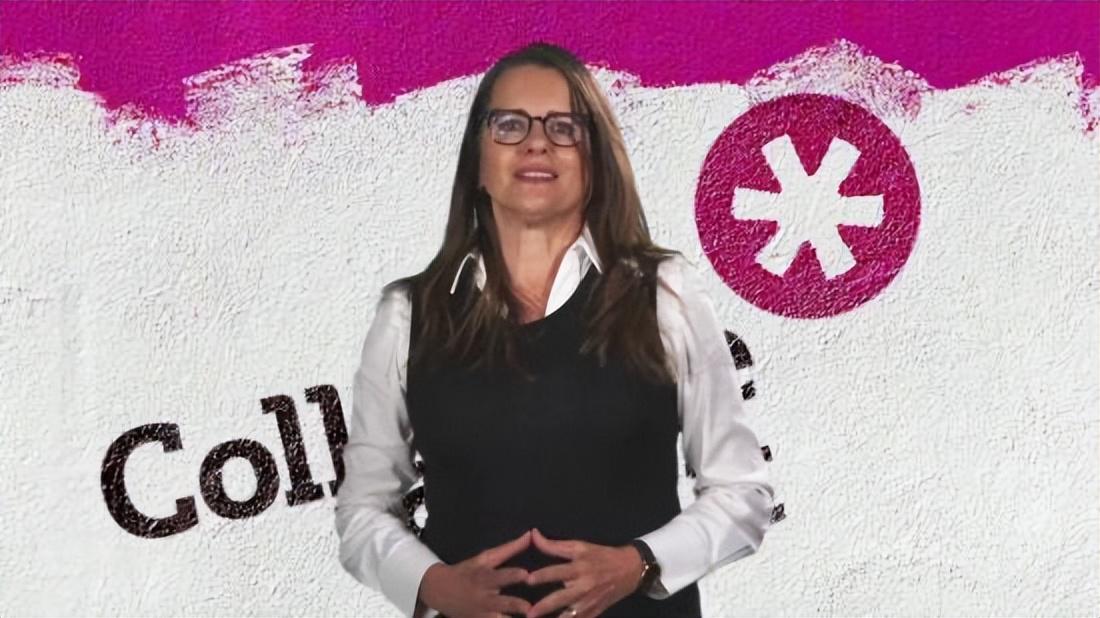
Shortly after the adult game takedown controversy erupted, this "mastermind"—the Australian radical feminist group Collective Shout—published a statement claiming responsibility for the action and even "thoughtfully" explained the full story behind the incident.
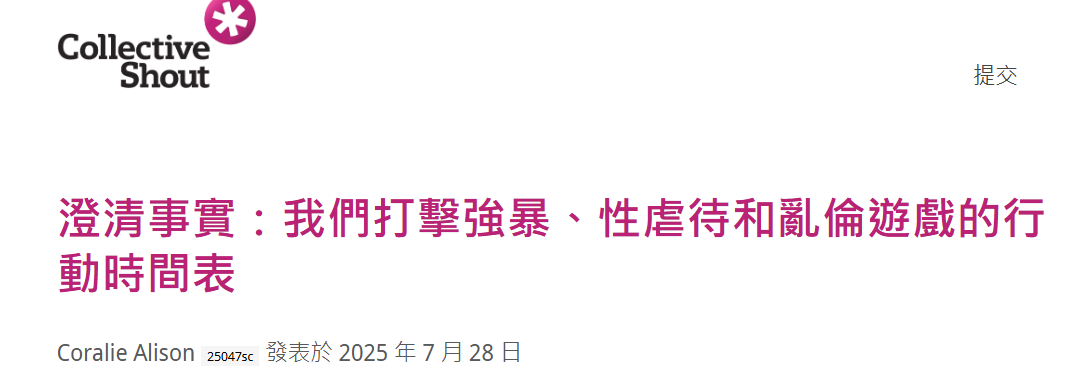
Image source: Collective Shout official website
The incident originated in March of this year, when a male gamer contacted Collective Shout via their official website, claiming he had discovered a game titled *No XXX* on Steam containing offensive content, and that his complaint to Steam had gone unanswered.
After reviewing the game, Collective Shout concluded that it indeed dealt with sensitive issues such as ethics and violent sexual acts. They immediately published a blog post to mobilize more players, and together with supporters, sent 3,463 emails to Steam and collected over 70,000 signatures for a petition—yet received no response from the platform.
Although the game’s developer eventually took the game down voluntarily due to public pressure, Steam officials never issued a statement, and Collective Shout’s request to “remove more games containing similar content” was not adopted.
According to Collective Shout, it was due to Steam’s lack of response and inaction that they were forced to turn to payment providers, who are more sensitive to such topics.

An open letter directly naming executives of major payment providers, image source: Collective Shout official website
They pressured payment providers through a massive email campaign and the issuance of open letters. Ultimately, under threat from payment providers, Steam was forced to remove the game and implement new regulations, while itch.io—which had briefly hosted *No XXX*—was also implicated.
It is clear that, in the face of external pressure, Steam did not simply give in without a fight; however, ultimately, due to the “betrayal” by payment service providers, it was forced to compromise.
Following this, Collective Shout posted a “victory statement” on X, thanking supporters while issuing a bold declaration: “The battle is not over; we will continue to urge platforms to completely remove all such games.”
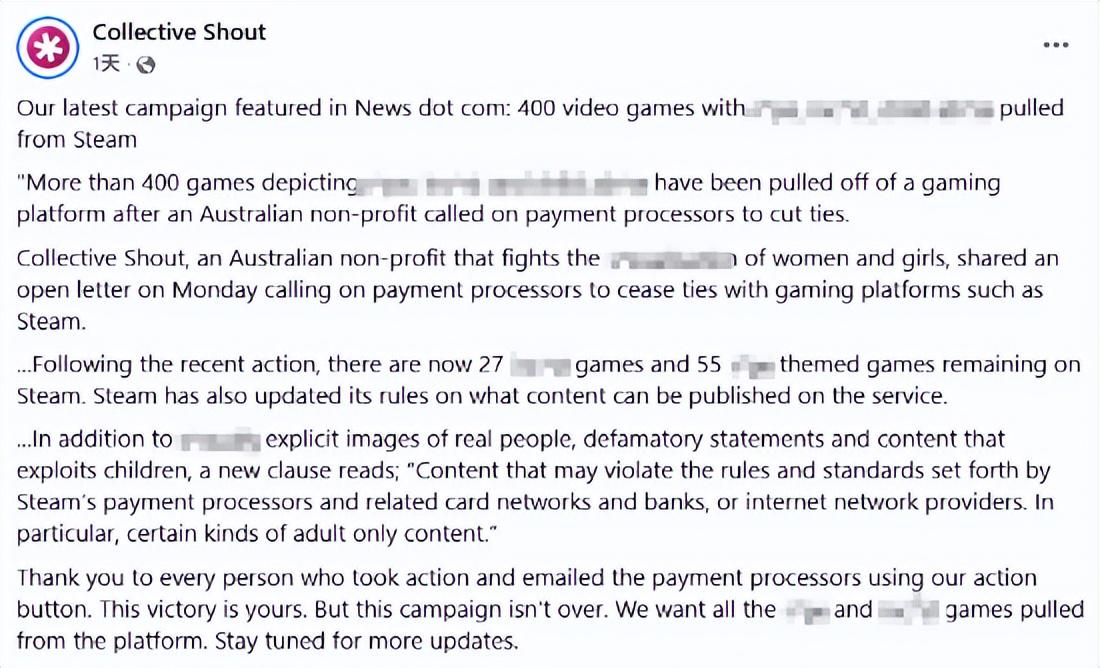
Founded in 2009, Collective Shout is a prominent Australian feminist organization whose official mission is described as “a grassroots movement against the objectification of women and the sexualization of girls.”
Over the past decade, the organization has repeatedly used this banner to launch campaigns against various video games.
They labeled *GTA 5* as “a video game that encourages players to brutally murder women for entertainment,” ultimately leading to its ban from numerous retail stores across Australia; they also strongly condemned *Detroit: Become Human* for a scene depicting “a sadistic father beating his daughter to death,” citing “child abuse and violence against women” as grounds for their criticism.

Report on *GTA 5* being pulled from store shelves, image source: Collective Shout website
Now, wielding the “payment provider” as a weapon, they are attempting to directly rewrite the content moderation policies of major gaming platforms to eliminate all games they deem inappropriate.
03
No Game Is Completely Safe
Faced with this situation, anger among the gaming community continues to grow: if an organization can now easily manipulate the entire gaming industry’s censorship mechanisms simply by making a few thousand phone calls and shouting slogans about “protecting women,” will another group emerge next year demanding the removal of yet another batch of games for similar reasons?
Many industry insiders have also come forward to express their anger and concern regarding radical organizations and paid censorship systems.
Independent studio Aggro Crab published a post directly confronting Collective Shout: If we allow puritanical groups to decide what content global users can consume, it will directly threaten the survival and development of video games. Moreover, under such circumstances, the notion that any game is absolutely safe is foolish.
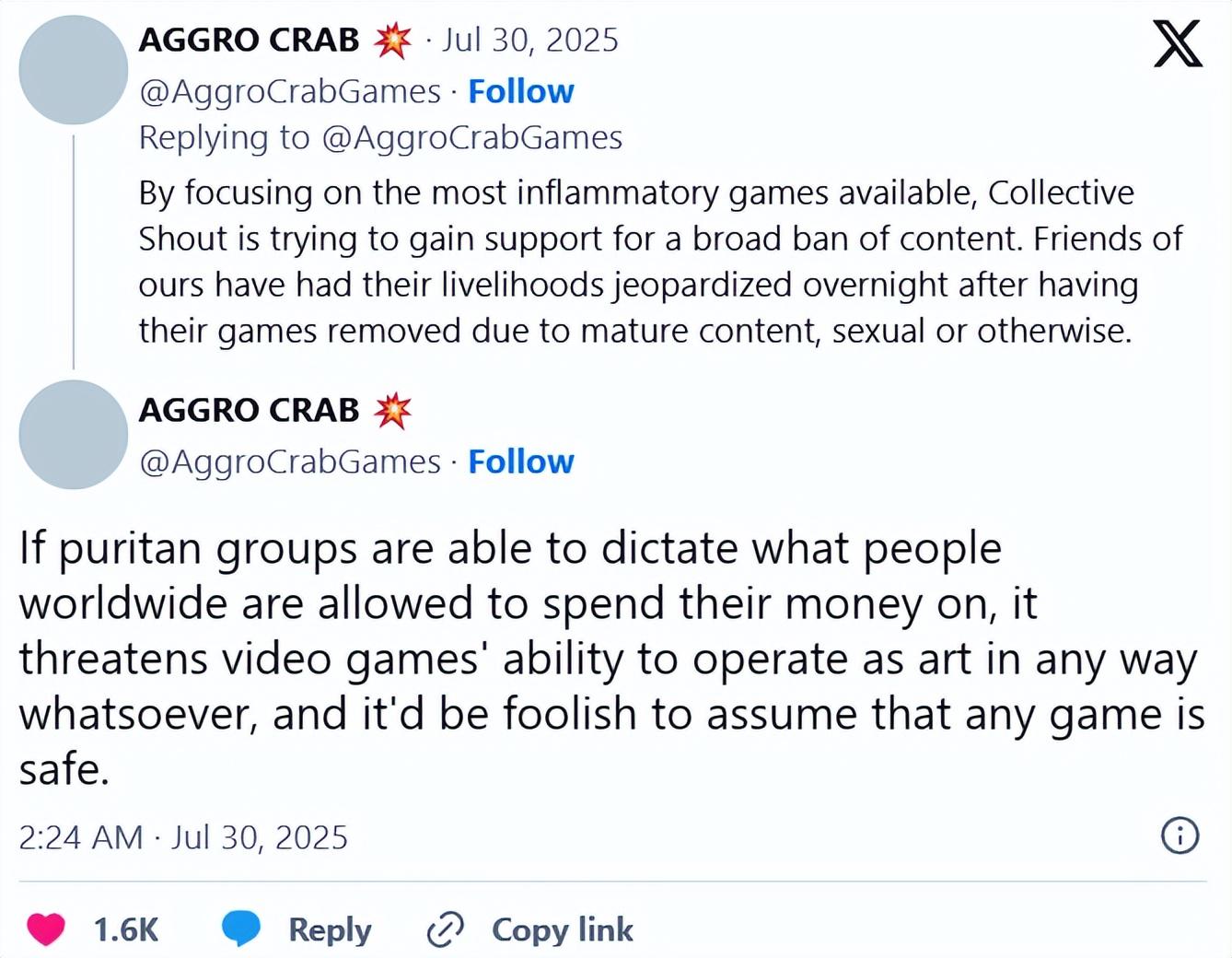
A developer affected by this told a foreign media outlet: “Banning adult content is just the beginning; they will certainly not stop there. We all know what will happen next—in the future, they will inevitably target more games they disagree with and further restrict other forms of content expression.”
Some netizens also believe that Collective Shout’s series of measures are not genuinely intended to protect women; they are merely using this as a pretext to promote their ideology.
The International Game Developers Association (IGDA) also issued a statement strongly condemning the platform’s heavy-handed approach to removing a large number of adult games. In the statement, the IGDA said: “We are deeply concerned about the manner in which certain platform policies are being enforced—policies that have led to the removal of many legitimate, consensual, and ethically sound games, particularly those created by the LGBTQ+ community and marginalized creators.”
The association also called on major platforms to improve transparency and fairness in the review and handling of adult games, emphasizing that “developers deserve clear rules, fair advance notice, and the right to appeal.”

The UK Interactive Entertainment Association (Ukie) also firmly defended game developers’ creative freedom, arguing that all platforms should adopt “clear and consistent age rating systems” like PEGI to ensure players are not exposed to content they do not wish to see.
With the support of industry insiders and the active participation of global gamers, a petition launched on Change.org titled “Demand that payment companies stop controlling access to legal content” quickly garnered over 147,000 signatures. Elon Musk also posted in support, stating that it was time to launch X Pay.
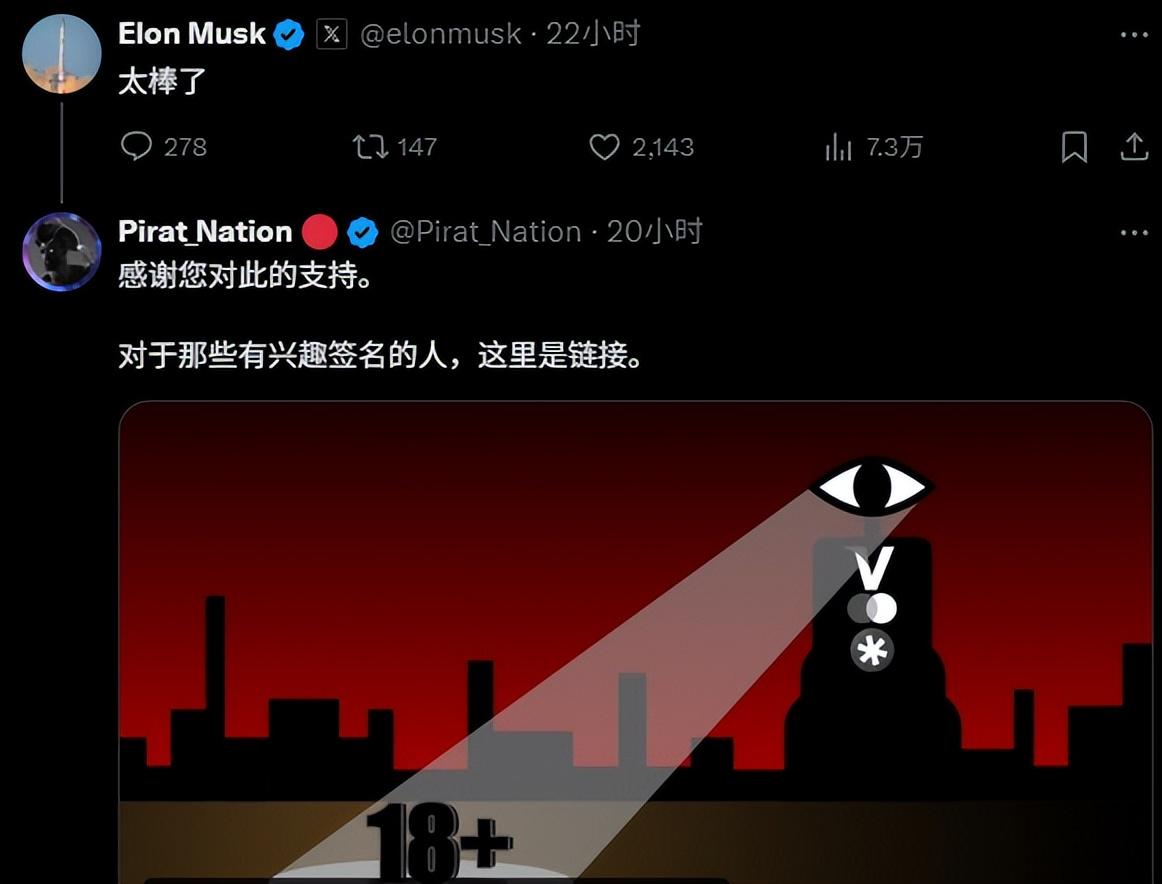
However, Elon Musk, who had stirred up the controversy, could not escape the backlash. The X platform was soon added to Collective Shout’s warning list; not only was it publicly listed on the organization’s homepage, but it was also required to clean up the platform and remove all adult videos.

Even Ani, the anime-style virtual girlfriend launched by xAI, was singled out for criticism due to its “adult mode.”
As the controversy escalated, U.S. President Donald Trump signed an executive order on August 7, effectively eliminating the operational space for “pay-to-censor” practices at the policy level.
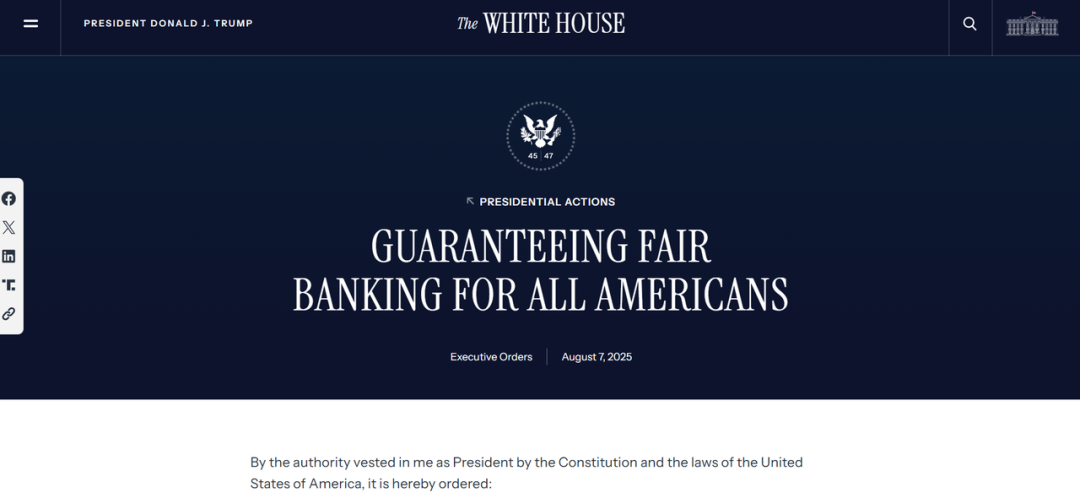
The executive order explicitly stipulates that financial institutions may not refuse or restrict services on the grounds of “reputational risk,” nor may they refuse or restrict services based on factors such as a customer’s political stance, religious beliefs, or legitimate business activities. Violators will face investigations, fines, or mandatory restoration of services, and any such restrictions already in place must be revoked or amended within 180 days.To prevent financial institutions from engaging in further “unethical practices,” Trump also directed the Secretary of the Treasury to develop comprehensive policies, including legislation and the establishment of corresponding regulatory bodies if necessary.
Under these strong measures, payment providers will no longer be able to interfere with platform content moderation by “refusing to provide services.” Industry insiders are generally encouraged by this development, believing it will provide strong safeguards for the release of legal adult content and games featuring controversial themes.
However, some experts point out that the executive order’s practical effectiveness is limited: on the one hand, it lacks retroactive effect and cannot automatically restore games that have already been removed; on the other hand, payment providers may still circumvent regulations using other pretexts, such as “fraud risks”; furthermore, the order applies only within the United States and cannot constrain censorship practices in other regions.
Nevertheless, Trump’s move has been widely praised and is generally viewed as an important step toward promoting net neutrality and defending creative freedom.
04
The Battle Continues
This dispute has made Collective Shout a household name—though perhaps not in the way they had hoped.
After X banned the account of its founder, Melinda Tankard Reist, Collective Shout was still mentioned an average of 8,400 times per day—a figure that had previously been in the single digits. Tankard Reist stated that she and her colleagues faced a deluge of death threats and rape threats on X.
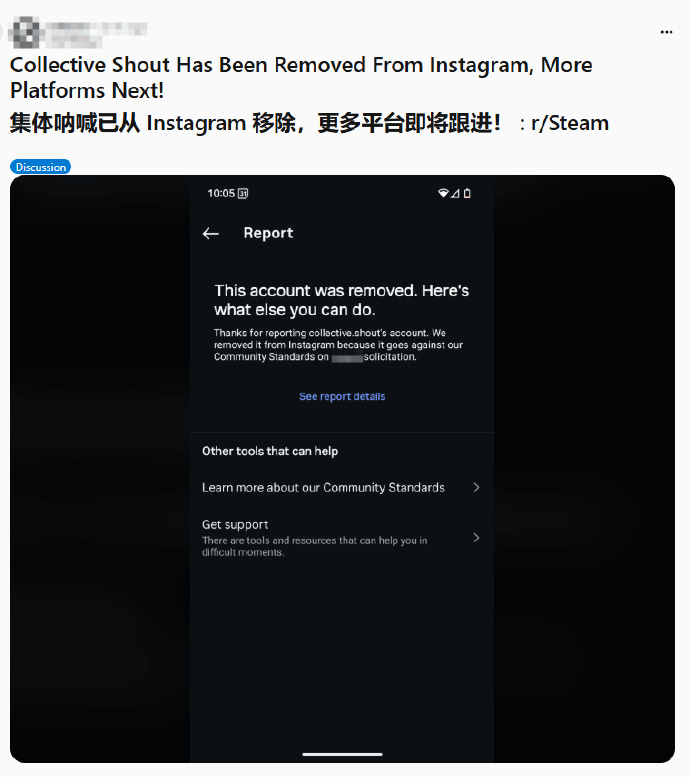
Now, amid a storm of public outrage, Collective Shout’s Instagram account has also been suspended.
Meanwhile, the issue of financial institutions interfering with content moderation remains unresolved, and the blocking and crackdown on adult games by payment systems continues unabated.
Not long ago, players discovered that in some regions, they could suddenly no longer complete payments on Steam via PayPal. Judging by Valve’s response, this change is also related to the earlier controversy over the removal of adult games; some acquiring banks stopped processing all Steam transactions in early July, resulting in the disconnection of PayPal payment channels for Steam in certain currency regions.
Recently, another Steam adult game developer posted online stating that PayPal had frozen £80,000 of his revenue for violating its terms of service. Owing a substantial debt to the UK tax authorities, he was forced to seek legal assistance online.
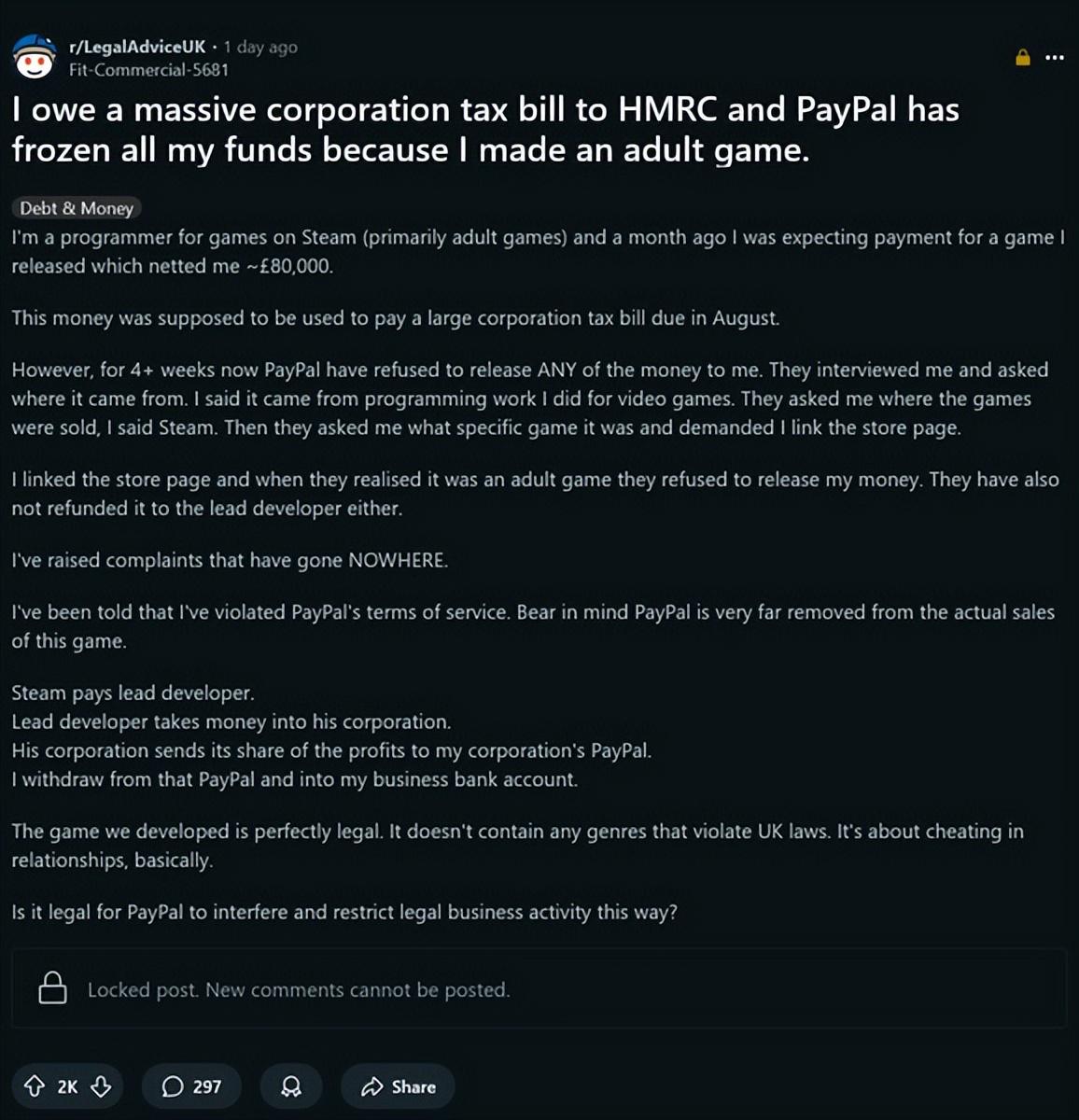
Reddit post by the developer whose funds were frozen
Furthermore, according to the latest reports, Steam no longer supports the Early Access release model for adult games—the crackdown on adult games continues from all sides, and no one knows when this crackdown will end.
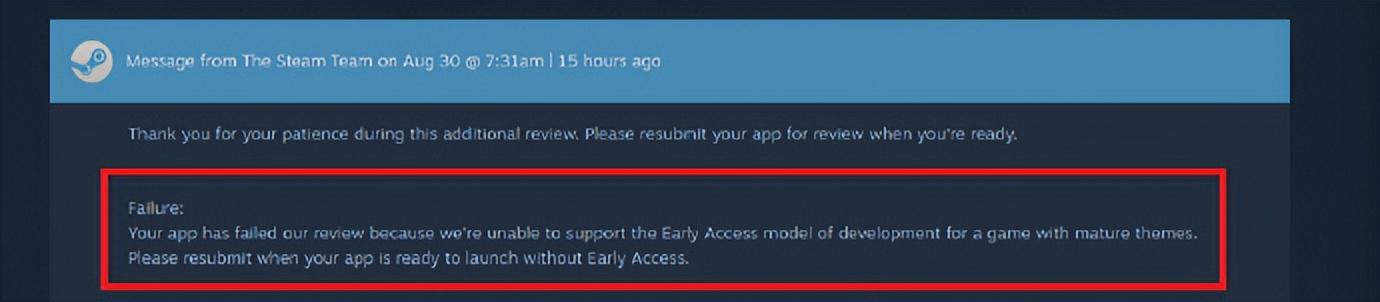
It can be said that there are no real winners in this controversy: players have lost their favorite games, developers have lost their creative work, platforms have lost user trust due to their heavy-handed approach, and payment providers and related organizations have sparked widespread public discontent.
However, at the very least, the "pay-to-censor mechanism" that has long been lurking within the industry has garnered more attention, and an increasing number of people are becoming aware of the existence of this covert form of control. Only by maintaining a sustained focus and speaking out collectively can we hope to drive change in this unreasonable content intervention and restore a fertile ground for free creation and legitimate growth.
References:
https://www.collectiveshout.org/tags/no_mercy
https://www.collectiveshout.org/no-mercy-game-steam
https://www.gosugamers.net/entertainment/news/76467-aggro-crab-and-igda-speak-out-on-game-censorship-as-nier-creator-s-2024-warning-resurfaces
http://gamesindustry.biz/ukie-responds-to-adult-games-being-pulled-from-steam-and-itchio-after-pressure-from-payment-providers
https://www.whitehouse.gov/presidential-actions/2025/08/guaranteeing-fair-banking-for-all-americans/
https://www.polygon.com/steam-paypal-issues-censorship-visa-mastercard/
https://www.xiaoheihe.cn/app/bbs/link/161312193?action=save
原创文章,作者:茶馆小二,禁止转载:https://youxichaguan.com/en/archives/194557