Green bamboo poles supported the curtains, while bamboo lanterns in alternating shades of red and yellow hung overhead. Behind the counter where wine was displayed, staff dressed in Hanfu moved back and forth, welcoming and seeing off guests—the scene resembled a quaint, old-fashioned country tavern. At Gamescom Asia in Thailand, amidst the high-tech exhibition halls, this elegant and unique booth drew countless gamers to stop and take a look.
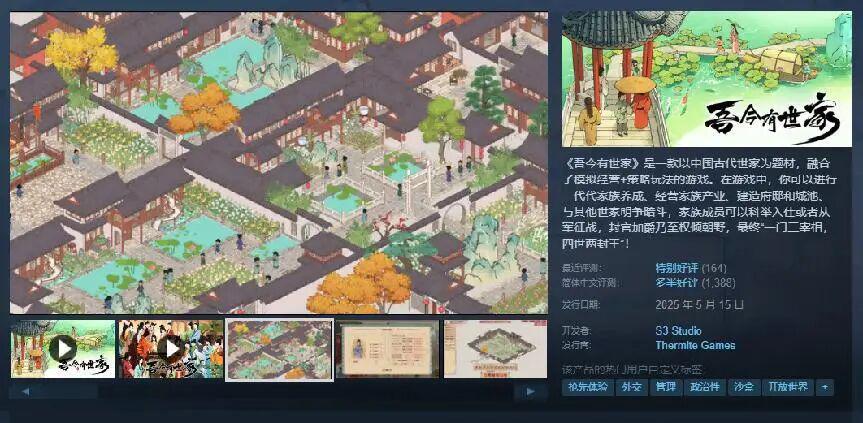
This is an ancient clan simulation game titled *My Noble Family*, whose Early Access version launched on Steam on May 15 of this year. Even before the event, the game had sparked heated discussion among players after a Thai gaming streamer created a series of stories about it.Although the game does not have a Thai version, players have created their own Thai language mods. At the event, the game’s publisher, Hot Pulse Games, revealed that Thailand ranks third in sales—behind only China and the United States.

Click to enter a description of the image (up to 30 characters)
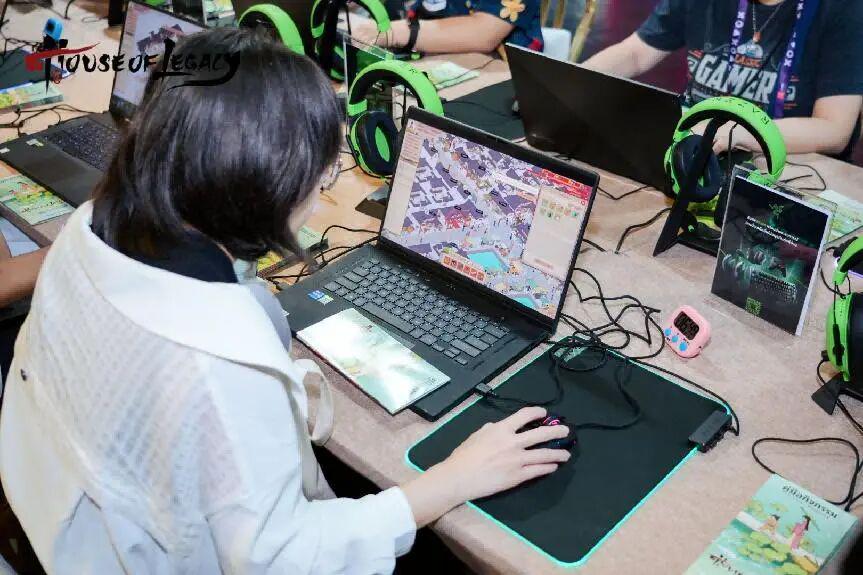
The "I Am a Noble Family" Booth at Gamescom Asia
On Steam, *My Noble Family* has made a remarkable comeback. Initially, the game was criticized as “half-baked” due to its lack of content and underdeveloped storyline, but the developer’s prompt response and frequent updates won over players.In the “2025 Mid-Year Sales Chart for Domestic Games” released by the “Domestic Game Sales Forum” on July 15, the game quietly climbed to the Top 13. The publisher revealed that sales have now exceeded 100,000 copies, and the game has earned an 86% positive rating on Steam, emerging as a low-key dark horse in the simulation management genre.
For Xia Chengliang, the producer of *My Modern Family*, it was no easy feat to see this game—which has achieved decent sales—finally come to fruition. In 2021, at the age of nearly 40, he suddenly decided to sell his house, leave Shanghai—where he had lived and worked for 10 years—and move to Chengdu, a city he had never visited before, to set up a studio.
Unfamiliar with the area, he scoured Chengdu in search of an office. Just then, he came across an opportunity to move into Tianfu Software Park for free, securing a space of about 40 square meters. It was there that *My Noble Family* was officially launched.
This isn’t the first time Xia Chengliang has gone all in on game development. As far back as 2013, he quit his job to work on a single-player action game. In 2018, he quit again and spent two years in Shanghai working alone to complete his previous game.
By giving up a comfortable life to start over in an unfamiliar city, Xia Chengliang appears to be a spontaneous person who isn’t afraid to start anew. Yet, in his own view, he isn’t good at change—he even orders the same dish at the same restaurant every day—but there are moments when he suddenly makes a change.
Xia Chengliang, a middle-aged game developer, is a man of contradictions, embodying a blend of courage and caution, idealism and pragmatic compromise. A few weeks ago, Teahouse sat down with Xia Chengliang, who remains busy working on game updates, for a chat. He was delighted that *My Noble Family* had already recouped the studio’s investment despite being in early access, and through this conversation, we gained further insight into the many facets of this indie game veteran.
01
The first game I worked on generated over 100 million yuan in monthly revenue,
I scrapped the new game project and quit my job to develop an indie game
If you had told Xia Chengliang back in high school that he would one day create his own hit game, he would most likely have found it hard to believe. At the time, he was attending a reputable high school in Shandong and was a textbook “model student”—he devoted all his energy to his studies, had his sights set on getting into the top local universities, and had absolutely no connection to the gaming industry.
However, twists of fate are often hidden in chance. He missed admission to his dream school by a single point and ultimately enrolled in the Digital Media Arts program at Jiangsu Normal University.There, he became fascinated with animation, and his student works garnered numerous accolades. After graduation, he naturally joined an animation studio. By 2012, drawing on his experience in animation and through a friend’s recommendation, he made the transition to a first-person shooter game company as an artist, officially entering the gaming industry.
He said that when he first entered the gaming industry, his quiet demeanor often led people to mistake him for a programmer.In fact, he knew nothing about programming at the time; during his first month on the job, he couldn’t even follow the discussions in project team meetings. The turning point came with the first game he worked on—a blockbuster title that generated over 100 million in revenue and led to the company’s rapid expansion. To select new projects, the company held a game demo competition, with the winner earning the right to launch a new project.
To achieve this, Xia Chengliang taught himself programming from scratch. The demo for an action mobile game he spent two or three months polishing ultimately won first place, but he turned down the opportunity to develop it into a full-scale project. Having been with the company for only two years at the time, he felt a deep sense of awe toward the role of producer and feared that his lack of experience would lead to the project’s failure.
Now a seasoned veteran of the gaming industry, he looks back on that experience with a newfound sense of perspective: “In commercial game companies, whether you’re a regular developer or a producer, you often lack comprehensive experience with game launches—many projects take two or three years, but either the team moves on before the game launches, or the project gets canceled midway.” In his view, the structure of commercial companies not only stifles creative inspiration but also makes it difficult for him to fully realize his potential.
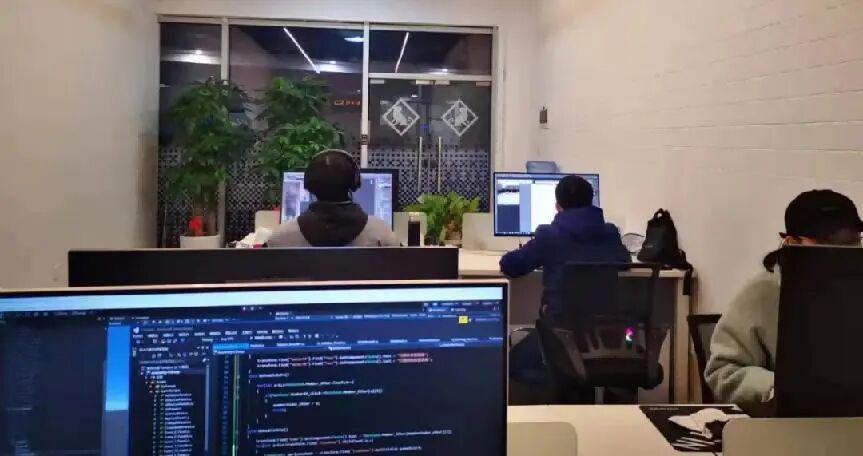
Xia Chengliang's first office after arriving in Chengdu
This tension between business realities and his ideals has been a constant throughout his 13-year career. He quit his job twice to pursue indie game development. In the second half of 2013, after leaving his job, he spent a year refining and releasing a demo that had previously been shelved. This not only gave him his first experience launching a game but also helped him build a network within the indie game community, which in turn helped him secure funding for his subsequent development projects.
In 2018, he once again quit his job at a commercial game company without securing another position, and spent two years and nine months working tirelessly on his own at home before successfully launching a game on Steam. Although the game didn’t gain much traction, the experience made him realize the limitations of going it alone. However, the financial pressure of setting up a studio in Shanghai left him feeling lost for a time.
Leaving Shanghai—where he had lived for 10 years and had long since settled down—was by no means an easy decision for Xia Chengliang, who had a family to support, and he anticipated that his family might question his choice. But when he suggested to his wife that they “sell their house in Shanghai and move to Chengdu,” she agreed immediately, even though he had expected her to refuse. He thought to himself that this might be a sign from fate.
The process of selling the house was far from smooth; it took several setbacks before the deal was finally closed. Xia Chengliang remembers the day he left his Shanghai home: he walked out the door at 5 a.m. and never returned.
02
“Make players grind for 100 hours only to realize they’ve barely scratched the surface”
Five months after the Chengdu studio was established, *My Family Today* was officially greenlit in December 2021.
The story of *My Noble Lineage* unfolds in a turbulent era ravaged by war, where noble clans are forced to flee and wander to escape the chaos. Against this backdrop, players take on the role of a survivor tasked with the mission of reviving their clan, embarking on a journey of clan development from within a dilapidated ancestral home.By cultivating core attributes such as wealth, knowledge, and martial prowess, clan members will gradually enter public service and reclaim lost territories, allowing the once-declining clan to grow and prosper in the process.
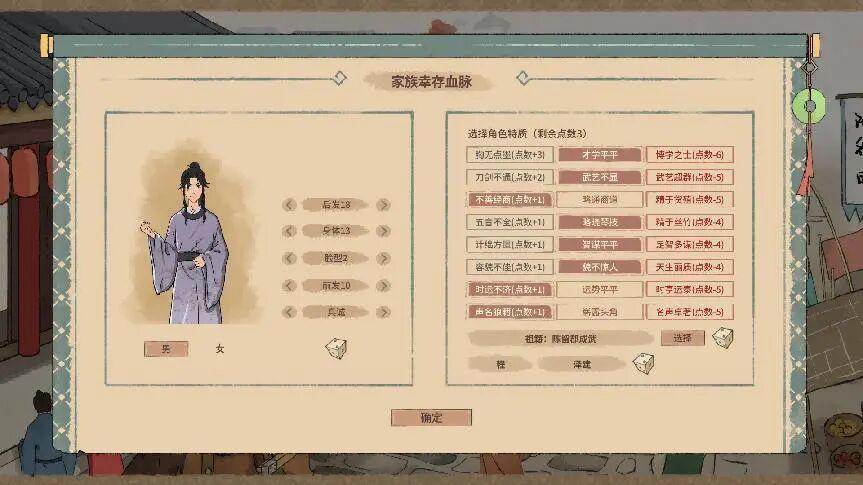
"My Noble Lineage" offers an exceptionally high degree of gameplay freedom. The game imposes no gender restrictions, allowing both male and female players to experience careers in government, engage in business and property management, and build diverse families.In terms of resource acquisition and the romance system, the game offers a wealth of options: when it comes to accumulating wealth, players can achieve this through legitimate means such as hard work and selling assets, or they can choose unconventional methods; regarding romance and family formation, the game encompasses various modes such as matchmaking, free love, and selecting a husband from among exam candidates. Even without marriage, there are various ways to bring new family members into the world.

Xia Chengliang said that the core concept of ancient aristocratic clans in the game was inspired by his passion for historical novels and Paradox Interactive games. In the 2023 documentary *Only the Fragrance Remains*, a simple incense recipe sparked a story that left him deeply moved for a long time; among Paradox Interactive’s games, he particularly favors the *Crusader Kings* series for its vivid portrayal of human characters.
In the creation of *My Noble Family*, he has also dedicated himself to recreating the intricate web of love, hatred, and power struggles among members of ancient noble families. Within the game, if players fall out with a powerful noble family, their path to advancement in the bureaucracy often becomes fraught with difficulties; internal family conflicts are also common, with settings such as verbal disputes among clan members and embezzlement by farm managers vividly showcasing the diverse facets of human nature.
Thanks to the game’s exceptional freedom of play, players can use their vivid imaginations to craft unique family sagas. In the early stages of a clan’s development, building up the population is the top priority: some players spend their life savings to marry a spouse, only to face the dilemma of infertility; others are destitute female clan leaders who, after failing to find a suitor on the streets, are forced into marriage, only to discover their husbands are philandering all over the clan.There are even players with a passion for classical architecture who have recreated the Grand View Garden from *Dream of the Red Chamber* within the game.

When development on *My Noble Family* first began, Xia Chengliang set a core goal: to create a game where "players would realize they’ve only just begun after putting in 100 hours of playtime." This required solid gameplay and content to support it. The art style of *My Noble Family* went through three revisions before taking on the form players see today.
To be honest, *My Noble Family* isn’t exactly a perfect simulation game. Its character development is too simplistic—as long as your clan members don’t starve to death in the early stages, you can accumulate wealth with almost no effort later on. The god’s-eye-view approach to managing the clan, the lack of a storyline, and the absence of a family chronicle also make it hard to feel immersed in the game.
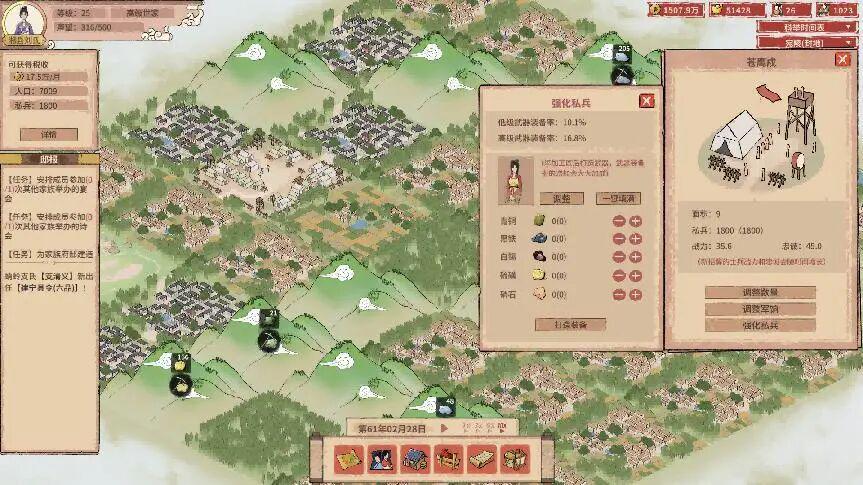
*My Noble Family* covers a wide range of content: building houses, climbing the career ladder, and expanding territories. Each of these areas features a wealth of interactive options. While many players have criticized the game for being “too scattered and lacking focus,” it’s also inexplicably addictive: simply watching your family’s wealth grow and your lineage thrive brings a sense of accomplishment that speaks for itself. Even after playing for over 80 hours, I checked the community and discovered there are still plenty of features yet to be unlocked.In a way, this also confirms the developer’s original vision.
03
The project was only halfway done when the money ran out
The sheer scale of *My Noble Family* meant that the project ran out of funds halfway through production.
It was mid-2023, more than two years after Xia Chengliang secured his first round of funding before moving to Chengdu in April 2021. Although the game’s initial framework had been completed, as the team’s development ambitions continued to expand, the volume of content to be developed grew exponentially.At that time, the team’s funding had dried up, and the game hadn’t even produced a playable demo. The team had no choice but to compile some project materials to pitch to publishers, eventually securing a partnership with ReMia Games. The advance payment provided by the publisher successfully helped them weather this crisis.
RePulse told Tea House that when they first saw *My Noble Family*, they were immediately drawn to the concept of a “simulation game centered on noble clans.” At the time, there were very few simulation games of this genre on Steam, and since the game incorporated farming elements, the team believed it had significant potential.
However, the final sales figures for *My Noble Family* still exceeded the expectations of ReMia Games and Xia Chengliang.
Xia Chengliang, who has been involved in the indie game scene since 2013, has extensive industry experience, but even he couldn’t guarantee that every title would sell well. He buried himself in updates, always feeling that there was still plenty of content that needed refinement—such as unpolished storylines and numerous gameplay modules that needed fleshing out.After the Early Access release, he and two studio members maintained a near-weekly update schedule, propelling the game from “mixed reviews” to a remarkable turnaround with “Overwhelmingly Positive” ratings.

On Steam, the simulation genre is a niche category. According to research data from GameDiscoverCo, this genre accounts for only 9.78% of the platform’s total revenue—far below the 58.37% for action games, 17.11% for role-playing games, and 13.97% for strategy games—indicating a relatively limited market size.
While games with traditional Chinese themes might be expected to appeal primarily to a domestic audience, the developers were surprised to find that they also achieved impressive sales figures in English-speaking markets and Southeast Asia. The "Noble Families" theme resonated deeply with Thai culture, striking a chord with Thai players and making Hot Pulse one of the few domestic indie game developers invited to exhibit at Gamescom Asia with a large booth.
04
“If it really doesn’t work out, I’ll just retire in Chengdu.”
When he fled Shanghai for Chengdu, feeling utterly desolate, Xia Chengliang had once thought to himself, “They say one shouldn’t go to Sichuan when young, nor leave it when old. I’m no spring chicken anymore; if things really don’t work out, I’ll just stay there to spend my twilight years.”
I asked him, “Is ‘retiring in Chengdu’ your life goal?” He smiled and said, “That’s probably the exact opposite of how I usually am—I’m actually a very driven person."Since coming to Chengdu, he hasn’t had a moment to spare, maintaining a high-intensity work schedule: waking up at 9 a.m., arriving at the office around 10:30 a.m., and most days working late into the night—often until 1 a.m., or even 2 or 3 a.m. Even if he’s out dining with friends until very late, once his friends go home, he heads back to his studio to keep working."
But Chengdu is a city that soothes his emotions. It offers a wide variety of cuisines, parks perfect for strolling, bustling night markets, and teahouses where you can sit all day with just a cup of tea. After work, grabbing a late-night snack—an ice-cold beer paired with a few skewers of grilled meat—is enough to wash away the day’s fatigue and anxiety.

Commuting Home from Work in Chengdu
Here, he has also experienced many heartwarming moments. When they first arrived in Chengdu, his wife quietly shed tears after returning home from the hospital due to illness. As she went to the neighborhood bakery to buy some pastries with tear stains still on her face, the shop owner quietly added a few animal-shaped steamed buns to her order, his eyes brimming with heartfelt encouragement.
When he quit his job to pursue indie game development in 2018, it coincided with the market explosion sparked by phenomenon-level titles such as *Chinese Parents* and *The Scroll of Taiwu*. He witnessed the rise of the indie game industry firsthand: seven or eight years ago, many of the indie developers he met were idealists working in a small market; now that the industry has taken off, college students and industry heavyweights are flocking to it.
The market’s ups and downs have actually helped him maintain a level-headed perspective. His goals are simple: to recoup his initial investment, stay afloat, and continue developing his next game—which he considers a source of great happiness. He believes, “Indie games are simpler and more pure than commercial ones, and good games have a better chance of gaining exposure. All you need to focus on is how to make the game itself great.”
原创文章,作者:游茶妹儿,禁止转载:https://youxichaguan.com/en/archives/194610