By 2025, if you mention "Demon's Souls-like" games to a friend who's just started playing or to a casual gamer, they'll likely be puzzled by this relatively old-school genre for a while.
But if you talk to them about games like *The 7th Chronicle* or *Onmyoji*, or about *Ise*, the in-house title from Xindong that launched its open beta on September 25 and topped the charts in multiple regions, they’ll likely nod in realization, understanding exactly what kind of game you’re referring to.
In recent years, buzzwords in the gaming market—such as "shoot-and-run," "open-world," and "anime-style"—have attracted significant industry attention and investment; meanwhile, the "Molee-like" genre has remained relatively quiet for quite some time.
However, now that the third-generation "Magic Spirit"-style products were launched yesterday, this category—which had been considered somewhat "old-fashioned"—is gradually returning to the mainstream.
Three generations of demon spirits—each one stronger than the last?
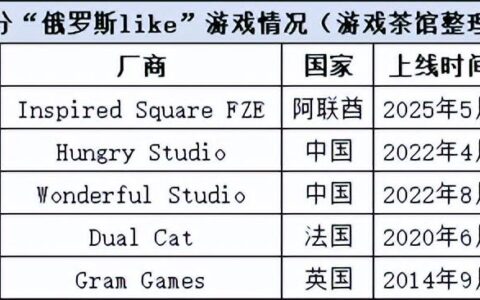
The "Summoners War"-style genre can be traced back to the 2014 South Korean online game *Summoners War*.
At that time, Com2uS established a gameplay paradigm that combined strategic depth with long-term progression goals, anchored by a solid “iron triangle” of ATB turn-based combat, deep and complex character development, and highly competitive PvP. All subsequent titles in the genre have followed this foundational framework. As a result, *Summoners War* is widely recognized as the “first generation” of the series.
Subsequent hit titles such as *Onmyoji* and *Epic Seven* belong to the second generation of "Monster Strike-like" games. While retaining the gameplay mechanics of their predecessors—including elemental affinities and rune/soul equipment systems—these titles strive to break out of their niche by featuring stunning character art, rich character narratives, and more mainstream themes. Their goal is to expand the audience for Monster Strike-like games from core strategy gamers to a broader base of anime and manga fans and casual players.
As the genre has evolved over two generations, the core gameplay framework and user base of "Molee-like" games have become highly mature and established. These players have invested significant amounts of time, money, and emotional investment in these games and have built deep social connections, making the ecosystem barriers of the genre increasingly robust.For a new game entering this market, persuading these players to switch platforms requires offering a generational leap in the gaming experience—a feat that is undoubtedly extremely difficult.
As a result, the mobile RPG genre hasn’t seen a new breakout hit in quite some time; even games like *The 7th Chronicle*, which many people perceive as a relatively new entry in the genre, have actually been around since 2018.
Just as the first signs of a bottleneck began to emerge in this sector, Xindong had already launched the project in 2020, assembling a team of over 100 people to enter the magical spirit game market. After nearly five years of development, they made a stunning debut with their new title, *Yise*, announcing the dawn of the “Third Era of Magical Spirits.”
In June of this year, *Ys* launched its international version. According to SensorTower data, on its first day of release overseas, *Ys* reached the top 2 spot on the App Store’s mobile game download charts in multiple European and American markets, including the U.S. and France, with downloads exceeding 1 million—making it a true dark horse. As previously revealed by the developers, PC players account for as much as half of the game’s overseas user base.Jack Zhou, the producer of *Ys*, has publicly stated that the game’s overseas performance “exceeded the expectations of both the team and the company.”
Caption: In addition, the official’s approach to communication is also commendable.
So, as a pioneer of third-generation "Mage-like" games, what sets *Ys* apart and makes it stand out in overseas markets?
Long-term operations—have they changed the payment model?
One of the defining features of *Ys* is the leap in quality.
Huang Yimeng, CEO of Xindong, has stated that *Ys* represents the company’s latest capabilities in game development. This is because the company currently has no other 3D project of this scale, and it is also the project that makes the most extensive use of Unreal Engine 4.
In terms of theme, *Yi Se* adopts a modern virtual city and sci-fi fantasy setting similar to *Ready Player One*, successfully avoiding the pitfall of thematic repetition common in similar projects. Visually, the series employs a cel-shaded rendering style and anime-inspired art, and through iterative refinements to its visual design, it has established itself as a strong contender within the industry.
It’s worth noting that *Yise* is by no means the typical mobile game as commonly perceived today, yet it retains the genre’s traditional strengths in art and storytelling, with no compromises in character skill animations or cinematic sequences. Many new players, upon seeing *Yise*, instinctively ask, “Is this just another mobile game?”; some casual mobile gamers even view it as a direct competitor to the top titles in the genre, which speaks volumes about its appeal.
Second, there is the evolution of gameplay.
As early as interviews during the development phase, the official team behind *Ys* had stated that approximately 50 characters would be available at launch—yet by the time the game actually launched, that number had risen to 60.There are virtually no "useless cards" among these characters; both R and SR cards see significant playtime, and some SR cards are even more practical than SSRs. The different attributes of various characters—including the cyclical counter-relationships between the "Reality," "Void," and "Otherworld" attributes, as well as the mutual counter-relationships between "Chaos" and "Constant"—provide players with ample deck-building flexibility, giving rise to hundreds of distinct tactical playstyles.
In addition to its core gameplay centered on Spirit Beings, the game introduces a "Source Gear" (equipment) system and a "Smart Shell" (a floating intelligent pet obtained through grinding, with no in-app purchases required) mechanic.Each character can equip one Intelligence Shell and six Source Artifacts, with the Intelligence Shell playing a particularly crucial role: it combines the effects of four key progression elements—statistics, passives, skills, and the Matrix—making it the very essence of *Yise*’s design.Examples include the "Jackal Guardian," which can pull the turn order, and "Amber," which provides an "immortality" effect—both are highly favored by players and have extremely high appearance and farming rates.
The addition of these elements has transformed the relatively rigid traditional gear-building system in *Demon’s Souls* into a system with greater strategic depth and more dimensions for tactical thinking. It’s safe to say that short-term products designed for a “one-and-done” approach would never invest such significant effort into achieving this level of gameplay depth and diversity in build styles.
In addition, *Ys* has introduced a new "Mini-World" mode alongside the existing "Demon Spirit" mode, significantly expanding both its PVE content and narrative presentation. The 3D map exploration seamlessly integrates with the classic combat system, serving the needs of storytelling and character development while providing players with additional avenues to explore the world and its characters.
The third distinguishing feature is the exploration of a "light commercialization" model.
During the Heartbeat 2025 mid-year earnings call, Huang Yimeng stated, “We believe that *Yise* can achieve steady growth through ongoing operations and are fully committed to breaking into the domestic market.”
Following the open beta, the developers chose to generously offer benefits to players by implementing a feature that guarantees a featured character in every 80th pull—without any rare card skips—a move that delighted the player base and aimed to enhance the predictability of the paid experience.Even characters with "Disorder/Constant" attributes—often jokingly referred to as having "superior-tier stats"—were not used as a means to force players to spend through marketing tactics like "limited-time gacha events," but were instead available for acquisition at any time.
More importantly, it has completely abandoned the pay-to-win weapon gacha system—which is currently overused and highly controversial in the mobile gaming community—and instead relies solely on character gacha for monetization (with guaranteed drops).To be honest, if *Isis* had launched with the standard combination of “character pools,” “weapon pools,” and “limited-time pools,” I have no doubt its first-month revenue would have skyrocketed by 150% or even more. But as producer Jack Zhou has stated directly, sacrificing short-term profits to let players experience the fun of the game first—rather than resorting to “Pay to Win”—is actually more beneficial for long-term growth.After seeing this series of player-friendly measures, many have even started saying, “I’ve got no choice but to jump into the Chinese server of *Isle*.”
So you’ll find that *Yi Se*’s strategy isn’t to focus on “short-term gains” or “one-hit wonders.” Its product positioning aligns with Xindong’s long-standing strategy: to create products designed for sustained, long-term operation.
In addition to these distinctive features, *Yise* has also taken a bold yet highly logical approach to its operations:
Build an esports ecosystem.
Expanding Overseas, with a Focus on Ecological Development
The development of the esports ecosystem is another major highlight of *Yise*.
The esports scene has long been dominated by MOBA and FPS games; few have attempted to combine "Demon's Souls"-style or even turn-based games with esports. However, *Ys*’s intense PVP elements and deep strategic depth were imbued with esports DNA from the very beginning, forming the cornerstone of its competitive gameplay.
As for the game *Ys* itself, the developers have even incorporated classic competitive mechanics such as the "Ban & Pick system" and the "Protected Slot 3" into its PvP mode, paving the way for esports.As early as the testing phase in January of this year, *Etheria* had already begun laying the groundwork by hosting the "Fusion Cup Invitational," inviting players from around the world to participate in an online esports tournament. During this overseas open beta, the game also launched its global esports initiative, EWS (Etheria World Summit).
This July, the official EWS Shanghai tournament officially kicked off. And as it turned out, the *Ether* tournament possesses all the elements expected of a mature esports event.As a strategy card game, it delivers an incredibly thrilling competitive experience right from the draft phase, with players vying to select and ban characters—a battle of wits that’s intense from the very start. As a tournament, the competition is full of twists and turns, featuring the emergence of dark horses and heart-pounding comebacks. All the passion and emotion you’ve come to expect from past esports events are present here in full force.Moreover, much like Riot Games, it has even dedicated an exclusive battle anthem to the 2025 EWS.
Just like in esports, the tournament features top-tier broadcasting and venue setups; and as we mentioned earlier, there are no "useless" cards in *Ys*. During the matches, many R and SR cards saw action and played a significant role.
The two-day tournament was packed with excitement from start to finish and produced plenty of memorable moments: Kekker’s “Death Note” and the surprise rise of dark horse Han (who had only a 7% pre-tournament approval rating) were both widely discussed among players; meanwhile, Kekker’s performance in the final showdown—where he controlled “Yeli” to unleash the “Nightfire Long Separation” ultimate move and clinch the second game in a flash—was hailed as the highlight of the entire tournament.
But in reality, winning that final match was no easy feat.The final match nearly saw Han pull off a stunning comeback from a 2-0 deficit to win 3-2, which is precisely where the appeal of this game lies in its “esports” adaptation: intense back-and-forth, vast strategic depth, and a touch of unpredictability. After all, no matter how strong a player’s lineup or how flawless their tactical design, even the slightest mistake can instantly undo their advantage. All of this proves that even turn-based games can be successfully adapted for esports.
On the domestic promotional front, the developers even invited three of the most prominent figures in China’s esports scene—Ke Jie, UZI, and Xiaohai—to lend their support to the game and the open beta special program “Hyperlink Esports.” Behind this “celebrity effect,” one can see *Yise*’s determination to pursue “esports integration” and “globalization” by cultivating a core user base, reaching out to the broader community, and refining the esports community ecosystem.
This bold yet sensible move not only provides a stronger foundation for the game’s long-term operation, but also offers a new direction for the current landscape of esports.
Conclusion
If you’ve been following the news, you’ll notice that Xindong’s performance over the past two years has been very encouraging.
According to Xindong’s financial report for fiscal year 2024, the company’s revenue last year reached 5.012 billion yuan, with a net profit of 890 million yuan for the full year. This marked a remarkable turnaround from the loss of over 65 million yuan recorded in fiscal year 2023. In the first half of this year, Xindong achieved total revenue of nearly 3.082 billion yuan and gross profit of 2.252 billion yuan, representing significant increases in both year-over-year growth and gross profit margin.
At the heart of this success lies Xindong’s “dual-drive” strategy. On one hand, this involves optimizing the TapTap platform’s algorithms and expanding into the PC and mini-game sectors; on the other hand, it is also attributable to the sustained momentum of Xindong’s series of in-house developed products.Within Xindong’s portfolio of in-house titles, *Let’s Go, Muffin* broke through as a lightweight RPG and remains the company’s highest-grossing product to date; meanwhile, *Heart Town* quickly gained widespread popularity after its launch, with TapTap downloads now exceeding 50 million, firmly putting its “evergreen strategy” into practice.
Today’s spotlight is on *Ise*, whose long-term operational roadmap includes plans such as “two-month-long seasons” and “event challenge modes during off-season breaks,” while also laying the groundwork for an esports-first ecosystem. The game offers a user-friendly entry point with reduced grind and lower pay-to-win barriers, yet also features a higher strategic ceiling thanks to its new systems.Now that the game has officially entered open beta, we can only wait and see what kind of waves it will make in the long-dormant demon spirit arena, and what valuable experience it will bring to Xindong’s in-house game portfolio.
原创文章,作者:游茶妹儿,禁止转载:https://youxichaguan.com/en/archives/194583